
Inspection Bodies
A Complete Guide to Their Role, Importance, and Accreditation
Inspection bodies play a critical role in ensuring quality, safety, and compliance across a wide range of industries. From construction and manufacturing to healthcare, oil & gas, and environmental services, inspection bodies act as independent evaluators that verify whether products, processes, services, or installations meet specified requirements. In today’s highly regulated and quality-conscious global market, the role of inspection bodies has become more vital than ever.
At the heart of inspection activities lies the internationally recognized standard ISO/IEC 17020, which specifies the requirements for the competence of bodies performing inspection and for the impartiality and consistency of their inspection activities. Unlike general quality management standards such as ISO 9001, ISO/IEC 17020 focuses specifically on the technical competence and operational integrity of inspection bodies.
Inspection bodies are organizations that examine materials, products, installations, plants, processes, work procedures, or services and determine their conformity with requirements. These requirements may be defined by standards, regulations, contracts, or client specifications. The key purpose of inspection is to provide assurance that a particular item or system meets the necessary safety, quality, and regulatory benchmarks.
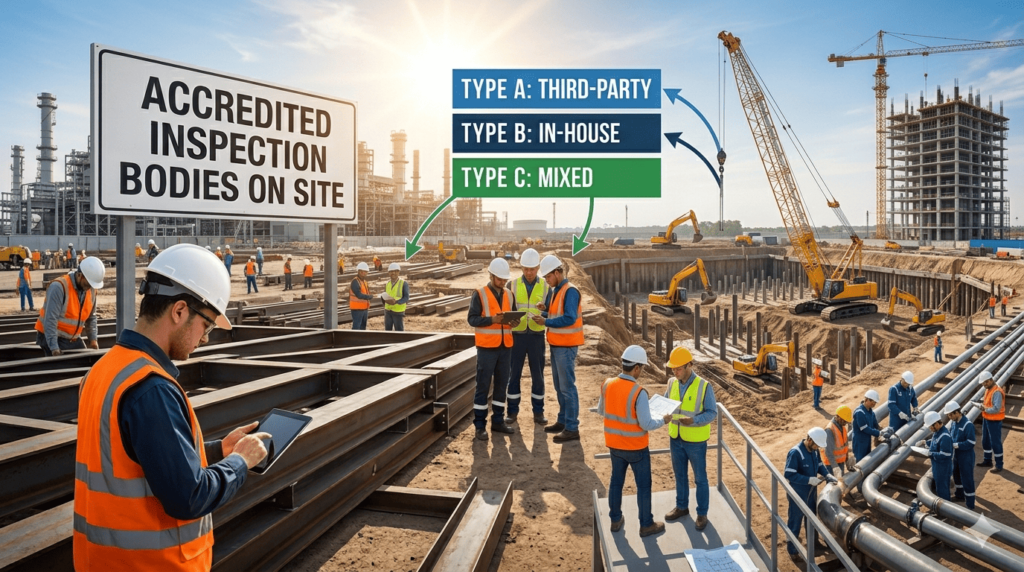
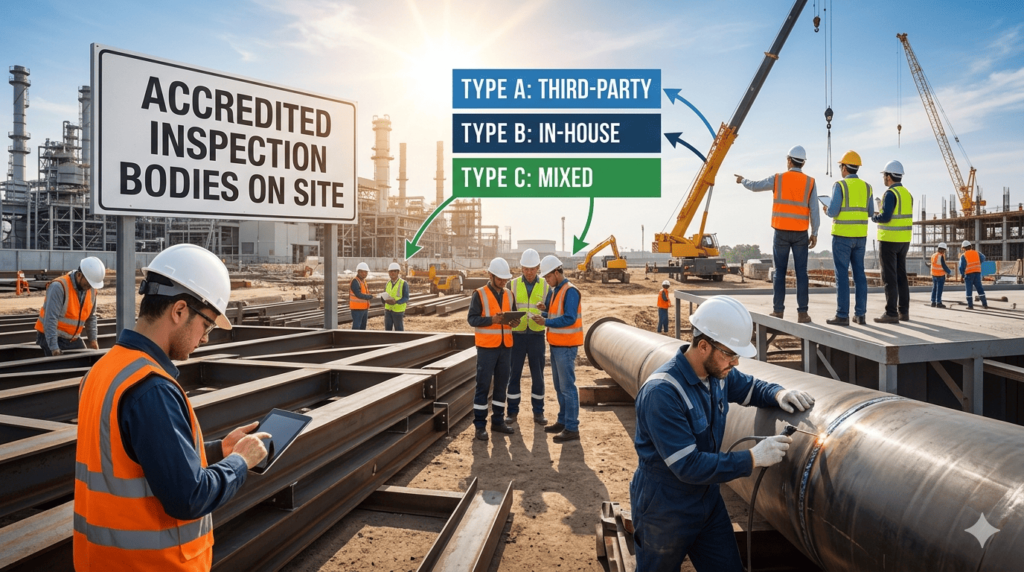
One of the defining characteristics of inspection bodies is their independence and impartiality. To maintain credibility, they must operate free from any undue influence that could affect their judgment. Based on their level of independence, inspection bodies are typically classified into three types: Type A, Type B, and Type C. Type A inspection bodies are completely independent third-party organizations with no involvement in the design, manufacture, supply, installation, or maintenance of the items they inspect. Type B inspection bodies are part of an organization but provide inspection services only to their parent organization. Type C inspection bodies may offer inspection services both internally and externally but must ensure that conflicts of interest are managed effectively.
The scope of inspection activities is vast and varies depending on the industry. In the construction sector, inspection bodies verify structural integrity, safety compliance, and adherence to building codes. In manufacturing, they assess product quality, dimensional accuracy, and material specifications. In the oil and gas industry, inspection bodies ensure that pipelines, pressure vessels, and equipment meet stringent safety and operational requirements. Similarly, in the healthcare and pharmaceutical sectors, inspection bodies play a crucial role in maintaining hygiene standards, validating processes, and ensuring compliance with regulatory frameworks.
Accreditation is a key factor that determines the credibility and reliability of an inspection body. Accreditation is a formal recognition by an authoritative body that an organization is competent to carry out specific tasks. When an inspection body is accredited to ISO/IEC 17020, it demonstrates that the organization operates according to internationally accepted criteria and follows best practices in inspection activities. Accreditation provides confidence to clients, regulators, and stakeholders that the inspection results are accurate, consistent, and trustworthy.
The accreditation process involves a comprehensive assessment of the inspection body’s management system, technical competence, personnel qualifications, equipment calibration, inspection methodologies, and reporting procedures. It also evaluates the organization’s ability to maintain impartiality and confidentiality. Regular surveillance and reassessment ensure that the inspection body continues to meet the required standards over time.
Inspection bodies offer numerous benefits to industries and organizations. One of the primary advantages is risk reduction. By identifying defects, non-conformities, and potential hazards at an early stage, inspection bodies help prevent accidents, failures, and costly rework. This is particularly important in high-risk industries such as construction, aviation, and energy, where even minor defects can lead to significant consequences.
Another major benefit is compliance assurance. Regulatory authorities often require inspections to ensure that organizations adhere to laws, regulations, and standards. Inspection bodies help organizations meet these requirements and avoid legal penalties, fines, or operational disruptions. Additionally, inspections enhance customer confidence by providing independent verification of product or service quality.
Inspection bodies also contribute to continuous improvement. Through detailed inspection reports and feedback, organizations can identify areas for improvement and implement corrective actions. This leads to enhanced efficiency, better quality control, and improved overall performance. In competitive markets, such improvements can provide a significant advantage.
Technological advancements have significantly transformed the inspection industry. Modern inspection bodies utilize advanced tools and techniques such as non-destructive testing (NDT), remote inspection technologies, drones, robotics, and digital reporting systems. These innovations enable more accurate, efficient, and safer inspections, especially in complex or hazardous environments. For example, drones can be used to inspect tall structures, pipelines, and offshore platforms without exposing personnel to risks.
Digitalization has also improved data management and traceability in inspection processes. Inspection bodies now use software systems to record, analyze, and store inspection data, making it easier to track performance, identify trends, and generate reports. This not only enhances transparency but also supports better decision-making for clients and stakeholders.
Despite their importance, inspection bodies face several challenges. One of the major challenges is maintaining impartiality, especially for Type B and Type C inspection bodies that are part of larger organizations. Ensuring that inspection decisions are free from commercial or organizational influence requires robust governance and ethical practices.
Another challenge is keeping up with evolving standards, regulations, and technological advancements. Inspection bodies must continuously update their knowledge, skills, and equipment to remain relevant and competent. This requires ongoing training, investment in technology, and active participation in industry developments.
Globalization has also increased the complexity of inspection activities. With supply chains spanning multiple countries, inspection bodies often need to operate across different regulatory environments and cultural contexts. Ensuring consistency and reliability in such scenarios requires strong coordination, standardized procedures, and effective communication.
In emerging markets, including countries like India, the demand for inspection services is growing rapidly due to increased industrialization, infrastructure development, and regulatory enforcement. Inspection bodies play a vital role in supporting sustainable development by ensuring that projects meet quality and safety standards. They also contribute to international trade by facilitating compliance with global standards and requirements.
The future of inspection bodies is closely linked to innovation and sustainability. As industries adopt new technologies such as artificial intelligence, the Internet of Things (IoT), and automation, inspection bodies will need to adapt their methodologies and develop new competencies. Predictive inspection, where data analytics is used to anticipate failures before they occur, is expected to become more prevalent.
Sustainability is another key focus area. Inspection bodies are increasingly involved in assessing environmental compliance, energy efficiency, and sustainable practices. They help organizations reduce their environmental impact and meet sustainability goals, which are becoming increasingly important in today’s world.
In conclusion, inspection bodies are essential pillars of quality assurance, safety, and compliance in modern industries. By providing independent and reliable evaluations, they help organizations meet standards, reduce risks, and improve performance. Accreditation to standards like ISO/IEC 17020 ensures that inspection bodies operate with competence, consistency, and integrity. As industries continue to evolve, inspection bodies will play an even more critical role in supporting innovation, sustainability, and global trade.
Inspection Bodies ISO/IEC 17020:latest – General Criteria For The Activity Of Different Kinds Of Bodies Performing Inspection Is A Globally Perceived Standard For The Ability Of The Inspection Bodies. Many People Mistake ISO 17020 With ISO 9001, Which Is A Generic Quality Management System. ISO 17020 Requires Assessment Of The Specialized Ability Of A Inspection Body.
WYAB Certification Expects That Inspection Bodies Should Adjust To The Most Recent Version Of The
• ISO/IEC 17020:latest – General Criteria For The Activity Of Different Types Of Bodies Performing Inspection;
• Exhibited Specialized Capability Well defined for The Field Where Inspection Is Done;
• The WYAB Accreditation Scheme Manual.
Inspection Bodies – ISO/IEC 17020 Accreditation and WYAB Certification Framework
Inspection bodies play a critical role in ensuring the safety, quality, and compliance of products, processes, installations, and services across industries. From construction and manufacturing to healthcare and energy sectors, inspection bodies act as independent evaluators that verify whether specified requirements, standards, and regulations are being met. In today’s globalized economy, the need for credible, competent, and impartial inspection services has become more important than ever. This is where ISO/IEC 17020: latest version – General Criteria for the Operation of Various Types of Bodies Performing Inspection becomes essential.
Understanding ISO/IEC 17020
ISO/IEC 17020 is an internationally recognized standard specifically designed for organizations that perform inspection activities. It establishes the criteria for competence, impartiality, and consistent operation of inspection bodies. Unlike generic management system standards, ISO/IEC 17020 focuses on technical competence and the ability to deliver reliable inspection results.
Many organizations mistakenly compare ISO/IEC 17020 with ISO 9001, but the two serve entirely different purposes. While ISO 9001 is centered around quality management systems and customer satisfaction, ISO/IEC 17020 emphasizes the technical capability, integrity, and independence of inspection bodies. It ensures that inspection results are trustworthy, reproducible, and internationally accepted.
Types of Inspection Bodies
ISO/IEC 17020 categorizes inspection bodies into three main types based on their independence and organizational structure:
- Type A (Third-Party Inspection Bodies): Fully independent organizations that provide impartial inspection services. They have no involvement in the design, manufacture, or maintenance of the items they inspect.
- Type B (In-House Inspection Bodies): Separate inspection units within an organization that serve only their parent organization.
- Type C (Combined Inspection Bodies): These may provide inspection services to both their parent organization and external clients but must ensure impartiality.
Each type has specific requirements to maintain objectivity and avoid conflicts of interest.
Core Requirements of ISO/IEC 17020
The standard is structured to ensure that inspection bodies operate with competence and integrity. The key requirements include:
1. Impartiality and Independence
Inspection bodies must demonstrate that their activities are free from commercial, financial, or other pressures that could influence results. This includes identifying risks to impartiality and implementing mitigation measures.
2. Confidentiality
Organizations must ensure the protection of client information and inspection results. Confidentiality agreements and secure data handling practices are essential.
3. Organizational Structure
Clear roles, responsibilities, and reporting lines must be defined. The structure should support impartial decision-making and accountability.
4. Resource Requirements
Inspection bodies must have qualified personnel, appropriate equipment, and suitable facilities. Competence must be demonstrated through education, training, and experience.
5. Process Requirements
Inspection procedures must be well-documented, standardized, and consistently applied. This includes sampling methods, inspection techniques, and reporting formats.
6. Management System Requirements
Although ISO/IEC 17020 is not a full management system standard like ISO 9001, it still requires a structured management approach to ensure consistency and continual improvement.
WYAB Certification and Its Expectations
The World Yoga Accreditation Board (WYAB) certification framework aligns inspection bodies with international best practices. WYAB expects inspection bodies to comply with the most recent version of ISO/IEC 17020 and additional internal requirements to ensure excellence in inspection activities.
Under WYAB certification, inspection bodies must meet the following criteria:
1. Compliance with ISO/IEC 17020
Inspection bodies must fully implement the requirements of ISO/IEC 17020, ensuring competence, impartiality, and consistency in operations.
2. Demonstrated Technical Competence
Organizations must exhibit specialized expertise in their field of inspection. This includes:
- Industry-specific knowledge
- Skilled personnel
- Validated inspection methods
- Proper calibration of equipment
3. Adherence to WYAB Accreditation Scheme Manual
The WYAB Accreditation Scheme Manual outlines additional policies, procedures, and guidelines that inspection bodies must follow. These may include:
- Documentation requirements
- Audit procedures
- Ethical guidelines
- Certification processes
Importance of Technical Competence
Technical competence is the backbone of any inspection body. It ensures that inspections are conducted accurately and reliably. Competence is demonstrated through:
- Qualified and trained inspectors
- Use of validated methods and procedures
- Regular calibration and maintenance of equipment
- Participation in proficiency testing or inter-laboratory comparisons
Without technical competence, inspection results lose credibility, which can lead to safety risks, regulatory non-compliance, and financial losses.
Differences Between ISO/IEC 17020 and ISO 9001
While both standards aim to improve organizational performance, their focus areas differ significantly:
| Aspect | ISO/IEC 17020 | ISO 9001 |
|---|---|---|
| Purpose | Inspection body competence | Quality management system |
| Focus | Technical capability and impartiality | Customer satisfaction and process efficiency |
| Applicability | Inspection bodies | All types of organizations |
| Certification | Accreditation-based | Certification-based |
This distinction highlights why inspection bodies must adopt ISO/IEC 17020 rather than relying solely on ISO 9001.
Benefits of ISO/IEC 17020 Accreditation
Achieving accreditation under ISO/IEC 17020 offers numerous advantages:
1. Enhanced Credibility
Accreditation demonstrates that the inspection body meets international standards, increasing trust among clients and regulators.
2. Global Recognition
Inspection reports from accredited bodies are widely accepted across borders, facilitating international trade.
3. Improved Operational Efficiency
Standardized processes lead to consistent and efficient inspection activities.
4. Risk Reduction
Accurate inspections help identify potential risks and prevent failures, ensuring safety and compliance.
5. Competitive Advantage
Accredited inspection bodies stand out in the market, attracting more clients and opportunities.
Inspection Process Lifecycle
The inspection process typically follows a structured lifecycle:
- Request and Contract Review: Understanding client requirements and defining the scope of inspection.
- Planning: Selecting appropriate methods, resources, and personnel.
- Execution: Conducting the inspection using standardized procedures.
- Evaluation: Analyzing findings against specified criteria.
- Reporting: Documenting results in a clear and structured format.
- Follow-Up: Addressing non-conformities and ensuring corrective actions.
Each stage must be carefully managed to ensure accuracy and reliability.
Role of Accreditation Bodies
Accreditation bodies evaluate inspection organizations against ISO/IEC 17020 requirements. They conduct audits, assess technical competence, and verify compliance with standards. Accreditation is granted only when all criteria are met.
WYAB acts as an accreditation authority that ensures inspection bodies operate at the highest level of competence and integrity. Through rigorous assessments and continuous monitoring, WYAB maintains the credibility of accredited organizations.
Challenges Faced by Inspection Bodies
Despite the benefits, inspection bodies may face several challenges:
- Maintaining impartiality in complex organizational structures
- Keeping up with evolving standards and regulations
- Ensuring continuous training and competence of personnel
- Managing documentation and compliance requirements
- Adapting to technological advancements
Addressing these challenges requires strong leadership, robust systems, and a commitment to continuous improvement.
Future Trends in Inspection Bodies
The inspection industry is evolving rapidly with advancements in technology and globalization. Key trends include:
- Digital Inspections: Use of drones, AI, and IoT for remote inspections
- Data Analytics: Leveraging data for predictive maintenance and risk assessment
- Sustainability Focus: Increased emphasis on environmental and social compliance
- Global Harmonization: Alignment of standards across countries
Inspection bodies must adapt to these trends to remain relevant and competitive.
Conclusion
Inspection bodies serve as the backbone of quality assurance and regulatory compliance across industries. The adoption of ISO/IEC 17020 ensures that these organizations operate with competence, impartiality, and consistency. While standards like ISO 9001 provide a foundation for quality management, ISO/IEC 17020 specifically addresses the unique requirements of inspection activities.
WYAB certification further strengthens this framework by incorporating additional requirements and ensuring adherence to international best practices. By complying with ISO/IEC 17020, demonstrating technical competence, and following the WYAB Accreditation Scheme Manual, inspection bodies can achieve global recognition, enhance credibility, and deliver reliable inspection services.
Table of Contents
Branches
WYAB Accreditation
WYAB Head Office
WYAB World Yoga Accreditation Board
WYAB House
C/O Mr.Garry 54, Glengarnock Avenue,
E-14 3BP Isle Of Dogs, London UK
Tel .: +44-8369083940
email: info@worldyoga.us
Website: https://worldyoga.us/
MUMBAI Head Office
World Yoga Accreditation Board (WYAB)
WYAB House
B-401, New Om Kaveri Chs. Ltd., Nagindas pada,
Next To Shiv Sena Office, Nallasopara (E)
Tel .: +91-7499991895
email: info@worldyoga.us
Website: https://worldyoga.us/
DELHI-NCR Regd. Office
World Yoga Accreditation Board (WYAB)
WYAB House
Asaoti, Dist Palwal
Faridabad Delhi NCR, Haryana
Tel .: +91-7979801035
Fax: +91-250 2341170
Website: https://worldyoga.us/