
ACCREDITATION OF TRAINING COURSES
Accreditation of training courses has become an essential requirement in today’s competitive and quality-driven environment, where both individuals and organizations seek credible, structured, and outcome-oriented learning programs. The WYAB TC:2023 standard (Authorization of Instructional Classes) provides a comprehensive framework to ensure that training courses meet defined quality benchmarks and deliver measurable value. It is designed to support a wide range of instructional programs, including professional development, technical training, corporate learning, and personal skill enhancement, delivered through classroom sessions, virtual platforms, eLearning, or blended formats.
The strength of WYAB TC:2023 lies in its flexible, tiered approach to accreditation, which recognizes that different training programs require varying levels of control and oversight. The standard is divided into three levels.
Level 1 (WYAB TC-1:2023) focuses on foundational requirements such as identifying training needs, defining course objectives, developing content, and evaluating effectiveness. This level is particularly suitable for internal training programs within organizations.
Level 2 (WYAB TC-2:2023) builds upon these fundamentals by incorporating structured delivery methods, trainer competency requirements, and resource planning, making it ideal for organizations offering training to external participants. Level 3 (WYAB TC-3:2023) represents the highest level of accreditation, emphasizing comprehensive course design, detailed curriculum, qualified trainers, formal assessment systems, and measurable outcomes. It is best suited for professional training institutes and dedicated learning providers.
The accreditation process under WYAB TC:2023 is systematic and transparent. It begins with an application, followed by document submission, evaluation by an independent assessor, and identification of any non-conformities. Training providers are required to implement corrective actions before a final accreditation decision is made. Once approved, courses may be subject to ongoing surveillance, including feedback reviews and observation of training delivery, ensuring continuous quality improvement.
An important aspect of the accreditation framework is the mandatory registration of students, which enhances traceability, transparency, and compliance with regulatory expectations. At the same time, training providers must clearly communicate which courses are accredited to avoid any misrepresentation, as accreditation applies to specific courses rather than the entire organization unless separately certified.
For programs involving certification of individuals or continuous professional development, alignment with ISO/IEC 17024 may also be considered to ensure global recognition and competency-based assessment.
In conclusion, WYAB TC:2023 accreditation helps training providers establish credibility, improve course quality, and gain a competitive advantage, while learners benefit from structured, recognized, and reliable training programs. It ultimately promotes excellence in education and supports the development of a skilled and competent workforce.
Authorization of Instructional Classes – WYAB TC:2023
Instructional class authorization to our distributed standard WYAB TC:2023 is suitable for courses conveying individual or business improvement, specialized abilities, proficient capabilities, and so forth. Course conveyance can be by means of homeroom-based learning, virtual learning or eLearning, or mixed learning.
License Levels
WYAB comprehends that different instructional classes require various degrees of consistence and administration. A course composed for interior use might require less powerful oversight than one that is being proposed to outsiders, which might include authoritative commitments. By adopting a layered strategy, associations can pick the degree of consistence proper to their instructional class necessities. Consequently, the WYAB TC:2023 standard elements three levels explicitly customized to the preparation suppliers.
Level 1 (WYAB TC-1:2023)
The Level 1 standard gives the base necessities to vigorous inside instructional classes. This incorporates evaluating preparing needs, setting course goals and results, course improvement, and benefit assessment.
Level 2 (WYAB TC-2:2023)
Notwithstanding the Level 1 appraisal measures, the WYAB Level Two Norm (Level Two) incorporates thought of conveyance strategies and staffing necessities. A Level 2 course is planned and conveyed by a business office or the association.
Level 3 (WYAB TC-3:2023)
Notwithstanding the Level 2 appraisal measures, the WYAB Level Three Norm (Level Three) incorporates course names, results, themes list, conveyance technique and staffing, and Level One evaluation rules, certifications of staff, way to deal with be utilized, and esteem accomplished. A Level 3 course is planned and conveyed by a committed preparation association or establishment.
For capability plots that require intermittent assessment or CPD, license to ISO/IEC 17024
(Conformity evaluation — General prerequisites for bodies working certification of people) might be more reasonable. For ISO/IEC 17024 license, kindly see here, or reach us for more direction in regards to which certification plot is more reasonable for your requirements.
Authorization of Instructional Classes – Stages
Authorization of instructional classes is accomplished in stages. These are:
• Application, see structure
• Audit application and, if fitting, issue a receipt
• Settlement of the receipt by the candidate
• Accommodation of recorded proof and course materials by the candidate
• Appraisal of submitted materials by an assessor as per the applicable level
Authorization of instructional classes is accomplished in stages
• WYAB TC:2023 standard (accessible upon demand).
• Survey of evaluation discoveries gave to the candidate.
• Restorative activity for any non-congruities.
• Evaluation put together by the assessor for WYAB’s license choice.
• Temporary license choice.
• Contract and MOU arrangement and marks.
• Conveyance of courses.
• Fruitful confirmation obviously audit. Confirmation might involve seeing course conveyance face to face without regard to candidate, audit obviously input structures from understudies or other distant reconnaissance action.
• Full license status and posting at https://worldyoga.us/
• Account opened by WYAB for understudy/authentication postings.
It is a necessity of certification that all understudies are enrolled with WYAB. This is finished by direct information passage of understudy subtleties by the preparation organization at www.irgao.com. It utilizes a full set-up of security settings to permit preparing suppliers to meet the prerequisites of understudies and public administrative bodies.
Not a necessity all courses show to the preparation supplier are certify by WYAB. In any case, the supplier ought to be clear in all correspondences and advertising to guarantee it isn’t suggested that all courses have been authorized.
The preparation supplier ought to be certain that their association has not been authorize by WYAB (as it were their instructional classes have been licensed) except if the preparation supplier has likewise been authorize to WYAB TP:2023.
Enrollment of understudies will be made with toward the finish of the primary day of participation of each new course. Upon fruitful fulfillment of the course, the enlistment is supported by the preparation supplier.
In today’s fast-evolving global economy, training and professional development have become essential pillars for both individual growth and organizational success. Whether it is technical skills, leadership capabilities, compliance knowledge, or personal development, the quality and credibility of training programs play a decisive role in shaping outcomes. This is where accreditation frameworks such as WYAB TC:2023 (Authorization of Instructional Classes) come into prominence. They ensure that training courses meet structured, standardized, and internationally aligned quality benchmarks.
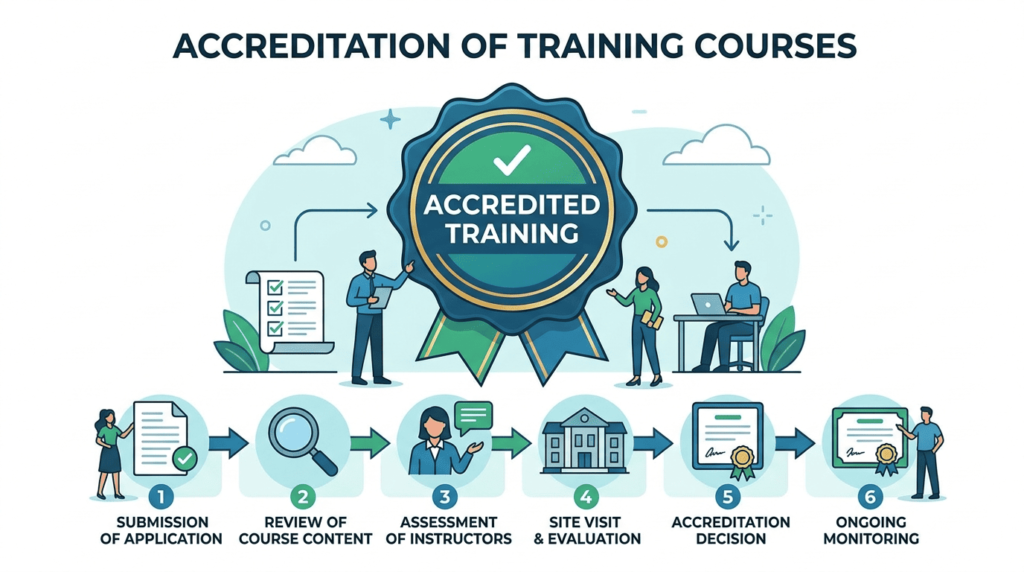
The WYAB TC:2023 standard has been developed to provide a robust framework for the authorization of instructional classes across various domains. It is designed to cater to a wide spectrum of learning formats, including classroom-based training, virtual learning environments, eLearning modules, and blended learning approaches. The standard emphasizes not only course design and delivery but also governance, assessment, and continuous improvement.
This comprehensive framework ensures that training providers deliver consistent, reliable, and high-quality educational experiences that align with both learner expectations and industry requirements.
Understanding WYAB TC:2023
The WYAB TC:2023 standard is applicable to a diverse range of instructional classes, including:
- Individual development programs
- Corporate training courses
- Technical skill development programs
- Professional certification courses
- Vocational and industry-specific training
The flexibility of the standard allows it to be adopted by training providers of all sizes, from small internal training units within organizations to large, independent training institutions.
A key feature of WYAB TC:2023 is its adaptability to different modes of delivery:
- Classroom-based learning – Traditional instructor-led sessions
- Virtual learning – Live online sessions conducted remotely
- eLearning – Self-paced digital courses
- Blended learning – A combination of online and offline training
This multi-modal compatibility ensures that the standard remains relevant in modern learning ecosystems, where digital transformation has significantly changed how education is delivered and consumed.
The Need for Accreditation in Training Courses
Accreditation serves as a formal recognition that a training course meets predefined quality standards. It provides assurance to learners, employers, and regulatory bodies that the course has been independently evaluated and validated.
Some of the key benefits of accreditation include:
- Enhanced credibility of training programs
- Improved learner confidence
- Standardization of course quality
- Recognition in national and international markets
- Alignment with industry and regulatory expectations
Without accreditation, training providers may struggle to demonstrate the effectiveness and reliability of their programs. WYAB TC:2023 addresses this gap by offering a structured and transparent authorization process.
License Levels under WYAB TC:2023
One of the most distinctive aspects of WYAB TC:2023 is its tiered licensing structure, which allows training providers to select an appropriate level of compliance based on their needs and operational scope.
Level 1 (WYAB TC-1:2023)
Level 1 represents the foundation level of accreditation. It is primarily designed for organizations that conduct internal training programs and require a basic yet structured framework.
At this level, the focus is on:
- Identification of training needs
- Definition of course objectives and learning outcomes
- Development of course content
- Evaluation of training effectiveness
Level 1 ensures that even internal training programs are systematic, measurable, and aligned with organizational goals. It introduces essential quality controls without imposing excessive administrative burdens.
This level is particularly suitable for:
- Internal corporate training departments
- Small organizations conducting in-house training
- Entry-level training providers
Level 2 (WYAB TC-2:2023)
Level 2 builds upon the requirements of Level 1 by introducing additional considerations related to course delivery and resource management.
Key enhancements at this level include:
- Evaluation of training delivery methods
- Assessment of trainer qualifications and competencies
- Resource allocation and infrastructure requirements
- Structured course delivery mechanisms
A Level 2 course is typically designed and delivered by a business unit or organizational training department. It ensures that not only the course content but also the delivery process meets defined quality standards.
This level is suitable for:
- Organizations offering training to external clients
- Corporate training divisions with structured programs
- Training providers aiming to expand their reach
Level 3 (WYAB TC-3:2023)
Level 3 represents the highest level of accreditation under WYAB TC:2023. It is intended for professional training institutions and dedicated learning organizations.
In addition to Level 2 requirements, Level 3 includes:
- Clearly defined course titles and structured curriculum
- Detailed learning outcomes and topic outlines
- Comprehensive delivery methodologies
- Qualification and certification requirements for trainers
- Assessment strategies and evaluation frameworks
- Measurement of training value and impact
Level 3 accreditation ensures a fully structured, professionally managed, and externally validated training program.
This level is ideal for:
- Independent training institutes
- Professional certification bodies
- Large-scale training providers
- Institutions offering globally recognized courses
Alignment with ISO Standards
For training programs that involve certification of individuals, particularly those requiring periodic reassessment or Continuing Professional Development (CPD), the standard recommends alignment with ISO/IEC 17024.
This international standard specifies requirements for organizations that certify individuals, ensuring:
- Fair and impartial assessment
- Competency-based evaluation
- Ongoing professional development
- Global recognition of certifications
Training providers should carefully evaluate whether WYAB TC:2023 or ISO/IEC 17024 is more suitable for their specific needs. In some cases, both frameworks may complement each other.
Stages of Authorization of Instructional Classes
The authorization process under WYAB TC:2023 is structured into multiple stages to ensure thorough evaluation and quality assurance.
1. Application Submission
The process begins with the submission of an application by the training provider. This includes details about the course, delivery methods, and organizational structure.
2. Application Review
WYAB reviews the application to verify completeness and suitability. If the application meets initial criteria, a receipt is issued.
3. Payment of Fees
The applicant completes the payment process as per the invoiced amount. This step confirms the initiation of the accreditation process.
4. Submission of Documentation
The training provider submits:
- Course materials
- Curriculum outlines
- Assessment methods
- Trainer qualifications
- Supporting evidence
5. Assessment by Assessor
An independent assessor evaluates the submitted materials against the relevant level of WYAB TC:2023 standards.
6. Evaluation Findings
The findings of the assessment are shared with the applicant. These may include:
- Compliance observations
- Areas for improvement
- Non-conformities
7. Corrective Actions
The applicant is required to address any non-conformities through corrective actions. This ensures that all requirements are fully met.
8. Accreditation Decision
The assessor submits a final evaluation report, based on which WYAB makes a provisional accreditation decision.
9. Agreement and Documentation
A formal agreement, including a Memorandum of Understanding (MOU), is signed between WYAB and the training provider.
10. Course Delivery and Surveillance
The training provider begins delivering the accredited course. WYAB may conduct surveillance activities such as:
- Observing course delivery
- Reviewing student feedback
- Conducting remote audits
11. Final Accreditation Status
Upon successful verification, the training provider is granted full accreditation status, and the course is listed on the official WYAB platform.
Student Registration and Compliance
A critical requirement under WYAB TC:2023 is the mandatory registration of all students enrolled in accredited courses.
Training providers must:
- Register student details through the designated platform
- Ensure data accuracy and compliance
- Maintain confidentiality and security
The system is designed with advanced security features to meet both student privacy requirements and regulatory expectations.
Student registration typically occurs at the end of the first day of the course, and successful completion is confirmed by the training provider.
Important Compliance Guidelines
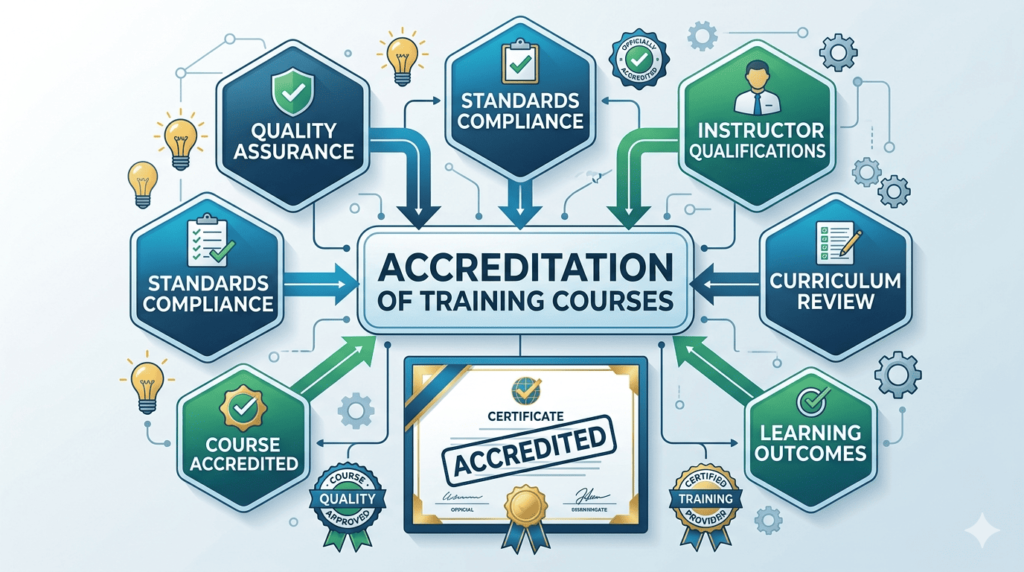
To maintain transparency and integrity, training providers must adhere to the following guidelines:
1. Scope of Accreditation
Not all courses offered by a training provider need to be accredited. However, it must be clearly communicated which courses are accredited under WYAB TC:2023.
2. Avoid Misrepresentation
Training providers must ensure that:
- Accreditation claims are accurate
- Marketing materials do not imply full organizational accreditation unless applicable
3. Organizational vs Course Accreditation
It is important to distinguish between:
- Course accreditation (WYAB TC:2023)
- Training provider accreditation (WYAB TP:2023)
Unless the organization is separately accredited under WYAB TP:2023, it cannot claim institutional accreditation.
4. Continuous Improvement
Training providers are expected to:
- Regularly review course content
- Update materials based on feedback
- Improve delivery methods
- Maintain compliance with evolving standards
Benefits of WYAB TC:2023 Accreditation
Accreditation under WYAB TC:2023 offers numerous advantages:
For Training Providers
- Increased credibility and trust
- Competitive advantage in the market
- Structured course development framework
- Access to global recognition
For Learners
- Assurance of course quality
- Recognized certification
- Improved career prospects
For Organizations
- Standardized training outcomes
- Enhanced workforce competency
- Alignment with industry standards
Conclusion
The WYAB TC:2023 standard provides a comprehensive, flexible, and scalable framework for the accreditation of training courses. Its tiered structure allows organizations to adopt a level of compliance that matches their operational needs, while its rigorous assessment process ensures the delivery of high-quality training programs.
In an era where knowledge and skills are critical assets, accreditation is no longer optional—it is a necessity. By aligning with WYAB TC:2023, training providers can demonstrate their commitment to excellence, transparency, and continuous improvement.
Table of Contents
WYAB World Yoga Accreditation Board
WYAB House
C/O Mr.Garry 54, Glengarnock Avenue,
E-14 3BP Isle Of Dogs, London UK
Tel .: +44-8369083940
email: info@worldyoga.us
Website: https://worldyoga.us/
MUMBAI Head Office
World Yoga Accreditation Board (WYAB)
WYAB House
B-401, New Om Kaveri Chs. Ltd., Nagindas pada,
Next To Shiv Sena Office, Nallasopara (E)
Tel .: +91-7499991895
email: info@worldyoga.us
Website: https://worldyoga.us/
DELHI-NCR Regd. Office
World Yoga Accreditation Board (WYAB)
WYAB House
Asaoti, Dist Palwal
Faridabad Delhi NCR, Haryana
Tel .: +91-7979801035
Fax: +91-250 2341170
Website: https://worldyoga.us/