
Medical Laboratories
Medical laboratories are a cornerstone of modern healthcare, playing a vital role in the detection, diagnosis, monitoring, and prevention of diseases. From routine blood tests to highly specialized genetic analyses, laboratories provide the scientific foundation upon which clinical decisions are made. In today’s rapidly evolving healthcare landscape, the accuracy, reliability, and timeliness of laboratory results are more critical than ever. This is why international standards such as ISO 15189 have been developed to ensure that medical laboratories operate with the highest levels of quality and technical competence.
ISO 15189:latest is specifically designed for medical laboratories and outlines detailed requirements for both quality management systems and technical operations. Unlike general quality standards, it focuses on the entire laboratory testing process, including pre-analytical, analytical, and post-analytical stages. Laboratories accredited to ISO 15189 are also recognized as meeting the principles of ISO 9001, ensuring a strong foundation in quality management while maintaining a specific emphasis on clinical accuracy and patient safety. This dual focus makes ISO 15189 one of the most important standards in the healthcare sector.
The role of medical laboratories begins even before a sample is collected. It starts with appropriate test selection and patient preparation. Patients may need to follow specific instructions such as fasting, avoiding certain medications, or scheduling tests at particular times of the day. Proper patient identification is crucial to ensure that test results correspond to the correct individual, reducing the risk of diagnostic errors. Once the patient is prepared, trained professionals collect samples such as blood, urine, tissue, or other bodily fluids using standardized procedures designed to maintain sample integrity.
After collection, the handling, transportation, and storage of samples become critical factors in maintaining their quality. Laboratories must follow strict protocols to prevent contamination, degradation, or loss of samples. Temperature control, labeling, and timely transport are all essential elements in this phase. Any compromise in these steps can lead to inaccurate results, which may ultimately affect patient care. ISO 15189 emphasizes the importance of controlling these variables to ensure consistency and reliability.
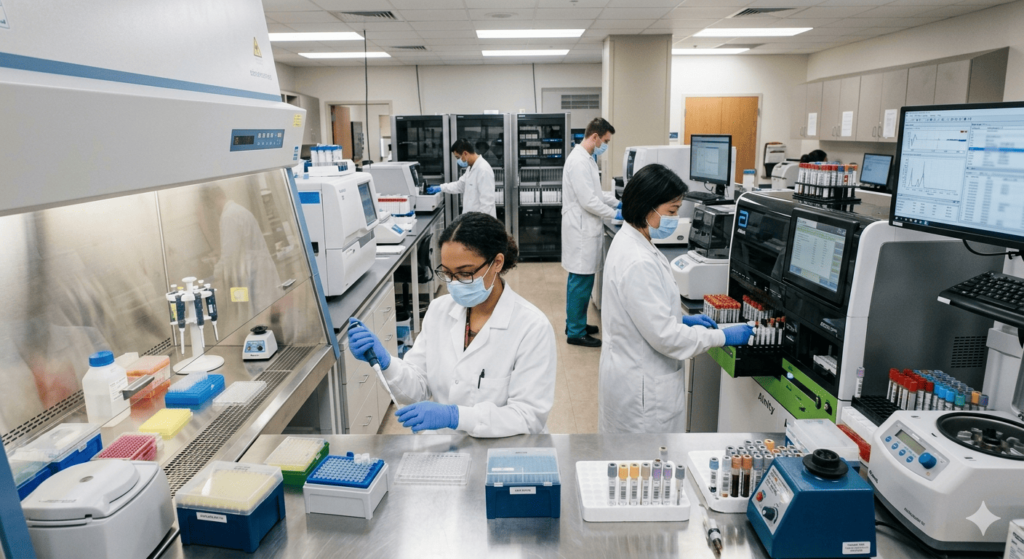
The analytical phase is where the actual testing takes place. This involves the use of sophisticated instruments, validated methods, and skilled personnel. Medical laboratories cover a wide range of disciplines, including clinical chemistry, hematology, microbiology, immunology, and molecular diagnostics. Each discipline requires specialized knowledge and equipment. For example, microbiology laboratories focus on identifying infectious organisms, while hematology laboratories analyze blood components to detect conditions such as anemia or leukemia. The use of calibrated equipment and standardized testing methods ensures that results are accurate and reproducible.
Once the analysis is complete, the results undergo validation and verification by qualified laboratory professionals. This step is essential to confirm that the findings are accurate and clinically relevant. Interpretation of results may also be provided to assist healthcare providers in making informed decisions. The final reports must be clear, precise, and delivered in a timely manner, as delays can impact diagnosis and treatment. Effective communication between laboratories and clinicians is therefore a key aspect of quality healthcare.
Safety and ethics are integral components of medical laboratory operations. Laboratories handle potentially hazardous materials, including infectious agents and chemicals, which require strict safety protocols to protect staff and the environment. Personal protective equipment, proper waste disposal, and adherence to biosafety guidelines are essential practices. Ethical considerations include maintaining patient confidentiality, obtaining informed consent when necessary, and ensuring transparency in reporting. These aspects are strongly emphasized in ISO 15189 to promote trust and accountability.
Accreditation bodies such as World Youth Accreditation Board play a significant role in assessing and certifying medical laboratories. WYAB certification indicates that a laboratory has been independently evaluated and meets international standards for quality and competence. This not only enhances the laboratory’s credibility but also provides assurance to patients, healthcare providers, and regulatory authorities. Accreditation is not a one-time process; it requires continuous monitoring, periodic audits, and ongoing improvement.
Medical laboratories operate across various specialized fields. Clinical chemistry laboratories analyze biochemical components in the body, such as glucose, cholesterol, and enzymes. Hematology laboratories focus on blood-related tests, including complete blood counts and coagulation studies. Microbiology laboratories identify pathogens responsible for infections, playing a crucial role in disease control and prevention. Immunology laboratories study the immune system and help diagnose autoimmune disorders and allergies. Advanced fields such as molecular diagnostics and cytogenetics are increasingly important for detecting genetic conditions and guiding personalized medicine.
The importance of medical laboratories was especially evident during the global outbreak of COVID-19. During the pandemic, laboratories were at the forefront of testing, surveillance, and research. Accurate and timely diagnostic testing was essential for controlling the spread of the virus and managing patient care. This highlighted the need for robust laboratory systems, skilled personnel, and adherence to international standards.
One of the key benefits of ISO 15189 accreditation is the improvement of overall laboratory performance. By implementing a structured quality management system, laboratories can identify inefficiencies, reduce errors, and enhance productivity. Continuous improvement is a core principle of the standard, encouraging laboratories to regularly review their processes and implement corrective actions. This leads to better service delivery and increased patient satisfaction.
Another significant advantage is international recognition. Laboratories accredited to ISO 15189 are often recognized globally, facilitating collaboration in research, clinical trials, and public health initiatives. This is particularly important in an interconnected world where diseases can spread rapidly across borders. Standardized laboratory practices ensure consistency and comparability of results, enabling effective global responses to health challenges.
Technology has transformed the way medical laboratories operate. Automation, digital reporting systems, and advanced diagnostic tools have significantly improved efficiency and accuracy. Laboratory information management systems (LIMS) help streamline workflows, manage data, and ensure traceability. ISO 15189 requires laboratories to validate and maintain these technologies to ensure data integrity and security. As technology continues to evolve, laboratories must adapt to new innovations while maintaining compliance with quality standards.
Training and competence of laboratory personnel are also critical factors in ensuring quality. Staff must be adequately trained, regularly assessed, and kept up to date with the latest developments in their field. Competency-based training programs and continuous professional development are essential components of a successful laboratory system. Skilled professionals not only perform tests but also contribute to quality improvement and innovation.
In conclusion, medical laboratories are an indispensable part of the healthcare system, providing essential diagnostic services that directly impact patient outcomes. Accreditation to ISO 15189 ensures that laboratories maintain high standards of quality, competence, and reliability across all stages of testing. Certification by organizations such as World Youth Accreditation Board further strengthens trust and credibility. As healthcare continues to advance, the role of medical laboratories will only become more significant, driving better diagnosis, treatment, and overall patient care.
Medical Laboratories ISO 15189:latest Which Characterizes Specific Prerequisites For The Quality And Ability Of Clinical Labs. It Could Be Noticed That The Medical Laboratories Accredited To ISO 15189:latest (an Area Explicit Specialized Skill And The Management System Standard) Are Perceived As Meeting The Management System Standards Of ISO 9001:latest. Medical Laboratories Services Are Crucial For Patient Care And Incorporate Game Plans For Order, Patient Preparation, patient Identification, Assortment Of Tests, Transportation, Capacity, Handling And Examination Of Clinical Samples, Along With Subsequent Validation, Understanding, Detailing And Guidance, In Augmentations To The Thought Of Safety And Morals In The Laboratory.
WYAB Certification Is Accessible Basically For The Following Classifications:
Pathology, Chemistry, Cytogenetics, Hematology, Histocompatibility, Immunology, Micro-Biology, Point Of Care Testing, Immunohaematology And Imaging.
WYAB Certification Is Accessible Basically For The Following Classifications:
• ISO/IEC 15189:latest – Medical Laboratories Specific Necessities For Quality And Ability.
• Exhibited Specialized Skill Well Defined For The Field Where Testing Is Performed.
• Pertinent WYAB License Necessities.
Medical laboratories play a critical role in modern healthcare systems, acting as the backbone of diagnosis, treatment, disease monitoring, and prevention. With the growing complexity of diseases and advancements in medical science, the need for highly reliable and accurate laboratory services has become more important than ever. This is where standards such as ISO 15189 come into the picture, defining the specific requirements for quality and competence in medical laboratories. Accreditation to ISO 15189:latest ensures that laboratories not only maintain a robust quality management system but also demonstrate technical competence in delivering precise and dependable results.
ISO 15189 is a globally recognized standard specifically developed for medical laboratories. Unlike generic quality standards, it combines both management system requirements and technical requirements, making it highly specialized for clinical environments. Laboratories accredited to ISO 15189:latest are widely recognized as meeting the principles of ISO 9001, which further reinforces their commitment to quality management. However, ISO 15189 goes a step further by focusing on laboratory-specific processes such as pre-examination, examination, and post-examination procedures, ensuring end-to-end quality in patient testing services.
Medical laboratory services are crucial for patient care and include a comprehensive range of activities. These services begin with proper test ordering by healthcare professionals, followed by patient preparation, which may include fasting, medication restrictions, or other specific instructions. Accurate patient identification is a fundamental step to avoid diagnostic errors. Once identified, the collection of clinical samples—such as blood, urine, tissue, or other bodily fluids—is carried out using standardized methods to ensure sample integrity.
After collection, the transportation and storage of samples play a significant role in maintaining their quality. Improper handling can lead to contamination or degradation, ultimately affecting test results. Laboratories adhering to ISO 15189:latest implement strict protocols for sample transportation, storage conditions, and timelines to preserve sample viability. Upon arrival at the laboratory, samples undergo processing and analysis using validated methods and calibrated equipment operated by trained personnel.
The examination phase involves the actual testing of samples using advanced diagnostic techniques. These may include biochemical analysis, molecular testing, microbiological cultures, or imaging procedures, depending on the type of laboratory. Each test must be performed in accordance with validated procedures to ensure accuracy and reproducibility. Laboratories are required to maintain traceability of results and ensure that all equipment used is regularly calibrated and maintained.
Following the examination phase, results undergo validation and verification by qualified professionals. This step ensures that the findings are accurate, consistent, and clinically relevant. Interpretation of results is equally important, as laboratory professionals often provide guidance to clinicians regarding the significance of findings. Detailed reporting is then carried out in a clear and timely manner, enabling healthcare providers to make informed decisions about patient care.
An essential aspect of ISO 15189:latest is its emphasis on safety and ethics within the laboratory environment. Laboratories must implement safety measures to protect staff, patients, and the environment from potential hazards such as infectious agents, chemical exposure, and biohazard waste. Ethical considerations include maintaining patient confidentiality, ensuring informed consent where applicable, and adhering to professional conduct standards.
Accreditation bodies such as World Youth Accreditation Board (WYAB) play a pivotal role in evaluating and certifying medical laboratories against ISO 15189 requirements. WYAB certification demonstrates that a laboratory has undergone a rigorous assessment process and meets internationally recognized standards of quality and competence. This not only enhances the credibility of the laboratory but also builds trust among patients, healthcare providers, and regulatory authorities.
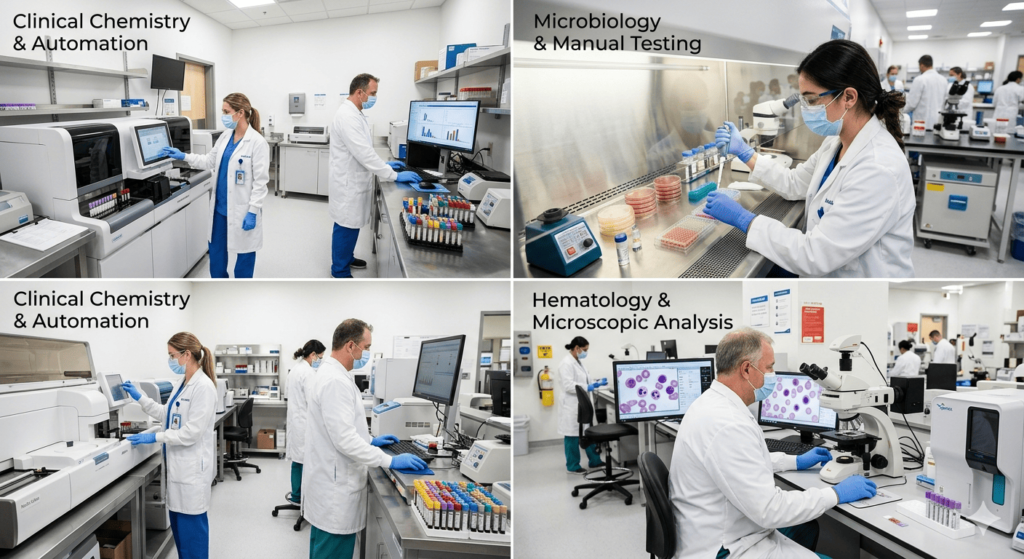
WYAB certification is available across a wide range of medical laboratory disciplines, reflecting the diverse nature of diagnostic services. One of the primary categories is pathology, which involves the study of diseases through examination of tissues, organs, and bodily fluids. Pathology laboratories provide critical insights into disease diagnosis, particularly in cases of cancer and other chronic conditions.
Clinical chemistry is another major discipline covered under WYAB certification. It involves the analysis of chemical components in biological samples, such as blood glucose, cholesterol levels, and enzyme activities. These tests are essential for diagnosing metabolic disorders, monitoring organ function, and managing chronic diseases such as diabetes.
Cytogenetics focuses on the study of chromosomes and genetic abnormalities. Laboratories specializing in cytogenetics play a crucial role in diagnosing genetic disorders, prenatal abnormalities, and certain types of cancers. Similarly, hematology laboratories deal with blood-related disorders, including anemia, clotting disorders, and leukemia. Accurate hematological analysis is vital for both diagnosis and treatment monitoring.
Histocompatibility and immunology laboratories are involved in studying the immune system and its response to various conditions. Histocompatibility testing is particularly important in organ transplantation, where compatibility between donor and recipient must be assessed to prevent rejection. Immunology laboratories also contribute to the diagnosis of autoimmune diseases and allergies.
Microbiology laboratories are responsible for detecting and identifying infectious agents such as bacteria, viruses, fungi, and parasites. These laboratories play a critical role in controlling the spread of infectious diseases and guiding appropriate antimicrobial therapy. The importance of microbiology has been highlighted during global health crises such as COVID-19, where accurate and timely testing was essential for disease management and containment.
Point of care testing (POCT) is another category supported under WYAB certification. POCT refers to diagnostic testing performed at or near the site of patient care, such as in clinics, emergency rooms, or even at home. These tests provide rapid results, enabling immediate clinical decisions. However, maintaining quality and accuracy in POCT requires strict adherence to standardized procedures and quality controls.
Immunohaematology laboratories focus on blood grouping, compatibility testing, and transfusion medicine. These services are critical for ensuring safe blood transfusions and preventing adverse reactions. Imaging services, although slightly different from traditional laboratory testing, are also included in the scope of medical diagnostics. Imaging techniques such as X-rays, MRI, and CT scans provide valuable insights into internal structures and support clinical decision-making.
WYAB certification is primarily aligned with ISO/IEC 15189:latest, which specifies the requirements for quality and competence in medical laboratories. Achieving this certification demonstrates that a laboratory has established a comprehensive quality management system, implemented effective technical procedures, and demonstrated competence in its specific field of testing. The certification process involves a detailed assessment of the laboratory’s infrastructure, personnel qualifications, equipment, procedures, and quality control measures.
A key requirement of ISO 15189:latest is the demonstration of technical competence. Laboratories must ensure that their staff are adequately trained and competent to perform assigned tasks. This includes ongoing training, competency assessments, and professional development. Equipment used in the laboratory must be properly maintained, calibrated, and validated to ensure accurate results. Additionally, laboratories must participate in external quality assessment programs to benchmark their performance against other laboratories.
Another important aspect of WYAB certification is compliance with relevant accreditation requirements. These requirements may include documentation control, risk management, internal audits, corrective and preventive actions, and continuous improvement processes. Laboratories must maintain detailed records of all activities and ensure that documentation is easily retrievable and accessible.
The benefits of ISO 15189:latest accreditation and WYAB certification are significant. For laboratories, it enhances credibility, improves operational efficiency, and reduces the risk of errors. For healthcare providers, it ensures access to reliable diagnostic services, which are essential for accurate diagnosis and effective treatment. For patients, it provides confidence that their test results are accurate and trustworthy.
In addition to improving quality and competence, accreditation also facilitates international recognition and collaboration. Laboratories accredited to ISO 15189:latest are often recognized by other accreditation bodies and healthcare organizations worldwide, enabling them to participate in global research, clinical trials, and diagnostic networks.
The implementation of ISO 15189:latest requires a structured approach and commitment from laboratory management and staff. It begins with a gap analysis to identify areas that need improvement, followed by the development and implementation of a quality management system. Training and awareness programs are conducted to ensure that all staff understand the requirements and their roles in achieving compliance. Internal audits and management reviews are carried out to monitor progress and identify opportunities for improvement.
Continuous improvement is a fundamental principle of ISO 15189:latest. Laboratories are expected to regularly review their processes, identify areas for enhancement, and implement corrective actions. Feedback from patients, clinicians, and other stakeholders is also considered to improve service quality. Risk management is another critical component, requiring laboratories to identify potential risks and implement measures to mitigate them.
Technology plays a vital role in modern medical laboratories. Advanced diagnostic equipment, laboratory information systems, and automation have significantly improved the efficiency and accuracy of laboratory operations. ISO 15189:latest encourages the use of validated technologies and requires laboratories to ensure data integrity and cybersecurity.
In conclusion, medical laboratories are an indispensable part of the healthcare system, providing essential diagnostic services that support patient care. Accreditation to ISO 15189 ensures that laboratories meet the highest standards of quality and competence, covering all aspects of laboratory operations from sample collection to result reporting. Certification by organizations such as World Youth Accreditation Board further enhances credibility and trust, demonstrating a commitment to excellence in healthcare services. As the demand for accurate and reliable diagnostics continues to grow, ISO 15189:latest accreditation and WYAB certification will remain key drivers of quality and innovation in medical laboratories worldwide.
Table of Contents
Branches
WYAB Accreditation
WYAB Head Office
WYAB World Yoga Accreditation Board
WYAB House
C/O Mr.Garry 54, Glengarnock Avenue,
E-14 3BP Isle Of Dogs, London UK
Tel .: +44-8369083940
email: info@worldyoga.us
Website: https://worldyoga.us/
MUMBAI Head Office
World Yoga Accreditation Board (WYAB)
WYAB House
B-401, New Om Kaveri Chs. Ltd., Nagindas pada,
Next To Shiv Sena Office, Nallasopara (E)
Tel .: +91-7499991895
email: info@worldyoga.us
Website: https://worldyoga.us/
DELHI-NCR Regd. Office
World Yoga Accreditation Board (WYAB)
WYAB House
Asaoti, Dist Palwal
Faridabad Delhi NCR, Haryana
Tel .: +91-7979801035
Fax: +91-250 2341170
Website: https://worldyoga.us/