
Assessor Code Of Conduct
An Assessor Code of Conduct serves as the backbone of professional integrity, guiding evaluators and surveying faculty in delivering fair, transparent, and high-quality services. At its core, the code emphasizes a client-centered approach, ensuring that every assessment prioritizes the needs, expectations, and goals of the organization being evaluated. Evaluators are expected to act impartially, provide accurate information, and avoid any conflicts of interest that could compromise their judgment.
This includes refraining from accepting gifts, favors, or any benefits from organizations under assessment, as well as disclosing any relationships that could influence objectivity. Confidentiality is another pillar of the code; all information obtained during the assessment process must be protected unless the client explicitly provides written consent for its disclosure. By adhering to these principles, assessors build trust, promote transparency, and foster a professional environment where ethical practice is non-negotiable. Beyond ethical behavior, the code also establishes operational standards for client interactions. Clients have the right to receive detailed information about services, project timelines, and associated costs.
They are entitled to professional guidance, access to records, and assurance that the assessment will be conducted with respect for privacy, dignity, and cultural or religious beliefs. Similarly, clients are expected to cooperate by providing accurate information, allocating time and resources, and engaging constructively in the assessment process. A well-implemented code of conduct also emphasizes the importance of promoting best practices rather than simply identifying deficiencies. Assessors are not merely auditors; they act as facilitators, offering actionable insights and recommendations that can drive meaningful improvements. Timely reporting, clear communication, and a structured approach to project management ensure that findings are useful and implementable.
At the same time, the code encourages evaluators to respect the knowledge and expertise of client personnel, supporting a collaborative environment where learning and growth are shared objectives. Ultimately, the Assessor Code of Conduct benefits both evaluators and clients. For evaluators, it provides clear ethical and operational guidelines, supporting consistency and accountability in their work. For clients, it offers confidence that assessments will be conducted professionally, fairly, and with their best interests in mind. By establishing clear expectations, the code strengthens professional relationships, enhances the credibility of the evaluation process, and fosters continuous improvement in organizational performance.
In today’s competitive and regulated business environment, adherence to a code of conduct is not just a matter of ethics—it is a strategic tool that promotes trust, efficiency, and long-term value. Whether guiding interactions, protecting sensitive information, or promoting best practices, the Assessor Code of Conduct is an essential framework that ensures evaluations are meaningful, ethical, and impactful for all stakeholders involved.
Assessor Code Of Conduct Set Of Principles For Evaluator And Surveying Faculty
FOREWORD
The privileges and guidelines set out in this record are intended to be a focal piece of an examiner’s conduct. No qualification is made in this report among ‘examiner’ and ‘assessor’. This record is intended to further develop the examiner’s administration the business local area.
Inspectors will be immovably dedicated to working on their administration. This implies a help that:
- continuously puts the client first, offering types of assistance that satisfy obviously characterized guidelines or agreement conditions, in manners receptive to business perspectives and requirements.
- produce clear, quantifiable advantages to business, with accentuation on the advancement of good practice as opposed to the aversion of poor.
- is exceptionally proficient, addressing great incentive for cash, accomplished through great administration.
- regards and values the abilities and information on clients.
How This Influences Clients
This report sets out clear client privileges of administration in the release of agreements.
The Client’s Privileges
- To get an expert degree of care based on business needs and wants.
- To be given itemized data on quality administrations, including quality guidelines, project timescales furthermore, costs.
- To get exhortation whenever through the examiner or its manager whenever contracted to supply it.
- To be relegated a superb resource, OK to the client, and to be doled out a subsequent individual on the off chance that this is helpful for the client.
- To be ensured arrangements for visits on a particular date and time.
- To be given a reasonable clarification of any proposed administration, including predictable dangers and practical choices, before the client chooses to make a move.
- To have any objection about the inspector’s administrations examined and to get a full and brief composed answer from the Inspector or from WYAB.
- To approach the inspector’s records, and to realize that those working for the evaluator are under a obligation of care to keep the records private.
- To pick whether he wishes to partake in specialized exploration or preparing.
- To be served by an individual who will notice completely the prerequisites of this Set of principles.
Client Norms
There are eight guidelines for examiners:
- Suggestions will be feasible. Client organizations ought not be suggested activities or arrangements past capacity to execute.
- Fruition of Tasks. Before the undertaking ends a choice ought to be made about any proceeding relationship with the reviewer or different necessities the client might have. The pertinent contact will concur plans for addressing these necessities.
- A named qualified individual liable for every client. The inspector ought to give a named, qualified individual who will be liable for the client business project.
- Arrangement times. The evaluator will concur a particular arrangement time and meet around then.
- Retraction of gatherings. The evaluator won’t drop upon the arrival of the gathering.
- Sitting tight time for administration. At the point when clients call the inspector’s workplaces, specialized help ought to be given inside a predefined time.
- Plans to guarantee clients, incorporating those utilizing individuals with exceptional requirements, can utilize administrations. Inspectors will guarantee that the representatives of the client can utilize the administrations they organize.
- Regard for protection, respect and strict and social convictions. Inspectors will make arrangement so that appropriate individual thought is shown, for instance by guaranteeing that security, pride and strict also, social convictions are regarded.
Set of rules
- Evaluators will act in a reliable and impartial way comparable to clients, and any organizations associated with administration by them.
- Examiners will not acknowledge installment, gift, commission, markdown or will they benefit in any capacity from organizations adjusted, from their agents, or other intrigued individual.
- Examiners will uncover to their clients any applicable connections they might have with other associations prior to undertaking any work.
- Evaluators will not unveil the discoveries, or any piece of them or some other data acquired in the course of administration to any outsider, except if approved recorded as a hard copy by the client.
- Reviewers will not act at all biased to the standing or the interest of clients or of organizations adjusted for their sake.
- Examiners will, in case of any supposed break of this code, co-work completely in any proper enquiry technique worked by WYAB, the client, or by a commonly selected proficient body.
- Inspectors will follow their own procedural documentation.
Execution And Progress, Guidance For Clients.
Inspecting and Accreditation and Consultancy will, not all alone, accomplish anything for client organizations. Clients meet their objectives themselves yet with reviewer help. An inspector isn’t regularly anticipated to give consultancy or answers for issues they might have recognized during a review. A reviewer is supposed to work as per a laid out inspecting standard e.g. ISO 19011.
Dispensing an amount of cash to an inspecting project isn’t sufficient. Clients need to designate time too to get ready for and answer it. Frequently what clients need isn’t dependably what they need. Clients ought to in this manner search for a change as the most substantial consequence of expert administrations.
Clients ought to anticipate:
- Review plans
- Clear discoveries in view of characterized models
- Opportune reports
- Politeness
- Compassion, not compassion
- Firm course
- Compelling venture the board
Criticism
Clients ought to be urged to give their perspectives to empower WYAB to foster these norms further.
Set of Principles for Evaluator and Surveying Faculty
FOREWORD
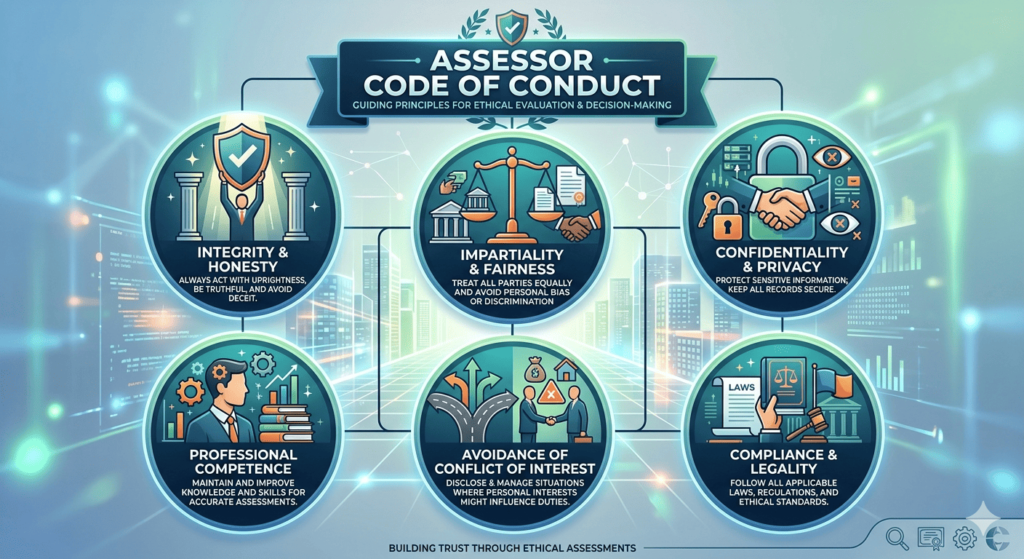
This Assessor Code of Conduct establishes the guiding principles for professional behavior and practice for evaluators and surveying faculty. Its purpose is to provide a comprehensive framework for ethical, responsible, and high-quality service delivery, ensuring that all parties involved—clients, organizations, and the assessing body—benefit from fair, transparent, and competent assessment practices.
No distinction is made in this code between the terms “examiner” and “assessor.” Both are used interchangeably to refer to individuals engaged in evaluation, auditing, and surveying activities. This document aims to support evaluators in enhancing their professional practice, maintaining consistency, and upholding the integrity of their assessments in all contexts.
The principles outlined herein reflect a commitment to client-focused service, professional integrity, and respect for all stakeholders in the assessment process. They serve as a benchmark for conduct and a guide to decision-making, ensuring that evaluators uphold the highest standards in their work.
PRINCIPLES OF SERVICE
Evaluators shall consistently demonstrate dedication to professional service, characterized by the following principles:
- Client-Centered Approach
Services shall be designed and delivered with the client’s needs as the primary consideration. Evaluators must ensure that their actions provide measurable benefits to the client, are responsive to business priorities, and comply with established contractual obligations. - Promotion of Best Practice
The focus of assessment should be on identifying and promoting good practice, not merely highlighting deficiencies. Evaluators must offer constructive insights that facilitate organizational growth, continuous improvement, and long-term value creation. - Professionalism
Every interaction with clients and stakeholders must be conducted in a professional manner. This includes timely delivery of services, accuracy of findings, clear communication, and demonstrating respect for the client’s business, culture, and objectives. - Recognition of Expertise
Evaluators shall respect and value the expertise and knowledge of client personnel. While evaluators provide guidance and insights, they acknowledge that ultimate decision-making authority rests with the client. - Transparency and Accountability
Evaluators shall provide clear, comprehensive information about the assessment process, findings, and recommendations. They shall be accountable for their actions and ensure that clients understand the implications and potential risks associated with assessment outcomes.
CLIENT RIGHTS
This code defines explicit rights that clients are entitled to when engaging with evaluators or surveying faculty:
- Professional Standard of Care
Clients have the right to receive services that meet professional standards and are tailored to their specific business needs. - Access to Information
Clients should be provided with detailed information on the nature, scope, and quality of services, including applicable standards, project timelines, and associated costs. - Timely Advice and Support
Clients are entitled to seek guidance from the assessor or supervising authority at any stage of engagement. This ensures that decisions are well-informed and aligned with organizational objectives. - Allocation of Competent Resources
Clients should be assigned qualified personnel for assessment, with provisions for additional support where necessary. - Scheduling and Appointment Assurance
Clients have the right to expect scheduled appointments and visits to be honored, with adequate prior notice in the event of changes. - Clarity of Assessment Plans
Evaluators must provide clear explanations of proposed assessments, including any risks, constraints, and practical alternatives, enabling informed decision-making by the client. - Feedback and Complaint Resolution
Clients may raise concerns regarding assessment services and receive timely, written responses. Evaluators must address these concerns transparently and constructively. - Access to Records
Clients are entitled to access records related to assessments, with assurance that all personnel handling these records uphold strict confidentiality standards. - Participation in Research or Training
Clients may choose to engage in relevant research or training activities as part of the assessment process. - Respect for the Code of Conduct
Clients should expect that all interactions with evaluators adhere to the principles and obligations set forth in this code.
CLIENT OBLIGATIONS
Clients are expected to support the assessment process to ensure its effectiveness:
- Provision of Accurate Information
Clients must provide correct and complete information relevant to the assessment to enable evaluators to conduct their work effectively. - Engagement and Cooperation
Clients should actively participate in discussions, interviews, and site visits, responding promptly to requests from evaluators. - Resource Allocation
Sufficient time, personnel, and facilities should be made available to facilitate comprehensive evaluation and assessment activities. - Acknowledgment of Findings
Clients should consider and implement findings and recommendations where feasible, aiming for measurable improvement and compliance.
EIGHT PRINCIPLES OF CLIENT SERVICE
Evaluators must uphold the following eight principles to maintain professional standards and ensure client satisfaction:
- Feasibility of Recommendations
Evaluators shall ensure that suggestions are practical and achievable within the client’s operational capacity. Recommendations must not exceed the client’s ability to implement them effectively. - Completion of Tasks
Evaluators must clarify the scope and conclusion of the engagement, agreeing on any follow-up actions or ongoing relationships with the client. - Assignment of a Qualified Point of Contact
Each client engagement shall have a named, competent individual responsible for coordinating the assessment process. - Adherence to Agreed Timelines
Evaluators must schedule appointments and meetings as agreed and make every effort to honor them. - Cancellation Protocols
Evaluators shall not cancel meetings without prior notice, except in circumstances beyond their control. - Response Time for Service Requests
Evaluators must respond to client inquiries promptly, within predefined timeframes. - Accessibility of Services
Services must be arranged to accommodate all client personnel, including those with special requirements. - Respect for Privacy, Dignity, and Cultural Beliefs
Evaluators shall conduct assessments in a manner that respects personal privacy, social norms, and cultural and religious beliefs.
CODE OF ETHICS
Evaluators are bound by the following ethical standards:
- Impartiality
Evaluators shall act consistently and without bias towards clients, organizations, or other stakeholders. - Prohibition of Undue Influence
Accepting payments, gifts, commissions, or preferential treatment from interested parties is strictly forbidden. - Disclosure of Conflicts of Interest
Evaluators must disclose any relationships or interests that could potentially influence the outcome of the assessment before commencing work. - Confidentiality
All findings, reports, and information obtained during the assessment must remain confidential unless written consent is obtained from the client. - Professional Integrity
Evaluators shall not act in any manner detrimental to the reputation or interests of the client or associated organizations. - Cooperation with Investigations
In case of alleged breaches of this code, evaluators shall cooperate fully with inquiries conducted by WYAB, the client, or an appointed professional body. - Adherence to Procedures
Evaluators shall follow established procedural documentation and standards relevant to the assessment.
PERFORMANCE AND CLIENT GUIDANCE
Assessment and consultancy services are tools to assist clients in achieving their goals. Evaluators do not replace the client’s responsibility for implementing improvements; rather, they provide guidance and evidence-based insights.
Key expectations for clients include:
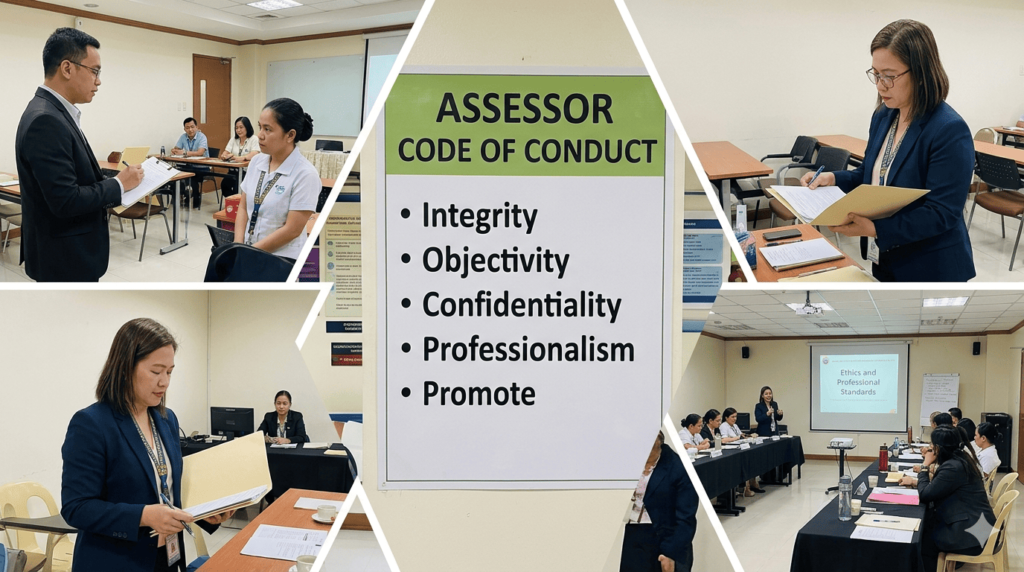
- Preparedness for Assessment
Clients should allocate sufficient time and resources for effective engagement and respond to requests promptly. - Expectation of Clear Findings
Reports must be based on defined standards and provide actionable insights. - Timely Delivery of Reports
Evaluators shall submit findings and reports within agreed timelines. - Professional Conduct
Assessors shall demonstrate courtesy, firm guidance, and empathetic professionalism. - Effective Project Management
Evaluators shall support structured planning, monitoring, and execution of client-related projects. - Constructive Feedback Mechanisms
Clients are encouraged to provide feedback on evaluation services, enabling continuous improvement of standards and processes.
CONCLUSION
This Assessor Code of Conduct serves as a comprehensive guide for evaluators and surveying faculty. By adhering to these principles, evaluators maintain professional integrity, ensure fairness, and promote the development of client organizations. Clients, in turn, are empowered to achieve sustainable improvements and long-term benefits from professional assessment services.
Continuous adherence to these standards will strengthen trust between evaluators and clients, enhance the quality of assessments, and uphold the reputation of the evaluating body. Both parties are encouraged to view this code as a living document, evolving with professional standards, regulatory requirements, and best practice guidance.
Table of Contents
Branches
WYAB Accreditation
WYAB Head Office
WYAB World Yoga Accreditation Board
WYAB House
C/O Mr.Garry 54, Glengarnock Avenue,
E-14 3BP Isle Of Dogs, London UK
Tel .: +44-8369083940
email: info@worldyoga.us
Website: https://worldyoga.us/
MUMBAI Head Office
World Yoga Accreditation Board (WYAB)
WYAB House
B-401, New Om Kaveri Chs. Ltd., Nagindas pada,
Next To Shiv Sena Office, Nallasopara (E)
Tel .: +91-7499991895
email: info@worldyoga.us
Website: https://worldyoga.us/
DELHI-NCR Regd. Office
World Yoga Accreditation Board (WYAB)
WYAB House
Asaoti, Dist Palwal
Faridabad Delhi NCR, Haryana
Tel .: +91-7979801035
Fax: +91-250 2341170
Website: https://worldyoga.us/