
Endorsement and Affirmation Bodies Authorization
Endorsement and Affirmation Bodies Authorization In today’s rapidly evolving landscape of standards, certifications, and professional development, the roles of endorsement and affirmation bodies have become increasingly significant. These organizations serve as pillars of credibility, ensuring that institutions, programs, and individuals meet defined standards of quality, safety, and performance. Understanding their authorization process, responsibilities, and impact is crucial for stakeholders in education, wellness, corporate, and regulatory sectors alike.
Understanding Endorsement and Affirmation Bodies
Endorsement bodies are organizations empowered to officially recognize or approve certain programs, qualifications, or professional practices. They effectively act as gatekeepers of quality, providing assurance to the public and stakeholders that the endorsed entity meets a set of predefined standards. In the context of yoga, wellness, and allied disciplines, endorsement may cover teacher training programs, educational courses, therapeutic practices, or organizational initiatives.
Affirmation bodies, on the other hand, validate claims or certifications made by institutions or individuals. While endorsement is often proactive—approving a program or credential—affirmation is more evaluative, confirming that the stated competencies, standards, or outcomes are indeed being met. Together, endorsement and affirmation bodies strengthen credibility and promote trust across sectors.
Authorization is the process by which these bodies are legally or officially empowered to carry out their responsibilities. Without proper authorization, any endorsement or affirmation they issue may lack legal recognition or professional credibility.
The Importance of Authorization
Authorization is critical for several reasons:
- Credibility and Trust: Authorized bodies are recognized by regulatory authorities, accreditation councils, or professional networks. Their endorsement or affirmation carries weight, influencing employers, learners, and regulatory stakeholders.
- Compliance with Standards: Authorized bodies operate within defined frameworks, ensuring that programs, courses, or professionals meet specific quality standards. This minimizes risks of malpractice, substandard delivery, or unethical practices.
- Consistency and Accountability: Authorization ensures that evaluation criteria are applied consistently across all endorsed programs or affirmed claims. This guarantees transparency and accountability in decision-making.
- Global Recognition: In a world where professional mobility and cross-border recognition of qualifications are increasingly common, authorization by recognized bodies ensures that endorsements and affirmations are respected internationally.
How Endorsement and Affirmation Bodies Obtain Authorization
The authorization process typically involves multiple steps designed to verify competency, governance, and operational capability. Key stages include:
- Application and Documentation: Organizations seeking authorization must submit detailed applications outlining their governance structures, operational procedures, expertise of personnel, and evidence of past work.
- Assessment of Competency: Regulatory authorities or higher accreditation entities evaluate whether the body has the necessary expertise, staff qualifications, and experience to perform endorsement or affirmation activities effectively.
- Compliance Verification: The body must demonstrate adherence to relevant legal, ethical, and quality standards. This may include financial transparency, data protection measures, conflict-of-interest management, and risk mitigation strategies.
- Pilot or Probationary Authorization: Some jurisdictions or accrediting councils grant initial authorization for a limited period or scope. During this time, the body’s operations are closely monitored to ensure standards are being met.
- Final Authorization and Registration: Once all criteria are satisfied, the body receives official authorization, often recorded in a public registry. This formal recognition allows the body to issue valid endorsements or affirmations.
- Ongoing Monitoring and Renewal: Authorization is not permanent. Authorized bodies are subject to periodic audits, reporting requirements, and performance evaluations. Renewals typically require demonstration of continued compliance and effectiveness.
Responsibilities of Authorized Bodies
Once authorized, endorsement and affirmation bodies carry significant responsibilities, including:
- Evaluation and Verification: They must rigorously assess programs, qualifications, and claims to ensure compliance with established standards. This includes reviewing curriculum, teaching methodologies, assessment processes, and documentation of outcomes.
- Maintaining Impartiality: Authorized bodies must operate independently, free from conflicts of interest that could compromise judgment. Transparency in decision-making processes is essential.
- Record-Keeping and Reporting: Documentation of evaluations, endorsements, and affirmations must be accurate and securely maintained. Many jurisdictions require regular reporting to regulatory authorities or public disclosure.
- Continuous Improvement: Authorized bodies are expected to remain abreast of changes in standards, best practices, and emerging industry trends. They should refine evaluation frameworks and methodologies accordingly.
- Stakeholder Communication: Clear communication of endorsement or affirmation decisions, including reasons for approval or rejection, is crucial. Stakeholders must understand the value and limitations of the issued recognition.
Impact on Organizations and Professionals
The authorization of endorsement and affirmation bodies has a ripple effect across the ecosystem:
- For Institutions and Programs: Receiving endorsement or affirmation from an authorized body enhances credibility, attracts participants, and facilitates partnerships with other recognized organizations. It demonstrates a commitment to quality and accountability.
- For Professionals and Practitioners: Affirmation of credentials or competencies by authorized bodies assures employers, clients, and peers that practitioners meet required standards. This can improve employability, career progression, and professional recognition.
- For Regulators and Policymakers: Authorized bodies simplify regulatory oversight by providing reliable evaluations. They act as intermediaries, ensuring that programs, qualifications, and claims align with legal and professional standards.
- For the Public and Consumers: Authorization ensures that endorsements and affirmations are trustworthy, reducing risks associated with substandard training, unsafe practices, or misleading claims.
Challenges in Authorization
Despite the importance of authorization, endorsement and affirmation bodies face several challenges:
- Dynamic Standards: In fast-evolving fields like wellness, education, and technology, maintaining up-to-date evaluation criteria can be complex.
- Resource Constraints: Smaller bodies may struggle with the administrative, financial, and technical requirements of obtaining and maintaining authorization.
- Global Recognition: Navigating different national and international frameworks can be difficult, particularly when recognition standards vary widely.
- Maintaining Independence: Ensuring impartiality while managing stakeholder relationships is a delicate balance that requires strong governance and ethical guidelines.
Case Study: Yoga Certification
In the yoga and wellness sector, the role of authorized endorsement and affirmation bodies is particularly evident. For instance, a yoga teacher training program seeking recognition must be evaluated by an authorized endorsement body. This body reviews the program’s syllabus, teacher qualifications, hours of training, assessment methods, and safety protocols.
Once approved, the program receives endorsement, signaling to potential students that it meets quality standards. Additionally, practitioners trained under this program may seek affirmation of their competencies from an authorized affirmation body, which verifies that the individual has completed required training hours, passed assessments, and demonstrated practical proficiency. This dual process ensures integrity and trust in yoga education and professional practice.
Conclusion
The authorization of endorsement and affirmation bodies is a cornerstone of credibility, quality assurance, and professional recognition in multiple sectors. By adhering to rigorous standards, ensuring impartiality, and maintaining accountability, these bodies safeguard public trust and promote excellence.
For organizations, practitioners, regulators, and consumers, working with authorized bodies ensures that endorsements and affirmations are meaningful, reliable, and internationally respected. In an era of increasing scrutiny, globalization, and professional mobility, the importance of authorized endorsement and affirmation cannot be overstated—it is the bridge between trust, quality, and recognition.
Authorized endorsement and affirmation bodies are not merely evaluators—they are stewards of professional integrity, facilitators of standardization, and enablers of growth across sectors. Ensuring their authorization is robust, transparent, and continually monitored is essential for sustaining confidence in any system of professional recognition.
What is Required Endorsement and Affirmation Bodies Authorization
In the growing fields of education, professional training, wellness, and yoga, the credibility of programs, certifications, and professional qualifications is paramount. To ensure trust, quality, and compliance with standards, organizations rely on endorsement and affirmation bodies. However, for these bodies to operate effectively and legitimately, they must undergo a formal process known as authorization. Understanding what is required for this authorization is essential for organizations, practitioners, and stakeholders involved in certification, accreditation, or professional development.
Defining Endorsement and Affirmation Bodies
Endorsement bodies are organizations that have the authority to officially recognize or approve programs, qualifications, or institutions. Their primary role is to ensure that the entities they endorse adhere to prescribed standards of quality, ethics, and safety. For example, in yoga education, an endorsement body might evaluate a teacher training program, verifying that it meets international curriculum guidelines, safety norms, and instructor qualifications.
Affirmation bodies, in contrast, validate the claims or competencies presented by institutions, programs, or individuals. They do not merely approve a program in principle; they confirm that specific standards have been met in practice. For example, an affirmation body might verify that a yoga practitioner has completed required training hours and passed the necessary assessments.
The combination of endorsement and affirmation creates a robust framework of accountability, credibility, and public trust. However, both types of bodies must be properly authorized to carry out these responsibilities.
Why Authorization is Required
Authorization is not optional; it is a critical requirement that ensures the integrity of endorsements and affirmations. The key reasons for requiring authorization include:
- Legal Recognition: Only authorized bodies are officially recognized to issue endorsements or affirmations that have legal or professional weight. Unauthorized entities risk producing certifications that may be invalid or unenforceable.
- Quality Assurance: Authorization ensures that the body has the expertise, governance, and processes required to uphold high standards. This protects learners, organizations, and the public from substandard programs or misleading claims.
- Consistency: Authorized bodies must follow standardized procedures, evaluation criteria, and ethical guidelines, ensuring that assessments are consistent across different programs and participants.
- Transparency and Accountability: Authorization typically involves monitoring, reporting, and audit requirements. These mechanisms ensure that endorsement and affirmation decisions are transparent and accountable.
- Global and Sectoral Recognition: In professional fields such as yoga, wellness, and education, endorsements and affirmations from authorized bodies are more likely to be recognized internationally or across professional networks, enhancing the credibility of programs and practitioners.
Requirements for Authorization
The requirements for an endorsement or affirmation body to be authorized can vary depending on jurisdiction, sector, or accrediting authority. However, several core requirements are universally expected:
- Organizational Competence: The body must demonstrate that it has the necessary expertise to evaluate programs, qualifications, or claims. This includes having qualified personnel with relevant knowledge, experience, and certifications.
- Defined Governance and Structure: Authorization requires the body to operate under a clear governance model, including policies on decision-making, conflict of interest, and ethical conduct. Transparency in organizational structure is crucial for credibility.
- Operational Procedures and Methodologies: The body must have well-documented procedures for carrying out endorsements or affirmations. This includes assessment methods, documentation standards, verification protocols, and reporting processes.
- Compliance with Legal and Regulatory Standards: Authorized bodies must comply with local, national, and sometimes international regulations. This includes data protection laws, liability requirements, and sector-specific regulations.
- Financial Stability: Many accrediting authorities require evidence of financial stability to ensure that the body can sustain its operations and maintain impartiality without undue external influence.
- Impartiality and Ethical Guidelines: Authorization mandates mechanisms to prevent conflicts of interest. The body must ensure that assessments and decisions are fair, objective, and unbiased.
- Monitoring and Continuous Improvement: Authorized bodies are expected to have mechanisms for ongoing monitoring of endorsed programs and affirmed claims. They should periodically review their own processes and update evaluation criteria based on industry developments and best practices.
Steps to Achieve Authorization
The authorization process typically follows these steps:
- Application Submission: The organization submits a detailed application to the relevant accrediting or regulatory authority, outlining its structure, staff qualifications, operational processes, and previous experience.
- Documentation Review: The authority reviews the submitted documents to ensure compliance with eligibility criteria, legal requirements, and quality standards.
- Assessment and Verification: An evaluation team may conduct audits, interviews, and inspections to verify operational competence and adherence to standards.
- Provisional or Pilot Authorization: Some authorities grant temporary authorization, allowing the body to operate under supervision while demonstrating effectiveness.
- Final Authorization: Upon successful verification, the body receives formal authorization, enabling it to issue valid endorsements and affirmations.
- Ongoing Compliance and Renewal: Authorization is not permanent. Periodic audits, performance reviews, and compliance checks ensure that the body continues to meet required standards. Renewal is contingent on successful demonstration of continued compliance.
Significance for the Yoga Sector
In yoga education and wellness practices, authorized endorsement and affirmation bodies play a vital role in ensuring that teacher training programs, certifications, and professional claims meet recognized standards. Learners and practitioners can trust that the programs they enroll in are credible and that their achievements will be recognized professionally and internationally.
By meeting the requirements for authorization, these bodies ensure consistency, accountability, and ethical practice in a sector that increasingly spans borders and cultures. They provide the foundation for a standardized, credible, and respected professional ecosystem.
Conclusion
Endorsement and affirmation bodies authorization is essential for maintaining the integrity and credibility of professional programs, certifications, and claims. To be authorized, these bodies must demonstrate competence, governance, operational rigor, compliance with legal standards, impartiality, and a commitment to continuous improvement.
Who is Required Endorsement and Affirmation Bodies Authorization
In professional sectors such as education, wellness, and yoga, ensuring the credibility and quality of programs, qualifications, and certifications is crucial. This is where endorsement and affirmation bodies come into play. These organizations evaluate, recognize, and validate programs, institutions, or practitioners, helping maintain public trust and professional standards. However, not all organizations or entities can operate as endorsement or affirmation bodies. Only those that are properly authorized can carry out these functions. Understanding who requires authorization is essential for regulators, organizations, and professionals.
Endorsement Bodies: Who Needs Authorization
Endorsement bodies are organizations that provide official approval or recognition to programs, institutions, or professional qualifications. The authorization of these bodies is required for anyone intending to:
- Evaluate and Approve Educational Programs: Organizations that assess training programs, certifications, or courses, such as yoga teacher training or wellness certifications, must be authorized. Without authorization, any endorsement they issue may be considered invalid or unreliable.
- Recognize Institutional Standards: Bodies that set benchmarks for institutions, such as schools, wellness centers, or professional training institutes, must operate under formal authorization. This ensures that recognized institutions meet predefined quality standards.
- Provide Professional Accreditation: Organizations offering professional accreditation or recognition for individuals—such as yoga instructors, therapists, or wellness coaches—must be authorized to ensure the endorsement is legitimate and recognized.
- Issue Certificates or Badges of Approval: Any body intending to issue certificates, seals of approval, or other forms of recognition requires authorization to ensure legal and professional credibility.
In short, any organization whose primary function is to formally approve or recognize programs, courses, or institutions falls under the requirement for endorsement body authorization.
Affirmation Bodies: Who Needs Authorization
Affirmation bodies validate the claims or competencies of programs, institutions, or individuals. Their authorization is required for entities that:
- Verify Professional Competencies: Organizations confirming that individuals have achieved a certain level of expertise—such as certified yoga instructors completing training hours and assessments—must be authorized.
- Audit Programs and Certifications: Bodies that audit programs or certifications to confirm adherence to standards need formal authorization. This ensures impartiality and credibility.
- Validate Claims Made by Institutions: Institutions may claim compliance with international standards or best practices. Affirmation bodies verify these claims, and authorization ensures these verifications are trustworthy.
- Support Regulatory Compliance: Affirmation bodies often assist regulatory authorities by confirming that programs and practitioners meet required standards. Without proper authorization, their evaluations may not be legally recognized or accepted.
Essentially, any organization that seeks to validate, confirm, or verify standards, competencies, or claims must obtain authorization as an affirmation body.
Who Else Is Impacted
While the primary requirement for authorization applies to endorsement and affirmation bodies themselves, several other stakeholders are indirectly affected:
- Training Institutes and Educational Programs: They must seek recognition only from authorized endorsement bodies to ensure credibility and legitimacy.
- Professional Practitioners: Individuals who seek certification or competency affirmation must work with authorized affirmation bodies to ensure their credentials are valid and recognized.
- Regulatory Authorities: Governmental or sectoral regulators rely on authorized bodies to ensure compliance and quality, making authorization mandatory for legal and professional accountability.
- Employers and Organizations: Companies hiring certified professionals depend on endorsements and affirmations from authorized bodies to guarantee employee competence and program validity.
Why Authorization is Critical
Authorization acts as a safeguard for all stakeholders. It ensures that:
- Endorsements and affirmations are legally valid and recognized.
- Evaluation processes are consistent, impartial, and transparent.
- Programs, institutions, and individuals meet required standards before receiving recognition.
- Public trust in certifications, professional qualifications, and training programs is maintained.
Without proper authorization, endorsements and affirmations may be questioned, creating risks of legal disputes, reputational damage, and professional invalidation.
Conclusion
Who is required endorsement and affirmation bodies authorization? The answer is clear:
- Any organization that intends to endorse programs, institutions, or professional qualifications must be authorized as an endorsement body.
- Any organization that aims to validate or affirm the claims, competencies, or standards of programs, individuals, or institutions must be authorized as an affirmation body.
- Indirectly, training institutes, professionals, regulators, and employers all rely on the proper authorization of these bodies to maintain credibility, compliance, and trust.
In sectors such as yoga, wellness, and professional education, authorization is not just a formality—it is a critical requirement that ensures legitimacy, quality, and recognition. Authorized endorsement and affirmation bodies form the backbone of a credible, transparent, and professional ecosystem, safeguarding the interests of learners, practitioners, institutions, and the public alike.
When is Required Endorsement and Affirmation Bodies Authorization
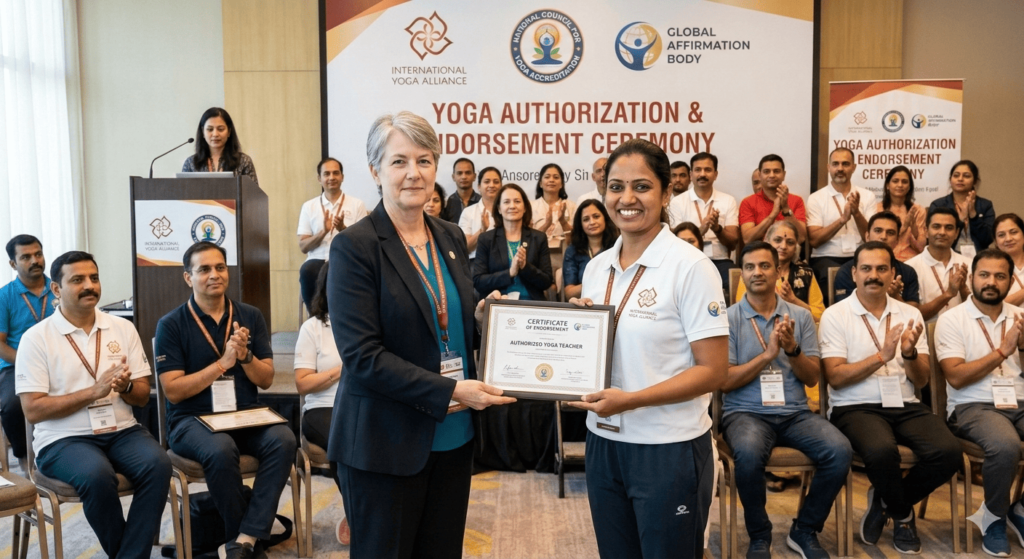
In professional sectors such as education, wellness, and yoga, ensuring the credibility and integrity of programs, certifications, and professional claims is essential. Endorsement and affirmation bodies play a vital role in evaluating, approving, and validating these programs and qualifications. However, their authority is not automatic. These bodies must obtain formal authorization to operate legitimately. Understanding when authorization is required helps organizations, practitioners, and regulators maintain compliance, protect public trust, and uphold professional standards.
Authorization at the Beginning of Operations
The primary time authorization is required is before an endorsement or affirmation body begins its operations. Any organization intending to evaluate programs, issue approvals, or validate claims must be legally and professionally recognized before engaging in such activities.
- For Endorsement Bodies: Authorization is required before formally recognizing programs, courses, or institutions. For example, a body that plans to endorse yoga teacher training programs must first receive authorization from the relevant accrediting authority. Without this, any endorsement issued may be invalid or lack professional credibility.
- For Affirmation Bodies: Authorization is necessary before validating claims or competencies. For instance, a body that confirms that yoga instructors have completed required training hours or passed skill assessments must be authorized to ensure the affirmation is recognized by regulators, employers, and professional peers.
Starting operations without authorization can lead to legal complications, reputational damage, and a lack of recognition for the endorsements or affirmations issued.
Authorization When Expanding or Adding Scope
Even after initial authorization, changes in operations or scope may trigger the requirement for reauthorization or additional authorization. This includes:
- Expanding Geographical Coverage: If a body wishes to operate in new regions or countries, it may need authorization from local or national authorities to ensure compliance with jurisdiction-specific standards.
- Adding New Programs or Services: Endorsement or affirmation bodies that begin evaluating new types of programs, certifications, or professional domains must ensure their authorization covers the expanded scope.
- Mergers or Organizational Changes: Significant changes in governance, structure, or ownership may necessitate review or renewal of authorization to confirm continued compliance with standards.
These requirements ensure that the body’s authority remains valid and relevant, regardless of changes in operations.
Authorization During Regulatory or Compliance Milestones
Authorization is also required at specific regulatory or compliance milestones:
- Before Issuing Certificates or Endorsements: Authorization is required before any official certificate, seal of approval, or recognition is issued to programs or individuals. Without authorization, such documents may be considered invalid.
- Periodic Reviews and Renewals: Many accrediting authorities require authorized bodies to undergo periodic audits and renewals. This ensures that the body continues to meet standards, maintains impartiality, and operates transparently. Authorization is required at these renewal milestones to maintain legal and professional recognition.
- In Response to Regulatory Changes: If regulatory standards, laws, or professional guidelines change, endorsement and affirmation bodies may need updated authorization to continue operating legally and effectively.
Situations Triggering Special Authorization
Certain situations may require special or conditional authorization:
- Pilot Programs or Probationary Operations: Some authorities grant provisional authorization to allow a body to operate under supervision while demonstrating compliance. Full authorization becomes required once the body completes the pilot phase.
- High-Risk or Specialized Evaluations: Bodies evaluating programs with safety-critical or high-stakes content—such as therapeutic yoga, medical wellness programs, or certifications with international recognition—may require additional authorization due to the potential impact of incorrect endorsements or affirmations.
- International Recognition: When endorsement or affirmation bodies aim for cross-border recognition, authorization may be required from international accreditation councils or professional networks to ensure acceptance globally.
Continuous Authorization Requirement
Authorization is not a one-time process. Once granted, it must be maintained through compliance with operational, ethical, and quality standards. Continuous authorization ensures:
- Consistency: Endorsements and affirmations remain credible and consistent over time.
- Transparency: Procedures, evaluations, and decisions are documented and accountable.
- Trust: Stakeholders—including learners, professionals, and regulators—can rely on the body’s authority.
Failure to maintain authorization can result in revoked recognition, legal penalties, and a loss of professional credibility.
Conclusion
When is endorsement and affirmation bodies authorization required? Authorization is essential at multiple stages:
- Before starting operations to legally and professionally issue endorsements or affirmations.
- When expanding services, entering new regions, or changing organizational structure.
- During regulatory compliance milestones, such as certification issuance, audits, or renewals.
- In special scenarios, including pilot programs, high-stakes evaluations, or international recognition.
- Continuously, to ensure ongoing credibility, transparency, and compliance.
For yoga and wellness programs, adherence to these requirements guarantees that endorsements and affirmations are legitimate, recognized, and trusted. Authorized bodies protect the integrity of certifications, uphold professional standards, and provide stakeholders with confidence in programs and practitioners. In short, authorization is required whenever the body acts in its official capacity, and must be maintained continuously to ensure professional and legal credibility.
Where is Required Endorsement and Affirmation Bodies Authorization
In professional fields such as education, wellness, and yoga, endorsement and affirmation bodies play a critical role in ensuring the credibility of programs, certifications, and professional qualifications. These bodies evaluate programs, validate claims, and formally recognize professional standards. However, to operate legitimately and issue recognized endorsements or affirmations, these organizations must obtain authorization. Understanding where authorization is required—both geographically and sectorally—is essential for maintaining compliance, credibility, and professional recognition.
Authorization in National Jurisdictions
The primary location requirement for authorization is within the country or jurisdiction where the body intends to operate. Most nations have regulations governing who can officially endorse or affirm programs and qualifications.
- Regulatory Oversight: Government agencies, professional councils, or accreditation authorities typically regulate endorsement and affirmation bodies. Authorization ensures that these organizations comply with local laws, standards, and professional guidelines.
- Issuance of Certificates or Recognition: In many countries, only authorized bodies can issue legally recognized certificates, seals of approval, or endorsements. For example, in yoga education, an endorsement from an unauthorized body may not be recognized by national professional councils or employers.
- Accountability and Legal Compliance: Authorization within the national jurisdiction ensures that the body is legally accountable for its actions, including assessment decisions, endorsements, and validations. This protects both learners and institutions from fraudulent or unverified claims.
Authorization in State or Regional Jurisdictions
In some cases, authorization is also required at state, provincial, or regional levels, particularly in federated or decentralized systems. These jurisdictions may have specific rules for:
- Licensing endorsement and affirmation bodies.
- Evaluating professional programs, certifications, or institutions within their region.
- Monitoring compliance with regional safety, training, or educational standards.
For example, a yoga teacher training program might need recognition from a national authority, but regional bodies may also require verification that the program meets state-specific requirements. Endorsement and affirmation bodies operating in multiple regions must ensure authorization for each jurisdiction.
Authorization in International or Cross-Border Contexts
With globalization and international professional mobility, many endorsement and affirmation bodies operate across borders. In such cases, authorization is required in every country or international region where the body seeks recognition.
- International Accreditation Bodies: Some global accrediting organizations require local or international authorization for their endorsement and affirmation processes. Authorization ensures that the body’s assessments are recognized worldwide.
- Cross-Border Education Programs: Institutions offering programs in multiple countries—such as international yoga teacher training courses—must work with authorized endorsement bodies in each jurisdiction to maintain credibility.
- Professional Recognition Abroad: Practitioners seeking employment, consultancy, or teaching opportunities internationally rely on endorsements or affirmations from authorized bodies recognized in the target country. Without proper authorization, their credentials may not be accepted.
Sector-Specific Requirements
Authorization is also required depending on the sector or type of program being endorsed or affirmed. Different sectors may have unique standards, regulatory frameworks, or professional requirements:
- Yoga and Wellness: Programs, instructors, and training institutions often require endorsement or affirmation by authorized bodies to ensure quality, safety, and adherence to recognized teaching standards.
- Education and Training: Academic and professional training programs must be endorsed by authorized bodies to guarantee that their curricula, assessment methods, and certifications are valid.
- Health and Therapeutic Programs: Specialized programs, including therapeutic yoga, Ayurveda, or wellness therapies, require endorsements from authorized bodies due to safety and regulatory considerations.
- Corporate and Professional Certifications: Programs or certifications in professional development, business skills, or technical training must work with authorized bodies to ensure that credentials are recognized by employers and industry stakeholders.
Online and Digital Operations
Authorization is also relevant in the digital space, especially for online courses, remote assessments, and digital certifications. Endorsement and affirmation bodies operating online must ensure that:
- Their authorization covers virtual delivery of programs or remote verification of claims.
- Certificates issued digitally are recognized legally and professionally.
- They comply with data protection, privacy, and cybersecurity regulations in their operational regions.
Conclusion
Where is endorsement and affirmation bodies authorization required? Authorization is required across multiple dimensions:
- National Jurisdictions – To legally operate and issue recognized endorsements or affirmations within a country.
- State or Regional Jurisdictions – Where decentralized rules or standards apply.
- International or Cross-Border Operations – For global recognition of programs and professional credentials.
- Sector-Specific Requirements – Depending on the type of programs, certifications, or professional claims being evaluated.
- Digital Platforms – For online courses, remote verifications, and digital certifications.
In sectors like yoga and wellness, where credibility, safety, and professional recognition are paramount, obtaining authorization in the relevant jurisdictions is not optional. Authorized endorsement and affirmation bodies ensure that programs, institutions, and practitioners meet recognized standards and that all endorsements and affirmations are valid, trustworthy, and legally recognized.
By understanding where authorization is required, organizations and practitioners can maintain compliance, enhance credibility, and ensure that their certifications or approvals are respected locally and globally.
How is Required Endorsement and Affirmation Bodies Authorization
Endorsement and affirmation bodies are essential for maintaining the credibility, integrity, and quality of programs, certifications, and professional qualifications. However, for these bodies to operate legitimately, they must obtain formal authorization. Understanding how authorization is required and carried out is crucial for organizations, practitioners, and regulators in sectors such as education, wellness, and yoga. This article explains the process, the steps involved, and the practical requirements for obtaining authorization.
Understanding the Purpose of Authorization
Authorization serves as a formal recognition that a body is competent, reliable, and legally allowed to issue endorsements or affirmations. It ensures that:
- Programs, institutions, or professional claims are evaluated consistently and impartially.
- Endorsements and affirmations carry legal and professional credibility.
- Stakeholders—including learners, practitioners, employers, and regulators—can trust the body’s evaluations.
Without proper authorization, endorsements and affirmations may be invalid, reducing confidence and potentially leading to legal or professional disputes.
Step 1: Eligibility Assessment
The first step in the authorization process is determining whether the organization meets the basic eligibility criteria. Common requirements include:
- Organizational Competence: The body must demonstrate expertise in evaluation, recognition, or validation processes. For example, staff should have relevant qualifications in yoga education, wellness, or professional training.
- Operational Infrastructure: The organization must have systems in place to carry out assessments, audits, and verification efficiently and reliably.
- Governance and Ethics: Clear policies on impartiality, conflict of interest, and ethical conduct are required to ensure credibility.
Only organizations that meet these criteria can proceed with formal authorization.
Step 2: Documentation and Application
Once eligibility is confirmed, the body must submit a formal application to the relevant accrediting or regulatory authority. This application typically includes:
- Organizational profile, including mission, structure, and governance.
- Staff qualifications and experience in the relevant sector.
- Detailed operational procedures for endorsement or affirmation.
- Policies on quality management, risk mitigation, and ethical compliance.
- Evidence of prior experience or successful evaluations, if available.
The application demonstrates that the organization has the capability, knowledge, and systems required to perform its functions effectively.
Step 3: Review and Assessment
After submission, the authority reviews the application and supporting documents. This stage may include:
- Document Verification: Checking legal status, staff credentials, and operational processes.
- Site Audits or Inspections: Evaluating physical or virtual facilities, procedures, and resource availability.
- Interviews or Presentations: Engaging with leadership and staff to confirm understanding and capability.
The review ensures that the body meets the regulatory, legal, and sector-specific requirements for authorization.
Step 4: Pilot or Provisional Authorization
In some cases, the accrediting authority grants provisional or pilot authorization. This allows the body to operate under supervision, typically for a limited period or within a restricted scope, to demonstrate effectiveness in real-world operations. Key aspects of this stage include:
- Monitoring adherence to operational procedures and ethical standards.
- Evaluating the accuracy and reliability of endorsements or affirmations issued.
- Collecting feedback from stakeholders to ensure credibility and transparency.
Successful completion of the pilot stage is often required before full authorization is granted.
Step 5: Full Authorization
After satisfactory evaluation, the organization receives full authorization, which allows it to:
- Formally endorse programs, courses, or institutions.
- Affirm competencies, certifications, or claims of individuals or organizations.
- Issue recognized certificates, seals of approval, or official documentation.
Full authorization is typically recorded in a public registry or database, providing transparency and legal recognition.
Step 6: Ongoing Compliance and Renewal
Authorization is not permanent. To maintain authorized status, bodies must:
- Submit periodic reports or documentation to demonstrate continued compliance.
- Undergo audits or inspections to verify adherence to standards.
- Update operational procedures to reflect changes in regulatory, legal, or professional requirements.
- Renew authorization at specified intervals, demonstrating sustained competence and reliability.
Continuous compliance ensures that endorsements and affirmations remain credible and recognized.
Conclusion
How is endorsement and affirmation bodies authorization required? The process is structured, transparent, and rigorous to ensure that authorized bodies are competent, impartial, and reliable. Key steps include:
- Assessing eligibility and organizational competence.
- Submitting a detailed application and supporting documentation.
- Undergoing review, verification, and assessment by the accrediting authority.
- Operating under provisional authorization, if applicable.
- Receiving full authorization and recognition.
- Maintaining ongoing compliance and renewing authorization as required.
In yoga, wellness, and professional education, following this process guarantees that endorsements and affirmations issued by authorized bodies are valid, trustworthy, and respected. Proper authorization protects learners, professionals, and institutions, ensuring quality, transparency, and confidence in certifications and professional recognition.
Case Study on Endorsement and Affirmation Bodies Authorization
Authorization of endorsement and affirmation bodies is essential for ensuring credibility, quality, and trust in professional programs and certifications. To better understand how this process works in practice, let’s examine a case study from the yoga education sector, where authorized bodies play a critical role in validating programs and practitioner competencies.
Background
Yoga has become a globally recognized wellness and professional discipline. With the proliferation of teacher training programs, wellness certifications, and professional workshops, there has been increasing demand for quality assurance and professional recognition. Without authorized endorsement or affirmation bodies, there is a risk of inconsistent program quality, unqualified instructors, and unrecognized certifications.
To address these challenges, countries and professional networks have established endorsement and affirmation bodies responsible for evaluating yoga programs and verifying instructor competencies. These bodies must obtain formal authorization from regulatory or accrediting authorities to ensure their evaluations and approvals are legitimate.
The Scenario
A new yoga certification organization, Global Yoga Excellence (GYE), aimed to offer international teacher training programs. The organization wanted its programs recognized by students, employers, and professional networks worldwide. To achieve credibility, GYE needed to collaborate with authorized endorsement and affirmation bodies.
The challenge was twofold:
- Identify which bodies were authorized in the countries and regions where GYE wanted recognition.
- Ensure that these bodies’ authorization covered both program endorsement and individual competency affirmation.
Steps Taken
Step 1: Identifying Authorized Bodies
GYE researched national accreditation authorities and international yoga councils to identify which endorsement and affirmation bodies were formally authorized. They verified:
- Registration in national or international public registries.
- Compliance with legal, regulatory, and sector-specific standards.
- Previous experience and credibility in endorsing yoga programs or affirming instructor competencies.
This ensured that the organization partnered only with bodies whose approvals would be recognized and respected.
Step 2: Ensuring Authorization Scope
GYE confirmed that the authorization of selected bodies included:
- Evaluation and endorsement of international teacher training programs.
- Affirmation of individual practitioners’ competencies based on completion of training hours, practical assessments, and theoretical knowledge.
- Legally recognized authority to issue certificates or validation documents.
By confirming the scope, GYE avoided working with bodies whose authorization might be limited to local programs or restricted types of evaluation.
Step 3: Collaborating with Authorized Bodies
Once authorized bodies were identified, GYE formalized partnerships. The collaboration involved:
- Endorsement Process: Authorized endorsement bodies reviewed GYE’s training curriculum, teacher qualifications, course hours, and assessment methods. They ensured alignment with recognized international yoga standards before issuing formal endorsements.
- Affirmation Process: Authorized affirmation bodies evaluated individual instructor competencies after program completion, verifying that practitioners met required standards.
Through this collaboration, both programs and individual practitioners gained recognition and credibility in the yoga community.
Step 4: Ongoing Compliance and Monitoring
Authorized bodies maintained oversight to ensure ongoing compliance with their standards:
- Periodic audits of GYE’s programs to confirm consistent quality and adherence to endorsement criteria.
- Review of instructor assessments and certification practices to guarantee valid affirmation.
- Updates to evaluation frameworks to reflect changes in international yoga standards and best practices.
This continuous monitoring reinforced the integrity of the endorsements and affirmations issued.
Outcomes
The case study demonstrates several key outcomes:
- Credibility for GYE Programs: Endorsements from authorized bodies gave GYE’s programs legitimacy in both local and international markets. Students trusted the quality and safety of the training.
- Professional Recognition for Practitioners: Graduates received affirmation certificates recognized by employers, professional networks, and international yoga councils, enhancing their career opportunities.
- Regulatory Compliance: By working only with authorized bodies, GYE ensured compliance with legal and professional requirements in multiple countries.
- Standardization and Quality Assurance: The process ensured consistent program quality and validated instructor competencies, reducing the risk of substandard training or unqualified instructors.
Lessons Learned
This case highlights important lessons for organizations and stakeholders:
- Authorization is Non-Negotiable: Only endorsement and affirmation bodies with formal authorization provide legally recognized and professionally credible approvals.
- Scope Matters: Ensure the authorization of bodies covers the intended programs, services, and geographical regions.
- Continuous Compliance: Ongoing monitoring by authorized bodies maintains program quality and professional trust.
- Global Recognition Requires International Authorization: For organizations operating across borders, working with internationally recognized authorized bodies ensures global acceptance of programs and certifications.
Conclusion
The experience of Global Yoga Excellence illustrates the practical importance of endorsement and affirmation bodies authorization. By partnering with properly authorized bodies, organizations can guarantee program quality, validate professional competencies, comply with regulations, and gain recognition both locally and internationally.
In sectors like yoga, wellness, and professional education, this authorization acts as a cornerstone of trust, ensuring that endorsements and affirmations are credible, transparent, and respected. The case study demonstrates that authorization is not just a regulatory requirement—it is an essential element in building professional legitimacy and maintaining standards across the global wellness and education ecosystem.
White paper on Endorsement and Affirmation Bodies Authorization
Executive Summary
In an era of growing professionalization in education, wellness, and yoga, the credibility of programs, certifications, and professional claims is paramount. Endorsement and affirmation bodies serve as the cornerstone of quality assurance, validation, and professional recognition. However, the legitimacy of their endorsements or affirmations depends on formal authorization. This white paper examines the necessity, processes, and implications of authorization for these bodies, highlighting its role in ensuring trust, compliance, and standardization.
Introduction
Endorsement bodies formally recognize programs, institutions, or professional qualifications, while affirmation bodies validate claims or competencies of individuals or organizations. Together, they uphold professional standards, maintain ethical practices, and protect public trust. Yet, without proper authorization, the credibility of their evaluations is questionable.
Authorization is a formal process that empowers these bodies to operate legally, issue recognized endorsements, and validate competencies reliably. In sectors like yoga and wellness, where professional mobility and cross-border recognition are common, authorization ensures that programs and certifications are universally respected.
The Need for Authorization
The requirement for authorization arises from several critical needs:
- Legal and Professional Recognition: Only authorized bodies can issue endorsements or affirmations that are legally valid and professionally credible.
- Quality Assurance: Authorization ensures that the body has the expertise, operational processes, and ethical frameworks to conduct evaluations consistently and accurately.
- Transparency and Accountability: Authorized bodies operate under defined governance structures, reporting mechanisms, and monitoring protocols, ensuring decisions are impartial and traceable.
- Global Standardization: For organizations and practitioners operating internationally, authorization guarantees that endorsements and affirmations are recognized across jurisdictions.
Who Requires Authorization
Authorization is required for:
- Organizations intending to endorse programs, institutions, or professional qualifications.
- Bodies that validate competencies, certifications, or claims of individuals or organizations.
- Institutions, practitioners, and regulatory authorities that rely on authorized endorsements or affirmations for credibility and compliance.
In essence, any entity that seeks to formally recognize programs or validate professional competencies must operate under authorized status.
When Authorization is Required
Authorization is necessary at multiple stages:
- Before Operations Begin: Bodies must secure authorization before issuing any endorsements or affirmations.
- During Expansion or Scope Changes: New services, geographic regions, or additional program types require updated authorization.
- At Regulatory or Compliance Milestones: Authorization is required for certification issuance, audits, renewals, and adherence to evolving standards.
- For Specialized or International Evaluations: High-stakes programs, cross-border operations, or online certifications may require additional authorization to ensure global recognition and compliance.
Where Authorization is Required
Authorization is relevant across multiple dimensions:
- National Jurisdictions: To legally operate and issue recognized approvals within a country.
- Regional or State Jurisdictions: Where decentralized regulations or standards apply.
- International Operations: For cross-border recognition and compliance with international accreditation standards.
- Sector-Specific Requirements: Depending on the nature of programs, certifications, or professional claims.
- Digital Platforms: For online programs, remote assessments, and digital certifications.
How Authorization is Obtained
The authorization process generally includes the following steps:
- Eligibility Assessment: Evaluating organizational competence, governance, and operational readiness.
- Application and Documentation: Submission of organizational structure, staff qualifications, operational procedures, and ethical policies.
- Review and Verification: Assessment of documentation, audits, inspections, and interviews with staff.
- Provisional Authorization: Temporary or pilot authorization to demonstrate compliance and operational effectiveness.
- Full Authorization: Formal recognition that empowers the body to issue legitimate endorsements and affirmations.
- Ongoing Compliance: Periodic audits, reporting, and renewals ensure continued adherence to standards.
Case Example
Consider a yoga certification organization aiming for global recognition. Partnering with authorized endorsement bodies ensures that its teacher training programs are formally approved and meet international standards. Simultaneously, authorized affirmation bodies verify individual instructor competencies, ensuring that graduates receive recognized credentials. This dual approach enhances credibility, compliance, and market acceptance.
Benefits of Authorization
- Enhanced Credibility: Stakeholders trust authorized endorsements and affirmations.
- Regulatory Compliance: Ensures adherence to legal and professional standards.
- Global Recognition: Facilitates international mobility and acceptance of programs and certifications.
- Quality Assurance: Promotes standardized evaluation and continuous improvement.
Conclusion
Authorization of endorsement and affirmation bodies is not merely a procedural requirement—it is a strategic necessity. It ensures legal recognition, professional credibility, and trust in certifications and programs. In yoga, wellness, and other professional sectors, working with authorized bodies guarantees quality, transparency, and global acceptance.
Proper authorization strengthens the ecosystem of professional standards, safeguards learners and practitioners, and fosters confidence in certifications. For organizations, practitioners, and regulators, understanding and adhering to authorization requirements is a critical step toward building a reliable, respected, and internationally recognized professional framework.
Industrial Application of Endorsement and Affirmation Bodies Authorization
In today’s knowledge-driven and professionalized economy, industries increasingly rely on standardized qualifications, certifications, and accredited programs to maintain quality, compliance, and competitiveness. Endorsement and affirmation bodies are central to this ecosystem, providing recognition, validation, and credibility to programs, institutions, and professionals. The industrial application of authorization for these bodies ensures that endorsements and affirmations are legitimate, trusted, and aligned with sector-specific standards.
Understanding the Industrial Context
Industries—from education and wellness to corporate training and healthcare—require consistent quality assurance and professional validation. Organizations offering programs, certifications, or training must be confident that their endorsements or affirmations are:
- Legally recognized and enforceable.
- Aligned with industry standards and best practices.
- Trusted by clients, employers, and regulators.
Authorized endorsement and affirmation bodies fulfill these requirements, bridging the gap between regulatory compliance, professional standards, and industry expectations.
Key Industrial Applications
- Quality Assurance in Training Programs
In industrial sectors, authorized endorsement bodies evaluate training programs to ensure they meet quality standards. For example:
- Yoga and Wellness Industry: Authorized bodies review yoga teacher training programs for curriculum completeness, safety protocols, and teaching methodology. Endorsement signals to learners and employers that the program meets recognized standards.
- Corporate Training: Programs in leadership, management, or technical skills require endorsement to validate the quality and relevance of course content.
- Professional Certification and Competency Validation
Authorized affirmation bodies validate the skills and competencies of professionals. This is critical in sectors where employee expertise impacts safety, performance, or regulatory compliance. Examples include:
- Healthcare and Therapeutic Services: Affirmation bodies verify that wellness practitioners, therapists, or yoga instructors have completed required training and demonstrated practical competency.
- Corporate Certifications: Technical or managerial certifications require affirmation to ensure professionals meet industry standards, enabling employers to trust verified credentials.
- Regulatory Compliance and Legal Assurance
Industries must comply with sectoral, national, and international regulations. Authorized endorsement and affirmation bodies help organizations demonstrate compliance:
- Accredited Approvals: Programs or certifications endorsed by authorized bodies are legally recognized, reducing regulatory risk.
- Verification of Claims: Affirmation bodies confirm that organizations’ claims about training hours, certifications, or program quality are accurate and auditable.
- Standardization Across Multiple Locations
Industries operating in multiple regions or countries benefit from authorized bodies’ ability to standardize program evaluations and competency validation:
- Global Yoga Programs: International training providers rely on authorized endorsement bodies to ensure consistent quality across countries.
- Corporate Training Networks: Multinational companies use authorized affirmation bodies to validate employees’ competencies globally, ensuring uniform standards.
- Enhancing Credibility and Market Recognition
Authorization enhances credibility, signaling to stakeholders that programs and certifications are verified and reliable:
- Students and Practitioners: Confidence in program quality and professional recognition.
- Employers: Assurance that certifications reflect verified competencies.
- Professional Networks: Recognition of programs and certifications across industry associations and international standards.
Process of Industrial Application
The industrial application of authorization follows a structured process to ensure legitimacy and credibility:
- Eligibility Assessment: Endorsement and affirmation bodies must demonstrate expertise, infrastructure, and governance capable of handling industrial-scale evaluations.
- Application and Documentation: Bodies submit detailed documentation about operational procedures, staff qualifications, and ethical policies.
- Verification and Audits: Regulatory or accrediting authorities evaluate the organization’s ability to conduct impartial, standardized assessments.
- Provisional Authorization (if applicable): Bodies may operate under monitored conditions to validate operational effectiveness.
- Full Authorization: Once verified, bodies can issue recognized endorsements and affirmations for programs, professionals, and organizations.
- Ongoing Compliance: Industrial applications require periodic audits, reporting, and updates to maintain continuous authorization.
Case Example: Yoga Industry
Consider a multinational yoga certification organization offering teacher training in several countries. Authorized endorsement bodies evaluate and approve their programs, ensuring alignment with international yoga standards. Authorized affirmation bodies validate instructors’ competencies after completion, confirming that they meet required training hours and practical skills. This dual authorization approach:
- Ensures program quality and professional credibility.
- Facilitates recognition across national and international markets.
- Provides a competitive advantage by demonstrating compliance and reliability.
Benefits for Industrial Stakeholders
- Organizations: Reduced risk, legal compliance, and enhanced credibility.
- Professionals: Recognition of verified skills and competencies for career growth.
- Regulators: Assurance that programs and certifications meet mandated standards.
- Consumers and Students: Confidence in program quality, safety, and professional outcomes.
Conclusion
The industrial application of endorsement and affirmation bodies authorization is a strategic necessity for sectors like yoga, wellness, education, and corporate training. Authorization ensures that evaluations, endorsements, and affirmations are reliable, standardized, and legally recognized.
By integrating authorized bodies into industrial processes, organizations can guarantee program quality, validate professional competencies, achieve regulatory compliance, and enhance credibility in domestic and global markets. In an increasingly competitive and professionalized world, authorization acts as the backbone of trust, quality, and recognition across industries.
Table of Contents