
Bespoke Accreditation
Bespoke accreditation refers to a customized form of accreditation designed to meet the specific needs, operational models, and technical requirements of an organization, industry, or specialized service. Unlike traditional accreditation programs that follow rigid and standardized criteria, bespoke accreditation offers a flexible framework that can be tailored to unique business environments, emerging technologies, innovative services, or niche industries that may not yet have a universally recognized accreditation standard. The term “bespoke” itself originates from the concept of something that is custom-made, and in the context of accreditation, it represents a structured recognition process developed specifically for an organization, product, system, or service that requires specialized evaluation beyond conventional standards.
In modern global markets, industries are evolving rapidly due to technological innovation, digital transformation, and the emergence of new service models. Many organizations operate in sectors where conventional accreditation schemes do not fully address their operational complexities or unique compliance requirements. Bespoke accreditation bridges this gap by providing a tailored evaluation mechanism that recognizes competence, reliability, quality assurance practices, and technical capability in a customized manner. This approach enables accreditation bodies to design specific assessment criteria, performance indicators, documentation requirements, and auditing methodologies that align with the organization’s real operational framework.
One of the key advantages of bespoke accreditation is its flexibility. Traditional accreditation schemes are often developed through lengthy international consensus processes and may take years to update. While such standardized systems are essential for global uniformity, they may not always reflect the latest innovations in specialized sectors such as emerging technologies, advanced manufacturing, digital services, sustainability programs, specialized training institutions, or research laboratories. Bespoke accreditation allows accreditation providers to develop tailored assessment models that address these modern requirements without waiting for global standard revisions.
Bespoke accreditation typically begins with a comprehensive consultation process between the accreditation body and the applicant organization. During this stage, experts evaluate the organization’s scope of work, operational risks, regulatory requirements, quality management systems, and industry expectations. Based on this analysis, a customized accreditation framework is developed. This framework includes defined assessment criteria, technical benchmarks, evaluation procedures, documentation standards, and competence requirements for personnel and processes. The result is an accreditation model that reflects both international best practices and the specific operational realities of the organization.
Organizations that operate in highly specialized or innovative sectors often benefit the most from bespoke accreditation. For example, companies involved in advanced research, specialized certification programs, digital inspection systems, unique training methodologies, or newly emerging industrial technologies may require evaluation frameworks that are not covered under existing accreditation programs. In such cases, bespoke accreditation provides credibility and structured recognition while maintaining rigorous quality assurance principles. This recognition helps organizations demonstrate competence, professionalism, and reliability to customers, partners, regulators, and investors.
Another important aspect of bespoke accreditation is its ability to support innovation while maintaining quality control. Many industries are experiencing rapid technological advancement, and businesses must continuously adapt to new systems, tools, and processes. Standard accreditation frameworks may sometimes restrict innovation because they focus on traditional evaluation models. Bespoke accreditation allows organizations to implement innovative practices while still maintaining verified quality and operational reliability. By developing customized evaluation models, accreditation bodies can assess innovative processes without compromising on transparency, impartiality, or technical competence.
Bespoke accreditation also plays an important role in building trust in emerging markets. In industries where regulatory frameworks are still evolving, customized accreditation systems can provide a structured mechanism for quality verification and professional recognition. Businesses operating in such environments can use bespoke accreditation to demonstrate that their services or products meet carefully defined technical and operational standards. This assurance strengthens confidence among stakeholders, including clients, investors, government agencies, and international partners.
Another significant benefit of bespoke accreditation is that it allows organizations to align accreditation criteria with their strategic goals and operational objectives. For example, a company may want its accreditation program to emphasize sustainability, digital compliance, risk management, or specialized technical expertise. Through a bespoke approach, these priorities can be integrated directly into the accreditation framework. This ensures that the accreditation process not only verifies compliance but also supports long-term business development and continuous improvement.
The assessment process in bespoke accreditation typically includes document review, on-site or remote audits, technical evaluations, interviews with key personnel, and verification of operational practices. Independent experts evaluate whether the organization meets the customized criteria established within the accreditation framework. These assessments maintain the same principles used in traditional accreditation, including impartiality, transparency, competence, and consistency. Once the organization successfully demonstrates compliance with the tailored requirements, it is granted bespoke accreditation for the defined scope of services or activities.
Maintaining bespoke accreditation requires continuous compliance and periodic reassessment. Organizations must demonstrate that they continue to meet the established criteria and maintain high standards of quality and operational performance. Surveillance audits, performance monitoring, and documentation reviews are typically conducted to ensure that accredited organizations maintain their credibility and competence over time. This continuous evaluation process ensures that bespoke accreditation remains a meaningful and reliable mark of quality and professionalism.
Bespoke accreditation also contributes to global competitiveness. In an increasingly interconnected world, organizations often compete in international markets where credibility and recognized quality systems play a crucial role in business success. Customized accreditation provides organizations with an additional layer of recognition that highlights their specialized capabilities and commitment to excellence. This can be particularly valuable for organizations providing niche services, innovative technologies, or specialized consulting and training solutions.
Furthermore, bespoke accreditation can support industry development by establishing structured benchmarks in emerging sectors. When new industries develop rapidly, there may be limited formal standards available to guide quality assurance and operational evaluation. Bespoke accreditation programs can serve as early frameworks that define best practices, technical requirements, and professional competence criteria for these sectors. Over time, these frameworks may even contribute to the development of broader industry standards and regulatory guidelines.
From a governance perspective, bespoke accreditation must still maintain strong principles of impartiality, transparency, and technical integrity. Accreditation bodies that offer customized accreditation programs must ensure that their evaluation processes remain objective and consistent. This includes the use of qualified assessors, documented evaluation procedures, clear conflict-of-interest policies, and structured review mechanisms. Maintaining these principles ensures that bespoke accreditation remains credible and widely accepted within professional and commercial environments.
In conclusion, bespoke accreditation represents a modern and flexible approach to quality assurance and professional recognition. By allowing accreditation frameworks to be tailored to the unique needs of organizations and industries, this model provides a practical solution for evaluating specialized services, innovative technologies, and emerging sectors. It supports innovation while maintaining rigorous quality standards, strengthens trust among stakeholders, and enhances the credibility of organizations operating in complex or evolving markets. As industries continue to transform and new technologies reshape global business landscapes, bespoke accreditation will play an increasingly important role in ensuring that organizations can demonstrate competence, reliability, and commitment to excellence in ways that standard accreditation systems alone may not fully address.
Bespoke Accreditation Generally Industry, Exchange, Business, And Expert Relationship As Well As Offices Of Trade Have Played And Will Keep On Assuming A Huge Part As A Basic Connection Among Business Visionaries And The Public Authority. The Commitments Of These Different Affiliations Remembered To Be Tremendous As Far As Getting The General Acknowledgment Of Industry Norms, Empowering And Implementing Sets Of Rules, And Expanding The Monetary Government Assistance Of Individuals And People. Same Is The Situation With The Congruity Evaluation Bodies Who To Offer Similarity Appraisal Administrations Where An Laid Out Norm/guide Isn’t Accessible. To Fulfill These Necessities, WYAB, In Counsel With The Specialized Warning Council Will Settle On The Appropriate Certification Measures Remembering The Applicable Partners Interest.
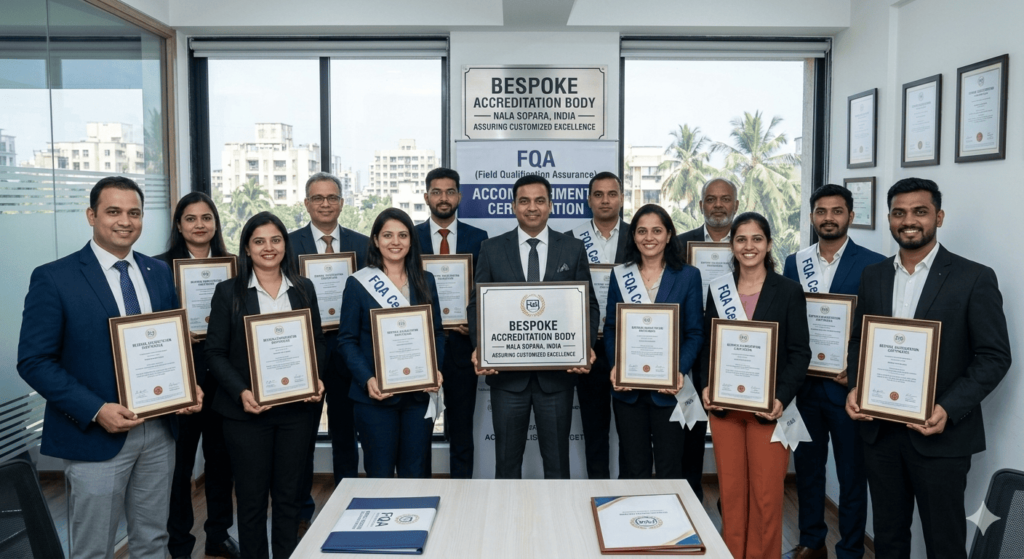
Bespoke accreditation is a specialized form of accreditation designed to address unique industry requirements where conventional standards, guidelines, or regulatory frameworks may not yet exist. In many sectors of modern industry, technological development, innovative business models, and evolving professional services create situations where traditional accreditation schemes cannot adequately evaluate competence, reliability, or quality assurance practices. Bespoke accreditation therefore provides a structured mechanism through which organizations, industries, professional associations, and conformity assessment bodies can receive formal recognition even when a globally accepted standard or guideline is not available.
Throughout history, industry associations, trade bodies, business exchanges, and professional organizations have played a significant role in shaping the standards and practices that guide commercial activity. These organizations act as an essential bridge between entrepreneurs, industry leaders, regulators, and the broader public. They help facilitate communication between businesses and government authorities, represent industry interests, and contribute to the development of policies and regulations that support economic growth and innovation. The collaboration between industry stakeholders and public institutions has historically been responsible for the development of many widely accepted industry standards and codes of practice.
Industry associations and trade organizations contribute to economic and professional development in several important ways. One of their primary functions is the promotion of best practices across industries. By bringing together businesses, technical experts, and policymakers, these organizations encourage the adoption of uniform quality standards that enhance safety, efficiency, and reliability. In many sectors, industry groups also develop codes of conduct and ethical guidelines that guide professional behavior, protect consumers, and maintain the reputation of the sector.
Another important function of industry associations and business chambers is their role in encouraging compliance with established standards and regulatory frameworks. They assist organizations in understanding complex regulatory requirements and help businesses implement quality management systems that align with industry expectations. This support is particularly valuable for small and medium-sized enterprises that may lack the internal expertise or resources required to navigate complex regulatory landscapes.
Beyond regulatory support, trade organizations and professional bodies also work to strengthen the economic welfare of their members. By promoting collaboration, facilitating market access, and encouraging innovation, these organizations contribute to the growth and sustainability of industries. They often organize training programs, technical workshops, industry conferences, and certification programs that help professionals improve their skills and stay updated with technological developments.
In this broader ecosystem of industry development, conformity assessment bodies play a critical role. These organizations are responsible for providing services such as testing, inspection, certification, validation, verification, and accreditation. Through these services, conformity assessment bodies evaluate whether products, services, processes, or management systems meet specified standards or regulatory requirements. Their work ensures that businesses operate in accordance with recognized quality and safety frameworks, thereby protecting consumers and strengthening market confidence.
However, there are many situations where a formal standard or internationally recognized guideline does not yet exist for a particular service, technology, or professional practice. This situation is common in emerging industries, innovative technologies, research-based services, and specialized professional activities. When no established benchmark exists, traditional accreditation schemes may be unable to provide recognition for organizations operating in these sectors. As a result, innovative businesses may face challenges in demonstrating their competence and credibility to clients, investors, regulators, and the public.
Bespoke accreditation is designed specifically to address this gap. It provides a flexible and structured approach to evaluating competence and reliability in sectors where established standards are unavailable. Instead of relying solely on predefined global standards, bespoke accreditation frameworks are developed through consultation with industry stakeholders, subject matter experts, and relevant professional bodies. These frameworks establish customized evaluation criteria that reflect the operational realities and technical requirements of the specific sector.
One of the core principles behind bespoke accreditation is collaboration. Since there is no universally accepted standard guiding the evaluation process, accreditation bodies must work closely with industry experts, technical advisors, and stakeholders to identify the most appropriate criteria for assessment. This collaborative approach ensures that the resulting accreditation framework reflects both technical accuracy and practical applicability.
Organizations seeking bespoke accreditation typically operate in specialized or innovative environments. These may include advanced research laboratories, specialized training institutions, digital technology providers, environmental monitoring services, professional consulting firms, emerging healthcare technologies, new manufacturing techniques, or other sectors that operate outside traditional regulatory frameworks. In such cases, bespoke accreditation provides a formal mechanism for evaluating competence and quality assurance practices.
A key component in the development of bespoke accreditation frameworks is the involvement of technical advisory bodies. Technical advisory councils or specialized committees are often composed of experienced professionals, scientists, industry experts, and academic specialists who possess deep knowledge of the relevant field. Their expertise is critical in defining the evaluation criteria that will be used during the accreditation process.
Through structured consultation and review, these technical advisory groups analyze the operational scope, risk factors, quality management practices, and technical competencies required within the sector. Based on this analysis, they help design an accreditation model that includes clearly defined performance indicators, operational benchmarks, documentation requirements, and competency standards. This ensures that the accreditation framework is both rigorous and relevant to the specific industry.
In bespoke accreditation systems, the role of accreditation bodies such as the World Yoga Accreditation Board (WYAB) becomes particularly significant. When organizations operate in fields where no established standard or guideline exists, accreditation bodies must rely on expert consultation and stakeholder engagement to determine appropriate certification measures. In consultation with its Technical Advisory Council, WYAB develops customized accreditation criteria that address the specific needs of the sector while maintaining fundamental principles of quality assurance, impartiality, and transparency.
The process typically begins with a detailed evaluation of the organization’s scope of activities. This includes an examination of operational procedures, technical capabilities, management systems, personnel qualifications, risk management strategies, and quality assurance processes. Accreditation assessors analyze how the organization operates and identify the critical factors that determine competence and reliability within that particular sector.
Once the scope and operational characteristics are clearly understood, the accreditation body develops a tailored set of evaluation criteria. These criteria are designed to measure the organization’s ability to consistently deliver reliable services, maintain operational integrity, and manage risks effectively. The evaluation framework may incorporate elements from existing international standards where applicable, while also introducing customized requirements that address the specific characteristics of the sector.

The assessment process itself follows a structured methodology similar to traditional accreditation systems. It may include documentation review, on-site or remote audits, interviews with key personnel, technical demonstrations, and verification of operational practices. Independent assessors evaluate whether the organization meets the established criteria and whether its management systems effectively support consistent quality performance.
Transparency and impartiality remain essential principles within bespoke accreditation. Even though the evaluation criteria are customized, the assessment process must remain objective, evidence-based, and professionally managed. Accreditation bodies must ensure that assessors possess the necessary technical expertise and maintain independence from the organizations being evaluated. This helps maintain the credibility and integrity of the accreditation system.
Bespoke accreditation also encourages organizations to implement structured quality management systems even when formal regulatory requirements are absent. By undergoing customized accreditation, organizations demonstrate their commitment to professional standards, operational reliability, and continuous improvement. This recognition can significantly enhance their credibility in the marketplace.
For clients and stakeholders, bespoke accreditation provides valuable assurance that the organization has been evaluated according to carefully designed technical and operational criteria. It indicates that the organization operates with professionalism, competence, and accountability even in fields where regulatory oversight may be limited or evolving.
Another important benefit of bespoke accreditation is its ability to support innovation without compromising quality assurance. Many emerging industries rely on experimental technologies, novel methodologies, and unconventional service models. Rigid regulatory frameworks can sometimes hinder innovation by imposing requirements that are not compatible with new technologies. Bespoke accreditation allows for a more flexible evaluation approach while still maintaining rigorous standards of performance and accountability.
This flexibility is particularly important in sectors experiencing rapid technological transformation. Fields such as digital services, advanced manufacturing, environmental monitoring, health technology, and specialized education are constantly evolving. Organizations operating in these sectors require recognition mechanisms that can adapt to changing conditions. Bespoke accreditation provides such adaptability while maintaining professional credibility.
Furthermore, bespoke accreditation supports international collaboration and market access. In a globalized economy, businesses often operate across national boundaries and must demonstrate credibility to international partners. Customized accreditation programs can help organizations establish trust with global clients by showing that their services have been independently evaluated and verified according to well-defined technical criteria.
Over time, bespoke accreditation frameworks can also contribute to the development of formal industry standards. When multiple organizations adopt similar customized accreditation criteria, these frameworks may eventually evolve into standardized guidelines that are recognized by regulators and international standardization bodies. In this way, bespoke accreditation can serve as an early-stage mechanism for establishing structured quality benchmarks within emerging industries.
From a governance perspective, accreditation bodies offering bespoke accreditation must maintain strong oversight and quality control mechanisms. This includes clear documentation of evaluation procedures, defined responsibilities for assessors and technical advisors, conflict-of-interest management, and regular review of accreditation frameworks. These governance practices ensure that bespoke accreditation remains reliable and credible over time.
Periodic reassessment is another important element of bespoke accreditation systems. Accredited organizations must demonstrate ongoing compliance with the established criteria through surveillance audits, performance reviews, and documentation updates. This continuous monitoring ensures that organizations maintain high standards of competence and quality performance throughout the accreditation cycle.
Training and professional development also play a role in maintaining the effectiveness of bespoke accreditation. Assessors, technical advisors, and organizational personnel must remain informed about evolving industry practices and technological developments. Continuous learning helps ensure that accreditation frameworks remain relevant and aligned with current industry needs.
In conclusion, bespoke accreditation represents an important evolution in the field of conformity assessment and professional recognition. As industries continue to innovate and expand into new areas of technology and service delivery, the need for flexible and customized evaluation frameworks becomes increasingly important. Industry associations, trade organizations, business chambers, and professional bodies have long served as essential links between entrepreneurs, regulators, and the public. Their contributions to the development of standards, codes of practice, and professional guidelines have helped shape modern economic systems.
Conformity assessment bodies build upon this foundation by providing structured evaluation services that verify competence, quality, and reliability. When established standards are unavailable, bespoke accreditation offers a practical and credible solution. Through consultation with technical experts and stakeholder engagement, accreditation bodies such as WYAB can develop tailored accreditation criteria that reflect the unique characteristics of specialized industries.
By combining flexibility with rigorous quality assurance principles, bespoke accreditation supports innovation, strengthens market confidence, and promotes professional excellence. It allows organizations operating in emerging or specialized sectors to demonstrate their competence and credibility while contributing to the broader development of industry standards and best practices. As global industries continue to evolve, bespoke accreditation will remain an essential tool for ensuring quality, trust, and responsible growth across diverse sectors of the modern economy.
Table of Contents
Branches
WYAB Accreditation
WYAB Head Office
WYAB World Yoga Accreditation Board
WYAB House
C/O Mr.Garry 54, Glengarnock Avenue,
E-14 3BP Isle Of Dogs, London UK
Tel .: +44-8369083940
email: info@worldyoga.us
Website: https://worldyoga.us/
MUMBAI Head Office
World Yoga Accreditation Board (WYAB)
WYAB House
B-401, New Om Kaveri Chs. Ltd., Nagindas pada,
Next To Shiv Sena Office, Nallasopara (E)
Tel .: +91-7499991895
email: info@worldyoga.us
Website: https://worldyoga.us/
DELHI-NCR Regd. Office
World Yoga Accreditation Board (WYAB)
WYAB House
Asaoti, Dist Palwal
Faridabad Delhi NCR, Haryana
Tel .: +91-7979801035
Fax: +91-250 2341170
Website: https://worldyoga.us/