Bodies Operating Certification Of Persons
Bodies operating certification of persons play a vital role in today’s knowledge-driven and skill-oriented global economy, where the validation of individual competence has become essential for ensuring quality, safety, and trust across industries. These bodies are responsible for assessing and certifying individuals based on predefined criteria, ensuring that they possess the necessary knowledge, skills, and professional attributes required to perform specific roles effectively.
The internationally recognized standard ISO/IEC 17024 provides the fundamental framework for such certification bodies, outlining the general requirements they must follow to deliver consistent, reliable, and impartial certification services. This standard is applicable across all sectors and professions, making it a universal benchmark for organizations involved in certifying individuals, whether in engineering, healthcare, information technology, quality management, or vocational training.
At the core of ISO/IEC 17024 is the principle of impartiality, which ensures that certification bodies operate without bias or conflict of interest. Certification decisions must be based solely on objective evidence of competence, and organizations must establish governance structures that safeguard against undue influence. This often includes the formation of impartiality committees, implementation of risk assessment mechanisms, and strict separation between training and certification activities to avoid any compromise in integrity. By maintaining impartiality, certification bodies build trust among candidates, employers, regulatory authorities, and the general public, thereby enhancing the credibility of the certifications they issue.
Another critical requirement of ISO/IEC 17024 is competence, not only of the candidates being assessed but also of the personnel involved in the certification process. Certification bodies must ensure that their examiners, assessors, and decision-makers are adequately qualified, experienced, and trained to perform their roles effectively. This involves defining competency criteria, conducting regular evaluations, and providing continuous professional development opportunities. Additionally, certification schemes must be developed based on thorough job analysis and industry consultation, ensuring that the competencies being assessed are relevant, current, and aligned with market needs.
Consistency and reliability are also central to the functioning of bodies operating certification of persons. The certification process must be standardized, documented, and systematically implemented to ensure uniformity in assessment and decision-making. This includes clearly defined procedures for application review, examination, assessment, certification decisions, and issuance of certificates. Assessment methods may vary depending on the profession but typically include written examinations, practical demonstrations, interviews, and portfolio evaluations. These methods must be validated to ensure they accurately measure the competencies they are intended to assess, thereby ensuring fairness and objectivity in the certification process.
Confidentiality is another key aspect that certification bodies must address. Given that they handle sensitive information related to candidates, including personal data, examination results, and assessment records, it is essential to implement robust data protection measures. This includes secure storage systems, controlled access to information, and clear policies regarding data handling and disclosure. Maintaining confidentiality not only protects the privacy of candidates but also reinforces trust in the certification system.
The management system of a certification body plays a crucial role in ensuring its effective operation. While ISO/IEC 17024 does not mandate a specific management system standard, it requires organizations to establish and maintain processes that support consistent and controlled operations. This includes document control, internal audits, corrective and preventive actions, and management reviews. A well-implemented management system enables certification bodies to monitor their performance, identify areas for improvement, and ensure ongoing compliance with standard requirements.
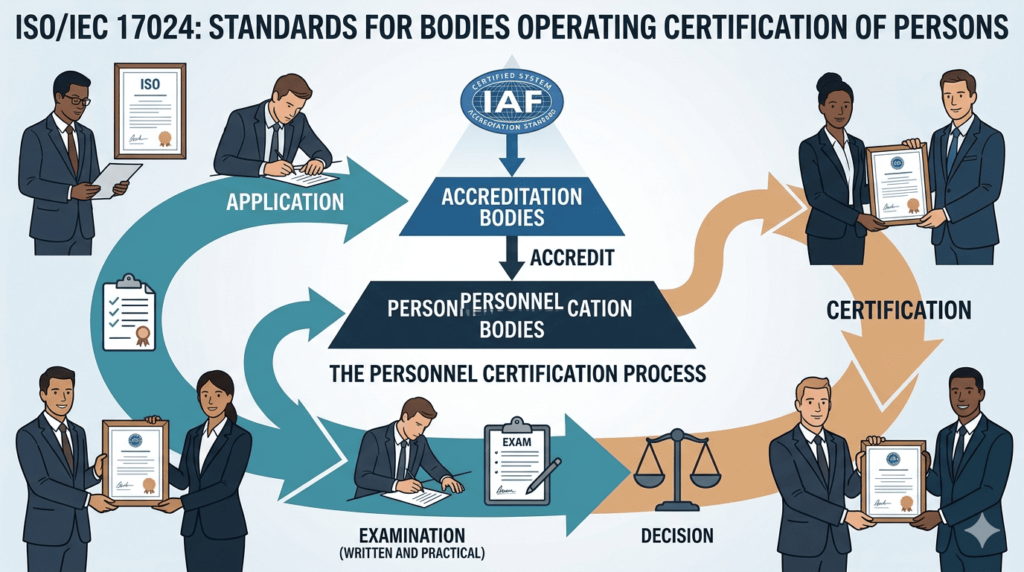
The certification process typically begins with the application stage, where candidates submit their qualifications, experience, and other relevant information for review. The certification body evaluates the application against predefined eligibility criteria to determine whether the candidate is qualified to proceed to the assessment stage. Once eligibility is confirmed, candidates undergo assessment through various methods designed to evaluate their competence. The results of these assessments are then reviewed by qualified personnel who make independent certification decisions, ensuring objectivity and impartiality. Successful candidates are awarded certification, which serves as formal recognition of their competence in a specific field.
Certification is not a one-time activity but an ongoing process that includes surveillance and recertification. Certification bodies must establish mechanisms to ensure that certified individuals continue to meet the required standards over time. This may involve periodic reassessment, continuing professional development (CPD) requirements, or monitoring of professional activities. Recertification ensures that individuals remain up to date with industry developments and maintain their competence throughout their professional careers.
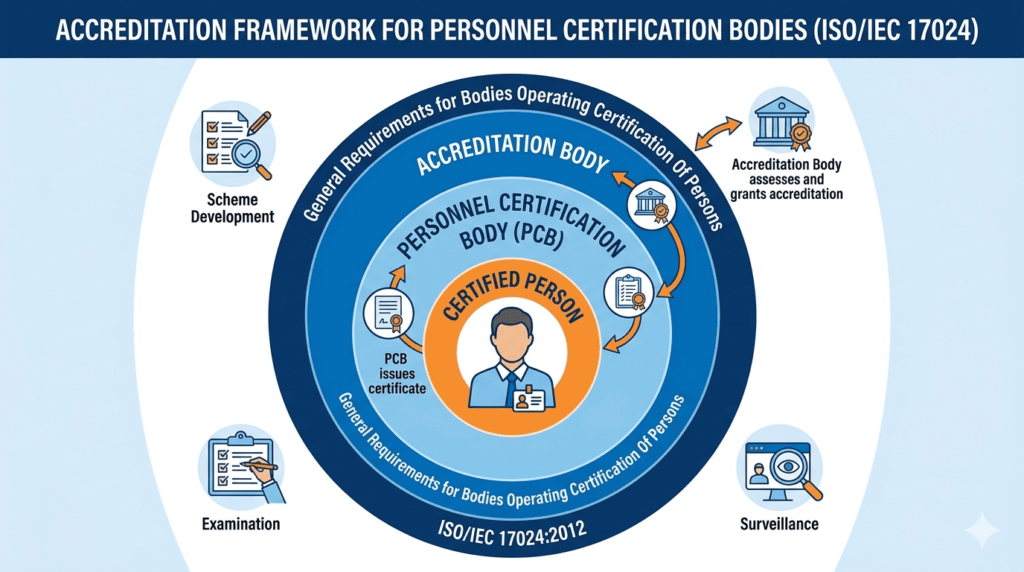
Accreditation further enhances the credibility of certification bodies by providing independent verification of their compliance with ISO/IEC 17024. Organizations such as the Worldwide Accreditation Body (WYAB) play a significant role in this process by evaluating certification bodies against international standards and specific accreditation requirements. WYAB accreditation demonstrates that a certification body operates with a high level of competence, impartiality, and consistency, thereby increasing stakeholder confidence and facilitating international recognition of certifications.
In addition to complying with ISO/IEC 17024, certification bodies seeking WYAB accreditation must adhere to specific licensing requirements set by the accreditation body. These may include additional criteria related to governance, operational procedures, use of certification marks, and branding guidelines. Proper use of accreditation symbols is particularly important, as it ensures that stakeholders can easily identify accredited certifications and distinguish them from non-accredited ones. Misuse of accreditation marks can lead to serious consequences, including suspension or withdrawal of accreditation.
Transparency and accountability are also emphasized under both ISO/IEC 17024 and WYAB requirements. Certification bodies must provide clear and accessible information about their certification schemes, including eligibility criteria, assessment methods, fees, and procedures for appeals and complaints. This transparency ensures that candidates are fully informed about the certification process and can make informed decisions بشأن their professional development.
The appeals and complaints process is a critical component of the certification system, providing a mechanism for addressing grievances and ensuring fairness. Candidates who disagree with certification decisions must have the opportunity to appeal, and certification bodies must handle such appeals in a transparent, unbiased, and timely manner. Similarly, complaints بشأن the conduct of the certification body or certified individuals must be addressed promptly and effectively, with appropriate corrective actions implemented as needed.
In the broader context, certification of persons contributes significantly to workforce development and economic growth. By providing a reliable means of assessing and recognizing competence, certification bodies help bridge the gap between education and employment, enabling individuals to demonstrate their skills and enhance their career prospects. For employers, certified professionals offer assurance of quality and competence, reducing risks and improving operational efficiency.
In conclusion, bodies operating certification of persons under ISO/IEC 17024 and supported by accreditation frameworks such as WYAB play a crucial role in maintaining standards of competence and professionalism across industries. Their commitment to impartiality, consistency, transparency, and continuous improvement ensures that certifications remain credible and valuable in a rapidly evolving global landscape. As the demand for skilled and certified professionals continues to grow, these certification bodies will remain at the forefront of quality assurance, empowering individuals and strengthening industries worldwide.
Bodies Operating Certification Of Persons ISO/IEC 17024:latest Conformity Assessment – General Necessities For Bodies Working Accreditation Of People. This Standard Gives A Benchmark To Certificate Bodies Offering Accreditation Of Individuals Applicable To Any Occupation.
WYAB Accreditation Expects That The Accreditation Bodies Should Adjust To The Latest Variant Of The Following Standards:
• ISO/IEC 17024:latest Conformity Assessment – General Prerequisites For Bodies Working Certification Of People.
• Applicable WYAB License Necessities.
ISO/IEC 17024: Latest Requirements and WYAB Accreditation Framework
In today’s competitive global economy, the validation of individual competence has become a critical factor in ensuring quality, safety, and trust across industries. Certification of persons plays a pivotal role in confirming that individuals possess the required knowledge, skills, and abilities to perform specific tasks effectively. Bodies operating certification of persons are therefore entrusted with a significant responsibility—to assess and certify individuals in a fair, consistent, and credible manner. The internationally recognized standard ISO/IEC 17024 provides the foundation for such certification bodies, establishing a benchmark for quality, impartiality, and operational excellence. When combined with the accreditation requirements set by Worldwide Accreditation Body (WYAB), certification bodies gain global credibility and recognition.
ISO/IEC 17024 is designed to harmonize the processes used by certification bodies worldwide, ensuring that certifications are reliable, comparable, and trusted across borders. It applies to any organization that certifies individuals, regardless of the profession or industry—whether in quality management, healthcare, information technology, engineering, education, or specialized technical fields. The standard emphasizes competence, impartiality, and consistency, which are essential for maintaining confidence among stakeholders, including employers, regulators, and the public.
One of the fundamental principles of ISO/IEC 17024 is impartiality. Certification bodies must operate independently and avoid conflicts of interest that could compromise the integrity of their certification decisions. This includes ensuring that personnel involved in assessment and certification are free from undue influence and that decision-making processes are transparent and unbiased. The governance structure of the certification body must support impartiality by implementing mechanisms such as impartiality committees, risk assessments, and documented procedures to identify and mitigate potential conflicts.
Another key requirement is competence. Certification bodies must demonstrate that their personnel, including examiners, assessors, and decision-makers, are competent to perform their roles. This involves establishing clear criteria for qualifications, experience, and training, as well as ongoing monitoring and evaluation of performance. Competence also extends to the development of certification schemes, which must be based on a thorough analysis of job roles and industry requirements. These schemes define the scope of certification, the competencies to be assessed, and the methods used for evaluation.
The standard also places significant emphasis on consistency and reliability in the certification process. Certification bodies must develop and implement standardized procedures for application review, examination, assessment, decision-making, and certification issuance. These procedures must be documented, controlled, and regularly reviewed to ensure they remain effective and aligned with current industry practices. The use of validated assessment methods, such as written exams, practical tests, interviews, and portfolio reviews, is essential to ensure that certification decisions are based on objective evidence.
Confidentiality is another critical aspect addressed by ISO/IEC 17024. Certification bodies handle sensitive information related to candidates, including personal data, examination results, and assessment records. They must implement robust measures to protect this information from unauthorized access, disclosure, or misuse. This includes secure data storage, controlled access, and clear policies on information handling.
In addition to these core principles, ISO/IEC 17024 requires certification bodies to establish a comprehensive management system. This system may be aligned with standards such as ISO 9001 or developed independently, but it must address key elements such as document control, internal audits, corrective actions, and management reviews. The management system ensures that the certification body operates in a structured and systematic manner, with a focus on continuous improvement.
The certification process under ISO/IEC 17024 typically begins with the application stage, where candidates submit their qualifications, experience, and other relevant information. The certification body reviews the application to determine eligibility based on predefined criteria. Once eligibility is confirmed, candidates proceed to the assessment stage, which may تشمل examinations, practical demonstrations, or other evaluation methods designed to measure competence.
Following the assessment, the certification body conducts a decision-making process to determine whether the candidate meets the certification requirements. This decision must be made by qualified personnel who are independent of the assessment process, ensuring objectivity and impartiality. Successful candidates are then awarded certification, which is typically valid for a specified period and subject to renewal requirements.
Surveillance and recertification are essential components of the certification lifecycle. Certification bodies must establish mechanisms to ensure that certified individuals continue to meet the required standards over time. This may include periodic reassessment, continuing professional development (CPD) requirements, or monitoring of professional activities. Recertification ensures that individuals remain competent and up to date with industry developments.
While ISO/IEC 17024 provides the international framework, accreditation by organizations such as the Worldwide Accreditation Body (WYAB) adds an additional layer of credibility. WYAB accreditation signifies that a certification body has been independently evaluated and found to comply with the requirements of ISO/IEC 17024 and relevant WYAB licensing criteria. This enhances trust among stakeholders and facilitates international recognition of certifications.
WYAB accreditation requires certification bodies to comply not only with ISO/IEC 17024 but also with specific WYAB license requirements. These requirements may تشمل additional criteria related to governance, operational procedures, branding, and the use of certification marks. Certification bodies must demonstrate compliance through a rigorous assessment process that includes document review, on-site audits, and ongoing surveillance.
One of the key expectations under WYAB accreditation is the proper use of certification marks and logos. Certification bodies must ensure that their certificates, promotional materials, and communications accurately reflect their accredited status without misleading stakeholders. The use of WYAB marks must comply with established guidelines, and any misuse can result in suspension or withdrawal of accreditation.
WYAB also emphasizes the importance of transparency and accountability. Accredited certification bodies must maintain clear and accessible information about their certification schemes, including eligibility criteria, assessment methods, fees, and appeals processes. This ensures that candidates and stakeholders have a clear understanding of the certification process and their rights and responsibilities.
Another critical aspect of WYAB accreditation is the requirement for continuous improvement. Certification bodies must regularly समीक्षा their processes, identify areas for improvement, and implement corrective actions where necessary. This includes responding to feedback from candidates, clients, and other stakeholders, as well as adapting to changes in industry standards and regulatory requirements.
The appeals and complaints process is also a vital component of both ISO/IEC 17024 and WYAB requirements. Certification bodies must establish procedures to handle appeals from candidates who dispute certification decisions, as well as complaints from stakeholders بشأن the conduct of the certification body or certified individuals. These processes must be fair, transparent, and timely, ensuring that all concerns are addressed appropriately.
In the context of global workforce development, certification of persons plays a significant role in enhancing employability and professional mobility. Accredited certifications provide individuals with recognized credentials that demonstrate their competence and commitment to professional excellence. For employers, these certifications serve as a reliable معيار for भर्ती, training, and performance evaluation.
Industries such as construction, healthcare, information technology, and manufacturing increasingly rely on certified professionals to ensure quality and safety. For example, certified auditors, inspectors, trainers, and technicians are essential in maintaining compliance with regulatory requirements and industry standards. Certification bodies operating under ISO/IEC 17024 and WYAB accreditation contribute to building a skilled and competent workforce capable of meeting these demands.
From an organizational perspective, becoming an accredited certification body offers numerous benefits. It enhances credibility, increases market acceptance, and provides a competitive advantage in the certification السوق. Accreditation also opens opportunities for international collaboration and recognition, enabling certification bodies to expand their reach and impact.
However, achieving and maintaining accreditation requires a significant commitment to quality and compliance. Certification bodies must invest in developing robust systems, تدريب personnel, and continuously monitoring their operations. They must also stay updated with changes in standards and accreditation requirements, ensuring ongoing alignment with best practices.
Technology is playing an increasingly important role in the certification of persons. Digital platforms are being used for online applications, remote assessments, and electronic certification issuance. While these advancements offer convenience and efficiency, they also introduce new challenges المتعلقة data security, परीक्षा integrity, and system reliability. Certification bodies must address these challenges by implementing appropriate controls and safeguards.
Ethical considerations are also central to the certification process. Certification bodies must uphold the highest standards of integrity and professionalism, ensuring that certifications are awarded solely based on merit. Any form of malpractice, such as cheating, fraud, or misrepresentation, must be strictly prohibited and addressed through appropriate الإجراءات.
In conclusion, bodies operating certification of persons under ISO/IEC 17024 and WYAB accreditation play a crucial role in ensuring the competence and credibility of individuals across various professions. By adhering to internationally recognized standards and rigorous accreditation requirements, these bodies contribute to building trust, enhancing quality, and supporting global workforce development. The combination of standardized processes, impartial decision-making, and continuous improvement ensures that certifications remain relevant, reliable, and respected worldwide.
As industries continue to evolve and the demand for skilled professionals grows, the importance of accredited certification bodies will only increase. Organizations that invest in compliance with ISO/IEC 17024 and WYAB requirements position themselves as leaders in the field of certification, driving excellence and fostering confidence among stakeholders. Ultimately, the certification of persons is not just about validating skills—it is about empowering individuals, strengthening industries, and advancing the global economy.
Table of Contents
Branches
WYAB Accreditation
WYAB Head Office
WYAB World Yoga Accreditation Board
WYAB House
C/O Mr.Garry 54, Glengarnock Avenue,
E-14 3BP Isle Of Dogs, London UK
Tel .: +44-8369083940
email: info@worldyoga.us
Website: https://worldyoga.us/
MUMBAI Head Office
World Yoga Accreditation Board (WYAB)
WYAB House
B-401, New Om Kaveri Chs. Ltd., Nagindas pada,
Next To Shiv Sena Office, Nallasopara (E)
Tel .: +91-7499991895
email: info@worldyoga.us
Website: https://worldyoga.us/
DELHI-NCR Regd. Office
World Yoga Accreditation Board (WYAB)
WYAB House
Asaoti, Dist Palwal
Faridabad Delhi NCR, Haryana
Tel .: +91-7979801035
Fax: +91-250 2341170
Website: https://worldyoga.us/