
Calibration Laboratories
Calibration laboratories form the backbone of accuracy, precision, and reliability in modern industry, ensuring that measurement instruments perform within defined limits and produce trustworthy results. In a world where even the smallest deviation can lead to significant quality issues, safety risks, or financial losses, calibration laboratories provide the confidence that equipment and systems are functioning correctly. At the heart of this ecosystem lies the globally recognized standard ISO/IEC 17025, which defines the general requirements for the competence of testing and calibration laboratories. This standard not only focuses on quality management principles but also emphasizes technical competence, making it essential for laboratories that produce calibration results and certificates relied upon across industries.
Calibration, in simple terms, is the process of comparing a measurement instrument against a known standard of higher accuracy to identify and correct any deviation. This process ensures that instruments such as thermometers, pressure gauges, electrical meters, and dimensional tools provide accurate readings. Without proper calibration, even advanced equipment can produce incorrect results, leading to defective products, regulatory non-compliance, and compromised safety. Calibration laboratories play a crucial role in preventing such issues by maintaining measurement accuracy and ensuring traceability to national or international standards.
One of the most important aspects of calibration laboratories is measurement traceability. Traceability refers to the ability to link measurement results to recognized standards through an unbroken chain of comparisons. This ensures consistency and uniformity in measurements across different laboratories and countries. For industries operating in global markets, traceability is essential, as it enables acceptance of calibration results internationally and supports compliance with regulatory requirements.
Calibration laboratories operate across a wide range of technical disciplines, each requiring specialized expertise and equipment. Electrical calibration is one of the most widely used categories, involving instruments such as multimeters, oscilloscopes, and power analyzers. Accurate electrical measurements are critical in sectors like electronics, energy, and telecommunications. Similarly, dimensional calibration focuses on measuring physical parameters such as length, thickness, and angles using tools like micrometers and calipers, which are vital in manufacturing and engineering applications.
Mechanical calibration includes the measurement of force, torque, pressure, and mass, ensuring that equipment used in industries such as automotive and construction performs reliably. Temperature calibration is another critical area, particularly in industries like pharmaceuticals, food processing, and chemical manufacturing, where even slight temperature variations can affect product quality and safety. Other important domains include humidity and thermo-physical properties, optical measurements, acoustical measurements, and volumetric calibration, each contributing to accuracy in their respective fields.
The implementation of ISO 9001 principles within calibration laboratories further strengthens their operational efficiency. While ISO 9001 focuses on quality management systems, ISO/IEC 17025 integrates these principles with technical requirements, ensuring that laboratories not only follow systematic processes but also demonstrate the competence needed to produce valid results. This combination of quality management and technical expertise sets accredited calibration laboratories apart from non-accredited ones.
Accreditation of calibration laboratories provides numerous benefits, both for the laboratories themselves and for their clients. For laboratories, accreditation enhances credibility, improves operational efficiency, and opens doors to new business opportunities. It demonstrates a commitment to quality and competence, making the laboratory more attractive to customers and regulatory authorities. For clients, working with accredited laboratories ensures confidence in measurement results, reduces risks, and supports compliance with industry standards and regulations.
Another key element of calibration laboratories is the estimation of measurement uncertainty. Every measurement has a degree of uncertainty, and laboratories must evaluate and report this uncertainty to provide a clear understanding of the reliability of the results. This transparency helps clients make informed decisions and ensures that measurements are interpreted correctly. In high-precision industries, such as aerospace and healthcare, understanding measurement uncertainty is crucial for maintaining safety and performance standards.
Environmental conditions within calibration laboratories also play a significant role in ensuring accuracy. Factors such as temperature, humidity, vibration, and electromagnetic interference can influence measurement results. Laboratories must carefully control and monitor these conditions to maintain consistency and reliability. For example, dimensional measurements require stable temperature conditions, as even minor fluctuations can cause expansion or contraction of materials, affecting accuracy.
The competence of personnel is another critical factor in calibration laboratories. Skilled and trained professionals are required to perform calibration activities, interpret results, and maintain equipment. Continuous training and development are essential to keep up with technological advancements and evolving standards. Laboratories must ensure that their staff possess the necessary knowledge, skills, and experience to carry out their responsibilities effectively.
In addition to technical competence, calibration laboratories must implement robust quality management systems. This includes document control, internal audits, corrective actions, and continuous improvement processes. Regular audits and management reviews help identify areas for improvement and ensure compliance with accreditation requirements. By maintaining a strong quality culture, laboratories can enhance their performance and deliver consistent, reliable results.
Proficiency testing and inter-laboratory comparisons are also important aspects of calibration laboratory operations. These activities allow laboratories to benchmark their performance against others and verify the accuracy of their results. Participation in such programs demonstrates a commitment to quality and provides valuable insights for continuous improvement.
With the advancement of technology, calibration laboratories are increasingly adopting digital tools and automation to improve efficiency and accuracy. Modern laboratories use advanced software for data management, automated calibration systems, and real-time monitoring solutions. These innovations not only enhance productivity but also improve traceability and reduce the risk of human error.
In today’s globalized economy, the role of calibration laboratories has become more important than ever. Industries rely on accurate measurements to maintain product quality, ensure safety, and comply with regulations. From manufacturing and healthcare to energy and research, calibration laboratories support a wide range of applications that impact everyday life.
In conclusion, calibration laboratories are essential for maintaining accuracy, reliability, and trust in measurements across industries. By adhering to standards like ISO/IEC 17025 and integrating strong quality management practices, these laboratories ensure that measurement instruments perform as expected. Their role in supporting quality assurance, regulatory compliance, and international trade makes them indispensable in the modern world. As industries continue to demand higher precision and reliability, calibration laboratories will remain a cornerstone of quality and excellence.
Calibration Laboratories ISO/IEC 17025:latest – Standard Is Mostly Utilized By Testing And Calibration Laboratories. At First Kown As Iso/iec Guide 25. There Are Numerous Shared Characteristics With The Iso 9001 Standard, However ISO/IEC 17025 Includes The Ability Necessities And It Applies Directly To Those Associations That Produce Calibration Results/certificates.
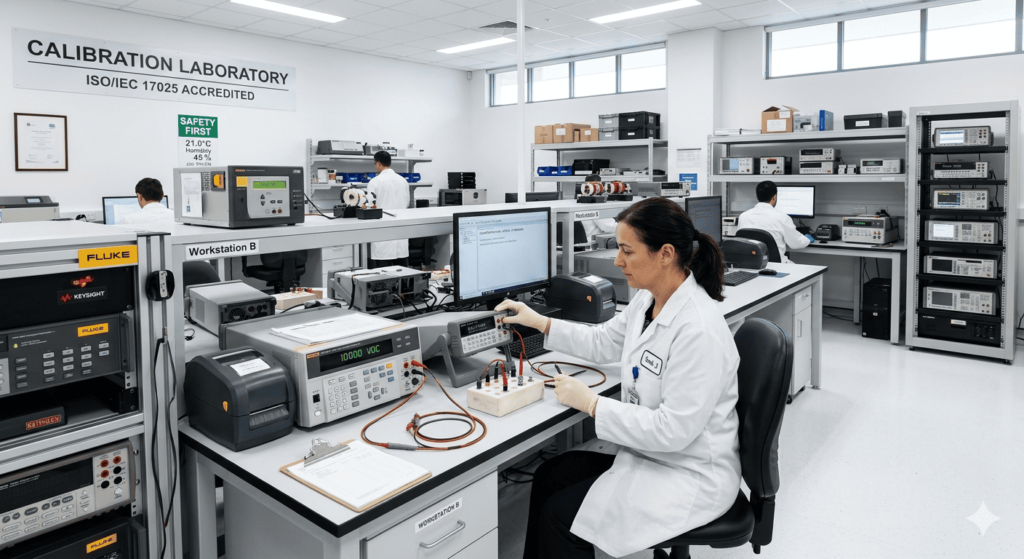
WYAB Certification Calibration Laboratories Is Accessible For The Following Classifications:
Electrical Amounts, Magnetic Amounts, Time And Frequency, Dimensional Amounts, Mechanical Amounts, Acoustical Amounts, Volumetric Amounts, Optical Amounts, Ionizing Radiation, Temperature, Humidity & Thermo Physical Properties, Chemical Analysis And Reference Materials.
WYAB Certification Expects That The Calibration Laboratories Should Adjust To The Latest Adaptation Of The Following Standards:
• ISO/IEC 17025:latest – General Necessities For The Skill Of Testing And Calibration Laboratories.
• Shown Specialized Skill Well Defined For The Field Wherein Calibration Is Performed.
• Applicable WYAB Certification Necessities.
Calibration laboratories play a critical role in ensuring the accuracy, reliability, and traceability of measurements across industries. In today’s highly competitive and quality-driven global environment, organizations depend heavily on precise measurements for manufacturing, testing, safety, compliance, and innovation. This is where the standard ISO/IEC 17025 becomes essential, as it defines the general requirements for the competence of testing and calibration laboratories.
Originally known as ISO/IEC Guide 25, ISO/IEC 17025 has evolved into the most widely accepted international benchmark for laboratories performing calibration and testing activities. While it shares certain similarities with ISO 9001, particularly in terms of quality management principles, ISO/IEC 17025 goes much further by incorporating technical competence requirements. This makes it uniquely suited for laboratories that generate calibration results, measurement data, and certificates that industries rely upon for critical decisions.
Calibration laboratories accredited under ISO/IEC 17025 demonstrate their ability to produce valid and reliable results. These laboratories ensure that instruments and equipment are functioning within specified limits, thereby maintaining consistency in production processes and safeguarding product quality. The importance of such laboratories extends across sectors including manufacturing, healthcare, aerospace, automotive, pharmaceuticals, energy, and research institutions.
A calibration laboratory operates by comparing a measurement device or instrument against a known standard with higher accuracy. This comparison helps identify any deviation or error in the instrument being calibrated. Once identified, necessary adjustments or corrections can be made to ensure that the instrument performs accurately. This process not only enhances measurement confidence but also ensures compliance with regulatory and industry standards.
One of the key aspects of ISO/IEC 17025 is its emphasis on traceability. Measurement traceability ensures that the results obtained from a calibration laboratory can be linked to national or international standards through an unbroken chain of comparisons. This is essential for maintaining global uniformity in measurements and enabling mutual recognition of calibration results across borders.
WYAB Certification provides accreditation services to calibration laboratories across a wide range of technical disciplines. These classifications reflect the diverse nature of calibration activities and the specialized expertise required in each domain.
Electrical quantities form one of the most significant categories in calibration laboratories. This includes the calibration of instruments such as multimeters, oscilloscopes, power analyzers, and voltage/current measuring devices. Accurate calibration in this field is essential for electrical engineering applications, power generation, and electronics manufacturing.
Magnetic quantities involve the calibration of instruments used to measure magnetic fields, flux density, and related parameters. This is particularly important in industries dealing with electromagnetics, transformers, and advanced scientific research.
Time and frequency calibration is another critical domain, especially in telecommunications, broadcasting, and satellite systems. Precision timing devices such as atomic clocks, frequency counters, and oscillators require highly accurate calibration to ensure synchronization and reliability in communication networks.
Dimensional calibration focuses on the measurement of physical dimensions such as length, diameter, thickness, and angles. Instruments such as vernier calipers, micrometers, and coordinate measuring machines (CMMs) are calibrated to maintain precision in manufacturing and engineering processes.
Mechanical quantities include the calibration of force, torque, pressure, and mass. Industries such as automotive, construction, and heavy engineering rely on accurate mechanical measurements to ensure safety and performance.
Acoustical quantities involve sound measurement and calibration of devices such as sound level meters and microphones. This is crucial for environmental monitoring, workplace safety, and compliance with noise regulations.
Volumetric calibration is used for measuring liquids and gases in terms of volume. This is widely applied in industries such as oil and gas, pharmaceuticals, and food processing, where accurate volume measurement is critical.
Optical calibration includes the calibration of instruments used in light measurement, such as spectrophotometers and photometers. This is essential in fields like material science, healthcare diagnostics, and optical engineering.
Ionizing radiation calibration is a highly specialized field that involves the calibration of instruments used to measure radiation levels. This is particularly important in nuclear power plants, medical imaging, and radiation safety.
Temperature calibration ensures the accuracy of thermometers, thermocouples, and temperature sensors. Given the importance of temperature control in industries such as pharmaceuticals, food processing, and chemical manufacturing, this category holds significant importance.
Humidity and thermo-physical properties calibration deals with the measurement of moisture levels and related thermal properties. Accurate humidity measurement is crucial in environmental monitoring, HVAC systems, and storage conditions for sensitive materials.
Chemical analysis and reference materials represent another important classification. Laboratories in this domain perform calibration and validation of analytical instruments such as chromatographs and spectrometers. Reference materials are used to ensure the accuracy and reliability of chemical measurements.
To achieve WYAB Certification, calibration laboratories must comply with the latest version of ISO/IEC 17025. This includes both management and technical requirements. The management requirements focus on the laboratory’s quality management system, document control, internal audits, corrective actions, and continuous improvement. These elements ensure that the laboratory operates in a systematic and consistent manner.
On the other hand, technical requirements address the competence of laboratory personnel, calibration methods, equipment maintenance, environmental conditions, measurement traceability, and the validity of results. Laboratories must demonstrate that their staff are adequately trained and competent to perform calibration activities. Additionally, they must use validated methods and maintain equipment in proper working condition.
Another important aspect of ISO/IEC 17025 is the estimation of measurement uncertainty. Laboratories are required to evaluate and report the uncertainty associated with their calibration results. This provides a quantitative indication of the confidence in the measurement and helps users make informed decisions.
Proficiency testing and inter-laboratory comparisons are also integral components of accreditation. These activities allow laboratories to benchmark their performance against others and identify areas for improvement. Participation in such programs demonstrates a laboratory’s commitment to maintaining high standards of accuracy and reliability.
The benefits of obtaining WYAB Certification for calibration laboratories are extensive. Accreditation enhances the credibility and reputation of the laboratory, making it more attractive to clients and stakeholders. It also facilitates international recognition, as many countries and organizations accept ISO/IEC 17025-accredited results under mutual recognition arrangements.
Furthermore, accreditation helps laboratories improve their internal processes and efficiency. By adhering to standardized procedures and best practices, laboratories can reduce errors, minimize rework, and optimize resource utilization. This ultimately leads to cost savings and improved customer satisfaction.
For industries relying on calibration services, working with accredited laboratories ensures confidence in measurement results. This is particularly important in regulated sectors where compliance with standards and regulations is mandatory. Accurate calibration helps organizations maintain product quality, ensure safety, and avoid costly recalls or failures.
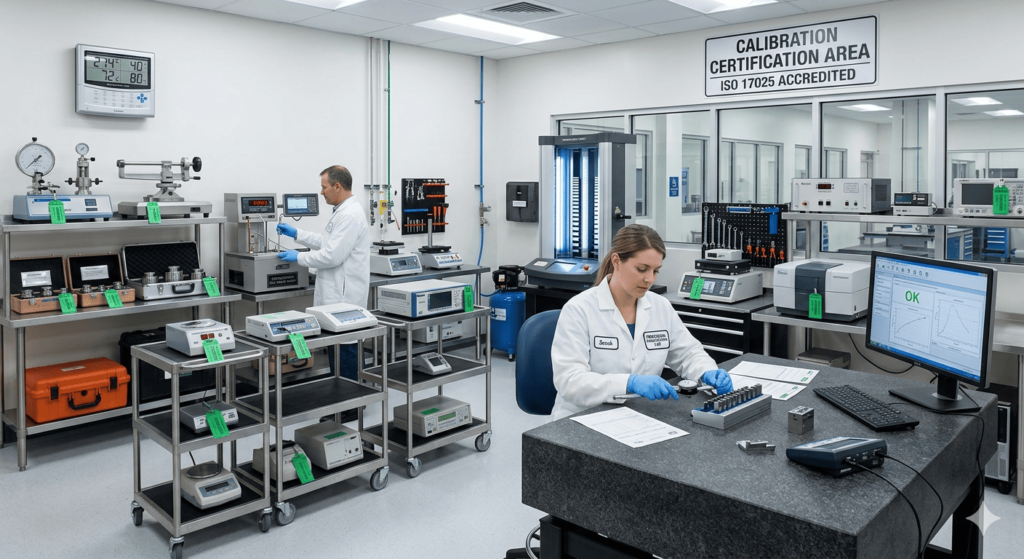
In the context of globalization, the role of calibration laboratories has become even more significant. With supply chains spanning multiple countries, the need for consistent and reliable measurements is paramount. ISO/IEC 17025 accreditation provides a common framework that enables laboratories worldwide to operate at a uniform level of competence.
WYAB Certification further strengthens this framework by providing additional requirements and oversight tailored to specific industries and applications. Laboratories seeking WYAB accreditation must not only meet ISO/IEC 17025 requirements but also demonstrate specialized technical competence in their respective fields.
Continuous improvement is a fundamental principle of ISO/IEC 17025. Laboratories are expected to regularly review their processes, identify areas for enhancement, and implement corrective actions. This ensures that they remain up-to-date with technological advancements and evolving industry requirements.
Digital transformation is also influencing the field of calibration laboratories. Modern laboratories are increasingly adopting automation, data management systems, and advanced analytical tools to improve accuracy and efficiency. Integration of digital technologies enables better data traceability, real-time monitoring, and enhanced reporting capabilities.
Risk-based thinking is another important concept incorporated into ISO/IEC 17025. Laboratories must identify potential risks that could affect the validity of their results and implement measures to mitigate them. This proactive approach helps ensure the reliability and integrity of calibration activities.
Training and competence development are crucial for maintaining high standards in calibration laboratories. Personnel must be continuously trained on new techniques, standards, and technologies. This not only enhances their skills but also ensures compliance with accreditation requirements.
Customer focus is a key element of both ISO/IEC 17025 and WYAB Certification. Laboratories must understand customer requirements, provide clear and accurate reports, and address any concerns or complaints effectively. Building strong customer relationships is essential for long-term success.
Documentation and record-keeping are also critical components of accreditation. Laboratories must maintain detailed records of calibration activities, equipment maintenance, and quality control measures. These records provide evidence of compliance and support traceability.
Environmental conditions within the laboratory must be carefully controlled to ensure accurate measurements. Factors such as temperature, humidity, vibration, and electromagnetic interference can affect calibration results. Laboratories must monitor and maintain these conditions within specified limits.
Equipment management is another important aspect. Calibration laboratories must ensure that all equipment is properly maintained, calibrated, and suitable for its intended use. This includes regular checks, preventive maintenance, and timely replacement of outdated or faulty equipment.
Internal audits and management reviews are conducted periodically to assess the effectiveness of the laboratory’s quality management system. These evaluations help identify gaps and ensure continuous compliance with accreditation requirements.
In conclusion, calibration laboratories accredited under ISO/IEC 17025 and WYAB Certification play a vital role in ensuring measurement accuracy and reliability across industries. By adhering to stringent standards and demonstrating technical competence, these laboratories provide confidence in calibration results and support quality assurance efforts worldwide. As industries continue to evolve and demand higher levels of precision, the importance of accredited calibration laboratories will only continue to grow.
Table of Contents
Branches
WYAB Accreditation
WYAB Head Office
WYAB World Yoga Accreditation Board
WYAB House
C/O Mr.Garry 54, Glengarnock Avenue,
E-14 3BP Isle Of Dogs, London UK
Tel .: +44-8369083940
email: info@worldyoga.us
Website: https://worldyoga.us/
MUMBAI Head Office
World Yoga Accreditation Board (WYAB)
WYAB House
B-401, New Om Kaveri Chs. Ltd., Nagindas pada,
Next To Shiv Sena Office, Nallasopara (E)
Tel .: +91-7499991895
email: info@worldyoga.us
Website: https://worldyoga.us/
DELHI-NCR Regd. Office
World Yoga Accreditation Board (WYAB)
WYAB House
Asaoti, Dist Palwal
Faridabad Delhi NCR, Haryana
Tel .: +91-7979801035
Fax: +91-250 2341170
Website: https://worldyoga.us/