
CE Markings
CE Marking is one of the most recognized conformity symbols in international trade, especially for products entering the European Economic Area (EEA). The mark signifies that a product complies with essential safety, health, and environmental protection requirements defined under European Union legislation. For manufacturers, exporters, and certification bodies, understanding CE marking is not just a regulatory necessity but also a strategic advantage for accessing global markets. However, despite its importance, CE marking is often misunderstood as a certification issued by an authority, whereas in reality, it is primarily a declaration of conformity made by the manufacturer.
The introduction and enforcement of Regulation (EC) No 765/2008 significantly reshaped how CE marking is applied and controlled within the European Union. This regulation, which came into effect in February 2011, established a comprehensive framework for accreditation and market surveillance. It clearly states that CE marking must only be affixed to products that fall under specific EU directives or regulations requiring such marking. The regulation also emphasizes that CE marking should not be misused or applied to products outside its scope, thereby eliminating earlier practices where manufacturers would apply the CE mark based on general assumptions or perceived benefits.
CE marking applies to a wide range of product categories, including machinery, electrical equipment, medical devices, construction products, and personal protective equipment. Each category is governed by specific EU directives that outline the essential requirements and conformity assessment procedures. In many cases, manufacturers can self-declare compliance by preparing technical documentation, conducting risk assessments, and ensuring that their products meet the applicable standards. However, for higher-risk products, the involvement of a Notified Body is mandatory. These bodies are officially designated organizations that assess conformity, perform testing, and issue certificates where required.
One of the key challenges surrounding CE marking is the widespread misconception that it is a form of quality certification issued by third-party organizations. In reality, CE marking is not a certification label but a legal requirement that indicates compliance with EU legislation. This misunderstanding has led to the emergence of unauthorized certification services, where organizations claim to provide CE marking approval or certificates. Such practices not only violate EU regulations but also create confusion among manufacturers and stakeholders.
In this context, the World Yoga Accreditation Board (WYAB) has observed a growing number of requests related to CE marking certification within its accreditation framework. Despite this increase in demand, WYAB has identified that most of these requests are based on incorrect assumptions about the nature of CE marking. Many organizations seek CE marking as a value-added certification rather than understanding its regulatory basis. As a result, WYAB has taken a proactive approach by issuing a formal warning notification and clarifying its position on CE marking activities.
WYAB has declared an interregnum, which is a temporary suspension of activities related to CE marking certification. This decision reflects the organization’s commitment to maintaining compliance with international regulations and preventing misuse of its accreditation system. During this period, WYAB will not authorize any organization to certify, approve, endorse, or promote CE marking for products or related documentation. This includes issuing CE certificates, offering CE approval services, or marketing CE marking as a certifiable scheme. The interregnum will remain in effect until further notice, allowing WYAB to review and strengthen its policies in alignment with global standards.
It is important to note that this suspension does not affect the existing status of certification bodies, inspection bodies, testing laboratories, calibration laboratories, or product certifiers operating under WYAB. These entities can continue their accredited activities as long as they do not engage in unauthorized CE marking services. WYAB’s directive is specifically targeted at preventing the incorrect interpretation and misuse of CE marking within its system.
At present, WYAB acknowledges that there is no legal offense if compliant products bear the CE mark, particularly when those products do not require the involvement of a Notified Body. Manufacturers are still allowed to self-declare conformity where applicable, provided they follow the correct procedures and maintain proper documentation. However, this does not justify the promotion or certification of CE marking by third-party organizations outside the regulatory framework.
For manufacturers and exporters, understanding the correct process for CE marking is essential. The first step is to identify whether the product falls under any EU directive that requires CE marking. If applicable, the manufacturer must ensure that the product meets all essential requirements, conduct conformity assessments, and prepare technical documentation. This documentation typically includes design specifications, risk assessments, test reports, and declarations of conformity. Only after completing these steps can the CE mark be affixed to the product.
Certification bodies, on the other hand, must exercise caution and avoid offering CE marking services that imply certification or approval. Instead, they should focus on legitimate certification schemes such as ISO standards, which provide structured frameworks for quality, environmental management, and occupational health and safety. By maintaining transparency and adhering to regulatory requirements, certification bodies can protect their credibility and support clients effectively.
The misuse of CE marking can lead to serious consequences, including legal penalties, product recalls, and loss of market access within the European Union. It can also damage the reputation of manufacturers and certification bodies, leading to long-term business impacts. Therefore, it is crucial for all stakeholders to understand the true nature of CE marking and comply with the applicable regulations.
WYAB’s position on CE marking highlights the importance of regulatory clarity and ethical practices in the accreditation and certification industry. By issuing a warning notification and suspending CE marking-related activities, WYAB aims to prevent misuse, promote awareness, and ensure alignment with international standards. This approach not only protects the integrity of the accreditation system but also supports manufacturers in achieving genuine compliance.
In conclusion, CE marking is a vital component of international trade and regulatory compliance within the European Economic Area. It serves as a declaration of conformity rather than a certification and must be applied in accordance with specific EU directives. The enforcement of Regulation (EC) No 765/2008 has strengthened the framework for CE marking, eliminating previous ambiguities and ensuring stricter control. WYAB’s decision to suspend CE marking certification activities reflects a responsible and forward-looking approach to maintaining compliance and preventing misuse. For manufacturers, exporters, and certification bodies, the key to success lies in understanding the regulatory requirements, avoiding misconceptions, and adhering to best practices in conformity assessment and documentation.
CE Marking WYAB position on CE stamping and confirmation
WYAB know about an expansion in CE Imprint accreditation being mentioned inside the WYAB system. Until this point in time notwithstanding, basically none has been directed. In any case, we feel it suitable to give this Warning Notice to all Affirmation Bodies.
By and large, there has been a training for some non-basic things entering the European market to have the CE mark applied to them. By and large there was veritable conviction and proof that the items met the general wellbeing necessity and, besides, a discernment that the CE mark was required. The appearance on third February 2011 of European Order 765/2008; Guideline on Certification and Market Observation (RAMS), and explicitly Article 30.2 of Section 4, expresses that this is no more so.
WYAB strategy is to pronounce an interregnum until additional notification. This strategy doesn’t in any case influence the status of Certificate Bodies, Investigation Bodies, Test House and Alignment Research centers or Item Certifiers.
WYAB perceives that right now there is no offense where consistent merchandise bear a CE mark and are of such a class that an Informed Body isn’t needed. Regardless, this Warning Notification stays pertinent.
WYAB Warning Notification
Compelling from the date of this notification, WYAB don’t authorize associations to ensure, approve, license or energize the fixing of CE Stamping to items, including related writing.
WYAB Position on CE Stamping and Certification
CE Marking is a critical conformity symbol that indicates a product meets the essential requirements of European legislation related to safety, health, and environmental protection. It allows products to move freely within the European Economic Area (EEA) and demonstrates compliance with applicable EU directives and regulations. Over time, CE marking has become widely recognized not only as a regulatory requirement but also as a mark of trust and quality in global markets.
In recent years, the WYAB (World Youth Accreditation Board) system has observed a growing number of requests related to CE marking certification. However, despite this increasing demand, very few such certifications have been formally processed or granted within the WYAB framework. This situation has prompted WYAB to issue a formal Warning Notification and clarify its official position regarding CE marking, certification, and related activities.
Understanding CE Marking and Its Importance
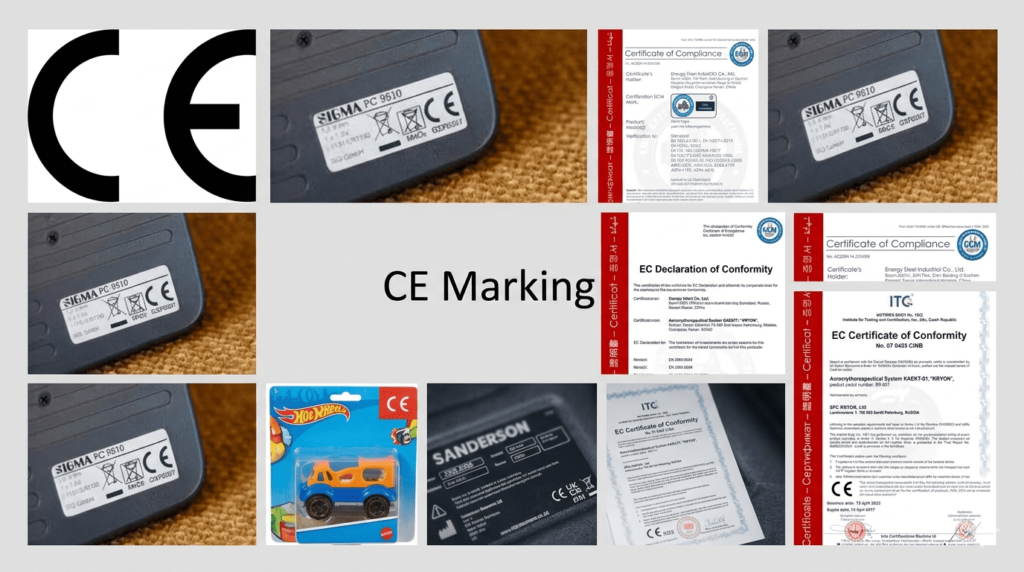
CE marking is not a certification in the traditional sense but rather a declaration by the manufacturer that the product complies with all relevant European Union legislation. It applies to a wide range of products, including machinery, medical devices, construction products, electrical equipment, and personal protective equipment.
The CE mark signifies that:
- The product meets EU safety, health, and environmental protection requirements
- The manufacturer has carried out the necessary conformity assessment procedures
- Technical documentation is maintained and available for inspection
- The product can be legally sold within the EEA
It is important to note that CE marking is mandatory only for products that fall under specific EU directives or regulations. Not all products require CE marking, and misuse or incorrect application can lead to legal consequences.
Historical Practices and Misconceptions
Historically, many non-critical products entering the European market were affixed with the CE mark, often based on a general belief that it was universally required. In many cases, manufacturers applied the CE mark voluntarily, supported by a perceived compliance with general safety requirements.
This practice led to several misconceptions:
- That CE marking is required for all products entering Europe
- That CE marking is a quality certification issued by third parties
- That any certification body can authorize or issue CE marking
While some of these practices were carried out in good faith, they often lacked proper regulatory backing or formal conformity assessment procedures.
Impact of Regulation (EC) No 765/2008
A significant shift occurred with the introduction of Regulation (EC) No 765/2008, particularly with its enforcement beginning on 3rd February 2011. This regulation established a robust framework for accreditation and market surveillance within the European Union.
Article 30.2 of this regulation clearly states that:
- CE marking must only be affixed to products for which its use is explicitly required by EU legislation
- It must not be applied to products that do not fall under relevant directives
- Misuse of CE marking is subject to enforcement and penalties
This regulation eliminated the earlier ambiguity and informal practices surrounding CE marking. It reinforced that CE marking is a legal compliance requirement—not a voluntary quality label or marketing tool.
WYAB’s Observations and Concerns
WYAB has identified a noticeable increase in requests for CE marking certification within its accreditation system. However, upon evaluation, it has been observed that:
- Most requests do not align with the actual requirements of EU directives
- There is confusion between certification and manufacturer self-declaration
- Some organizations seek CE marking as a commercial advantage rather than a legal necessity
These trends raise serious concerns about potential misuse, misinterpretation, and non-compliance with international regulations.
WYAB Strategy: Declaration of Interregnum
In response to these developments, WYAB has adopted a cautious and responsible approach by declaring an interregnum—a temporary suspension or pause—on activities related to CE marking certification.
This means that:
- WYAB will not process or approve CE marking certification requests until further notice
- The organization will review and reassess its policies in alignment with international regulations
- Additional guidance and frameworks may be developed before resuming such activities
This decision reflects WYAB’s commitment to maintaining the integrity of its accreditation system and ensuring compliance with global standards.
Scope of the Interregnum
It is important to clarify that this interregnum:
- Does NOT affect the status or operations of:
- Certification Bodies
- Inspection Bodies
- Testing Laboratories
- Calibration Laboratories
- Product Certifiers
These entities may continue their accredited activities as per existing standards and scopes, provided they do not engage in unauthorized CE marking certification or endorsement.
Current Legal Position on CE Marking
WYAB acknowledges that, at present:
- There is no legal offense if compliant products bear the CE mark
- This applies particularly to products that do not require involvement of a Notified Body
- Manufacturers may still self-declare conformity where permitted
However, this does not override the importance of proper compliance procedures and adherence to EU legislation.
WYAB Warning Notification
Effective immediately from the date of the notification, WYAB has issued a strict directive:
WYAB does not authorize any organization to certify, approve, endorse, license, or promote the application of CE marking on products or associated documentation.
This includes:
- Issuing CE certificates
- Providing CE approval services
- Marketing CE marking as a certification
- Including CE marking in promotional or training materials as a certifiable service
Role of Notified Bodies in CE Marking
In certain cases, CE marking requires the involvement of a Notified Body—an organization designated by an EU member state to assess product conformity.
Notified Bodies are responsible for:
- Conducting conformity assessments
- Reviewing technical documentation
- Performing product testing and inspections
- Issuing certificates where required
However, not all products require a Notified Body. In many cases, manufacturers can self-declare compliance based on internal assessments.
Risks of Misusing CE Marking
Incorrect use of CE marking can lead to serious consequences, including:
- Legal penalties and fines
- Product recalls or market withdrawal
- Damage to brand reputation
- Loss of market access in the EU
Organizations must ensure that CE marking is applied only when legally required and supported by proper documentation.
Guidance for Certification Bodies
Certification Bodies operating under WYAB or similar frameworks should:
- Avoid offering CE marking certification services
- Educate clients on the correct regulatory requirements
- Focus on legitimate certification schemes such as ISO standards
- Maintain transparency and compliance in all operations
Guidance for Manufacturers and Exporters
Manufacturers seeking to enter the European market should:
- Identify applicable EU directives or regulations
- Determine whether CE marking is required
- Conduct conformity assessment procedures
- Prepare technical documentation
- Affix CE marking only after compliance is confirmed
It is advisable to consult regulatory experts or legal advisors to ensure full compliance.
CE Marking vs Certification: Key Differences
| Aspect | CE Marking | Certification |
|---|---|---|
| Nature | Legal requirement | Voluntary or mandatory standard |
| Issued by | Manufacturer (or Notified Body) | Certification Body |
| Purpose | Market access in EU | Quality assurance |
| Scope | Specific directives | Various standards (ISO, etc.) |
Understanding this distinction is essential to avoid confusion and regulatory issues.
WYAB’s Commitment to Compliance and Integrity
WYAB remains committed to:
- Upholding international regulatory standards
- Preventing misuse of accreditation systems
- Promoting ethical certification practices
- Supporting organizations with accurate guidance
The decision to suspend CE marking-related activities reflects a proactive approach to maintaining credibility and trust.
Future Outlook
While the current interregnum places a temporary halt on CE marking activities within WYAB, it is expected that:
- Updated policies and frameworks will be introduced
- Clear guidelines will be established for stakeholders
- Alignment with EU regulations will be strengthened
Organizations should stay informed about future updates and ensure ongoing compliance.
Conclusion
CE marking plays a vital role in facilitating trade within the European Economic Area and ensuring product safety and compliance. However, its misuse or misunderstanding can lead to significant risks.
WYAB’s position on CE marking is clear and decisive:
- CE marking is not a certifiable service within the WYAB system
- Unauthorized certification or promotion is strictly prohibited
- A temporary interregnum is in effect until further notice
By adhering to these guidelines and maintaining a clear understanding of regulatory requirements, organizations can ensure compliance, avoid legal issues, and build trust in international markets.
Table of Contents
Branches
WYAB Accreditation
WYAB Head Office
WYAB World Yoga Accreditation Board
WYAB House
C/O Mr.Garry 54, Glengarnock Avenue,
E-14 3BP Isle Of Dogs, London UK
Tel .: +44-8369083940
email: info@worldyoga.us
Website: https://worldyoga.us/
MUMBAI Head Office
World Yoga Accreditation Board (WYAB)
WYAB House
B-401, New Om Kaveri Chs. Ltd., Nagindas pada,
Next To Shiv Sena Office, Nallasopara (E)
Tel .: +91-7499991895
email: info@worldyoga.us
Website: https://worldyoga.us/
DELHI-NCR Regd. Office
World Yoga Accreditation Board (WYAB)
WYAB House
Asaoti, Dist Palwal
Faridabad Delhi NCR, Haryana
Tel .: +91-7979801035
Fax: +91-250 2341170
Website: https://worldyoga.us/