
FQA Testing & Calibration Laboratories
FQA Testing & Calibration Laboratories play a vital role in ensuring the safety, reliability, and compliance of fasteners used in critical industries such as construction, automotive, aerospace, oil & gas, and heavy engineering. Fasteners, including bolts, nuts, screws, and washers, are essential components that hold structures and machinery together, and any failure in their quality can lead to severe consequences such as structural collapse, equipment malfunction, or even loss of life. To address these risks, the Fastener Quality Act (FQA) was established as a regulatory framework to ensure that fasteners meet specified standards and performance requirements. This Act emphasizes the importance of testing, inspection, certification, and traceability, thereby making accredited laboratories a cornerstone of compliance and quality assurance.
FQA Testing & Calibration Laboratories are specialized facilities equipped to perform a wide range of tests and measurements on fasteners to verify their conformity to specified standards. These laboratories conduct mechanical testing such as tensile strength, yield strength, hardness, and torque testing to evaluate the physical properties of fasteners under different conditions. In addition to mechanical testing, they also perform chemical analysis to determine the material composition and ensure that the fasteners are manufactured using the correct alloys and materials.
Dimensional inspection is another critical aspect, where laboratories check parameters such as thread accuracy, pitch, diameter, and length to ensure precise manufacturing. Calibration services are equally important, as they ensure that all testing instruments and equipment used in the laboratory provide accurate and reliable measurements traceable to national or international standards.
The credibility and effectiveness of FQA Testing & Calibration Laboratories largely depend on their accreditation, which is typically based on internationally recognized standards such as ISO/IEC 17025. This standard outlines the general requirements for the competence of testing and calibration laboratories, covering aspects such as personnel qualifications, equipment calibration, testing methods, quality management systems, and reporting of results. Compliance with ISO/IEC 17025 ensures that laboratories operate with a high level of technical competence and produce results that are accurate, consistent, and globally accepted. Accreditation bodies like WYAB evaluate laboratories against these requirements, providing formal recognition of their ability to perform specific testing and calibration activities.
The Fastener Quality Act plays a crucial role in safeguarding public safety by ensuring that fasteners sold in the market conform to the specifications they claim to meet. It mandates that certain categories of fasteners must undergo inspection, testing, and certification using standardized procedures before they can be used in critical applications. This requirement not only prevents the use of substandard or counterfeit fasteners but also promotes transparency and accountability in the supply chain. Accredited laboratories serve as independent and reliable entities that verify compliance with these requirements, thereby enhancing trust among manufacturers, regulators, and end-users.
Calibration is a fundamental aspect of laboratory operations, especially in the context of FQA compliance. Accurate calibration of testing equipment ensures that measurements are precise and reliable, which is essential for making correct decisions regarding the quality of fasteners. Laboratories must establish and maintain calibration schedules, ensure traceability of measurements, and document all calibration activities. Any deviation or inaccuracy in measurement can lead to incorrect test results, potentially allowing defective fasteners to enter the market or rejecting compliant ones. Therefore, maintaining strict calibration practices is critical for the integrity of testing processes.
The process of obtaining accreditation for FQA Testing & Calibration Laboratories involves several stages, including application, document review, on-site assessment, and ongoing surveillance. Laboratories are required to demonstrate their technical competence, implement a robust quality management system, and provide evidence of compliance with relevant standards. During on-site assessments, auditors evaluate various aspects of laboratory operations, including testing procedures, equipment condition, staff competence, and quality control measures. Successful accreditation not only validates the laboratory’s capabilities but also establishes its credibility in the global market.
One of the major benefits of accreditation is enhanced trust and recognition. Accredited laboratories are considered reliable and competent, which increases confidence among clients and regulatory authorities. This recognition is particularly important in international trade, where compliance with global standards is essential for market access. Additionally, accreditation helps laboratories improve their internal processes, reduce errors, and enhance overall efficiency. It also provides a competitive advantage by differentiating accredited laboratories from non-accredited ones.
Despite its advantages, achieving and maintaining accreditation can be challenging for laboratories. It requires significant investment in infrastructure, equipment, and training, as well as continuous efforts to comply with evolving standards and regulations. Laboratories must also maintain extensive documentation and undergo periodic audits to ensure ongoing compliance. However, these challenges are outweighed by the long-term benefits of improved quality, credibility, and business opportunities.
FQA Testing & Calibration Laboratories are indispensable in various industries where the quality of fasteners directly impacts safety and performance. In the construction industry, they ensure that structural fasteners can withstand loads and environmental conditions. In the automotive sector, they verify the durability and reliability of fasteners used in vehicles. In aerospace applications, where safety standards are extremely stringent, these laboratories play a critical role in ensuring that fasteners meet high-performance requirements. Similarly, in the oil and gas industry, fasteners must endure extreme conditions, making accurate testing and calibration essential.
Looking ahead, the future of FQA Testing & Calibration Laboratories is likely to be shaped by advancements in technology and increasing globalization. Digitalization and automation are expected to enhance testing accuracy, improve data management, and streamline laboratory operations. The adoption of advanced materials and manufacturing techniques will also require laboratories to upgrade their capabilities and adapt to new testing requirements. Furthermore, the harmonization of standards across countries will facilitate international trade and promote consistency in quality assurance practices.
In conclusion, FQA Testing & Calibration Laboratories are a critical component of the quality assurance ecosystem, ensuring that fasteners meet stringent safety and performance standards. Through rigorous testing, precise calibration, and adherence to international standards, these laboratories help prevent failures, protect public safety, and support industrial reliability. Accreditation under standards like ISO/IEC 17025 further strengthens their role by ensuring technical competence and global recognition. As industries continue to evolve and demand higher levels of quality and safety, the importance of FQA Testing & Calibration Laboratories will only continue to grow.
FQA Testing & Calibration Laboratories WYAB Accreditation For The Laboratories That Direct Tests And Estimations Of Fasteners Covered By The Most Recent Fastener Quality Act (FQA) Public Regulation As Changed According To The Agreement Standard.
The Fastener Quality Act (FQA), Public Regulation (as Changed) Safeguards Public Security By:
• Expected That Specific Fasteners Sold In Trade Adjust To The Details To Which They Are Addressed To Be Made;
• Accommodating Accreditation Of Laboratories Took Part In Fastener Testing;
• Requiring Inspection, Testing, And Certification, As Per Standardized Strategies.
WYAB License Expects That The Laboratories That Direct Tests And Estimations Of Fasteners Covered By The Latest Fastener Quality Act (FQA) Public Regulation As Changed According To The Agreement Standard Or Norms Should Adjust To The Latest Form Of The Following Standards:
• ISO/IEC 17025:latest – General Necessities For The Skill Of Testing And Calibration Laboratories.
• Shown Specialized Skill Well Defined For The Field Wherein Testing / Calibration Is Performed.
• WYAB Accreditation Scheme Manual.
• WYAB Strategy On Authorization Of Accreditation Bodies For Fastener Quality Confirmation Framework And Laboratories For Fastener Testing.
FQA Testing & Calibration Laboratories – WYAB Accreditation Framework
FQA Testing & Calibration Laboratories play a crucial role in ensuring the safety, reliability, and compliance of fasteners used across industries such as construction, automotive, aerospace, oil & gas, and manufacturing. Fasteners—such as bolts, nuts, screws, and washers—may appear small, but they are fundamental components that hold critical structures together. Any failure in their quality can lead to catastrophic consequences, including structural collapse, equipment malfunction, and serious safety hazards.
To address these risks, the Fastener Quality Act (FQA) was established as a regulatory framework to ensure that fasteners meet strict quality, performance, and traceability requirements. WYAB Accreditation provides a structured and internationally aligned system to assess and recognize laboratories that conduct testing and calibration of fasteners under FQA compliance.
This comprehensive guide explores the importance, requirements, processes, and benefits of WYAB accreditation for FQA Testing & Calibration Laboratories.
Understanding the Fastener Quality Act (FQA)
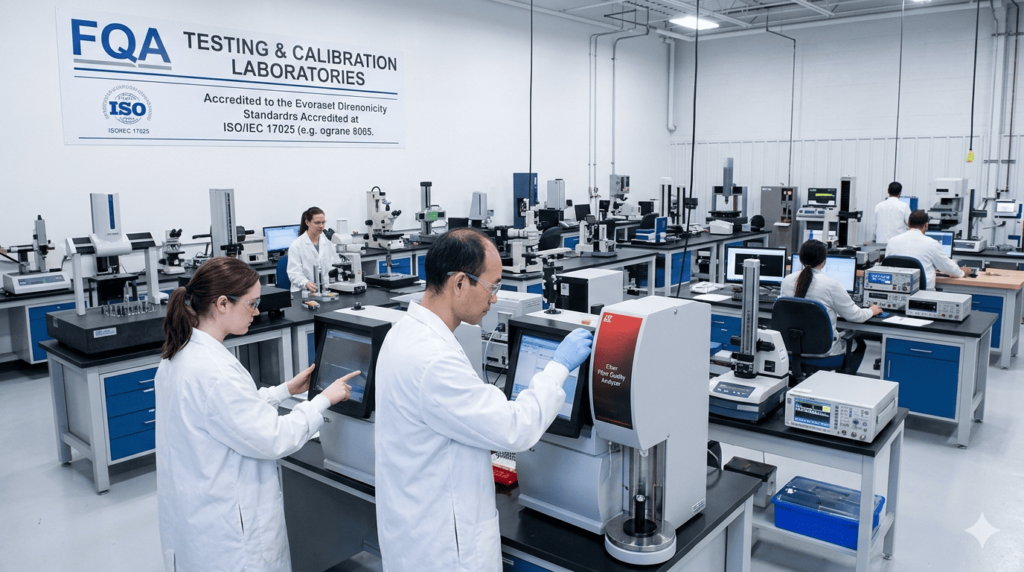
The Fastener Quality Act (FQA) is a public regulation designed to safeguard public safety and ensure the integrity of fasteners used in commerce. The Act applies to specific categories of fasteners that are critical to structural and mechanical applications.
The key objectives of the FQA include:
- Ensuring that fasteners sold in trade conform to the specifications they claim to meet
- Preventing the use of counterfeit or substandard fasteners
- Establishing standardized testing and inspection protocols
- Promoting traceability and documentation across the supply chain
- Supporting accreditation of laboratories engaged in fastener testing
The Act mandates that fasteners must undergo inspection, testing, and certification based on recognized standards. This is where accredited laboratories become essential.
Role of FQA Testing & Calibration Laboratories
FQA Testing & Calibration Laboratories are specialized facilities equipped to perform mechanical, chemical, and dimensional testing of fasteners. Their primary responsibility is to verify whether fasteners meet specified standards and regulatory requirements.
Key Functions
- Mechanical Testing
- Tensile strength
- Yield strength
- Hardness
- Torque testing
- Chemical Analysis
- Material composition verification
- Alloy identification
- Dimensional Inspection
- Thread accuracy
- Diameter and length verification
- Calibration Services
- Ensuring testing instruments are accurate and traceable to national/international standards
- Failure Analysis
- Investigating defects or failures in fasteners
These laboratories must operate with high precision, consistency, and reliability, which is ensured through accreditation.
WYAB Accreditation for FQA Laboratories
WYAB Accreditation is a formal recognition that a laboratory is competent to perform specific testing and calibration activities in accordance with international standards and regulatory requirements.
The WYAB accreditation framework ensures that laboratories:
- Maintain technical competence
- Follow standardized procedures
- Ensure accuracy and repeatability of results
- Operate under a robust quality management system
Accreditation is not just a certification—it is a continuous process of assessment, monitoring, and improvement.
Key Standards for Accreditation
To achieve WYAB accreditation, FQA Testing & Calibration Laboratories must comply with several standards and guidelines.
1. ISO/IEC 17025
This is the primary international standard for testing and calibration laboratories. It specifies general requirements for:
- Competence of personnel
- Calibration and testing methods
- Equipment maintenance
- Measurement traceability
- Reporting of results
Compliance with ISO/IEC 17025 ensures that laboratory results are accurate, reliable, and globally accepted.
2. Technical Competence Requirements
Laboratories must demonstrate technical expertise in their specific testing domain. This includes:
- Qualified and trained personnel
- Validated testing methods
- Properly maintained equipment
- Participation in proficiency testing programs
3. WYAB Accreditation Scheme Manual
This document outlines:
- Accreditation procedures
- Application requirements
- Assessment criteria
- Surveillance and reassessment processes
4. WYAB Strategy on Fastener Quality Assurance
This strategy defines:
- Requirements for accreditation bodies
- Guidelines for laboratory evaluation
- Policies for maintaining consistency in fastener testing
Accreditation Process
The process of obtaining WYAB accreditation involves multiple stages:
1. Application
The laboratory submits an application detailing:
- Scope of testing/calibration
- Equipment and facilities
- Personnel qualifications
- Quality management system
2. दस्तावेज़ समीक्षा (Document Review)
WYAB evaluates the laboratory’s documentation to ensure compliance with required standards.
3. On-Site Assessment
A team of technical assessors visits the laboratory to evaluate:
- Testing procedures
- Equipment calibration
- Staff competence
- Quality control practices
4. Proficiency Testing
Laboratories may be required to participate in inter-laboratory comparisons to demonstrate accuracy and consistency.
5. Accreditation Decision
Based on assessment findings, WYAB grants accreditation if all requirements are met.
6. Surveillance & Reassessment
Accredited laboratories undergo periodic audits to ensure ongoing compliance.
Importance of Calibration in FQA Laboratories
Calibration ensures that measurement instruments provide accurate and reliable results. In fastener testing, even minor deviations can lead to incorrect conclusions.
Key Aspects of Calibration
- Traceability to national/international standards
- Regular calibration schedules
- Documentation and record-keeping
- Uncertainty measurement
Calibration is a critical component of ISO/IEC 17025 compliance and WYAB accreditation.
Benefits of WYAB Accreditation
1. Enhanced Credibility
Accreditation demonstrates that the laboratory meets international standards, increasing trust among clients and regulators.
2. Regulatory Compliance
Accredited laboratories are recognized as compliant with FQA requirements, reducing legal risks.
3. Global Recognition
Results from accredited laboratories are accepted worldwide, facilitating international trade.
4. Improved Quality Assurance
Accreditation ensures consistent and reliable testing processes.
5. Competitive Advantage
Accredited laboratories stand out in the market, attracting more clients and business opportunities.
6. Risk Reduction
Accurate testing minimizes the risk of product failure and associated liabilities.
Challenges in FQA Laboratory Accreditation
Despite its benefits, achieving accreditation can be challenging:
1. High Initial Investment
- Advanced testing equipment
- Infrastructure setup
- Training costs
2. Technical Complexity
Fastener testing requires specialized knowledge and expertise.
3. Continuous Compliance
Maintaining accreditation requires ongoing effort and monitoring.
4. Documentation Requirements
Extensive documentation is needed for quality management systems.
Best Practices for Compliance
To successfully achieve and maintain WYAB accreditation, laboratories should adopt the following best practices:
1. Implement a Strong Quality Management System
Align processes with ISO/IEC 17025 requirements.
2. Regular Training
Ensure staff are continuously trained and updated on latest standards.
3. Equipment Maintenance
Maintain and calibrate equipment regularly.
4. Internal Audits
Conduct periodic audits to identify and address gaps.
5. Proficiency Testing
Participate in inter-laboratory comparisons to validate performance.
6. Documentation Control
Maintain accurate and updated records of all processes.
Role in Public Safety
FQA Testing & Calibration Laboratories contribute significantly to public safety by:
- Preventing the use of defective fasteners
- Ensuring structural integrity of buildings and infrastructure
- Supporting safe operation of machinery and vehicles
Their role becomes even more critical in industries where failure can result in loss of life.
Industry Applications
1. Construction
Ensuring the strength and reliability of structural fasteners.
2. Automotive
Testing fasteners used in vehicles for safety and durability.
3. Aerospace
Verifying high-performance fasteners used in aircraft.
4. Oil & Gas
Ensuring fasteners can withstand extreme conditions.
5. Manufacturing
Maintaining quality in production processes.
Future Trends in FQA Laboratories
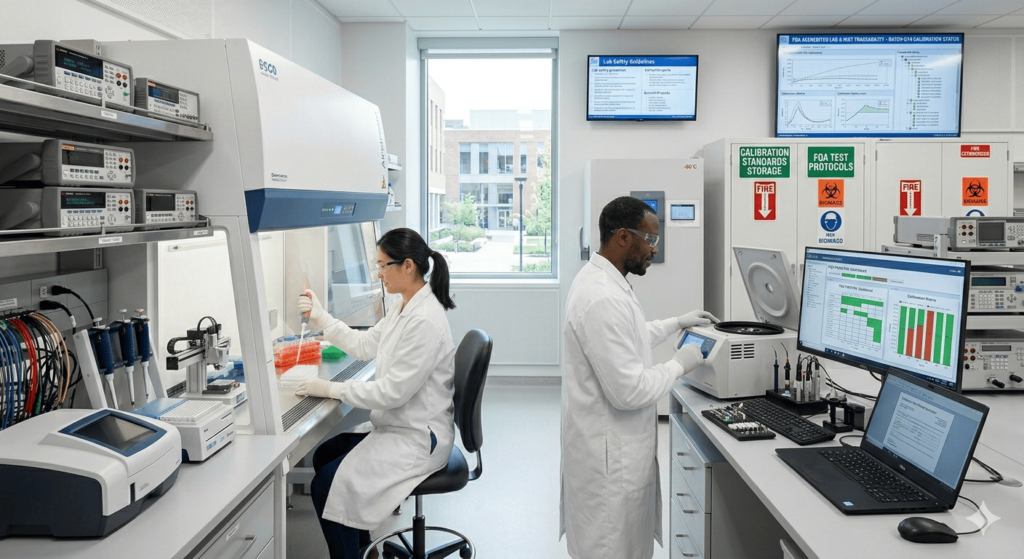
1. Digitalization
Use of digital tools for data management and reporting.
2. Automation
Automated testing systems for increased accuracy and efficiency.
3. Advanced Materials Testing
Testing new materials and coatings for improved performance.
4. Global Standardization
Increasing alignment of standards across countries.
Conclusion
FQA Testing & Calibration Laboratories are a cornerstone of quality assurance in industries that rely on fasteners. The Fastener Quality Act ensures that only compliant and reliable fasteners are used in critical applications, thereby safeguarding public safety.
WYAB Accreditation provides a structured and internationally recognized framework to assess and validate the competence of these laboratories. By adhering to standards like ISO/IEC 17025, demonstrating technical expertise, and maintaining robust quality systems, laboratories can achieve accreditation and contribute to a safer, more reliable industrial ecosystem.
Table of Contents
Branches
WYAB Accreditation
WYAB Head Office
WYAB World Yoga Accreditation Board
WYAB House
C/O Mr.Garry 54, Glengarnock Avenue,
E-14 3BP Isle Of Dogs, London UK
Tel .: +44-8369083940
email: info@worldyoga.us
Website: https://worldyoga.us/
MUMBAI Head Office
World Yoga Accreditation Board (WYAB)
WYAB House
B-401, New Om Kaveri Chs. Ltd., Nagindas pada,
Next To Shiv Sena Office, Nallasopara (E)
Tel .: +91-7499991895
email: info@worldyoga.us
Website: https://worldyoga.us/
DELHI-NCR Regd. Office
World Yoga Accreditation Board (WYAB)
WYAB House
Asaoti, Dist Palwal
Faridabad Delhi NCR, Haryana
Tel .: +91-7979801035
Fax: +91-250 2341170
Website: https://worldyoga.us/