Management System Certification Bodies
Role, Importance, and Functions
Introduction
Management System Certification Bodies (MSCBs) are organizations responsible for assessing, auditing, and certifying organizations’ management systems to ensure they comply with specific international standards. These certifications serve as formal recognition that an organization’s practices align with industry best practices, regulatory requirements, and international standards. MSCBs play a crucial role in various sectors, helping organizations enhance their operations, improve quality, and meet customer expectations while fostering a culture of continuous improvement.
What is a Management System Certification Body?
A Management System Certification Body (MSCB) is an independent third-party organization that conducts audits to determine whether an organization’s management systems conform to specific international standards. These management systems typically relate to areas such as quality (ISO 9001), environmental performance (ISO 14001), health and safety (ISO 45001), information security (ISO 27001), and many others.
After a successful audit, the MSCB grants certification, which serves as evidence that the organization is compliant with the chosen standard. These certifications are often recognized globally, which can enhance the organization’s credibility and reputation. MSCBs themselves are accredited by national or international accreditation bodies that ensure the integrity and competence of the certification process.
The Role of MSCBs
The primary role of MSCBs is to evaluate the management systems of organizations and issue certifications to those who meet the prescribed standards. This is a multi-step process, and it includes several key responsibilities:
- Independent Auditing: MSCBs are responsible for conducting impartial and objective audits of organizations’ management systems. This ensures that companies are genuinely adhering to the standards set by the relevant international bodies.
- Certifying Compliance: Once the audit is complete and the organization is found to meet the required standards, the MSCB issues a certificate that validates the company’s compliance. This certification is a symbol of the company’s commitment to quality, safety, and continuous improvement.
- Monitoring Compliance: Certification is not a one-time event. MSCBs also monitor and assess organizations periodically to ensure they continue to meet the required standards. Regular audits and surveillance assessments are necessary to retain certification.
- Consultative Support: While MSCBs are primarily focused on auditing, some also provide support and guidance to organizations in preparation for certification. This might involve offering feedback on best practices or advising on how to improve certain aspects of a management system.
- Continuous Improvement Advocacy: MSCBs encourage organizations to adopt practices that promote ongoing improvement. They advocate for the continual monitoring and refinement of management systems, which ensures that the organization remains competitive and capable of responding to changes in the market.
Importance of Management System Certification
The significance of obtaining certification from an MSCB is substantial for organizations in a variety of industries. Some of the primary reasons for obtaining certification include:
- Enhanced Credibility: Certification from a reputable MSCB enhances an organization’s credibility in the market. It demonstrates a commitment to adhering to international standards and continually improving processes. This can significantly increase consumer and partner trust.
- Market Differentiation: In competitive markets, certifications serve as a point of differentiation. They can set a company apart from its competitors by showing that it meets or exceeds internationally recognized standards.
- Improved Operational Efficiency: Organizations that undergo certification processes often experience enhanced internal processes and practices. The rigorous audit requirements often lead to identifying inefficiencies, which can be corrected, ultimately improving overall operational performance.
- Risk Management: Certifications like ISO 9001 (quality management) or ISO 27001 (information security management) are geared toward reducing risks. They help organizations proactively manage operational risks, customer satisfaction, and regulatory compliance.
- Access to New Markets: Certification can open doors to new customers and markets that require vendors to meet specific standards. For example, many large organizations or government bodies only do business with suppliers who hold relevant certifications.
- Regulatory Compliance: In certain sectors, certification can be a requirement for compliance with laws or regulations. For instance, organizations in healthcare, automotive, or food industries often need specific certifications to demonstrate compliance with safety and quality standards.
- Employee Engagement: The certification process often involves employees at all levels. When they understand the purpose and benefits of the certification, it can help foster a culture of continuous improvement and employee engagement. This can lead to increased morale and a stronger commitment to the organization’s goals.
Key Types of Certifications Provided by MSCBs
There are several types of management system certifications that MSCBs offer, each aligned with specific organizational needs. Some of the most common types include:
- ISO 9001 (Quality Management): ISO 9001 is the most widely recognized standard for quality management. It focuses on customer satisfaction, the quality of products and services, and improving operational efficiency.
- ISO 14001 (Environmental Management): ISO 14001 is focused on environmental responsibility. Organizations certified under this standard demonstrate a commitment to reducing their environmental impact and complying with environmental regulations.
- ISO 45001 (Occupational Health and Safety): ISO 45001 is aimed at improving workplace safety and ensuring that organizations take all necessary measures to protect the health and well-being of their employees.
- ISO 27001 (Information Security Management): This standard is focused on ensuring that an organization’s information security management system (ISMS) is effective in protecting sensitive data from unauthorized access, breaches, and other risks.
- ISO 22000 (Food Safety Management): This certification is for organizations in the food industry, ensuring that they adhere to proper food safety practices, minimize risks, and comply with food safety regulations.
- ISO 50001 (Energy Management): ISO 50001 helps organizations improve energy performance and reduce their energy consumption, leading to cost savings and a reduced carbon footprint.
- ISO 13485 (Medical Devices Quality Management): This certification is specifically for organizations in the medical device industry and ensures that they meet international standards for manufacturing medical devices.
- ISO 22301 (Business Continuity Management): ISO 22301 helps organizations prepare for and recover from disruptive incidents, ensuring that their critical business operations can continue in the event of a crisis.
Accreditation of MSCBs
For an MSCB to be recognized as legitimate and reliable, it must be accredited by a national or international accreditation body. Accreditation is the formal recognition that a certification body meets specific competence standards to perform audits and issue certifications.
Accreditation bodies, such as the International Accreditation Forum (IAF) or national organizations like the United Kingdom Accreditation Service (UKAS) or ANSI National Accreditation Board (ANAB), ensure that MSCBs have the necessary technical expertise, impartiality, and integrity to issue certifications. These bodies assess the MSCBs’ competence in areas such as audit procedures, management system knowledge, and professional conduct.
How Certification Bodies Operate
The typical process followed by MSCBs in issuing certification involves several stages:
- Pre-assessment/Gap Analysis: In some cases, MSCBs may conduct a pre-assessment or gap analysis to help organizations understand how close they are to meeting the standards. This step is optional but can help ensure the success of the subsequent audit.
- Stage 1 – Documentation Review: The first official stage of the audit is a review of the organization’s documentation. The MSCB assesses whether the documented management system aligns with the relevant standard.
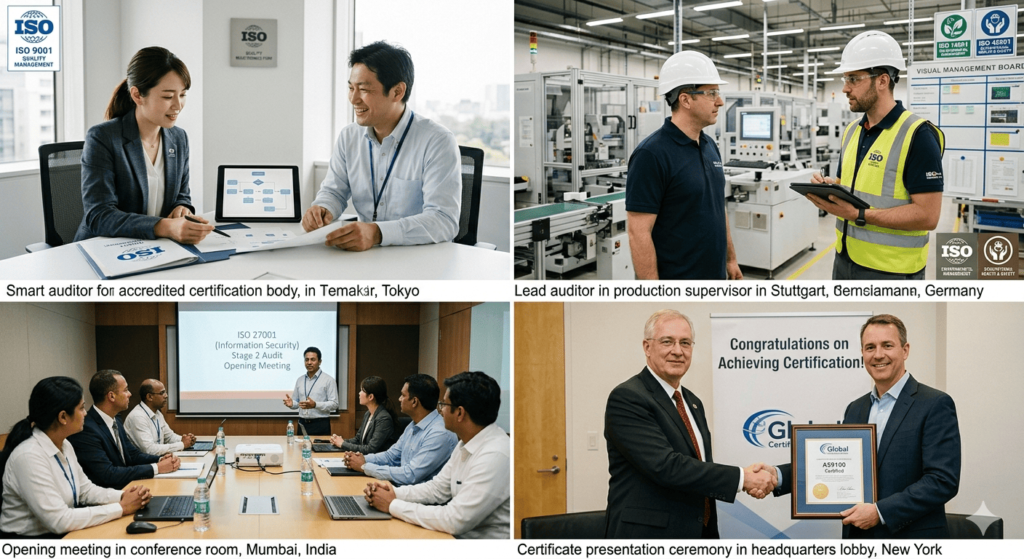
- Stage 2 – On-site Audit: This stage involves a more in-depth on-site audit, where the MSCB evaluates the implementation of the management system in the organization’s day-to-day operations. Auditors interview staff, observe processes, and review records.
- Certification Decision: Based on the audit findings, the MSCB makes a certification decision. If the organization meets the standard, it is granted certification. If any non-conformities are identified, the organization must correct them before certification is granted.
- Surveillance Audits: After certification is awarded, the MSCB conducts regular surveillance audits to ensure that the organization continues to comply with the standards.
- Recertification: Certification is typically valid for three years, after which the organization must undergo a recertification process to maintain its certification.
Challenges Faced by Certification Bodies
- Maintaining Objectivity: As third-party organizations, MSCBs must maintain impartiality throughout the audit process. Balancing the need for transparency with customer relationships can sometimes be challenging.
- Changing Standards: International standards are continually evolving, and certification bodies must stay up to date with these changes. They must regularly update their auditing practices to ensure that they reflect the latest standards.
- Market Competition: The rise of multiple certification bodies in various industries has led to intense competition, which can sometimes impact the quality of certification. Organizations must choose an MSCB with a solid reputation and proper accreditation to ensure reliable certification.
- Cost of Certification: Certification costs can be significant, especially for small and medium-sized businesses. However, the long-term benefits of certification often outweigh the costs, making it a wise investment for many organizations.
Conclusion
Management System Certification Bodies play a critical role in ensuring that organizations operate in line with internationally recognized standards. By providing independent, impartial assessments, MSCBs help businesses improve quality, reduce risks, enhance their reputation, and gain access to new markets. Through the certification process, they foster continuous improvement and encourage organizations to operate more efficiently and responsibly. As organizations continue to strive for operational excellence, MSCBs will remain integral to driving quality and compliance in global business operations.
Management System Certification Bodies ISO/IEC 17021-1:2015- Conformity Assessment Requirements for Bodies Providing
Audit and Certification of Management Systems for Quality Management Systems ISO 9001, Environmental Management Systems ISO 14001, Occupational Health & Safety Management Systems ISO 45001, Medical Devices Quality Management Systems Requirements for Regulatory Purposes ISO 13485, HACCP Based Food Safety Management Systems ISO 22000, Information Security Management Systems ISO 27001 Information Technology Services Management System ISO 20000 Security
Management System for Supply Chain ISO 28000, Energy management System ISO 50001, Ship Recycling Management System ISO 30000, Societal Security-Business
Continuity Management Systems -Requirements ISO 22301, Asset Management- Management Systems- Requirements ISO 55001, GHG- Verifiers etc.
- · ISO/IEC 17021-1:Latest – Conformity Assessment – Requirements for Bodies Providing Audit and Certification of Management Systems.
- · ISO/TS 22003:Latest – Food Safety Management Systems – Requirements for Bodies Providing Audit and Certification of Food Safety Management Systems.
- · ISO/IEC 27006:Latest -Information Technology – Security Techniques Requirements for Bodies Providing Audit and Certification of Information Security Management Systems.
- · ISO 28003:Latest – Security Management Systems for The Supply Chain – Requirements for Bodies Providing Audit and Certification of Supply Chain Security Management Systems.
- · ISO 30003:Latest – Ships & marine Technology – Ship Recycling management System-requirements for bodies providing audit & certification for ship recycling management.
- · ISO 14065:Latest Green House Gases – requirements for Green House Gas validation & verification bodies for using accreditation or other forms of recognition.
- · ISO 19011:Latest – Guidelines for Auditing Management Systems.
- · Relevant WYAB Accreditation Requirements.
ISO/IEC 17021-1:2015 and Conformity Assessment for Management Systems Certification Bodies
Introduction
In today’s globalized world, organizations are under increasing pressure to demonstrate their commitment to quality, environmental responsibility, health and safety, and security. This has led to the rise of various management systems standards, such as ISO 9001 (Quality Management), ISO 14001 (Environmental Management), ISO 45001 (Occupational Health and Safety), and many more. To ensure that organizations meet these standards, Management System Certification Bodies (MSCBs) have become crucial players. These bodies are responsible for auditing and certifying organizations against international standards.
The effectiveness, credibility, and impartiality of these certification bodies are paramount to the value of certification. The ISO/IEC 17021-1:2015 standard provides the framework for the operation of these certification bodies, ensuring they meet the required levels of competence and reliability in providing audit and certification services. This document explores ISO/IEC 17021-1:2015, its importance, and the role of related ISO standards that govern different management systems and certification processes.
ISO/IEC 17021-1:2015 – Conformity Assessment – Requirements for Bodies Providing Audit and Certification of Management Systems
Overview of ISO/IEC 17021-1:2015
ISO/IEC 17021-1:2015 is the international standard that sets the requirements for the operation of certification bodies involved in auditing and certifying management systems. The standard outlines the general requirements for the competence, consistency, and impartiality of certification bodies, ensuring that their certification activities are reliable and unbiased.
ISO/IEC 17021-1 applies to any organization providing audit and certification services for management systems that are designed to meet international standards. The key principle of ISO/IEC 17021-1 is that it ensures certification bodies operate in a neutral and independent manner, with a high degree of professionalism and expertise.
Key Requirements of ISO/IEC 17021-1:2015
ISO/IEC 17021-1:2015 covers several critical areas that certification bodies must address in their operations:
- Impartiality: Certification bodies must demonstrate impartiality in their certification activities, avoiding any conflicts of interest that might undermine the integrity of the process. This includes ensuring the auditors are free from external pressures and conflicts that could influence their decisions.
- Competence: Certification bodies must have a robust process in place for ensuring the competence of their auditors. This includes providing auditors with the necessary training and experience in specific areas related to the management system being audited, such as quality management systems (ISO 9001) or environmental management systems (ISO 14001).
- Consistent Processes: Certification bodies must employ consistent procedures and practices across all audits to ensure fairness, transparency, and repeatability in their evaluations.
- Resource Management: The certification body must ensure that it has adequate resources, including qualified personnel, to carry out the audits. This includes having access to specialists or technical experts if needed, especially for complex industries such as medical devices or information security.
- Audit Process: The certification body must have a structured audit process, including planning, conducting audits, and reporting the results. Audits should be based on thorough analysis and objective evidence to support the certification decision.
- Surveillance and Recertification: To ensure ongoing compliance, the certification body must conduct surveillance audits and recertification assessments at regular intervals. These audits help confirm that the organization continues to meet the certification criteria.
- Confidentiality: Certification bodies must safeguard the confidentiality of the information they handle during the certification process. This includes protecting sensitive organizational data and audit findings from being disclosed inappropriately.
Relevant Standards for Specific Management System Certification

Several other ISO standards complement ISO/IEC 17021-1 by defining the certification process for specific management systems. These standards provide additional guidance on the requirements and procedures specific to various industries. Some of the key certifications for different sectors include:
1. ISO/TS 22003: Food Safety Management Systems
ISO/TS 22003 provides specific requirements for bodies providing audit and certification services for food safety management systems (FSMS). This is a crucial certification for organizations in the food industry, as it ensures that organizations meet food safety standards and comply with regulations that prevent contamination and ensure the safety of food products. Certification bodies under this standard must demonstrate their competence in auditing processes that assess Hazard Analysis and Critical Control Points (HACCP) and other food safety controls.
2. ISO/IEC 27006: Information Security Management Systems
ISO/IEC 27006 defines the requirements for certification bodies that provide audits of information security management systems (ISMS). In the age of digital information, ISO 27001 is a critical certification for organizations looking to protect sensitive data and manage cybersecurity risks. ISO/IEC 27006 outlines the competence required by certification bodies to conduct audits that verify the robustness of an organization’s information security practices.
3. ISO 28003: Security Management Systems for the Supply Chain
ISO 28003 provides guidelines for the audit and certification of Supply Chain Security Management Systems (SCSMS). This standard is especially relevant to companies involved in global supply chains, where security is critical to prevent risks related to terrorism, piracy, and theft. Certification bodies under ISO 28003 ensure that organizations are implementing security measures that protect their supply chain from threats, thereby enhancing overall global security.
4. ISO 30003: Ship Recycling Management System
The ISO 30003 standard outlines the requirements for certification bodies offering audits for Ship Recycling Management Systems. This certification is critical for organizations involved in ship recycling to ensure environmentally sustainable and safe practices. The standard helps ensure that ships are dismantled in a way that meets environmental regulations, health and safety standards, and international treaties.
5. ISO 14065: Greenhouse Gas Validation and Verification
ISO 14065 establishes the requirements for bodies that validate and verify greenhouse gas (GHG) emissions data. This is increasingly important as organizations and governments strive to meet climate change goals and regulatory requirements. Certification bodies under this standard must demonstrate competence in auditing carbon footprints and ensuring that organizations accurately report GHG emissions.
6. ISO 22301: Business Continuity Management Systems
ISO 22301 sets the requirements for organizations to develop and implement effective business continuity management systems (BCMS). Certification bodies providing audits of BCMS help ensure that organizations have proper systems in place to handle disruptions, whether caused by natural disasters, cyber-attacks, or other emergencies. The certification helps businesses prepare for unexpected events, minimizing operational downtime and financial loss.
7. ISO 55001: Asset Management
ISO 55001 specifies the requirements for an asset management system (AMS). Certification bodies assess how well an organization manages its physical assets, such as machinery, infrastructure, and equipment. Proper asset management can reduce costs, increase reliability, and improve the overall efficiency of operations, making this certification crucial for industries like manufacturing, oil and gas, and utilities.
Related Guidelines and Best Practices
In addition to the specific standards mentioned above, there are also guidelines and best practices that help both certification bodies and organizations navigate the certification process more effectively:
ISO 19011: Guidelines for Auditing Management Systems
ISO 19011 provides comprehensive guidelines for auditing management systems. It covers everything from the principles of auditing to the management of audit programs. Certification bodies can use this standard to guide their auditors in planning and conducting audits effectively, ensuring that all relevant criteria are addressed.
WYAB Accreditation Requirements
Certification bodies must also comply with the accreditation requirements set by national and international accreditation organizations. These bodies, such as ANAB (ANSI National Accreditation Board) or UKAS (United Kingdom Accreditation Service), ensure that certification bodies operate in accordance with international standards and possess the necessary competence to carry out audits and issue valid certifications.
Conclusion
The ISO/IEC 17021-1:2015 standard is essential for ensuring the competence, reliability, and impartiality of management system certification bodies. It sets the framework for consistent and credible certification processes across various industries, including quality management, environmental management, occupational health and safety, information security, and supply chain security, among others.
Complementary standards like ISO/TS 22003, ISO/IEC 27006, and ISO 28003 ensure that certification bodies can provide specialized audits tailored to the specific requirements of each sector. With increasing global competition and a growing demand for compliance with international standards, organizations that achieve certification gain credibility, enhance operational efficiency, and improve risk management practices.
By adhering to the ISO/IEC 17021-1 and other related standards, certification bodies contribute significantly to the global efforts of improving organizational performance and promoting sustainable, secure, and reliable business practices.
Table of Contents
Branches
WYAB Accreditation
WYAB Head Office
WYAB World Yoga Accreditation Board
WYAB House
C/O Mr.Garry 54, Glengarnock Avenue,
E-14 3BP Isle Of Dogs, London UK
Tel .: +44-8369083940
email: info@worldyoga.us
Website: https://worldyoga.us/
MUMBAI Head Office
World Yoga Accreditation Board (WYAB)
WYAB House
B-401, New Om Kaveri Chs. Ltd., Nagindas pada,
Next To Shiv Sena Office, Nallasopara (E)
Tel .: +91-7499991895
email: info@worldyoga.us
Website: https://worldyoga.us/
DELHI-NCR Regd. Office
World Yoga Accreditation Board (WYAB)
WYAB House
Asaoti, Dist Palwal
Faridabad Delhi NCR, Haryana
Tel .: +91-7979801035
Fax: +91-250 2341170
Website: https://worldyoga.us/