
Summary Procedure For Inspection Body Accreditation
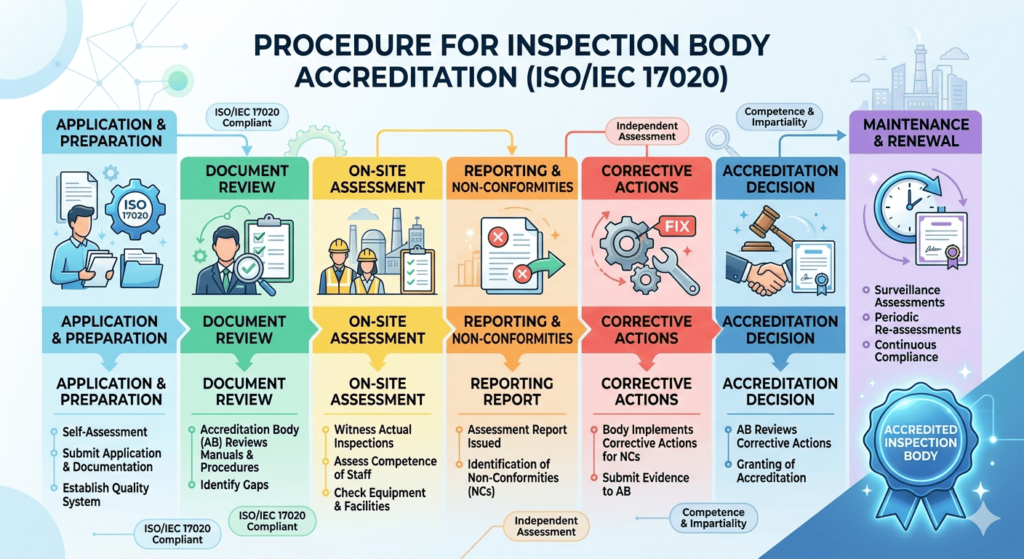
Inspection Body Accreditation is a formal recognition process that demonstrates an organization’s competence, impartiality, and consistency in performing inspection activities. It plays a vital role in ensuring that inspections are carried out in accordance with internationally accepted standards, thereby building confidence among clients, regulators, and stakeholders. The entire procedure is structured, transparent, and aligned primarily with the requirements of ISO/IEC 17020, along with quality management principles derived from ISO 9001.
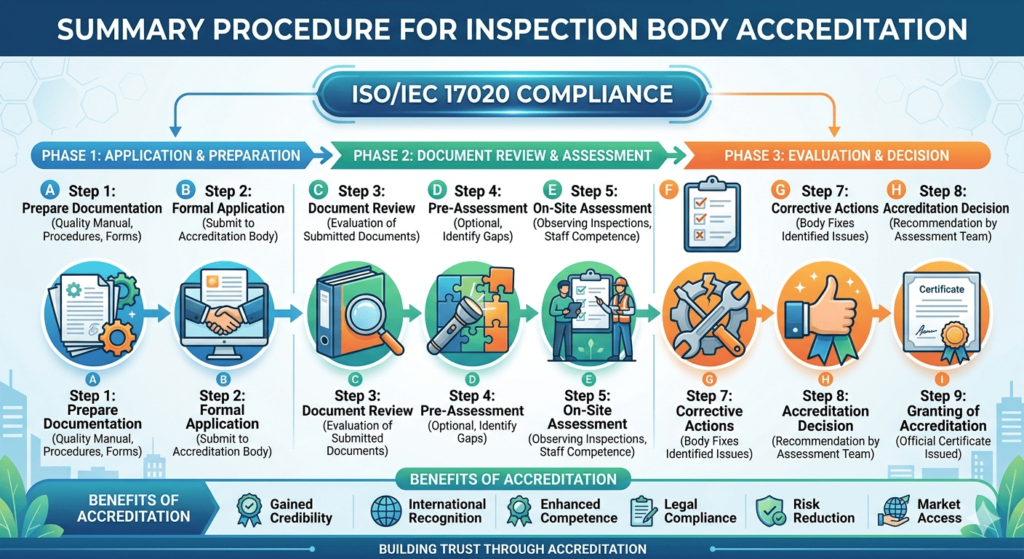
The process begins with the submission of a formal application by the inspection body to the accreditation authority. This application must be completed in the prescribed format and accompanied by the required fee. At this stage, the applicant provides essential information about the organization, including its legal identity, organizational structure, scope of inspection services, and technical capabilities. Defining the scope of accreditation is particularly important, as it outlines the specific inspection activities the organization intends to perform under accreditation. A clear and accurate application helps streamline the evaluation process and reduces delays.
Once the application is submitted, the inspection body must demonstrate compliance with the requirements of ISO/IEC 17020. This standard specifies criteria for the operation of different types of inspection bodies and emphasizes impartiality, independence, technical competence, and consistent inspection practices. In addition, the organization is expected to establish and maintain a Quality Management System aligned with ISO 9001 or an equivalent framework that ensures systematic control of processes, documentation, and continuous improvement. Implementing such a system enables the inspection body to deliver reliable and repeatable results while enhancing customer satisfaction.
Following compliance preparation, the applicant submits detailed documentation to the accreditation body. This documentation includes quality manuals, procedures, and operational guidelines that define how inspection activities are conducted. One of the key elements is the classification of the inspection body as Type A, Type B, or Type C. Type A inspection bodies operate as independent third parties, ensuring complete impartiality, while Type B and Type C bodies may be part of larger organizations but must still demonstrate clear measures to manage conflicts of interest.
Along with this, the organization must provide procedures covering various inspection types such as design verification, product inspection, process evaluation, and testing. Contractual agreements and client terms must also be submitted, clearly outlining responsibilities, confidentiality clauses, and service conditions.
After receiving the documentation, the accreditation body conducts a thorough document review. This stage involves evaluating whether the applicant’s systems and procedures meet the requirements of the relevant standards. Assessors carefully examine the quality management system, staff qualifications, inspection methods, reporting formats, and impartiality safeguards. If any gaps or non-conformities are identified, the applicant is required to address them by revising documents and submitting corrective actions. This step may involve multiple iterations until all requirements are satisfactorily fulfilled, ensuring that the organization is well-prepared for the next phase.
Once the documentation is approved, the accreditation body proceeds with an on-site assessment, often referred to as a witness audit. This is a critical stage where assessors visit the organization’s premises to verify the actual implementation of documented systems. During this assessment, they observe inspection activities, evaluate staff competence, review equipment calibration, and examine records. The objective is to ensure that the organization not only has proper documentation but also effectively applies it in real-world operations. Assessors may also interact with personnel to assess their understanding of procedures and standards. Any non-conformities identified during this stage must be addressed through corrective actions within a specified timeframe.
Corrective actions form an essential part of the accreditation process. When non-conformities are detected, the organization must identify their root causes and implement appropriate measures to eliminate them. This may involve updating procedures, conducting staff training, improving documentation, or enhancing operational controls. The applicant must then provide evidence of these actions to the accreditation body for review. Only after all non-conformities are satisfactorily closed does the process move forward.
The final stage is the accreditation decision. Based on the results of the document review, on-site assessment, and corrective actions, the accreditation body determines whether the applicant meets all requirements. If successful, accreditation is granted, and the inspection body receives an official certificate along with a defined scope of accreditation. The organization is also listed on the accreditation body’s official platform, allowing clients and stakeholders to verify its accredited status. This recognition significantly enhances the organization’s credibility and market reputation.
However, accreditation is not a one-time achievement. It requires continuous compliance and improvement. Accreditation bodies conduct periodic surveillance audits, sometimes without prior notice, to ensure that the inspection body continues to meet the required standards. These audits focus on maintaining consistency, competence, and adherence to procedures. Failure to comply with requirements may lead to suspension or withdrawal of accreditation, making it essential for organizations to remain vigilant and committed to quality.
The importance of Inspection Body Accreditation extends beyond compliance. It provides a competitive advantage by demonstrating reliability and professionalism. Accredited inspection bodies are often preferred by clients and regulators because their work is recognized as trustworthy and technically sound. This reduces the need for repeated inspections and facilitates smoother regulatory approvals. Additionally, accreditation promotes risk reduction by ensuring standardized processes and minimizing errors.
Despite its benefits, the accreditation process can be demanding. Organizations may face challenges such as extensive documentation requirements, the need for skilled personnel, and the time required for audits and corrective actions. However, these challenges can be effectively managed through proper planning, training, and internal audits. Organizations that invest in building strong systems and fostering a culture of quality find the accreditation process more manageable and rewarding.
In conclusion, the Summary Procedure for Inspection Body Accreditation is a comprehensive and structured process designed to ensure that inspection bodies operate with the highest levels of competence, impartiality, and consistency. By aligning with standards such as ISO/IEC 17020 and ISO 9001, organizations not only achieve formal recognition but also strengthen their operational excellence and market credibility. From application to continuous surveillance, each stage contributes to building a robust system that delivers reliable inspection services and fosters trust across industries.
1) Investigation bodies will make a conventional application for certification on structure along with the right application charge.
2) The candidate assessment body is expected to conform to the necessities of ISO 17020 what’s more, to keep a Quality Administration Framework as per the necessities of ISO 9001 (most recent rendition) or their own framework that at any rate accomplishes the necessities of ISO 17020.
3) The candidate ships off WYAB the manuals and techniques for the activity of an assessment body. These should include:
a. Its status with respect to Type A, B or C and game plans for unprejudiced nature and secrecy in view of the examination body type.
b. The sort of investigation, e.g., plan assessment, demonstrating, assessment or physical test, along with going with techniques and guidelines
c. Contract agreements for examination body clients and commonplace provisos
4) WYAB will lead a report evaluation. If important, WYAB will require the candidate to correct and answer before the subsequent stage.
5) WYAB will, when is helpful, lead a site observer of the candidate’s investigation.
6) Subject to a fruitful site observer and conclusion of any material remedial activity, the candidate’s license is affirmed. The review body is recorded on the WYAB site
for the most part without admonition.
Inspection Body Accreditation is a structured and systematic process that ensures an organization is competent, impartial, and capable of performing inspection activities in accordance with internationally recognized standards. Accreditation enhances credibility, builds trust among clients and regulators, and demonstrates adherence to best practices. The procedure outlined below provides a comprehensive understanding of how an inspection body obtains accreditation, particularly in alignment with ISO/IEC 17020 and quality management principles of ISO 9001.
1. Formal Application Submission
The accreditation journey begins with the inspection body submitting a formal application to the accreditation authority such as WYAB (World Yoga Accreditation Board or similar governing body). This application must be completed in the prescribed format and accompanied by the applicable fees.
The application serves as the first official communication between the applicant and the accreditation body. It includes detailed organizational information such as:
- Legal identity and ownership structure
- Scope of inspection services offered
- Technical capabilities and industry sectors covered
- Organizational structure and staffing details
This stage is crucial because it establishes the foundation for the entire accreditation process. The accuracy and completeness of the application significantly influence the efficiency of subsequent evaluation stages. Any missing or unclear information can lead to delays or requests for clarification.
Additionally, the applicant must clearly define the scope of accreditation they are seeking. This scope determines the specific inspection activities and sectors that will be evaluated and approved.
2. Compliance with ISO Standards
The applicant inspection body is required to comply with the requirements of ISO/IEC 17020, which specifies criteria for the competence of inspection bodies performing inspection activities.
ISO/IEC 17020 focuses on key elements such as:
- Independence and impartiality
- Technical competence
- Inspection methodologies
- Reporting and documentation
- Quality assurance practices
In addition to ISO/IEC 17020, the organization must implement a Quality Management System (QMS) aligned with ISO 9001 or an equivalent system that meets or exceeds ISO 17020 requirements.
A well-implemented QMS ensures:
- Consistency in inspection processes
- Continuous improvement
- Customer satisfaction
- Risk management
- Documented procedures and controls
Organizations that already have ISO 9001 certification often find it easier to align with ISO 17020 requirements, as both standards emphasize process control, documentation, and continual improvement.
3. Submission of Documentation
Once the application is accepted, the candidate inspection body must submit comprehensive documentation to WYAB. This documentation forms the basis for the document review stage and demonstrates how the organization meets accreditation requirements.
Key documents include:
a. Inspection Body Classification (Type A, B, or C)
The inspection body must declare its classification:
- Type A: Fully independent third-party inspection body
- Type B: Separate but part of a larger organization (internal inspection)
- Type C: Inspection body involved in design, manufacturing, or maintenance
The applicant must provide detailed arrangements for:
- Impartiality – Ensuring unbiased inspection outcomes
- Confidentiality – Protecting client information
- Conflict of interest management
These elements are critical because accreditation bodies place significant emphasis on trust and independence.
b. Types of Inspection Activities
The organization must clearly define the types of inspections it performs, such as:
- Design verification
- Product inspection
- Process inspection
- Installation inspection
- Testing and validation
Each inspection type must be supported by:
- Documented procedures
- Work instructions
- Technical guidelines
- Acceptance criteria
This ensures that inspections are performed consistently and accurately across different projects and clients.
c. Contractual Agreements and Client Terms
The applicant must submit standard contract formats and client agreements. These documents typically include:
- Scope of services
- Responsibilities of the inspection body
- Obligations of the client
- Confidentiality clauses
- Liability limitations
Clear contractual terms help avoid misunderstandings and ensure transparency in business relationships.
4. Document Review by Accreditation Body
After receiving the documentation, WYAB conducts a comprehensive document review. This stage evaluates whether the applicant’s systems, procedures, and policies comply with accreditation requirements.
During this review, assessors examine:
- Quality manual and procedures
- Organizational structure
- Personnel qualifications and competence records
- Inspection methods and reporting formats
- Risk management and impartiality mechanisms
If any gaps or non-conformities are identified, WYAB will request corrective actions. The applicant must:
- Address the observations
- Revise documentation
- Provide evidence of corrective measures
This iterative process may involve multiple rounds of review until all requirements are satisfactorily met.
5. On-Site Assessment (Site Witness Audit)
Once the documentation is approved, WYAB conducts an on-site assessment (also known as a witness audit). This is one of the most critical stages in the accreditation process.
During the site visit, assessors evaluate:
- Implementation of documented procedures
- Competence of personnel
- Inspection activities in real-time
- Equipment calibration and maintenance
- Record-keeping practices
The purpose is to verify that the organization not only has documented systems but also effectively implements them in practice.
Assessors may:
- Observe actual inspection processes
- Interview staff members
- Review inspection reports
- Check compliance with safety and regulatory requirements
Any non-conformities identified during the audit must be corrected within a specified timeframe.
6. Corrective Actions and Closure
If the on-site assessment reveals non-conformities, the applicant must take corrective actions. These actions involve:
- Identifying root causes
- Implementing corrective measures
- Preventing recurrence
The applicant must submit evidence such as:
- Revised procedures
- Training records
- Updated documentation
- Corrective action reports
WYAB reviews these submissions to ensure that all issues have been adequately addressed.
Only after successful closure of all non-conformities does the process move to the final stage.
7. Accreditation Decision and Approval
Following successful completion of all assessments and corrective actions, WYAB makes a final decision regarding accreditation.
If approved:
- The inspection body is granted accreditation
- A certificate is issued
- The scope of accreditation is clearly defined
The accredited body is then officially listed on the WYAB website, making its status publicly accessible. This enhances credibility and allows clients to verify accreditation.
8. Surveillance and Continuous Monitoring
Accreditation is not a one-time achievement; it requires continuous compliance. WYAB conducts periodic surveillance audits, often without prior notice, to ensure ongoing adherence to standards.
These audits focus on:
- Consistency in inspection activities
- Maintenance of quality systems
- Continued competence of personnel
- Implementation of improvements
Failure to maintain compliance can result in:
- Suspension of accreditation
- Withdrawal of accreditation
9. Importance of Inspection Body Accreditation
Accreditation provides numerous benefits to inspection bodies and their stakeholders:
a. Enhanced Credibility
Accredited organizations are recognized as competent and reliable, increasing trust among clients and regulators.
b. Market Advantage
Accreditation differentiates organizations from competitors and opens opportunities in regulated markets.
c. Regulatory Acceptance
Many authorities accept accredited inspection reports, reducing the need for repeated inspections.
d. Risk Reduction
Standardized processes minimize errors and improve consistency.
e. Continuous Improvement
Accreditation encourages organizations to regularly review and improve their systems.
10. Challenges in the Accreditation Process
While beneficial, the accreditation process can be challenging:
- Extensive documentation requirements
- Need for skilled personnel
- Time-consuming audits
- Continuous compliance obligations
Organizations must invest in training, infrastructure, and process improvements to meet accreditation requirements.
11. Best Practices for Successful Accreditation
To ensure a smooth accreditation process, organizations should:
- Conduct internal audits before applying
- Train staff on ISO standards
- Maintain clear and updated documentation
- Implement a robust quality management system
- Address non-conformities promptly
Proactive preparation significantly reduces delays and increases the likelihood of success.
Conclusion
The procedure for Inspection Body Accreditation is a rigorous but rewarding process that ensures organizations operate with the highest levels of competence, integrity, and professionalism. By adhering to standards such as ISO/IEC 17020 and ISO 9001, inspection bodies demonstrate their commitment to quality and reliability.
From initial application to ongoing surveillance, each step plays a critical role in establishing trust and maintaining excellence. Accreditation not only enhances organizational reputation but also contributes to safer, more reliable systems across industries.
Table of Contents
Branches
WYAB Accreditation
WYAB Head Office
WYAB World Yoga Accreditation Board
WYAB House
C/O Mr.Garry 54, Glengarnock Avenue,
E-14 3BP Isle Of Dogs, London UK
Tel .: +44-8369083940
email: info@worldyoga.us
Website: https://worldyoga.us/
MUMBAI Head Office
World Yoga Accreditation Board (WYAB)
WYAB House
B-401, New Om Kaveri Chs. Ltd., Nagindas pada,
Next To Shiv Sena Office, Nallasopara (E)
Tel .: +91-7499991895
email: info@worldyoga.us
Website: https://worldyoga.us/
DELHI-NCR Regd. Office
World Yoga Accreditation Board (WYAB)
WYAB House
Asaoti, Dist Palwal
Faridabad Delhi NCR, Haryana
Tel .: +91-7979801035
Fax: +91-250 2341170
Website: https://worldyoga.us/