
Testing Laboratories
Testing laboratories play a vital role in ensuring the safety, quality, and reliability of products, materials, and systems across a wide range of industries. From construction and manufacturing to healthcare, food safety, and environmental protection, laboratories provide the scientific validation needed to confirm that products meet established standards and regulatory requirements. In today’s global marketplace, where precision and trust are essential, testing laboratories act as the backbone of quality assurance by delivering accurate and dependable results that businesses, governments, and consumers can rely on.
At the core of laboratory competence lies the internationally recognized standard ISO/IEC 17025, which is specifically designed for testing and calibration laboratories. This standard outlines the general requirements for the competence, impartiality, and consistent operation of laboratories. Unlike generic quality management standards, ISO/IEC 17025 focuses heavily on technical capability, ensuring that laboratories are not only well-managed but also scientifically proficient. It covers key aspects such as personnel competence, equipment calibration, measurement traceability, testing methods, and result reporting, all of which contribute to the credibility and reliability of laboratory outcomes.
Testing laboratories operate in diverse fields, each requiring specialized expertise and advanced equipment. For instance, chemical testing laboratories analyze substances to determine their composition, purity, and compliance with safety regulations. These laboratories are essential in industries such as pharmaceuticals, food production, and environmental monitoring. Similarly, microbiological testing laboratories focus on detecting harmful microorganisms in products like food, water, and medical supplies, helping to protect public health and ensure compliance with hygiene standards.
Another critical area is physical and mechanical testing, where materials are evaluated for properties such as strength, durability, and elasticity. This type of testing is widely used in construction, automotive, and aerospace industries to ensure that materials can withstand operational stresses and environmental conditions. Metallurgical testing further examines the structure and properties of metals, providing valuable insights into their performance and suitability for specific applications.
In the field of electronics, testing laboratories assess the performance, safety, and reliability of electronic devices and components. This includes electromagnetic compatibility (EMC) testing, which ensures that devices do not emit excessive electromagnetic interference and can function properly in their intended environment. Such testing is crucial for maintaining the performance of communication systems, consumer electronics, and industrial equipment.
Environmental testing laboratories evaluate how products and materials respond to various environmental conditions such as temperature, humidity, vibration, and corrosion. These tests help manufacturers design products that can perform reliably under real-world conditions. Additionally, environmental laboratories monitor air, water, and soil quality, playing a key role in environmental protection and sustainability efforts.
Non-destructive testing (NDT) is another important discipline within testing laboratories. It involves evaluating materials and structures without causing damage, using techniques such as ultrasonic testing, radiography, and magnetic particle inspection. NDT is widely used in industries like oil and gas, construction, and aviation to ensure structural integrity and safety without compromising the tested components.
Accreditation is a crucial aspect of testing laboratories, as it provides formal recognition of their competence to perform specific tests. Accreditation bodies assess laboratories against ISO/IEC 17025 requirements to ensure they meet international standards. Achieving accreditation enhances a laboratory’s credibility, as it demonstrates its ability to produce reliable and accurate results. It also facilitates global acceptance of test reports, reducing the need for duplicate testing and supporting international trade.
One of the key benefits of ISO/IEC 17025 accreditation is improved customer confidence. Clients are more likely to trust and rely on results from accredited laboratories, knowing that they adhere to strict quality and technical standards. Accreditation also helps laboratories streamline their processes, reduce errors, and improve overall efficiency. By implementing a robust quality management system, laboratories can identify areas for improvement, implement corrective actions, and continuously enhance their performance.
The competence of laboratory personnel is another critical factor in ensuring accurate results. Skilled and trained professionals are essential for conducting tests, interpreting data, and maintaining equipment. ISO/IEC 17025 emphasizes the importance of ongoing training and competency evaluation to ensure that staff remain up to date with the latest techniques and technologies. This focus on human expertise, combined with advanced equipment and standardized procedures, ensures the reliability of laboratory operations.
Measurement traceability is also a fundamental requirement in testing laboratories. It ensures that measurement results can be traced back to recognized standards, typically through an unbroken chain of calibrations. This traceability provides confidence in the accuracy and consistency of test results, which is particularly important in industries where precision is critical.
In recent years, technological advancements have significantly transformed the operations of testing laboratories. Automation, digital data management, and advanced analytical tools have improved the speed, accuracy, and efficiency of testing processes. Laboratories are increasingly adopting technologies such as artificial intelligence and machine learning to analyze complex data and identify patterns, further enhancing their capabilities.
The future of testing laboratories is closely linked to innovation and sustainability. As industries evolve and new challenges emerge, laboratories must adapt to meet changing demands. This includes expanding capabilities in areas such as biotechnology, genetic testing, and environmental analysis. Additionally, there is a growing emphasis on sustainable practices, with laboratories striving to minimize their environmental impact and contribute to global sustainability goals.
In conclusion, testing laboratories are indispensable to modern society, providing the scientific foundation for quality, safety, and compliance. Through adherence to standards like ISO/IEC 17025, laboratories demonstrate their technical competence and commitment to excellence. Their work supports a wide range of industries, protects consumers, and facilitates global trade. As technology continues to advance and the demand for reliable testing grows, testing laboratories will remain at the forefront of innovation, ensuring that products and systems meet the highest standards of performance and safety.
Testing Laboratories ISO/IEC 17025:latest – Standard Is For The Most Part Utilized By Testing And Calibration Laboratories. At First Known As ISO/IEC 17025 Includes Skill Prerequisites And It Applies Straightforwardly To Those Associations That Produce Testing Results/endorsements.
WYAB Certification Is Accessible For The Following Classifications:
Acoustic Estimation, Ballistic Estimation, Fire Testing, Aspect Estimation, Testing Of Electronic Hardware/item, Testing Of Electromagnetic Compatibility (EMC), Synthetic Material’s Testing Geology, Testing Of Individual Security and Assurance Types of gear, Non Destructive Testing (NDT), Information Technology (IT), Chemical Testing, Erosion Testing, Actual Material’s Testing, Metallurgical Testing, Microbiological Testing, Assessment Of The Environments Influence On Products & Equipments, Behaviour, Tangible Investigation, Security, Scientific categorization, Ionizing Radiations and Radio Action, Atomic Science, Genetic Modified Organisms (GMO), Biology, Veterinary Medication, Bio-Banks And Forensic Examinations.
WYAB Certification Is Accessible For The Following Classifications:
• ISO/IEC 17025:latest – General Necessities For The Capability Of Testing And Calibration Laboratories.
• Shown Specialized Capability Well defined for The Field In Which Testing Is Performed.
• Applicable WYAB Accreditation Necessities.
Testing Laboratories and ISO/IEC 17025: Ensuring Accuracy, Reliability, and Global Acceptance
Testing laboratories play a critical role in modern industries by ensuring that products, materials, and systems meet defined standards, regulations, and customer expectations. In today’s highly competitive and regulated environment, the need for reliable testing results has become more important than ever. Organizations, regulators, and consumers rely on testing laboratories to provide accurate, unbiased, and technically competent results. This is where ISO/IEC 17025, the globally recognized standard for testing and calibration laboratories, becomes essential.
ISO/IEC 17025 is widely used by testing and calibration laboratories to demonstrate their technical competence and ability to produce valid and reliable results. Originally introduced to harmonize laboratory practices across countries, the standard has evolved into a cornerstone of quality assurance in laboratory operations. It not only specifies management requirements but also focuses heavily on technical competence, ensuring that laboratories maintain high levels of accuracy, consistency, and credibility.
Understanding ISO/IEC 17025
ISO/IEC 17025 is designed specifically for laboratories that carry out testing and calibration activities. Unlike general quality standards such as ISO 9001, ISO/IEC 17025 goes deeper into the technical aspects of laboratory operations. It includes requirements related to personnel competence, equipment calibration, measurement traceability, sampling methods, and result reporting.
The standard is applicable to all organizations performing laboratory activities, regardless of size or complexity. Whether a laboratory operates independently, is part of a manufacturing organization, or belongs to a research institution, ISO/IEC 17025 provides a structured framework to ensure quality and reliability in testing outcomes.
The “latest version” of ISO/IEC 17025 emphasizes a risk-based approach, increased flexibility, and alignment with other ISO standards. It focuses on improving laboratory processes, reducing errors, and enhancing customer confidence in test results and certifications.
Importance of Accreditation for Testing Laboratories
Accreditation is a formal recognition that a laboratory is competent to perform specific testing or calibration activities. Achieving accreditation under ISO/IEC 17025 signifies that a laboratory has been thoroughly assessed by an authoritative body and meets internationally accepted standards.
Accreditation provides several key benefits:
- Global Recognition: Accredited laboratories gain international acceptance of their test reports, reducing the need for retesting in different countries.
- Improved Credibility: Clients and stakeholders trust results from accredited laboratories more than non-accredited ones.
- Regulatory Compliance: Many industries and government agencies require ISO/IEC 17025 accreditation for compliance.
- Operational Efficiency: Implementation of the standard improves laboratory processes and reduces errors.
- Customer Confidence: Accreditation demonstrates commitment to quality and technical excellence.
WYAB Certification for Testing Laboratories
WYAB certification is available for a wide range of testing laboratory classifications. It ensures that laboratories not only comply with ISO/IEC 17025 requirements but also meet additional accreditation criteria defined by WYAB. This certification validates the laboratory’s capability to produce accurate and reliable results in its specific field of testing.
WYAB certification is particularly valuable for laboratories seeking to establish credibility in competitive markets and gain recognition in both national and international domains.
Key Classifications of Testing Laboratories Under WYAB Certification
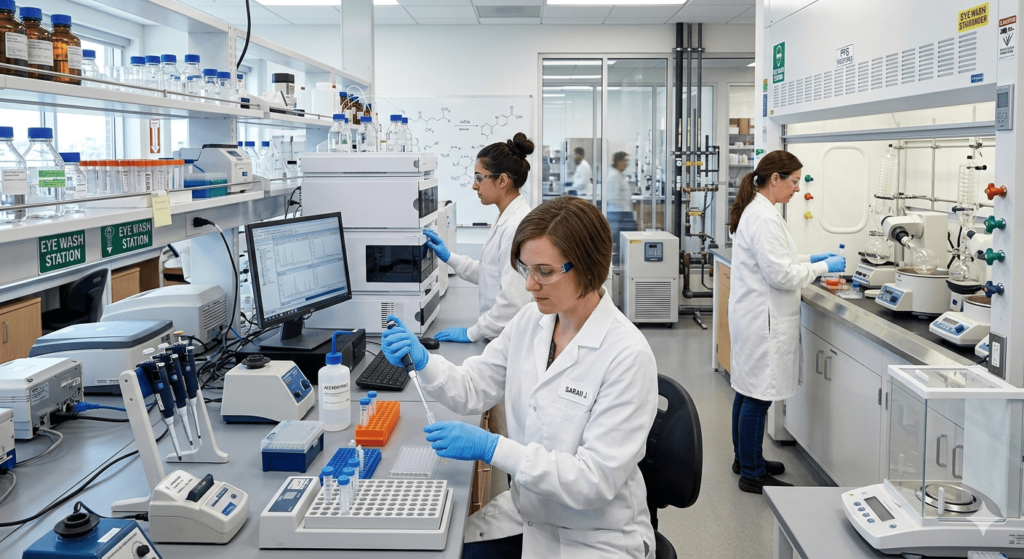
Testing laboratories cover a broad spectrum of disciplines, each requiring specialized knowledge, equipment, and methodologies. WYAB certification is available across numerous categories, ensuring that laboratories in diverse sectors can demonstrate their competence effectively.
Acoustic Measurement
Acoustic testing laboratories focus on measuring sound levels, noise pollution, and vibration effects. These laboratories are essential in industries such as construction, automotive, and environmental monitoring. Accurate acoustic measurements help ensure compliance with noise regulations and improve product design.
Ballistic Measurement
Ballistic testing involves the study of projectile behavior, impact resistance, and material performance under high-velocity conditions. Laboratories in this field are crucial for defense, law enforcement, and security equipment manufacturers.
Fire Testing
Fire testing laboratories evaluate the fire resistance, flammability, and safety of materials and products. This category is vital for construction materials, textiles, and electrical equipment to ensure safety standards are met.
Dimensional Measurement
Dimensional testing ensures that products meet specified size and tolerance requirements. Precision measurement is critical in manufacturing industries such as aerospace, automotive, and engineering.
Testing of Electronic Equipment
Laboratories specializing in electronic equipment testing assess performance, safety, and durability. These tests ensure that devices function correctly under various conditions and meet regulatory standards.
Electromagnetic Compatibility (EMC) Testing
EMC testing ensures that electronic devices do not emit excessive electromagnetic interference and can operate effectively in their environment. This is essential for telecommunications, consumer electronics, and industrial equipment.
Chemical and Material Testing
Chemical testing laboratories analyze the composition, quality, and safety of materials. This includes testing for contaminants, chemical properties, and compliance with safety standards.
Geological Testing
Geological testing involves analyzing soil, rocks, and minerals. These laboratories support construction, mining, and environmental studies by providing data on material properties and stability.
Personal Protective Equipment (PPE) Testing
Testing of personal safety equipment ensures that protective gear such as helmets, gloves, and safety clothing meets required standards for performance and durability.
Non-Destructive Testing (NDT)
NDT laboratories evaluate materials and structures without causing damage. Techniques such as ultrasonic testing, radiography, and magnetic particle inspection are widely used in industries like oil and gas, aerospace, and construction.
Information Technology Testing
IT testing laboratories assess software and hardware performance, cybersecurity, and system reliability. This ensures that technology products meet functional and security requirements.
Corrosion Testing
Corrosion testing evaluates how materials respond to environmental conditions such as humidity, salt exposure, and chemicals. This is crucial for infrastructure, marine, and industrial applications.
Physical Testing of Materials
Physical testing involves analyzing properties such as strength, elasticity, and durability. This helps manufacturers ensure product quality and performance.
Metallurgical Testing
Metallurgical laboratories examine the structure and properties of metals. These tests are essential for quality control in manufacturing and engineering industries.
Microbiological Testing
Microbiological testing focuses on detecting microorganisms in food, water, pharmaceuticals, and other products. This ensures safety and compliance with health regulations.
Environmental Testing
Environmental testing evaluates how products perform under various environmental conditions such as temperature, humidity, and pressure. It also assesses environmental impact.
Sensory and Behavioral Analysis
These laboratories analyze human responses to products, including taste, smell, and usability. This is particularly relevant in food, cosmetics, and consumer goods industries.
Security Testing
Security testing laboratories assess the safety and resilience of systems, products, and infrastructure against threats and vulnerabilities.
Taxonomy and Biological Testing
These laboratories classify organisms and conduct biological research, supporting industries such as agriculture, pharmaceuticals, and environmental conservation.
Ionizing Radiation and Radioactivity
Testing in this field ensures safety in environments involving radiation, such as nuclear facilities and medical applications.
Atomic and Molecular Science
Laboratories in this category conduct advanced scientific research and testing at atomic and molecular levels.
GMO Testing
Genetically Modified Organism (GMO) testing laboratories analyze food and agricultural products to detect genetic modifications and ensure compliance with regulations.
Veterinary and Biomedical Testing
These laboratories support animal health and biomedical research through diagnostic and analytical testing.
Biobanks
Biobanks store and manage biological samples for research and medical purposes, requiring strict quality and traceability standards.
Forensic Testing
Forensic laboratories provide scientific analysis for legal investigations, including DNA analysis, toxicology, and material identification.
Core Requirements of ISO/IEC 17025
To achieve accreditation, laboratories must meet several core requirements outlined in ISO/IEC 17025:
General Requirements
These include impartiality and confidentiality, ensuring that laboratory operations are unbiased and secure.
Structural Requirements
Laboratories must have a defined organizational structure with clear roles and responsibilities.
Resource Requirements
This includes qualified personnel, properly calibrated equipment, and suitable facilities.
Process Requirements
Laboratories must follow validated methods, ensure measurement traceability, and maintain accurate records.
Management System Requirements
A robust management system must be in place to ensure continuous improvement, internal audits, and corrective actions.
Demonstrating Technical Competence
One of the most important aspects of ISO/IEC 17025 is demonstrating technical competence. Laboratories must prove that they have the expertise, equipment, and procedures necessary to produce accurate and reliable results.
This includes:
- Skilled and trained personnel
- Validated testing methods
- Properly calibrated equipment
- Participation in proficiency testing
- Continuous monitoring and improvement
Role of WYAB Accreditation Requirements
In addition to ISO/IEC 17025, laboratories seeking WYAB certification must comply with specific accreditation requirements. These requirements ensure that laboratories maintain high standards of quality, integrity, and technical competence.
WYAB accreditation focuses on:
- Field-specific technical capability
- Compliance with international standards
- Continuous improvement practices
- Transparent and reliable reporting
Benefits of WYAB Certification
WYAB certification offers several advantages for testing laboratories:
- Enhanced reputation and market credibility
- Increased business opportunities
- Recognition in international markets
- Improved operational efficiency
- Compliance with regulatory requirements
Future of Testing Laboratories
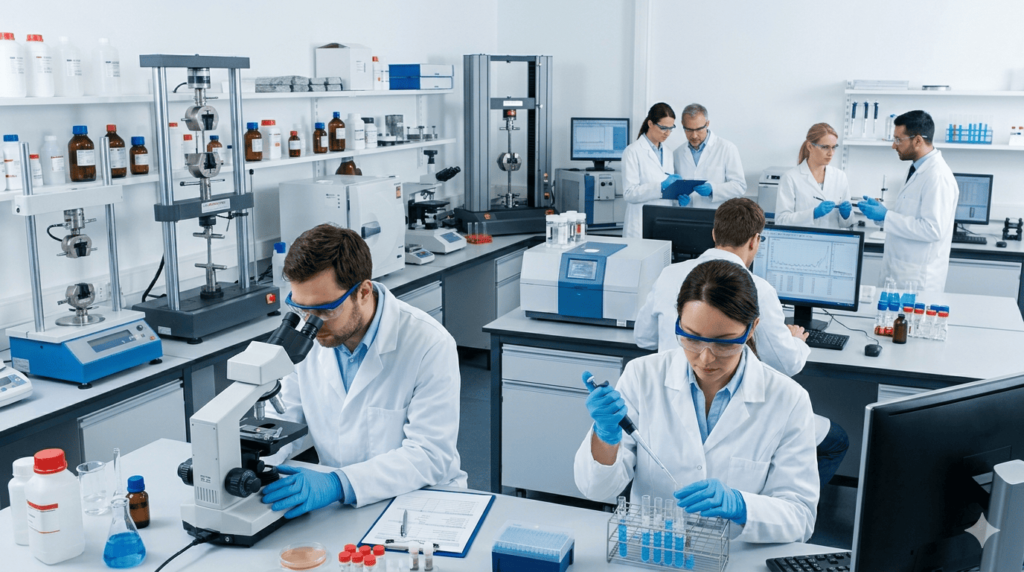
The future of testing laboratories is driven by technological advancements, automation, and digital transformation. Emerging trends include:
- Integration of artificial intelligence in testing processes
- Use of advanced analytical tools
- Increased focus on sustainability and environmental testing
- Expansion of biotechnology and genetic testing
- Greater emphasis on data integrity and cybersecurity
As industries continue to evolve, the demand for accurate and reliable testing will only increase. Laboratories must continuously adapt to new technologies and standards to remain competitive.
Conclusion
Testing laboratories are essential pillars of quality assurance, safety, and innovation across industries. ISO/IEC 17025 provides a comprehensive framework to ensure that laboratories operate with competence, consistency, and credibility. Accreditation under this standard, combined with WYAB certification, enables laboratories to demonstrate their technical expertise and gain global recognition.
From acoustic and chemical testing to advanced fields like biotechnology and forensic science, the scope of laboratory testing is vast and continuously expanding. By adhering to ISO/IEC 17025 and meeting WYAB accreditation requirements, laboratories can ensure the highest standards of quality and reliability in their operations.
Table of Contents
Branches
WYAB Accreditation
WYAB Head Office
WYAB World Yoga Accreditation Board
WYAB House
C/O Mr.Garry 54, Glengarnock Avenue,
E-14 3BP Isle Of Dogs, London UK
Tel .: +44-8369083940
email: info@worldyoga.us
Website: https://worldyoga.us/
MUMBAI Head Office
World Yoga Accreditation Board (WYAB)
WYAB House
B-401, New Om Kaveri Chs. Ltd., Nagindas pada,
Next To Shiv Sena Office, Nallasopara (E)
Tel .: +91-7499991895
email: info@worldyoga.us
Website: https://worldyoga.us/
DELHI-NCR Regd. Office
World Yoga Accreditation Board (WYAB)
WYAB House
Asaoti, Dist Palwal
Faridabad Delhi NCR, Haryana
Tel .: +91-7979801035
Fax: +91-250 2341170
Website: https://worldyoga.us/