WYAB Affiliations
7 Powerful WYAB Affiliations Strengthening Global Accreditation and Quality Assurance
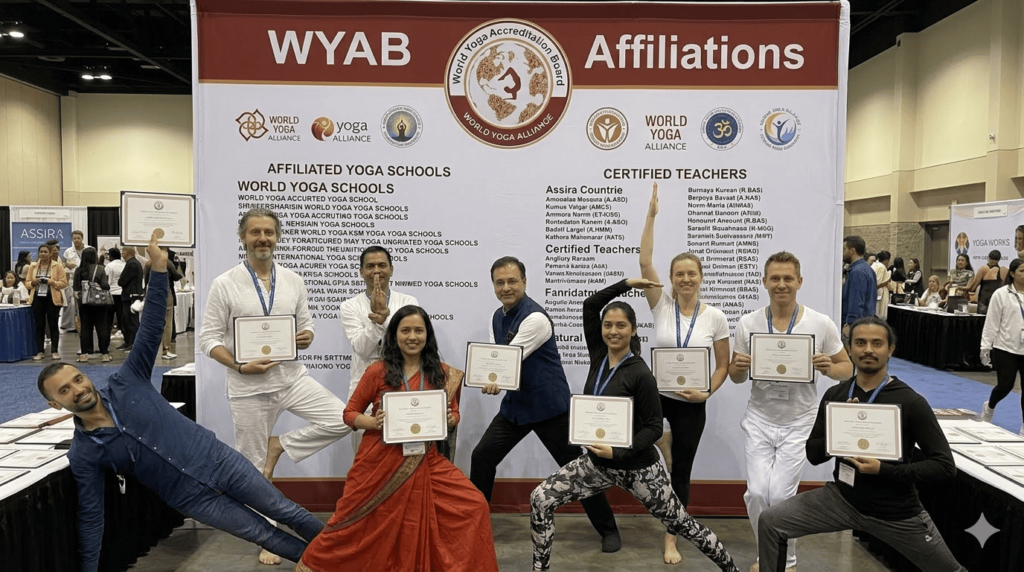
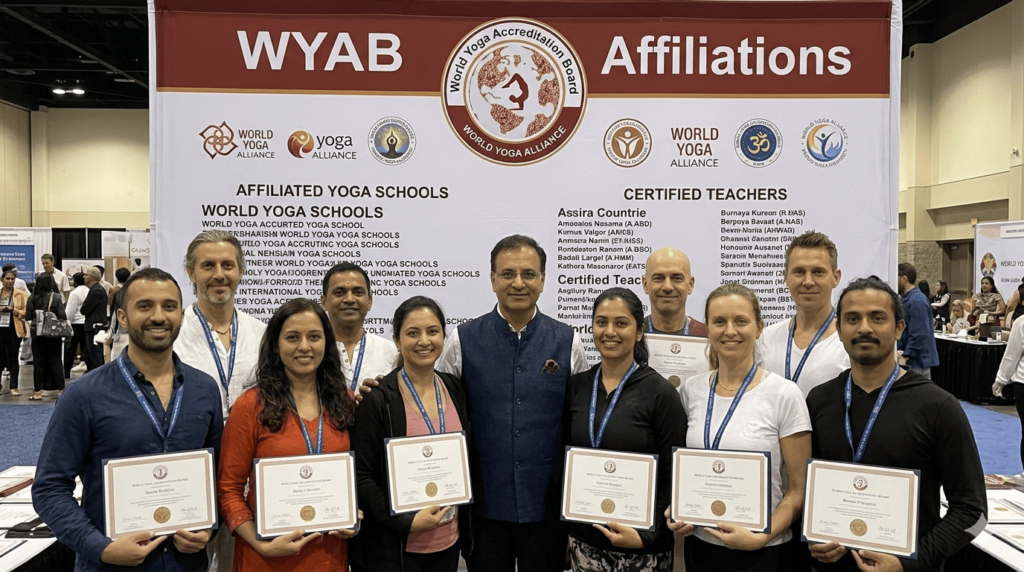
Affiliations play a critical role in building credibility, trust, and global recognition for any accreditation body. The World Yoga Accreditation Board (WYAB) has developed strong affiliations with various institutions, organizations, certification bodies, training institutes, and professional networks to promote quality, transparency, and global standards in yoga education and certification. These affiliations help WYAB maintain high levels of professional integrity while ensuring that training providers, instructors, and organizations associated with the board follow internationally recognized guidelines. Through collaborative partnerships and strategic relationships, WYAB is able to expand its reach and deliver reliable accreditation services to individuals and institutions worldwide.
The concept of affiliation within WYAB refers to formal partnerships or cooperative relationships established with educational institutions, training providers, wellness organizations, certification agencies, and research bodies. These affiliations enable the board to support the development of standardized yoga education systems while encouraging best practices in training, research, and certification. By collaborating with various institutions across the globe, WYAB ensures that yoga training programs meet structured guidelines and maintain consistency in quality, curriculum design, instructor competence, and ethical practices. This network of affiliations also allows institutions to gain international visibility and credibility in the yoga and wellness industry.
One of the most important purposes of WYAB affiliations is to create a unified global platform where yoga education and certification standards can be harmonized. Yoga has evolved into a global discipline practiced in many countries with diverse cultural and professional contexts. Without proper standards and regulatory frameworks, it becomes difficult to maintain uniformity in teaching methods, instructor qualifications, and certification processes. WYAB affiliations help address this challenge by bringing together educational institutions and professional organizations under a common accreditation framework. This collaborative system ensures that affiliated organizations follow transparent evaluation procedures, structured training methodologies, and internationally accepted ethical principles.
Affiliated organizations benefit significantly from their association with WYAB. When an institution becomes affiliated, it demonstrates its commitment to quality education, professional development, and responsible yoga instruction. Affiliation allows institutions to align their training programs with global accreditation guidelines, which increases their credibility among students, practitioners, and industry stakeholders. For yoga training schools, wellness centers, and educational institutions, this recognition enhances their reputation and makes their certifications more valuable in the international market. Students and practitioners also gain confidence knowing that their training program is connected to a recognized accreditation framework.
WYAB affiliations also promote academic and professional collaboration. Affiliated institutions can share research, exchange knowledge, and collaborate on training programs, seminars, workshops, and conferences related to yoga, health, and wellness. Such collaboration helps promote innovation in yoga education while preserving the traditional philosophy and principles of the discipline. Through these partnerships, WYAB encourages the integration of modern scientific understanding with ancient yogic knowledge, allowing the discipline to evolve responsibly while maintaining its cultural authenticity.
Another key advantage of WYAB affiliations is the support provided to training institutions and instructors in developing structured curricula and training frameworks. Many yoga schools operate independently and may not have access to standardized curriculum development resources. Through affiliation, WYAB provides guidance on course structure, training hours, evaluation systems, and instructor competency requirements. This ensures that students receive consistent and comprehensive training that includes theoretical knowledge, practical practice, teaching methodology, ethics, and professional conduct. Such structured guidance strengthens the overall quality of yoga education and helps maintain consistency across different institutions.
WYAB also promotes international recognition through its affiliation network. In the global wellness industry, credibility and recognition are essential for professional success. When institutions and instructors are affiliated with a recognized accreditation board, their certifications carry greater value in international markets. This allows instructors to teach yoga in different countries, collaborate with wellness organizations, and participate in international yoga programs and events. For training institutions, international affiliation helps attract students from different parts of the world who seek credible and structured yoga education.
In addition to educational institutions, WYAB affiliations extend to wellness organizations, research bodies, certification agencies, and professional associations. These collaborations strengthen the broader ecosystem of yoga and holistic health practices. By working with research organizations, WYAB encourages scientific studies and research initiatives related to yoga therapy, mental health, physical wellness, and holistic healing. Such research contributes to the growing body of knowledge that supports the effectiveness and benefits of yoga in modern healthcare and wellness systems.
WYAB affiliations also emphasize ethical standards and professional responsibility. Yoga is not only a physical practice but also a philosophical and spiritual discipline rooted in ethical principles such as integrity, respect, compassion, and self-discipline. Through its affiliation framework, WYAB encourages institutions and instructors to uphold these values in their teaching and professional conduct. Affiliated institutions are expected to maintain transparent policies, fair training practices, and ethical student relationships. This helps protect the authenticity of yoga education and prevents commercialization that could undermine the discipline’s traditional values.
Another important aspect of WYAB affiliations is capacity building and professional development. The board supports affiliated institutions by organizing training programs, workshops, seminars, and professional development initiatives for instructors and trainers. Continuous learning is essential in the evolving wellness industry, and such initiatives help instructors enhance their teaching skills, expand their knowledge, and stay updated with new developments in yoga research and education. These programs also create networking opportunities where professionals from different countries can exchange ideas and experiences.
Through its affiliation framework, WYAB also promotes community engagement and social responsibility. Yoga has always been associated with holistic well-being and social harmony. Affiliated institutions are encouraged to organize community programs, public yoga sessions, health awareness campaigns, and wellness initiatives that promote healthy lifestyles. Such activities help bring the benefits of yoga to wider communities, including individuals who may not have access to formal training programs. By supporting community-based initiatives, WYAB affiliations contribute to the broader mission of promoting physical, mental, and spiritual well-being.
The affiliation process within WYAB typically involves evaluation and assessment to ensure that institutions meet basic eligibility and quality requirements. This evaluation may include reviewing training programs, faculty qualifications, infrastructure, and organizational policies. The purpose of this process is not to restrict participation but to ensure that affiliated institutions maintain acceptable standards of quality and professionalism. Once affiliated, institutions may receive ongoing guidance, periodic reviews, and opportunities for collaboration with other members of the WYAB network.
Another significant benefit of WYAB affiliations is the global networking opportunities they provide. In today’s interconnected world, collaboration across borders is essential for growth and innovation. WYAB’s network of affiliated institutions creates a global community of yoga professionals who can share knowledge, develop joint programs, and promote cross-cultural understanding. This global network helps strengthen the reputation of affiliated institutions while expanding opportunities for students and instructors to participate in international programs.
Affiliations also play a role in supporting entrepreneurship and professional growth within the yoga industry. Many yoga practitioners aspire to establish their own training schools, wellness centers, or community programs. By becoming affiliated with WYAB, these professionals gain access to guidance, standards, and professional networks that can help them develop sustainable and credible training initiatives. This support encourages responsible growth within the yoga industry while maintaining quality and professional standards.
Furthermore, WYAB affiliations contribute to the preservation and promotion of traditional yogic knowledge. As yoga continues to grow globally, there is a risk that its traditional philosophical and cultural foundations may be diluted or misinterpreted. Through partnerships with educational and cultural organizations, WYAB encourages the integration of classical yoga philosophy, meditation practices, and ethical teachings into modern training programs. This balanced approach ensures that yoga education remains authentic while adapting to contemporary learning environments.
In conclusion, WYAB affiliations represent a vital component of the organization’s mission to promote high standards in yoga education, training, and certification worldwide. Through strategic partnerships with educational institutions, wellness organizations, certification agencies, and research bodies, WYAB creates a collaborative network dedicated to quality, transparency, and professional excellence. These affiliations not only enhance the credibility of training institutions and instructors but also contribute to the global development of yoga as a respected and structured discipline. By supporting collaboration, research, education, and ethical practice, WYAB affiliations help build a sustainable and trustworthy ecosystem that benefits students, instructors, organizations, and communities around the world.
Summary:
WYAB isn’t as of now a part/signatories of IAF, ILAC or IPC. There is no specialized necessity for enrollment of these exchange affiliations that are commonly non-benefit
appropriating business associations.
In outcome of public consciousness of this subject, WYAB is distributing this direction.
Our position stays under consistent survey.
Detail:
WYAB works in more than 65 nations and across a wide scope of license types. Inside each certification type, industry area, nation and district, there are a large number of accessible affiliations, affiliations and confidential certification plans. We are frequently inquired “Is WYAB an individual from X proficient body?”. We should be particular, generally the managerial capability and participation costs to keep up with these affiliations would degrade our basic roles of value confirmation.
Numerous worldwide associations, like IAF and ILAC are private organizations that are laid out with no other dispatch or authority than to work as non-benefit dispersing business associations. They have no legitimately allocated status, (for example, that which is alloted to United Nations Organisations or the International Monetary Fund) nor is there any lawful prerequisite for their individuals to be individuals.
Regardless, WYAB perceive that enrollment has benefits specifically the believability and esteem that such associations might have developed in the commercial center, despite the fact that these advantages may be emotional and are economically determined factors.
At season of distribution, IAF multilateral acknowledgment plans were set up with just 56% of nations on the planet and ILAC MRAs set up with 55% of nations on the planet. WYAB feel that to prohibit the larger part of the world’s authorization bodies from quality confirmation and acquirement plans doesn’t mirror the motivation behind worldwide principles like ISO.
WYAB highly esteem being in fact extraordinary without being excessively regulatory. We offer license to ISO norms and other non-restrictive plans. We survey similarity evaluation bodies (CABs) to the expected norm and just the norm, as opposed to extra obligatory reports that private participation bodies force on CABs. These extra prerequisites serve pretty much nothing reason to work on quality confirmation.
9 Important Facts About WYAB Affiliations and Global Accreditation Position
The World Yoga Accreditation Board (WYAB) operates as an international accreditation body that provides certification and accreditation services to organizations, training institutes, and conformity assessment bodies across the world. As global interest in accreditation and certification continues to grow, many stakeholders frequently ask about WYAB’s affiliations with international organizations and professional bodies. One of the most common questions raised is whether WYAB is a signatory or member of well-known international accreditation associations. In response to increasing public awareness and inquiries, WYAB has issued guidance explaining its position regarding affiliations, memberships, and participation in international accreditation networks.
At present, WYAB is not a member or signatory of several international accreditation trade associations that are commonly referenced in the certification and accreditation industry. These organizations include the International Accreditation Forum (IAF), the International Laboratory Accreditation Cooperation (ILAC), and the International Personnel Certification Association (IPC). These organizations are widely recognized as global trade associations that promote cooperation and mutual recognition among accreditation bodies. However, it is important to understand that membership in such organizations is not a legal requirement for an accreditation body to operate or provide certification services internationally.
WYAB emphasizes that these organizations function primarily as private, non-profit trade associations created by voluntary collaboration among accreditation bodies and related organizations. They are not governmental authorities, nor do they have legally delegated global regulatory power. Unlike organizations established by international treaties or formal intergovernmental agreements, these associations operate through voluntary membership structures. Their primary purpose is to facilitate cooperation, develop mutual recognition arrangements, and promote best practices within the accreditation community.
For comparison, organizations such as the United Nations (UN) or the International Monetary Fund (IMF) are established through formal international agreements between governments and have legally recognized global mandates. Trade associations like IAF or ILAC do not hold the same legal status. Their authority is based largely on voluntary cooperation and market recognition rather than statutory regulation. Therefore, accreditation bodies around the world are not legally obligated to join these associations in order to operate or provide accreditation services.
WYAB has clarified that there is no technical or regulatory requirement for an accreditation body to become a member of such trade organizations. Many accreditation bodies choose to join them because of perceived benefits such as international networking, shared resources, and the credibility that may come from participation in widely recognized forums. However, these benefits are largely market-driven rather than legally mandated. As a result, different accreditation bodies may adopt different approaches based on their operational priorities, strategic goals, and financial considerations.
One of the reasons WYAB carefully evaluates participation in trade associations is the significant administrative responsibilities and membership costs associated with maintaining such affiliations. International trade organizations often require extensive reporting, governance participation, committee involvement, and financial contributions. While these activities can be valuable in certain circumstances, they may also divert resources away from the core functions of an accreditation body. WYAB believes that its primary responsibility is to focus on quality assurance, technical competence, and effective accreditation services for organizations and certification bodies operating worldwide.
WYAB currently operates in more than sixty-five countries, providing accreditation across a wide range of certification and assessment sectors. These sectors include management systems certification, product certification, personnel certification, training accreditation, and other specialized conformity assessment programs. Within each of these sectors, there are numerous industry associations, professional networks, and private certification schemes that operate independently across different regions and markets. Because of this diversity, it is practically impossible for any accreditation body to maintain membership in every available professional organization or trade association.
Organizations frequently ask WYAB whether it is affiliated with specific professional bodies or certification networks. While WYAB maintains relationships and cooperation with many institutions, it must be selective in establishing formal affiliations. Attempting to join every possible organization would create significant administrative overhead and financial obligations, potentially reducing the efficiency and responsiveness of accreditation services. For this reason, WYAB prioritizes technical integrity, independence, and operational efficiency rather than maintaining extensive membership lists.
Another important factor in this discussion involves the concept of mutual recognition arrangements used by some international accreditation organizations. Mutual recognition arrangements are agreements between accreditation bodies that allow them to recognize each other’s accreditation decisions. For example, the Multilateral Recognition Arrangement (MLA) promoted by the International Accreditation Forum aims to facilitate global acceptance of accredited certifications. Similarly, the Mutual Recognition Arrangement (MRA) developed by the International Laboratory Accreditation Cooperation focuses on laboratory testing and calibration accreditation.
However, at the time of WYAB’s public guidance, participation in these arrangements was not universal. Only about 56 percent of countries worldwide were represented within the IAF MLA framework, while approximately 55 percent of countries participated in ILAC MRAs. WYAB has expressed concern that limiting recognition systems to these frameworks could exclude a significant portion of the world’s accreditation bodies and conformity assessment institutions. Such exclusion may contradict the broader intent of international standards, particularly those developed under the International Organization for Standardization (ISO).
ISO standards are designed to be globally applicable technical frameworks that can be implemented by organizations regardless of geographic location or institutional affiliation. The objective of these standards is to promote consistent quality, safety, and reliability across industries worldwide. WYAB believes that restricting the acceptance of accredited certifications only to organizations participating in specific trade association arrangements may not fully reflect the inclusive spirit of international standardization.
Instead, WYAB focuses on technical compliance with the standards themselves rather than additional requirements imposed by private membership organizations. When WYAB evaluates a conformity assessment body (CAB), it assesses the organization directly against the relevant international standard. For example, certification bodies may be evaluated against standards such as ISO/IEC 17021, laboratories against ISO/IEC 17025, and personnel certification bodies against ISO/IEC 17024. The emphasis remains on verifying that the organization meets the technical requirements defined by the applicable standard.
Some trade associations require accredited organizations to comply with additional documents, policies, or procedural requirements beyond the base international standards. These supplementary requirements are often developed by the membership organization itself and may be mandatory for participating accreditation bodies. WYAB’s approach differs in that it avoids imposing unnecessary additional documentation or regulatory burdens unless they directly support the integrity of the accreditation process.
This philosophy reflects WYAB’s commitment to being technically rigorous without becoming excessively bureaucratic. The goal is to ensure that accreditation processes remain efficient, transparent, and accessible to organizations in different regions of the world. Excessive administrative requirements can create barriers for small and medium-sized certification bodies, laboratories, and training institutions, particularly in developing countries. WYAB aims to support global participation in quality assurance systems rather than limiting access through complex procedural requirements.
WYAB also recognizes that credibility and market perception are important considerations in the accreditation industry. Membership in well-known organizations can sometimes enhance visibility and recognition in certain markets. However, such recognition is largely determined by commercial expectations and industry practices rather than legal mandates. WYAB continues to evaluate these factors carefully as part of its strategic planning and international engagement activities.
The organization maintains an open and transparent policy regarding its affiliations and memberships. WYAB regularly reviews its position in response to changes within the global accreditation landscape, developments in international standards, and feedback from stakeholders. This ongoing review process ensures that WYAB remains responsive to evolving industry needs while maintaining its commitment to independence and technical integrity.
In addition to evaluating memberships in international trade associations, WYAB actively collaborates with organizations, training providers, certification bodies, and conformity assessment institutions around the world. These collaborations help promote best practices in accreditation, certification, and quality management systems. By working with partners across different industries and regions, WYAB contributes to the development of reliable and credible certification frameworks that support global trade and professional mobility.
Another important aspect of WYAB’s strategy is the promotion of independent accreditation systems that prioritize technical competence rather than organizational affiliation. Independence helps ensure that accreditation decisions are based solely on objective evaluation criteria. This approach supports impartiality and reduces the risk of conflicts of interest that could arise when accreditation bodies become overly dependent on external institutional structures.
The global accreditation ecosystem is diverse and constantly evolving. Different countries have developed various models for accreditation governance, ranging from government-mandated national accreditation bodies to independent private organizations. Each model reflects the legal, economic, and institutional context of the region in which it operates. WYAB operates within this broader ecosystem as an independent accreditation provider committed to international standards and professional quality assurance practices.
Looking toward the future, WYAB acknowledges that the global accreditation environment continues to develop through increased cooperation, technological innovation, and expanding international trade. As organizations across industries seek reliable certification and accreditation services, the demand for credible and efficient accreditation frameworks is expected to grow. WYAB intends to remain actively engaged in these developments while preserving its core values of independence, technical competence, and operational efficiency.
The organization also continues to monitor global discussions related to accreditation harmonization, international cooperation, and mutual recognition frameworks. Any potential participation in international trade associations or recognition arrangements will be evaluated based on how effectively they support WYAB’s mission and benefit the organizations it accredits. Decisions regarding such affiliations will always consider the balance between administrative requirements, financial commitments, and the practical value delivered to stakeholders.
In conclusion, WYAB’s current position regarding affiliations with organizations such as the International Accreditation Forum, the International Laboratory Accreditation Cooperation, and the International Personnel Certification Association reflects a strategic decision to prioritize technical accreditation services over extensive institutional memberships. While these organizations play important roles within the accreditation community, membership in them is voluntary and not legally required. WYAB remains committed to delivering high-quality accreditation services in accordance with international standards while maintaining independence, efficiency, and global accessibility.
Table of Contents
Branches
WYAB Accreditation
WYAB Head Office
WYAB World Yoga Accreditation Board
WYAB House
C/O Mr.Garry 54, Glengarnock Avenue,
E-14 3BP Isle Of Dogs, London UK
Tel .: +44-8369083940
email: info@worldyoga.us
Website: https://worldyoga.us/
MUMBAI Head Office
World Yoga Accreditation Board (WYAB)
WYAB House
B-401, New Om Kaveri Chs. Ltd., Nagindas pada,
Next To Shiv Sena Office, Nallasopara (E)
Tel .: +91-7499991895
email: info@worldyoga.us
Website: https://worldyoga.us/
DELHI-NCR Regd. Office
World Yoga Accreditation Board (WYAB)
WYAB House
Asaoti, Dist Palwal
Faridabad Delhi NCR, Haryana
Tel .: +91-7979801035
Fax: +91-250 2341170
Website: https://worldyoga.us/