Arm Balances
Arm balances are a category of yoga postures in which the body’s weight is supported primarily by the hands and arms, frequently requiring strength, balance, coordination, and focus. Commonly found in both traditional and modern yoga practices, arm develop upper‑body strength, core stability, proprioception (body awareness), and mental concentration. In addition to physical benefits, these postures cultivate confidence and resilience by challenging practitioners to move beyond comfort zones.
Arm balances range from foundational poses like Bakasana (Crow Pose) to advanced asanas such as Mayurasana (Peacock Pose) and Eka Pada Koundinyasana variations. The underlying principles of arm involve shifting the body’s center of gravity while engaging the core and stabilizing muscles to maintain equilibrium. Although arm can appear intimidating, they are accessible through systematic progression and mindful preparation.
Key Physical Components
- Core Strength
A stable core is essential for arm . The abdominal muscles and hip flexors generate lift and control, preventing the legs from sagging or shifting unpredictably during the pose. A strong core also protects the lumbar spine and supports alignment. - Upper‑Body and Shoulder Strength
The arms, shoulders, and upper back must be robust enough to support body weight. Poses such as Plank and Chaturanga Dandasana serve as preparatory exercises to build the necessary strength. - Wrist and Forearm Conditioning
As the hands and wrists are the primary contact points with the ground, gradual conditioning reduces strain and enhances stability. Variations in hand positioning and weight distribution further refine balance. - Flexibility and Joint Mobility
Adequate flexibility in the hips, hamstrings, and shoulders allows for smooth transitions into arm balances and reduces compensatory tension that can hinder performance.
Preparatory Practices and Progressions
Effective arm balance training emphasizes warm‑ups and preparatory sequences. Foundational poses such as Downward Facing Dog (Adho Mukha Svanasana) and low Plank (Chaturanga Dandasana) build strength and alignment awareness. Specific drills, like “heel‑hooking” and engaging the inner thighs toward the centerline, help beginners find lift and stability.
Guided progressions encourage starting with simpler balance variations and gradually working toward more complex postures. Practitioners are advised to listen to their bodies, respect individual structural differences, and seek instruction from experienced teachers to prevent injury.
Benefits and Considerations
Regular practice of arm balances improves muscular endurance, coordination, and mindfulness. Beyond physical gains, the challenge of balancing fosters perseverance and focus under pressure. However, individuals with wrist, shoulder, or lower back issues should approach these postures with caution and may benefit from modifications or props.
For additional guidance on arm , the Yoga Journal provides a detailed pose guide and progressions: https://www.yogajournal.com/poses/types/arm-balances and Yoga International offers expert breakdowns on technique: https://yogainternational.com/article/view/how-to-practice-arm-balances.
#Arm Balances in the World
What is an Arm Balances?
Arm balances are advanced yoga postures that require the practitioner to support the body’s weight primarily with the arms and hands. These poses emphasize strength, stability, balance, and body awareness, often engaging the core, shoulders, wrists, and upper back muscles. Unlike standing or seated poses, arm balances challenge both physical and mental focus, demanding precision and control to maintain proper alignment.
Key Characteristics of Arm Balances
- Weight Distribution: In arm balances, a significant portion or the entirety of the body weight rests on the hands or forearms. This requires strong upper body muscles, particularly the triceps, deltoids, and chest muscles, to maintain stability.
- Core Engagement: A strong core is essential for most arm balances. Abdominal and lower back muscles work together to keep the body lifted and aligned. Poses like Bakasana (Crow Pose) or Adho Mukha Vrksasana (Handstand) require active core engagement to prevent collapsing forward.
- Focus and Breath Control: Mental focus, or drishti, helps maintain balance, while controlled breathing supports muscle engagement and calmness. Arm balances often fail when practitioners lose concentration or attempt to hold the posture while tensing unnecessarily.
- Flexibility and Joint Mobility: While strength is crucial, sufficient wrist, shoulder, and hip flexibility is necessary to achieve the correct positioning. Tightness in these areas can limit movement and increase the risk of injury.
Common Types of Arm Balances
- Hand Balances: Poses like Adho Mukha Vrksasana (Handstand) and Eka Pada Koundinyasana (Flying Splits Pose) rely on hand placement for support and involve inversion.
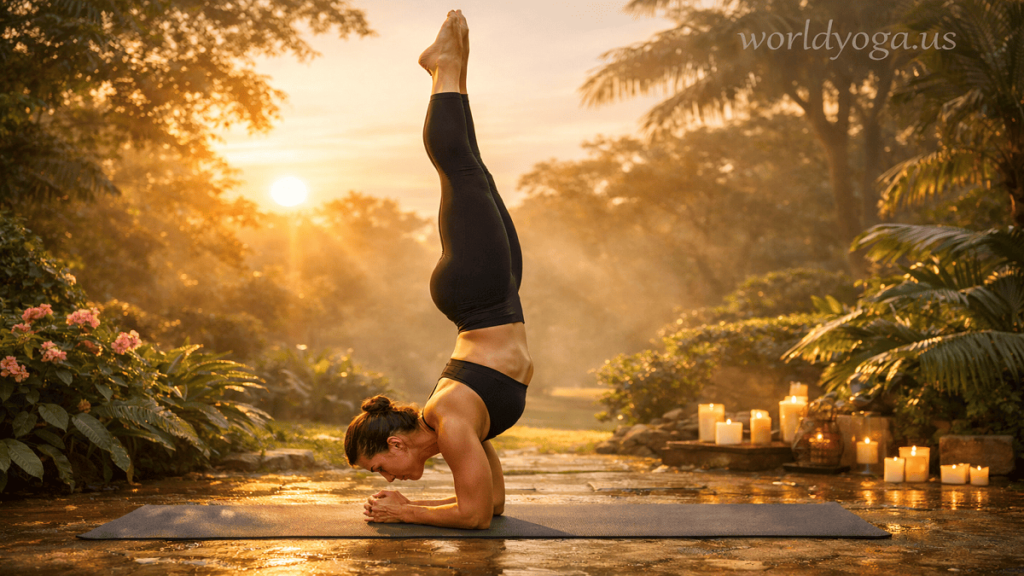
- Forearm Balances: Poses such as Pincha Mayurasana (Forearm Stand) distribute weight on the forearms, which can offer more stability but still require strong shoulder engagement.
- Crow and Variations: Bakasana (Crow Pose) and Parsva Bakasana (Side Crow) are foundational arm balances that teach body awareness and proper weight distribution.
Benefits of Practicing Arm Balances
Practicing arm balances enhances upper body strength, improves balance and coordination, boosts confidence, and encourages mindfulness. They also challenge the practitioner to confront fear, particularly in inversion-based poses, fostering mental resilience.
Considerations and Safety
Begin with foundational poses and gradually progress to more advanced balances. Proper wrist and shoulder warm-ups are essential, and practicing near a wall or with guidance from a certified instructor can prevent injuries.
For further information on arm balances, the Yoga Journal provides a comprehensive guide: Yoga Journal – Arm Balances.
#Arm Balances in India
Which muscles are most important for arm balances?
Arm balances in yoga demand strength, stability, and coordination from multiple muscle groups throughout the body. While overall body engagement is essential, certain muscles play a central role in achieving and maintaining these challenging poses. Understanding these muscles helps practitioners develop targeted strength and reduce the risk of injury.
1. Shoulders (Deltoids)
The deltoid muscles are critical for supporting body weight on the arms. Strong deltoids allow for controlled lifting and stabilization, particularly in handstand variations (Adho Mukha Vrksasana) and forearm balances (Pincha Mayurasana). Engaging the shoulders properly also protects the joints from excessive strain.
2. Arms (Triceps and Biceps)
The triceps are essential for straightening the elbows and providing stability during arm-supported poses. The biceps assist in fine-tuning arm positioning and controlling balance. Together, these muscles allow practitioners to hold postures like Bakasana (Crow Pose) and Eka Pada Koundinyasana (Flying Splits Pose) safely.
3. Chest (Pectoralis Major)
The chest muscles contribute to pushing strength and stability, helping maintain alignment while the body is suspended. They work in conjunction with the shoulders and triceps to prevent collapsing forward during hand or forearm-supported poses.
4. Core Muscles (Abdominals and Obliques)
Core strength is arguably the most important factor for arm balances. The rectus abdominis, transverse abdominis, and obliques stabilize the torso, allowing the legs to lift without compromising posture. A strong core keeps the spine neutral and prevents the pelvis from sagging, which is critical in poses like Crow and Side Crow (Parsva Bakasana).
5. Back Muscles (Latissimus Dorsi and Erector Spinae)
The lats help control arm positioning and shoulder stability, while the erector spinae support spinal extension and alignment. Together, these muscles maintain the body’s structural integrity during inversions and arm balances.
6. Hip Flexors and Glutes
Although arm balances primarily rely on upper body strength, the hip flexors and glutes help lift and position the legs. Strong glutes provide support in extending the hips and stabilizing the lower body, while flexible hip flexors allow for smoother transitions into complex balances.
Conclusion
Effective arm balance practice requires a combination of strength, flexibility, and body awareness. Targeting these key muscle groups—shoulders, arms, chest, core, back, and hips—through progressive conditioning exercises will improve performance and reduce injury risk.
For more guidance on muscle engagement in arm balances, see: Yoga International – Arm Balance Strength
#Arm Balances in Pune
Name a beginner-friendly arm balance.
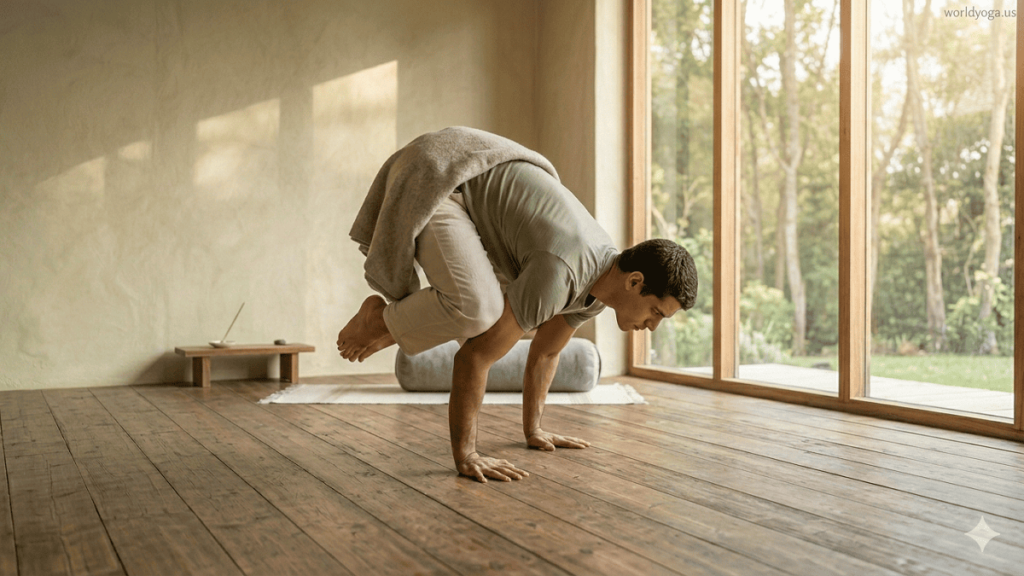
Bakasana, commonly known as Crow Pose, is widely regarded as one of the most accessible arm balances for beginners. It provides a strong foundation for learning how to shift weight onto the hands, engage the core, and develop wrist and shoulder strength safely.
How to Practice Crow Pose
- Starting Position: Begin in a squat with your feet hip-width apart. Place your hands on the mat slightly in front of your feet, fingers spread wide for stability.
- Knee Placement: Bend your elbows slightly and rest your knees on the back of your upper arms, close to your armpits. This creates a stable base for balance.
- Engage the Core: Draw your navel toward your spine, activating the abdominal muscles. A strong core is essential for lifting your feet off the floor without tipping forward.
- Shift Weight Forward: Lean your torso slightly forward while keeping your gaze slightly ahead of your hands. Gradually lift one foot, then the other, finding balance on your hands.
- Hold and Breathe: Maintain the pose for a few breaths, keeping the shoulders engaged, elbows slightly bent, and core active. Slowly release and return to a squat.
Benefits of Crow Pose
- Builds Strength: Strengthens wrists, shoulders, arms, and core.
- Improves Balance: Teaches weight distribution and body awareness.
- Boosts Confidence: Provides a manageable introduction to arm balances and inversions.
- Prepares for Advanced Poses: Serves as a foundation for poses like Side Crow (Parsva Bakasana) and handstand progressions.
Tips for Beginners
- Place a folded blanket or cushion in front of you to reduce fear of falling.
- Keep your elbows tucked in slightly toward your body for added stability.
- Practice core engagement before attempting to lift both feet simultaneously.
For a detailed guide with variations and step-by-step instructions, visit: Yoga Journal – Crow Pose
#Arm Balances in Kolkata
Why is core strength important for arm balances?
Core strength is a fundamental component of successful arm balances in yoga. The “core” refers to the muscles of the abdomen, lower back, pelvis, and hips, including the rectus abdominis, transverse abdominis, obliques, and erector spinae. These muscles act as the central stabilizers of the body, providing balance, alignment, and support while performing arm-supported poses.
1. Stability and Balance
In arm balances, the body is often suspended above the ground with weight concentrated on the hands or forearms. A strong core stabilizes the torso, preventing the pelvis from dropping or the lower back from arching excessively. For example, in Crow Pose (Bakasana) or Handstand (Adho Mukha Vrksasana), engaging the core allows the practitioner to lift the legs safely while maintaining equilibrium.
2. Alignment and Control
Proper alignment is crucial for reducing strain on the wrists, shoulders, and spine. Core engagement ensures that the spine stays neutral and the body maintains a streamlined shape, which improves efficiency in balancing. Weak core muscles often lead to sagging hips or an unstable torso, making the pose harder to sustain and increasing the risk of injury.
3. Strength Transmission
The core functions as a bridge between the upper and lower body. It transmits force generated by the arms and shoulders to lift the legs and control movements. For example, in Side Crow (Parsva Bakasana), strong obliques allow the torso to rotate while keeping the body lifted and stable on the hands.
4. Facilitates Progression to Advanced Poses
A well-conditioned core provides a foundation for progressing to more challenging arm balances, such as Forearm Stand (Pincha Mayurasana) or Handstand Variations. Without sufficient core strength, lifting the legs overhead or holding inversions can become unsafe and counterproductive.
5. Mind-Body Awareness
Engaging the core enhances proprioception (awareness of body position) and concentration, both of which are essential for balancing. It helps practitioners sense shifts in weight and make micro-adjustments to maintain stability during the pose.
Conclusion
In essence, the core is the central engine that enables arm balances. Strengthening the core not only improves performance but also reduces strain on the upper body, promotes proper alignment, and enhances confidence in executing challenging poses. Integrating core-focused exercises, such as plank variations, boat pose, and hollow body holds, can significantly enhance arm balance practice.
For more information, Yoga Journal provides a detailed guide on core engagement in arm balances: Yoga Journal – Core Strength for Arm Balances.
#Arm Balances in Ahemdabad
How can wrist strain be reduced during arm balances?
Wrist strain is one of the most common challenges for practitioners performing arm balances in yoga. Because these poses require the hands and wrists to bear much of the body’s weight, improper technique, weak supporting muscles, or insufficient preparation can lead to discomfort or injury. Understanding strategies to reduce wrist strain is essential for safe and sustainable practice.
1. Proper Hand Placement
Hand placement directly affects wrist alignment and load distribution. Spread the fingers wide and press firmly through the fingertips and the base of the thumb. This distributes weight evenly across the hands and reduces pressure on the wrist joints. Slightly turning the fingers outward can also relieve tension for some practitioners.
2. Engage the Forearms and Upper Body
Rather than allowing the wrists to bear all the weight, engage the shoulders, triceps, and forearms to lift and support the body. Actively pressing into the mat through the arms can shift some of the load from the wrists, reducing strain. For example, in Crow Pose (Bakasana), lifting the knees toward the armpits while maintaining shoulder engagement can alleviate wrist pressure.
3. Warm-Up and Stretch the Wrists
Performing wrist warm-ups before arm balances is critical. Gentle stretches—such as flexing and extending the wrists, making circular movements, and performing tabletop rocking exercises—improve flexibility and circulation. These preparatory exercises reduce stiffness and make the wrists more resilient to weight-bearing poses.
4. Use Props and Modifications
For beginners or those experiencing discomfort, using props can make a significant difference. Placing a folded towel, yoga wedge, or foam block under the hands can slightly elevate the wrist and reduce the extension angle. Alternatively, practicing forearm balances (like Dolphin Pose or Forearm Stand) can help develop arm and shoulder strength without excessive wrist loading.
5. Gradual Strengthening
Consistent wrist strengthening exercises are essential. Techniques like fingertip push-ups, plank variations, and gentle resistance band exercises increase joint stability and muscular support around the wrist, preparing the body for prolonged weight-bearing in arm balances.
6. Maintain Mindful Alignment
Always keep a neutral wrist alignment and avoid collapsing into the joints. Engaging the core and distributing weight evenly allows for a more stable base and prevents overloading the wrist ligaments. Taking breaks and releasing tension between repetitions also helps maintain joint health.
Conclusion
Reducing wrist strain in arm balances requires a combination of proper alignment, active engagement of surrounding muscles, preparatory warm-ups, gradual strengthening, and use of props when necessary. By integrating these strategies, practitioners can improve performance, prevent injuries, and build confidence in challenging arm balance poses.
For more detailed guidance, see: Yoga International – Wrist Safety in Arm Balances.
#Arm Balances in Hyderabad
Case Study of Arm Balances
Introduction
Arm balances are advanced yoga postures that require strength, flexibility, coordination, and mental focus. This case study examines the progress of a 28-year-old yoga practitioner, referred to here as Participant A, who incorporated arm balances into her practice over a 12-week period. The study highlights the challenges, techniques, and measurable outcomes associated with developing proficiency in arm balances.
Background
Participant A had three years of general yoga experience but limited exposure to inversions or arm-supported postures. She reported occasional wrist discomfort and moderate core strength. The primary goal was to achieve stable performance in Crow Pose (Bakasana) and progress toward Side Crow (Parsva Bakasana) and Forearm Stand (Pincha Mayurasana).
Methodology
- Frequency: 3 yoga sessions per week, 60–75 minutes each.
- Progression: The program began with preparatory exercises, including plank variations, dolphin pose, wrist warm-ups, and core-strengthening drills.
- Arm Balance Practice: Crow Pose was introduced in week 2, initially using a yoga block under the forehead for safety. Gradual lifting of one foot at a time helped develop balance and confidence. Side Crow was introduced at week 6, and partial forearm stand attempts began at week 10 with wall support.
- Evaluation: Strength, flexibility, and balance were assessed weekly through observation, self-reports, and instructor feedback. Wrist comfort was monitored closely.
Results
- Strength Gains: Participant A demonstrated significant improvement in core engagement and upper body strength. Plank hold duration increased from 40 seconds to 2 minutes, and shoulder stability improved.
- Balance and Control: Initially, the participant could only lift one foot in Crow Pose. By week 8, she was able to hold both feet off the ground for 10–15 seconds. Side Crow balance improved incrementally, with proper alignment achieved by week 12.
- Wrist Adaptation: Regular warm-ups, proper hand positioning, and weight distribution techniques reduced wrist discomfort, allowing longer practice sessions without pain.
- Mental Focus: Participant A reported increased confidence and reduced fear of falling, reflecting improved concentration and mindfulness.
Discussion
This case study highlights the importance of progressive training, targeted muscle strengthening, and safety strategies in mastering arm balances. Core strength, shoulder engagement, wrist preparation, and incremental challenges were key to successful skill acquisition. The participant’s experience aligns with research indicating that arm balances require both physical conditioning and mental focus to achieve stability and reduce injury risk (Yoga International – Arm Balance Strength).
Conclusion
A structured, progressive approach enabled Participant A to achieve measurable improvement in arm balances over 12 weeks. Emphasis on core engagement, proper wrist alignment, and gradual exposure to challenging poses proved effective in developing both physical ability and mental confidence.
#Arm Balances in Maharshtra
White Paper of Arm Balances
Executive Summary
Arm balances are a prominent category of advanced yoga postures that require a combination of strength, flexibility, balance, and mental focus. These postures, which involve supporting the body primarily through the arms or forearms, offer both physical and psychological benefits. This white paper explores the physiological requirements, training strategies, safety considerations, and applications of arm balances in yoga practice.
Introduction
Yoga, traditionally focused on flexibility, breath control, and mindfulness, has increasingly incorporated arm balances as a method to develop upper body strength and core stability. Arm balances, including poses like Crow Pose (Bakasana), Side Crow (Parsva Bakasana), Handstand (Adho Mukha Vrksasana), and Forearm Stand (Pincha Mayurasana), challenge the practitioner to integrate muscular engagement with proprioception and concentration.
Physiological Requirements
Successful execution of arm balances demands coordinated engagement of multiple muscle groups:
- Shoulders (Deltoids) and Arms (Triceps, Biceps): Provide the primary weight-bearing support.
- Core (Rectus Abdominis, Obliques, Transverse Abdominis): Stabilizes the torso and maintains alignment.
- Back Muscles (Latissimus Dorsi, Erector Spinae): Assist in posture control and upper body strength.
- Hip Flexors and Glutes: Facilitate leg lifting and alignment, enabling proper form in more advanced variations.
Additionally, flexibility in the wrists, shoulders, and hips is essential to reduce strain and improve posture execution.
Training Strategies
A progressive training approach is critical for safely developing proficiency in arm balances:
- Foundational Strength: Plank variations, dolphin pose, and push-ups build upper body and core strength.
- Wrist and Shoulder Conditioning: Warm-ups, stretches, and strengthening exercises improve joint resilience and prevent injury.
- Incremental Pose Practice: Begin with supported or modified poses, gradually advancing to full lifts and inversions.
- Mindfulness and Focus: Concentration techniques and breath control enhance balance and proprioception.
Safety Considerations
Wrist strain, shoulder injuries, and falls are common risks in arm balances. Mitigation strategies include:
- Using props like blocks or blankets for support.
- Practicing near a wall during early progression.
- Maintaining proper alignment and core engagement.
- Gradually increasing intensity and duration rather than forcing advanced poses prematurely.
Applications and Benefits
- Physical: Enhances upper body strength, core stability, flexibility, and coordination.
- Psychological: Builds confidence, concentration, and stress management.
- Therapeutic: May improve postural awareness and functional strength relevant to daily activities.
Conclusion
Arm balances are a vital aspect of modern yoga, combining strength, flexibility, and mental focus. A structured, progressive approach that emphasizes muscle engagement, safety, and mindfulness allows practitioners to develop these skills efficiently while minimizing injury risk. Their integration into regular yoga practice contributes to holistic physical fitness and mental resilience.
For further reading, see: Yoga Journal – Arm Balances and Yoga International – Arm Balance Strength.
#Arm Balances in Delhi
Industry Application of Arm Balances
Arm balances, traditionally rooted in yoga practice, have evolved into a significant component of the health, fitness, and wellness industry. Their applications extend beyond conventional yoga classes, influencing functional training, physical therapy, athletic conditioning, and performance arts. Understanding these applications highlights how arm balances contribute to broader industry trends in strength, flexibility, and holistic wellness.
1. Yoga Studios and Group Classes
In modern yoga studios, arm balances are frequently incorporated into intermediate and advanced classes to enhance upper body strength, balance, and core stability. Poses like Crow Pose (Bakasana), Side Crow (Parsva Bakasana), and Forearm Stand (Pincha Mayurasana) challenge practitioners while encouraging mindfulness and body awareness. Studios often use arm balances as focal points for workshops or specialty classes aimed at improving inversion skills and overall posture control.
2. Functional Fitness and Strength Training
Arm balances are increasingly integrated into functional fitness programs, particularly those emphasizing bodyweight strength and core stability. Exercises derived from yoga arm balances, such as hand-supported holds or crow-to-plank transitions, develop muscular endurance and proprioception. These movements translate to better performance in calisthenics, gymnastics, and high-intensity interval training (HIIT) programs.
3. Physical Therapy and Rehabilitation
Therapists and wellness professionals apply modified arm balances to rehabilitate and strengthen the upper body and core. Under controlled conditions, supported inversions and weight-bearing exercises help improve joint stability, muscular coordination, and balance in individuals recovering from injury. The emphasis is on safe progression, gradual load bearing, and strengthening the supporting musculature without overstressing the wrists or shoulders.
4. Sports and Performance Arts
Athletes in gymnastics, dance, martial arts, and circus arts incorporate arm balances as part of skill development and body control training. These poses improve spatial awareness, upper body strength, and stability, all of which enhance performance in acrobatics and dynamic routines. The mental focus required in arm balances also strengthens concentration and resilience under pressure.
5. Wellness and Mind-Body Programs
Arm balances are used in holistic wellness programs to promote mind-body integration. Beyond physical strength, they develop mental discipline, focus, and confidence. Corporate wellness programs and personal training sessions often introduce beginner-friendly balances, such as Crow Pose, as a means to improve posture, reduce stress, and cultivate mindfulness in daily life.
Conclusion
The industrial applications of arm balances span yoga studios, functional fitness, rehabilitation, sports, and wellness programs. Their integration emphasizes a combination of strength, balance, flexibility, and mental focus, making them a versatile tool in both physical and psychological development. By incorporating structured progressions, safety protocols, and preparatory exercises, professionals across industries can leverage arm balances to enhance performance, prevent injuries, and promote holistic well-being.
For further insights: Yoga Journal – Arm Balances and Yoga International – Arm Balance Strength.
#Arm Balances in Mumbai
Ask FAQs
What are arm balances in yoga?
Answer: Arm balances are yoga postures in which the body’s weight is primarily supported by the hands or forearms. They engage the arms, shoulders, core, and back muscles, requiring strength, flexibility, balance, and focus. Examples include Crow Pose (Bakasana), Side Crow (Parsva Bakasana), and Handstand (Adho Mukha Vrksasana).
Which muscles are most important for arm balances?
Answer: The key muscles for arm balances include:
Shoulders (Deltoids) – for weight-bearing and stability
Arms (Triceps and Biceps) – for lifting and controlling the body
Core (Rectus Abdominis, Obliques, Transverse Abdominis) – for maintaining balance and alignment
Back muscles (Latissimus Dorsi, Erector Spinae) – for posture support
Glutes and hip flexors – for leg positioning and stability
How can beginners safely start practicing arm balances?
Answer: Beginners should start with foundational poses like Crow Pose (Bakasana) using props such as a folded blanket or yoga block. Key strategies include:
Engaging the core and shoulders
Distributing weight evenly across the hands
Gradually lifting one foot at a time
Practicing near a wall for safety
Progression should be slow, focusing on strength, alignment, and confidence.
Why is core strength crucial for arm balances?
Answer: Core strength stabilizes the torso and maintains proper alignment, preventing the pelvis from sagging or the lower back from collapsing. Engaged core muscles act as a bridge between the upper and lower body, enabling controlled leg lifts and balance in poses such as Handstand or Side Crow. Weak core muscles often lead to instability and increased risk of injury.
How can wrist strain be minimized during arm balances?
Answer: Wrist strain can be reduced through:
Proper hand placement with fingers spread wide
Engaging shoulders and forearms to share the load
Performing wrist warm-ups and stretches before practice
Using props like blocks or cushions for support
Gradually strengthening the wrists and avoiding sudden progression to advanced poses
Source: Livinleggings
Table of Contents
Disclaimer:
The information provided about arm balances is for educational and informational purposes only. It is not a substitute for professional medical advice, diagnosis, or treatment. Always consult a qualified healthcare provider before beginning any new exercise program, especially if you have pre-existing conditions, injuries, or concerns. Practice arm balances safely, using proper technique, modifications, and guidance from a certified yoga instructor when necessary.