Side Crane Pose
Side Crane Pose, known in Sanskrit as Parsva Bakasana, is an advanced arm balance posture in modern yoga practice. It is a twisted variation of Crane Pose (Bakasana) and requires a combination of strength, flexibility, balance, and focused attention. This pose is commonly practiced in Vinyasa and Ashtanga yoga systems as part of intermediate-to-advanced sequences.
Technique and Execution
Parsva Bakasana begins in a squatting position. The practitioner brings the hands to the floor and rotates the torso to one side, typically hooking the opposite upper arm onto the outer thigh. The elbows are bent into a stable Chaturanga-like position, creating a shelf for the legs. The weight is gradually shifted forward onto the hands while engaging the core. As balance is achieved, both feet lift off the ground and the legs are held together or stacked to one side.
Proper alignment is essential: wrists should be directly under the shoulders, core muscles fully engaged, and gaze slightly forward to maintain balance and prevent tipping.
A detailed breakdown of the pose can be found here:
https://www.yogajournal.com/poses/side-crow-pose/
Benefits
Side Crane Pose offers a wide range of physical and mental benefits:
- Upper Body Strength – Builds strength in the wrists, arms, shoulders, and chest due to sustained weight-bearing.
- Core Stability – Deep engagement of abdominal muscles improves overall trunk control and spinal stability.
- Twisting Mobility – Enhances spinal rotation and helps maintain healthy mobility in the thoracic spine.
- Balance and Coordination – Develops neuromuscular control and proprioception through arm balancing.
- Mental Focus – Requires concentration and calm breathing, supporting mindfulness and stress reduction.
More anatomical insights can be found at:
https://www.verywellfit.com/side-crow-pose-parsva-bakasana-3567127
Preparatory Work
Before attempting Parsva Bakasana, practitioners typically develop strength and mobility through preparatory poses such as:
- Crow Pose (Bakasana)
- Chair Pose with twist (Parivrtta Utkatasana)
- Low squats (Malasana)
- Plank variations for core stability
These preparatory poses condition the wrists, core, and hip flexors for the demands of the arm balance.
Safety Considerations
This pose is not recommended for beginners, or for individuals with wrist injuries, shoulder instability, or severe lower back issues. Proper warm-up is essential to prevent strain. Using a yoga block under the feet during entry can help beginners gradually understand weight transfer.
Conclusion
Side Crane Pose is a challenging yet rewarding posture that integrates strength, balance, and spinal rotation. With consistent practice and proper progression, it enhances both physical capability and mental discipline. It is best learned under the supervision of an experienced yoga instructor to ensure correct alignment and safe progression.
For additional reference:
https://www.ekhartyoga.com/resources/yoga-poses/side-crow-pose
#Side Crane Pose in Singapore
What is Side Crane Pose and its meaning?
Side Crane Pose, known in Sanskrit as Parsva Bakasana, is an advanced arm-balancing yoga posture that combines a deep twisting motion with upper-body strength and balance. The name comes from Sanskrit: “Parsva” meaning “side” or “lateral,” and “Bakasana” meaning “crane pose.” Together, it translates to “Side Crane Pose,” referring to the body’s resemblance to a crane balancing gracefully on one leg while twisting sideways.
Meaning and Symbolism
In yogic tradition, the crane symbolizes patience, focus, and stillness. The Side Crane Pose reflects these qualities by requiring the practitioner to remain calm while balancing the entire body on the hands in a twisted position. It is often seen as a physical representation of mental discipline and inner control. The twist in the posture also symbolizes detoxification and the removal of physical and mental stagnation.
Parsva Bakasana is not just a physical exercise; it is also considered a meditative balance posture. It encourages awareness of breath, alignment, and concentration, making it a practice of both body and mind integration.
What the Pose Involves
In this posture, the practitioner starts in a low squat and twists the torso to one side. The upper arm is hooked against the opposite thigh, creating a stable base. The hands are placed firmly on the ground, and the body weight is gradually shifted forward until both feet lift off the floor. The legs are typically held together or stacked to one side while the arms support the entire body.
This position demands strength in the wrists, arms, shoulders, and core muscles, along with flexibility in the hips and spine.
A reliable reference for understanding the pose can be found here:
https://www.yogajournal.com/poses/side-crow-pose/
Purpose in Yoga Practice
Side Crane Pose is often used in advanced yoga sequences to develop arm strength, core stability, and spinal mobility. It also helps improve balance and coordination. From a mental perspective, it trains focus, patience, and resilience, as falling out of the pose is common during learning.
Additional explanation and anatomical breakdown can be found here:
https://www.verywellfit.com/side-crow-pose-parsva-bakasana-3567127
Summary
Side Crane Pose (Parsva Bakasana) is an advanced yoga arm balance that combines twisting movement with strength and concentration. Its meaning goes beyond physical form, representing patience, control, and mental clarity. It is a posture that teaches practitioners how to stay composed under pressure while building physical power and mindfulness.
#Side Crane Pose in India
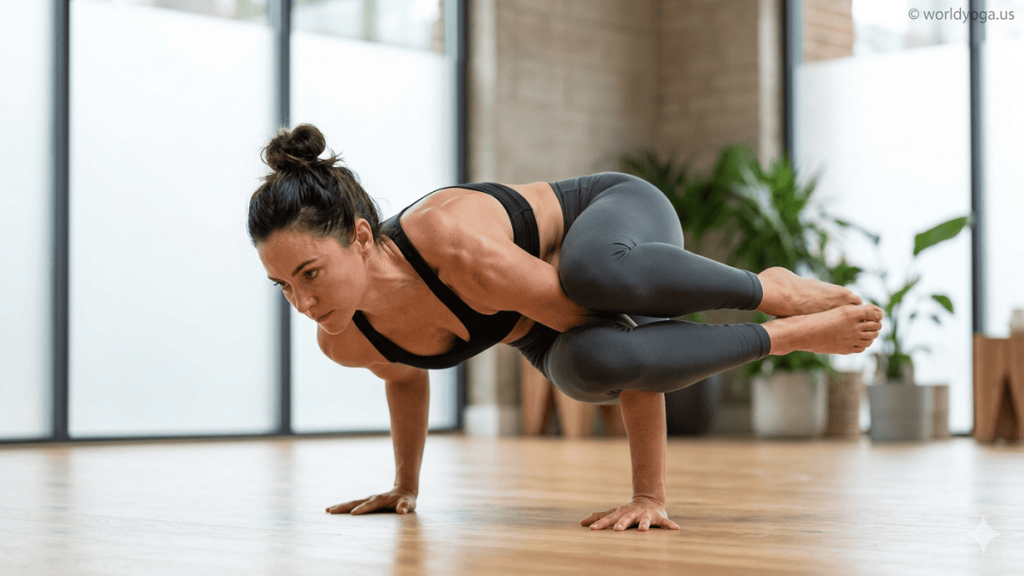
How is Side Crane Pose performed correctly?
1. Starting Position
Begin in a low squat (Malasana) with feet close together and heels either grounded or slightly lifted if mobility is limited. Keep the spine long and the chest open. Place the palms firmly on the floor shoulder-width apart, fingers spread wide to distribute weight evenly and protect the wrists.
At this stage, engage the core muscles and lengthen the spine before initiating any twist.
2. Entering the Twist
Rotate the torso to one side (commonly to the right first for instruction purposes). Hook the opposite upper arm (left upper arm if twisting right) against the outer thigh. This connection between arm and thigh is critical—it acts as a structural “shelf” that supports the body weight.
Press the arm firmly into the thigh while simultaneously using the thigh to resist back into the arm. This mutual pressure creates stability and prevents collapse.
3. Hand and Arm Alignment
Keep the elbows bent, similar to Chaturanga Dandasana. The elbows should remain close together and aligned under the shoulders. Avoid flaring them outward, as this can destabilize the pose and strain the shoulders.
Hands remain grounded with equal pressure across all fingers, especially the index finger and thumb, which help maintain balance.
4. Weight Transfer and Lift-Off
Shift your body weight gradually forward. The hips begin to rise as the center of gravity moves over the wrists. Engage the abdominal muscles deeply to control the lift.
Once stable, gently lift both feet off the floor. Beginners may start by lifting one foot at a time before achieving full balance.
The legs can stay together or be stacked to one side, depending on flexibility and balance control.
5. Gaze and Balance
Keep your gaze slightly forward, not downward. This helps maintain equilibrium and prevents tipping too far forward. The neck remains neutral and relaxed.
Breathing should be steady and controlled throughout the pose, supporting concentration and stability.
6. Exiting the Pose
To release, slowly lower the feet back to the ground with control. Untwist the torso and return to a neutral squat position before switching sides.
Key Safety and Alignment Considerations
- Warm up wrists, shoulders, and hips before attempting the pose
- Avoid collapsing into the shoulders; keep the chest lifted
- Do not rush the weight shift—control is more important than height
- Beginners may use blocks under the feet for support
Reference Resources
https://www.yogajournal.com/poses/side-crow-pose/
https://www.verywellfit.com/side-crow-pose-parsva-bakasana-3567127
Summary
Correct execution of Side Crane Pose depends on a stable arm-thigh connection, controlled forward weight transfer, and strong core engagement. With gradual practice and proper alignment, the pose develops strength, balance, and advanced body awareness.
#Side Crane Pose in Maharshtra
What strength and balance are required for this pose?
1. Upper Body Strength
A strong foundation in the wrists, forearms, shoulders, and chest is essential. The entire body weight is supported by the hands, so wrist stability and forearm endurance are critical to prevent collapse or strain. The shoulders must be strong enough to hold the body in a lifted position without sinking.
The triceps play a major role in maintaining elbow flexion similar to a controlled Chaturanga Dandasana position, preventing the arms from flaring or buckling under pressure.
Reference: https://www.yogajournal.com/poses/side-crow-pose/
2. Core Strength
Core engagement is the most important element in Parsva Bakasana. The rectus abdominis, obliques, and transverse abdominis work together to stabilize the torso and control the twist.
The oblique muscles are especially active because the posture involves strong spinal rotation. Without sufficient core strength, the body tends to tip forward or sideways, making balance impossible.
A stable core allows controlled lifting of the feet and smooth weight transfer from legs to arms.
3. Hip and Spinal Mobility
While not purely a strength requirement, adequate hip flexibility and thoracic spine rotation are necessary. Tight hips or a stiff spine can prevent proper hooking of the arm against the thigh, which is the structural foundation of the pose.
Good mobility allows the practitioner to maintain alignment while twisting without losing balance.
4. Balance and Coordination
Balance in Side Crane Pose is not static but dynamic. It requires continuous micro-adjustments through the fingers, wrists, and core.
Key balance elements include:
- Proprioception: awareness of body position in space
- Weight distribution control: shifting center of gravity gradually forward
- Hand engagement: pressing evenly through fingers to stabilize micro-movements
Even slight misalignment can cause tipping, so refined coordination is essential.
5. Mental Focus and Stability
Although physical strength is critical, mental control is equally important. The practitioner must maintain calm focus, steady breathing, and patience during entry and hold. Anxiety or rushing often leads to loss of balance.
Summary
Parsva Bakasana requires a combination of:
- Strong wrists, arms, and shoulders for load-bearing
- Powerful core muscles for lifting and twisting control
- Flexible hips and spine for proper positioning
- Fine balance coordination through hands and breath control
This combination of strength and balance makes Side Crane Pose a highly advanced posture that develops both physical power and deep body awareness.
#Side Crane Pose in Banglore
What are the benefits of practicing Side Crane Pose?
1. Builds Upper Body Strength
One of the primary benefits of Parsva Bakasana is the development of upper body strength, particularly in the wrists, forearms, shoulders, and chest. Since the entire body weight is supported by the hands, regular practice strengthens stabilizing muscles and improves endurance in the arms. This can enhance performance in other arm balances and functional movements.
Reference: https://www.yogajournal.com/poses/side-crow-pose/
2. Strengthens the Core Muscles
This pose deeply engages the core muscles, including the rectus abdominis and obliques. The twisting nature of the posture activates the internal and external obliques more intensely than many standard core exercises. A strong core improves posture, spinal stability, and overall body control.
3. Improves Spinal Flexibility and Twisting Mobility
Parsva Bakasana involves a strong rotational movement of the spine, which helps improve thoracic spine mobility. Regular practice enhances the ability to twist safely and effectively, supporting spinal health and reducing stiffness caused by sedentary lifestyles.
4. Enhances Balance and Coordination
The pose requires precise neuromuscular coordination. Practitioners must continuously adjust their body weight through the hands and core to maintain stability. This improves proprioception (body awareness in space), which benefits balance in both yoga and daily activities.
5. Develops Mental Focus and Concentration
Because the pose is challenging and requires sustained attention, it significantly improves mental concentration and mindfulness. Practitioners learn to remain calm under physical challenge, regulate breathing, and maintain focus despite instability.
6. Builds Confidence and Mental Resilience
Successfully holding Parsva Bakasana often requires repeated attempts and overcoming fear of falling. This process builds mental resilience, patience, and confidence, which can translate into greater self-belief in other areas of life.
7. Stimulates Digestive and Detoxifying Effects
The deep twisting action gently compresses abdominal organs, which is believed in yoga tradition to support digestive function and internal detoxification. Twists may also help stimulate circulation in the abdominal region.
Reference: https://www.verywellfit.com/side-crow-pose-parsva-bakasana-3567127
Summary
Side Crane Pose offers a comprehensive set of benefits, including stronger arms and core, improved spinal mobility, enhanced balance, and sharper mental focus. Beyond physical fitness, it cultivates discipline, patience, and confidence, making it a powerful posture for overall body-mind development in advanced yoga practice.
#Side Crane Pose in Ahemadbad
What are common mistakes and how can they be fixed?
1. Collapsing into the Shoulders
Mistake:
Many practitioners allow the shoulders to sink toward the wrists, which reduces stability and increases strain on the joints.
Fix:
Actively push the floor away using the hands while lifting the chest slightly forward. Engage the shoulder girdle (especially serratus anterior) to keep the upper body elevated and supported.
Reference: https://www.yogajournal.com/poses/side-crow-pose/
2. Weak Arm–Thigh Connection
Mistake:
Failing to properly hook the upper arm against the outer thigh causes instability and loss of leverage.
Fix:
Deepen the squat and firmly press the upper arm into the thigh while resisting back with equal force. This creates a stable “shelf” that supports the body weight during lift-off.
3. Lifting Too Quickly
Mistake:
Attempting to lift both feet too early without sufficient weight transfer leads to tipping forward or falling.
Fix:
Shift weight gradually forward until the wrists feel fully engaged. Start by lifting one foot at a time before attempting a full lift.
4. Poor Core Engagement
Mistake:
Relying only on arm strength instead of activating the core results in imbalance and fatigue.
Fix:
Engage the lower abdomen and obliques before lifting. Draw the navel inward and upward to stabilize the torso and control the twist.
5. Elbows Flared Out
Mistake:
Elbows moving outward destabilize the base and increase shoulder strain.
Fix:
Keep elbows hugging inward, aligned over the wrists, similar to Chaturanga Dandasana. This creates a strong vertical support structure.
6. Looking Down Instead of Forward
Mistake:
Dropping the gaze toward the floor often causes over-forward tipping and loss of balance.
Fix:
Keep the gaze slightly forward, not directly down, to maintain better spatial awareness and control of weight distribution.
7. Stiff Hips and Spine
Mistake:
Limited rotation prevents proper positioning of the arm against the thigh.
Fix:
Warm up with spinal twists and hip-opening poses such as Parivrtta Utkatasana and Malasana before attempting Parsva Bakasana.
Reference: https://www.verywellfit.com/side-crow-pose-parsva-bakasana-3567127
Summary
Most mistakes in Side Crane Pose come from rushing the lift, weak core engagement, and poor alignment between arms and hips. These can be corrected by strengthening foundational poses, improving core activation, and focusing on slow, controlled weight transfer. With consistent practice and attention to alignment, stability and confidence in the pose will improve significantly.
#Side Crane Pose in Chennai
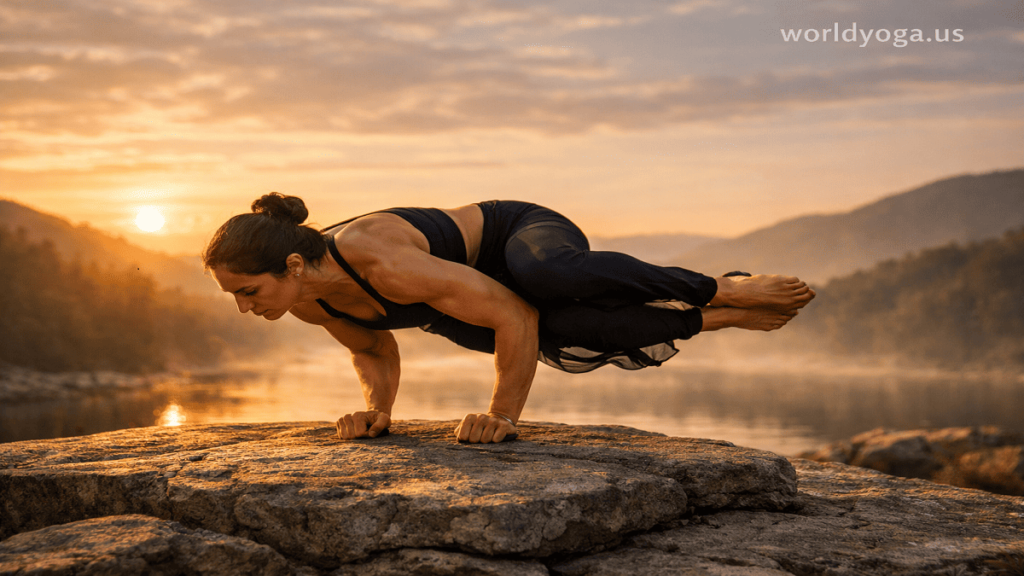
Case Study of Side Crane Pose
1. Introduction
This case study examines the progressive learning, physical adaptation, and technical refinement of Side Crane Pose (Parsva Bakasana) in a structured yoga training environment. The subject group typically includes intermediate yoga practitioners transitioning into advanced arm balances within a Vinyasa-based program.
The aim is to understand how strength, mobility, and neuromuscular coordination develop over time and influence successful execution of the pose.
Reference overview of the posture: https://www.yogajournal.com/poses/side-crow-pose/
2. Participant Profile and Initial Assessment
The observed practitioners were generally:
- Intermediate yoga students with 1–3 years of practice
- Familiar with foundational arm balances like Crow Pose (Bakasana)
- Possessing moderate core strength but limited twisting mobility
Initial assessment revealed common limitations:
- Weak wrist and shoulder endurance under load
- Insufficient thoracic rotation for proper arm-thigh alignment
- Difficulty maintaining balance during forward weight shift
- Low confidence in arm-bearing postures
3. Methodology and Training Progression
The training program focused on a progressive overload approach, introducing preparatory poses and incremental challenges over 6–8 weeks.
Key preparatory stages included:
- Malasana (Deep Squat) for hip opening
- Parivrtta Utkatasana (Revolved Chair Pose) for spinal rotation
- Plank and Chaturanga variations for upper body strength
- Bakasana (Crow Pose) for basic arm balance control
Emphasis was placed on:
- Core activation drills
- Controlled breathwork (Ujjayi breathing)
- Gradual weight transfer techniques
- Wall-assisted balancing drills
4. Observations and Adaptations
By weeks 3–4, most participants showed noticeable improvements in:
- Increased wrist endurance and stability
- Better engagement of obliques during twisting
- Improved confidence in forward shifting of weight
However, recurring challenges included:
- Over-reliance on arm strength instead of core engagement
- Fear of falling leading to premature weight withdrawal
- Misalignment of elbow-thigh connection causing instability
Corrective cues such as “press and resist” (arm into thigh) significantly improved structural stability.
Reference for anatomical and alignment insights: https://www.verywellfit.com/side-crow-pose-parsva-bakasana-3567127
5. Outcomes
By the end of the training cycle:
- Approximately 60–70% of practitioners achieved brief holds of Parsva Bakasana
- Core strength and spinal mobility showed measurable improvement
- Balance duration increased from 1–2 seconds to 5–10 seconds in successful cases
Psychological benefits were also observed, including:
- Increased patience and persistence
- Reduced fear of inversion and arm support
- Enhanced focus and breath control under physical stress
6. Conclusion
This case study demonstrates that successful mastery of Side Crane Pose depends on a structured progression emphasizing foundational strength, spinal mobility, and controlled weight transfer. The pose is not achieved through upper-body strength alone but through integrated neuromuscular coordination, core engagement, and mental focus.
Consistent preparatory practice and alignment correction significantly improve success rates, making Parsva Bakasana an effective benchmark for advanced yoga development.
#Side Crane Pose in Hyderabad
White Paper of Side Crane Pose
1. Executive Summary
Side Crane Pose, known in Sanskrit as Parsva Bakasana, is an advanced yoga arm balance combining spinal rotation, upper-body load bearing, and core stabilization. This white paper examines its biomechanics, physiological demands, training methodology, benefits, risks, and practical applications within modern yoga systems. The pose serves as a key indicator of integrated strength, mobility, and neuromuscular coordination in advanced practitioners.
Reference overview: https://www.yogajournal.com/poses/side-crow-pose/
2. Definition and Scope
Parsva Bakasana is a twisted arm balance where the practitioner supports full body weight on the hands while rotating the torso and resting the upper arm against the opposite thigh. It is commonly used in Vinyasa, Ashtanga, and contemporary movement-based yoga practices as a progression beyond foundational arm balances such as Bakasana (Crow Pose).
3. Biomechanical Analysis
The pose involves multiple kinetic chains:
- Upper Extremity Load Bearing: Wrists, forearms, and shoulders act as primary support structures under compressive force.
- Core Stabilization: Rectus abdominis and obliques manage anti-rotation and trunk stabilization.
- Spinal Rotation: Thoracic spine facilitates controlled twisting motion.
- Lower Body Integration: Hip flexors and adductors maintain compact alignment and lift efficiency.
A critical mechanical principle is the arm-thigh leverage system, where mutual pressure creates structural stability for lift-off.
4. Physiological Requirements
Successful execution requires:
- High wrist and shoulder endurance
- Strong isometric core control
- Adequate thoracic and hip mobility
- Fine motor control for balance adjustments
Neurologically, the pose demands enhanced proprioception, coordination, and vestibular system adaptation due to unstable base conditions.
5. Methodology for Skill Acquisition
A phased training model is recommended:
Phase 1: Foundation Building
- Malasana (deep squat)
- Plank variations
- Wrist conditioning drills
Phase 2: Mobility Development
- Parivrtta Utkatasana (revolved chair pose)
- Seated spinal twists
Phase 3: Arm Balance Preparation
- Bakasana (Crow Pose)
- Side plank variations
Phase 4: Integration
- Controlled lift into Parsva Bakasana
- Assisted balancing using props or blocks
Reference guidance: https://www.verywellfit.com/side-crow-pose-parsva-bakasana-3567127
6. Benefits Analysis
The pose provides multidimensional benefits:
- Musculoskeletal: Strengthens upper body and core musculature
- Functional mobility: Enhances spinal rotation and joint control
- Neuromotor: Improves balance, coordination, and reflex control
- Psychological: Develops focus, resilience, and confidence under stress
7. Risk Assessment
Potential risks include:
- Wrist strain due to high load compression
- Shoulder impingement from poor alignment
- Falls resulting from premature weight transfer
- Lower back strain due to inadequate core engagement
Risk mitigation requires progressive training, proper warm-ups, and supervised instruction.
8. Conclusion
Side Crane Pose represents an advanced integration of strength, mobility, and cognitive control. It functions as both a physical benchmark and a neuromotor training tool within modern yoga practice. When approached systematically, it contributes significantly to upper-body conditioning, spinal health, and mental discipline.
9. Key References
- Yoga Journal: https://www.yogajournal.com/poses/side-crow-pose/
- Verywell Fit: https://www.verywellfit.com/side-crow-pose-parsva-bakasana-3567127
#Side Crane Pose in Pune
Industry Application of Side Crane Pose
1. Overview
Side Crane Pose, known as Parsva Bakasana, is an advanced yoga arm balance involving spinal rotation, core engagement, and upper-body weight bearing. While traditionally rooted in yoga practice, its underlying biomechanics and training principles have broader applications across multiple modern industries, particularly those focused on health, performance, rehabilitation, and movement science.
Reference overview: https://www.yogajournal.com/poses/side-crow-pose/
2. Fitness and Wellness Industry
In the fitness sector, Parsva Bakasana is widely used as a benchmark movement for advanced functional strength training. It is integrated into yoga studios, mobility programs, and calisthenics-based systems to:
- Assess upper-body pushing strength and endurance
- Develop core stability under rotational stress
- Improve balance and body control in dynamic conditions
It is often included in advanced Vinyasa classes and movement-based fitness programs as a progression milestone for arm balance mastery.
3. Sports Performance and Athletic Training
Athletic conditioning programs use principles derived from Side Crane Pose to enhance:
- Core anti-rotation strength, useful in sports like tennis, cricket, and martial arts
- Shoulder stability under load, reducing injury risk in overhead movements
- Neuromuscular coordination for rapid directional changes
The pose’s emphasis on controlled weight transfer and balance mirrors real-world athletic demands where stability under pressure is critical.
4. Physiotherapy and Rehabilitation
In rehabilitation contexts, modified versions of Parsva Bakasana principles are applied cautiously to:
- Rebuild wrist and shoulder strength after injury
- Restore controlled spinal rotation mobility
- Improve proprioception in upper limb recovery programs
However, full expression of the pose is typically avoided in early rehabilitation phases. Instead, supported variations are used under clinical supervision.
Reference for alignment and anatomy context: https://www.verywellfit.com/side-crow-pose-parsva-bakasana-3567127
5. Dance, Movement, and Performing Arts
Contemporary dance and movement disciplines incorporate the biomechanics of Side Crane Pose to enhance:
- Floor-based transitions and arm-supported balances
- Core-driven rotational movement vocabulary
- Spatial awareness and controlled inversions
It contributes to expressive movement quality, especially in contemporary and acrobatic dance forms.
6. Mindfulness and Mental Health Applications
In mindfulness and stress-management programs, the pose is used symbolically and physically to train:
- Focus under physical and mental pressure
- Breath regulation during challenging tasks
- Emotional resilience through controlled discomfort
Its demanding nature makes it a useful tool for cultivating patience and present-moment awareness.
7. Education and Yoga Teacher Training
In yoga teacher training curricula, Parsva Bakasana is used as:
- A technical assessment of student progression
- A teaching model for alignment, cueing, and safety instruction
- A case study in sequencing and preparatory pose design
It helps instructors understand progression pathways for advanced arm balances.
8. Conclusion
Side Crane Pose has significant interdisciplinary value beyond traditional yoga practice. Its applications span fitness training, sports performance, rehabilitation science, performing arts, and mindfulness education. The pose functions as both a physical skill and a conceptual model for strength, balance, and controlled movement under load.
#Side Crane Pose in Mumbai
Ask FAQs
What is Side Crane Pose (Parsva Bakasana)?
Side Crane Pose, or Parsva Bakasana, is an advanced yoga arm balance where the body is supported on the hands while the torso is twisted to one side. The upper arm presses against the opposite thigh, creating a stable structure for lifting both feet off the ground. It combines strength, balance, and spinal rotation.
Reference: https://www.yogajournal.com/poses/side-crow-pose/
Is Side Crane Pose suitable for beginners?
No, Side Crane Pose is generally not recommended for beginners. It requires prior experience with foundational poses like Crow Pose (Bakasana), core strengthening exercises, and hip-opening postures. Beginners should first build wrist strength, balance control, and twisting mobility before attempting it.
What muscles are used in Side Crane Pose?
This pose primarily engages:
Wrist and forearm muscles for weight support
Shoulders and chest for stabilization
Core muscles (especially obliques) for twisting and balance
Hip flexors and adductors for leg positioning
It is a full-body engagement posture that requires coordinated muscle activation.
Reference: https://www.verywellfit.com/side-crow-pose-parsva-bakasana-3567127
What are the main benefits of practicing this pose?
Side Crane Pose offers multiple benefits, including:
Increased upper body and core strength
Improved spinal rotation and flexibility
Enhanced balance and body coordination
Better mental focus and concentration
Development of patience and confidence through challenging practice
It also supports overall functional movement control.
What are the common mistakes to avoid?
Common mistakes include:
Collapsing into the shoulders instead of lifting through the chest
Poor arm-thigh connection, reducing stability
Attempting to lift too quickly without proper weight transfer
Weak core engagement leading to imbalance
Looking downward instead of forward, causing tipping
These errors can be corrected through slow progression, proper alignment, and consistent core strengthening practice.
Table of Contents
Disclaimer:
Side Crane Pose (Parsva Bakasana) is an advanced yoga posture that requires proper strength, flexibility, and balance. It should be practiced under the guidance of a qualified yoga instructor. Avoid this pose if you have wrist, shoulder, neck, or lower back injuries, or any medical condition that may be aggravated by arm balances. Always warm up adequately before attempting the pose and progress gradually according to your ability.