Swan Pose
Swan Pose (Hamsasana / Sleeping Swan variation in Yin Yoga) is a widely practiced yoga posture focused on deep hip opening, spinal release, and improving lower-body mobility. In many modern yoga styles—especially Yin and Hatha Yoga—the term “Swan Pose” often refers to a version of the Pigeon Pose, where one leg is folded in front of the body while the other extends straight back. It is commonly used to target tight hips, glutes, and the lower back.
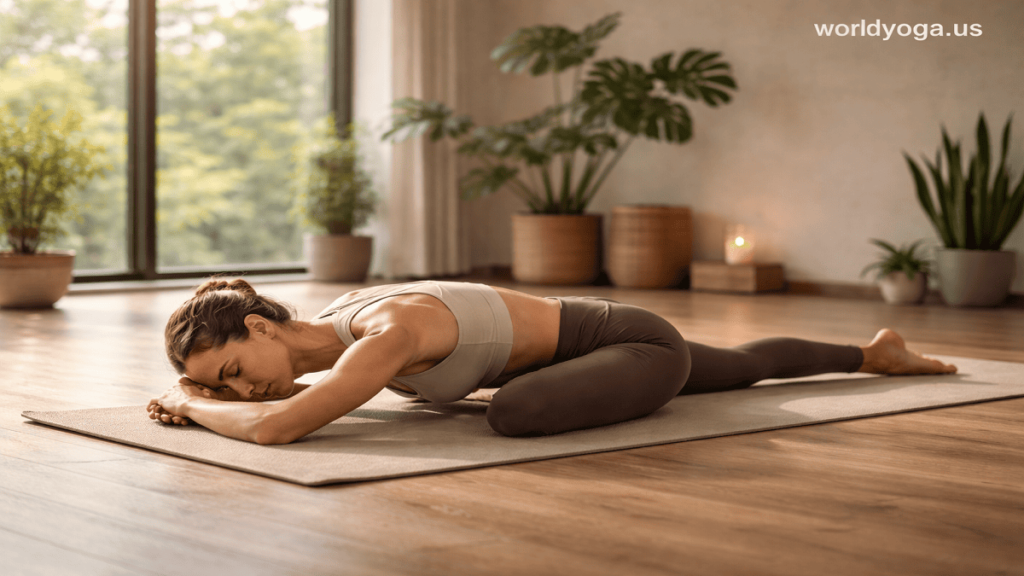
From a structural standpoint, Swan Pose involves bringing one knee forward toward the wrist area while the shin angles across the mat, and the opposite leg extends backward with the top of the foot resting on the floor. The torso may remain upright for an active stretch or fold forward for a deeper, more restorative version known as “Sleeping Swan.” This variation allows gravity to gently increase the stretch across the hip joints and fascia, encouraging long, passive release.
Benefits of Swan Pose
Swan Pose is primarily valued for its effects on the hip complex and surrounding muscle groups. It deeply stretches the hip flexors, piriformis, gluteal muscles, and outer thighs while also lengthening the psoas and abdominal region. Regular practice can improve hip mobility, reduce stiffness from prolonged sitting, and support better posture and spinal alignment. It is also known to stimulate relaxation responses in the nervous system, making it useful for stress relief and calming practices.
According to yoga references, this pose also supports flexibility in the lower back and may help improve circulation in the pelvic region.
How to Practice (Basic Steps)
Start in a tabletop position. Bring your right knee forward behind your right wrist and angle your shin comfortably on the mat. Extend your left leg straight back, ensuring the hips are as square as possible. Inhale to lengthen the spine, then either stay upright or slowly fold forward over the front leg. Rest on forearms or place the forehead on a block for support. Hold for 1–3 minutes, breathing slowly, then switch sides.
Precautions and Modifications
Swan Pose places pressure on the knees and hips, so it should be approached carefully. If there is knee discomfort, use a folded blanket under the hip or try a reclined variation. Avoid forcing the front shin into a parallel position, as hip anatomy varies widely. People with knee injuries or severe hip issues should modify or avoid the full expression.
External References
- https://www.yogajournal.com/poses/pigeon-pose/
- https://www.yogaeasy.com/artikel/swan-pose
- https://www.siddhiyoga.com/yoga/poses/hamsasana-swan-pose
#Swan Pose in India
What is Swan Pose?
Swan Pose is a yoga posture commonly used in Yin Yoga, Hatha Yoga, and mobility-based stretching routines. It is essentially a variation of the well-known Pigeon Pose, designed to deeply open the hips, stretch the lower body, and encourage relaxation in the nervous system.
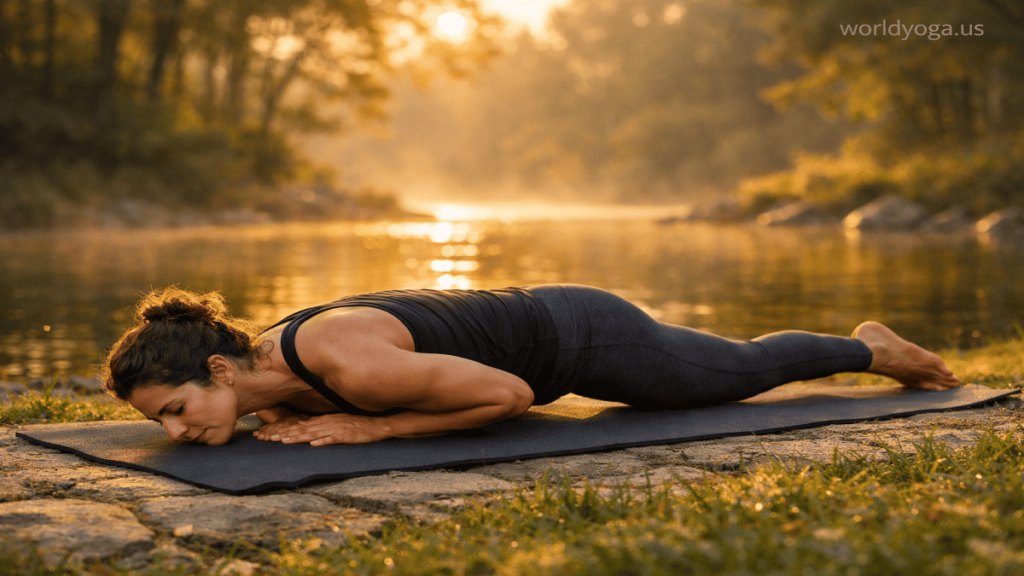
In Swan Pose, one leg is brought forward with the knee bent and the shin angled across the mat, while the other leg extends straight back with the top of the foot resting on the ground. The hips are gently lowered toward the floor. The upper body can stay upright for a milder stretch, or it can fold forward over the front leg for a deeper, more restorative version often called Sleeping Swan.
Purpose and Benefits
The main purpose of Swan Pose is to improve hip flexibility and release tension stored in the lower body. It targets key muscle groups such as the hip flexors, glutes, piriformis, and lower back muscles. Because many people accumulate tightness in the hips from sitting for long hours, this pose is frequently recommended to restore mobility and balance in the pelvic region.
It also supports:
- Improved hip joint range of motion
- Relief from lower back stiffness
- Better posture and spinal alignment
- Stress reduction through deep, slow breathing
In restorative yoga practices, Swan Pose is also valued for its calming effect on the nervous system, helping the body shift into a relaxed state.
How It Feels
Swan Pose is often described as an intense but relieving stretch. Beginners may feel a strong pull in the outer hip or glute of the front leg, while the back leg stretches through the thigh and hip flexor. Over time, consistent practice helps the body soften into the posture more comfortably.
Precautions
Because it places stress on the hips and knees, proper alignment is important. Practitioners should avoid forcing the front shin into a perfect angle, as hip anatomy varies. Using props like blankets or blocks can make the pose safer and more accessible. People with knee injuries or severe hip issues should modify or avoid deep variations.
References
- https://www.yogajournal.com/poses/pigeon-pose/
- https://www.yogaeasy.com/artikel/swan-pose
- https://www.siddhiyoga.com/yoga/poses/hamsasana-swan-pose
#Swan Pose in Delhi
How is Swan Pose performed step by step?
1. Start in Tabletop Position
Begin on your hands and knees in a tabletop position. Your wrists should be under your shoulders and your knees under your hips. Take a few slow breaths here to center your body and prepare your hips.
2. Bring the Front Leg Forward
Slide your right knee forward toward your right wrist. Depending on your flexibility, your shin may angle diagonally across the mat or be closer to parallel at the front. Place your right foot in a comfortable position near the left side of the mat, but do not force the angle—comfort and stability are more important than shape.
3. Extend the Back Leg
Slowly slide your left leg straight back behind you. The top of the foot should rest on the mat. Ensure the leg is extended fully but not locked. Keep your hips as square as possible toward the front of the mat.
4. Adjust Your Hips
This step is important for safety and comfort. Gently lower your hips toward the mat. If one side feels lifted or strained, place a folded blanket or yoga block under the right hip for support. This helps maintain balance and reduces pressure on the knee.
5. Lengthen the Spine
Place your hands on the mat in front of you. Inhale deeply and lift your chest, extending your spine forward and upward. Keep your shoulders relaxed and away from your ears.
6. Choose Your Variation
You now have two main options:
- Active Swan Pose: Stay upright with your hands supporting you, focusing on alignment and gentle stretching.
- Sleeping Swan (Yin variation): Slowly walk your hands forward and lower your torso over your front leg. You can rest on your forearms, a bolster, or fully bring your chest and forehead down to the mat.
7. Hold and Breathe
Stay in the pose for 1–3 minutes (or longer in Yin Yoga). Breathe slowly and deeply into your hips, allowing tension to gradually release. Avoid forcing the stretch.
8. Exit the Pose Safely
Press your hands into the mat, gently lift your torso, and carefully bring the front leg back to neutral. Return to tabletop position and pause before switching sides.
Key Tips
- Never force the front knee or hip into position
- Use props if your hips feel uneven
- Stop if you feel sharp knee pain (mild stretching is okay, pain is not)
External References
- https://www.yogajournal.com/poses/pigeon-pose/
- https://www.yogaeasy.com/artikel/swan-pose
- https://www.siddhiyoga.com/yoga/poses/hamsasana-swan-pose
#Swan Pose in Maharashtra
What strength and balance are required?
Strength Requirements
1. Core Stability (Moderate)
You need mild core strength to keep the torso lifted if you stay in the upright version. The core helps stabilize the pelvis so you don’t collapse into the lower back or twist unevenly. Without this, the pose can feel unstable or overly compressed in the hips.
2. Hip and Glute Control (Light to Moderate)
While Swan Pose is a stretching posture, the glutes and hip muscles still play a stabilizing role. The front leg’s glutes and deep hip rotators help support the position, preventing the knee from taking excessive load.
3. Upper Body Support (Light)
Your arms and shoulders support you when you are upright or transitioning into the forward fold. This is not demanding, but some light endurance is helpful, especially if holding the pose for longer Yin-style durations.
Balance Requirements
1. Pelvic Alignment Awareness
The most important “balance skill” in Swan Pose is maintaining even hips. Many beginners naturally tilt to one side, so you need awareness to keep the pelvis as square as possible to avoid strain on the lower back or knee.
2. Asymmetrical Body Control
Because one leg is folded forward and the other is extended back, your body is split into two different positions. This asymmetry requires coordination to distribute weight evenly instead of collapsing into the front hip.
3. Proprioception (Body Awareness)
You should be able to sense whether pressure is going into the hip, knee, or lower back and adjust accordingly. This is more important than flexibility.
Flexibility Relationship (Important Context)
Although not “strength,” Swan Pose is strongly limited by hip flexibility. Tight hips can make balance harder because the pelvis cannot settle evenly. Over time, as flexibility improves, balance and comfort also improve.
Who Finds It Challenging?
- Beginners with tight hips or hamstrings
- People who sit for long hours
- Individuals with knee sensitivity or uneven hip mobility
Summary
Swan Pose requires:
- Low-to-moderate strength (core + hip stabilization)
- Moderate balance awareness (especially pelvis alignment)
- More flexibility than strength overall
It becomes easier not by building power, but by improving mobility, control, and relaxation in the hips.
References
- https://www.yogajournal.com/poses/pigeon-pose/
- https://www.yogaeasy.com/artikel/swan-pose
- https://www.siddhiyoga.com/yoga/poses/hamsasana-swan-pose
#Swan Pose in Kolkata
What are the benefits of this pose?
1. Deep Hip Opening
The main benefit of Swan Pose is its ability to release tightness in the hips and glutes. It targets deep muscles such as the piriformis, gluteus maximus, and hip rotators. These areas often become tight from long sitting or repetitive movement patterns. Regular practice improves hip joint space and reduces stiffness over time.
2. Improved Lower Back Comfort
By loosening the hips, Swan Pose indirectly reduces strain on the lower back (lumbar spine). When hips are tight, the lower back often compensates, leading to discomfort or stiffness. Releasing hip tension helps the spine move more naturally and reduces pressure buildup in the lumbar region.
3. Increased Mobility and Flexibility
This pose enhances range of motion in the hips, thighs, and pelvis. Over time, it improves walking, squatting, and other functional movements. It is especially useful for people who spend long hours sitting or have limited lower-body flexibility.
4. Stress and Nervous System Relaxation
In the Yin Yoga version (Sleeping Swan), the long, passive hold encourages activation of the parasympathetic nervous system, which promotes relaxation. Slow breathing in the pose can reduce stress, calm the mind, and support emotional release. Many practitioners describe it as deeply grounding.
5. Better Posture and Alignment
Tight hips often affect posture by pulling the pelvis out of alignment. Swan Pose helps restore balance in the pelvic region, which can improve sitting and standing posture over time.
6. Emotional Release (Common in Yin Practice)
Hip-opening poses are often associated in yoga tradition with stored emotional tension. While not a medical claim, many practitioners report feelings of emotional release or mental clarity after long holds in Swan Pose.
7. Improved Circulation in Lower Body
The gentle compression and release in the hips and thighs can support blood flow and circulation, helping reduce stiffness and heaviness in the lower body.
Important Note
Benefits are gradual and depend on consistent practice. Forcing the pose can cause knee or hip strain, so props (like blankets or blocks) are often recommended.
External References
- https://www.yogajournal.com/poses/pigeon-pose/
- https://www.yogaeasy.com/artikel/swan-pose
- https://www.siddhiyoga.com/yoga/poses/hamsasana-swan-pose
#Swan Pose in Hyderabad
What common mistakes should be avoided?
1. Forcing the Front Shin Position
Many people try to make the front shin perfectly parallel to the front of the mat. This is unnecessary and often unsafe.
Why it’s a mistake:
Hip anatomy varies from person to person. Forcing the angle can strain the knee or overstretch the hip joint.
Fix:
Let the shin sit at a natural angle. Comfort matters more than symmetry.
2. Collapsing Into One Hip
A very common issue is letting one side of the pelvis drop unevenly toward the floor.
Why it’s a mistake:
It creates imbalance and can strain the lower back or sacroiliac joint.
Fix:
Place a folded blanket or yoga block under the hip that is lifted to keep the pelvis level.
3. Placing Excess Pressure on the Front Knee
Some practitioners feel the stretch in the knee instead of the hip.
Why it’s a mistake:
Swan Pose should target hips, not knees. Knee pressure can lead to discomfort or injury.
Fix:
Adjust the shin angle, use props under the hip, or reduce depth of the pose.
4. Overarching the Lower Back
When the hips are tight, people often compensate by arching the lower back excessively.
Why it’s a mistake:
It compresses the lumbar spine and reduces the hip stretch.
Fix:
Engage the core lightly and lengthen the spine forward instead of leaning back.
5. Rushing Into the Forward Fold
Dropping quickly into Sleeping Swan without preparation is another common mistake.
Why it’s a mistake:
It can shock tight hips and strain the lower back.
Fix:
Move slowly into the fold and use forearms or a bolster for support.
6. Holding the Breath
Some people unknowingly hold their breath when the stretch feels intense.
Why it’s a mistake:
It increases tension and prevents the muscles from releasing.
Fix:
Maintain slow, steady breathing throughout the pose.
7. Ignoring Pain Signals
There is a difference between deep stretching and sharp pain.
Why it’s a mistake:
Pain in the knee or joint area is a warning sign.
Fix:
Back off immediately, adjust alignment, or exit the pose.
Summary
The key to safe Swan Pose practice is:
- Prioritizing hips over knee alignment
- Using props generously
- Moving slowly and mindfully
- Keeping breath steady
External References
- https://www.yogajournal.com/poses/pigeon-pose/
- https://www.yogaeasy.com/artikel/swan-pose
- https://www.siddhiyoga.com/yoga/poses/hamsasana-swan-pose
#Swan Pose in Banglore
Case Study of Swan Pose
1. Background
Swan Pose is commonly used in Yin Yoga and Hatha Yoga programs as a deep hip-opening posture derived from Pigeon Pose. It is widely included in classes targeting lower back pain relief, stress reduction, and hip mobility improvement, especially for individuals with sedentary lifestyles.
A typical case study approach in yoga therapy examines how consistent practice of Swan Pose affects mobility, discomfort levels, and psychological relaxation over time.
2. Participant Profile (Example Case)
- Age: 32 years
- Occupation: Desk-based office worker
- Primary complaints: Tight hips, lower back stiffness, stress-related fatigue
- Activity level: Low to moderate (occasional walking, no regular stretching routine)
3. Intervention Plan
The participant practiced Swan Pose as part of a 20-minute daily mobility routine for 6 weeks.
Protocol:
- Swan Pose (right side): 2–3 minutes
- Swan Pose (left side): 2–3 minutes
- Supported Sleeping Swan using bolster for comfort
- Focus on slow breathing (4–6 breaths per minute)
- Complementary poses: Child’s Pose and Downward Dog (light variation)
4. Observed Outcomes
Week 1–2: Initial Adaptation
- Strong sensation of stretch in hips and glutes
- Mild discomfort in knee when alignment was incorrect
- Difficulty staying relaxed in forward fold
- Noticeable stiffness after long sitting periods
Week 3–4: Mobility Improvement
- Reduced hip tightness after sessions
- Improved ability to hold pose without strain
- Better pelvic alignment awareness
- Lower back stiffness decreased slightly
Week 5–6: Functional Benefits
- Significant increase in hip range of motion
- Reduced discomfort during prolonged sitting
- Improved postural awareness at work
- Calmer mental state during practice sessions
- Faster relaxation response during deep breathing
5. Key Findings
- Hip flexibility improved first, followed by lower back relief
- Proper use of props (blanket under hip) prevented knee strain
- Slow breathing enhanced nervous system relaxation
- Consistency (daily practice) was more important than duration or intensity
6. Conclusion
This case suggests that Swan Pose, when practiced regularly and with proper alignment, can significantly improve hip mobility, reduce lower back stiffness, and support stress reduction in individuals with sedentary lifestyles.
However, the effectiveness depends heavily on:
- Correct alignment (avoiding knee stress)
- Gradual progression into deeper variations
- Consistent but non-forceful practice
7. External References
- https://www.yogajournal.com/poses/pigeon-pose/
- https://www.yogaalliance.org/resources/yoga-therapy-overview
- https://www.siddhiyoga.com/yoga/poses/hamsasana-swan-pose
- https://www.yogaeasy.com/artikel/swan-pose
#Swan Pose in Chennai
White Paper of Swan Pose
1. Executive Summary
Swan Pose (commonly derived from Pigeon Pose in modern yoga systems) is a foundational hip-opening posture used in Hatha Yoga, Yin Yoga, and yoga therapy contexts. It is primarily applied to improve hip mobility, reduce lower back tension, and support stress regulation through prolonged, controlled stretching.
This white paper reviews Swan Pose from a biomechanical, physiological, and therapeutic perspective, summarizing its mechanisms, benefits, risks, and practical applications in movement and rehabilitation-oriented practices.
2. Definition and Scope
Swan Pose is a unilateral hip flexion-external rotation posture, where one leg is flexed in front of the body while the opposite leg extends posteriorly. The posture may be held upright (active variation) or folded forward (Sleeping Swan, restorative variation).
It is widely used in:
- Yoga conditioning programs
- Mobility and flexibility training
- Stress reduction protocols
- Gentle rehabilitation and movement therapy frameworks
3. Biomechanical Analysis
Swan Pose primarily influences the following structures:
- Hip joint (acetabulofemoral articulation): deep external rotation and flexion of the front leg
- Gluteal muscles: particularly gluteus maximus and deep rotators
- Hip flexors (iliopsoas group): lengthening in the extended back leg
- Lumbar spine: indirect decompression through pelvic release
The posture creates a controlled asymmetrical load, requiring pelvic stabilization to avoid lateral tilt or lumbar compensation.
4. Physiological Effects
Swan Pose produces both mechanical and neurophysiological responses:
- Increased fascial extensibility in the hip region
- Improved local circulation in pelvic and lower limb tissues
- Activation of parasympathetic nervous system during prolonged holds
- Reduction in muscular guarding patterns associated with sedentary behavior
Slow breathing during the posture enhances vagal tone, contributing to relaxation and stress modulation.
5. Therapeutic Applications
Swan Pose is commonly integrated into movement-based interventions for:
- Sedentary lifestyle-related hip tightness
- Non-specific lower back discomfort (mild to moderate)
- Stress and anxiety reduction protocols
- Postural imbalance correction programs
It is frequently used in Yin Yoga and yoga therapy frameworks as a long-duration passive stretch.
6. Risk Profile and Contraindications
Despite its benefits, Swan Pose carries specific risks if misapplied:
- Knee strain due to improper shin alignment
- Hip joint irritation in forced external rotation
- Lumbar compression from pelvic collapse
- Exacerbation of pre-existing knee or SI joint conditions
Contraindicated or requires modification in:
- Acute knee injuries
- Severe hip joint pathology
- Post-surgical lower limb conditions (without supervision)
7. Best Practice Guidelines
To optimize safety and effectiveness:
- Use props (blocks/bolsters) under hips for balance
- Avoid forcing shin alignment
- Maintain neutral spinal length before folding forward
- Emphasize breath control over depth of stretch
- Progress gradually over weeks rather than forcing intensity
8. Conclusion
Swan Pose is a low-to-moderate intensity mobility and restorative posture with significant applications in hip flexibility development and stress regulation. Its effectiveness is strongly dependent on alignment accuracy, load management, and consistent practice.
When applied correctly, it serves as a valuable intervention for improving functional movement quality and reducing tension associated with sedentary lifestyles.
9. External References
- https://www.yogajournal.com/poses/pigeon-pose/
- https://www.yogaalliance.org/resources/yoga-therapy-overview
- https://www.yogaeasy.com/artikel/swan-pose
- https://www.siddhiyoga.com/yoga/poses/hamsasana-swan-pose
#Swan Pose in Ahemadabad
Industry Application of Swan Pose
1. Fitness and Gym Industry
In fitness environments, Swan Pose is used as a cool-down and recovery movement after strength training or cardio sessions.
Applications:
- Post-leg-day hip and glute release
- Flexibility training programs
- Mobility-focused group classes (e.g., “deep stretch” or “recovery flow”)
Value:
It helps reduce post-exercise tightness in the hips and lower back, improving recovery and long-term movement efficiency.
2. Physiotherapy and Rehabilitation
In clinical and rehabilitation settings, Swan Pose is adapted (often with props) for non-invasive mobility restoration.
Applications:
- Management of mild lower back pain (non-specific)
- Hip mobility restoration after prolonged inactivity
- Supporting recovery from sedentary posture-related dysfunction
Value:
It provides a low-load, controlled stretch that can be adjusted for patient limitations.
3. Corporate Wellness Programs
Companies increasingly include Swan Pose in workplace wellness initiatives to counteract prolonged sitting and ergonomic strain.
Applications:
- Desk-worker stretching sessions
- Stress management workshops
- Virtual wellness breaks
Value:
It reduces hip tightness and improves comfort associated with long sitting hours, supporting productivity and employee well-being.
4. Sports Performance and Athletics
Athletes in sports requiring lower-body mobility (running, football, cycling, martial arts) use Swan Pose as part of recovery and flexibility training.
Applications:
- Hip mobility enhancement
- Post-training recovery routines
- Injury prevention protocols
Value:
It supports range of motion in hips and pelvis, which is essential for stride efficiency and movement mechanics.
5. Mental Health and Wellness Industry
In yoga therapy and mindfulness-based programs, Swan Pose is used for its calming and grounding effects.
Applications:
- Stress reduction sessions
- Anxiety management practices
- Mind-body therapy programs
Value:
Long holds (Sleeping Swan variation) encourage relaxation through parasympathetic nervous system activation.
6. Education and Yoga Training Institutes
Yoga schools and teacher training programs teach Swan Pose as a foundational hip opener.
Applications:
- Anatomy and alignment education
- Sequencing in beginner-to-advanced yoga classes
- Yin Yoga curriculum development
Value:
It is a core posture for understanding asymmetrical hip mechanics and safe stretching principles.
7. Digital Wellness and Fitness Platforms
Apps and online platforms integrate Swan Pose into guided routines.
Applications:
- Mobility training videos
- AI-guided yoga sessions
- Personalized stretching plans
Value:
It is highly adaptable for home-based fitness and guided virtual coaching systems.
Conclusion
Swan Pose has evolved from a traditional yoga posture into a multi-industry functional movement tool. Its adaptability makes it valuable across fitness, healthcare, corporate wellness, sports, education, and digital health platforms. Its primary industry relevance lies in hip mobility improvement, recovery support, and stress regulation.
External References
- https://www.yogajournal.com/poses/pigeon-pose/
- https://www.yogaalliance.org/resources/yoga-therapy-overview
- https://www.nccih.nih.gov/health/yoga-what-you-need-to-know
- https://www.siddhiyoga.com/yoga/poses/hamsasana-swan-pose
#Swan Pose in Mumbai
Ask FAQs
What is Swan Pose?
Swan Pose is a yoga posture commonly used in Yin Yoga and Hatha Yoga that deeply opens the hips. It is a variation of Pigeon Pose where one leg is bent in front of the body and the other is extended straight back. It helps stretch the hips, glutes, and lower back while improving flexibility and relaxation.
What are the main benefits of Swan Pose?
Swan Pose improves hip flexibility, lower back comfort, and posture alignment. It helps release tension in the glutes and hip flexors, reduces stiffness from long sitting, and can also promote relaxation and stress relief when held for longer durations in restorative practice.
Who should avoid or modify Swan Pose?
People with knee injuries, severe hip pain, or sacroiliac joint issues should avoid or modify the pose. Pregnant individuals or beginners with very tight hips should use props like blankets or blocks and practice a gentler variation to reduce pressure on the joints.
What is the correct way to do Swan Pose safely?
Start in a tabletop position, bring one knee forward behind the wrist, and extend the opposite leg straight back. Keep hips as level as possible. Use props under the hips if needed. Stay upright or fold forward slowly, breathing deeply without forcing the stretch.
Why does Swan Pose feel intense?
Swan Pose feels intense because it targets deep hip muscles like the glutes and piriformis, which often store tension from sitting and inactivity. The asymmetrical position also challenges hip mobility and requires controlled relaxation to ease into the stretch safely.
Table of Contents
Disclaimer: Swan Pose is a general yoga posture description intended for educational purposes only. It is not medical advice. Practice within your comfort level, avoid pain, and consult a qualified healthcare professional or certified yoga instructor if you have injuries, medical conditions, or concerns before attempting this pose.