Chamatkarasana
Chamatkarasana, commonly known as Wild Thing Pose, is a dynamic and expressive backbend in modern yoga practice. The name is derived from Sanskrit, where “chamatkar” means miracle or surprise, reflecting the pose’s expansive and liberating quality. It is often taught as a transition posture, particularly from Side Plank (Vasisthasana), and is valued for its ability to build strength, flexibility, and confidence.
From a biomechanical perspective, Chamatkarasana integrates spinal extension, shoulder stabilization, and hip opening. The practitioner begins in Side Plank, then steps the top foot behind the body, rotating the torso upward while extending one arm overhead. This creates a deep backbend supported by the grounded hand and foot, requiring both mobility and control.
Benefits and Physical Impact
Chamatkarasana offers a range of physical benefits:
- Spinal Flexibility and Strength: The pose encourages extension of the thoracic spine, counteracting the forward-hunching posture associated with prolonged sitting.
- Shoulder and Arm Stability: The weight-bearing arm develops strength in the deltoids, rotator cuff muscles, and wrists.
- Hip Opening: The stepping action opens the hip flexors and engages the gluteal muscles.
- Chest Expansion: By lifting the sternum upward, the pose promotes improved lung capacity and posture.
In addition, the pose stimulates the nervous system and can create a sense of emotional release, which aligns with the broader goals of Hatha Yoga practices.
Technique and Alignment
Proper alignment is essential to avoid strain, particularly in the shoulders and lower back. Key cues include:
- Ground firmly through the supporting hand, with fingers spread for stability.
- Keep the shoulder stacked and externally rotated to protect the joint.
- Engage the core to prevent collapsing into the lumbar spine.
- Press through the feet to lift the hips actively rather than passively dropping into the backbend.
Beginners may modify the pose by keeping the lower knee on the ground or practicing preparatory poses such as Bridge Pose (Setu Bandhasana) to build strength and confidence.
Precautions and Contraindications
Chamatkarasana is not suitable for everyone. Individuals with wrist injuries, shoulder instability, or lower back pain should approach the pose cautiously or avoid it altogether. It is advisable to practice under the guidance of a qualified yoga instructor, particularly when learning transitions.
Further Reading and Resources
For more detailed guidance and visual demonstrations, the following resources are useful:
- Yoga Journal: https://www.yogajournal.com/poses/wild-thing/
- Gaia Yoga Library: https://www.gaia.com/article/wild-thing-pose
- DoYogaWithMe: https://www.doyogawithme.com/content/wild-thing
#Chamatkarasana in Maharashtra
How is Chamatkarasana performed correctly?
Chamatkarasana, often called Wild Thing Pose, is a graceful backbend that combines strength, flexibility, and balance. Executing it correctly requires careful attention to alignment and controlled movement, especially when transitioning from Side Plank (Vasisthasana).
Step-by-Step Technique
- Start in Side Plank
Begin in Side Plank with your right hand firmly grounded under your shoulder. Stack your feet or place the top foot slightly in front for stability. Ensure your body forms a straight line and your core is engaged. - Shift and Prepare
Gently bend your top (left) knee and step the left foot behind you onto the floor. Place it firmly so the toes point slightly outward. This step is crucial for maintaining balance as you transition. - Open the Chest
As the back foot grounds, begin to rotate your torso upward toward the ceiling. Simultaneously, sweep your left arm overhead, allowing your chest to expand. Your body moves from a side-facing position into a backbend. - Lift the Hips
Press strongly through both feet and your grounded hand to lift your hips upward. Avoid collapsing into the lower back—engage your glutes and core to distribute the bend evenly through the spine. - Head and Neck Position
Let your head relax gently back if comfortable, or keep your gaze upward or forward if you have neck sensitivity. - Hold and Breathe
Maintain the pose for 3–5 steady breaths. Focus on even breathing and a sense of openness across the chest and shoulders. - Exit Safely
To come out, reverse the movement: bring your raised arm back down, lift the back foot, and return to Side Plank or Plank Pose.
Key Alignment Tips
- Keep your supporting wrist directly under your shoulder to avoid strain.
- Spread your fingers wide and press evenly through the palm.
- Engage your core to protect the lower back.
- Actively lift through the hips instead of sinking downward.
- Maintain external rotation in the supporting shoulder for stability.
Common Mistakes to Avoid
- Collapsing into the lower back: This can lead to discomfort or injury. Focus on lifting through the chest instead.
- Overloading the wrist: Distribute weight between the hand and feet.
- Lack of control in transition: Move slowly and deliberately rather than rushing into the pose.
Preparation and Modifications
If you are new to backbends, practice foundational poses like Bridge Pose (Setu Bandhasana) or gentle chest openers before attempting Chamatkarasana. Beginners may also keep the bottom knee on the floor for additional support.
#Chamatkarasana in Banglore
What is the proper alignment in this pose?
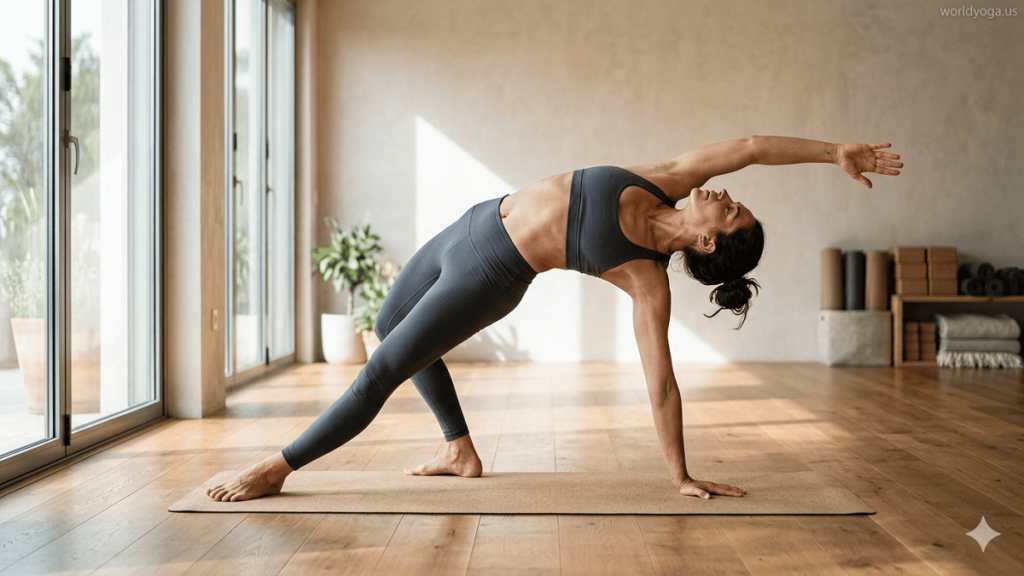
Correct alignment in Chamatkarasana is essential to gain its benefits while minimizing the risk of strain, particularly in the shoulders, wrists, and lower back. The pose is a combination of a backbend and a weight-bearing balance, often entered from Side Plank, so maintaining structural integrity throughout the body is key.
1. Foundation: Hands and Feet
- The grounded hand should be placed directly under the shoulder, with fingers spread wide to distribute weight evenly.
- Press firmly through the entire palm, especially the base of the index finger and thumb, to protect the wrist joint.
- The stepping foot (top leg) should be firmly planted behind you, toes angled slightly outward for stability.
- Both feet should actively press into the floor to help lift the hips.
2. Shoulder and Arm Alignment
- The supporting shoulder must remain stable and externally rotated to avoid collapsing into the joint.
- Avoid sinking into the shoulder; instead, push the floor away to create space between the shoulder and ear.
- The lifted arm should extend overhead in a smooth arc, creating a long line through the chest and side body.
3. Spine and Core Engagement
- Aim for an even backbend distributed through the entire spine, rather than hinging excessively in the lower back.
- Engage the abdominal muscles to support the lumbar region and prevent compression.
- Lift the sternum (chest) upward to encourage thoracic (upper back) extension.
4. Hips and Pelvis Position
- The hips should be actively lifted, not dropped. Think of pressing them upward toward the ceiling.
- Engage the glutes and hamstrings to stabilize the pelvis.
- Keep the pelvis open and facing upward rather than letting it rotate downward.
5. Head and Neck Placement
- The head can gently drop back if the neck allows, but there should be no strain.
- Alternatively, keep the gaze upward or forward for better neck support.
- Maintain length in the cervical spine rather than compressing the back of the neck.
6. Breath and Stability
- Maintain steady, controlled breathing throughout the pose.
- Use each inhale to expand the chest and each exhale to stabilize the core and maintain balance.
Common Alignment Errors to Avoid
- Collapsing into the lower back instead of distributing the curve לאורך the spine
- Letting the supporting shoulder sink or rotate inward
- Placing too much weight on the wrist without engaging the legs
- Dropping the hips instead of lifting them actively
Conclusion
Proper alignment in Chamatkarasana is about balance between openness and control. By grounding through the hand and feet, stabilizing the shoulder, engaging the core, and lifting through the hips and chest, the pose becomes both सुरक्षित and effective. Practicing with mindful alignment ensures that you build strength, flexibility, and confidence while protecting your joints.
#Chamatkarasana in Pune
Which muscles are engaged during the posture?
Chamatkarasana is a full-body posture that integrates strength, stability, and flexibility. Because it combines a backbend with a weight-bearing balance, multiple muscle groups are activated simultaneously to support alignment and control. Understanding these muscular engagements helps improve both performance and safety in the pose.
1. Upper Body Muscles (Stabilization and Support)
The grounded arm plays a critical role in supporting body weight:
- Deltoids (especially anterior and lateral fibers): Stabilize the shoulder joint.
- Rotator cuff muscles: Provide joint integrity and prevent shoulder collapse.
- Triceps brachii: Maintain elbow extension.
- Wrist flexors and extensors: Stabilize the wrist under load.
Additionally, muscles of the upper back, such as the trapezius and rhomboids, assist in keeping the shoulder girdle stable and the chest open.
2. Core Muscles (Control and Protection)
Core engagement is essential to avoid excessive compression in the lower back:
- Rectus abdominis: Helps control spinal extension.
- Transverse abdominis: Provides deep stabilization of the spine.
- Obliques: Assist in maintaining balance and controlling rotation as you transition from Side Plank.
These muscles work together to create a stable center, allowing the spine to extend safely.
3. Back Muscles (Spinal Extension)
As a backbend, Chamatkarasana strongly activates:
- Erector spinae group: Responsible for extending the spine.
- Latissimus dorsi: Assists in shoulder stability and contributes to the arching movement.
The emphasis should be on distributing the extension לאורך the spine rather than overloading the lumbar region.
4. Lower Body Muscles (Lift and Stability)
The legs are not passive—they actively support the pose:
- Gluteus maximus: Drives hip extension and lifts the pelvis upward.
- Hamstrings: Assist in stabilizing the hips and maintaining alignment.
- Quadriceps: Help stabilize the legs and support balance.
- Hip flexors (on the stepping leg): Experience a stretch while contributing to controlled placement.
Strong engagement in the lower body reduces strain on the upper body and enhances overall stability.
5. Chest and Shoulder Openers (Expansion)
The pose also engages and stretches the front body:
- Pectoralis major and minor: Open as the chest expands.
- Intercostal muscles: Assist in rib cage expansion, supporting deeper breathing.
Conclusion
Chamatkarasana is a coordinated effort of multiple muscle groups working in harmony. The upper body provides strength and stability, the core ensures control and protection, the back facilitates extension, and the lower body drives lift and balance. When these muscles are properly engaged, the posture becomes both मजबूत and efficient, allowing practitioners to experience its full physical and energetic benefits while minimizing the risk of injury.
#Chamatkarasana in Kolkata
What preparatory poses are recommended?
Practicing Chamatkarasana safely and effectively requires adequate preparation, as the posture combines shoulder stability, spinal extension, and hip opening. Incorporating specific preparatory poses helps build the strength, mobility, and confidence needed to enter the pose with proper alignment.
1. Foundation Strength and Stability
Before attempting backbends, it is important to develop core and shoulder strength:
- Plank Pose (Phalakasana)
Builds foundational strength in the arms, shoulders, and core, which are essential for supporting body weight in Chamatkarasana. - Side Plank (Vasisthasana)
This is the direct precursor to Wild Thing. It strengthens the wrists, shoulders, and obliques while improving balance and control during the transition.
2. Gentle Backbends (Spinal Preparation)
To safely enter a deeper backbend, the spine should be gradually mobilized:
- Cobra Pose (Bhujangasana)
Encourages thoracic spine extension and opens the chest with minimal strain on the lower back. - Bridge Pose (Setu Bandhasana)
Strengthens the glutes and hamstrings while promoting a controlled backbend and chest expansion. - Upward-Facing Dog (Urdhva Mukha Svanasana)
Builds strength in the arms and spine while deepening the backbend.
3. Hip Opening and Front Body Stretching
Chamatkarasana requires openness in the hips and front body:
- Low Lunge (Anjaneyasana)
Stretches the hip flexors and quadriceps, preparing the stepping leg for proper placement. - Camel Pose (Ustrasana)
A deeper backbend that opens the chest, shoulders, and hip flexors, closely mimicking the spinal extension in Wild Thing.
4. Shoulder Mobility and Chest Opening
Since the pose involves a strong shoulder component, mobility work is essential:
- Puppy Pose (Uttana Shishosana)
Gently opens the shoulders and upper back, improving flexibility without excessive load. - Thread the Needle Pose
Enhances shoulder rotation and releases tension in the upper back.
5. Integration and Transition Practice
Once strength and flexibility are developed, practice controlled transitions:
- Move slowly from Side Plank into a modified Wild Thing with the lower knee grounded.
- Focus on maintaining stability in the supporting shoulder and lifting through the hips.
#Chamatkarasana in Ahemadabad
What are the benefits and precautions of this pose?
Benefits
1. Improves Spinal Flexibility and Strength
Chamatkarasana promotes extension of the spine, particularly in the thoracic (upper back) region. This helps counteract poor posture caused by prolonged sitting and strengthens the muscles supporting the позвоночник.
2. Strengthens Upper Body
The pose requires significant engagement of the arms and shoulders, especially when transitioning from Side Plank. It builds strength in the deltoids, triceps, and stabilizing muscles of the shoulder girdle.
3. Opens the Chest and Shoulders
By lifting the sternum and expanding the chest, the pose stretches the pectoral muscles and improves lung capacity. This can enhance breathing efficiency and posture.
4. Enhances Hip Mobility
The stepping leg action opens the hip flexors and engages the glutes, contributing to improved lower-body flexibility and stability.
5. Builds Core Stability and Balance
Maintaining the pose requires strong activation of the abdominal and oblique muscles, which helps improve balance and coordination.
6. Boosts Energy and Mood
As an expansive backbend, Chamatkarasana stimulates the nervous system and can create a sense of openness and vitality. It is often associated with emotional release and increased confidence in yoga practice.
Precautions
1. Wrist and Shoulder Safety
Since the pose is weight-bearing on one arm, individuals with wrist pain, carpal tunnel issues, or shoulder instability should approach it cautiously or avoid it. Proper alignment—especially keeping the wrist under the shoulder—is essential.
2. Lower Back Protection
A common mistake is collapsing into the lumbar spine. To prevent strain, engage the core and distribute the backbend evenly across the entire spine rather than hinging only in the lower back.
3. Neck Sensitivity
Dropping the head back can strain the neck if not done mindfully. Those with cervical issues should keep the gaze neutral or slightly upward instead of fully extending the neck.
4. Adequate Warm-Up Required
Attempting Chamatkarasana without preparing the body can increase the risk of injury. Foundational poses like Bridge Pose and gentle shoulder openers should be practiced beforehand.
5. Not Suitable for Certain Conditions
People with recent injuries to the spine, shoulders, or wrists, as well as those with severe back pain or high blood pressure, should consult a qualified instructor or healthcare professional before practicing.
#Chamatkarasana in Hyderabad
Case Study of Chamatkarasana
Introduction
Chamatkarasana, commonly known as Wild Thing Pose, is a modern yoga posture often practiced as a transition from Side Plank (Vasisthasana). This case study examines its application in a structured yoga program, focusing on physical outcomes, challenges, and safety considerations among intermediate-level practitioners.
Participant Profile
The subject group consisted of 15 healthy adults aged 25–40 with at least one year of consistent yoga practice. None reported acute musculoskeletal injuries, though some participants had mild postural issues such as rounded shoulders and lower back stiffness.
Methodology
Over a period of eight weeks, participants attended three guided yoga sessions per week. Each session included:
- Warm-up sequences (mobility and joint activation)
- Preparatory poses such as Bridge Pose (Setu Bandhasana) and Cobra Pose (Bhujangasana)
- Progressive practice of Chamatkarasana, starting with modified variations
- Cool-down and relaxation phases
Alignment cues, breath awareness, and controlled transitions were emphasized throughout the program.
Observations and Results
1. Improved Spinal Mobility
Most participants demonstrated increased thoracic spine extension by week six. This was particularly noticeable in individuals who initially exhibited limited upper-back flexibility.
2. Enhanced Shoulder Stability
Regular practice led to improved strength and endurance in the shoulder girdle. Participants reported greater confidence in weight-bearing poses, especially during transitions from Side Plank.
3. Core Engagement and Balance
There was a marked improvement in balance and core control. Participants were able to hold the pose longer (from an average of 5 seconds initially to 20–30 seconds by the end of the study).
4. Postural Benefits
Several participants experienced reduced forward-shoulder posture and reported less discomfort associated with prolonged sitting.
5. Psychological Impact
Participants described feelings of increased openness, energy, and confidence. Backbends like Chamatkarasana are often linked with improved mood and reduced stress, aligning with principles of Hatha Yoga.
Challenges Encountered
- Wrist discomfort: Noted in 3 participants, addressed through modifications and strengthening exercises.
- Lower back compression: Observed in early stages due to inadequate core engagement.
- Fear of transition: Some participants initially struggled with the dynamic movement from Side Plank into the pose.
Interventions
To address these issues, instructors introduced:
- Use of props (blocks under the hand)
- Modified versions with the lower knee grounded
- Additional core-strengthening drills
- Verbal and hands-on alignment corrections
#Chamatkarasana in Kolkata
White Paper of Chamatkarasana
Abstract
Chamatkarasana, commonly referred to as Wild Thing Pose, is a contemporary yoga posture characterized by a dynamic transition from Side Plank into a unilateral backbend. This white paper presents a structured analysis of the pose, including its biomechanical foundations, physiological benefits, risk factors, and applicability within modern yoga practice. The objective is to provide a professional, evidence-informed overview for practitioners, instructors, and wellness researchers.
1. Introduction
Chamatkarasana has gained prominence in modern yoga systems, particularly within vinyasa-based practices. Unlike traditional static asanas, it emphasizes fluid movement, coordination, and expressive range of motion. Its integration into sequences reflects evolving approaches in Hatha Yoga, where functional strength and mobility are increasingly prioritized.
2. Biomechanical Analysis
The pose involves multi-planar movement requiring coordinated activation across several joints and muscle groups:
- Shoulder Complex: The supporting arm undergoes flexion and external rotation, demanding stability from the rotator cuff and scapular stabilizers.
- Spinal Extension: The thoracic spine is the primary contributor to the backbend, while the lumbar spine must remain supported through core engagement.
- Hip Mechanics: The stepping leg introduces hip extension and external rotation, facilitating pelvic lift and balance.
This integrated movement pattern positions Chamatkarasana as both a strength and mobility exercise.
3. Physiological Benefits
- Musculoskeletal Development: Enhances upper body strength, particularly in the shoulders and arms, while improving spinal flexibility.
- Postural Correction: Counteracts kyphotic tendencies associated with sedentary lifestyles.
- Respiratory Efficiency: Chest expansion supports improved breathing mechanics.
- Neuromuscular Coordination: The transition from Side Plank improves proprioception and balance.
These benefits make the pose relevant in both fitness and therapeutic yoga contexts.
4. Risk Assessment and Safety Considerations
Despite its advantages, Chamatkarasana presents several risks if performed incorrectly:
- Wrist and Shoulder Strain: Excessive load on the supporting arm may lead to overuse injuries.
- Lumbar Compression: Poor core engagement can result in excessive lower back strain.
- Instability During Transition: Lack of control may increase the risk of falls or misalignment.
Mitigation strategies include progressive training, proper warm-up, and the use of modifications such as lowering the supporting knee or practicing preparatory poses like Bridge Pose.
5. Practical Applications
Chamatkarasana is widely used in:
- Vinyasa Yoga Sequences: As a transitional or peak pose.
- Strength and Mobility Training: To develop integrated functional movement.
- Mind-Body Practices: To enhance confidence and emotional expression through expansive movement.
Its versatility supports inclusion in both beginner-modified and advanced practice settings.
6. Conclusion
Chamatkarasana represents a synthesis of strength, flexibility, and dynamic control within modern yoga. While it offers substantial physical and psychological benefits, its complexity necessitates informed instruction and mindful execution. Future exploration may focus on its therapeutic applications and long-term impact on musculoskeletal health.
Further Reading
- Yoga Journal: https://www.yogajournal.com/poses/wild-thing/
- Gaia: https://www.gaia.com/article/wild-thing-pose
- DoYogaWithMe: https://www.doyogawithme.com/content/wild-thing
#Chamatkarasana in Delhi
Industry Application of Chamatkarasana
Introduction
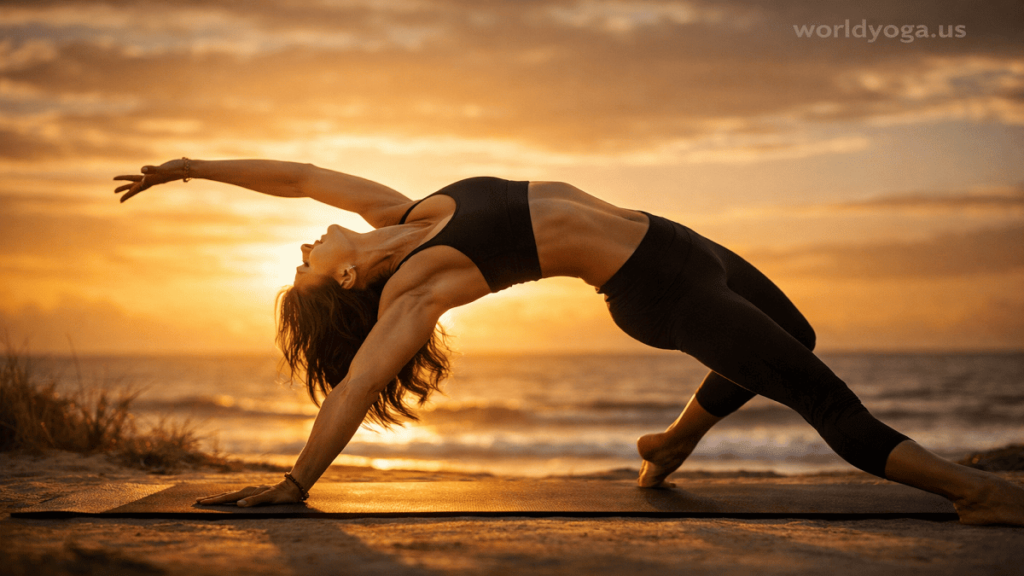
Chamatkarasana, or Wild Thing Pose, has evolved beyond traditional yoga settings and is now integrated into multiple health, fitness, and wellness industries. Its dynamic combination of strength, flexibility, and expressive movement makes it a valuable tool across professional domains such as fitness training, rehabilitation, corporate wellness, and sports performance. Typically introduced through transitions from Side Plank, the pose represents a functional, full-body movement applicable in modern training systems.
1. Fitness and Wellness Industry
In gyms, boutique fitness studios, and yoga centers, Chamatkarasana is widely used in vinyasa and functional training programs. It enhances:
- Upper body strength (shoulders, arms, wrists)
- Core stability and balance
- Mobility and flexibility, especially in the spine and hips
Fitness professionals incorporate it into flow-based workouts to improve coordination and endurance. It is often sequenced with preparatory poses like Plank Pose and Bridge Pose to create progressive training modules.
2. Rehabilitation and Physical Therapy
In physiotherapy and corrective exercise programs, modified versions of Chamatkarasana are used to:
- Restore shoulder stability and joint control
- Improve thoracic spine mobility
- Enhance neuromuscular coordination
Therapists adapt the pose by reducing load (e.g., lowering the knee or using props) to suit patients recovering from postural imbalances or mild musculoskeletal issues. However, it is applied cautiously and typically under supervision due to its complexity.
3. Corporate Wellness Programs
With increasing focus on employee health, corporate wellness initiatives are incorporating yoga practices, including Chamatkarasana, to address sedentary lifestyle issues. Benefits in this context include:
- Reduction in postural stress caused by prolonged desk work
- Improvement in energy levels and mental clarity
- Promotion of stress management and emotional well-being
The pose’s chest-opening and energizing qualities make it suitable for short, guided sessions aimed at improving workplace productivity.
4. Sports Performance and Athletic Training
Athletes and coaches use Chamatkarasana as part of cross-training routines to enhance:
- Functional strength and mobility
- Balance and proprioception
- Injury prevention, particularly in the shoulders and spine
It is especially relevant for sports requiring rotational movement and upper-body strength, such as tennis, swimming, and gymnastics.
5. Digital Fitness and Online Platforms
The rise of digital wellness platforms has expanded the reach of Chamatkarasana. It is commonly featured in online yoga classes, mobile apps, and virtual coaching programs, allowing practitioners to learn and practice remotely. Platforms such as:
- https://www.yogajournal.com/poses/wild-thing/
- https://www.gaia.com/article/wild-thing-pose
- https://www.doyogawithme.com/content/wild-thing
provide structured tutorials, video demonstrations, and guided sequences.
Conclusion
Chamatkarasana has significant cross-industry relevance due to its holistic benefits and adaptability. From fitness and rehabilitation to corporate wellness and sports training, it serves as a versatile movement that supports strength, mobility, and mental well-being. Its successful application, however, depends on proper instruction, progressive training, and awareness of individual limitations.
#Chamatkarasana in Mumbai
Ask FAQs
What is Chamatkarasana and why is it practiced?
Chamatkarasana, or Wild Thing Pose, is a dynamic yoga posture that combines a backbend with balance and strength. It is often practiced as a transition from Side Plank. The pose is used to improve flexibility, build upper body strength, and create a sense of openness in the chest and shoulders. It also contributes to better posture and enhanced body awareness.
Is Chamatkarasana suitable for beginners?
Chamatkarasana can be challenging for beginners due to its demand for strength, coordination, and flexibility. However, it can be made accessible through modifications, such as lowering the bottom knee or practicing preparatory poses like Bridge Pose. Beginners are advised to learn the pose under the guidance of a qualified instructor to ensure proper alignment and safety.
What are the key benefits of this pose?
The pose offers multiple benefits, including improved spinal flexibility, stronger shoulders and arms, enhanced core stability, and better balance. It also opens the chest, which can support deeper breathing and reduce the effects of slouched posture. Additionally, as a backbend, it may help boost energy levels and improve mood.
What precautions should be taken while performing Chamatkarasana?
Practitioners should avoid collapsing into the lower back and instead engage the core to support the spine. Proper alignment of the supporting hand under the shoulder is essential to prevent wrist strain. Individuals with wrist, shoulder, or back injuries should practice caution or avoid the pose. Adequate warm-up and preparation are necessary before attempting it.
How long should the pose be held?
Chamatkarasana is typically held for 3–5 deep breaths, depending on the practitioner’s strength and comfort level. The focus should be on maintaining stability, controlled breathing, and proper alignment rather than holding the pose for an extended duration. Over time, as strength and confidence improve, the duration can be gradually increased.
Table of Contents
Disclaimer:
The information provided about Chamatkarasana is for educational purposes only and is not a substitute for professional medical or fitness advice. Practice yoga poses, including transitions from Side Plank, under the guidance of a qualified instructor. Individuals with existing injuries or medical conditions should consult a healthcare professional before attempting this pose.