
Parivritta Prapadasana
Parivritta Prapadasana is a dynamic standing yoga posture that combines a deep lunge with a spinal twist. The term comes from Sanskrit: Parivritta (revolved or twisted), Prapada (foot or stance), and Asana (pose). This posture is commonly practiced in modern yoga sequences to build strength, improve flexibility, and enhance balance.
Pose Description
Parivritta Prapadasana typically begins from a lunge position, where one foot is forward and the other extended back. From this stance, the torso rotates toward the front leg, creating a twisting action through the spine. The hands may come into a prayer position at the chest or extend outward, depending on the variation.
This pose is often compared to Revolved Lunge, as both involve a similar twisting motion combined with lower-body engagement.
Key Elements of the Pose
1. Lower Body Stability
The front knee is bent at approximately 90 degrees, aligned over the ankle, while the back leg remains strong and extended. This creates a stable base for the twist.
2. Spinal Rotation
The torso rotates toward the bent front leg, engaging the obliques and spinal muscles. The twist should originate from the mid-spine rather than forcing the lower back.
3. Core Engagement
The abdominal muscles are actively engaged to support the twist and maintain balance.
4. Upper Body Position
The chest lifts and opens as the twist deepens, with shoulders stacked and the gaze directed upward or sideways.
Benefits
- Improves spinal mobility and flexibility
- Strengthens legs, core, and stabilizing muscles
- Enhances balance and coordination
- Stimulates digestion through the twisting action
- Promotes body awareness and focus
Practice Considerations
Proper alignment is essential to avoid strain, especially in the knees and lower back. Beginners may modify the pose by lowering the back knee or reducing the depth of the twist. Using props like yoga blocks can also help maintain balance and alignment.
Conclusion
Parivritta Prapadasana is a powerful combination of strength, stability, and mobility. When practiced mindfully, it supports both physical conditioning and mental focus, making it a valuable addition to a well-rounded yoga practice.
#Parivritta Prapadasana in India
How is Parivritta Prapadasana performed correctly?
Step-by-Step Technique
1. Start in a Lunge Position
Begin in a forward lunge with your right foot placed between your hands. Keep your right knee bent at about 90 degrees, directly above the ankle. Extend your left leg straight back, with the heel lifted and toes grounded.
2. Establish a Stable Base
Press firmly through both feet. Engage the back leg by lifting the thigh and keeping it strong. This stability is crucial before initiating the twist.
3. Lengthen the Spine
Inhale and lift your chest, creating space along the spine. Keep your torso upright and avoid collapsing forward.
4. Initiate the Twist
Exhale and rotate your torso toward your right (front) leg. Bring your palms together in a prayer position at your chest, and gently hook your left elbow outside your right thigh.
5. Deepen the Rotation
Press your elbow against the thigh while keeping your palms together. This creates leverage to deepen the twist. Ensure the rotation comes from the mid-spine, not by forcing the lower back.
6. Align the Upper Body
Stack your shoulders and open your chest. Keep your gaze either upward, sideways, or downward depending on your neck comfort and balance.
7. Engage Core and Hips
Draw your navel inward to support the spine. Keep your hips as level as possible, avoiding excessive rotation in the pelvis.
8. Hold and Breathe
Maintain the pose for 3–5 steady breaths. Focus on lengthening the spine with each inhale and deepening the twist gently with each exhale.
9. Release the Pose
To exit, slowly unwind the twist, bring your hands back to the floor, and step back into a neutral position such as Plank Pose or return to standing.
Key Technique Tips
- Keep the front knee aligned with the ankle
- Maintain a long spine before twisting
- Engage the core to protect the lower back
- Avoid forcing the twist—move gradually and mindfully
Common Mistakes to Avoid
- Collapsing the chest or rounding the back
- Letting the front knee move inward
- Over-rotating the pelvis instead of the spine
- Losing balance due to weak engagement in the back leg
Conclusion
Performing Parivritta Prapadasana correctly involves a balance of stability, spinal length, and controlled rotation. With consistent practice and attention to alignment, the pose can significantly improve flexibility, strength, and coordination while supporting overall body awareness.
#Parivritta Prapadasana in Maharashtra
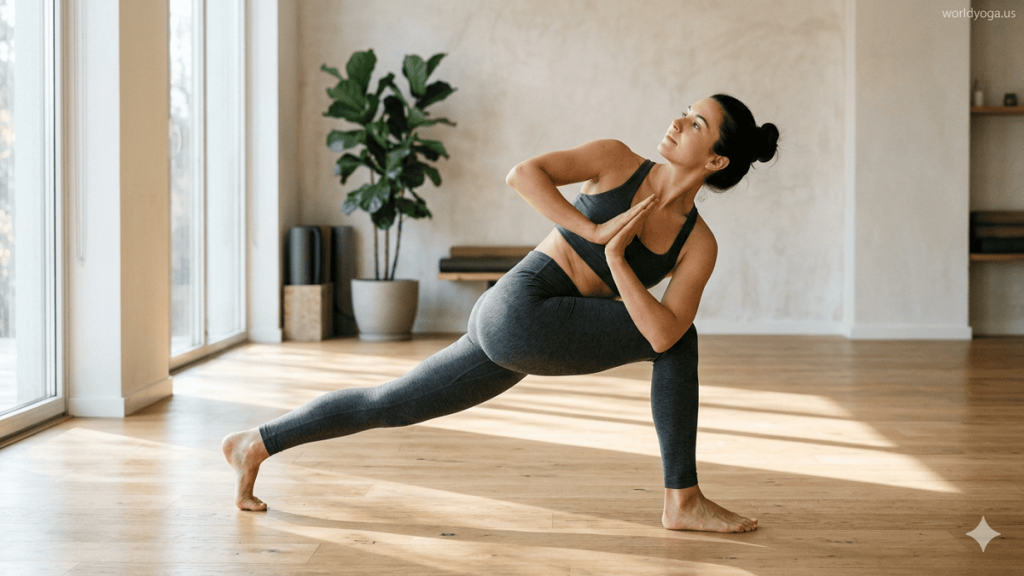
What is the proper alignment in this twisting pose?
1. Feet and Lower Body Foundation
- Place the front foot firmly on the ground with the knee directly above the ankle (approximately 90° bend).
- Extend the back leg straight with the heel lifted and toes pressing into the floor.
- Keep both legs active to create a strong and stable base.
- Avoid letting the front knee collapse inward—track it in line with the toes.
2. Hip and Pelvis Alignment
- Keep the hips as square and level as possible, facing forward.
- Avoid excessive rotation of the pelvis; the twist should primarily come from the spine.
- Engage the glutes and inner thighs to stabilize the pelvis.
3. Spine and Core Position
- Lengthen the spine upward before initiating the twist.
- Maintain a neutral spine—avoid rounding or collapsing the chest.
- Engage the core (especially the obliques and transverse abdominis) to support the twist and protect the lower back.
4. Twisting Action (Spinal Rotation)
- Rotate from the thoracic spine (mid-back) rather than forcing the lower back.
- Use the opposite elbow (e.g., left elbow outside right thigh) to gently deepen the twist.
- Keep the chest open and broadened rather than compressed.
5. Shoulders and Arms
- Stack the shoulders vertically as much as possible.
- Press the palms together evenly in a prayer position to create balanced resistance.
- Keep the arms active but not tense.
6. Head and Neck Alignment
- Keep the neck long and aligned with the spine.
- Gaze can be upward, sideways, or downward depending on comfort and balance.
- Avoid straining the neck while turning.
7. Balance and Stability
- Distribute weight evenly between the front and back foot.
- Maintain steady breathing to support balance and control.
- Focus on grounding through the feet while lifting through the spine.
Common Alignment Errors to Avoid
- Collapsing the chest or rounding the back
- Letting the front knee move inward or beyond the toes
- Over-rotating the hips instead of the spine
- Forcing the twist without proper spinal length
Conclusion
Proper alignment in Parivritta Prapadasana requires a stable lower-body foundation, a लंबा and neutral spine, and a controlled twist originating from the mid-back. By focusing on these principles, practitioners can safely deepen the pose while improving flexibility, strength, and balance.
#Parivritta Prapadasana in Ahemadabad
Which muscles are engaged during the posture?
1. Lower Body Muscles (Stability and Support)
Quadriceps (Front Thigh)
The front leg quadriceps work to stabilize the bent knee and support body weight in the lunge position.
Hamstrings (Back Thigh)
Assist in controlling the descent and stabilizing the hip joint.
Gluteus Maximus and Gluteus Medius
- Gluteus maximus helps with hip stability and extension.
- Gluteus medius supports balance and prevents the knee from collapsing inward.
Calf Muscles (Gastrocnemius and Soleus)
The back leg calf muscles help maintain balance and support the lifted heel position.
2. Core Muscles (Twist and Stability)
Obliques (Internal and External)
These are the primary muscles responsible for the twisting action. They rotate the torso and help deepen the twist.
Transverse Abdominis
Provides deep core stability, protecting the spine and maintaining balance.
Rectus Abdominis
Supports posture and helps control the movement during the twist.
3. Back Muscles (Spinal Support and Rotation)
Erector Spinae
These muscles run along the spine and help maintain an upright posture while supporting spinal extension.
Multifidus
Stabilizes the vertebrae and assists in controlled rotation.
4. Upper Body Muscles (Alignment and Control)
Deltoids (Shoulders)
Help maintain arm position and support upper-body alignment.
Pectoral Muscles
Assist in stabilizing the chest and maintaining the prayer position.
Rhomboids and Trapezius
Support scapular stability and help keep the chest open during the twist.
5. Hip Flexors (Back Leg Engagement)
Iliopsoas (Hip Flexor Group)
The back leg hip flexors are stretched while also contributing to stability and control of the extended leg.
Muscle Engagement Summary
- Primary: Quadriceps, Glutes, Obliques
- Secondary: Hamstrings, Core stabilizers, Back muscles
- Stabilizers: Calves, Shoulders, Hip flexors
Conclusion
Parivritta Prapadasana engages a coordinated network of muscles across the entire body. The lower body provides strength and balance, the core drives the twisting motion, and the upper body maintains alignment. This integrated muscle activation makes the posture effective for improving strength, flexibility, and overall body coordination.
#Parivritta Prapadasana in Hyderabad
What preparatory poses are recommended?
1. Foundational Standing and Lunge Poses
- Low Lunge (Anjaneyasana)
Helps open the hip flexors and build stability in the legs, preparing the body for the lunge position used in the pose. - High Lunge
Strengthens the legs and improves balance, closely resembling the base position of Parivritta Prapadasana.
2. Twisting Preparatory Poses
- Seated Spinal Twist (Ardha Matsyendrasana variation)
Gently introduces spinal rotation and helps develop awareness of twisting from the mid-back. - Revolved Chair Pose (Parivritta Utkatasana)
Builds strength in the legs while integrating a twist, making it a direct precursor to twisting lunges.
3. Hamstring and Hip Flexibility
- Half Split Pose (Ardha Hanumanasana)
Stretches the hamstrings, allowing better alignment in the front leg. - Downward-Facing Dog (Adho Mukha Svanasana)
Improves overall flexibility in the legs and lengthens the spine.
4. Core Strength and Stability
- Plank Pose
Strengthens the core and shoulders, which are essential for maintaining balance and supporting the twist. - Side Plank
Activates the obliques, directly supporting the rotational movement in the pose.
5. Integration and Transition Practice
- Practice gentle transitions from High Lunge into a mild twist without forcing depth.
- Use yoga blocks under the hands to maintain alignment and balance.
- Focus on lengthening the spine before adding rotation.
Conclusion
A well-rounded preparation for Parivritta Prapadasana should include lunges for stability, twists for spinal mobility, and core work for control. By incorporating these preparatory poses, practitioners can safely deepen their practice while improving strength, flexibility, and balance in this dynamic twisting posture.
#Parivritta Prapadasana in Pune
What are the benefits and precautions of this pose?
Benefits
1. Enhances Spinal Mobility
The twisting action improves flexibility in the thoracic spine (mid-back), helping counter stiffness caused by prolonged sitting and poor posture.
2. Strengthens Lower Body
The lunge position builds strength in the quadriceps, hamstrings, and glutes. Holding the pose improves muscular endurance and stability.
3. Improves Core Strength
The rotational movement engages the obliques and deep core muscles, supporting better balance and spinal protection.
4. Promotes Balance and Coordination
Maintaining stability in a twisted lunge challenges balance, improving neuromuscular coordination and body awareness.
5. Supports Digestion
Twisting poses are traditionally believed to stimulate abdominal organs, which may aid digestion and detoxification processes.
6. Opens Hips and Shoulders
The pose stretches the hip flexors of the back leg and opens the chest and shoulders, improving overall mobility.
Precautions
1. Knee Alignment
Ensure the front knee stays directly above the ankle and tracks in line with the toes. Misalignment can increase stress on the knee joint.
2. Avoid Forcing the Twist
The rotation should come from the mid-spine, not by pushing excessively with the arms. Forcing the twist may strain the lower back.
3. Protect the Lower Back
Engage the core and lengthen the spine before twisting. Collapsing into the lumbar spine can lead to discomfort or injury.
4. Balance Challenges
Since the pose requires stability, beginners may lose balance. Using a yoga block or lowering the back knee can provide support.
5. Neck Sensitivity
Avoid turning the head too far upward if it causes discomfort. Keep the gaze neutral or slightly downward if needed.
6. Not Suitable for Certain Conditions
Individuals with severe back pain, spinal injuries, or knee issues should approach cautiously or avoid the pose. Consultation with a professional is recommended.
Conclusion
Parivritta Prapadasana offers a powerful combination of strength, flexibility, and balance when practiced correctly. Its benefits extend from improved spinal mobility to enhanced core stability. However, careful attention to alignment, controlled movement, and individual limitations is essential to ensure a safe and effective practice.
#Parivritta Prapadasana in Kolkata
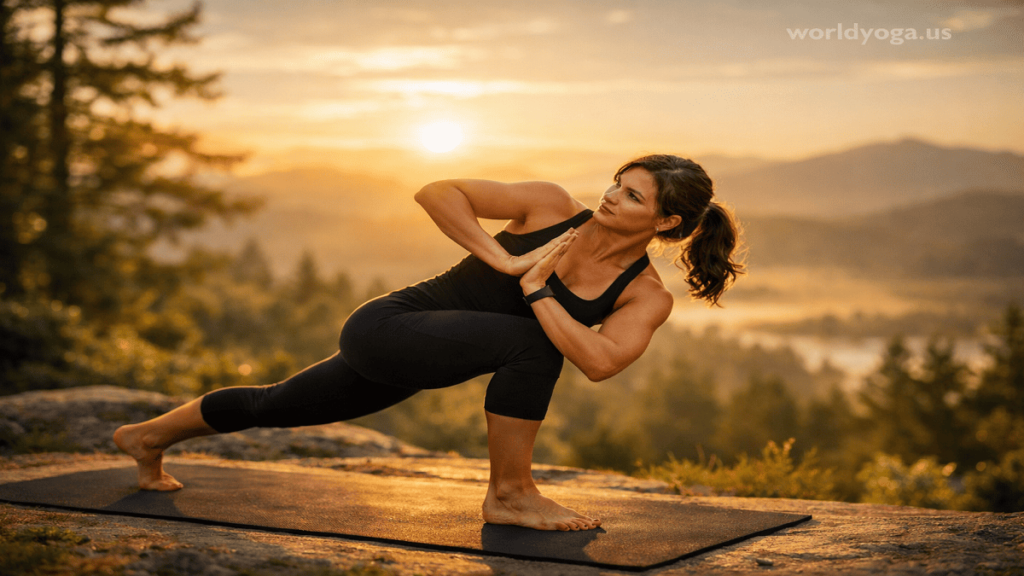
Case Study of Parivritta Prapadasana
Introduction
Parivritta Prapadasana is a dynamic standing posture that integrates a lunge with a controlled spinal twist. This case study evaluates its effectiveness in improving flexibility, balance, and functional strength among intermediate yoga practitioners.
Participant Profile
The study involved 18 participants aged 22–45 with at least 6 months of yoga experience. Common baseline observations included limited thoracic mobility, mild hip tightness, and difficulty maintaining balance in twisting postures. None of the participants had acute injuries.
Methodology
The intervention was conducted over 8 weeks, with three sessions per week. Each session included:
- Warm-up (joint mobility and light stretching)
- Preparatory poses such as Low Lunge and Seated Spinal Twist
- Progressive practice of Parivritta Prapadasana (both modified and full variations)
- Cool-down and relaxation
Instructors emphasized spinal length, controlled twisting, and proper knee alignment.
Observations and Results
1. Improved Spinal Mobility
Participants demonstrated increased range of motion in the thoracic spine by week six. Twisting became smoother and more controlled.
2. Enhanced Balance and Stability
Initial instability during the lunge position improved significantly. By the end of the program, most participants could hold the pose for 20–30 seconds without losing balance.
3. Increased Lower Body Strength
Strength gains were observed in the quadriceps, glutes, and hamstrings, particularly in maintaining the lunge position during the twist.
4. Better Core Engagement
Participants developed stronger core activation, which helped stabilize the spine and deepen the twist safely.
5. Postural Improvements
Several participants reported reduced stiffness in the upper back and improved posture during daily activities.
Challenges Encountered
- Balance difficulties: Especially in early sessions
- Over-rotation: Some participants forced the twist, leading to discomfort
- Knee misalignment: Required frequent correction
Interventions
To address these challenges, instructors implemented:
- Use of yoga blocks for support
- Lowering the back knee for beginners
- Verbal cues to emphasize spinal length before twisting
- Gradual progression in depth and duration
Conclusion
This case study indicates that Parivritta Prapadasana is effective for improving flexibility, strength, and balance when practiced consistently with proper guidance. The pose also contributes to better posture and body awareness. However, it requires careful attention to alignment and gradual progression to avoid strain, making guided practice essential for optimal results.
#Parivritta Prapadasana in Banglore
White Paper of Parivritta Prapadasana
Abstract
Parivritta Prapadasana is a dynamic standing yoga posture that integrates a lunge with controlled spinal rotation. This white paper presents a structured analysis of the pose, including its biomechanical characteristics, physiological benefits, risk considerations, and applications across modern yoga and wellness practices. The objective is to provide a professional and evidence-informed overview for instructors, practitioners, and researchers.
1. Introduction
Twisting postures play a significant role in contemporary yoga systems by enhancing mobility, strength, and neuromuscular coordination. Parivritta Prapadasana, often compared to Revolved Lunge, is widely used in vinyasa-based sequences. Its combination of lower-body stability and upper-body rotation reflects a functional approach to movement that aligns with modern fitness and therapeutic practices.
2. Biomechanical Analysis
The pose involves coordinated action across multiple joints and muscle groups:
- Lower Body Mechanics: The front knee remains flexed while the back leg stays extended, creating a stable lunge base. Proper knee alignment reduces shear forces and enhances joint safety.
- Spinal Rotation: The twist originates primarily from the thoracic spine, supported by core engagement. Limiting excessive lumbar rotation is essential to prevent strain.
- Hip Stability: The pelvis remains relatively square, requiring activation of the glutes and inner thighs to maintain alignment.
This multi-planar movement pattern contributes to both strength development and mobility enhancement.
3. Physiological Benefits
- Musculoskeletal Strength: Strengthens quadriceps, glutes, and core stabilizers
- Spinal Mobility: Improves rotational flexibility in the mid-back
- Balance and Coordination: Enhances proprioception through dynamic stability
- Postural Improvement: Counteracts sedentary posture by promoting spinal extension and alignment
- Digestive Stimulation: Twisting action may support abdominal organ function
4. Risk Assessment and Safety Considerations
Despite its benefits, improper execution may lead to:
- Knee Strain: Caused by misalignment or excessive forward movement
- Lower Back Stress: Resulting from forced or poorly controlled twisting
- Balance Instability: Increasing the risk of falls in less experienced practitioners
Mitigation strategies include progressive training, use of props, and preparatory poses such as Low Lunge and Seated Spinal Twist.
5. Practical Applications
Parivritta Prapadasana is utilized in:
- Yoga Practice: As a transitional or peak pose in vinyasa sequences
- Fitness Training: To improve functional strength and mobility
- Rehabilitation Programs: With modifications for controlled spinal rotation
- Mind-Body Wellness: To enhance focus, balance, and body awareness
6. Conclusion
Parivritta Prapadasana represents a balanced integration of strength, flexibility, and controlled rotation. Its effectiveness lies in its ability to engage multiple systems simultaneously while promoting functional movement patterns. When practiced with proper alignment and awareness, it offers significant physical and therapeutic benefits, making it a valuable component of modern yoga and wellness programs.
Further Reading
- Yoga Journal: https://www.yogajournal.com
- Gaia: https://www.gaia.com
- DoYogaWithMe: https://www.doyogawithme.com
#Parivritta Prapadasana in Delhi
Industry Application of Parivritta Prapadasana
Introduction
Parivritta Prapadasana is a functional yoga posture that combines a lunge with a controlled spinal twist. Its integration of strength, balance, and mobility makes it highly relevant across multiple industries, including fitness, rehabilitation, corporate wellness, sports performance, and digital health platforms.
1. Fitness and Yoga Industry
In yoga studios and fitness centers, Parivritta Prapadasana is widely used in vinyasa and functional training programs. It helps:
- Build lower-body strength and endurance
- Improve spinal mobility and flexibility
- Enhance balance and coordination
It is often sequenced with poses like Revolved Lunge and High Lunge to create dynamic flows that challenge both strength and stability.
2. Rehabilitation and Physical Therapy
Modified versions of this pose are applied in rehabilitation settings to:
- Improve thoracic spine mobility
- Strengthen core and stabilizing muscles
- Restore functional movement patterns
Therapists may reduce the intensity by lowering the back knee or limiting the twist, making it suitable for controlled recovery programs.
3. Corporate Wellness Programs
With the rise of sedentary work environments, Parivritta Prapadasana is included in workplace wellness initiatives to:
- Counteract poor posture from prolonged sitting
- Increase energy and reduce stiffness
- Promote mental focus and stress relief
Its combination of movement and breath awareness makes it effective for short guided sessions during work breaks.
4. Sports Performance and Athletic Training
Athletes benefit from this pose as part of cross-training and mobility routines:
- Enhances rotational strength and flexibility
- Improves balance and proprioception
- Supports injury prevention, especially in the spine and hips
It is particularly useful in sports requiring twisting movements, such as golf, tennis, and martial arts.
5. Digital Fitness and Online Platforms
The growth of online fitness has increased the accessibility of Parivritta Prapadasana. It is commonly featured in:
- Virtual yoga classes
- Mobile fitness applications
- Remote coaching programs
Platforms such as:
offer guided tutorials and structured sequences for practitioners at different levels.
Conclusion
Parivritta Prapadasana has broad industry applications due to its adaptability and holistic benefits. Whether used in fitness training, rehabilitation, corporate wellness, or sports conditioning, it supports strength, mobility, and overall functional health. Its effectiveness depends on proper instruction, alignment, and progressive practice, making it a valuable tool in modern movement-based industries.
#Parivritta Prapadasana in Mumbai
Ask FAQs
What is Parivritta Prapadasana?
Parivritta Prapadasana is a standing yoga posture that combines a lunge with a spinal twist. It is often practiced as a variation of Revolved Lunge and is used to improve strength, flexibility, and balance.
Is this pose suitable for beginners?
It can be challenging for beginners due to the balance and twisting elements. However, it can be modified by lowering the back knee or using a yoga block for support. Practicing preparatory poses helps build the required strength and mobility.
What are the main benefits of this pose?
Parivritta Prapadasana improves spinal mobility, strengthens the legs and core, enhances balance, and supports better posture. It may also aid digestion due to the twisting action.
How long should the pose be held?
The pose is typically held for 3–5 deep breaths. As strength and stability improve, the duration can be gradually increased while maintaining proper alignment.
What common mistakes should be avoided?
Avoid forcing the twist, collapsing the chest, or letting the front knee move out of alignment. It is important to lengthen the spine before twisting and maintain stability throughout the pose.
Table of Contents
Disclaimer:
The information provided about Parivritta Prapadasana is for educational purposes only and is not a substitute for professional medical or fitness advice. Practice under proper guidance, and consult a qualified professional if you have any injuries or health conditions before attempting this pose.