One-Legend Squat: Foot Under the Knee
Overview
The One-Legged Squat (Foot Under the Knee) is a unilateral lower-body exercise where one leg supports the body while the other remains bent, with the foot positioned near or slightly under the standing knee. It is often used as a modified progression toward the full Pistol Squat, making it more accessible while still highly effective.
How It Is Performed
Begin by standing upright with feet hip-width apart. Shift your weight onto one leg while lifting the opposite foot slightly off the ground. Instead of extending the non-working leg forward (as in a full pistol squat), keep it bent with the foot hovering under or near the standing knee.
Lower your body slowly by bending the standing knee and pushing your hips back. Maintain an upright chest and engage your core for balance. Descend as far as your mobility allows without compromising alignment. Then press through the heel of the standing leg to return to the starting position.
Muscles Worked
This variation strongly activates the quadriceps, glutes, and hamstrings of the standing leg. The core muscles engage to stabilize the torso, while the calves and ankle stabilizers assist in maintaining balance. Because it is unilateral, it also helps correct muscle imbalances between legs.
Benefits
- Improves single-leg strength and stability
- Enhances balance and coordination
- Builds mobility in the hips, knees, and ankles
- Serves as a progression toward advanced movements like the Pistol Squat
- Reduces asymmetries and strengthens stabilizing muscles
Proper Alignment Tips
Keep the knee of the working leg tracking in line with the toes to avoid inward collapse. Maintain a neutral spine and avoid rounding the back. The heel should stay grounded throughout the movement, Foot Under the Knee and the hips should move back rather than straight down.
Precautions
Avoid this exercise if you have knee pain or instability without proper supervision. Limited ankle mobility can also affect form, so preparatory mobility work may be necessary. Beginners may use support, such as holding onto a stable surface, to maintain balance.
Conclusion
The One-Legged Squat (Foot Under the Knee) is a practical and scalable exercise that bridges the gap between basic squats and advanced single-leg movements like the Pistol Squat. When performed with proper form, it is highly effective for building lower-body strength and functional stability.
#One-Legend Squat: Foot Under the Knee in India
How is One-Legged Squat with foot under the knee performed correctly?
The One-Legged Squat with the foot under the knee is a controlled, unilateral movement often used as a progression toward the Pistol Squat. Performing it correctly requires attention to balance, alignment, and muscle engagement.
Step-by-Step Technique
Begin by standing upright with your feet hip-width apart. Shift your body weight onto one leg while lifting the opposite foot slightly off the ground. Instead of extending the lifted leg forward, keep it bent so the foot stays positioned under or close to the standing knee. Your arms can extend forward to help maintain balance.
Engage your core and keep your chest lifted. Slowly initiate the squat by bending the standing knee and pushing your hips backward. The movement should be controlled, not rushed. As you descend, ensure your standing heel remains firmly grounded and your knee tracks in line with your toes.
Lower your body as far as your mobility and strength allow while maintaining proper form. Ideally, your thigh moves toward parallel with the ground, but depth can vary depending on flexibility and control. Avoid collapsing forward or rounding your back.
At the bottom of the movement, pause briefly while maintaining tension in your muscles. Then press through the heel of the standing leg to rise back up to the starting position. Keep the movement smooth and controlled throughout, avoiding any jerky motion.
Key Alignment Points
Proper alignment is essential for both effectiveness and injury prevention. The knee of the working leg should remain stable and aligned with the toes, not collapsing inward. The spine should stay neutral, with the chest open and shoulders relaxed. The hips should move back naturally, rather than dropping straight down, to maintain balance.
The non-working leg should remain relaxed but controlled, with the foot staying under the knee without touching the ground. This positioning reduces leverage and makes the exercise more manageable than a full Pistol Squat.
Breathing Technique
Inhale as you lower into the squat, maintaining control and stability. Exhale as you push back up to the starting position. Controlled breathing helps maintain core engagement and balance.
Common Mistakes to Avoid
Avoid letting the heel lift off the ground, as this reduces stability. Do not allow the knee to cave inward, which can strain the joint. Rushing the movement or using momentum instead of muscle control can also reduce effectiveness and increase injury risk.
Conclusion
When performed correctly, the One-Legged Squat with the foot under the knee is an effective exercise for building unilateral strength, improving balance, and preparing for more advanced movements like the Pistol Squat. Proper form, control, and gradual progression are key to maximizing its benefits safely.
#One-Legend Squat: Foot Under the Knee in Maharashtra
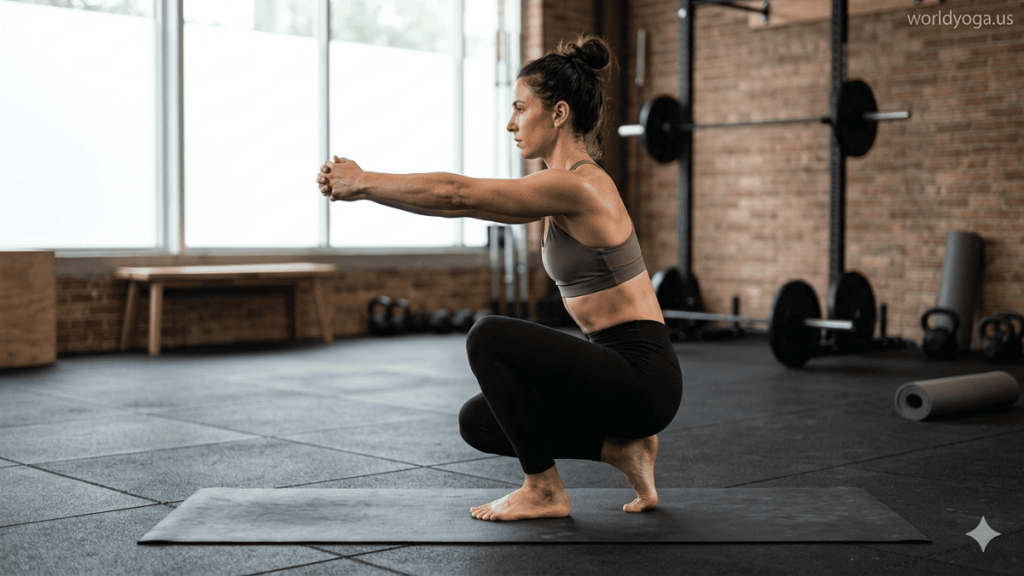
What is the proper alignment in this variation?
Lower Body Alignment
The standing foot should remain flat on the ground, with weight evenly distributed but slightly biased toward the heel. The knee of the working leg must track in line with the toes throughout the movement. Avoid letting the knee collapse inward (valgus position), as this can place unnecessary strain on the joint. The hip of the working leg should hinge backward naturally, helping maintain balance and proper squat mechanics.
The non-working leg stays bent, with the foot positioned under or close to the standing knee. It should remain relaxed but controlled, without touching the ground or swinging excessively. This compact position reduces leverage and makes the movement more stable than a full Pistol Squat.
Hip and Pelvic Position
The pelvis should remain level and stable throughout the movement. Avoid dropping one side of the hips or rotating the pelvis, as this can compromise balance and reduce muscle efficiency. Engaging the glutes and hip stabilizers is essential to maintain this alignment.
Spinal and Upper Body Alignment
Keep a neutral spine from head to tailbone. The chest should stay lifted, and the shoulders relaxed, avoiding any rounding of the upper back. A slight forward lean is طبیعی and helps counterbalance the hips moving backward, but it should not become excessive. The head should remain in a neutral position, with the gaze directed forward or slightly downward.
Core Engagement
The core muscles should be actively engaged to stabilize the torso and prevent collapsing forward. Proper core activation helps maintain balance and supports the lower back throughout the movement.
Ankle and Foot Stability
The ankle of the standing leg should remain stable, avoiding excessive inward or outward rolling. Strong foot engagement, especially through the heel and midfoot, ensures a solid base of support.
Common Alignment Errors
Frequent mistakes include lifting the heel, allowing the knee to cave inward, rounding the back, or losing balance due to poor core engagement. These errors can reduce effectiveness and increase the risk of injury.
Conclusion
Maintaining proper alignment in the One-Legged Squat with the foot under the knee ensures safe execution and optimal muscle activation. By focusing on knee tracking, pelvic stability, and a neutral spine, practitioners can build strength and control effectively while progressing toward more advanced movements like the Pistol Squat.
#One-Legend Squat: Foot Under the Knee in Ahemadabad
Which muscles are engaged during the squat?
Primary Muscles Engaged
The quadriceps are the main drivers of the movement. Located at the front of the thigh, they are responsible for extending the knee as you rise from the squat. During the descent, they also work eccentrically to control the lowering motion.
The gluteus maximus plays a major role in hip extension, helping you push back up to a standing position. It also contributes significantly to overall शक्ति and control during the movement.
The hamstrings, located at the back of the thigh, assist in stabilizing the knee and supporting hip movement. While they are not the primary movers, they work in coordination with the glutes to maintain control.
Stabilizing Muscles
The core muscles, including the abdominals and obliques, are heavily engaged to stabilize the torso. Since the movement is performed on one leg, the core must work harder to maintain balance and prevent the body from collapsing forward.
The hip stabilizers, particularly the gluteus medius and minimus, are crucial for keeping the pelvis level. They prevent the knee from collapsing inward and help maintain proper alignment throughout the squat.
Lower Leg Muscles
The calf muscles (gastrocnemius and soleus) assist in stabilizing the ankle and maintaining balance. The smaller muscles in the foot and ankle also play an important role in providing a stable base of support.
Secondary Engagement
The adductors (inner thigh muscles) help stabilize the leg and control movement, especially during the lowering phase. Additionally, the muscles around the knee joint work together to ensure proper tracking and joint integrity.
Conclusion
Overall, the One-Legged Squat with the foot under the knee is a compound, functional exercise that targets the quadriceps, glutes, hamstrings, core, and stabilizing muscles. Its unilateral nature makes it particularly effective for improving balance, correcting muscle imbalances, and building strength required for advanced movements like the Pistol Squat.
#One-Legend Squat: Foot Under the Knee in Hyderabad
What preparatory exercises are recommended?
1. Foundational Strength Exercises
Start with basic lower-body strength movements such as Bodyweight Squat. This helps develop proper squat mechanics, including knee tracking and hip movement. Once comfortable, progress to Split Squat, which introduces unilateral loading and improves leg strength.
2. Assisted Single-Leg Work
Exercises like Assisted Pistol Squat are highly effective. Using a support (such as holding onto a wall or bar) allows you to practice the movement pattern while reducing balance demands. This builds confidence and control.
Another useful variation is the Box Squat, where you lower onto a chair or bench using one leg. This helps control depth and improves strength at the bottom of the movement.
3. Balance and Stability Training
Balance is critical in single-leg exercises. Movements like Single-Leg Stand or single-leg deadlifts improve proprioception and ankle stability. These exercises train the smaller stabilizing muscles that are essential for maintaining control.
4. Mobility and Flexibility Work
Limited mobility can restrict proper form. Focus on ankle, hip, and hamstring flexibility. Exercises such as Ankle Dorsiflexion Stretch and hip openers help improve range of motion, allowing for deeper and more stable squats.
5. Core Strengthening
A strong core is essential for maintaining balance and posture. Incorporate exercises like Plank Exercise and Dead Bug Exercise. These movements enhance stability and prevent excessive forward lean.
6. Eccentric Control Training
Slow, controlled lowering movements are key. Practicing the downward phase of a single-leg squat (eccentric training) helps build strength and control. You can lower slowly on one leg and use both legs to stand back up if needed.
Conclusion
A combination of strength training, balance work, mobility exercises, and core conditioning creates a solid foundation for the One-Legged Squat with the foot under the knee. Progressing gradually through these preparatory exercises will improve technique, reduce injury risk, and prepare you effectively for advanced movements like the Pistol Squat.
#One-Legend Squat: Foot Under the Knee in Delhi
What are the benefits and precautions of this exercise?
Benefits
One of the primary advantages is improved single-leg strength. The working leg—especially the quadriceps, glutes, and hamstrings—must handle the full body weight, leading to greater muscle activation compared to bilateral squats.
This exercise is highly effective for enhancing balance and stability. Because you are standing on one leg, the body recruits stabilizing muscles in the hips, core, and ankles to maintain control. Over time, this improves coordination and proprioception.
Another key benefit is correction of muscle imbalances. Since each leg works independently, weaknesses or asymmetries between sides become more noticeable and can be addressed effectively.
The movement also promotes joint mobility, particularly in the hips, knees, and ankles. Controlled squatting through a full range of motion helps maintain joint health and flexibility.
Additionally, it contributes to functional fitness. The strength and control developed through this exercise translate well to daily activities and sports that involve single-leg movements, such as walking, running, and climbing stairs.
Precautions
Despite its benefits, this exercise requires careful execution. One major precaution is avoiding knee misalignment. The knee of the working leg should track in line with the toes; allowing it to collapse inward can increase the risk of injury.
Individuals with knee, ankle, or hip issues should approach this exercise cautiously or consult a professional before attempting it. The unilateral load can place significant stress on these joints if not properly controlled.
Another concern is limited mobility, especially in the ankles and hips. Poor mobility can lead to compensations such as lifting the heel or rounding the back, which reduces effectiveness and increases injury risk.
Maintaining balance and control is essential. Beginners may struggle with stability, so using support (like holding onto a wall or rail) is recommended during early stages.
It is also important to avoid rushing the movement. Performing the squat too quickly can compromise form and reduce muscle engagement. Controlled, steady motion ensures better results and safety.
Conclusion
The One-Legged Squat with the foot under the knee is a powerful exercise for developing unilateral strength, balance, and functional movement. However, proper alignment, adequate mobility, and gradual progression are essential to safely gain its benefits and prepare for more advanced exercises like the Pistol Squat.
#One-Legend Squat: Foot Under the Knee in Kolkata
Case Study of One-Legend Squat: Foot Under the Knee
Background
This case study examines the progression of an individual learning the One-Legged Squat with the foot under the knee, a modified unilateral exercise often used as a stepping stone toward the Pistol Squat. The subject, a 28-year-old recreational fitness enthusiast, had prior experience with basic strength training but limited exposure to single-leg movements. The primary goals were to improve lower-body strength, balance, and correct mild muscular imbalances between legs.
Initial Assessment
At the start, the individual demonstrated adequate bilateral squat strength but struggled with single-leg stability. Observations included knee valgus (inward collapse), limited ankle mobility, and reduced control during descent. Balance was inconsistent, and the subject could not perform a full one-legged squat without assistance.
Intervention Program
A structured 8-week training program was implemented. The first phase focused on foundational exercises such as bodyweight squats, lunges, and assisted single-leg movements. The subject practiced Assisted Pistol Squat using a stable support to build confidence and coordination.
Mobility drills, including ankle dorsiflexion and hip-opening exercises, were introduced to address range-of-motion limitations. Core strengthening exercises such as planks were incorporated to improve stability.
In the second phase, the subject progressed to the One-Legged Squat (foot under the knee). Initially, partial range-of-motion squats were performed using a box for support. Gradually, depth and control improved, and external support was reduced.
Observations and Progress
By week four, the subject showed improved balance and reduced knee valgus. Strength gains were evident in the quadriceps and glutes, and ankle mobility had increased. By week six, the individual could perform controlled repetitions of the One-Legged Squat with minimal assistance.
At the end of eight weeks, the subject successfully executed multiple repetitions with proper alignment, including stable knee tracking and a neutral spine. The non-working leg remained controlled under the knee without compromising balance.
Challenges
The primary challenges included maintaining balance during the eccentric (lowering) phase and preventing knee misalignment. Occasional muscle fatigue in the stabilizers, particularly around the hips and ankles, was also noted. These issues were managed through gradual progression and adequate recovery.
Outcomes
The program resulted in significant improvements in unilateral strength, coordination, and joint stability. The subject also reported better performance in other functional movements such as running and stair climbing. Importantly, no injuries were reported throughout the training period.
Conclusion
This case study demonstrates that the One-Legged Squat with the foot under the knee is an effective intermediate exercise for building strength and balance. With proper progression, mobility work, and attention to alignment, it can safely prepare individuals for advanced movements like the Pistol Squat while reducing the risk of injury.
#One-Legend Squat: Foot Under the Knee in Banglore
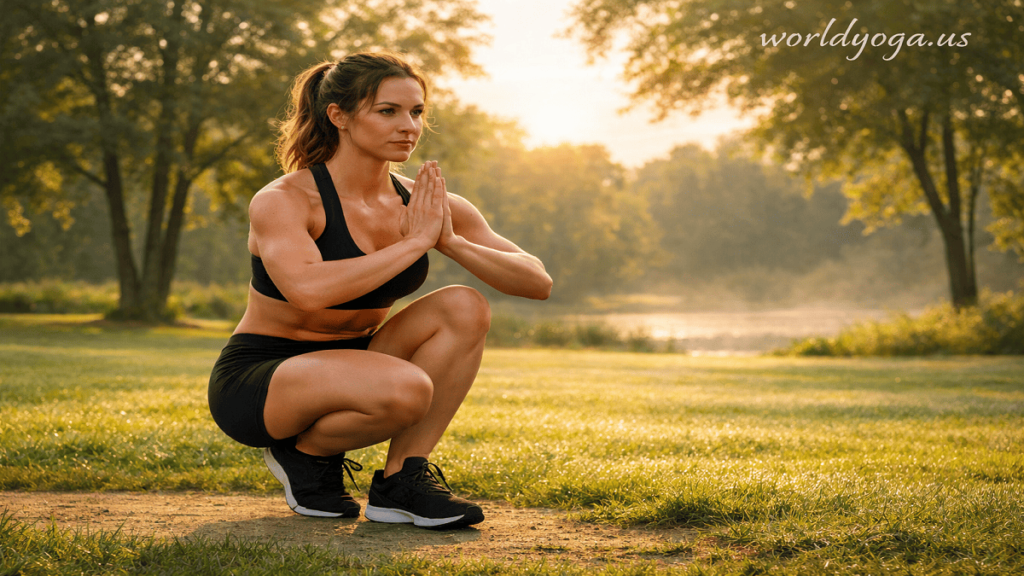
White Paper of One-Legend Squat: Foot Under the Knee
Abstract
The One-Legged Squat with the foot under the knee is a unilateral lower-body exercise designed to develop strength, balance, and neuromuscular control. Commonly used as a progression toward the Pistol Squat, this variation reduces mechanical difficulty while maintaining high functional value. This white paper examines its biomechanics, physiological benefits, training applications, and safety considerations for fitness professionals and practitioners.
Introduction
Unilateral training has gained prominence in modern strength and conditioning due to its ability to address muscular imbalances and improve functional movement. The One-Legged Squat (foot under the knee) is particularly relevant as it bridges the gap between bilateral squats and advanced single-leg exercises. By keeping the non-working leg bent beneath the body, the exercise reduces leverage demands while maintaining stability challenges.
Biomechanical Analysis
This exercise primarily involves knee flexion and extension, hip flexion and extension, and ankle stabilization. The working leg supports the full body weight, requiring coordinated activation of multiple muscle groups.
The quadriceps act as the primary movers during knee extension, while the gluteus maximus drives hip extension. The hamstrings assist in stabilization, and the calf muscles contribute to ankle control. Additionally, the gluteus medius and minimus play a crucial role in maintaining pelvic alignment and preventing knee valgus.
The core musculature, including the abdominals and spinal stabilizers, is engaged to maintain a neutral spine and prevent excessive forward lean. Compared to the full Pistol Squat, this variation reduces torque at the hip and knee, making it more accessible while still effective.
Physiological and Functional Benefits
The One-Legged Squat (foot under the knee) enhances lower-body strength, particularly in the quadriceps and glutes. It also improves balance, coordination, and proprioception due to the unilateral load.
From a functional perspective, the exercise mimics real-life movements such as walking, running, and stair climbing, making it valuable for athletic training and daily activities. It is also effective in correcting asymmetries between limbs, which can reduce the risk of injury.
Training Methodology
A progressive training approach is recommended. Practitioners should begin with foundational exercises such as bodyweight squats and lunges before advancing to assisted single-leg variations. Gradual reduction of external support helps build confidence and control.
Incorporating mobility exercises for the ankles and hips is essential to achieve proper depth and alignment. Controlled tempo training, particularly during the eccentric phase, enhances strength and movement quality.
Risk Assessment and Safety Considerations
Improper execution can lead to joint stress, particularly in the knees and ankles. Common risks include knee misalignment, heel elevation, and loss of balance. Individuals with pre-existing joint conditions should exercise caution and seek professional guidance.
Maintaining proper alignment—such as keeping the knee in line with the toes and the spine neutral—is critical. Adequate warm-up and mobility preparation are necessary to reduce injury risk.
Applications in Fitness and Rehabilitation
This exercise is widely used in strength training, athletic conditioning, and rehabilitation settings. It serves as an intermediate progression for clients working toward advanced unilateral exercises like the Pistol Squat. In rehabilitation, modified versions can help restore strength and stability following lower-body injuries.
Conclusion
The One-Legged Squat with the foot under the knee is a versatile and effective exercise for developing unilateral strength, balance, and functional movement. Its scalability makes it suitable for a wide range of practitioners. When performed with proper technique and progression, it offers significant benefits while minimizing risk, serving as a foundational step toward mastering the Pistol Squat.
#One-Legend Squat: Foot Under the Knee in Pune
Industry Application of One-Legend Squat: Foot Under the Knee
The One-Legged Squat with the foot under the knee is widely used across multiple sectors of the fitness and health industry due to its effectiveness in developing unilateral strength, balance, and functional movement. As a progression toward the Pistol Squat, it has practical applications in training, rehabilitation, and performance optimization.
Fitness and Strength Training Industry
In gyms and personal training environments, this exercise is incorporated into lower-body and functional training programs. Trainers use it to build single-leg strength, correct muscular imbalances, and improve coordination. It is often included in progressive workout plans where clients transition from bilateral exercises to more advanced unilateral movements like the Pistol Squat.
Sports Performance and Athletic Conditioning
Athletes benefit significantly from unilateral exercises because many sports movements—such as running, jumping, and cutting—occur on one leg at a time. Strength and conditioning coaches use this squat variation to enhance balance, stability, and joint control. It is particularly useful in sports like football, basketball, and track and field, where lower-body शक्ति and coordination are critical for performance and injury prevention.
Physical Therapy and Rehabilitation
In rehabilitation settings, modified versions of the One-Legged Squat (foot under the knee) are used to rebuild strength and stability after injuries. Physical therapists incorporate it to improve joint alignment, muscle activation, and proprioception, especially in the knees and hips. Because it is less demanding than a full Pistol Squat, it provides a safer intermediate step during recovery.
Corporate Wellness and Preventive Health
Corporate wellness programs increasingly include functional exercises to counteract sedentary lifestyles. This squat variation is used in structured fitness sessions to improve mobility, strength, and posture. It helps individuals develop better movement patterns that translate into everyday activities, reducing the risk of musculoskeletal issues.
Digital Fitness and Online Coaching
With the growth of online fitness platforms, trainers frequently demonstrate this exercise in virtual programs and tutorials. It is often presented as a scalable progression, making it suitable for a wide audience. Digital coaching platforms use video analysis and guided instruction to help users refine technique and safely progress toward advanced exercises like the Pistol Squat.
Education and Certification Programs
Fitness certification courses and strength training curricula include this exercise as part of teaching movement progression and biomechanics. Trainees learn how to coach proper alignment, identify common errors, and adapt the movement for different fitness levels.
Conclusion
The One-Legged Squat with the foot under the knee has broad industry relevance due to its versatility and effectiveness. From gym training and athletic performance to rehabilitation and wellness programs, it serves as a critical tool for developing strength, balance, and functional movement. Its role as a progression toward the Pistol Squat further reinforces its importance across fitness and health sectors.
#One-Legend Squat: Foot Under the Knee in Mumbai
Ask FAQs
What is the One-Legged Squat with the foot under the knee?
It is a unilateral lower-body exercise where one leg supports the body while the other remains bent with the foot positioned under or near the standing knee. It is commonly used as a progression toward the Pistol Squat.
Is this exercise suitable for beginners?
Yes, but with modifications. Beginners can perform assisted versions by holding onto a support or limiting the range of motion. It is important to first develop basic strength and balance before attempting full single-leg squats.
What are the main benefits of this exercise?
This exercise improves single-leg strength, balance, coordination, and joint stability. It also helps correct muscle imbalances and enhances functional movement patterns used in daily activities and sports.
What are common mistakes to avoid?
Common mistakes include allowing the knee to collapse inward, lifting the heel off the ground, rounding the back, and rushing the movement. Maintaining proper alignment and control is essential for safety and effectiveness.
How can I progress from this exercise to a full pistol squat?
To progress toward the Pistol Squat, gradually increase depth, improve mobility, and reduce reliance on support. Strengthening the core, hips, and ankles will also help achieve better control and balance.
Table of Contents
Disclaimer:
The One-Legged Squat (foot under the knee) and progressions like the Pistol Squat are for educational purposes only. Perform exercises within your limits and with proper form. Consult a qualified fitness professional or healthcare provider before starting, especially if you have existing injuries or medical conditions.