Anjaneyasana
Anjaneyasana, commonly known as Low Lunge or Crescent Lunge, is a foundational yoga posture that combines strength, flexibility, and balance. It is widely practiced in Hatha, Vinyasa, and Ashtanga yoga sequences and is especially valued for opening the hips while strengthening the lower body. Named after Lord Hanuman (Anjaneya), it symbolizes devotion, strength, and forward movement, both physically and mentally.
This asana primarily targets the hip flexors, quadriceps, and groin muscles while engaging the core for stability. It also helps improve spinal extension and enhances overall posture. Regular practice can be particularly beneficial for individuals who spend long hours sitting, as it counteracts stiffness in the hips and lower back.
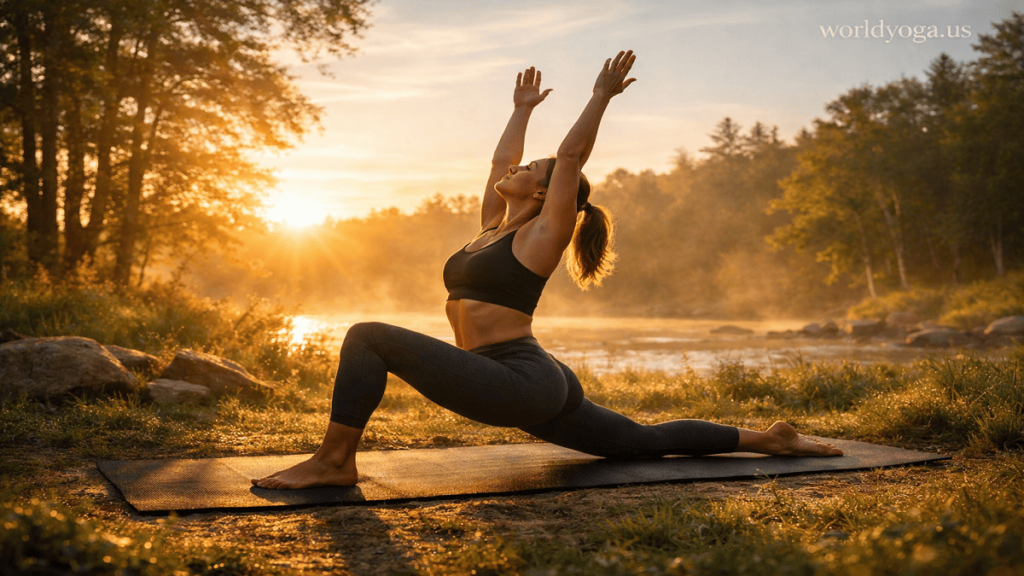
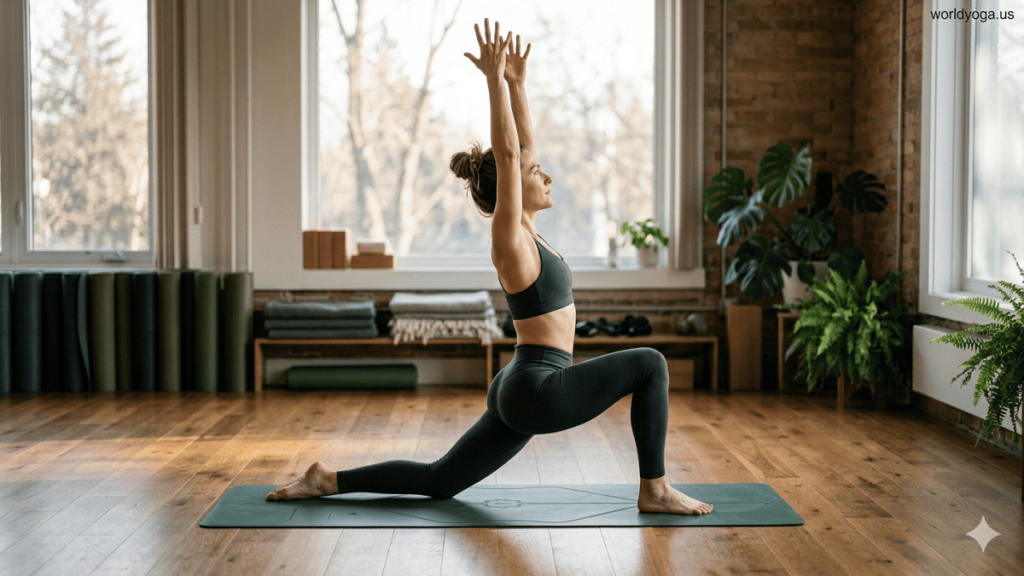
To perform Anjaneyasana, begin in a standing forward fold and step one foot back into a lunge position. The front knee should be aligned directly above the ankle, forming a 90-degree angle. Lower the back knee gently onto the mat, ensuring the top of the foot rests flat. As you inhale, raise your arms overhead, either parallel or with palms together, and gently arch the upper back while lifting the chest. The gaze can be forward or slightly upward, depending on neck comfort. Hold the position while maintaining steady breathing, then switch sides.
Alignment is crucial to avoid strain. The front knee should not collapse inward, and the hips should remain square toward the front. Engaging the core helps protect the lower back, especially when adding a backbend variation. Beginners may keep hands on the front thigh for support instead of raising them overhead.
There are several variations of this pose. A deeper variation involves lifting the back knee off the mat to form a high lunge, increasing intensity in the legs and core. Another variation includes a gentle backbend, which expands the chest and improves lung capacity. For restorative practice, the pose can be supported using yoga blocks under the hands.
Anjaneyasana also offers therapeutic benefits. It helps stimulate blood circulation in the lower body, supports digestive health by engaging the abdominal region, and can reduce tension in the hips and thighs. However, individuals with knee injuries or severe lower back pain should practice with caution or seek guidance from a qualified instructor.
For further reference and detailed alignment cues, reputable resources include Yoga Journal – Low Lunge Pose Guide and Yoga Basics – Low Lunge (Anjaneyasana) Instructions. These sources provide additional insights into modifications, benefits, and sequencing within yoga practice.
Consistent practice of Anjaneyasana helps build both physical resilience and mental focus, making it a valuable posture for practitioners at all levels.
#Anjaneyasana in India
How is Anjaneyasana performed correctly?
Anjaneyasana is a foundational yoga posture that requires precise alignment to ensure safety, stability, and maximum benefit. When performed correctly, it improves hip flexibility, strengthens the lower body, and enhances balance and posture. Proper execution is less about depth and more about controlled alignment and mindful engagement of muscles.
To begin, start in a standing position such as Tadasana (Mountain Pose). Step one foot back into a long stride, placing the back knee gently on the mat. The front foot should remain firmly grounded, with the knee stacked directly over the ankle. This alignment is critical; if the knee moves beyond the ankle, it can place unnecessary strain on the joint. The back foot should be extended with the top of the foot resting on the floor to maintain stability.
Once the lower body is set, focus on the pelvis. Square the hips toward the front of the mat instead of allowing them to open outward. This is one of the most common mistakes in Anjaneyasana and can reduce the effectiveness of the stretch. Engage the core lightly to support the lower back and maintain balance.
Next, lengthen the spine before lifting the arms. On an inhale, raise both arms overhead with palms facing each other or touching. The shoulders should stay relaxed and away from the ears. The chest should lift upward rather than collapse forward, creating space across the collarbones. The gaze can be forward or slightly upward, depending on neck comfort, but it should never create strain.
Breathing plays a central role in maintaining correct form. The breath should remain slow and steady, helping the practitioner deepen the stretch without forcing the body. Hold the pose for 20–60 seconds, depending on experience level, and then gently release by bringing the hands down and stepping forward before switching sides.
Common corrections include avoiding excessive arching in the lower back, keeping the front heel grounded, and ensuring the back knee is cushioned if sensitive. Beginners can modify the pose by placing hands on the front thigh instead of raising them overhead, or by using yoga blocks for support.
When practiced correctly, Anjaneyasana improves hip mobility, strengthens quadriceps and glutes, and enhances spinal extension. It is also frequently used in yoga sequences as a preparatory pose for deeper backbends and standing balances.
For additional guidance on alignment and variations, you can refer to Yoga Journal – Low Lunge Pose Instructions and Yoga Basics – Anjaneyasana Guide. These resources provide detailed visual cues and modifications for different skill levels.
In summary, correct performance of Anjaneyasana depends on mindful alignment of the knee and hips, engagement of the core, and controlled breathing. When these elements are combined, the pose becomes both safe and highly effective for building strength and flexibility.
#Anjaneyasana in Maharashtra
What is the proper alignment in Crescent Lunge Pose?
Proper alignment in Anjaneyasana, also known as Crescent Lunge Pose, is essential for ensuring stability, preventing injury, and maximizing the physical and energetic benefits of the posture. Although it appears simple, the pose requires coordinated engagement of the lower body, pelvis, spine, and shoulders. Small misalignments can shift pressure into the knees or lower back, reducing its effectiveness.
The foundation of correct alignment begins with the feet and legs. Step one foot forward and ensure the front knee is stacked directly above the ankle. This 90-degree alignment is crucial because it distributes weight evenly and protects the knee joint from excess stress. The back leg should be extended behind you, either with the knee resting on the mat for a low lunge variation or lifted in a high lunge for greater intensity. In both variations, the back leg remains active, with the heel reaching backward to create length through the entire leg.
Hip positioning is one of the most important aspects of alignment. The hips should be squared toward the front of the mat rather than opening outward. Many practitioners unintentionally rotate the pelvis, which reduces the stretch in the hip flexors and can strain the lower back. Engaging the core gently helps stabilize the pelvis and maintain this squared position.
The spine should remain long and neutral before adding any backbend. The chest lifts upward without compressing the lower back. Ribs should stay drawn in rather than flaring outward, which helps protect the lumbar spine. This vertical extension of the spine creates space and improves posture over time.
The upper body alignment supports the lower structure. As the arms extend overhead, the shoulders should stay relaxed and away from the ears. The arms can be parallel or the palms can touch, depending on comfort and mobility. The gaze may be forward or slightly upward, but it should never strain the neck.
Breath is also part of alignment. A steady, controlled breath helps maintain muscular engagement without tension. The pose should feel strong yet stable, not forced or compressed.
Common alignment errors include allowing the front knee to collapse inward, over-arching the lower back, or placing too much weight into the back knee without support. Using a mat or folded blanket under the knee can help beginners maintain comfort and stability.
For additional guidance on correct form and variations, you can refer to Yoga Journal – Crescent Lunge Pose Guide and Yoga Basics – Low Lunge Alignment Instructions. These resources provide visual alignment cues and modifications for different levels of practice.
In summary, proper alignment in Crescent Lunge is built on three pillars: a stable lower body, a neutral and elongated spine, and relaxed yet active upper-body engagement. When these elements work together, the pose becomes both safe and deeply effective.
#Anjaneyasana in Ahemadabad
Which muscles are engaged during Anjaneyasana?
Anjaneyasana is a multi-muscle engagement posture that activates both the lower and upper body while simultaneously improving flexibility, balance, and core stability. Often practiced in yoga flows, this pose creates a dynamic stretch-and-strength response across several major muscle groups, making it both functional and therapeutic.
The primary muscles engaged in Anjaneyasana are the hip flexors of the rear leg, especially the iliopsoas. These muscles are deeply stretched as the back leg extends behind the body. This is particularly beneficial for individuals with tight hips due to prolonged sitting, as it helps restore natural hip mobility and reduces stiffness in the lower back region.
In the front leg, the quadriceps play a dominant role. The front thigh works isometrically to stabilize the bent knee while bearing a portion of the body weight. The gluteus muscles, particularly the gluteus maximus and medius, assist in stabilizing the pelvis and maintaining balance in the lunge position. This engagement helps build strength in the lower body and supports better movement mechanics in daily activities such as walking, running, and climbing stairs.
The hamstrings of the front leg are also mildly activated as they assist in controlling the alignment of the knee and hip. Meanwhile, the calf muscles provide grounding and stability through the front foot, ensuring a strong base of support.
Core engagement is another essential aspect of Anjaneyasana. The rectus abdominis, obliques, and transverse abdominis work together to stabilize the spine and pelvis. This core activation prevents excessive arching of the lower back, especially when the arms are lifted overhead or when a gentle backbend is introduced. A strong core also enhances balance and allows for smoother transitions into and out of the pose.
The upper body is not passive in this posture. When the arms are raised overhead, the deltoids and trapezius muscles are engaged to support shoulder stability and arm elevation. The muscles along the spine, including the erector spinae, assist in maintaining an upright posture and controlled spinal extension. This contributes to improved posture and upper-back strength over time.
Additionally, the chest muscles, particularly the pectoralis major, are gently stretched as the chest opens upward. This helps counteract rounded shoulders, which are common due to prolonged desk work or screen use.
Beyond muscular engagement, Anjaneyasana also encourages neuromuscular coordination. The body must constantly adjust to maintain balance, which improves proprioception and overall body awareness.
For further anatomical insights and yoga biomechanics, you can refer to Yoga Journal – Crescent Lunge Pose Benefits and Yoga Anatomy Guide – Low Lunge Muscles.
In summary, Anjaneyasana is a full-body engagement posture that strengthens the quadriceps, glutes, and core while stretching the hip flexors and opening the chest and shoulders. This balanced combination of strength and flexibility makes it a highly effective pose for overall functional fitness and yoga practice.
#Anjaneyasana in Hyderabad
What preparatory poses help improve stability and flexibility for this posture?
To build strength, stability, and flexibility for Anjaneyasana, a structured set of preparatory yoga poses is essential. These preparatory asanas focus on opening the hips, strengthening the legs, activating the core, and improving balance—each of which directly supports safer and more effective performance of the pose.
One of the most important preparatory poses is Tadasana. Although it appears simple, it teaches foundational alignment, including even weight distribution through the feet, pelvic neutrality, and spinal elongation. Practicing Mountain Pose regularly helps develop body awareness, which is critical when transitioning into dynamic postures like Crescent Lunge.
To open the hip flexors and quadriceps, Ashwa Sanchalanasana is highly effective. This pose closely mirrors the shape of Anjaneyasana but with a gentler intensity. It allows practitioners to gradually lengthen the iliopsoas muscles and prepare the hips for deeper extension without strain. Holding this pose while focusing on square hips helps correct common alignment issues before advancing further.
For strengthening the legs and improving balance, Virabhadrasana I is one of the most valuable preparatory postures. It builds endurance in the quadriceps, glutes, and calves while reinforcing hip alignment and spinal extension. Warrior I also trains the body to maintain stability in a split stance, which directly translates to better control in Crescent Lunge.
Another highly beneficial pose is Virabhadrasana II. This posture enhances lower-body strength while opening the inner thighs and hips. It also improves lateral stability and teaches controlled engagement of the core and legs, both of which are essential for maintaining balance in Anjaneyasana transitions.
To improve hip flexibility, Baddha Konasana is especially effective. This seated posture gently stretches the inner thighs and groin muscles, preparing the hips for deeper lunging positions. It also encourages relaxed breathing into tight areas, which improves mobility over time.
For core activation and spinal support, plank variations such as Phalakasana are highly recommended. A strong core prevents lower-back compression in Crescent Lunge and supports better balance when the arms are lifted overhead. Side plank variations can further enhance oblique strength, which contributes to pelvic stability.
Consistently practicing these preparatory poses creates a balanced foundation of strength and flexibility. When combined, they reduce strain on the knees and lower back while allowing smoother transitions into deeper expressions of the posture.
For additional guidance on sequencing and preparation, you can refer to Yoga Journal – Low Lunge Pose Guide and Yoga Basics – Yoga Pose Preparation Series. These resources offer structured sequences and alignment cues for progressive practice.
In summary, preparatory poses such as Mountain Pose, Warrior I and II, Butterfly Pose, and Plank work together to build the stability, flexibility, and strength required for safe and effective practice of Crescent Lunge.
#Anjaneyasana in Delhi
What are the benefits and precautions of practicing Anjaneyasana?
Anjaneyasana offers a balanced combination of strength-building, flexibility enhancement, and postural correction, making it a widely practiced pose in yoga sequences. However, like all physical postures, it must be performed with awareness to avoid strain, especially in the knees and lower back.
One of the primary benefits of Anjaneyasana is improved hip flexibility. The deep stretch in the hip flexors, particularly the iliopsoas, helps counteract stiffness caused by prolonged sitting. Over time, this can improve gait, reduce lower back tightness, and enhance overall mobility. The quadriceps of the front leg are also strengthened as they support the body in a stable lunge position.
Another significant benefit is lower-body strengthening. The front leg bears most of the body weight, activating the quadriceps, glutes, hamstrings, and calves. This builds muscular endurance and improves functional strength for everyday movements such as walking, climbing stairs, and maintaining balance.
Anjaneyasana also supports spinal extension and postural improvement. When the arms are lifted overhead, the spine lengthens, and the chest opens, which helps counter rounded shoulders and forward head posture. This is especially beneficial for individuals who spend long hours at desks or using electronic devices.
Core engagement is another key advantage. The abdominal muscles stabilize the pelvis and lower back, helping improve balance and reducing the risk of lumbar strain. This controlled engagement also enhances body awareness and coordination.
In addition to physical benefits, the pose has mental and energetic effects. The combination of grounding through the lower body and expansion through the upper body can promote focus, calmness, and a sense of stability.
Despite these benefits, there are important precautions to consider. Individuals with knee injuries should practice carefully, as improper alignment can place stress on the front knee joint. Using a folded blanket or cushion under the back knee can help reduce pressure. It is essential that the front knee remains aligned directly over the ankle to avoid joint strain.
People with lower back issues should avoid excessive arching when lifting the arms or performing backbend variations. Keeping the core engaged and the ribs controlled helps protect the lumbar spine. Similarly, those with hip injuries should avoid forcing the depth of the stretch and instead work within a comfortable range of motion.
Balance can also be a challenge for beginners, so practicing near a wall or using yoga blocks for support is recommended. Breath awareness is crucial; holding the pose while straining or losing steady breathing is a sign to reduce intensity.
For further reference on safe practice and benefits, you can explore Yoga Journal – Crescent Lunge Pose Benefits and Yoga Basics – Low Lunge Instructions and Safety Tips.
In summary, Anjaneyasana strengthens the legs, opens the hips, improves posture, and enhances core stability, but it must be practiced with correct alignment and mindful progression to ensure safety and long-term benefits.
#Anjaneyasana in Banglore
Case Study of Anjaneyasana
This case study examines the impact of integrating Anjaneyasana (Crescent Lunge Pose) into a structured 8-week yoga-based mobility program aimed at improving hip flexibility, lower-body strength, and postural alignment in individuals with sedentary lifestyles. The participants were office workers experiencing common issues such as tight hip flexors, mild lower back discomfort, and reduced functional mobility due to prolonged sitting.
Background and Objective
The primary objective was to assess whether consistent practice of Anjaneyasana, combined with complementary yoga poses, could improve hip range of motion, reduce musculoskeletal discomfort, and enhance postural stability. The intervention focused on progressive adaptation rather than intensity, emphasizing correct alignment and breath control.
Methodology
Participants practiced Anjaneyasana four times per week as part of a 30-minute guided routine. Each session included preparatory poses such as gentle lunges and core activation exercises, followed by holding Anjaneyasana for 20–45 seconds per side. Emphasis was placed on keeping the front knee aligned over the ankle, maintaining square hips, and engaging the core to support the lower back.
Modifications such as using a folded mat under the back knee and keeping hands on the front thigh were introduced for beginners. Over time, participants progressed to raising the arms overhead and exploring deeper hip opening variations.
Observations and Results
After 8 weeks, notable improvements were recorded in hip flexibility, particularly in the iliopsoas region. Participants reported reduced stiffness when transitioning from sitting to standing positions. Core strength improvements were also observed, contributing to better balance and reduced sway during standing tasks.
A significant outcome was the reduction in lower back discomfort in most participants. This was attributed to improved pelvic alignment and increased awareness of spinal positioning during movement. Additionally, postural assessments showed improved shoulder alignment and reduced forward rounding, likely due to the chest-opening component of the pose.
Beyond physical changes, participants reported enhanced body awareness and stress reduction. The combination of grounded lower-body engagement and upward spinal extension created a sense of stability and focus during practice.
Discussion
The results suggest that Anjaneyasana is an effective functional movement tool for individuals with sedentary habits. Its dual action of stretching and strengthening makes it particularly suitable for correcting muscle imbalances caused by prolonged sitting. However, success was strongly dependent on proper alignment and gradual progression.
For reference on alignment principles and therapeutic applications, resources such as Yoga Journal – Crescent Lunge Pose Guide and Yoga Basics – Low Lunge Instructional Guide provide additional technical insights.
Conclusion
This case study demonstrates that consistent, mindful practice of Anjaneyasana can significantly improve hip mobility, core stability, and postural health. When integrated into a structured routine with proper guidance, it serves as a powerful corrective and strengthening posture for modern sedentary lifestyles.
#Anjaneyasana in Pune
White Paper of Anjaneyasana
Abstract
This white paper examines Anjaneyasana (Crescent Lunge Pose) as a functional yoga posture that integrates strength, flexibility, and postural alignment. It evaluates its biomechanical effects on major muscle groups, its role in mobility enhancement, and its applicability in modern sedentary lifestyles. The analysis is based on established yoga anatomy principles and functional movement patterns commonly referenced in therapeutic yoga frameworks.
Introduction
Anjaneyasana is a foundational yoga posture widely used in dynamic sequences such as Vinyasa and Hatha yoga. It is characterized by a split stance that combines hip extension in the rear leg and knee flexion in the front leg. The posture is frequently used both as a transitional movement and a sustained hold for developing lower-body strength and hip flexibility.
Biomechanical Framework
The pose primarily engages the hip flexors (iliopsoas) of the extended rear leg, while the quadriceps and gluteal muscles of the front leg provide stability and load-bearing support. Core musculature, including the transverse abdominis and obliques, stabilizes the pelvis and prevents lumbar hyperextension. Shoulder flexion engages the deltoids and upper trapezius when arms are elevated.
This coordinated activation promotes neuromuscular integration across the anterior and posterior kinetic chains, improving balance and proprioception.
Functional Benefits
Anjaneyasana offers several evidence-aligned functional benefits:
- Improved hip flexor length and mobility
- Enhanced quadriceps and glute strength
- Increased spinal extension and postural correction
- Core stabilization and pelvic control
- Improved balance and unilateral load tolerance
These benefits make the pose particularly relevant for individuals with sedentary occupational patterns, where shortened hip flexors and weakened glutes are common.
Therapeutic Applications
In corrective movement systems, Anjaneyasana is often used to address anterior pelvic tilt and lumbar compression patterns. By strengthening the posterior chain while lengthening the anterior hip structures, it contributes to improved pelvic neutrality.
It is also frequently incorporated into rehabilitation-inspired yoga sequences for mild lower back discomfort, provided it is practiced with controlled alignment and progression.
Alignment Considerations
Optimal execution requires precise biomechanical alignment: the front knee must remain stacked over the ankle, hips should stay squared forward, and the spine must maintain a neutral-to-extended position without lumbar compression. Core engagement is essential to prevent compensatory lower back strain.
Precautions
Despite its benefits, caution is required for individuals with knee injuries, severe hip restrictions, or lumbar disc issues. Modifications such as back knee support or reduced depth are recommended.
Conclusion
Anjaneyasana serves as a multifunctional posture that bridges flexibility training and functional strength development. Its structured engagement of major muscle groups makes it a valuable component in both yoga practice and movement-based rehabilitation programs.
References
- https://www.yogajournal.com/poses/crescent-lunge/
- https://www.yogabasics.com/asana/low-lunge/
- https://www.ncbi.nlm.nih.gov/pmc/ (General research on yoga and musculoskeletal health)
Summary
When practiced with correct alignment and progression, Anjaneyasana functions as a biomechanically efficient posture that supports mobility, stability, and postural integrity in modern movement systems.
#Anjaneyasana in Kolkata
Industry Appplication of Anjaneyasana
Anjaneyasana (Crescent Lunge Pose) has moved beyond traditional yoga practice and is now widely integrated into multiple industries focused on health, performance, rehabilitation, and workplace wellness. Its combination of hip opening, lower-body strengthening, and core stabilization makes it a versatile movement pattern applicable across clinical, athletic, and corporate environments.
1. Physiotherapy and Rehabilitation Industry
In physiotherapy, Anjaneyasana is frequently used as a functional mobility exercise to restore hip flexor length and improve pelvic alignment. Patients with lower back pain, anterior pelvic tilt, or postural dysfunction benefit from its controlled stretch-strength balance. Therapists often prescribe modified versions using support (such as a chair or blocks) to ensure safety while gradually improving range of motion. The pose is particularly effective in post-injury recovery programs where restoring gait symmetry is a priority.
2. Sports and Athletic Training
In sports performance training, Crescent Lunge is used to enhance unilateral leg strength, hip stability, and dynamic balance. Athletes in running, football, martial arts, and cycling benefit from improved stride mechanics and reduced injury risk due to tighter hip flexors. Strength and conditioning coaches incorporate it into warm-ups and mobility circuits to activate the glutes, quadriceps, and core before high-intensity training sessions.
3. Corporate Wellness Programs
With increasing sedentary work environments, corporate wellness programs integrate Anjaneyasana to counteract prolonged sitting. It helps reduce stiffness in the hips and lower back while improving posture and focus. Many organizations include short guided yoga breaks featuring lunging movements to improve employee productivity and reduce musculoskeletal complaints.
According to the World Health Organization, physical inactivity is a major global health risk, reinforcing the need for accessible movement practices in workplaces:
https://www.who.int/news-room/fact-sheets/detail/physical-activity
4. Fitness and Yoga Industry
In fitness studios and yoga schools, Anjaneyasana is a foundational posture used in Vinyasa flows, strength-based yoga, and flexibility training. It serves as both a transitional and static pose, making it essential for sequencing. It is also widely taught in beginner-to-advanced progression programs due to its scalability through modifications and variations.
5. Mental Health and Mindfulness Applications
Yoga-based mental health interventions use Anjaneyasana as part of grounding and breath-awareness practices. The combination of stability in the lower body and expansion in the upper body supports stress reduction and emotional regulation. Research from Harvard Health highlights how yoga improves relaxation response and stress management:
https://www.health.harvard.edu/staying-healthy/yoga-benefits-beyond-the-mat
6. Digital Health and Fitness Platforms
Fitness apps and virtual training platforms increasingly include guided sessions featuring lunging postures like Anjaneyasana. AI-driven posture correction tools and wearable-integrated yoga programs use it as a benchmark movement for assessing lower-body mobility and balance.
Conclusion
Across industries, Anjaneyasana functions as a multi-purpose movement tool that bridges rehabilitation, performance enhancement, and wellness. Its adaptability makes it valuable in clinical settings, athletic training, corporate health initiatives, and digital fitness ecosystems. As awareness of mobility and posture-related health grows, its relevance across industries continues to expand.
#Anjaneyasana in Mumbai
Ask FAQs
What is Anjaneyasana?
Anjaneyasana, also known as Crescent Lunge or Low Lunge Pose, is a yoga posture where one leg is extended back while the front knee is bent at a 90-degree angle. It is commonly used to improve hip flexibility, strengthen the lower body, and enhance balance.
What are the main benefits of practicing Anjaneyasana?
This pose helps stretch the hip flexors, strengthens the quadriceps and glutes, and improves core stability. It also supports better posture by opening the chest and lengthening the spine. Regular practice can reduce stiffness caused by prolonged sitting.
Which muscles are worked in Anjaneyasana?
The primary muscles engaged include the iliopsoas (hip flexors), quadriceps, glutes, hamstrings, and core muscles. The shoulders and arms are also activated when the pose is performed with arms raised overhead, improving upper-body strength and stability.
What are common mistakes to avoid in Anjaneyasana?
Common mistakes include allowing the front knee to move beyond the ankle, collapsing the lower back, or letting the hips rotate outward. Another frequent error is over-arching the spine, which can strain the lower back. Proper alignment and core engagement are essential.
Who should avoid or modify Anjaneyasana?
Individuals with knee injuries, severe hip pain, or lower back issues should practice with caution. Modifications such as placing a cushion under the back knee or keeping hands on the front thigh can help reduce strain while maintaining benefits.
Table of Contents
Disclaimer: This content is for general informational and educational purposes only and is not a substitute for professional medical advice, diagnosis, or treatment. Practice Anjaneyasana under the guidance of a qualified yoga instructor, especially if you have any existing injuries or medical conditions.