Ardha Vayu Muktyasana
Introduction
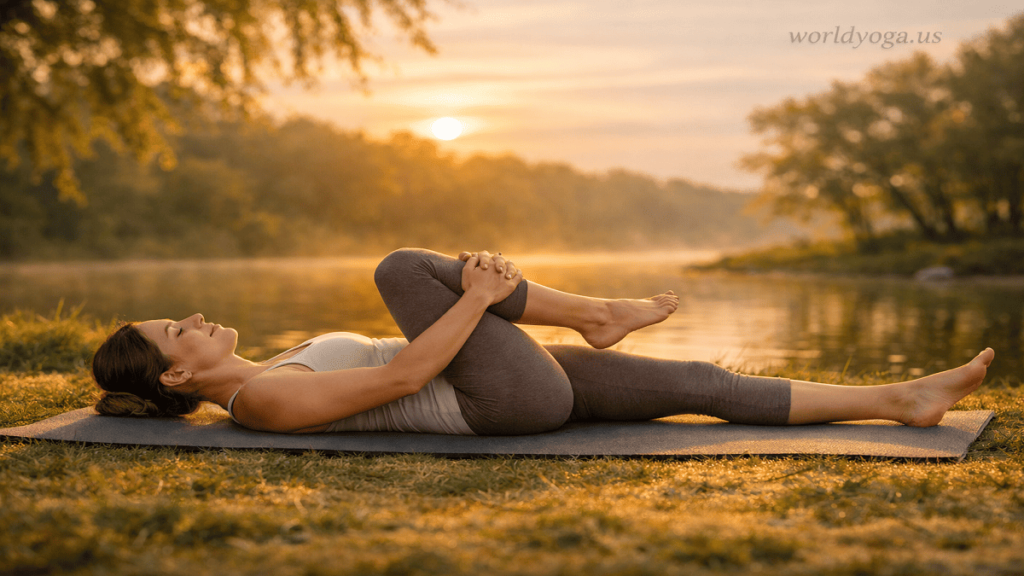
Ardha Vayu Muktyasana is a gentle preparatory variation of the traditional wind-releasing practice. In Sanskrit, “Ardha” means half, “Vayu” refers to wind or air, and “Muktya” means release. This posture is designed to relieve gas, improve digestion, and gently massage the abdominal organs while maintaining a soft and accessible position for beginners.
How to Perform Ardha Vayu Muktyasana Correctly
- Lie flat on your back on a yoga mat with legs extended.
- Keep your spine neutral and shoulders relaxed.
- Bend one knee and slowly draw it toward your chest.
- Interlock your fingers around the shin or knee for support.
- Keep the other leg extended straight on the mat.
- Ensure the lower back remains relaxed and grounded.
- Breathe deeply and hold the position comfortably.
- Release slowly and repeat on the opposite side.
Proper Alignment
- Spine should remain flat and relaxed on the mat
- Extended leg should stay straight and active
- Bent knee should be gently drawn without forcing
- Shoulders should remain relaxed and away from ears
- Neck should stay neutral and tension-free
- Pelvis should remain stable without lifting
Muscles Engaged
- Abdominal muscles (gentle core activation)
- Hip flexors (bent leg movement control)
- Hamstrings (extended leg stabilization)
- Lower back stabilizers
- Pelvic floor muscles
Benefits of Ardha Vayu Muktyasana
- Improves digestion and relieves gas buildup
- Gently massages abdominal organs
- Reduces lower back stiffness
- Enhances hip flexibility
- Promotes relaxation and stress relief
- Supports gentle core activation
Preparatory Poses
- Apanasana (knees-to-chest pose)
- Supta Baddha Konasana (reclined bound angle pose)
- Supta Tadasana (supine alignment awareness)
- Marjaryasana-Bitilasana (cat-cow stretch)
- Balasana (child’s pose)
Precautions
- Avoid forcing the knee toward the chest
- Do not hold breath during the posture
- Avoid if you have recent abdominal surgery or severe hernia
- Move slowly to protect lower back
- Stop if any sharp pain occurs
Conclusion
Ardha Vayu Muktyasana is a simple yet effective supine yoga practice that supports digestive health, spinal relaxation, and gentle core engagement. When practiced regularly and mindfully, it helps release tension from the abdominal region while promoting overall physical comfort and relaxation.
#Ardha Vayu Muktyasana in India
How is Ardha Vayu Muktyasana performed correctly?
Ardha Vayu Muktyasana is a gentle supine posture focused on controlled knee-to-chest movement, spinal relaxation, and abdominal compression. Proper execution ensures digestive benefits, lower back relief, and safe core engagement without strain.
Step-by-Step Correct Technique
1. Start in a Supine Position
Lie flat on your back on a yoga mat. Keep both legs extended, arms resting beside your body, and palms facing down. Ensure your body is fully relaxed.
2. Establish Neutral Alignment
Allow your spine to rest naturally on the floor. The head, shoulders, and pelvis should remain evenly grounded without unnecessary tension.
3. Bend One Knee Slowly
Inhale gently and bend one knee toward your chest. Move slowly to avoid jerky motion and maintain control of the pelvis.
4. Draw the Knee Toward the Chest
Bring the bent knee closer to the abdomen using both hands or a light interlock around the shin or knee. Do not force the movement.
5. Keep the Opposite Leg Straight
The other leg should remain fully extended on the mat, with toes pointing upward. Keep the leg active but relaxed.
6. Stabilize the Lower Back
Ensure the lower back stays relaxed and grounded. Avoid lifting the hips or creating excessive pressure on the lumbar spine.
7. Relax the Upper Body
Keep shoulders soft and away from the ears. Arms should gently hold the knee without gripping tightly. The neck should remain neutral.
8. Maintain Steady Breathing
Breathe slowly and deeply through the nose. Each exhalation can gently deepen relaxation without forcing the stretch.
9. Hold and Release
Hold the posture for a comfortable duration, then slowly release the bent leg back to the mat. Repeat on the opposite side.
Key Alignment Points
- Spine remains neutral and supported
- One leg stays straight and active
- Bent knee moves only as far as comfort allows
- Pelvis remains stable and grounded
- Shoulders and neck stay relaxed
- Breath remains smooth and continuous
Common Mistakes to Avoid
- Forcing the knee too close to the chest
- Lifting the lower back off the mat
- Holding the breath during the stretch
- Tensing the shoulders or neck
- Allowing the straight leg to bend or rotate outward
Conclusion
Correct performance of Ardha Vayu Muktyasana depends on gentle movement, spinal stability, and mindful breathing. When practiced properly, it supports digestive function, relieves lower back tension, and enhances relaxation without overstressing the body.
#Ardha Vayu Muktyasana in Ahemadabad
What is the proper alignment in this half wind-relieving pose variation?
Ardha Vayu Muktyasana is a gentle supine posture designed to support digestion, release lower back tension, and encourage mindful core engagement. Proper alignment is essential to ensure comfort, effectiveness, and spinal safety during the practice.
1. Spine: Neutral and Fully Supported
The spine should rest naturally on the mat without excessive arching or flattening. The entire back—especially the lower back—should remain relaxed and grounded.
2. Pelvis: Stable and Even
The pelvis must stay level on both sides. Avoid lifting or twisting the hips when drawing the knee toward the chest. Stability here ensures proper abdominal massage and spinal safety.
3. Extended Leg: Straight and Active
The non-working leg should remain fully extended along the mat. Keep the thigh engaged and the toes gently pointing upward to maintain alignment and prevent external rotation.
4. Bent Leg: Controlled and Comfortable
The knee is drawn toward the chest only as far as the body comfortably allows. There should be no forcing or compression. The movement should feel supportive, not strained.
5. Core: Gentle Engagement
The abdominal muscles should be lightly engaged to support the movement of the bent leg. This helps stabilize the spine and enhances the digestive benefits of the posture.
6. Shoulders and Upper Body: Relaxed
Shoulders must remain soft and grounded on the mat. The chest should stay open, and there should be no tension in the upper back or neck.
7. Neck and Head: Neutral Position
The head should rest comfortably on the mat with the neck aligned to the spine. Avoid lifting or straining the head during the posture.
8. Arms: Supportive but Relaxed
Hands may gently hold the bent knee or shin without excessive pulling. The arms should assist stability rather than create force.
9. Breath: Smooth and Continuous
Breathing should remain slow, deep, and nasal. Proper breath control enhances relaxation and supports the natural release of abdominal tension.
Summary
Proper alignment in Ardha Vayu Muktyasana focuses on a neutral spine, stable pelvis, active extended leg, and gently drawn bent knee. When these alignment principles are maintained, the posture becomes safe, effective, and beneficial for digestion, relaxation, and lower back relief.
#Ardha Vayu Muktyasana in Hyderabad
Which muscles are engaged during the posture?
Ardha Vayu Muktyasana is a gentle supine posture that primarily supports digestion, spinal relaxation, and light core activation. Although it appears restorative, it still involves coordinated engagement of multiple muscle groups to stabilize the pelvis and control the movement of the bent leg.
Primary Muscles Engaged
1. Rectus Abdominis
This muscle provides gentle flexion of the trunk and helps draw the knee toward the chest. It also supports abdominal compression, which contributes to the digestive benefits of the pose.
2. Transverse Abdominis
As the deepest core stabilizer, it helps maintain spinal integrity and keeps the pelvis stable during unilateral leg movement.
3. Internal and External Obliques
The obliques assist in controlling asymmetry by preventing pelvic rotation and ensuring balanced core engagement.
Hip and Lower Limb Muscles
4. Iliopsoas (Hip Flexors)
Actively engaged in lifting and holding the bent knee toward the chest. This is the primary driver of hip flexion in the posture.
5. Hamstrings
The straight leg engages the hamstrings to maintain extension and prevent external rotation or collapse of the leg.
6. Quadriceps
The quadriceps help stabilize the extended leg, keeping the knee straight and aligned.
Supporting Stabilizer Muscles
7. Erector Spinae
These spinal muscles maintain a neutral spine and prevent excessive flattening or arching of the lower back.
8. Gluteal Muscles
The glutes assist in pelvic stabilization and help prevent unwanted tilting during the asymmetrical leg position.
9. Pelvic Floor Muscles
These deep stabilizers coordinate with the core to support abdominal control and pelvic alignment.
Secondary Muscles Involved
- Adductors (inner thigh stabilization)
- Deep spinal stabilizers (multifidus)
- Foot and ankle stabilizers (maintain straight leg alignment)
Summary
Ardha Vayu Muktyasana engages a combination of deep core muscles, hip flexors, and lower limb stabilizers. While it is a gentle and restorative posture, it still promotes meaningful neuromuscular activation that supports digestion, pelvic stability, and lower back health.
#Ardha Vayu Muktyasana in Hyderabad
What preparatory poses are recommended before practicing it?
Before practicing Ardha Vayu Muktyasana, it is important to prepare the body with gentle supine, hip-opening, and core-awareness poses. These preparatory movements improve comfort in the lower back, enhance hip flexibility, and support controlled knee-to-chest action.
1. Apanasana (Knees-to-Chest Pose)
This is the most direct preparatory posture. It gently compresses the abdomen, releases tension in the lower back, and familiarizes the body with bringing the knees toward the chest.
2. Supta Tadasana (Supine Mountain Pose)
Lying flat in a neutral alignment helps establish awareness of spinal positioning and pelvic balance before introducing asymmetry in the legs.
3. Supta Padangusthasana (Reclined Hand-to-Big-Toe Pose)
This posture stretches the hamstrings and improves control of the extended leg, which is essential for maintaining proper alignment during the straight-leg position.
4. Setu Bandhasana (Bridge Pose)
Bridge Pose activates the glutes, hamstrings, and core muscles, helping build strength and stability required for controlled movement in supine positions.
5. Supta Baddha Konasana (Reclined Bound Angle Pose)
This restorative pose opens the hips and groin, reducing stiffness that may restrict smooth knee flexion.
6. Ananda Balasana (Happy Baby Pose)
This posture increases hip mobility and gently stretches the inner thighs and lower back, making it easier to draw the knee toward the chest.
7. Cat-Cow Stretch (Marjaryasana-Bitilasana)
Although not a supine pose, this spinal mobility exercise improves coordination between breath and movement and prepares the back for flexion and extension patterns.
8. Viparita Karani (Legs-Up-The-Wall Pose)
This restorative inversion promotes circulation, relaxes the lower body, and reduces tension in the hips and hamstrings.
Summary
A combination of hip-opening, spinal-awareness, and gentle core-activation poses prepares the body effectively for Ardha Vayu Muktyasana. Poses such as Apanasana, Supta Padangusthasana, and Setu Bandhasana ensure better alignment, smoother movement, and improved comfort during practice.
#Ardha Vayu Muktyasana in Delhi
What are the benefits and precautions of Ardha Vayu Muktyasana?
Ardha Vayu Muktyasana is a gentle supine yoga posture that supports digestive health, spinal relaxation, and mild core engagement. It is commonly used in beginner yoga, therapeutic sequences, and relaxation-based practices.
Benefits of Ardha Vayu Muktyasana
1. Supports Digestive Health
The gentle compression of the abdomen helps stimulate digestive organs, which may assist in relieving gas, bloating, and discomfort in the abdominal region.
2. Relieves Lower Back Tension
The supine position allows the spine to relax fully while the controlled knee-to-chest action helps release stiffness in the lumbar area.
3. Improves Hip Flexibility
Drawing one knee toward the chest gently opens the hip joint, improving mobility and reducing tightness caused by prolonged sitting.
4. Strengthens Gentle Core Awareness
Light engagement of the abdominal muscles supports spinal stability and helps develop awareness of deep core control without strain.
5. Promotes Relaxation and Stress Relief
The slow, controlled nature of the posture activates the parasympathetic nervous system, encouraging relaxation and mental calmness.
6. Enhances Body Awareness
The asymmetrical leg position helps practitioners identify differences in left and right side flexibility and control.
Precautions for Ardha Vayu Muktyasana
1. Avoid Forceful Compression
Do not pull the knee aggressively toward the chest. The movement should remain gentle and within a comfortable range.
2. Be Cautious with Lower Back Conditions
Individuals with severe lumbar disc issues or acute back pain should avoid or modify the posture under professional supervision.
3. Avoid After Recent Abdominal Surgery
The abdominal compression involved may not be suitable during recovery from surgery or serious abdominal conditions.
4. Maintain Neutral Spine
Do not flatten or excessively arch the lower back. A natural spinal curve should be maintained throughout the posture.
5. Do Not Hold Breath
Breathing should remain smooth and continuous. Breath-holding can create unnecessary abdominal tension.
6. Move Slowly During Transitions
Rapid movement between sides can strain the hip flexors or disturb pelvic alignment. Always switch sides with control.
Summary
Ardha Vayu Muktyasana offers multiple benefits including improved digestion, lower back relief, and gentle core activation. When practiced mindfully with proper alignment and breathing, it is a safe and effective restorative posture, suitable for beginners and therapeutic applications.
#Ardha Vayu Muktyasana in Pune
Case Study of Ardha Vayu Muktyasana
Introduction
Ardha Vayu Muktyasana is a gentle supine yoga posture widely used in therapeutic and beginner-level yoga practices. This case study examines its application in improving digestive comfort, lower back relief, and overall relaxation in individuals with sedentary lifestyles and mild gastrointestinal discomfort.
1. Background of the Case
A group of adults aged 30–50 with desk-based occupations participated in a 6-week yoga intervention program. Common concerns included:
- Occasional bloating and digestive discomfort
- Mild lower back stiffness
- Stress-related abdominal tension
- Reduced physical activity levels
The objective was to introduce a safe, restorative posture to support digestion and spinal relaxation.
2. Intervention Protocol
The program ran for 6 weeks, with 5 sessions per week, each lasting 20–30 minutes.
Session Structure:
- Gentle breathing exercises (diaphragmatic breathing)
- Supine warm-up movements
- Practice of Ardha Vayu Muktyasana (both sides)
- Complementary restorative yoga poses
- Guided relaxation (Yoga Nidra style)
3. Method of Practice Progression
Week 1–2: Familiarization
- Short holds (10–15 seconds per side)
- Focus on correct alignment and relaxation
- Emphasis on gentle knee-to-chest movement
Week 3–4: Stability and Breath Integration
- Longer holds (20–30 seconds per side)
- Coordinated breathing with abdominal release
- Improved comfort in supine position
Week 5–6: Functional Relaxation
- Smooth transitions between sides
- Reduced abdominal tension during holds
- Enhanced awareness of pelvic stability and relaxation response
4. Observations and Outcomes
1. Improved Digestive Comfort
Most participants reported reduced bloating and improved abdominal ease after consistent practice.
2. Reduction in Lower Back Discomfort
Gentle spinal decompression helped alleviate mild lumbar stiffness.
3. Enhanced Relaxation Response
Participants experienced reduced stress levels and improved sleep quality due to parasympathetic activation.
4. Increased Body Awareness
Improved awareness of abdominal tension and pelvic positioning was observed.
5. Better Breathing Control
Diaphragmatic breathing improved significantly during and after practice sessions.
5. Challenges Identified
- Difficulty relaxing the abdomen in early sessions
- Over-pulling the knee toward the chest in some participants
- Mild discomfort in hip flexors during initial practice
- Inconsistent breathing patterns under tension
These issues were addressed through guided instruction, reduced intensity, and slower progression.
6. Conclusion
The case study demonstrates that Ardha Vayu Muktyasana is an effective and accessible therapeutic posture for improving digestive comfort, reducing lower back tension, and promoting relaxation.
#Ardha Vayu Muktyasana in Kolkata
White Paper of Ardha Vayu Muktyasana
Abstract
Ardha Vayu Muktyasana is a foundational supine yoga posture used in therapeutic yoga, digestive wellness programs, and beginner movement training. This white paper examines its biomechanical characteristics, physiological effects, muscular activation patterns, clinical relevance, and applications in preventive and rehabilitative care. The posture is recognized for its low-load structure and its ability to support digestion, spinal relaxation, and gentle neuromuscular engagement.
1. Introduction
Modern sedentary lifestyles contribute to digestive irregularities, reduced spinal mobility, and weakened core awareness. Supine therapeutic postures are widely used to address these issues safely. Ardha Vayu Muktyasana offers a controlled method of abdominal compression and spinal relaxation without mechanical strain, making it suitable for a wide range of populations.
2. Definition and Conceptual Framework
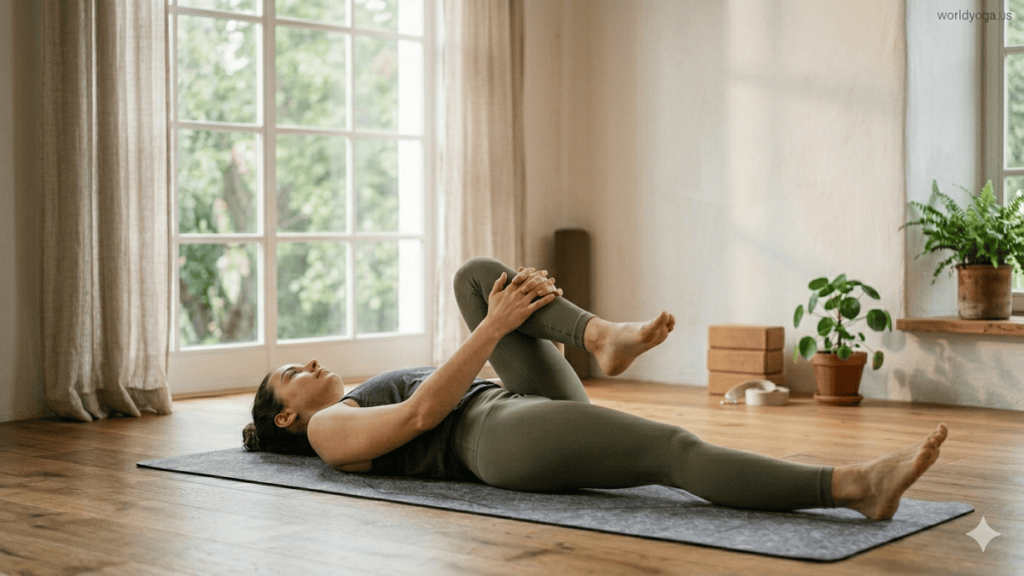
Ardha Vayu Muktyasana is a supine posture in which one knee is drawn toward the chest while the opposite leg remains extended on the floor. The asymmetrical configuration creates gentle abdominal compression and pelvic stabilization demands while maintaining full spinal support from the ground.
The posture is commonly used in yoga therapy systems as a preparatory or restorative technique.
3. Biomechanical Analysis
3.1 Spinal Mechanics
The spine remains in a neutral supine position with minimal compressive load. The floor provides full posterior support, reducing stress on intervertebral structures.
3.2 Pelvic Stability
The unilateral leg position introduces asymmetry, requiring active stabilization to prevent pelvic rotation or tilt.
3.3 Abdominal Compression Dynamics
Gentle knee-to-chest action produces controlled compression of abdominal organs, which is associated with improved digestive stimulation.
4. Muscular Activation Profile
Primary Muscles
- Rectus abdominis (controlled trunk flexion and abdominal compression)
- Transverse abdominis (deep core stabilization)
- Obliques (anti-rotational pelvic control)
Hip and Lower Limb Muscles
- Iliopsoas (bent leg flexion and hold)
- Hamstrings (straight leg extension stability)
- Quadriceps (knee stabilization of extended leg)
Stabilizing Muscles
- Erector spinae (spinal alignment maintenance)
- Gluteus medius and maximus (pelvic stabilization)
- Pelvic floor musculature (core integration and support)
5. Physiological Effects and Benefits
5.1 Digestive Stimulation
The posture applies gentle pressure to abdominal organs, supporting digestive activity and relieving bloating.
5.2 Lower Back Decompression
Supine positioning reduces spinal load and promotes relaxation of lumbar musculature.
5.3 Core Awareness Development
Light abdominal engagement enhances neuromuscular awareness of deep core systems.
5.4 Parasympathetic Activation
Slow breathing combined with supine positioning supports relaxation and stress reduction.
5.5 Hip Mobility Enhancement
Controlled knee flexion improves hip joint range of motion and reduces stiffness.
6. Therapeutic Applications
Ardha Vayu Muktyasana is widely used in:
- Yoga therapy for digestive disorders
- Stress management and relaxation programs
- Early-stage rehabilitation for lower back discomfort
- Sedentary lifestyle correction protocols
- Elderly mobility and gentle movement training
Its simplicity makes it highly adaptable in both clinical and wellness settings.
7. Contraindications and Safety Considerations
While generally safe, caution is advised in the following conditions:
- Recent abdominal surgery
- Severe lumbar disc pathology
- Acute hip or groin injury
- Severe gastrointestinal inflammation or acute abdominal pain
Proper guidance is recommended to avoid excessive knee pulling or pelvic strain.
8. Limitations
- Limited strength development compared to dynamic core training
- Requires progression for functional strength gains
- Potential for compensation if pelvic alignment is not monitored
- Not sufficient as a standalone intervention for advanced rehabilitation needs
9. Conclusion
Ardha Vayu Muktyasana is a safe, low-impact, and therapeutically valuable posture that supports digestive health, spinal relaxation, and gentle core activation. Its biomechanical simplicity and accessibility make it suitable for beginners, elderly populations, and rehabilitation contexts.
#Ardha Vayu Muktyasana in Banglore
Industry Application of Ardha Vayu Muktyasana
Ardha Vayu Muktyasana is a low-impact, supine yoga posture widely used across wellness, healthcare, fitness, and rehabilitation industries. Its simplicity, safety profile, and therapeutic value make it highly adaptable for both clinical and non-clinical environments.
1. Physiotherapy and Clinical Rehabilitation
In physiotherapy settings, this posture is used as an early-stage intervention for patients requiring gentle spinal and abdominal engagement.
Applications:
- Lower back pain management programs
- Postural correction and spinal decompression routines
- Post-operative reconditioning (non-abdominal strain stages)
- Early core activation in deconditioned patients
Industry Value:
It provides a safe, floor-based movement that supports rehabilitation without increasing spinal load or requiring complex coordination.
2. Yoga Therapy and Holistic Wellness
Yoga therapists use this posture as a foundational restorative technique.
Applications:
- Digestive health-focused yoga sequences
- Stress reduction and relaxation therapy
- Gentle abdominal stimulation practices
- Beginner-level yoga therapy modules
Industry Value:
It bridges the gap between relaxation and therapeutic activation, making it ideal for holistic healing programs.
3. Fitness and Corrective Exercise Training
Fitness professionals integrate this movement into beginner and corrective training systems.
Applications:
- Core activation warm-up drills
- Movement re-education programs for sedentary clients
- Functional mobility restoration routines
- Injury prevention and recovery sessions
Industry Value:
It is a scalable exercise that improves neuromuscular control without fatigue or high injury risk.
4. Corporate Wellness Programs
Due to rising sedentary work environments, this posture is increasingly used in workplace wellness initiatives.
Applications:
- Desk-job stress relief sessions
- Short guided movement breaks
- Posture correction programs for office workers
- Digestive comfort and relaxation modules
Industry Value:
It reduces musculoskeletal strain associated with prolonged sitting and supports employee well-being.
5. Sports Recovery and Conditioning
Athletes and trainers use this posture primarily during recovery phases.
Applications:
- Post-training recovery routines
- Lower back and hip relaxation protocols
- Off-season mobility maintenance
- Gentle core reactivation after injury
Industry Value:
It supports recovery without adding physical stress, making it suitable for regeneration phases.
6. Elderly and Geriatric Care
This posture is widely applicable in senior wellness programs.
Applications:
- Gentle mobility maintenance exercises
- Digestive comfort support routines
- Fall-prevention conditioning (indirect core strengthening)
- Relaxation and breath awareness training
Industry Value:
Its low-impact nature makes it safe for aging populations with limited mobility.
7. Digital Health and Online Fitness Platforms
The posture is highly suitable for virtual wellness delivery.
Applications:
- Online yoga therapy classes
- Mobile fitness and wellness apps
- AI-guided posture correction systems
- Home-based beginner rehabilitation programs
Industry Value:
Its simplicity allows accurate instruction through digital platforms without specialized equipment.
8. Education and Training Institutions
Yoga schools and movement science programs use this posture for foundational teaching.
Applications:
- Introduction to core stabilization principles
- Anatomy and movement mechanics training
- Beginner yoga certification curricula
- Therapeutic yoga education modules
Industry Value:
It serves as a clear, safe example for teaching alignment, breath coordination, and core engagement.
Conclusion
Ardha Vayu Muktyasana is a versatile and widely applicable movement used across multiple industries including physiotherapy, yoga therapy, fitness, corporate wellness, sports recovery, elderly care, and digital health platforms. Its low-risk, high-accessibility design makes it an effective tool for improving digestion, spinal relaxation, and foundational core stability in diverse populations.
#Ardha Vayu Muktyasana in Mumbai
Ask FAQs
What is Ardha Vayu Muktyasana?
Ardha Vayu Muktyasana is a gentle supine yoga posture where one knee is drawn toward the chest while the other leg remains extended. It is commonly used to support digestion, relax the lower back, and gently activate the core.
What are the main benefits of this pose?
It helps improve digestion, relieve gas and bloating, reduce lower back stiffness, enhance hip flexibility, and promote relaxation through gentle abdominal compression and controlled breathing.
Who can practice Ardha Vayu Muktyasana?
It is suitable for beginners, elderly individuals, and those with sedentary lifestyles. It is also commonly used in yoga therapy and rehabilitation programs for gentle core activation and relaxation.
How long should the pose be held?
Beginners can hold the posture for 10–15 seconds per side and gradually increase to 30 seconds or more as comfort and flexibility improve. The focus should always remain on comfort and controlled breathing.
Are there any precautions to follow?
Yes. Avoid forcefully pulling the knee toward the chest, and do not practice if you have severe lower back pain, recent abdominal surgery, or acute hernia. Always maintain a neutral spine and breathe steadily throughout the posture.
Table of Contents
Disclaimer
The information provided about Ardha Vayu Muktyasana is for educational and informational purposes only and does not replace medical advice. Individuals with injuries, medical conditions, or health concerns should consult a qualified healthcare professional or certified yoga instructor before practicing. Practice gently, within personal limits, and discontinue if discomfort or pain occurs.