
Bound Foot One-Legged Inverted Staff Pose
Bound Foot One-Legged Inverted Staff Pose—commonly known as Eka Pada Viparita Dandasana with a foot bind—is an advanced backbending and inversion posture in Yoga. It combines elements of deep spinal extension, shoulder mobility, hip flexibility, and balance, making it suitable only for experienced practitioners with a well-established foundation in backbends and inversions.
In this pose, the practitioner begins in a supported inversion, often transitioning from Forearm Stand or Wheel Pose. From there, one leg remains grounded or extended overhead while the other leg is bent, allowing the foot to be drawn toward the torso and bound with the hands or forearms. The spine arches deeply, the chest opens fully, and the head may either hang freely or lightly touch the floor depending on the variation. This configuration creates a dynamic interplay between strength and flexibility, requiring significant control of the core and breath.
The physical benefits of this pose are extensive. It enhances spinal elasticity and strengthens the posterior chain, including the back muscles, glutes, and hamstrings. The intense chest opening improves lung capacity and may support better respiratory function. Additionally, the inversion aspect promotes circulation, encouraging blood flow toward the brain and upper body, which practitioners often associate with increased mental clarity and focus. According to resources like Yoga Journal, advanced backbends such as this can also stimulate the nervous system and energize the body when practiced mindfully.
However, the complexity of the Bound Foot One-Legged Inverted Staff Pose also introduces risks. Without adequate preparation, practitioners may strain the lower back, shoulders, or neck. It is essential to warm up thoroughly with preparatory poses such as Camel Pose, Pigeon Pose, and supported backbends. Using props like blocks or practicing under the guidance of a qualified instructor can significantly reduce the likelihood of injury.
Breath control plays a crucial role in maintaining stability and ease in the posture. Slow, steady breathing helps regulate the nervous system and allows the body to relax into the deep stretch rather than resist it. Practitioners should exit the pose carefully and follow it with counterposes such as gentle forward folds or twists to neutralize the spine.
For a detailed visual guide and step-by-step breakdown, you may refer to:
#Bound Foot One-Legged Inverted Staff Pose in India
How do you perform Bound Foot One-Legged Inverted Staff Pose safely?
Preparation is essential
Before attempting this pose, spend adequate time warming up the spine, shoulders, and hips. Preparatory postures like Camel Pose, Wheel Pose, and Pigeon Pose help open the chest and increase flexibility. You should also be comfortable holding inversions such as Forearm Stand, as this pose often transitions from it.
Step-by-step approach
Begin in a stable inversion, ideally Forearm Stand near a wall for support. Ensure your shoulders are stacked over your elbows and your core is engaged. Slowly bend one knee and begin to arc the spine into a deep backbend, lowering the foot toward the floor behind your head. The other leg remains extended and active for balance.
Once stable, reach back carefully to hold the bent foot, creating the “bound” aspect of the pose. Keep the chest lifting and avoid collapsing into the lower back—distribute the curve evenly along the spine. Maintain steady breathing throughout; controlled breath helps prevent tension and supports balance.
Key safety principles
Alignment is critical. Avoid dumping weight into the neck or compressing the lumbar spine. Instead, press strongly through the shoulders and arms to keep the upper body supported. Engaging the core and glutes helps protect the lower back.
Use props such as blocks, straps, or a wall to reduce strain and improve stability. Practicing under the supervision of a qualified yoga instructor is strongly recommended, especially when first learning the pose.
Listen to your body
This posture places intense demands on flexibility and strength. If you feel sharp pain—particularly in the lower back, shoulders, or neck—exit the pose immediately. Gradual progression is far more effective and safer than forcing depth.
Counterpose and recovery
After releasing the pose, neutralize the spine with gentle forward folds or twists. This helps restore balance and prevents lingering tension.
For further guidance, trusted resources such as Yoga Journal and DoYogaWithMe provide detailed tutorials and visual demonstrations.
Final note
Safety in advanced yoga poses comes down to patience, preparation, and awareness. Mastery of foundational poses, consistent practice, and mindful breathing will allow you to explore the Bound Foot One-Legged Inverted Staff Pose with greater confidence and reduced risk.
#Bound Foot One-Legged Inverted Staff Pose in Delhi
What muscles are engaged in this pose?
Upper body and shoulders
The shoulders and upper arms play a crucial stabilizing role, especially if the pose is entered from Forearm Stand. The deltoids, triceps, and rotator cuff muscles work actively to support body weight and maintain alignment. Additionally, the trapezius and serratus anterior help stabilize the shoulder blades and prevent collapse into the neck.
Core muscles
A strong and engaged core is essential for maintaining balance and protecting the spine. The rectus abdominis, transverse abdominis, and obliques work together to control the arch of the back and prevent excessive compression in the lumbar region. Even though this is a deep backbend, core engagement ensures the movement is controlled rather than passive.
Back and spinal extensors
The erector spinae group is heavily activated to create and sustain the deep spinal extension. These muscles run along the length of the spine and are responsible for lifting and arching the torso. Supporting muscles like the multifidus contribute to spinal stability, Bound Foot One-Legged, particularly during the transition into the pose.
Hips and glutes
The gluteus maximus and gluteus medius are strongly engaged to support the pelvis and assist in hip extension. The lifted leg requires activation of the hip flexors (such as the iliopsoas), while the bent leg—especially in the binding action—engages the hip rotators and adductors to maintain position and control.
Legs and lower body
The extended leg activates the quadriceps to keep it straight and strong, while the hamstrings of the bent leg lengthen deeply. The calf muscles (gastrocnemius and soleus) assist in stabilizing the lower limbs and maintaining pointed or flexed foot alignment depending on the variation.
Chest and breathing muscles
The deep chest opening in this pose engages the pectoralis major and minor as they stretch, while the intercostal muscles between the ribs assist with controlled breathing. This expansion can enhance lung capacity when practiced with steady breath.
Integrated effort
What makes this pose unique is the simultaneous engagement of opposing muscle groups—strength in the back body and shoulders, with controlled activation in the core and legs. This balanced engagement allows the practitioner to hold the posture safely and avoid strain.
In summary, the Bound Foot One-Legged Inverted Staff Pose is a full-body integration exercise that strengthens the upper body, stabilizes the core, and deeply engages the spine and hips, reflecting the advanced physical demands of modern yoga practice.
#Bound Foot One-Legged Inverted Staff Pose in Maharashtra
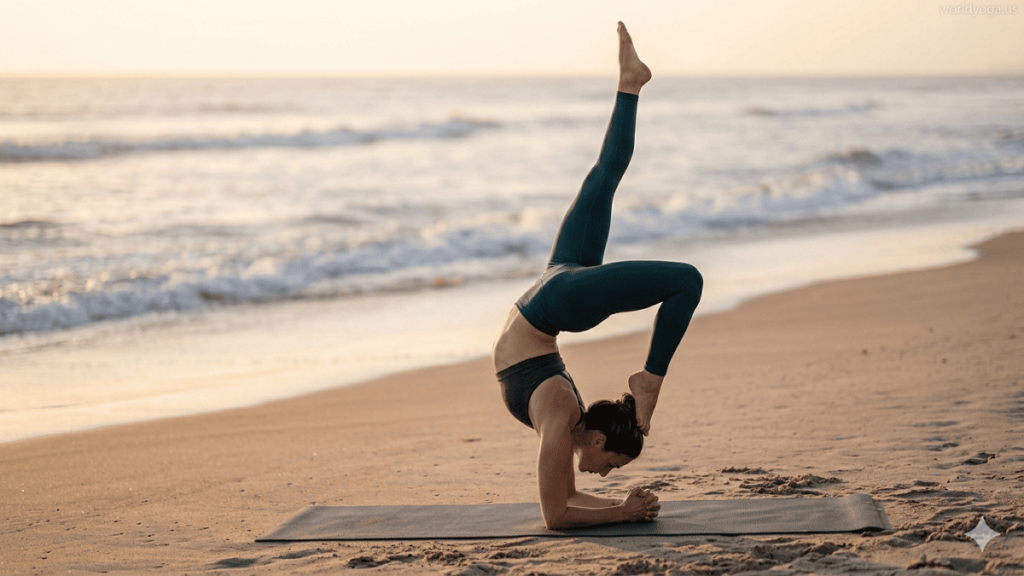
What are the key preparatory poses?
Spinal extension and backbend preparation
Developing a safe and even backbend is essential. Foundational poses like Cobra Pose and Locust Pose strengthen the spinal extensors and teach controlled lifting of the chest. As flexibility improves, Bound Foot One-Legged, deeper backbends such as Camel Pose and Wheel Pose help open the thoracic spine and shoulders, which is critical for achieving the deep arch required in the final pose.
Shoulder and upper body stability
Strong, mobile shoulders are key for supporting body weight in inverted positions. Poses like Dolphin Pose build endurance in the shoulders and arms while reinforcing proper alignment. This directly prepares the body for weight-bearing inversions such as Forearm Stand, which is often the entry point into the advanced posture.
Hip opening and leg flexibility
Since the pose involves a deep leg bend and foot binding, hip mobility is crucial. Pigeon Pose is particularly effective for opening the hips and stretching the glutes and hip rotators. Complementary poses like low lunges or quad stretches help lengthen the hip flexors, making it easier to draw the foot toward the body without strain.
Core engagement and control
Although backbending is the dominant movement, Bound Foot One-Legged, a stable core ensures control and prevents compression in the lower back. Plank variations and controlled transitions into backbends help activate the deep abdominal muscles, creating balanced support throughout the pose.
Inversion readiness
Comfort with being upside down is non-negotiable. Practicing Forearm Stand or supported inversions against a wall helps build confidence, balance, and proprioception. These skills are essential for safely transitioning into and out of the pose.
Integration and progression
The key is to link these preparatory elements gradually rather than rushing into the final posture. A well-rounded sequence might begin with gentle backbends, Bound Foot One-Legged, progress into deeper spinal work, incorporate hip openers, and finish with inversion practice.
Final thought
Consistent practice of these preparatory poses not only improves physical readiness but also enhances body awareness. Over time, this allows practitioners to approach the Bound Foot One-Legged Inverted Staff Pose with greater control, stability, and safety—turning a complex posture into a sustainable part of an advanced yoga practice.
#Bound Foot One-Legged Inverted Staff Pose in Kolkata
What mistakes should be avoided?
Over-compressing the lower back
One of the most frequent errors is dumping too much of the backbend into the lumbar spine. This happens when practitioners push for depth without evenly distributing the curve along the entire spine. Instead, focus on lifting through the chest and engaging the core to create a balanced arch. Preparatory poses like Camel Pose can help train this awareness.
Neglecting shoulder support
Inversions demand strong, active shoulders. A common mistake is collapsing into the shoulders or allowing them to sink toward the neck, Bound Foot One-Legged, which can lead to instability or injury. When entering from Forearm Stand, ensure the shoulders remain stacked and actively pushing away from the floor to maintain structural integrity.
Forcing the bind
Trying to grab the foot without sufficient flexibility is another major issue. This often leads to twisting or straining the hips and lower back. The bind should come naturally as a result of open hips and a flexible spine, not by pulling aggressively. Using a strap or modifying the pose is a safer alternative until mobility improves.
Holding the breath
Breath restriction is subtle but harmful. Many practitioners unconsciously hold their breath due to the intensity of the posture. This increases tension and reduces control. Maintaining slow, steady breathing helps regulate the nervous system and allows the body to ease into the pose more safely.
Lack of core engagement
Even though the pose emphasizes backbending, neglecting the core can destabilize the entire posture. Without proper engagement of the abdominal muscles, Bound Foot One-Legged, the lower back bears excessive load. A strong core supports the spine and helps maintain balance throughout the inversion.
Skipping proper warm-up
Attempting this pose without adequate preparation is a critical mistake. Without warming up through poses like Wheel Pose or Pigeon Pose, the body is not ready for the deep extension and flexibility required.
Rushing entry and exit
Transitions are just as important as the pose itself. Moving too quickly into or out of the posture can lead to loss of control and potential injury. Always enter and exit slowly, Bound Foot One-Legged, with awareness and stability.
Final insight
Avoiding these mistakes comes down to patience, proper technique, and self-awareness. Practicing under guidance and progressing gradually ensures that the Bound Foot One-Legged Inverted Staff Pose becomes both safe and effective as part of an advanced yoga journey.
#Bound Foot One-Legged Inverted Staff Pose in Ahemadabad
What are the benefits of this pose?
Enhanced spinal flexibility and strength
One of the primary benefits is the development of spinal mobility. The deep backbend stretches the entire front body while strengthening the erector spinae muscles along the back. Over time, this improves posture, reduces stiffness, and promotes a more resilient spine. Unlike passive stretching, this pose builds active flexibility, meaning strength and mobility are developed together.
Improved shoulder and upper body strength
Because the pose is often entered through Forearm Stand, it requires significant engagement of the shoulders, arms, and upper back. This strengthens the deltoids, triceps, and stabilizing muscles around the shoulder girdle, enhancing overall upper body endurance and control.
Deep chest opening and better breathing capacity
The intense expansion of the chest stretches the pectoral muscles and opens the rib cage. This can improve lung capacity and encourage deeper, more efficient breathing patterns. Many practitioners find that regular backbending helps counteract the effects of prolonged sitting and poor posture.
Increased hip flexibility and mobility
The binding action and leg positioning place a deep stretch on the hips, particularly when transitioning through poses like Pigeon Pose. This enhances hip mobility, reduces tightness, and supports better movement patterns in both yoga and daily activities.
Boosted circulation and energy levels
As an inversion, the pose encourages blood flow toward the upper body and brain. This can support improved circulation and may contribute to increased alertness and mental clarity. According to insights from Yoga Journal, inversions are often associated with energizing effects and improved focus when practiced safely.
Mental focus and confidence
Balancing in such a complex posture requires concentration, coordination, and breath control. This cultivates mindfulness and mental discipline. Successfully working toward or achieving the pose can also build confidence and a sense of accomplishment, reinforcing long-term commitment to practice.
Nervous system stimulation
Deep backbends are known to stimulate the nervous system, potentially helping to combat fatigue and low energy. When combined with controlled breathing, this stimulation can feel both invigorating and stabilizing.
Final perspective
While the benefits are substantial, they are best realized through gradual progression and consistent practice. The Bound Foot One-Legged Inverted Staff Pose is not just about physical achievement—it represents a balanced integration of strength, flexibility, and awareness, making it a powerful addition to an advanced yoga practice.
#Bound Foot One-Legged Inverted Staff Pose in Hyderabad
Case Study of Bound Foot One-Legged Inverted Staff Pose
The Bound Foot One-Legged Inverted Staff Pose represents a peak-level posture that integrates inversion, deep spinal extension, and advanced flexibility. This case study examines the progression, outcomes, and challenges experienced by an intermediate-to-advanced practitioner over a 16-week structured training program designed to safely achieve this pose.
Participant Profile and Objective
The subject was a 32-year-old experienced yoga practitioner with 5+ years of consistent practice, particularly comfortable with backbends such as Wheel Pose and inversions like Forearm Stand. The primary goal was to safely attain and hold the Bound Foot One-Legged Inverted Staff Pose for at least five controlled breaths without discomfort or instability.
Training Methodology
The program followed a progressive approach, emphasizing mobility, strength, and neuromuscular control. Sessions were conducted five times per week and included:
- Warm-up phase: Dynamic spinal movements and preparatory poses such as Camel Pose and Cobra Pose to improve thoracic extension.
- Strength and stability: Focus on shoulder endurance and alignment through drills like Dolphin Pose and controlled holds in Forearm Stand.
- Flexibility training: Deep hip openers including Pigeon Pose to facilitate the binding action.
- Skill integration: Gradual introduction of backbend transitions and assisted attempts at the final pose using props and wall support.
Results and Observations
By week 8, the participant demonstrated significant improvements in spinal flexibility and shoulder stability, allowing for deeper, more controlled backbends. By week 12, assisted entry into the pose was achieved, with the practitioner able to briefly maintain the bind using a strap.
At the end of 16 weeks, the subject successfully performed the full pose unassisted, maintaining stability for 5–7 breaths. Notable improvements included increased thoracic mobility, enhanced core engagement, and better breath regulation under physical stress. The participant also reported improved posture and reduced lower back discomfort in daily activities.
Challenges and Limitations
The most significant challenges were avoiding lumbar compression and developing sufficient shoulder endurance. Early stages revealed a tendency to over-rely on lower back flexibility rather than distributing the curve evenly. This was addressed through targeted core strengthening and alignment cues. Additionally, psychological barriers—particularly fear of falling in inversion—required gradual exposure and confidence-building.
Conclusion
This case study highlights that achieving the Bound Foot One-Legged Inverted Staff Pose is feasible with structured progression, consistent practice, and proper guidance. The pose not only enhances physical capabilities such as flexibility and strength but also fosters mental resilience and body awareness. However, it underscores the importance of patience and technique, as premature attempts without preparation may lead to injury.
#Bound Foot One-Legged Inverted Staff Pose in Pune
White Paper of Bound Foot One-Legged Inverted Staff Pose
Abstract
The Bound Foot One-Legged Inverted Staff Pose is a complex, advanced yoga posture that integrates inversion, spinal extension, and limb binding. This white paper examines its biomechanical demands, physiological benefits, training requirements, and safety considerations. The aim is to provide a structured, evidence-informed overview for practitioners, instructors, and movement professionals seeking to understand and apply this posture within advanced practice frameworks.
1. Introduction
Modern yoga practice increasingly emphasizes functional strength and mobility. Advanced poses such as this one represent the culmination of progressive training in flexibility, neuromuscular coordination, and balance. Rooted in classical backbending techniques and inversion work, the pose is often approached through foundational postures like Wheel Pose and Forearm Stand.
2. Biomechanical Analysis
The pose requires deep thoracic extension while maintaining lumbar stability. The erector spinae facilitate spinal extension, while the rectus abdominis and transverse abdominis provide counter-support to prevent excessive compression. The shoulders operate in flexion and stabilization, engaging the deltoids and rotator cuff muscles. Simultaneously, hip extension and rotation occur in the bound leg, requiring flexibility in the hip flexors and strength in the gluteal group. The integration of these systems highlights the pose as a full-body kinetic chain activity.
3. Physiological Benefits
Practicing this posture may improve spinal mobility, enhance shoulder stability, and increase hip flexibility. The inversion component can promote circulation toward the upper body, potentially supporting cognitive alertness. Deep chest expansion may also improve respiratory efficiency. According to Yoga Journal, advanced backbends and inversions are often associated with energizing effects and improved posture when practiced consistently.
4. Training Protocols
A phased training model is recommended:
- Phase 1: Foundational mobility using poses such as Camel Pose and Cobra Pose.
- Phase 2: Strength development through shoulder stabilization and inversion drills, particularly Forearm Stand.
- Phase 3: Integration of flexibility and control using hip openers like Pigeon Pose.
- Phase 4: Assisted and eventually unassisted attempts at the full posture.
5. Risk Assessment and Safety
Potential risks include lumbar spine compression, shoulder strain, and loss of balance during inversion. These risks can be mitigated through proper warm-up, progressive loading, and the use of props. Supervised practice is strongly advised, particularly during early attempts. Breath regulation and controlled entry/exit are critical to minimizing injury.
6. Practical Applications
Beyond its role as a peak pose, this posture can serve as a diagnostic tool for identifying imbalances in mobility and strength. It is also valuable in advanced training programs aimed at improving full-body coordination and proprioception.
7. Conclusion
The Bound Foot One-Legged Inverted Staff Pose exemplifies the integration of strength, flexibility, and control in advanced yoga practice. When approached systematically, it offers substantial physical and mental benefits. However, its complexity necessitates disciplined preparation and adherence to safety principles, reinforcing the importance of progressive and mindful practice.
#Bound Foot One-Legged Inverted Staff Pose in Banglore
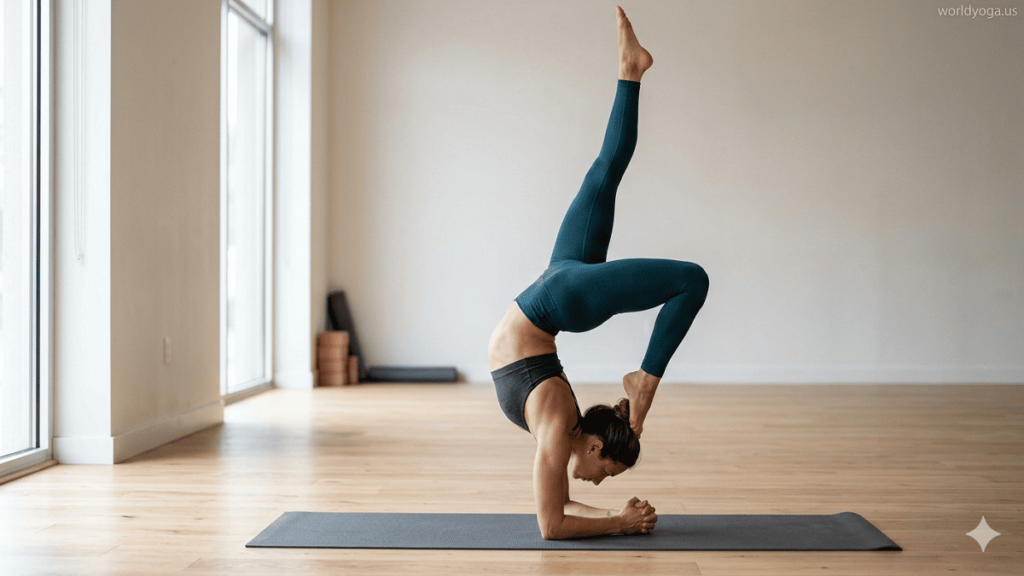
Industry Application of Bound Foot One-Legged Inverted Staff Pose
1. Fitness and Wellness Industry
In high-end yoga studios and fitness centers, this pose is often used as a benchmark for advanced practitioners. It is incorporated into specialized classes focused on mobility, strength, and flexibility training. Studios and platforms such as Yoga Journal and DoYogaWithMe highlight such postures in premium content to attract experienced users seeking progression beyond foundational routines. Additionally, personal trainers integrate elements of the pose—such as deep backbending and inversion drills—into hybrid fitness programs.
2. Physical Therapy and Rehabilitation
While the full pose is rarely prescribed in clinical settings, its components are highly relevant in rehabilitation. Controlled spinal extension, shoulder stabilization, and hip mobility exercises derived from preparatory poses like Cobra Pose and Pigeon Pose are used to improve posture, reduce back pain, and restore functional movement. Physical therapists may adapt these elements to help patients regain strength and flexibility after injury.
3. Sports Performance and Athletic Training
Athletes in disciplines such as gymnastics, dance, and martial arts benefit from the mobility and strength required for this pose. Training programs often incorporate inversion work and backbends like Wheel Pose to enhance spinal flexibility and coordination. The pose’s emphasis on balance and body awareness supports improved proprioception, which is critical for injury prevention and performance optimization.
4. Corporate Wellness Programs
With increasing focus on employee well-being, corporate wellness initiatives are integrating advanced yoga modules for experienced participants. While beginners focus on basic stretches, advanced practitioners may explore challenging postures under supervision. The pose’s energizing and focus-enhancing qualities align with productivity and stress-management goals in workplace settings.
5. Digital Fitness and Content Platforms
Online fitness platforms and mobile apps leverage visually impressive poses like this one to engage users and differentiate advanced-level content. Instructional videos, masterclasses, and subscription-based programs often feature progressions leading to the pose, appealing to a global audience of dedicated practitioners.
6. Education and Teacher Training
Yoga teacher training programs use this pose as a case study in biomechanics and sequencing. Trainees learn how to safely guide students through preparatory stages, emphasizing alignment, breath control, and injury prevention.
Conclusion
The Bound Foot One-Legged Inverted Staff Pose extends beyond personal practice into diverse industry applications. Its value lies not only in its physical demands but also in its adaptability—serving as a tool for performance enhancement, rehabilitation, education, and wellness innovation.
#Bound Foot One-Legged Inverted Staff Pose in Mumbai
Ask FAQs
What is the Bound Foot One-Legged Inverted Staff Pose?
The Bound Foot One-Legged Inverted Staff Pose is an advanced posture in Yoga that combines inversion, deep backbending, and a binding action. It requires significant strength, flexibility, and balance, and is typically practiced by experienced individuals who have mastered foundational poses.
Who should practice this pose?
This pose is best suited for advanced practitioners with a strong foundation in backbends and inversions such as Wheel Pose and Forearm Stand. Beginners or those with injuries—especially in the spine, shoulders, or neck—should avoid attempting it without professional guidance.
What are the main benefits of this pose?
The pose enhances spinal flexibility, strengthens the shoulders and core, and improves hip mobility. It also promotes better circulation due to its inversion component and can support mental focus and energy levels when practiced consistently within a structured Yoga routine.
How can I prepare for this pose safely?
Preparation involves a combination of backbends, shoulder strengthening, and hip-opening exercises. Poses like Camel Pose and Pigeon Pose are particularly effective. Consistent practice, proper warm-up, and the use of props or wall support can significantly reduce the risk of injury.
What are the common risks associated with this pose?
The most common risks include lower back compression, shoulder strain, and loss of balance during inversion. These risks can be minimized by maintaining proper alignment, engaging the core, and progressing gradually. Practicing under the supervision of a qualified instructor is strongly recommended.
Table of Contents
Desclaimer
This content is for informational purposes only and does not constitute medical or professional advice. Practice advanced yoga poses, including Bound Foot One-Legged Inverted Staff Pose, under the guidance of a qualified instructor. Consult a healthcare professional before attempting if you have any existing injuries or medical conditions.