
Downward Dog: Forearms and Head on the Floor
The variation of Downward-Facing Dog where the forearms and head come closer to or rest toward the floor is most closely associated with Dolphin Pose (Ardha Pincha Mayurasana) or a supported forearm variation of Adho Mukha Svanasana. This posture is commonly used in yoga practice to deepen shoulder engagement, build upper-body strength, and prepare for inversions.
Execution and Alignment
Begin in a tabletop position on hands and knees. Lower the forearms to the floor, placing them parallel to each other with elbows directly under the shoulders. The hands can be flat on the mat or gently clasped, depending on comfort and stability.
From here, lift the hips upward and backward, extending the legs to form an inverted “V” shape. The spine should remain long and neutral rather than rounded. The head naturally moves toward the floor, Dolphin Pose, but it should remain relaxed and not bear weight unless specifically instructed in a supported variation.
A key distinction: in standard Downward-Facing Dog, the palms support the body, whereas in this forearm variation, the forearms take that role, significantly increasing the demand on shoulder stability and core engagement.
Key Benefits
This posture offers multiple physical benefits:
- Shoulder strengthening: It intensifies activation of the deltoids, Dolphin Pose, rotator cuff muscles, and upper back stabilizers.
- Core engagement: Maintaining the lifted hip position requires sustained abdominal control.
- Spinal decompression: Like traditional Downward Dog, Dolphin Pose, it elongates the spine and can relieve compression in the lower back.
- Preparation for inversions: It is widely used as a foundational pose for headstands and forearm balances.
According to yoga anatomy references, Dolphin Pose is particularly effective in building endurance in the upper body without full wrist load, making it suitable for practitioners with wrist sensitivity.
Common Misalignments
Several mistakes should be avoided:
- Collapsing into the shoulders instead of actively pressing the forearms into the floor.
- Letting the chest drop too far, which can strain the neck.
- Overarching or rounding the lower back.
- Shifting too much body weight forward toward the head.
The head should remain light, with no pressure unless using a supported prop such as a block or bolster.
Modifications and Safety
Beginners may bend the knees to reduce hamstring tension or keep the forearms on a raised surface (like a block). Individuals with shoulder, neck, Dolphin Pose, or high blood pressure concerns should approach this pose cautiously or consult a qualified instructor.
For more structured guidance, you can refer to:
- https://www.yogajournal.com/poses/dolphin-pose/
- https://www.yogapedia.com/definition/6094/dolphin-pose-ardha-pincha-mayurasana
- https://www.verywellfit.com/how-to-do-dolphin-pose-3567220
#Downward Dog: Forearms and Head on the Floor in Hydrabad
How is Downward Dog with forearms and head on the floor performed correctly?
Starting Position
Begin on hands and knees in a tabletop position. Place your forearms on the mat, parallel to each other. Ensure the elbows are directly under the shoulders. This alignment is essential because it creates a stable base for the upper body and prevents strain on the shoulders.
You can either:
- Keep the palms flat on the floor, or
- Interlace the fingers lightly for added stability
Lifting Into the Pose
From here, tuck your toes under and slowly lift your knees off the ground. Press your forearms firmly into the mat while lifting your hips upward and back. The body should form an inverted “V” shape.
As you move into the full position:
- Lengthen the spine by pushing the hips away from the shoulders
- Engage the core to prevent collapsing in the lower back
- Keep the legs active, either straight or with a slight bend in the knees if needed
Head Position
The head should remain relaxed and naturally hang between the upper arms. It should not carry weight. The gaze is typically toward the feet or the navel area. If the neck feels strained, Dolphin Pose, slightly increase the distance between the head and the floor by adjusting shoulder engagement.
Key Alignment Cues
Proper form depends on active engagement:
- Press forearms evenly into the mat to avoid sinking into the shoulders
- Lift shoulders away from the ears (scapular elevation and stability)
- Keep the chest gently moving toward the thighs
- Maintain a long, neutral spine rather than rounding or over-arching
- Distribute weight evenly between both arms
Common Mistakes to Avoid
- Collapsing into the shoulders instead of actively lifting away from the floor
- Letting elbows move wider than shoulder-width
- Dropping the chest too low, which can strain the neck
- Locking the knees with tight hamstrings instead of maintaining a controlled bend if needed
Benefits of Correct Practice
When performed correctly, Dolphin Pose, this posture strengthens the shoulders, arms, Dolphin Pose and core while improving spinal extension and flexibility in the hamstrings. It is also commonly used as preparation for inversions like headstand due to its emphasis on upper-body stability.
Additional Guidance
For step-by-step visuals and deeper anatomical breakdowns, you can refer to:
- https://www.yogajournal.com/poses/dolphin-pose/
- https://www.verywellfit.com/how-to-do-dolphin-pose-3567220
- https://www.yogapedia.com/definition/6094/dolphin-pose-ardha-pincha-mayurasana
#Downward Dog: Forearms and Head on the Floor in Maharashtra
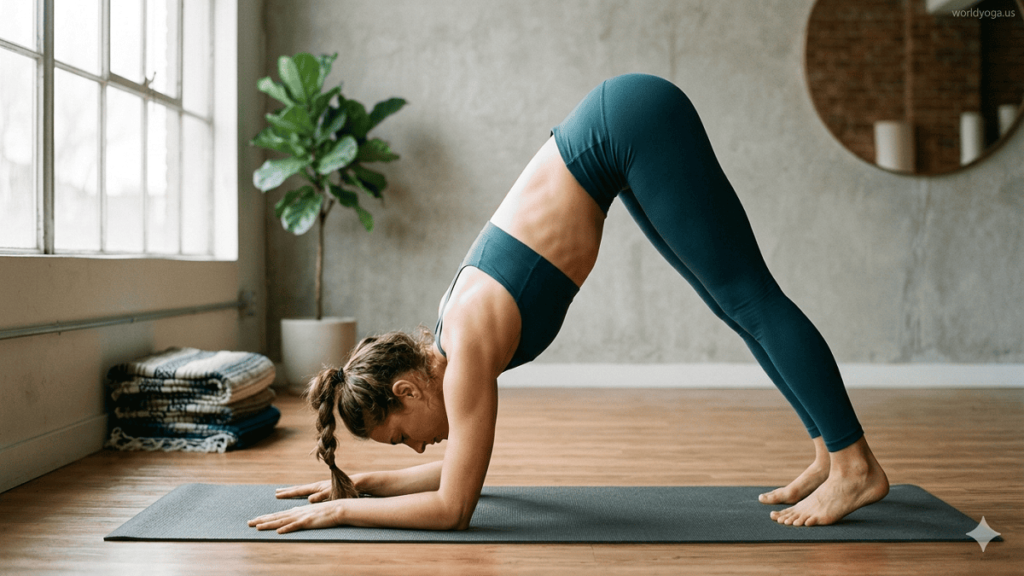
What is the proper alignment in this variation?
Forearms and Shoulders
Start by placing the forearms on the floor with elbows directly under the shoulders. This stacking is essential for structural support. The forearms should be parallel, Dolphin Pose about shoulder-width apart, pressing evenly into the mat. The pressure should feel distributed through both forearms rather than collapsing into one side.
The shoulders must stay active and lifted away from the ears. This action, known as scapular elevation with stability, Dolphin Pose prevents compression in the neck and upper back. Instead of sinking into the joints, Dolphin Pose, the upper back should feel broad and engaged.
Spine and Torso
The spine should remain long and neutral. From the pelvis to the crown of the head, there should be a continuous line of length rather than rounding or over-arching. The chest naturally moves slightly toward the thighs, but it should not collapse downward.
The ribcage stays contained rather than flaring outward. Core engagement is important here, Dolphin Pose as it stabilizes the pelvis and prevents excessive arching in the lower back.
Hips and Legs
The hips are lifted high and pushed back, forming the peak of the inverted “V” shape. The pelvis should tilt slightly forward (anterior tilt) to maintain spinal length.
Leg positioning depends on flexibility:
- Ideally, legs are straight with heels reaching toward the floor
- If hamstrings are tight, a slight bend in the knees is correct and preferable to rounding the spine
The thighs should stay active, Dolphin Pose with muscles engaged rather than passive. This helps maintain balance and reduces strain on the upper body.
Head and Neck
The head hangs naturally between the upper arms without bearing weight. The neck remains relaxed, long, and aligned with the spine. The gaze typically points toward the shins or feet. Any compression in the neck indicates misalignment in the shoulders or spine.
Weight Distribution
A key aspect of proper alignment is even weight distribution:
- Press evenly through both forearms
- Avoid shifting weight too far forward toward the head or shoulders
- Maintain balanced engagement between upper body support and lower body lift
Common Alignment References
In yoga anatomy guidance, Dolphin Pose is often described as a preparatory posture for inversions because it teaches shoulder stacking, core engagement, Dolphin Pose and pelvic control without wrist load. Proper alignment ensures these benefits while reducing risk of strain.
For further technical reference:
- https://www.yogajournal.com/poses/dolphin-pose/
- https://www.yogapedia.com/definition/6094/dolphin-pose-ardha-pincha-mayurasana
- https://www.verywellfit.com/how-to-do-dolphin-pose-3567220
#Downward Dog: Forearms and Head on the Floor in India
Which muscles are engaged during the pose?
Shoulders and Upper Back
The most actively engaged region is the shoulder girdle. Key muscles include:
- Deltoids (especially anterior and medial heads): Help support the body weight through the forearms and maintain shoulder stability.
- Trapezius (upper and middle fibers): Assist in lifting the shoulders away from the ears and stabilizing the scapulae.
- Serratus anterior: Plays a crucial role in keeping the shoulder blades stable against the rib cage, preventing collapse into the shoulders.
- Rhomboids: Help control scapular positioning and support upper-back stability.
These muscles work continuously to prevent the upper body from sinking and to maintain the lifted structure of the pose.
Arms and Forearms
Although the forearms are in contact with the floor, they are highly active:
- Biceps brachii: Assist in stabilizing the elbow joint.
- Forearm flexors and extensors: Maintain firm grounding through the forearms and control pressure distribution.
- Triceps: Contribute to elbow extension stability, preventing collapse.
Even though the wrists are not bearing load, the entire arm chain remains engaged isometrically.
Core Muscles
The core is central to maintaining the inverted “V” shape:
- Rectus abdominis: Supports spinal flexion control and prevents lower back collapse.
- Transverse abdominis: Acts as a deep stabilizer, compressing the abdominal wall for spinal support.
- Obliques: Assist in maintaining balance and preventing lateral shifting.
- Erector spinae (lower back): Work in balance with the abdominal muscles to keep the spine elongated and neutral.
This core engagement is what prevents the pelvis from sagging and helps maintain the lifted hip position.
Lower Body Muscles
The legs are not passive; they contribute significantly to stability:
- Hamstrings: Engage to lengthen the back of the legs and assist in lifting the hips.
- Gluteus maximus: Supports hip extension and stabilizes the pelvis.
- Quadriceps: Keep the knees extended or controlled when slightly bent.
- Calves (gastrocnemius and soleus): Assist in maintaining foot positioning and heel direction toward the floor.
Neck and Cervical Stabilizers
- Deep cervical flexors and extensors: Keep the neck long and relaxed without compression.
- Suboccipital muscles: Maintain subtle head alignment without strain.
Overall Muscle Function Pattern
This pose is primarily an isometric full-body engagement, meaning muscles are activated without significant movement. The upper body supports weight, Dolphin Pose the core stabilizes the spine, Dolphin Pose and the lower body provides counterbalance through hip lift and leg extension.
It is widely used in yoga conditioning because it strengthens:
- Shoulder stability and endurance
- Core control and spinal alignment
- Posterior chain activation (hamstrings and glutes)
References for Further Study
- https://www.yogajournal.com/poses/dolphin-pose/
- https://www.verywellfit.com/how-to-do-dolphin-pose-3567220
- https://www.yogapedia.com/definition/6094/dolphin-pose-ardha-pincha-mayurasana
#Downward Dog: Forearms and Head on the Floor in Pune
What preparatory poses are recommended?
1. Tabletop and Shoulder Activation Poses
Tabletop (Bharmanasana) is the most fundamental starting point. It teaches neutral spine alignment and shoulder stacking (wrists under shoulders, knees under hips). From here, subtle movements like shoulder protraction and retraction prepare the scapulae for load-bearing.
Cat-Cow (Marjaryasana–Bitilasana) helps mobilize the spine and warms up the shoulder girdle and core coordination. It also improves awareness of spinal neutrality, which is essential for Dolphin Pose.
2. Plank-Based Preparations
Forearm Plank (Phalakasana on forearms) is one of the most important preparatory poses. It directly trains:
- Core engagement
- Shoulder stability (serratus anterior activation)
- Proper forearm grounding
This pose closely mimics Dolphin Pose without the hip lift, making it a key strength builder.
High Plank is also useful for teaching straight-line body alignment and strengthening wrists, shoulders, and abdominals before transitioning to forearm support.
3. Downward-Facing Dog (Adho Mukha Svanasana)
Traditional Downward Dog is essential preparation because it:
- Opens the shoulders
- Lengthens hamstrings and calves
- Teaches hip lift and spinal elongation
This pose directly translates into Dolphin alignment but with palm support, making it easier for beginners to understand body shape before adding forearm load.
4. Shoulder and Chest Openers
Because Dolphin Pose requires strong shoulder flexion and stability, preparatory openers are important:
- Puppy Pose (Uttana Shishosana): Gently opens shoulders and chest while maintaining hip alignment.
- Thread the Needle (Parsva Balasana variation): Improves shoulder mobility and reduces stiffness in the upper back.
- Extended Child’s Pose with arms forward: Encourages shoulder flexion and spinal lengthening.
5. Hamstring and Posterior Chain Work
Tight hamstrings often limit proper hip lift in Dolphin Pose. Useful preparations include:
- Standing Forward Fold (Uttanasana): Lengthens hamstrings and decompresses the spine
- Half Split (Ardha Hanumanasana): Targets deeper hamstring flexibility
- Supine Hamstring Stretch (Supta Padangusthasana): Builds controlled flexibility without spinal strain
6. Core Strengthening Poses
Core stability is critical to prevent collapsing into the shoulders:
- Boat Pose (Navasana): Strengthens deep abdominal muscles
- Plank variations: Reinforce full-body tension and control
- Dead Bug (yoga-inspired core drill): Builds coordination between breath and core engagement
Summary
Effective preparation for Dolphin Pose focuses on three pillars:
- Shoulder stability (plank variations, Puppy Pose)
- Core strength (Plank, Boat Pose)
- Hamstring flexibility (Forward folds, Half Split)
When these areas are developed, the forearm-supported Downward Dog becomes significantly safer, more stable, and easier to align correctly.
References
- https://www.yogajournal.com/poses/dolphin-pose/
- https://www.yogapedia.com/definition/6094/dolphin-pose-ardha-pincha-mayurasana
- https://www.verywellfit.com/how-to-do-dolphin-pose-3567220
#Downward Dog: Forearms and Head on the Floor in Kolkata
What are the benefits and precautions of this variation?
Benefits of the Pose
1. Upper-Body Strength and Stability
This variation places sustained load on the shoulders and upper back, building functional strength without wrist stress.
- Strengthens deltoids, trapezius, and serratus anterior
- Improves scapular stability and control
- Builds endurance in the shoulder girdle, which is essential for arm balances and inversions
Because the weight is supported on the forearms, it is often used as a safer progression toward headstand preparation.
2. Core Activation and Spinal Support
Maintaining the inverted “V” shape requires continuous core engagement.
- Strengthens rectus abdominis and transverse abdominis
- Improves spinal alignment awareness
- Helps reduce lower back instability through controlled engagement
The pose teaches how to stabilize the torso while the body is partially inverted.
3. Hamstring and Calf Flexibility
The lifted hip position naturally stretches the posterior chain.
- Lengthens hamstrings
- Stretches calves (gastrocnemius and soleus)
- Encourages better hip mobility over time
This makes it useful for improving flexibility for standing forward folds and deeper yoga postures.
4. Preparation for Inversions
Dolphin Pose is widely used as a foundation for more advanced poses.
- Builds familiarity with upside-down orientation
- Trains shoulder stacking and core engagement
- Prepares for Headstand (Sirsasana) and forearm balances
5. Circulation and Energy Flow
As a mild inversion, it can support venous return from the lower body.
- May improve blood circulation to the upper body
- Can help reduce feelings of fatigue when practiced mindfully
Precautions and Contraindications
1. Shoulder and Neck Safety
This is the most important area of caution.
- Avoid collapsing into the shoulders, which can compress the neck
- Do not place weight on the head unless specifically instructed in a supported variation
- Individuals with shoulder injuries or instability should approach carefully or avoid the pose
The load should remain firmly on the forearms, not the neck.
2. High Blood Pressure and Eye Conditions
Because the body is partially inverted:
- People with uncontrolled hypertension should avoid or modify
- Those with glaucoma or retinal issues should consult a medical professional before practicing inversions
3. Wrist Relief Does Not Mean Full Safety
Even though wrists are not loaded, the shoulders bear significant weight.
- Overloading the shoulders too quickly can lead to strain
- Poor alignment (collapsed chest or misaligned elbows) increases risk of injury
4. Neck Strain and Head Positioning
- The head should remain passive and not carry weight
- If the neck feels compressed, the pose should be adjusted immediately
5. Hamstring Tightness Compensation
Tight hamstrings can cause rounding in the spine.
- Bending the knees is safer than forcing straight legs with poor alignment
- Maintaining a long spine is more important than heel contact with the floor
Summary
This forearm Downward Dog variation is highly effective for building shoulder strength, core stability, and hamstring flexibility, while also preparing the body for inversions. However, it requires careful attention to shoulder engagement, spinal alignment, and neck safety. Proper progression and alignment are essential to gain benefits without strain.
References
- https://www.yogajournal.com/poses/dolphin-pose/
- https://www.verywellfit.com/how-to-do-dolphin-pose-3567220
- https://www.yogapedia.com/definition/6094/dolphin-pose-ardha-pincha-mayurasana
#Downward Dog: Forearms and Head on the Floor in Banglore
Case Study of Downward Dog: Forearms and Head on the Floor
1. Introduction
This case study examines the forearm-supported Downward Dog variation, commonly known as Dolphin Pose (Ardha Pincha Mayurasana). The focus is on a recreational yoga practitioner using this pose to improve upper-body strength, hamstring flexibility, and inversion readiness. The study evaluates biomechanics, outcomes, limitations, and injury-risk considerations over a structured practice period.
2. Subject Profile
- Age: 32 years
- Activity level: Moderately active (light gym + beginner yoga practice)
- Primary limitations: Mild shoulder stiffness, tight hamstrings
- Goal: Improve core strength and prepare for headstand progression
3. Intervention Protocol
The subject practiced Dolphin Pose as part of a yoga sequence 4 times per week for 6 weeks. Each session included:
- Warm-up: Cat-Cow, Downward-Facing Dog
- Main hold: Dolphin Pose (3 sets of 20–40 seconds)
- Restorative counterpose: Child’s Pose
- Progression: Gradual increase in hold duration and improved alignment focus
4. Biomechanical Focus
Shoulder and Upper Back Load
The pose shifted weight from wrists to forearms, increasing demand on:
- Serratus anterior (scapular stability)
- Deltoids (shoulder support)
- Trapezius (postural control)
This created a controlled isometric strengthening environment without wrist strain.
Core Engagement
The inverted “V” position required sustained activation of:
- Transverse abdominis (deep stabilization)
- Rectus abdominis (anti-extension control)
This helped reduce lumbar collapse during holds.
Posterior Chain Lengthening
Hamstrings and calves experienced progressive stretching due to hip elevation and heel-reaching mechanics.
5. Observed Outcomes (After 6 Weeks)
Improvements
- Noticeable increase in shoulder endurance and stability
- Improved ability to hold forearm plank and transition into Dolphin without fatigue
- Increased hamstring flexibility, allowing straighter leg positioning
- Better awareness of spinal alignment under load
Technical Progression
- Initial collapse into shoulders reduced significantly by week 3
- Improved scapular control and reduced neck tension
- Ability to maintain 40–60 second holds with stable breathing
6. Limitations and Challenges
- Early sessions showed overloading of shoulder joints due to poor scapular engagement
- Hamstring tightness caused occasional spinal rounding
- Fatigue led to inconsistent hip lift in longer holds
- Neck awareness required continuous correction to avoid passive compression
7. Safety and Risk Considerations
Key risks identified in this case:
- Shoulder impingement risk if weight collapses forward
- Neck compression risk if head is improperly weighted
- Lower back strain from spinal rounding under fatigue
- Increased difficulty for individuals with existing shoulder instability or hypertension
Proper alignment correction eliminated most discomfort after the second week.
8. Discussion
Dolphin Pose functions as a bridge posture between foundational yoga and inversion training. In this case, it effectively improved upper-body strength without wrist stress, making it suitable for progression toward headstand preparation. However, its benefits are highly dependent on correct scapular control and core engagement.
The pose is not simply a static stretch but a full-body isometric strength drill, requiring coordination between upper limbs, core stabilizers, and posterior chain muscles.
9. Conclusion
This case study demonstrates that regular, properly aligned practice of forearm-supported Downward Dog can significantly improve shoulder stability, core strength, and hamstring flexibility within a short training cycle. However, benefits are strongly linked to alignment discipline and gradual progression.
References
- https://www.yogajournal.com/poses/dolphin-pose/
- https://www.verywellfit.com/how-to-do-dolphin-pose-3567220
- https://www.yogapedia.com/definition/6094/dolphin-pose-ardha-pincha-mayurasana
#Downward Dog: Forearms and Head on the Floor in Pune
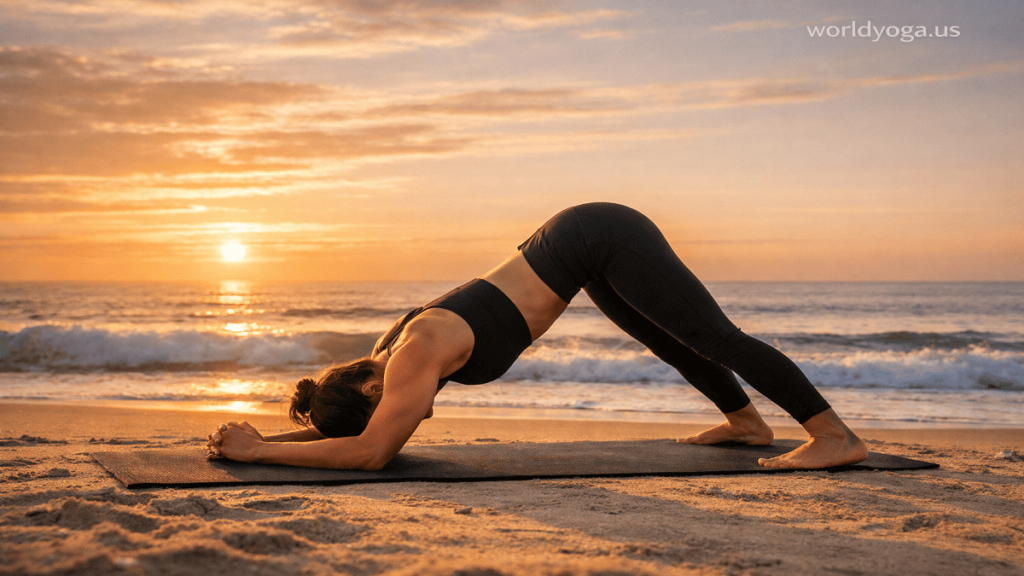
White Paper of Downward Dog: Forearms and Head on the Floor
Abstract
This white paper examines the forearm-supported variation of Downward-Facing Dog, commonly referred to as Dolphin Pose (Ardha Pincha Mayurasana). It analyzes biomechanical load distribution, neuromuscular engagement, functional benefits, and safety considerations. The aim is to provide a structured understanding of the pose as a preparatory inversion and full-body isometric strength posture within modern movement and yoga practice.
1. Introduction
Dolphin Pose is a forearm-weight-bearing inversion preparation posture derived from traditional yoga systems. Unlike standard Downward-Facing Dog, which loads the wrists, this variation shifts support to the forearms, increasing demand on shoulder stability and core control while reducing wrist stress.
It is widely used in yoga conditioning programs, rehabilitation-based movement training, and inversion preparation protocols.
2. Biomechanical Structure
2.1 Load Distribution Model
In Dolphin Pose, body weight is distributed across three primary points:
- Forearms (primary support base)
- Shoulders (load stabilizers)
- Feet (counterbalance and propulsion)
This creates an inverted kinetic chain where force transmission flows from lower body to upper body through a stabilized core.
2.2 Shoulder Complex Mechanics
The shoulder girdle operates in a closed-chain stabilization pattern:
- Scapular elevation prevents neck compression
- Serratus anterior maintains scapular adherence to ribcage
- Deltoids and rotator cuff muscles stabilize humeral positioning
This makes the pose a high-relevance exercise for shoulder endurance development.
2.3 Core Integration
The core acts as a central stabilizing unit:
- Transverse abdominis regulates intra-abdominal pressure
- Rectus abdominis resists spinal extension collapse
- Obliques maintain lateral balance
The system functions isometrically to prevent lumbar overload.
3. Musculoskeletal Engagement Profile
Primary Muscles
- Deltoids (anterior/medial)
- Trapezius (upper/middle)
- Serratus anterior
- Rectus abdominis
- Hamstrings
Secondary Muscles
- Forearm flexors/extensors
- Gluteus maximus
- Calves (gastrocnemius, soleus)
- Erector spinae (postural support)
This classification highlights Dolphin Pose as a compound isometric training posture rather than a passive stretch.
4. Functional Benefits
4.1 Strength Development
- Builds shoulder stability without wrist load
- Enhances scapular control under weight-bearing conditions
- Improves posterior chain endurance
4.2 Mobility Enhancement
- Lengthens hamstrings and calves under controlled load
- Encourages thoracic spine extension awareness
4.3 Inversion Readiness
- Trains head-down orientation tolerance
- Develops core-shoulder coordination required for headstand (Sirsasana) progression
5. Risk Profile and Safety Considerations
5.1 Primary Risk Zones
- Shoulder impingement due to collapsed scapular positioning
- Cervical compression from passive head loading
- Lumbar strain from loss of core engagement
5.2 Contraindications
- Uncontrolled hypertension
- Glaucoma or retinal pressure disorders
- Acute shoulder or neck injuries
5.3 Mitigation Strategies
- Maintain active scapular elevation
- Keep head non-weight-bearing
- Modify knee bend to reduce hamstring pull
- Use forearm supports if necessary
6. Methodological Application in Training
Dolphin Pose is most effective when integrated into progressive frameworks:
- Foundational mobility (Cat-Cow, Child’s Pose)
- Strength activation (Plank, Forearm Plank)
- Load transition (Downward Dog)
- Integrated isometric hold (Dolphin Pose)
- Recovery sequencing (Supine or seated rest)
This sequence supports safe neuromuscular adaptation.
7. Discussion
Dolphin Pose functions as a hybrid between strength training and mobility work. Its primary value lies in closed-chain shoulder conditioning and core stabilization under inversion-like loading conditions. Unlike dynamic exercises, it emphasizes sustained muscular engagement, making it relevant for both yoga practitioners and functional movement trainers.
Its biomechanical profile positions it as a preparatory gateway to advanced inversion work rather than an endpoint posture.
8. Conclusion
The forearm-supported Downward Dog variation is a high-value isometric conditioning posture that develops shoulder stability, core control, and posterior chain flexibility. When executed with correct alignment and progressive loading, it serves as a safe and effective preparatory tool for inversion-based practices. However, its benefits are contingent on strict adherence to scapular control and spinal neutrality principles.
References
- https://www.yogajournal.com/poses/dolphin-pose/
- https://www.verywellfit.com/how-to-do-dolphin-pose-3567220
- https://www.yogapedia.com/definition/6094/dolphin-pose-ardha-pincha-mayurasana
#Downward Dog: Forearms and Head on the Floor in Delhi
Industry Application of Downward Dog: Forearms and Head on the Floor
Overview
The forearm-supported Downward Dog variation, commonly known as Dolphin Pose (Ardha Pincha Mayurasana), has applications beyond traditional yoga practice. In modern industries such as fitness training, physiotherapy, sports conditioning, occupational wellness, and rehabilitation science, it is used as a structured movement pattern for developing shoulder stability, core control, and inversion readiness.
Rather than being treated as a purely spiritual or flexibility-based posture, it is increasingly analyzed as a functional closed-chain kinetic exercise.
1. Fitness and Strength & Conditioning Industry
In fitness programming, Dolphin Pose is used as a bodyweight strength-conditioning drill.
Applications:
- Shoulder endurance training without wrist load
- Core stabilization development for calisthenics athletes
- Progression tool toward advanced movements like handstands and forearm balances
- Active recovery exercise within mobility circuits
Why it is useful:
It replicates overhead stabilization demands in a low-equipment environment, making it valuable in gyms, home training, and group fitness classes.
2. Physiotherapy and Rehabilitation
In physiotherapy, the pose is often adapted (not always full expression) for controlled shoulder rehabilitation.
Applications:
- Scapular stabilization training (serratus anterior activation)
- Gradual loading of rotator cuff muscles
- Postural correction for rounded shoulders (kyphotic posture)
- Controlled reintroduction of weight-bearing through upper limbs
Clinical value:
Because it avoids wrist loading, it is sometimes preferred over plank-based progressions for patients with wrist sensitivity, while still challenging shoulder stability.
However, it is only used in modified or progressive forms under supervision, especially in early rehabilitation stages.
3. Sports Performance Training
Athletic conditioning programs use this pose as part of kinetic chain integration training.
Applications:
- Gymnastics and diving: inversion familiarity and shoulder strength
- Rock climbing: scapular endurance and grip-chain support (indirect transfer)
- Combat sports: core bracing and postural resilience
- Swimming: shoulder stability and overhead endurance
Performance benefit:
It improves isometric control under partial inversion, which translates into better body positioning in dynamic sports environments.
4. Occupational Health and Workplace Wellness
Corporate wellness programs and ergonomics-focused training sometimes integrate Dolphin Pose as part of mobility breaks.
Applications:
- Counteracting prolonged desk posture (forward head, rounded shoulders)
- Improving thoracic extension mobility
- Reducing musculoskeletal fatigue from sedentary work
- Supporting spinal decompression routines
Implementation format:
- Short-duration holds (10–30 seconds)
- Integrated into stretching breaks or yoga-at-desk programs
5. Yoga Industry and Teacher Training
In yoga education systems, Dolphin Pose is classified as a preparatory inversion posture.
Applications:
- Teaching shoulder stacking mechanics
- Building progression pathways toward Headstand (Sirsasana)
- Training breath control under load
- Developing alignment awareness under fatigue
It is often included in 200-hour and 300-hour yoga teacher training curricula as a foundational inversion-prep posture.
6. Emerging Applications in Movement Science
Modern movement research frames Dolphin Pose as:
- A closed-chain kinetic stabilization drill
- A model for studying scapular rhythm under load
- A safe entry point for inversion adaptation studies
It is also used in functional movement screening contexts to assess shoulder control and core integration.
7. Limitations in Industry Use
Despite wide applicability, limitations include:
- Not suitable for individuals with severe shoulder instability
- Requires correct alignment training to avoid neck strain
- Not a standalone strength solution (must be part of a system)
Conclusion
The forearm-supported Downward Dog (Dolphin Pose) has evolved from a traditional yoga posture into a multi-industry functional training tool. Its primary value lies in its ability to develop shoulder stability, core integration, and controlled inversion mechanics without equipment. Across fitness, rehabilitation, sports performance, and workplace wellness, it serves as a scalable, adaptable movement pattern for improving upper-body resilience and postural control.
References
- https://www.yogajournal.com/poses/dolphin-pose/
- https://www.verywellfit.com/how-to-do-dolphin-pose-3567220
- https://www.yogapedia.com/definition/6094/dolphin-pose-ardha-pincha-mayurasana
#Downward Dog: Forearms and Head on the Floor in Mumbai
Ask FAQs
What is the difference between Dolphin Pose and Downward-Facing Dog?
Dolphin Pose is a forearm-supported variation of Downward-Facing Dog. In Dolphin Pose, the weight is carried on the forearms instead of the hands, which reduces wrist strain and increases demand on the shoulders and core. Downward-Facing Dog uses the palms as the primary support base, while Dolphin Pose emphasizes shoulder stability and inversion preparation.
Is it normal for the head to touch the floor in this pose?
No, the head should not bear weight in this variation. The head may come closer to the floor depending on flexibility, but it should remain relaxed and “hanging” between the upper arms. Any pressure on the head usually indicates collapsed shoulders or incorrect alignment.
What muscles are most engaged in Dolphin Pose?
Dolphin Pose primarily engages the shoulders, upper back, and core. Key muscles include the deltoids, trapezius, serratus anterior, rectus abdominis, and hamstrings. The forearms also work isometrically to stabilize the posture, while the legs and glutes help support hip elevation.
Who should avoid practicing this pose?
Individuals with uncontrolled high blood pressure, glaucoma, recent shoulder injuries, or severe neck issues should avoid or modify this pose. Since it involves partial inversion and significant shoulder loading, it should be approached carefully or practiced under professional guidance if there are existing medical conditions.
What are the main benefits of practicing this variation regularly?
Regular practice improves shoulder strength, core stability, and hamstring flexibility. It also helps prepare the body for advanced inversions like headstand by building control in an upside-down position. Additionally, it supports better posture by strengthening the upper back and improving scapular stability.
Table of Contents
Disclaimer: This content is for educational purposes only and is not a substitute for professional medical or yoga instruction. Practice carefully and consult a qualified instructor if you have any injuries or health conditions.