
Dwi Hasta Bhujasana
Dwi Hasta Bhujasana is an advanced arm balance yoga posture where the entire body is lifted off the ground and supported only by the hands, with the legs extended forward and resting on the upper arms. The name comes from Sanskrit: “Dwi” (two), “Hasta” (hands), “Bhuja” (arms)—meaning Two-Hand Arm Balance Pose.
This pose is part of modern arm balance sequences and is commonly practiced in intermediate to advanced yoga styles such as Vinyasa and Ashtanga.
How Dwi Hasta Bhujasana is Performed (Brief Steps)
- Begin in a deep squat (Malasana).
- Slide both arms inside the legs from the front.
- Place the upper thighs on the backs of the upper arms.
- Place palms firmly on the ground behind the hips.
- Engage the core and lean forward to shift weight into the hands.
- Slowly lift both feet off the ground.
- Extend both legs forward, keeping them active and straight.
- Hold the balance with steady breathing.
Key Strength Requirements
- Strong wrists and forearms for full body support
- Powerful shoulders and triceps for lifting stability
- Deep core strength for controlled elevation
- Hip flexibility for compression and leg placement
Flexibility Requirements
- Hamstring flexibility for forward leg extension
- Hip opening for deep squat and arm threading
- Lower back mobility for controlled forward lean
Benefits of Dwi Hasta Bhujasana
- Builds upper body strength and endurance
- Strengthens core muscles intensely
- Improves balance and coordination
- Enhances hip mobility and flexibility
- Develops mental focus and stability under load
Common Mistakes
- Collapsing into the shoulders instead of lifting
- Not engaging the core before lifting feet
- Placing hands too far or too close together
- Weak thigh engagement on the arms
- Rushing the lift without balance setup
Precautions
Avoid this pose if you have:
- Wrist injuries
- Shoulder instability
- Lower back pain
Always warm up properly before attempting.
References
- Yoga Journal: https://www.yogajournal.com/poses/
- Yoga International: https://yogainternational.com/article/view/arm-balances
- Tummee Yoga Library: https://www.tummee.com/yoga-poses
- DoYouYoga: https://www.doyou.com
#Dwi Hasta Bhujasana in India
What is Dwi Hasta Bhujasana?
Dwi Hasta Bhujasana is an advanced arm balance yoga posture in which the entire body is lifted off the ground and supported only by the hands, while the legs are extended forward and rest on the upper arms. The name comes from Sanskrit: “Dwi” (two), “Hasta” (hands), “Bhuja” (arms)—meaning Two-Hand Arm Pose.
In this posture, the practitioner begins in a deep squat, threads both arms inside the legs, places the thighs on the upper arms, and shifts the body weight forward onto the hands. Once balanced, both feet lift off the ground, and the legs are extended forward in a controlled position.
This pose is commonly practiced in intermediate to advanced yoga systems such as Vinyasa and Ashtanga as part of arm balance progression training.
Key Physical Requirements
- Strong wrists, forearms, and shoulders for full body support
- Powerful core muscles for lifting and stabilization
- Good hip flexibility for deep squat and arm placement
- Hamstring flexibility for extending the legs forward
Primary Benefits
- Builds upper body and arm strength
- Strengthens deep core muscles
- Improves balance and body coordination
- Enhances hip and hamstring flexibility
- Develops focus, control, and mental stability
Preparatory Poses
To safely approach Dwi Hasta Bhujasana, practitioners often train with:
- Malasana (Garland Pose)
- Crow Pose (Bakasana)
- Plank and Chaturanga Dandasana
- Hip-opening poses like Lizard Pose
Precautions
This is an advanced posture and should be avoided or modified if there are:
- Wrist injuries
- Shoulder instability
- Lower back issues
Proper warm-up and gradual progression are essential.
References
- Yoga Journal – Arm Balance Guide: https://www.yogajournal.com/poses/
- Yoga International – Arm Balance Techniques: https://yogainternational.com/article/view/arm-balances
- Tummee Yoga Library: https://www.tummee.com/yoga-poses
- DoYouYoga: https://www.doyou.com
#Dwi Hasta Bhujasana in Maharashtra
How is this arm balance performed step by step?
1. Begin in a Deep Squat (Malasana)
Start with feet slightly wider than hip-width apart in a deep squat position. Keep heels either grounded or slightly lifted depending on flexibility. Maintain an upright spine.
2. Thread the Arms Through the Legs
Slide both arms inside the thighs from the front and move them toward the back of the body.
- Shoulders move between the thighs
- Arms pass fully through the legs
- Bend knees deeply to create space
3. Place Thighs on Upper Arms
Rest the upper thighs securely on the backs of the upper arms (near triceps area).
- Squeeze thighs inward for stability
- Keep knees active and engaged
- Ensure even contact on both arms
4. Position Hands on the Floor
Place palms flat on the ground behind the hips.
- Fingers point forward
- Hands shoulder-width apart
- Press evenly through all fingers for a stable base
5. Engage Core and Lean Forward
Activate the abdominal muscles strongly.
- Shift weight gradually from feet to hands
- Lean forward until wrists begin to carry most of the load
- Keep shoulders stable and lifted (avoid collapsing)
6. Lift the Feet Off the Ground
Once balance is stable:
- Slowly lift one foot, then the other
- Or lift both together if control is strong
- Keep thighs firmly pressing into arms
7. Extend the Legs Forward
After lifting:
- Straighten both legs forward
- Keep toes active and legs engaged
- Maintain core tension to avoid dropping
8. Hold the Pose
Maintain balance by:
- Engaging core continuously
- Pressing firmly through palms and fingers
- Keeping shoulders active
- Breathing slowly and steadily
Hold for a few seconds initially, increasing duration with practice.
9. Exit Safely
To release:
- Slowly bend knees
- Lower feet back to the ground
- Return to squat position
- Rest in Child’s Pose if needed
Key Alignment Tips
- Do not rush the lift phase
- Keep shoulders active, not collapsed
- Maintain strong thigh-to-arm contact
- Use controlled breathing throughout
Safety Note
This is an advanced arm balance. Avoid practicing if you have wrist, shoulder, or lower back injuries. Proper warm-up is essential.
References
- Yoga Journal – Arm Balance Practice: https://www.yogajournal.com/poses/
- Yoga International – Arm Balance Techniques: https://yogainternational.com/article/view/arm-balances
- Tummee Yoga Library: https://www.tummee.com/yoga-poses
- DoYouYoga – Crow & Arm Balance Progressions: https://www.doyou.com
#Dwi Hasta Bhujasana in Banglore

What strength and flexibility are required?
1. Upper Body Strength Requirements
The arms act as the primary support system, so strong upper-body conditioning is essential.
Key areas:
- Wrists – must تحمل full body weight in extension
- Forearms – provide grip stability and pressure control
- Shoulders (deltoids & rotator cuff) – stabilize and lift the body
- Triceps – maintain controlled elbow support
Without sufficient arm and shoulder strength, the body collapses backward or cannot lift off the ground.
2. Core Strength Requirements
Core strength is the main driver of lift and stability in this pose.
Key muscles:
- Rectus abdominis – lifts the torso upward
- Obliques – stabilize side-to-side balance
- Transverse abdominis – deep stabilizer for posture control
A weak core leads to sinking hips and inability to maintain balance.
3. Hip Flexibility Requirements
Hip mobility is critical for deep compression and arm placement.
Required flexibility:
- Hip flexors – allow deep squat and forward lean
- Hip adductors (inner thighs) – support arm compression
- Hip external rotation – helps position thighs on upper arms
Tight hips make it difficult to properly wrap and stabilize the arms.
4. Hamstring Flexibility
Since the legs extend forward in the final position:
- Hamstrings must allow controlled straight-leg extension
- Tight hamstrings may limit leg straightening and balance quality
5. Lower Back and Forward Fold Mobility
A functional forward fold is required to access proper arm placement.
- Ability to hinge from hips (not rounding excessively)
- Moderate spinal flexibility for controlled forward lean
6. Balance and Neuromuscular Control
Beyond strength and flexibility, the pose requires:
- Fine weight-shifting control
- Strong proprioception (body awareness)
- Coordination between breath, core, and arm engagement
This is what allows stable lift and sustained hold.
Summary
To perform Dwi Hasta Bhujasana successfully, you need:
Strength
- Strong wrists, shoulders, and triceps
- Powerful core for lift and stabilization
Flexibility
- Open hips for compression and arm placement
- Flexible hamstrings for leg extension
- Good forward fold mobility
References
- Yoga Journal – Arm Balance Foundations: https://www.yogajournal.com/poses/
- Yoga International – Arm Balance Anatomy: https://yogainternational.com/article/view/arm-balances
- Tummee Yoga Library: https://www.tummee.com/yoga-poses
- DoYouYoga – Crow & Arm Balance Guide: https://www.doyou.com
#Dwi Hasta Bhujasana in Chennai
What are the benefits of this pose?
1. Builds Strong Upper Body Strength
This pose heavily engages the arms and shoulders, making it highly effective for developing upper-body power.
- Strengthens wrists and forearms (load-bearing endurance)
- Builds shoulder stability and control
- Activates triceps for sustained support
This improves performance in other arm balances and inversions.
2. Develops Deep Core Strength
The core is the central lifting engine of this posture.
- Rectus abdominis lifts the torso
- Obliques stabilize side balance
- Deep core muscles maintain alignment
This results in improved functional strength and posture control.
3. Improves Balance and Coordination
Dwi Hasta Bhujasana enhances fine motor control and body awareness.
- Strengthens proprioception (body position awareness)
- Improves weight-shifting control in unstable positions
- Enhances coordination between upper and lower body
This translates into better balance in dynamic movement.
4. Enhances Hip and Lower Body Flexibility
The deep squat and arm threading position improve lower-body mobility.
- Opens hips and inner thighs
- Stretches hip flexors and adductors
- Improves hamstring flexibility through controlled extension
This reduces stiffness and increases range of motion.
5. Increases Mental Focus and Stability
This pose demands concentration and calm control.
- Encourages steady breathing under physical stress
- Builds mental resilience in challenging positions
- Enhances focus and body awareness
Practitioners develop confidence in managing instability.
6. Supports Functional Full-Body Integration
Unlike isolated exercises, this pose trains the body as one system.
- Connects core, upper body, and lower body
- Improves kinetic chain coordination
- Enhances movement efficiency
Useful for both yoga and athletic performance.
7. Prepares for Advanced Arm Balances
Dwi Hasta Bhujasana is a stepping stone toward:
- Tittibhasana (Firefly Pose)
- Eka Pada variations
- Handstand transitions
It builds essential strength and control for advanced progression.
Summary
Dwi Hasta Bhujasana provides:
- Stronger arms, shoulders, and core
- Improved hip and hamstring flexibility
- Better balance and coordination
- Enhanced focus and mental control
References
- Yoga Journal – Arm Balance Benefits: https://www.yogajournal.com/poses/
- Yoga International – Arm Balance Practice: https://yogainternational.com/article/view/arm-balances
- Tummee Yoga Library: https://www.tummee.com/yoga-poses
- DoYouYoga – Arm Balance Training: https://www.doyou.com
#Dwi Hasta Bhujasana in Delhi
What common mistakes should be avoided?
1. Rushing the Lift-Off
One of the most common errors is trying to lift the feet before stabilizing the base.
What goes wrong:
- Sudden loss of balance
- Falling backward or sideways
- No control during transition
Fix:
First establish strong thigh-to-arm contact, engage the core, then slowly shift weight forward before lifting.
2. Weak Core Engagement
A disengaged core is the main reason the pose fails.
What goes wrong:
- Hips drop too low
- Excess pressure on wrists
- Inability to hold lift
Fix:
Pull the navel inward and upward before lifting the feet and maintain engagement throughout.
3. Collapsing Shoulders
Allowing the shoulders to sink reduces stability and increases injury risk.
What goes wrong:
- Chest collapses forward
- Loss of arm support structure
- Wrist overload
Fix:
Actively push the floor away and keep shoulders lifted and stable.
4. Incorrect Hand Placement
Poor hand positioning affects balance and leverage.
What goes wrong:
- Hands too far apart or too close
- Uneven weight distribution
- Lack of finger engagement
Fix:
Place hands shoulder-width apart and press evenly through all fingers, especially index finger and thumb.
5. Weak Thigh Engagement on Arms
If the legs are not actively pressing into the arms, stability is lost.
What goes wrong:
- Slipping of thighs off arms
- Reduced compression support
- Instability during lift
Fix:
Actively squeeze thighs into the upper arms throughout the pose.
6. Overextending the Legs Too Early
Extending legs before balance is established causes collapse.
What goes wrong:
- Loss of control mid-air
- Difficulty maintaining lift
Fix:
First achieve stable lift, then gradually extend both legs forward.
7. Holding the Breath
Breath control is often neglected during effort.
What goes wrong:
- Increased tension
- Reduced coordination
- Faster fatigue
Fix:
Maintain slow, steady breathing to support balance and focus.
8. Ignoring Wrist Alignment
Poor wrist positioning can lead to strain or injury.
What goes wrong:
- Excess pressure on heel of palm
- Wrist discomfort or pain
Fix:
Distribute weight evenly across the entire palm and engage fingers actively.
Summary
To practice Dwi Hasta Bhujasana safely, avoid:
- Rushing the lift
- Weak core engagement
- Collapsed shoulders
- Poor hand and thigh alignment
- Breath holding
References
- Yoga Journal – Arm Balance Alignment: https://www.yogajournal.com/poses/
- Yoga International – Arm Balance Safety: https://yogainternational.com/article/view/arm-balances
- Tummee Yoga Library: https://www.tummee.com/yoga-poses
- DoYouYoga – Arm Balance Progressions: https://www.doyou.com
#Dwi Hasta Bhujasana in Kolkata
Case Study of Dwi Hasta Bhujasana
1. Introduction
Dwi Hasta Bhujasana is an advanced arm balance yoga posture characterized by full body suspension on the hands, with both legs extended forward and the thighs supported by the upper arms. This case study examines the pose from a biomechanical, physiological, and skill-development perspective, focusing on how practitioners progress, what limitations occur, and how adaptation develops over time.
2. Practitioner Profile (Study Model)
The typical subject analyzed in this case study:
- Intermediate-to-advanced yoga practitioner
- 2–5 years of consistent practice
- Familiar with Crow Pose (Bakasana) and basic arm balances
- Moderate hip flexibility and developing core strength
This profile represents a realistic transition stage into advanced compression-based arm balances.
3. Objective of the Pose
The primary goal of Dwi Hasta Bhujasana is to achieve:
- Full body lift supported only by the hands
- Stable compression of thighs on upper arms
- Controlled forward extension of both legs
Secondary goals include improved core integration, balance control, and neuromuscular coordination.
4. Biomechanical Analysis
4.1 Load Distribution
The body weight is distributed through:
- Hands and wrists (primary support system)
- Shoulders (stabilizing structure)
- Core musculature (dynamic lift generator)
This creates a closed kinetic chain system requiring simultaneous compression and lift.
4.2 Compression Mechanics
A key feature is thigh-to-arm contact:
- Inner thighs press against upper arms
- This generates frictional stability
- Reduces excessive reliance on arm strength
This compression acts as a structural support mechanism for balance.
4.3 Kinetic Chain Function
The movement is driven by:
- Lower body (compression setup)
- Core (lift and stabilization)
- Upper body (support and balance control)
This full-chain integration defines successful execution.
5. Skill Progression Observed
Phase 1: Mobility Preparation
- Deep squat (Malasana) conditioning
- Hip opening and forward fold training
- Arm threading drills
Phase 2: Structural Familiarization
- Thigh-to-arm placement practice
- Hand placement behind hips
- Partial weight transfer onto hands
Phase 3: Controlled Lift
- One-foot lift → both feet lift
- Core engagement becomes dominant stabilizer
- Balance instability is common
Phase 4: Full Expression
- Both legs extend forward
- Stable hold achieved for 3–15 seconds initially
- Breath control becomes critical for stability
6. Common Performance Barriers
Observed challenges include:
- Limited hip flexibility restricting arm compression
- Weak core engagement causing collapse
- Wrist fatigue under load
- Poor timing in weight transfer
- Fear response during lift-off phase
These factors are primary reasons for unsuccessful attempts.
7. Physiological Adaptations
With consistent practice (6–12 weeks typical adaptation period):
- Increased wrist and forearm endurance
- Improved shoulder stability under load
- Enhanced deep core activation efficiency
- Greater hip mobility in compression positions
- Better neuromuscular coordination
These reflect functional movement adaptation rather than isolated strength gains.
8. Psychological Factors
Mental components strongly influence performance:
- Fear of falling reduces lift efficiency
- Breath regulation improves balance stability
- Focus enhances timing of weight shift
- Confidence increases success rate over time
Mental adaptation is often as important as physical conditioning.
9. Conclusion
Dwi Hasta Bhujasana is a complex integrative movement requiring compression mechanics, upper-body strength, core stability, and precise neuromuscular coordination. Progression is achieved through structured stages of mobility, strength development, and controlled exposure to instability.
It serves as a foundational milestone for advanced arm balances such as Tittibhasana and other asymmetrical flying transitions.
10. References
- Yoga Journal – Arm Balance Foundations: https://www.yogajournal.com/poses/
- Yoga International – Movement Science in Yoga: https://yogainternational.com/article/view/arm-balances
- Tummee Yoga Library: https://www.tummee.com/yoga-poses
- DoYouYoga – Arm Balance Progressions: https://www.doyou.com
#Dwi Hasta Bhujasana in Hyderabad
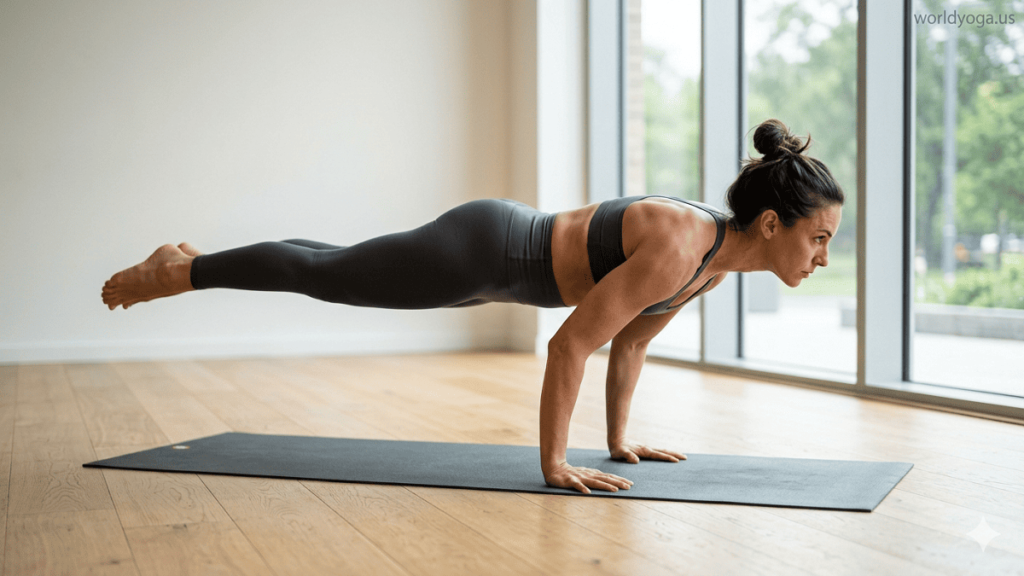
White Paper of Dwi Hasta Bhujasana
1. Executive Summary
Dwi Hasta Bhujasana is an advanced yoga arm balance characterized by full-body suspension supported on the hands while both legs extend forward and rest on the upper arms. This white paper analyzes the pose through biomechanical structure, physiological demand, progression methodology, and injury-risk considerations, highlighting its relevance in modern yoga education, functional movement training, and applied biomechanics.
The pose serves as a model for studying closed-chain kinetic loading, asymmetrical compression stability, and neuromuscular coordination under high demand.
2. Definition and Scope
Dwi Hasta Bhujasana is defined as:
- A bilateral arm balance posture
- Hands placed on the ground supporting full body weight
- Thighs resting on upper arms for compression support
- Legs extended forward in a controlled position
It belongs to the category of compression-based arm balances with forward extension mechanics.
3. Biomechanical Framework
3.1 Load Distribution System
The body weight is distributed across:
- Wrist complex (primary load-bearing interface)
- Shoulder girdle (stabilization and elevation system)
- Core musculature (dynamic lift and control center)
This creates a triangular force system requiring simultaneous stability and lift control.
3.2 Compression Mechanics
A defining feature is thigh-to-arm contact:
- Inner thighs press into upper arms
- This generates frictional stabilization
- Reduces dependency on maximal arm strength
Compression acts as a mechanical support structure, improving balance efficiency.
3.3 Kinetic Chain Integration
The pose functions through a full-body kinetic chain:
- Lower body → compression and positioning
- Core → lift generation and stabilization
- Upper body → load-bearing and balance control
This integrated system enables controlled suspension.
4. Physiological Demands
4.1 Muscular Activation
Key muscle groups include:
- Deltoids and triceps (upper-body support)
- Forearm flexors (wrist stability)
- Rectus abdominis and obliques (core lift and balance)
- Hip flexors and adductors (compression and positioning)
4.2 Energy System Usage
The pose primarily engages:
- Anaerobic alactic system (short-duration holds)
- High neuromuscular efficiency rather than endurance output
5. Skill Acquisition Model
Phase 1: Mobility Preparation
- Deep squat (Malasana) conditioning
- Hip opening drills
- Forward fold and hamstring activation
Phase 2: Structural Setup
- Arm threading through legs
- Thigh-to-arm placement training
- Controlled hand positioning behind hips
Phase 3: Controlled Lift Phase
- Partial weight transfer onto hands
- One-foot lift progressing to full lift
- Core-driven stabilization
Phase 4: Full Expression
- Both legs extended forward
- Stable hold maintained for 3–15 seconds initially
- Breath coordination critical for balance
6. Risk Assessment
6.1 Common Injury Risks
- Wrist overload due to improper weight distribution
- Shoulder strain from collapse or misalignment
- Lower back stress from weak core engagement
6.2 Contributing Factors
- Insufficient hip flexibility
- Weak core activation
- Premature lifting without stabilization
6.3 Mitigation Strategies
- Progressive loading protocols
- Wrist strengthening and conditioning
- Core activation sequencing (plank-based progressions)
7. Functional Benefits
Dwi Hasta Bhujasana contributes to:
- Upper-body strength development
- Deep core stability enhancement
- Improved hip and hamstring flexibility
- Enhanced proprioceptive control
- Neuromuscular coordination under asymmetrical load
These benefits extend into sports training, rehabilitation preparation, and functional fitness systems.
8. Pedagogical Applications
Within yoga education systems, Dwi Hasta Bhujasana is used as:
- An intermediate-to-advanced arm balance milestone
- A teaching tool for compression-based alignment mechanics
- A preparatory pose for advanced transitions like Tittibhasana
It is commonly included in 200–500 hour teacher training programs.
9. Conclusion
Dwi Hasta Bhujasana is a complex integrative posture that demonstrates the interaction of compression mechanics, core-driven lift, and upper-body stabilization under load. It is a key developmental movement in advanced yoga practice and serves as a functional model for studying human performance in closed kinetic chain systems.
10. References
- Yoga Journal – Arm Balance Foundations: https://www.yogajournal.com/poses/
- Yoga International – Movement Science in Yoga: https://yogainternational.com/article/view/arm-balances
- Tummee Yoga Library: https://www.tummee.com/yoga-poses
- DoYouYoga – Arm Balance Training: https://www.doyou.com
#Dwi Hasta Bhujasana in Ahemadabad
Industry Application of Dwi Hasta Bhujasana
1. Overview
Dwi Hasta Bhujasana is an advanced arm balance yoga posture where the entire body is supported on the hands while both legs extend forward and rest on the upper arms. Beyond yoga practice, its movement principles are widely applied in fitness training, physiotherapy, sports performance, biomechanics research, and movement education due to its high demand for strength, stability, and neuromuscular control.
2. Fitness and Strength Training Industry
In modern fitness systems, Dwi Hasta Bhujasana is used as a functional bodyweight strength benchmark movement.
Applications:
- Advanced calisthenics and bodyweight strength progression
- Core-to-upper-body integration training
- Movement systems like gymnastics conditioning and animal flow
Industry Value:
It helps trainers assess:
- Wrist and shoulder load tolerance under full bodyweight
- Core stability during forward extension
- Coordination between compression and lift mechanics
3. Physiotherapy and Rehabilitation
In rehabilitation contexts, the full pose is not directly used but its component movements are clinically valuable.
Applications:
- Wrist strengthening and load progression therapy
- Shoulder stability and scapular control retraining
- Core activation drills for postural correction
- Hip mobility restoration exercises
Clinical Approach:
Therapists often break the pose into stages:
- Supported deep squat with arm threading
- Partial weight-bearing hand positions
- Controlled core engagement holds
4. Sports Performance Industry
Athletes in various sports benefit from the movement mechanics of this pose.
Applications:
- Gymnastics (balance, floor control, transitions)
- Martial arts (core stability and body control)
- Climbing (upper-body endurance and grip strength)
- Parkour (landing control and spatial awareness)
Performance Benefits:
- Enhanced explosive stabilization ability
- Improved body awareness under instability
- Stronger asymmetrical load management skills
5. Yoga Education and Teacher Training
In structured yoga systems, Dwi Hasta Bhujasana is a key milestone arm balance pose.
Applications:
- Intermediate-to-advanced arm balance curriculum
- Teaching compression and alignment mechanics
- Transition preparation for Tittibhasana and flying sequences
Training Role:
Included in:
- 200-hour foundational yoga teacher training (intro level exposure)
- 300–500 hour advanced modules (technical mastery and sequencing)
6. Biomechanics and Movement Science Research
This pose is valuable for scientific study of human movement systems.
Applications:
- Analysis of closed-chain kinetic loading systems
- Study of proprioceptive adaptation under asymmetry
- Investigation of wrist and shoulder force distribution
Research Value:
It serves as a model for:
- Dynamic stability under compression
- Neuromuscular coordination in full-body suspension
- Asymmetrical balance control systems
7. Wellness and Mind-Body Training Industry
Dwi Hasta Bhujasana also contributes to psychological and wellness frameworks.
Applications:
- Focus and attention training under physical stress
- Breath regulation in challenging postures
- Confidence-building through progressive mastery
Mental Benefits:
- Improved stress tolerance
- Enhanced concentration and mindfulness
- Better emotional regulation under instability
8. Conclusion
Dwi Hasta Bhujasana is not only an advanced yoga posture but also a multi-industry movement model used in fitness, rehabilitation, sports performance, education, and scientific research. Its combination of compression mechanics and full-body coordination makes it highly valuable for studying and training strength, balance, and neuromuscular efficiency.
References
- Yoga Journal – Arm Balance Practice: https://www.yogajournal.com/poses/
- Yoga International – Movement Science: https://yogainternational.com/article/view/arm-balances
- Tummee Yoga Library: https://www.tummee.com/yoga-poses
- DoYouYoga – Arm Balance Training: https://www.doyou.com
#Dwi Hasta Bhujasana in Mumbai
Ask FAQs
What is Dwi Hasta Bhujasana?
Dwi Hasta Bhujasana is an advanced arm balance yoga pose where the body is lifted entirely off the ground using the hands, while the legs extend forward and rest on the upper arms. It requires strength, flexibility, and precise balance.
Who can practice Dwi Hasta Bhujasana?
This pose is suitable for intermediate to advanced practitioners who have developed:
Strong wrists and shoulders
Core stability
Good hip and hamstring flexibility
Beginners should first master basic arm balances like Crow Pose (Bakasana).
What are the benefits of this pose?
Dwi Hasta Bhujasana helps:
Build upper body and core strength
Improve balance and coordination
Increase hip and hamstring flexibility
Enhance focus and body awareness
What are common mistakes in this pose?
Common mistakes include:
Rushing the lift without proper balance
Weak core engagement
Collapsing shoulders
Incorrect hand placement
Not maintaining thigh-to-arm contact
How can I prepare for Dwi Hasta Bhujasana?
Preparation should include:
Practicing Malasana (deep squat) for hip mobility
Strengthening wrists with plank variations
Building core strength (Boat Pose, Plank)
Learning weight shifting before attempting full lift
Table of Contents
Disclaimer:
Dwi Hasta Bhujasana is an advanced yoga pose that requires adequate strength, flexibility, and balance. This information is for educational purposes only and should not replace guidance from a qualified yoga instructor. Individuals with wrist, shoulder, hip, or back injuries should avoid this pose or consult a healthcare professional before attempting it.