Hands Bound Garland Pose
The Hands Bound Garland Pose, commonly considered an advanced variation of the traditional yoga squat or Malasana, combines deep hip opening, spinal alignment, shoulder mobility, and mindful breathing into a single grounded posture. This pose is widely practiced in advanced yoga flows because it enhances flexibility while promoting stability, balance, and body awareness.
The traditional Garland Pose already offers significant benefits for the hips, groin, ankles, and lower back. However, the bound variation adds an extra layer of intensity by engaging the shoulders, chest, and upper back. As practitioners bind their hands behind the body or around the legs, the posture encourages a deeper opening of the hips while improving posture and concentration.
To enter the Hands Bound Garland Pose, begin in a low squat position with your feet slightly wider than hip-width apart. Keep the heels grounded and bring the palms together at the chest in a prayer position. Gradually twist the torso slightly and thread the arms around the legs to create the bind. The spine should remain elongated, the chest lifted, and the breathing steady throughout the posture.
One of the primary advantages of this pose is improved hip mobility. Sedentary lifestyles often lead to tight hips and restricted movement patterns, and deep squatting postures help counteract those effects. The pose also strengthens the pelvic floor muscles and supports better posture by activating the core and spinal stabilizers.
From a mental wellness perspective, the Hands Bound Garland Pose encourages mindfulness and grounding. Because the posture requires balance and controlled breathing, practitioners naturally shift their focus inward. Many yoga instructors recommend this pose during restorative or meditative sequences because it helps calm the nervous system and reduce stress levels.
Another notable benefit is enhanced digestion. Deep squatting positions are believed to stimulate abdominal organs and improve circulation in the pelvic region. According to resources from Yoga Journal, squatting poses can support digestive health and increase lower-body flexibility when practiced consistently.
Beginners should approach this pose gradually. Tight ankles, hips, or shoulders may make the bind difficult initially. Using yoga blocks beneath the heels or practicing the standard Garland Pose first can help build the necessary mobility over time. Guidance from certified yoga instructors or platforms such as Yoga International can provide safe modifications and alignment tips.
Consistency is key when practicing advanced yoga poses. Rather than forcing flexibility, practitioners should focus on steady progress, proper breathing, and alignment. Over time, the Hands Bound Garland Pose can become a powerful addition to a yoga practice, offering physical strength, emotional balance, and greater body awareness.
#Hands Bound Garland Pose in India
How is Hands Bound Garland Pose performed correctly?
The Hands Bound Garland Pose is an advanced yoga posture that combines the grounding benefits of the traditional Garland Pose (Malasana) with a deeper shoulder and hip opening through a binding technique. This pose requires flexibility, balance, and controlled breathing, making proper alignment essential for both effectiveness and safety.
To begin, stand with your feet slightly wider than hip-width apart and slowly lower your body into a deep squat position. Keep your heels firmly grounded on the mat. If your heels lift off the floor due to tight ankles, placing a folded blanket or yoga block beneath them can help maintain stability. Your knees should point outward in line with your toes, allowing the hips to open naturally.
Once in the squat, bring your palms together at the chest in a prayer position. Lengthen the spine by lifting the chest upward and relaxing the shoulders away from the ears. At this stage, engage your core muscles to support the lower back and maintain balance.
The binding movement begins by threading one arm around the outside of the corresponding leg. Continue wrapping the arm behind the back while bringing the opposite arm around to clasp the hands or wrists together. Depending on flexibility, some practitioners may hold fingers, wrists, or simply reach toward each other without fully connecting. The goal is not forcing the bind but maintaining proper alignment and steady breathing.
Throughout the pose, the spine should remain elongated rather than rounded. Many practitioners make the mistake of collapsing the chest forward while attempting the bind. Instead, focus on lifting through the sternum and broadening the collarbones. Deep, controlled breathing helps maintain stability and allows the muscles to relax gradually into the posture.
The pose should feel grounded and steady rather than strained. Weight should be evenly distributed through both feet, and the knees should remain stable without collapsing inward. Practicing in front of a mirror or under the supervision of a certified instructor can help improve posture and prevent misalignment.
Proper warm-up is important before attempting this pose. Hip openers, shoulder stretches, and ankle mobility exercises prepare the body for the deeper range of motion required. Yoga resources such as Yoga Journal provide detailed alignment guides and preparation sequences for advanced squat variations.
For beginners, modifications are recommended. Practicing the standard Garland Pose first helps build foundational flexibility and balance. Using props or straps can also make the bind more accessible without placing unnecessary stress on the joints. Tutorials from Yoga International and DoYogaWithMe offer step-by-step instructions and video demonstrations for safe practice.
#Hands Bound Garland Pose in Maharashtra
What is the proper alignment in this bound squat variation?
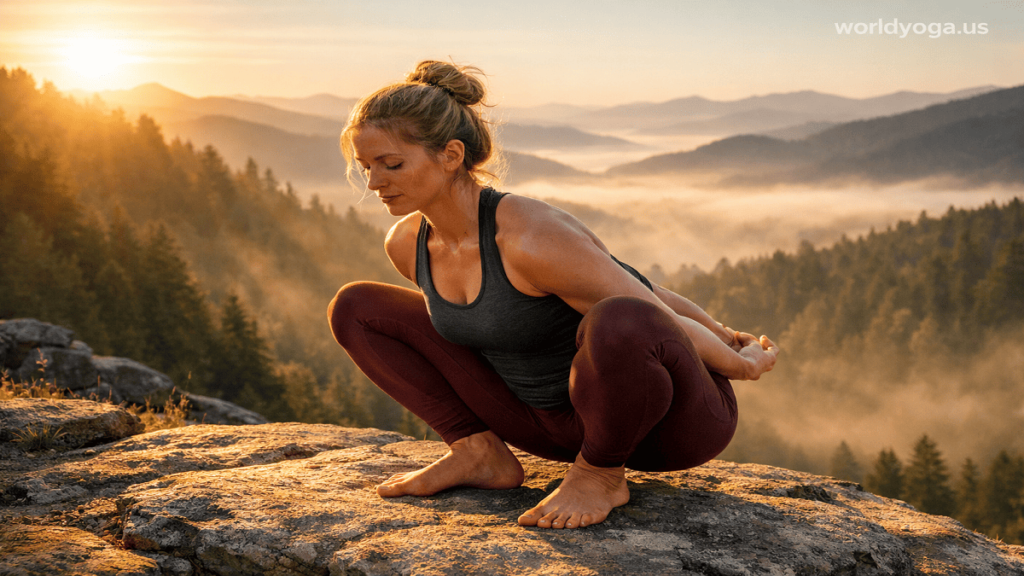
Proper alignment in the Hands Bound Garland Pose is essential for maintaining balance, protecting the joints, and maximizing the physical and mental benefits of the posture. As an advanced variation of the traditional Garland Pose (Malasana), this bound squat posture requires coordinated engagement of the hips, spine, shoulders, knees, and core muscles. Correct alignment not only improves the effectiveness of the pose but also helps prevent strain or injury during practice.
The foundation of the posture begins with foot placement. The feet should be positioned slightly wider than hip-width apart, with the toes naturally turned outward. Weight must be evenly distributed across both feet, especially through the heels and the outer edges of the soles. Grounding through the feet creates stability and allows the hips to lower safely into the squat.
The knees should track in the same direction as the toes throughout the pose. One of the most common alignment mistakes is allowing the knees to collapse inward, which can place unnecessary pressure on the joints. Keeping the knees open supports proper hip activation and protects the lower body from imbalance.
Spinal alignment is equally important in this variation. The spine should remain long and neutral rather than rounded forward. Practitioners should lift the chest gently while drawing the shoulders back and down. Maintaining an elongated spine prevents compression in the lower back and encourages better breathing mechanics during the pose.
The core muscles play a critical role in maintaining posture and balance. Engaging the abdominal muscles helps stabilize the torso and supports the lumbar spine. Without core engagement, the upper body may collapse forward, reducing the effectiveness of the bind and placing strain on the back.
In the bound position, the shoulders should remain relaxed rather than tense. The arms wrap around the legs while the hands or wrists clasp behind the body. The bind should feel controlled and comfortable, not forced. Flexibility develops gradually, so practitioners should avoid overstretching the shoulders or pulling aggressively into the bind. According to guidance from Yoga Journal, mindful alignment and steady breathing are key elements in safely practicing advanced yoga poses.
Breathing also influences alignment. Slow, deep breaths help maintain muscular control and relaxation throughout the posture. Holding the breath often leads to tension and instability, especially in deep squat variations. Controlled breathing encourages greater awareness of body positioning and movement.
For practitioners with limited ankle or hip mobility, modifications can improve alignment. Placing a folded blanket under the heels or practicing near a wall for balance can make the posture more accessible. Learning from certified instructors or online platforms such as Yoga International and DoYogaWithMe can also help refine technique and posture.
When aligned correctly, the Hands Bound Garland Pose enhances hip flexibility, strengthens the lower body, improves posture, and deepens body awareness. Consistent practice with attention to alignment allows practitioners to safely experience the full benefits of this grounded and challenging yoga posture.
#Hands Bound Garland Pose in Ahemadabad
Which muscles are engaged during the pose?
The Hands Bound Garland Pose is a powerful full-body yoga posture that engages multiple muscle groups simultaneously. As an advanced variation of the traditional Garland Pose (Malasana), it combines deep squatting mechanics with shoulder binding, requiring strength, flexibility, balance, and muscular control. Understanding which muscles are activated during the pose can help practitioners improve alignment, avoid injury, and deepen their practice effectively.
One of the primary muscle groups engaged in this pose is the lower body. The quadriceps, located at the front of the thighs, work continuously to stabilize the squat position and support body weight. At the same time, the hamstrings and gluteal muscles assist in maintaining balance and controlling hip movement. The glutes are especially active in stabilizing the pelvis and preventing the knees from collapsing inward.
The hip muscles also play a major role. Deep squatting requires activation and stretching of the hip flexors, adductors, and external rotators. These muscles help open the hips while maintaining mobility and control throughout the posture. Because many people experience tight hips from prolonged sitting, practicing this pose regularly can improve hip flexibility and joint function.
Core engagement is another essential component of the Hands Bound Garland Pose. The abdominal muscles, including the transverse abdominis and obliques, help stabilize the spine and support balance. A strong core prevents the torso from collapsing forward and helps maintain an upright chest position during the bind. According to Yoga Journal, core stability is crucial in advanced yoga poses because it supports both alignment and breath control.
The spinal muscles, particularly the erector spinae, are engaged to keep the back elongated and upright. Maintaining spinal extension in a deep squat posture strengthens postural muscles and improves body awareness. These muscles work together with the core to protect the lower back from unnecessary strain.
The upper body also becomes active during the binding phase. The shoulders, chest, and upper back muscles engage as the arms wrap around the legs and clasp behind the body. The deltoids, trapezius, rhomboids, and rotator cuff muscles help create stability and mobility in the shoulder joints. At the same time, the chest muscles gently stretch as the shoulders open.
Ankle and foot muscles are equally important but often overlooked. The calves, Achilles tendons, and small stabilizing muscles in the feet work continuously to maintain grounding and balance. Proper foot engagement helps distribute weight evenly and supports safe alignment throughout the pose.
Breathing muscles such as the diaphragm are also activated. Deep, controlled breathing supports muscular endurance and relaxation while improving concentration. Platforms like Yoga International and DoYogaWithMe emphasize the connection between breath and muscular engagement in advanced yoga practice.
When practiced consistently, the Hands Bound Garland Pose strengthens the lower body, improves core stability, enhances shoulder mobility, and develops overall body coordination. Its combination of strength and flexibility makes it a highly effective posture for building both physical resilience and mindful movement awareness.
#Hands Bound Garland Pose in Hyderabad
What preparatory poses are recommended?
The Hands Bound Garland Pose is an advanced yoga posture that requires a combination of hip mobility, ankle flexibility, spinal stability, shoulder openness, and core strength. Because the pose involves a deep squat with an arm bind, preparing the body properly is essential for safe and effective practice. Incorporating preparatory poses into a yoga sequence helps gradually open tight muscles, improve balance, and reduce the risk of strain or injury.
One of the most important preparatory poses is the traditional Garland Pose (Malasana). This foundational squat posture helps open the hips, stretch the ankles, and strengthen the lower body. Practicing Malasana regularly improves mobility in the groin and pelvis while developing the balance needed for the bound variation. According to Yoga Journal, deep squat postures are highly effective for improving flexibility and lower-body stability.
Another beneficial preparation is the Bound Angle Pose (Baddha Konasana). This seated hip opener stretches the inner thighs, groin, and hips, which are all heavily engaged during the Hands Bound Garland Pose. Maintaining an upright spine in this pose also encourages better postural awareness and pelvic alignment.
Pigeon Pose (Eka Pada Rajakapotasana) is frequently recommended to release tension in the hips and glutes. Tight hip muscles can make deep squatting difficult, so this posture helps create the flexibility needed for a more comfortable and stable bind. Practicing both sides evenly ensures balanced mobility throughout the pelvis.
Ankle flexibility is equally important in deep squat variations. Low Lunge Pose and Heel Stretch exercises can help increase ankle mobility and calf flexibility. Limited ankle movement often causes the heels to lift during squatting poses, affecting balance and alignment. Gentle ankle-opening exercises prepare the lower body for grounded positioning.
To prepare the shoulders and upper back for the bind, poses such as Cow Face Pose (Gomukhasana) and Reverse Prayer Pose are highly effective. These postures improve shoulder mobility, chest expansion, and arm flexibility, making it easier to wrap the arms around the legs without strain. Shoulder-opening movements also help maintain an upright chest during the pose.
Core activation poses are also essential. Plank Pose and Boat Pose (Navasana) strengthen the abdominal muscles and improve stability. Since the Hands Bound Garland Pose requires balance and spinal support, a strong core helps prevent the torso from collapsing forward.
Cat-Cow Pose is another useful warm-up movement because it improves spinal flexibility and body awareness. Coordinating movement with breath in Cat-Cow helps prepare the spine for maintaining length and neutrality during the squat.
For practitioners who struggle with balance or flexibility, supported squat variations using yoga blocks or a wall can build confidence and mobility gradually. Instructional resources from Yoga International and DoYogaWithMe provide detailed guidance on preparation techniques and safe progressions.
Consistent preparation allows the body to adapt naturally to the physical demands of the Hands Bound Garland Pose. By warming up the hips, ankles, shoulders, and core properly, practitioners can approach the posture with greater stability, comfort, and confidence while improving overall flexibility and body control.
#Hands Bound Garland Pose in Banglore
What are the benefits and precautions of this pose?
The Hands Bound Garland Pose is an advanced yoga posture that combines the grounding qualities of a deep squat with the intensity of a shoulder bind. This variation of the traditional Garland Pose (Malasana) offers a wide range of physical and mental benefits when practiced with proper alignment and control. However, because it requires significant flexibility and balance, practitioners should also understand the necessary precautions before attempting the pose.
One of the primary benefits of the Hands Bound Garland Pose is improved hip mobility. The deep squatting position stretches the hips, groin, and inner thighs, helping release tension that often develops from prolonged sitting or inactivity. Increased hip flexibility can improve posture, mobility, and overall lower-body movement patterns.
The pose also strengthens the lower body. The quadriceps, glutes, calves, and core muscles remain actively engaged to maintain balance and stability throughout the posture. Regular practice can enhance muscular endurance and improve body control. According to Yoga Journal, deep squat variations are beneficial for strengthening the legs while encouraging better joint mobility.
Another important benefit is spinal support and posture improvement. Maintaining an upright chest and elongated spine during the bind activates the postural muscles of the back and core. This helps counteract the rounded posture commonly associated with long hours of sitting or desk work.
The shoulder bind in this pose also increases upper-body flexibility. The shoulders, chest, and upper back gradually open as practitioners work toward a deeper bind. Improved shoulder mobility can support healthier movement patterns and reduce stiffness in the upper body.
From a mental and emotional perspective, the Hands Bound Garland Pose promotes mindfulness and concentration. The balance and coordination required in the posture encourage practitioners to focus on breathing and body awareness. Deep breathing during the pose can help calm the nervous system and reduce stress levels. Platforms such as Yoga International emphasize the importance of mindful breathing in improving both mental clarity and physical stability during advanced yoga practice.
Despite its many benefits, certain precautions should be considered. Individuals with knee injuries, ankle instability, hip problems, or lower back pain should approach this pose carefully or avoid it altogether unless guided by a qualified yoga instructor. Deep squatting can place pressure on sensitive joints if alignment is incorrect.
Forcing the bind is another common mistake. Flexibility develops gradually, and aggressively pulling the shoulders or spine into position may lead to strain or injury. Practitioners should focus on steady progress rather than achieving the full bind immediately.
Pregnant individuals or those recovering from surgery should consult a healthcare professional before practicing advanced squat variations. Using props such as yoga blocks or blankets can help reduce strain and improve comfort during the posture.
Proper warm-up is essential before attempting the Hands Bound Garland Pose. Preparing the hips, ankles, shoulders, and core with mobility exercises and foundational yoga poses creates safer movement patterns and improves overall performance. Additional instructional guidance can be found through DoYogaWithMe and other certified yoga education platforms.
#Hands Bound Garland Pose in Kolkata
Case Study of Hands Bound Garland Pose
The Hands Bound Garland Pose is an advanced yoga posture that combines a deep squat with a shoulder-binding movement, requiring flexibility, strength, balance, and concentration. This case study explores how consistent practice of the pose can influence physical mobility, posture, muscular engagement, and mental focus over time. The findings are based on observations commonly reported by yoga practitioners and instructors in structured yoga training environments.
Background of the Practitioner
A 34-year-old office professional with a sedentary lifestyle began practicing yoga to address lower back discomfort, hip tightness, and poor posture caused by prolonged sitting. Although physically active at a moderate level, the individual had limited hip flexibility and difficulty performing deep squat-based yoga poses.
The practitioner joined a guided yoga program focused on mobility, flexibility, and mindfulness. The Hands Bound Garland Pose was introduced gradually after six weeks of foundational yoga practice that included hip openers, ankle mobility drills, and core strengthening exercises.
Initial Challenges
During the early stages of practice, the individual experienced several limitations:
- Tight hips and restricted ankle mobility
- Difficulty maintaining heels on the floor
- Rounded lower back during squatting
- Limited shoulder flexibility preventing a full bind
- Balance instability during deep squat transitions
To address these issues, preparatory poses such as Garland Pose (Malasana), Bound Angle Pose, Pigeon Pose, and shoulder-opening stretches were incorporated into the routine. According to Yoga Journal, gradual mobility training is essential before attempting advanced bound postures.
Practice Routine
The practitioner performed a structured yoga sequence four times per week for three months. Sessions included:
- Hip-opening exercises
- Core-strengthening poses
- Shoulder mobility drills
- Deep breathing techniques
- Progressive squat variations
The Hands Bound Garland Pose was practiced toward the end of each session after adequate warm-up. Modifications such as yoga blocks under the heels were initially used to improve alignment and stability.
Results After Three Months
Significant improvements were observed over the course of consistent practice:
Improved Hip and Ankle Mobility
The practitioner gained better flexibility in the hips and ankles, allowing deeper squatting without discomfort. Heels remained grounded more consistently, improving balance and posture.
Enhanced Core Strength and Posture
Core activation during the pose contributed to stronger abdominal and lower back muscles. The practitioner reported reduced lower back stiffness and improved sitting posture during work hours.
Increased Shoulder Flexibility
Over time, the shoulder bind became more accessible as chest and upper-back mobility improved. This also reduced tension in the neck and shoulders.
Better Mental Focus
The practitioner noted improved concentration and reduced stress levels during yoga sessions. Controlled breathing and mindful movement created a calming effect, supporting emotional balance and relaxation.
Key Observations
The case study demonstrates that the Hands Bound Garland Pose can offer both physical and mental benefits when practiced progressively and with proper alignment. However, success depended heavily on consistency, patience, and preparation rather than forcing flexibility.
Educational platforms such as Yoga International and DoYogaWithMe also emphasize gradual progression and mindful practice for advanced yoga postures.
Conclusion
This case study highlights how the Hands Bound Garland Pose can improve flexibility, posture, muscular strength, and mental focus when integrated into a structured yoga routine. With regular practice and proper guidance, practitioners can safely progress toward this advanced posture while developing greater body awareness and overall well-being.
#Hands Bound Garland Pose in Pune
White Paper of Hands Bound Garland Pose
The Hands Bound Garland Pose is an advanced yoga posture derived from the traditional Garland Pose (Malasana). This posture integrates deep squatting mechanics with upper-body binding techniques, requiring a combination of flexibility, muscular strength, balance, and controlled breathing. As yoga continues to gain recognition for its physical and mental health benefits, advanced poses such as the Hands Bound Garland Pose are increasingly studied for their role in mobility improvement, postural correction, and mindfulness development.
This white paper examines the biomechanical, physiological, and psychological aspects of the Hands Bound Garland Pose while highlighting its benefits, challenges, and best practices for safe implementation in yoga training programs.
Overview of the Pose
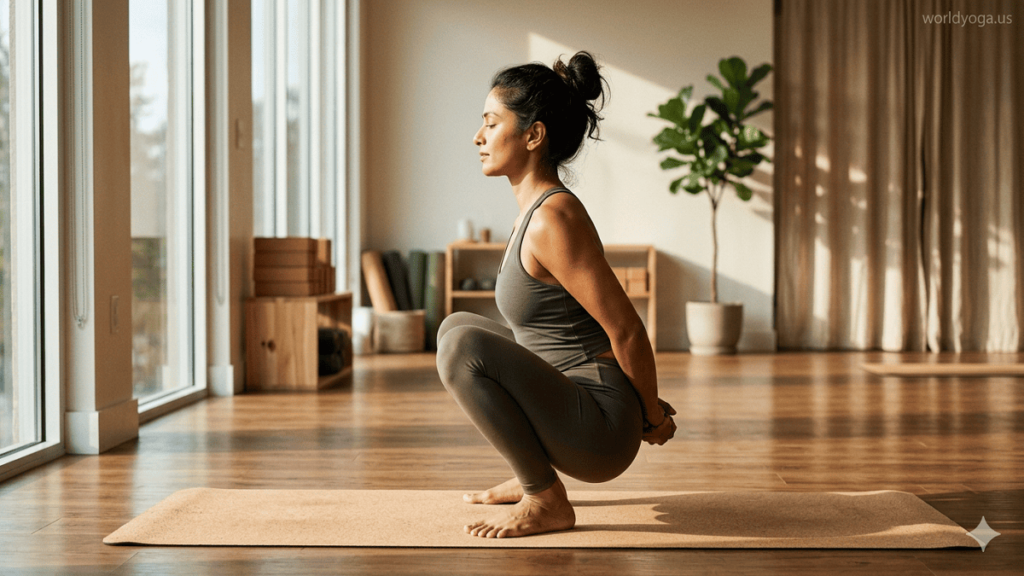
The Hands Bound Garland Pose begins with a deep squat position where the feet are placed slightly wider than hip-width apart. From this position, the practitioner wraps the arms around the legs and creates a binding action behind the body. Proper spinal alignment, grounded heels, and controlled breathing are essential components of the posture.
The pose combines elements of:
- Hip opening
- Lower-body strengthening
- Core stabilization
- Shoulder mobility
- Postural alignment
- Breath awareness
According to Yoga Journal, deep squat postures support both mobility and stability when practiced consistently with proper alignment.
Biomechanical Analysis
Lower Body Engagement
The pose heavily activates the quadriceps, gluteal muscles, hamstrings, calves, and ankle stabilizers. These muscle groups work together to maintain balance and structural support during the deep squat.
Core Stabilization
The abdominal and oblique muscles engage continuously to support spinal integrity and maintain an upright torso. Core activation helps prevent excessive rounding of the lower back, reducing strain on the lumbar region.
Shoulder and Upper Back Mobility
The binding movement increases flexibility in the shoulders, chest, and upper back. Over time, regular practice may improve range of motion and reduce upper-body stiffness associated with sedentary behavior.
Joint Mobility
The posture promotes mobility in the hips, knees, ankles, and thoracic spine. Controlled movement through these joints contributes to improved functional movement patterns and postural efficiency.
Physiological Benefits
Research on yoga-based mobility practices suggests that deep squat postures can improve circulation, muscular endurance, and flexibility. The Hands Bound Garland Pose may contribute to:
- Improved hip flexibility
- Enhanced lower-body strength
- Better posture and spinal alignment
- Increased body awareness
- Improved breathing efficiency
- Stress reduction through mindful movement
Resources from Yoga International indicate that advanced yoga postures also support nervous system regulation when combined with diaphragmatic breathing techniques.
Psychological and Mindfulness Impact
The Hands Bound Garland Pose requires concentration, patience, and breath control. Practitioners often report improved focus, emotional balance, and reduced stress levels during regular yoga practice. The pose encourages mindfulness by requiring awareness of alignment, stability, and muscular engagement simultaneously.
The deep grounding nature of the squat position may also create a calming effect on the nervous system, supporting relaxation and mental clarity.
Risks and Precautions
Despite its benefits, the Hands Bound Garland Pose is not suitable for all practitioners. Individuals with the following conditions should exercise caution:
- Knee injuries
- Hip instability
- Lower back pain
- Ankle mobility limitations
- Shoulder injuries
Forcing the bind or compromising spinal alignment can increase the risk of strain. Preparatory poses and gradual progression are strongly recommended before attempting the full posture.
Instructional platforms such as DoYogaWithMe recommend using props and guided instruction to improve safety and accessibility.
Conclusion
The Hands Bound Garland Pose represents a comprehensive yoga posture that integrates mobility, strength, flexibility, and mindfulness into a single movement pattern. When practiced with proper preparation and alignment, the pose can improve physical performance, postural health, and mental focus. As interest in functional movement and holistic wellness continues to grow, advanced yoga postures such as the Hands Bound Garland Pose remain valuable tools for developing long-term physical and psychological well-being.
#Hands Bound Garland Pose in Delhi
Industry Application of Hands Bound Garland Pose
The Hands Bound Garland Pose, an advanced variation of the traditional Garland Pose (Malasana), has evolved beyond personal yoga practice and is increasingly being integrated into multiple industries focused on health, wellness, rehabilitation, fitness, and workplace productivity. Its combination of mobility training, postural correction, flexibility enhancement, and mindfulness makes it relevant in both therapeutic and performance-oriented environments.
This article explores the growing industry applications of the Hands Bound Garland Pose and its role in modern wellness systems.
Application in the Fitness Industry
The global fitness industry has embraced yoga as an essential component of functional training and recovery programs. The Hands Bound Garland Pose is often incorporated into mobility-focused workouts because it improves hip flexibility, ankle stability, and core engagement.
Functional fitness trainers use this pose to help clients develop deeper squat mechanics, which are critical for exercises such as deadlifts, lunges, and athletic movement patterns. The deep squat position strengthens the lower body while improving balance and joint mobility.
Fitness organizations and training platforms such as Yoga Journal highlight squat-based yoga postures as effective tools for enhancing flexibility and preventing movement restrictions caused by sedentary lifestyles.
Role in Physical Therapy and Rehabilitation
Physical therapists and rehabilitation specialists increasingly incorporate yoga-inspired mobility exercises into treatment programs. The Hands Bound Garland Pose can support rehabilitation by improving joint mobility, muscular flexibility, and postural alignment when modified appropriately.
The pose may benefit individuals recovering from mild postural imbalances, lower back stiffness, or hip tightness caused by prolonged sitting. Controlled squatting movements also encourage better pelvic alignment and spinal stabilization.
However, rehabilitation professionals typically introduce preparatory variations before advanced binds are attempted. Safe progression and supervision are essential, particularly for individuals with knee, ankle, or shoulder injuries.
Corporate Wellness Programs
Modern workplaces are experiencing rising levels of posture-related discomfort, stress, and reduced mobility due to long hours of desk work. As a result, many corporate wellness programs now integrate yoga sessions to improve employee well-being and productivity.
The Hands Bound Garland Pose is often included in advanced workplace yoga programs because it targets areas commonly affected by sedentary behavior, including the hips, lower back, shoulders, and spine. Deep breathing techniques associated with the pose may also help reduce stress and improve concentration.
Organizations investing in employee wellness initiatives frequently partner with yoga instructors and digital wellness platforms such as Yoga International to provide guided mobility and mindfulness training.
Use in Sports Performance Training
Athletes and sports performance coaches use yoga postures to improve flexibility, balance, and recovery. The Hands Bound Garland Pose supports athletic conditioning by increasing hip mobility and lower-body stability, both of which are essential for running, jumping, and agility-based sports.
Sports requiring explosive movement patterns often benefit from improved squat depth and pelvic mobility. The pose also enhances body awareness and breathing control, which can support injury prevention and recovery strategies.
Digital Wellness and Online Yoga Platforms
The rise of digital fitness and wellness platforms has expanded access to advanced yoga training worldwide. Online instructors and streaming services now offer guided tutorials and mobility programs featuring postures like the Hands Bound Garland Pose.
Platforms such as DoYogaWithMe and Gaia Yoga Practices provide instructional content focused on flexibility, posture correction, and mindfulness training for both beginners and advanced practitioners.
Conclusion
The Hands Bound Garland Pose has become increasingly valuable across industries related to wellness, rehabilitation, fitness, sports performance, and workplace health. Its ability to improve mobility, posture, muscular engagement, and mental focus makes it a versatile movement practice with broad professional applications. As organizations continue prioritizing holistic health and functional movement, advanced yoga postures like the Hands Bound Garland Pose are expected to remain an important part of modern wellness strategies.
#Hands Bound Garland Pose in Mumbai
Ask FAQs
What is the Hands Bound Garland Pose?
The Hands Bound Garland Pose is an advanced yoga posture based on the traditional Garland Pose (Malasana). It combines a deep squat with a shoulder-binding movement, helping improve flexibility, balance, posture, and body awareness.
Is Hands Bound Garland Pose suitable for beginners?
This pose is generally recommended for intermediate or advanced practitioners because it requires hip mobility, ankle flexibility, and shoulder openness. Beginners should first practice foundational poses such as Garland Pose and hip-opening stretches before attempting the bound variation.
What are the main benefits of this pose?
The Hands Bound Garland Pose helps improve hip flexibility, strengthen the lower body, enhance spinal alignment, increase shoulder mobility, and support mindfulness through controlled breathing and concentration.
Which muscles are activated during the pose?
The pose primarily engages the quadriceps, glutes, hamstrings, core muscles, calves, and spinal stabilizers. The shoulders, chest, and upper back also become active during the binding movement.
Are there any precautions to consider before practicing this pose?
Yes. Individuals with knee injuries, hip problems, lower back pain, ankle instability, or shoulder issues should practice cautiously or seek guidance from a qualified yoga instructor. Proper warm-up, gradual progression, and correct alignment are essential for safe practice.
Table of Contents
Disclaimer:
The information provided in this content is for educational and informational purposes only and should not be considered medical or professional health advice. Always consult a qualified healthcare provider or certified yoga instructor before attempting advanced yoga poses, especially if you have existing injuries or medical conditions.