
Kuntasana
Kuntasana is an advanced yoga posture that emphasizes balance, flexibility, strength, and deep body awareness. Known for its dynamic structure and challenging alignment, the pose requires a combination of core stability, hip mobility, muscular control, and focused concentration. Practiced primarily in advanced Hatha Yoga and Vinyasa Yoga sequences, Kuntasana is valued for its ability to improve coordination, endurance, and mindful movement.
The name “Kuntasana” is derived from Sanskrit terminology traditionally associated with focused positioning and controlled posture work in yoga practice. Like many advanced asanas, Kuntasana combines physical discipline with mental concentration, encouraging practitioners to maintain steady breathing and body awareness while holding the posture.
This pose engages multiple muscle groups simultaneously, including the core, shoulders, hips, legs, and spinal stabilizers. As a result, Kuntasana helps build functional strength and flexibility while improving balance and posture alignment. The posture also enhances neuromuscular coordination by training the body to maintain stability during complex movement patterns.
Because Kuntasana requires advanced mobility and body control, practitioners are generally encouraged to prepare with foundational yoga poses that strengthen the hips, shoulders, and abdominal muscles. Preparatory poses such as lunges, hip openers, arm balances, and core-strengthening exercises can help improve stability and reduce the risk of strain while learning the posture.
In addition to its physical benefits, Kuntasana supports mental focus and mindfulness. The balancing and stabilizing elements of the pose require concentration and breath control, helping practitioners develop patience, discipline, and greater mind-body connection during yoga practice.
#Kuntasana in India
How is Kuntasana performed correctly?
Kuntasana is an advanced yoga posture that combines flexibility, balance, strength, and body control. The pose requires precise alignment, steady breathing, and strong muscular engagement to maintain stability and avoid strain. Because Kuntasana places significant demand on the hips, core, shoulders, and legs, practitioners should approach the posture gradually with proper preparation and awareness.
Correct performance of Kuntasana depends on maintaining balance between mobility and strength. Practicing foundational yoga poses beforehand can help improve flexibility, coordination, and confidence before attempting the full variation.
Step-by-Step Guide to Perform Kuntasana
Begin by warming up the hips, shoulders, hamstrings, and core muscles through preparatory yoga poses and mobility exercises. Dynamic stretches and balancing postures help prepare the body for the deeper engagement required in Kuntasana.
Start in a stable standing or seated yoga position, depending on the variation being practiced. Slowly shift the body into the posture while maintaining controlled breathing and spinal alignment. Engage the abdominal muscles to stabilize the torso and support balance throughout the movement.
As you move deeper into the pose, maintain steady pressure through the supporting limbs and avoid collapsing into the joints. The shoulders should remain active and stable, while the chest stays lifted and the spine elongated.
The hips should remain balanced and aligned to prevent unnecessary strain on the lower back. Keep the legs actively engaged to maintain posture control and muscular stability.
Once the posture is established, maintain slow and controlled breathing. Focus the gaze, or drishti, on a fixed point to improve balance and concentration. Hold the posture only as long as alignment and breathing remain stable and comfortable.
To exit the pose, release slowly with control rather than dropping out of the position abruptly. Gentle counterposes and stretching afterward can help relax the muscles and restore balance in the body.
Important Alignment Tips
Proper alignment is essential for practicing Kuntasana safely and effectively. The spine should remain lengthened rather than compressed, and the core muscles should stay active to support the lower back.
The shoulders should remain away from the ears to avoid tension in the neck and upper body. Weight distribution must remain balanced across the supporting limbs to improve stability and reduce joint stress.
Practitioners should avoid forcing flexibility or attempting deeper variations before developing adequate mobility and strength.
Breathing During the Pose
Controlled breathing plays an important role in maintaining balance and muscular efficiency during Kuntasana. Smooth inhalations help lengthen the spine and expand the chest, while steady exhalations support stability and relaxation.
Holding the breath can create unnecessary tension and reduce balance control, so rhythmic breathing should remain consistent throughout the practice.
Common Mistakes to Avoid
One common mistake is rushing into the posture without sufficient warm-up or preparation. Tight hips, weak core muscles, or unstable shoulders can compromise alignment and increase injury risk.
Another frequent issue is collapsing into the lower back instead of engaging the core muscles. Practitioners should also avoid placing excessive pressure on the joints or sacrificing alignment to achieve a deeper expression of the pose.
Using yoga props or practicing under the supervision of a qualified yoga instructor can help improve technique and posture awareness.
Conclusion
Kuntasana is a challenging yet rewarding yoga posture that develops flexibility, strength, balance, and concentration. Performing the pose correctly requires gradual progression, proper alignment, steady breathing, and mindful muscular engagement.
#Kuntasana in Maharashtra
What is the proper alignment in this dynamic balancing posture?
Proper alignment is essential for safely and effectively practicing Kuntasana, a dynamic balancing yoga posture that requires strength, flexibility, coordination, and concentration. Because the pose combines stability with controlled movement, maintaining correct body positioning helps improve balance, muscular engagement, and posture control while reducing the risk of injury.
Kuntasana challenges multiple areas of the body simultaneously, including the core, hips, shoulders, spine, and legs. Proper alignment ensures that body weight is distributed evenly and that the joints remain protected during the posture.
Spinal Alignment
The spine should remain elongated and neutral throughout Kuntasana. Practitioners should avoid excessive rounding or over-arching of the lower back, as this can create compression and reduce stability.
Engaging the abdominal muscles helps support the lumbar spine and maintain postural control. Lengthening upward through the crown of the head encourages proper spinal extension and improves overall balance.
A stable spine also allows smoother breathing and more efficient muscular engagement during the posture.
Core Engagement
Core activation is one of the most important alignment principles in Kuntasana. The abdominal muscles stabilize the torso, support balance, and protect the lower back from unnecessary strain.
The transverse abdominis and oblique muscles should remain gently engaged throughout the posture to maintain body control and improve equilibrium. A strong core also helps coordinate movement between the upper and lower body.
Without proper core engagement, practitioners may collapse into the spine or lose stability during balancing transitions.
Shoulder and Upper-Body Position
The shoulders should remain active, stable, and relaxed away from the ears. Collapsing into the shoulders can create tension in the neck and reduce upper-body support.
If the hands are weight-bearing in the variation being practiced, the weight should be distributed evenly across the palms and fingers. The shoulder blades should remain engaged and supported to create upper-body stability.
The chest should stay open and lifted rather than compressed, allowing better posture and breathing capacity.
Hip and Pelvic Alignment
The hips should remain balanced and properly aligned with the center of gravity. Uneven hip positioning can affect balance and place strain on the lower back or knees.
The pelvis should remain stable and supported by active engagement of the gluteal and core muscles. Practitioners should avoid twisting or dropping one side of the pelvis unless intentionally required in a specific variation of the pose.
Hip mobility is important, but flexibility should never compromise structural alignment or stability.
Leg and Foot Positioning
The legs should remain active and engaged to maintain balance and muscular control. The quadriceps, hamstrings, and inner thigh muscles help stabilize the posture and support proper alignment.
If the pose includes a standing balance component, the supporting foot should press firmly into the floor with even weight distribution through the heel and forefoot. Engaging the arches of the feet can improve stability and reduce unnecessary joint pressure.
The knees should remain aligned with the direction of the toes to protect the joints and maintain efficient movement patterns.
Breathing and Gaze Control
Steady breathing is essential for maintaining alignment and concentration in Kuntasana. Controlled inhalations help lengthen the spine and expand the chest, while smooth exhalations support balance and muscular stability.
A fixed gaze point, or drishti, improves focus and equilibrium during the posture. Looking at a stable point helps reduce unnecessary movement and enhances body awareness.
Common Alignment Mistakes
Common alignment errors include collapsing into the lower back, overloading the shoulders, holding the breath, and losing hip stability. Rushing into advanced variations without sufficient preparation can also compromise posture quality and increase injury risk.
Practitioners should prioritize stability and controlled movement over achieving the deepest version of the pose.
Conclusion
Proper alignment in Kuntasana depends on spinal stability, active core engagement, balanced hips, controlled shoulder positioning, and steady breathing. By focusing on correct technique and mindful movement, practitioners can safely develop greater strength, flexibility, balance, and body awareness through this advanced dynamic balancing posture.
#Kuntasana in Ahemadabad
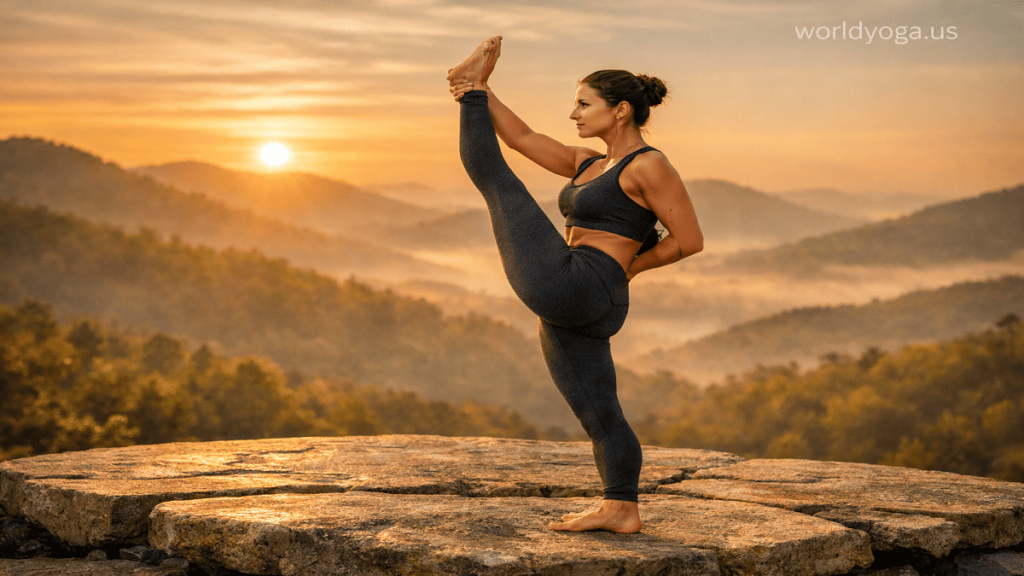
Which muscles are engaged during the pose?
Kuntasana is an advanced dynamic balancing yoga posture that requires coordinated muscular engagement throughout the entire body. The pose combines balance, flexibility, stability, and strength, making it a highly effective posture for developing overall body control and functional movement. Because Kuntasana demands both static stability and controlled movement, multiple muscle groups work simultaneously to support alignment and maintain equilibrium.
Understanding which muscles are engaged during Kuntasana helps practitioners improve technique, strengthen weak areas, and practice the posture more safely and efficiently.
Core Muscle Engagement
The core muscles play a central role in maintaining balance and spinal stability during Kuntasana. The rectus abdominis, transverse abdominis, and oblique muscles remain continuously active to stabilize the torso and protect the lower back.
The transverse abdominis acts as a deep stabilizing muscle that supports posture and balance, while the obliques assist with rotational control and body coordination. Strong core engagement helps maintain alignment and prevents collapsing into the spine during the posture.
The lower back muscles, including the erector spinae, also contribute to spinal support and upright posture control.
Hip and Pelvic Muscles
The hips and pelvis require significant muscular activation to maintain balance and proper alignment in Kuntasana. The gluteus maximus, gluteus medius, and gluteus minimus help stabilize the pelvis and support controlled movement.
The hip flexors, including the iliopsoas muscles, assist in lifting and positioning the legs depending on the variation of the pose. The adductor muscles of the inner thighs help maintain balance and stabilize the legs during transitions.
These muscles work together to support pelvic stability and prevent unnecessary shifting or imbalance.
Leg Muscle Activation
The quadriceps and hamstrings remain strongly engaged to stabilize the knees and support the lower body during balancing movements. The quadriceps help maintain leg extension and alignment, while the hamstrings contribute to hip control and lower-body stability.
The calf muscles, including the gastrocnemius and soleus, assist with balance and ankle stabilization, especially in standing or weight-bearing variations of the posture.
The feet and smaller stabilizing muscles around the ankles also remain active to improve equilibrium and weight distribution.
Shoulder and Upper-Body Engagement
The shoulders and upper body provide stability and support, particularly if the variation of Kuntasana involves arm balancing or weight-bearing through the hands.
The deltoids, trapezius, rhomboids, and rotator cuff muscles stabilize the shoulders and upper back. The chest muscles, including the pectorals, assist with upper-body control and posture support.
If the hands are placed on the floor, the forearm muscles and wrist stabilizers become highly active to maintain balance and distribute body weight safely.
Spinal Stabilizers and Postural Muscles
The spinal stabilizing muscles remain active throughout the posture to maintain alignment and posture control. The erector spinae support spinal extension and upright positioning, while smaller stabilizing muscles around the spine contribute to balance and coordination.
Maintaining an elongated spine requires continuous muscular support from both the core and back muscles.
Importance of Full-Body Coordination
One of the defining characteristics of Kuntasana is the integration of multiple muscle groups into a coordinated movement pattern. Rather than isolating a single area of the body, the posture trains the muscles to work together efficiently.
This full-body engagement improves functional strength, neuromuscular coordination, balance, posture, and overall body awareness.
Conclusion
Kuntasana engages a wide range of muscles throughout the body, including the core, hips, legs, shoulders, back, and stabilizing muscles around the joints. The pose develops strength, flexibility, balance, coordination, and posture control through integrated muscular activation.
#Kuntasana in Hyderabad
What preparatory poses are recommended before practicing Kuntasana?
Kuntasana is an advanced dynamic balancing yoga posture that requires flexibility, strength, stability, and focused concentration. Because the pose places significant demands on the hips, core, shoulders, spine, and legs, proper preparation is essential before attempting the full posture. Preparatory poses help warm up the muscles, improve mobility, activate stabilizing muscle groups, and reduce the risk of injury during practice.
A structured preparation routine allows practitioners to gradually build the balance, flexibility, and body awareness necessary for practicing Kuntasana safely and effectively.
Adho Mukha Svanasana (Downward Facing Dog)
Downward Facing Dog is one of the most effective preparatory poses for Kuntasana because it stretches and strengthens multiple areas of the body simultaneously. The pose helps improve shoulder mobility, hamstring flexibility, spinal elongation, and calf flexibility.
It also activates the arms, shoulders, and core muscles while preparing the body for balance-oriented postures. Practicing steady breathing in Downward Facing Dog helps improve body awareness and posture control.
Anjaneyasana (Low Lunge Pose)
Anjaneyasana is highly beneficial for preparing the hips and hip flexors before practicing Kuntasana. The deep lunge position stretches the quadriceps, groin, and psoas muscles while improving pelvic mobility and lower-body stability.
The posture also encourages spinal extension and balance control, both of which are important for maintaining alignment during Kuntasana.
Utkatasana (Chair Pose)
Chair Pose strengthens the quadriceps, glutes, calves, and core muscles while improving endurance and balance. Since Kuntasana requires strong lower-body support and core stability, Utkatasana helps prepare the body for controlled balancing transitions.
The posture also improves postural awareness and teaches practitioners how to engage the abdominal muscles effectively.
Navasana (Boat Pose)
Boat Pose is one of the best preparatory postures for developing core strength and balance control. The pose strongly activates the abdominal muscles, hip flexors, and spinal stabilizers while improving concentration and body awareness.
A strong core is essential for maintaining spinal stability and equilibrium during advanced balancing poses like Kuntasana.
Bakasana (Crow Pose)
Crow Pose helps practitioners develop arm-balance confidence, wrist strength, shoulder stability, and core engagement. If the variation of Kuntasana involves upper-body support or weight-bearing through the hands, Bakasana becomes an excellent preparatory posture.
The pose also improves coordination and teaches controlled weight shifting, which is important for maintaining balance during dynamic yoga postures.
Parivrtta Anjaneyasana (Revolved Lunge Pose)
Revolved Lunge improves spinal mobility, hip flexibility, and balance while activating the core and oblique muscles. Twisting movements prepare the spine and torso for the rotational control often required in advanced balancing poses.
The posture also enhances concentration and improves muscular coordination between the upper and lower body.
Dolphin Pose
Dolphin Pose strengthens the shoulders, upper back, arms, and core muscles while improving shoulder stability and mobility. This posture is particularly useful if Kuntasana involves upper-body engagement or balancing transitions.
The pose also helps develop endurance in the shoulder stabilizers and improves posture awareness.
Hip-Opening Poses
Hip flexibility plays an important role in many advanced balancing postures. Preparatory poses such as Pigeon Pose, Bound Angle Pose, and Garland Pose help release tension in the hips and improve pelvic mobility.
Flexible hips support smoother movement patterns and reduce unnecessary strain on the lower back and knees during Kuntasana.
Wrist and Shoulder Mobility Exercises
In addition to yoga postures, wrist stretches, shoulder circles, and forearm strengthening exercises are highly recommended before practicing Kuntasana. These movements improve joint mobility, circulation, and stability while preparing the body for weight-bearing balance work.
Proper warm-up of the wrists and shoulders is especially important for preventing strain and improving control during advanced yoga practice.
Conclusion
Preparing for Kuntasana requires a combination of flexibility training, strength development, balance practice, and mobility work. Foundational poses such as Downward Facing Dog, Low Lunge, Chair Pose, Boat Pose, Crow Pose, and Dolphin Pose help build the stability and body awareness necessary for safely performing this advanced dynamic balancing posture.
#Kuntasana in Delhi
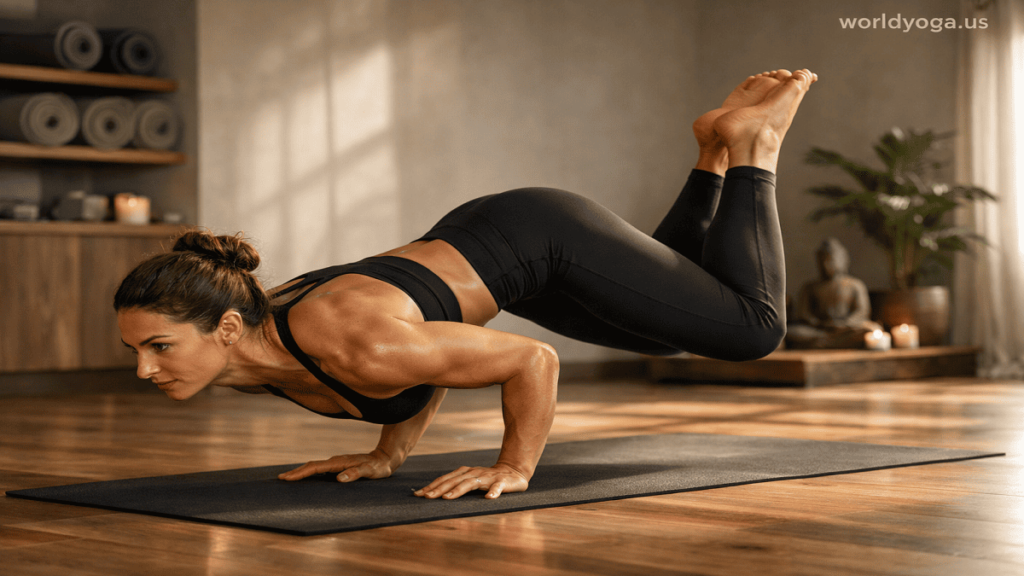
What are the benefits and precautions of Kuntasana?
Kuntasana is an advanced dynamic balancing yoga posture that combines strength, flexibility, stability, coordination, and concentration. The pose challenges both the body and mind by requiring controlled muscular engagement, balance awareness, and precise alignment. Practiced consistently and correctly, Kuntasana can significantly improve physical conditioning, posture control, and mental focus.
However, because the posture demands advanced mobility and stability, it should be practiced carefully with proper preparation and mindful technique. Understanding both the benefits and precautions of Kuntasana is essential for safe and effective yoga practice.
Physical Benefits of Kuntasana
Improves Core Strength and Stability
One of the primary benefits of Kuntasana is the development of strong core muscles. The abdominal muscles, obliques, and spinal stabilizers remain actively engaged throughout the posture to support balance and spinal alignment.
Improved core stability helps enhance posture, protect the lower back, and improve overall body control during yoga practice and daily movement.
Enhances Balance and Coordination
Kuntasana is a balance-focused posture that trains the body to maintain stability during complex movement patterns. The pose improves neuromuscular coordination, proprioception, and equilibrium by teaching practitioners how to control weight distribution and body positioning.
Better balance can support athletic performance, posture correction, and functional movement efficiency.
Strengthens the Legs and Hips
The posture strongly activates the quadriceps, hamstrings, gluteal muscles, calves, and hip stabilizers. These muscle groups work together to support the pelvis and maintain lower-body stability.
Regular practice helps improve muscular endurance, lower-body strength, and hip control.
Increases Flexibility and Mobility
Kuntasana improves flexibility in the hips, hamstrings, shoulders, and spine. The posture encourages controlled stretching while simultaneously strengthening the supporting muscles.
Improved mobility can help reduce stiffness, support joint function, and enhance movement quality throughout the body.
Supports Better Posture
The alignment principles practiced in Kuntasana strengthen the postural muscles and encourage spinal elongation. This helps improve body awareness and supports healthier posture patterns during both yoga practice and daily activities.
Develops Mental Focus and Concentration
Because Kuntasana requires sustained balance and controlled breathing, the posture enhances concentration, mindfulness, and mental discipline. Practitioners often experience improved focus and greater awareness of breath and movement coordination.
The mental concentration required in balancing poses can also contribute to stress reduction and emotional calmness.
Precautions Before Practicing Kuntasana
Avoid Practicing with Existing Injuries
Individuals with knee injuries, hip problems, wrist discomfort, shoulder instability, or lower-back pain should approach Kuntasana cautiously or avoid the posture unless guided by a qualified instructor.
The balancing and weight-bearing demands of the pose can place additional stress on vulnerable joints and muscles.
Warm Up Thoroughly
A proper warm-up is essential before practicing Kuntasana. Dynamic stretching, hip-opening exercises, shoulder mobility work, and core activation help prepare the body for the demands of the posture.
Cold muscles and restricted joints increase the risk of strain and imbalance.
Do Not Force Flexibility
One common mistake is attempting to achieve the deepest version of the posture without sufficient flexibility or control. Overstretching can place excessive pressure on the hips, hamstrings, knees, or lower back.
Practitioners should progress gradually and prioritize stability over range of motion.
Maintain Proper Alignment
Incorrect alignment can compromise balance and increase the risk of injury. The spine should remain elongated, the core engaged, and the hips balanced throughout the posture.
Weight should be distributed evenly through the supporting limbs to avoid excessive joint stress.
Use Controlled Breathing
Holding the breath during balancing postures creates tension and reduces stability. Slow and steady breathing helps maintain muscular control, concentration, and relaxation during the pose.
Practice Under Professional Guidance
Because Kuntasana is considered an advanced posture, beginners and intermediate practitioners should practice under the supervision of a qualified yoga instructor. Professional guidance helps improve technique, alignment, and progression safety.
Using yoga props or practicing modified variations can also support gradual learning and confidence building.
Conclusion
Kuntasana is a powerful advanced yoga posture that offers numerous benefits for strength, flexibility, balance, posture, coordination, and mental focus. The pose develops full-body stability while enhancing body awareness and controlled movement.
#Kuntasana in Pune
Case Study of Kuntasana
Introduction
Kuntasana is an advanced dynamic balancing yoga posture that integrates strength, flexibility, coordination, and mental focus into a single controlled movement pattern. It is commonly practiced in advanced Hatha Yoga and Vinyasa Yoga systems as a progression-based posture for improving full-body stability and neuromuscular control.
This case study explores the impact of structured Kuntasana practice on physical performance, balance ability, flexibility, and cognitive focus over a defined training period. It also highlights challenges faced during learning and the methods used to improve alignment, strength, and control.
Profile of the Practitioner
A 29-year-old intermediate yoga practitioner with three years of consistent yoga experience participated in a six-week structured training program focused on Kuntasana progression. The practitioner had prior experience with foundational postures such as Plank Pose, Downward Facing Dog, Navasana (Boat Pose), and Bakasana (Crow Pose), but limited exposure to advanced dynamic balancing postures.
The training program included five guided sessions per week, each lasting 60 minutes. Each session incorporated warm-ups, mobility drills, core strengthening exercises, and progressive balancing sequences leading toward Kuntasana.
Training Methodology
The training approach emphasized gradual progression and alignment awareness rather than immediate full posture execution. Early sessions focused on building wrist stability, shoulder endurance, hip flexibility, and core strength.
Preparatory poses such as Utkatasana, Anjaneyasana, Dolphin Pose, and Crow Pose were integrated into the routine to develop foundational strength and balance skills.
By the fourth week, the practitioner began holding modified versions of Kuntasana for short durations with support and controlled breathing. Progression included reducing reliance on props and increasing hold time gradually.
Key focus areas during training included:
- Core activation and spinal alignment
- Controlled weight shifting
- Hip stability and flexibility
- Shoulder engagement and posture control
- Breath synchronization with movement
Physical Improvements Observed
Increased Core Strength
One of the most noticeable improvements was enhanced core stability. The practitioner demonstrated better abdominal engagement, reduced lower-back strain, and improved posture control during balancing transitions.
Improved Balance and Coordination
Kuntasana training significantly improved balance and neuromuscular coordination. The practitioner developed better awareness of body positioning and weight distribution, resulting in smoother transitions and increased stability.
Enhanced Lower-Body Strength
The quadriceps, hamstrings, glutes, and hip stabilizers showed improved endurance and strength. This contributed to better pelvic control and reduced instability during dynamic movement phases.
Greater Flexibility and Mobility
Hip and hamstring flexibility improved due to consistent practice of preparatory poses. Shoulder mobility and spinal flexibility also increased, supporting better alignment in balancing positions.
Mental and Cognitive Benefits
The practitioner reported improved concentration, mindfulness, and emotional control during practice sessions. Holding balancing postures required sustained focus and controlled breathing, which helped develop mental clarity and patience.
The gradual progression process also increased confidence and reduced fear of imbalance or falling during advanced movements.
Challenges Encountered
Balance Instability
Initial difficulty was observed in maintaining stable balance during transitions. This was addressed through slower movement practice and improved core engagement techniques.
Muscle Fatigue
Early sessions resulted in fatigue in the shoulders, hips, and core due to insufficient conditioning. Gradual load progression helped overcome this issue.
Alignment Errors
Minor alignment issues, such as collapsing hips and rounded spine, were corrected through instructor feedback and focused correction drills.
Fear of Falling
Psychological hesitation during balancing was reduced through support-based practice, wall assistance, and controlled progression.
Conclusion
This case study demonstrates that structured and progressive practice of Kuntasana can significantly improve core strength, balance, flexibility, coordination, and mental focus. The posture also enhances body awareness and functional movement efficiency when practiced consistently.
#Kuntasana in Banglore
White Paper of Kuntasana
Introduction
Kuntasana is an advanced dynamic balancing yoga posture that integrates strength, flexibility, coordination, and neuromuscular control into a unified movement pattern. It is typically practiced in advanced Hatha Yoga and Vinyasa Yoga frameworks where emphasis is placed on functional strength, balance training, and mindful body awareness.
In modern movement science and yoga-based fitness systems, Kuntasana is increasingly recognized as a compound posture that develops full-body integration rather than isolated muscular flexibility. This white paper examines the anatomical, biomechanical, physiological, and practical dimensions of Kuntasana, along with its applications in fitness, wellness, and performance training environments.
Posture Overview
Kuntasana is characterized by controlled balance, dynamic stability, and coordinated engagement of multiple muscle groups. Unlike static yoga poses, it requires continuous adjustment of posture, breath, and muscular activation.
The pose emphasizes:
- Core-driven stability
- Lower-body balance control
- Shoulder and spinal alignment
- Coordinated movement and breath synchronization
Its complexity makes it suitable for advanced practitioners with established foundational strength and mobility.
Anatomical and Biomechanical Analysis
Core System
The rectus abdominis, transverse abdominis, and oblique muscles form the primary stabilizing system. These muscles maintain spinal integrity and control rotational balance during movement transitions.
The erector spinae supports posture extension and helps prevent collapse in the lumbar region.
Lower Body Kinetics
The quadriceps, hamstrings, gluteal muscles, and hip stabilizers contribute to pelvic control and lower-body alignment. The hip flexors assist in controlled movement transitions, while the adductors stabilize medial leg positioning.
The ankle and foot stabilizers regulate balance and ground contact where applicable.
Upper Body Engagement
Depending on variation, the deltoids, trapezius, rhomboids, and rotator cuff muscles stabilize the shoulders. The chest muscles assist in maintaining upper-body posture control.
If weight-bearing is involved, forearm muscles and wrist stabilizers manage load distribution and joint protection.
Spinal Alignment Mechanics
Kuntasana requires a dynamically neutral spine supported by active muscular engagement. This prevents hyperflexion or hyperextension and promotes controlled axial alignment.
Physiological Benefits
Muscular Strength Development
The posture develops integrated strength across the core, hips, shoulders, and lower limbs. It enhances endurance in stabilizing muscle groups due to sustained isometric engagement.
Neuromuscular Coordination
Kuntasana improves proprioception and motor control by requiring continuous micro-adjustments in balance and posture. This enhances body awareness and movement precision.
Flexibility and Mobility Enhancement
Dynamic stretching within the posture improves flexibility in the hips, hamstrings, shoulders, and spine while simultaneously building strength in those ranges.
Balance and Postural Control
The posture trains the vestibular and proprioceptive systems, improving equilibrium and postural stability in both static and dynamic conditions.
Cognitive and Psychological Benefits
The balancing nature of Kuntasana enhances concentration, breath awareness, and stress regulation through sustained mental focus.
Applications Across Industries
Yoga Education and Teacher Training
Kuntasana is used in advanced yoga curricula to teach sequencing, alignment, and progression principles for dynamic balancing postures.
Functional Fitness and Strength Training
Fitness systems integrate Kuntasana-inspired movements to develop core stability, joint resilience, and full-body coordination.
Athletic Conditioning
Athletes in disciplines such as gymnastics, martial arts, dance, and climbing benefit from improved balance, agility, and body control.
Rehabilitation and Movement Therapy
Modified elements of the posture are used in corrective exercise programs to enhance core stability, hip mobility, and postural alignment.
Mindfulness and Wellness Programs
The posture supports breath control, focus training, and stress management in holistic wellness frameworks.
Safety Considerations
Kuntasana requires careful progression due to its complexity and physical demands.
Key risks include:
- Lower back strain
- Hip overextension
- Shoulder instability
- Loss of balance and falls
Safety guidelines include:
- Proper warm-up of hips, shoulders, and core
- Gradual progression through preparatory poses
- Controlled breathing techniques
- Avoiding forceful flexibility
- Professional supervision for beginners
Training Recommendations
Recommended preparatory practices include:
- Plank Pose variations
- Boat Pose (Navasana)
- Chair Pose (Utkatasana)
- Dolphin Pose
- Crow Pose (Bakasana)
- Hip-opening sequences
- Core strengthening drills
Progression should be slow, structured, and alignment-focused.
Conclusion
Kuntasana is a complex yet highly effective advanced yoga posture that develops integrated strength, balance, flexibility, coordination, and cognitive focus. Its value extends beyond traditional yoga practice into fitness training, athletic conditioning, rehabilitation, and wellness applications.
#Kuntasana in Kolkata
Industry Application of Kuntasana
Introduction
Kuntasana is an advanced dynamic balancing yoga posture that integrates strength, flexibility, coordination, and mental focus into a single controlled movement pattern. While traditionally rooted in advanced yoga practice, Kuntasana is increasingly being recognized across modern industries for its value in functional movement training, athletic conditioning, rehabilitation support, and holistic wellness systems.
Its combination of core activation, balance control, and full-body engagement makes it a relevant tool in both performance-based and therapeutic environments. This article explores how Kuntasana is applied across multiple professional and commercial sectors.
Application in the Fitness Industry
In the fitness industry, Kuntasana is used as a functional bodyweight training model that develops integrated strength and mobility. Unlike isolated machine-based exercises, this posture activates multiple muscle groups simultaneously, including the core, hips, shoulders, and lower limbs.
Fitness trainers incorporate Kuntasana-inspired progressions to improve:
- Core stability
- Joint control and mobility
- Muscular endurance
- Full-body coordination
It is often included in advanced calisthenics and mobility programs as a dynamic stability exercise that enhances movement efficiency and body awareness.
Role in Athletic Training and Sports Performance
Athletes require strong balance, coordination, agility, and neuromuscular control, all of which are directly supported by Kuntasana practice.
Sports such as gymnastics, martial arts, dance, rock climbing, and athletics benefit from yoga-based balancing training because it improves:
- Proprioception (body awareness)
- Reaction stability under movement
- Core-driven power transfer
- Injury prevention through joint stabilization
Kuntasana helps athletes develop controlled movement patterns that enhance performance efficiency and reduce the risk of musculoskeletal injuries.
Application in Rehabilitation and Physical Therapy
In rehabilitation settings, Kuntasana is not typically used in its full advanced form but serves as a reference for controlled movement patterns and stability training.
Physiotherapists and movement specialists may adapt elements of the posture to:
- Improve core engagement
- Strengthen hip stabilizers
- Enhance shoulder mobility
- Restore balance and coordination
Modified versions are especially useful for patients recovering from posture-related imbalances or mild musculoskeletal dysfunctions.
Corporate Wellness and Workplace Health
Corporate wellness programs increasingly include yoga-based movement systems to address stress, fatigue, and posture-related issues caused by prolonged sitting and digital work environments.
While Kuntasana itself is advanced, simplified variations and preparatory movements are used to:
- Improve posture awareness
- Reduce muscular stiffness
- Enhance focus and mental clarity
- Support stress management
These practices contribute to improved employee productivity, reduced burnout, and better physical well-being in workplace environments.
Wellness and Mindfulness Industry
The global wellness industry integrates yoga postures like Kuntasana into mindfulness, meditation, and holistic health programs. The posture’s requirement for concentration and breath control makes it valuable for mental conditioning.
In wellness retreats and yoga training centers, Kuntasana-related practices support:
- Mind-body connection development
- Stress reduction through breath awareness
- Emotional regulation and focus training
- Discipline and patience building
It aligns with modern holistic health approaches that combine physical movement with mental well-being.
Digital Fitness and Online Yoga Platforms
With the growth of digital fitness ecosystems, Kuntasana and its preparatory progressions are widely featured in online yoga classes, mobile applications, and virtual training programs.
Digital platforms use structured progressions to teach:
- Step-by-step balancing techniques
- Strength-building sequences
- Alignment correction cues
- Safe advancement into advanced poses
This accessibility has made advanced yoga training more widely available to global audiences.
Conclusion
Kuntasana has evolved beyond a traditional yoga posture into a valuable tool across multiple industries, including fitness, sports performance, rehabilitation, corporate wellness, and digital health platforms. Its emphasis on integrated strength, balance, flexibility, and coordination makes it highly relevant in modern movement science and holistic training systems.
#Kuntasana in Mumbai
Ask FAQs
What is Kuntasana?
Kuntasana is an advanced dynamic balancing yoga posture that combines strength, flexibility, coordination, and core stability. It is practiced in advanced yoga styles like Hatha and Vinyasa Yoga to improve full-body control and balance.
Who can practice Kuntasana?
Kuntasana is generally suitable for intermediate to advanced yoga practitioners who already have experience with foundational poses such as Plank Pose, Boat Pose, and basic balance postures. Beginners should build strength and flexibility first before attempting it.
What are the main benefits of Kuntasana?
The posture helps improve core strength, balance, flexibility, posture, coordination, and mental focus. It also enhances neuromuscular control and overall body awareness through dynamic movement and stabilization.
Which muscles are engaged in Kuntasana?
Kuntasana activates multiple muscle groups, including the core (abdominals and obliques), shoulders, hips, glutes, quadriceps, hamstrings, and spinal stabilizers. It is a full-body engagement posture.
What precautions should be taken before practicing Kuntasana?
Practitioners should warm up properly, avoid forcing flexibility, and maintain correct alignment. Those with injuries in the wrists, hips, shoulders, or lower back should practice under professional guidance or avoid the pose until fully prepared.
Table of Contents
Disclaimer:
This content is for educational and informational purposes only and is not a substitute for professional medical or fitness advice. Practice Kuntasana only under the guidance of a qualified yoga instructor, especially if you have injuries, joint issues, or health conditions.