Lunge: Back Knee on the Floor
Lunge: Back Knee on the Floor is a foundational yoga and fitness posture commonly practiced to improve lower-body flexibility, balance, and stability. Often included in yoga sequences, stretching routines, and rehabilitation exercises, this posture provides a gentle yet effective stretch for the hips, thighs, and lower back while promoting proper body alignment and mobility.
This variation of the lunge is especially suitable for beginners because the back knee remains grounded, reducing pressure on the legs and improving stability during the movement. It is widely practiced in yoga styles such as Hatha Yoga, Vinyasa Yoga, and restorative mobility training programs. According to Yoga Journal, low lunge variations help improve hip flexibility and support functional movement patterns used in daily activities.
Understanding the Pose
In this posture, one foot is placed forward with the knee bent at approximately a right angle, while the opposite leg extends backward with the knee resting comfortably on the floor. The torso remains upright, and the hips gently move forward to create a stretch along the front of the hip and thigh.
The grounded back knee provides support and balance, making the pose more accessible for individuals with limited flexibility or reduced lower-body strength. Practitioners can place their hands on the front thigh, the floor, or raise the arms overhead depending on the desired variation and intensity.
Benefits of Lunge: Back Knee on the Floor
One of the primary benefits of this posture is improved hip flexibility. Prolonged sitting and sedentary lifestyles often lead to tight hip flexors, which may contribute to poor posture and lower back discomfort. This lunge variation helps lengthen the hip flexors and improve mobility in the pelvic region.
The pose also strengthens the legs, glutes, and core muscles while encouraging better balance and posture. Regular practice may help improve coordination and support healthy spinal alignment.
According to Harvard Health Publishing, stretching and mobility-focused exercises can enhance joint function, reduce muscular tension, and improve overall movement quality.
Additional benefits include:
- Increased lower-body flexibility
- Improved posture and spinal alignment
- Enhanced balance and stability
- Gentle strengthening of the legs and core
- Better circulation and mobility
Precautions and Safety Tips
Although the posture is beginner-friendly, proper alignment is essential. The front knee should remain aligned over the ankle to avoid unnecessary pressure on the joint. Practitioners with knee sensitivity may place a folded blanket or cushion beneath the grounded knee for additional support.
Individuals with hip, knee, or lower back injuries should practice cautiously and seek guidance from a qualified instructor when needed.
Conclusion
Lunge: Back Knee on the Floor is a simple yet highly effective posture that supports flexibility, balance, and lower-body strength. Its accessibility makes it suitable for beginners, while its therapeutic benefits make it valuable for experienced practitioners as well. With regular and mindful practice, this pose can contribute to improved mobility, posture, and overall physical wellness.
#Lunge: Back Knee on the Floor in India
How is Lunge with the back knee on the floor performed correctly?
Lunge with the back knee on the floor, commonly known as Low Lunge or a kneeling lunge variation, is a beginner-friendly posture widely practiced in yoga, stretching routines, and fitness training. This pose helps improve hip flexibility, strengthen the legs, and promote better posture while providing greater stability than standing lunges. Performing the posture correctly is essential to maximize its benefits and prevent unnecessary strain on the knees, hips, or lower back.
According to Yoga Journal, proper alignment and controlled movement are key to safe and effective yoga practice, especially in foundational poses involving balance and joint positioning.
Step-by-Step Guide to Performing the Pose
1. Begin in a Stable Starting Position
Start on a yoga mat in a tabletop position with your hands and knees resting comfortably on the floor. Keep the spine neutral and shoulders relaxed.
Step one foot forward between the hands, placing the foot flat on the mat. The front knee should bend naturally.
2. Position the Back Knee Correctly
Slide the opposite leg backward until a comfortable stretch is felt along the front of the hip and thigh. Lower the back knee gently onto the floor.
The top of the back foot may rest flat on the mat, or the toes can remain tucked depending on comfort and stability.
For additional support, place a folded blanket or cushion beneath the back knee if sensitivity or discomfort is present.
3. Align the Front Leg
Proper front-leg alignment is crucial. The front knee should stack directly above or slightly behind the ankle, forming roughly a 90-degree angle.
Avoid allowing the knee to move far beyond the toes, as this may place unnecessary stress on the joint.
Keep the front foot grounded and evenly balanced.
4. Lift and Lengthen the Torso
Once the lower body is stable, gently lift the torso upright. Keep the chest open and shoulders relaxed away from the ears.
Hands may rest:
- On the front thigh for balance
- On the floor beside the foot
- Raised overhead for a deeper stretch and increased core engagement
Maintain a tall spine rather than leaning excessively forward or arching the lower back.
5. Engage the Core and Breathe
Lightly engage the abdominal muscles to support the spine and maintain stability. Allow the hips to move forward gently until a stretch is felt in the hip flexors and front thigh of the grounded leg.
Controlled breathing is essential during the posture. Slow inhalations help lengthen the spine, while steady exhalations encourage relaxation and flexibility.
According to Harvard Health Publishing, mindful stretching and breathing can improve flexibility, posture, and muscular coordination.
Common Mistakes to Avoid
Several alignment mistakes may reduce effectiveness or increase discomfort:
- Front knee moving too far past the ankle
- Collapsing into the lower back
- Raising the shoulders toward the ears
- Forcing the hips too deeply forward
- Holding the breath
Maintaining controlled movement and proper alignment helps prevent these issues.
Final Thoughts
Lunge with the back knee on the floor is a simple yet powerful posture that supports flexibility, strength, and balance. Practicing the pose with proper technique and mindful breathing allows practitioners to safely improve mobility and enjoy its full physical and therapeutic benefits.
#Lunge: Back Knee on the Floor in Maharashtra
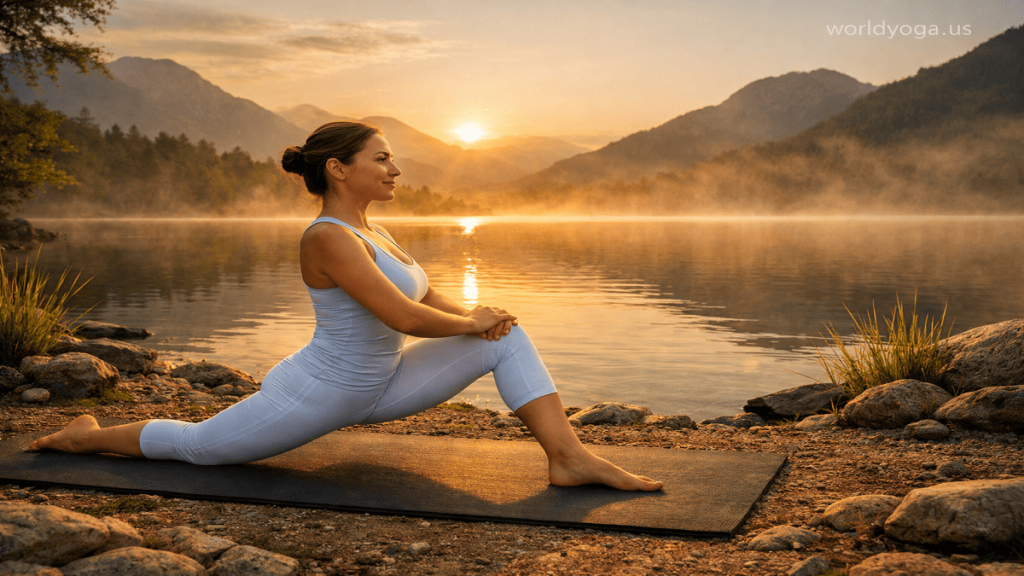
What is the proper alignment in this low lunge variation?
Proper alignment is essential when practicing a low lunge variation with the back knee on the floor. Correct positioning helps maximize the benefits of the posture while reducing stress on the knees, hips, and lower back. This foundational yoga and mobility pose is widely used to improve flexibility, strengthen the lower body, and support healthy posture. When performed with awareness and control, it becomes a safe and effective stretch for practitioners of all experience levels.
According to Yoga International, maintaining alignment and stability in foundational yoga poses helps improve body awareness and reduces the risk of injury during movement practice.
Importance of Proper Alignment
Low lunge variations primarily target the hip flexors, thighs, glutes, and core muscles. However, poor alignment can place unnecessary pressure on the joints and spine. Proper posture ensures even weight distribution and controlled muscular engagement throughout the movement.
Good alignment also improves balance, breathing efficiency, and flexibility progression over time.
Key Alignment Principles
Front Knee Over the Ankle
One of the most important alignment points is the position of the front knee. The knee should remain directly above or slightly behind the ankle, creating approximately a 90-degree angle in the front leg.
Allowing the knee to move too far forward may increase pressure on the joint and reduce stability.
The front foot should stay firmly grounded with weight distributed evenly across the heel and ball of the foot.
Back Knee Placement
The back knee should rest comfortably on the floor beneath the hip line. A folded blanket or yoga pad may be used for cushioning if needed.
The back leg extends gently behind the body without excessive strain. The top of the back foot can remain flat on the mat, or the toes may stay tucked for additional support and balance.
Hip Alignment
The hips should face forward evenly rather than rotating outward. Keeping the pelvis neutral helps deepen the stretch safely and improves muscular balance.
Practitioners should avoid collapsing into one side of the body or forcing the hips excessively forward.
Lengthen the Spine
Maintaining an elongated spine is essential for proper posture. The chest should stay lifted while the shoulders remain relaxed and away from the ears.
Avoid overarching the lower back. Instead, lightly engage the abdominal muscles to support the spine and stabilize the torso.
According to Harvard Health Publishing, proper posture and core engagement during stretching exercises can improve spinal support and reduce muscular tension.
Shoulder and Head Position
The shoulders should remain soft and aligned over the hips. If the arms are lifted overhead, avoid tightening the neck or raising the shoulders excessively.
The head should stay in a neutral position with the gaze directed forward or slightly upward, depending on comfort.
Breathing and Stability
Controlled breathing plays an important role in maintaining alignment. Deep inhalations help create length through the spine, while slow exhalations allow the hips and muscles to relax gradually into the stretch.
Steady breathing also improves balance and concentration during the pose.
Final Thoughts
Proper alignment in this low lunge variation supports flexibility, posture, and joint safety. By focusing on balanced positioning, spinal length, and controlled breathing, practitioners can safely deepen the stretch and improve overall movement quality. Consistent practice with mindful technique helps build strength, stability, and mobility over time.
#Lunge: Back Knee on the Floor in Ahemadabad
Which muscles are engaged during the posture?
Lunge with the back knee on the floor, often referred to as a Low Lunge variation, is an effective posture for improving flexibility, balance, and lower-body strength. Although it appears simple, the pose activates multiple muscle groups simultaneously to stabilize the body, support posture, and control movement. Understanding which muscles are engaged during the posture can help practitioners improve alignment, deepen the stretch safely, and enhance overall body awareness.
According to Yoga Journal, lunging postures are valuable for strengthening stabilizing muscles while improving hip mobility and posture.
Primary Muscles Engaged in the Posture
Hip Flexors
The hip flexors are among the most actively stretched and engaged muscles in this posture, particularly in the back leg. Muscles such as the iliopsoas and rectus femoris lengthen as the hips move forward.
Tight hip flexors are common due to prolonged sitting, making this posture especially beneficial for improving mobility and reducing stiffness in the pelvic region.
Quadriceps
The quadriceps of both legs play a significant role during the pose. In the front leg, the quadriceps help stabilize the bent knee and support body weight. In the back leg, the front thigh muscles stretch gently while maintaining alignment.
This balanced engagement improves lower-body strength and muscular endurance.
Gluteal Muscles
The gluteal muscles, especially the gluteus maximus and gluteus medius, help stabilize the hips and pelvis throughout the posture. These muscles assist in maintaining balance and proper hip alignment.
Strong gluteal activation also supports healthy lower back mechanics during movement.
Hamstrings
The hamstrings of the front leg work together with the glutes to stabilize the hip and knee joints. While not deeply stretched in this variation, they contribute to lower-body support and balance.
Core Muscles
The abdominal muscles are essential for maintaining stability and spinal alignment. The transverse abdominis, obliques, and deeper core stabilizers engage to support the torso and prevent excessive arching in the lower back.
Core activation improves posture and helps distribute body weight evenly during the stretch.
According to Harvard Health Publishing, core engagement during stretching and yoga movements supports spinal health and overall functional stability.
Spinal and Back Muscles
The muscles along the spine, including the erector spinae, assist in keeping the torso upright and elongated. These muscles help maintain posture while preventing the chest from collapsing forward.
Upper back muscles also contribute to shoulder stability when the arms are raised overhead.
Calf and Foot Muscles
The calf muscles and intrinsic foot muscles provide additional support and balance, particularly in the front leg. These smaller stabilizing muscles help maintain grounding and alignment throughout the pose.
Joint Stabilization During the Pose
Several joints work together during this posture, including:
- Hip joints
- Knee joints
- Ankle joints
- Spinal joints
The surrounding muscles help stabilize these joints while allowing controlled movement and flexibility.
Final Thoughts
Lunge with the back knee on the floor is a highly effective posture that engages the hips, legs, core, and spinal muscles simultaneously. Its combination of stretching and strengthening makes it valuable for improving mobility, posture, balance, and muscular coordination.
#Lunge: Back Knee on the Floor in Hyderabad
What preparatory poses are recommended before practicing it?
Lunge with the back knee on the floor, commonly known as a Low Lunge variation, is a foundational yoga and mobility posture that stretches the hips, thighs, and lower body while improving balance and posture. Although it is beginner-friendly, practicing preparatory poses beforehand can help warm up the muscles, improve flexibility, and reduce the risk of discomfort or injury.
Preparatory movements are especially important for individuals with tight hips, stiff hamstrings, or lower back tension. According to Yoga International, warming up the body before yoga practice improves joint mobility, muscular activation, and movement efficiency.
Why Preparatory Poses Matter
Low Lunge places emphasis on hip flexor flexibility, spinal alignment, and lower-body stability. Without proper preparation, practitioners may experience tightness in the hips, knees, or back.
Preparatory poses gradually activate the muscles and joints required for the posture while improving circulation and balance. They also help practitioners become more aware of body alignment and breathing patterns.
Recommended Preparatory Poses
Cat-Cow Stretch
Cat-Cow is one of the most effective warm-up movements for improving spinal mobility and preparing the torso for upright posture in Low Lunge.
Alternating between spinal flexion and extension helps:
- Loosen the back muscles
- Improve spinal flexibility
- Encourage coordinated breathing
This movement also helps release stiffness caused by prolonged sitting.
Child’s Pose (Balasana)
Child’s Pose gently stretches the hips, thighs, and lower back while promoting relaxation and breath awareness. It prepares the body for deeper hip-opening movements without placing stress on the joints.
Practicing Child’s Pose before Low Lunge can help improve mobility and reduce muscular tension.
Downward-Facing Dog (Adho Mukha Svanasana)
Downward-Facing Dog stretches the hamstrings, calves, shoulders, and spine while activating the arms and core muscles.
This pose prepares the lower body for lunging movements by improving flexibility and lengthening the posterior chain muscles.
Butterfly Pose (Baddha Konasana)
Butterfly Pose is highly effective for opening the hips and inner thighs. Sitting with the soles of the feet together while gently lowering the knees toward the floor helps increase hip mobility and flexibility.
Improved hip flexibility supports better alignment and comfort during Low Lunge.
Standing Forward Fold (Uttanasana)
Standing Forward Fold stretches the hamstrings, calves, and lower back. Tight hamstrings can affect pelvic positioning during lunges, so warming them up beforehand improves movement quality and stability.
According to Harvard Health Publishing, stretching exercises that improve flexibility and posture may help reduce muscular tension and support healthy movement patterns.
Gentle Hip Circles
Simple hip mobility exercises such as hip circles help lubricate the hip joints and prepare the pelvis for deeper stretching. These dynamic movements increase circulation and improve range of motion.
Tabletop Hip Stretch
A tabletop hip stretch or kneeling hip flexor stretch can directly target the muscles most involved in Low Lunge, especially the iliopsoas and quadriceps.
Final Thoughts
Practicing preparatory poses before Low Lunge helps improve flexibility, alignment, and overall comfort during the posture. Hip-opening stretches, spinal mobility exercises, and gentle warm-ups allow the body to move more efficiently while reducing unnecessary strain on the joints and muscles.
#Lunge: Back Knee on the Floor in Banglore
What are the benefits and precautions of this lunge variation?
Lunge with the back knee on the floor, commonly referred to as a Low Lunge variation, is a beginner-friendly yoga and stretching posture that supports flexibility, balance, and lower-body strength. This posture is widely used in yoga, rehabilitation programs, athletic training, and mobility routines because it gently stretches the hips while improving posture and muscular stability.
Although the pose offers numerous physical and mental benefits, practicing it with proper alignment and awareness is essential to avoid strain or discomfort. According to Yoga Journal, foundational yoga poses such as Low Lunge can improve mobility and muscular coordination when performed with correct technique and controlled breathing.
Benefits of This Lunge Variation
Improves Hip Flexibility
One of the most important benefits of this posture is increased flexibility in the hip flexors and thighs. Prolonged sitting often causes tightness in the hips, which may contribute to lower back discomfort and reduced mobility.
This lunge variation gently stretches the front of the hips and helps restore natural movement patterns.
Strengthens the Lower Body
The posture activates and strengthens several muscles, including:
- Quadriceps
- Gluteal muscles
- Hamstrings
- Calves
The front leg works to stabilize the body, while the back leg stretches and supports balance.
Supports Better Posture
Low Lunge encourages spinal elongation and core engagement, both of which contribute to healthier posture. Opening the chest and lengthening the spine may help counteract the effects of prolonged sitting and poor postural habits.
Enhances Balance and Stability
Even though the back knee remains on the floor, the posture still requires coordination and balance. Practicing the pose regularly can improve body awareness and lower-body stability.
Increases Spinal Mobility
When the torso is lifted properly, the pose encourages gentle spinal extension and mobility. This can help reduce stiffness in the back and improve movement quality.
According to Harvard Health Publishing, stretching and mobility exercises may improve flexibility, posture, and overall musculoskeletal health.
Encourages Relaxation and Mindful Breathing
Like many yoga postures, this variation promotes controlled breathing and relaxation. Slow breathing during the stretch can help reduce muscular tension and improve focus.
Precautions to Consider
Avoid Overextending the Front Knee
The front knee should remain aligned directly above or slightly behind the ankle. Allowing the knee to move too far forward may place unnecessary pressure on the joint.
Protect the Back Knee
Since the back knee rests on the floor, individuals with knee sensitivity should place a folded blanket or cushion beneath the knee for support.
Hard surfaces may increase discomfort if padding is not used.
Do Not Force the Hip Stretch
Pushing the hips too deeply forward can strain the hip flexors or lower back. The stretch should feel controlled and comfortable rather than painful.
Gradual flexibility development is safer and more effective over time.
Maintain Core Engagement
Failing to engage the core muscles may lead to excessive arching in the lower back. Light abdominal activation helps support spinal alignment and stability.
Practice Carefully with Existing Injuries
Individuals with hip, knee, or lower back injuries should practice under professional guidance and avoid deep variations if discomfort occurs.
Final Thoughts
This low lunge variation offers valuable benefits for flexibility, posture, strength, and mobility when practiced correctly. Proper alignment, mindful breathing, and gradual progression are essential for safe practice.
#Lunge: Back Knee on the Floor in Pune
Case Study of Lunge: Back Knee on the Floor
Lunge: Back Knee on the Floor, commonly known as a Low Lunge variation, is a foundational posture widely used in yoga, physical therapy, athletic training, and mobility programs. The posture combines lower-body stretching, core stabilization, and postural alignment, making it beneficial for improving flexibility, balance, and muscular coordination. This case study examines the effects of regular Low Lunge practice on flexibility, posture, and lower-body mobility in a structured wellness program.
According to Yoga International, low lunge variations are frequently used to improve hip mobility and support functional movement patterns essential for daily activities and physical performance.
Background of the Participant
The case study involved a 38-year-old office professional who experienced:
- Tight hip flexors
- Mild lower back stiffness
- Reduced hamstring flexibility
- Poor posture caused by prolonged sitting
The participant had limited prior yoga experience and reported discomfort during extended periods of standing and walking.
The primary goals of introducing the posture into the wellness routine included:
- Improving hip flexibility
- Reducing lower back tension
- Enhancing posture
- Increasing lower-body mobility
A six-week supervised mobility and yoga program was developed with gradual progression.
Program Structure
The participant practiced Lunge: Back Knee on the Floor four times per week under instructor supervision.
Each session included:
- Cat-Cow Stretch
- Butterfly Pose
- Gentle hamstring stretches
- Child’s Pose
- Low Lunge holds on both sides
Initially, the posture was held for 20 seconds per side with support blocks for balance. By the end of the program, the participant comfortably held the posture for 60 seconds with improved alignment and stability.
Controlled breathing and spinal alignment were emphasized throughout the training sessions.
Observed Results
Improved Hip Flexibility
After six weeks, the participant demonstrated significantly improved hip mobility and reduced tightness in the hip flexors. Daily activities such as walking, climbing stairs, and standing became more comfortable.
Reduced Lower Back Stiffness
The participant reported noticeable reduction in lower back discomfort due to improved pelvic positioning and core engagement during movement.
According to Harvard Health Publishing, stretching and posture-focused exercises can help reduce muscular tension and support spinal health.
Better Postural Alignment
Consistent practice encouraged spinal elongation and stronger core activation. The participant showed improved standing posture and reduced forward pelvic tilt commonly associated with prolonged sitting.
Increased Lower-Body Strength and Stability
The posture strengthened the quadriceps, gluteal muscles, and stabilizing muscles around the hips and knees. Balance and movement control improved steadily over the duration of the program.
Enhanced Body Awareness
The participant developed greater awareness of breathing patterns, posture, and muscular engagement during movement. This contributed to improved coordination and confidence during exercise.
Challenges Encountered
During the first two weeks, mild discomfort in the back knee was reported. This issue was resolved by using additional cushioning beneath the knee and adjusting alignment.
The participant also experienced difficulty maintaining upright posture initially due to tight hip flexors and weak core muscles. Gradual progression and instructor guidance improved these limitations over time.
Conclusion
This case study demonstrates that Lunge: Back Knee on the Floor can effectively improve hip flexibility, posture, lower-body strength, and movement quality when practiced consistently and with proper alignment.
#Lunge: Back Knee on the Floor in Delhi
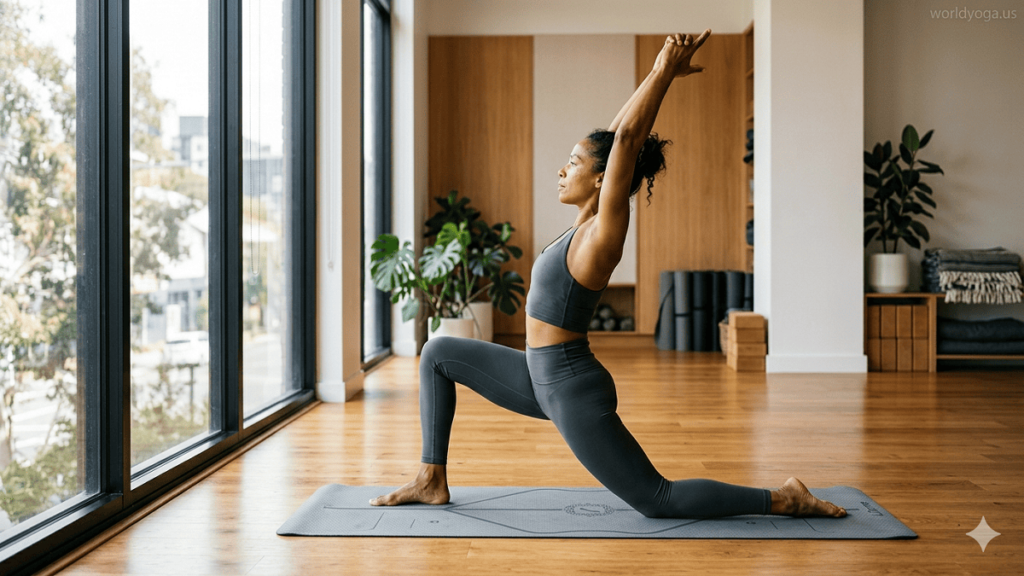
White Paper of Lunge: Back Knee on the Floor
Introduction
Lunge: Back Knee on the Floor, commonly referred to as Low Lunge, is a foundational posture widely practiced in yoga, fitness training, rehabilitation, and mobility-focused exercise programs. The posture combines flexibility, lower-body strengthening, balance, and postural alignment while remaining accessible to practitioners across different fitness levels.
As modern lifestyles increasingly involve prolonged sitting and limited physical movement, mobility-based exercises such as Low Lunge have become important tools for improving musculoskeletal health and movement efficiency. According to Harvard Health Publishing, stretching and mobility exercises can improve flexibility, posture, and overall joint function when practiced consistently and correctly.
This white paper explores the biomechanical, physiological, therapeutic, and practical applications of Lunge: Back Knee on the Floor while outlining its benefits, risks, and best-practice recommendations.
Overview of the Posture
Low Lunge is performed by placing one foot forward with the front knee bent while the opposite knee rests on the floor behind the body. The posture creates a controlled stretch through the hip flexors, thighs, and lower body while engaging stabilizing muscles throughout the core and spine.
The grounded back knee provides additional support and balance, making the pose more accessible than standing lunge variations.
The posture is commonly included in:
- Yoga sequences
- Rehabilitation programs
- Warm-up routines
- Athletic mobility training
- Functional movement practices
Biomechanical Analysis
Muscular Engagement
Several major muscle groups are activated during the posture:
- Hip flexors
- Quadriceps
- Gluteal muscles
- Hamstrings
- Core stabilizers
- Erector spinae muscles
The front leg primarily supports body weight and stability, while the back leg experiences controlled stretching through the hip flexor region.
Core activation helps maintain spinal alignment and prevents excessive lumbar compression.
Joint Involvement
The primary joints involved include:
- Hip joints
- Knee joints
- Ankle joints
- Sacroiliac joints
- Vertebral joints of the spine
According to Cleveland Clinic, mobility exercises that combine flexibility and muscular activation may improve joint function and support injury prevention.
Physiological Benefits
Improved Hip Mobility
Low Lunge effectively stretches the iliopsoas and surrounding hip flexor muscles, which are commonly shortened due to prolonged sitting. Improved hip mobility contributes to healthier gait patterns and reduced lower back stress.
Enhanced Postural Alignment
The posture encourages spinal elongation, chest opening, and core engagement. These elements support better postural awareness and may help counteract sedentary movement patterns.
Lower-Body Strength Development
The front leg engages the quadriceps, glutes, and stabilizing muscles, contributing to lower-body strength and balance.
Improved Flexibility and Circulation
Dynamic and static variations of the posture can increase flexibility while promoting blood circulation throughout the lower extremities.
Neuromuscular Coordination
Maintaining alignment and balance during the posture develops body awareness and coordinated muscular control.
Therapeutic and Rehabilitation Applications
Low Lunge is frequently integrated into physical therapy and rehabilitation programs due to its adaptability and low-impact nature.
Potential rehabilitation applications include:
- Hip mobility restoration
- Postural correction
- Lower-body flexibility training
- Movement re-education
- Functional mobility improvement
Modified variations can be used for individuals recovering from muscular tightness or movement restrictions.
Risks and Precautions
Despite its accessibility, improper execution may increase stress on the knees, hips, or lower back.
Common risks include:
- Front knee misalignment
- Excessive lumbar arching
- Overstretching of the hip flexors
- Knee discomfort on hard surfaces
Practitioners with existing knee, hip, or spinal conditions should seek professional guidance before practicing deeper variations.
Best Practice Recommendations
To optimize safety and effectiveness:
- Maintain front knee alignment over the ankle.
- Engage the core to support the spine.
- Use padding beneath the back knee if needed.
- Progress gradually without forcing flexibility.
- Coordinate movement with controlled breathing.
According to Yoga Journal, mindful alignment and gradual progression are essential components of safe yoga practice.
Conclusion
Lunge: Back Knee on the Floor is a highly effective posture for improving flexibility, posture, mobility, and lower-body stability. Its adaptability makes it suitable for yoga practitioners, rehabilitation patients, athletes, and general wellness programs.
#Lunge: Back Knee on the Floor in Kolkata
Industry Application of Lunge: Back Knee on the Floor
Lunge: Back Knee on the Floor, commonly known as Low Lunge, is a widely practiced movement used across multiple industries related to fitness, rehabilitation, sports performance, wellness, and occupational health. The posture combines flexibility training, lower-body strengthening, postural correction, and balance development, making it valuable in both therapeutic and performance-based environments.
As industries increasingly prioritize mobility, injury prevention, and functional movement, Low Lunge has become an important exercise within modern health and wellness programs. According to Yoga Alliance, yoga-based movement practices are now integrated into diverse professional sectors to support physical well-being, stress management, and mobility improvement.
Application in the Fitness Industry
The fitness industry extensively uses Low Lunge in:
- Warm-up routines
- Functional training programs
- Mobility sessions
- Strength and flexibility classes
Fitness trainers incorporate the posture to improve hip mobility, activate stabilizing muscles, and prepare the lower body for dynamic movement patterns such as squats, running, and athletic drills.
The pose is particularly useful for addressing tight hip flexors caused by sedentary lifestyles and prolonged sitting.
According to Yoga Journal, low lunge variations help enhance lower-body flexibility and support proper movement mechanics during exercise.
Role in Physical Therapy and Rehabilitation
Physical therapists frequently use modified Low Lunge variations to support rehabilitation and mobility restoration. The posture can be adapted for patients recovering from:
- Hip stiffness
- Lower back discomfort
- Reduced mobility
- Postural imbalances
- Muscular tightness
The grounded back knee provides stability and reduces impact, making the movement accessible for individuals with limited balance or lower-body weakness.
Therapists often use the posture to retrain movement patterns and improve joint mobility gradually under supervised conditions.
Sports Performance and Athletic Training
Athletes require flexibility, balance, and efficient movement mechanics to perform safely and effectively. Sports conditioning programs commonly integrate Low Lunge into:
- Dynamic warm-ups
- Recovery sessions
- Flexibility training
- Injury prevention protocols
The posture helps athletes improve:
- Hip mobility
- Lower-body coordination
- Stride efficiency
- Core stability
- Muscular activation
Sports such as running, martial arts, soccer, dance, gymnastics, and cycling particularly benefit from hip-opening mobility exercises.
Workplace Wellness Programs
Corporate wellness initiatives increasingly include yoga and mobility practices to address the physical effects of prolonged desk work. Low Lunge is commonly introduced in workplace stretching sessions because it:
- Reduces hip and lower back stiffness
- Improves posture
- Encourages movement during sedentary workdays
- Supports stress reduction through mindful breathing
According to Harvard Health Publishing, stretching and movement-based wellness programs may improve musculoskeletal health and workplace comfort.
Application in Yoga Education and Teacher Training
Yoga certification and teacher training programs use Low Lunge as a foundational posture for teaching:
- Proper alignment
- Joint safety
- Breathing coordination
- Hip-opening techniques
- Transitional movement patterns
Because the posture appears frequently in yoga flows such as Sun Salutations and Vinyasa sequences, it is considered essential for developing movement awareness and sequencing skills.
Use in Senior Fitness and Mobility Programs
Modified versions of Low Lunge are also applied in senior fitness programs to maintain:
- Joint mobility
- Lower-body strength
- Balance and coordination
- Functional movement capacity
Supportive props and gentle variations make the posture adaptable for older adults and individuals with mobility limitations.
Conclusion
Lunge: Back Knee on the Floor has broad industry applications across fitness, rehabilitation, sports performance, workplace wellness, and yoga education. Its combination of flexibility, strength, posture correction, and mobility development makes it a valuable movement in both therapeutic and performance-focused environments.
#Lunge: Back Knee on the Floor in Mumbai
Ask FAQs
What is Lunge: Back Knee on the Floor?
Lunge: Back Knee on the Floor, commonly called Low Lunge, is a yoga and stretching posture where one foot is placed forward while the opposite knee rests on the floor behind the body. The pose helps improve flexibility, balance, posture, and lower-body strength.
What muscles does this lunge variation target?
This posture primarily targets the hip flexors, quadriceps, gluteal muscles, hamstrings, and core muscles. It also engages the spinal stabilizers and improves mobility in the hips and lower back.
Is this posture suitable for beginners?
Yes, Low Lunge is considered beginner-friendly because the grounded back knee provides additional stability and support. Beginners can use yoga blocks or knee padding for extra comfort during practice.
What are the main benefits of practicing this posture?
Regular practice may improve hip flexibility, posture, balance, lower-body strength, and spinal mobility. According to Yoga International,
What precautions should be taken while practicing Low Lunge?
Practitioners should keep the front knee aligned over the ankle, avoid forcing the hips too deeply forward, and engage the core to protect the lower back. Individuals with knee, hip, or spinal injuries should practice under professional guidance and use support if necessary.
Table of Contents
Disclaimer:
This content is for informational and educational purposes only and is not intended as medical or professional fitness advice. Practice Lunge: Back Knee on the Floor with proper guidance and alignment, especially if you are a beginner or have existing injuries or health conditions. Consult a qualified healthcare professional before starting any new exercise or yoga routine.