
One Leg to the Side Downward Facing Dog Pose
The One-Leg-to-the-Side Downward Facing Dog Pose is a variation of the traditional Downward-Facing Dog (Adho Mukha Svanasana), designed to enhance flexibility, balance, and muscular engagement. This variation introduces an additional lateral movement of the leg, which increases the intensity of the stretch and activates stabilizing muscles throughout the body.
In the standard posture, the body forms an inverted “V” shape, with hands and feet grounded and hips lifted toward the ceiling. In this variation, one leg is lifted and extended outward to the side rather than straight back. This lateral extension challenges the practitioner’s core stability and requires greater control in the shoulders and hips. Detailed visual and instructional references for the base pose can be found through resources such as Yoga Journal (https://www.yogajournal.com/poses/downward-facing-dog/) and Yoga International (https://yogainternational.com/article/view/downward-facing-dog-pose/), which provide foundational alignment guidance.
From a biomechanical perspective, the pose engages multiple muscle groups. The shoulders and arms bear weight, strengthening the deltoids and triceps, while the spine lengthens under the action of gravity. The lifted leg, when moved laterally, activates the hip abductors—particularly the gluteus medius and minimus—while the standing leg stabilizes the pelvis. The core muscles, Dog Pose, including the obliques, play a crucial role in maintaining balance and preventing rotation or collapse of the torso.
Practicing this variation offers several benefits. It improves hip mobility by encouraging a wider range of motion, especially in the outer hips. It also enhances proprioception and coordination, as the body must adjust to asymmetrical weight distribution. Additionally, the inversion aspect promotes circulation and can contribute to mild stress relief, Dog Pose, similar to other inverted yoga postures. For further anatomical insights, platforms such as Verywell Fit (https://www.verywellfit.com/downward-facing-dog-adho-mukha-svanasana-3567107) provide accessible breakdowns of muscle engagement and benefits.
To perform the pose safely, begin in a stable Downward-Facing Dog. Shift your weight evenly into both hands, ensuring the shoulders are externally rotated and the neck remains relaxed. Slowly lift one leg and extend it outward to the side, Dog Pose, keeping the hips as level as possible. Avoid collapsing into the standing leg or over-rotating the pelvis. Hold for several breaths before returning to the starting position and switching sides.
As with any yoga practice, modifications may be necessary. Beginners can keep the lifted leg lower or practice near a wall for support. Individuals with wrist, shoulder, or hamstring injuries should approach the pose cautiously or consult a qualified instructor.
Overall, the One-Leg-to-the-Side Downward Facing Dog Pose is an effective progression for practitioners seeking to deepen their yoga practice through improved strength, flexibility, Dog Pose and body awareness.
#One Leg to the Side Downward Facing Dog Pose in India
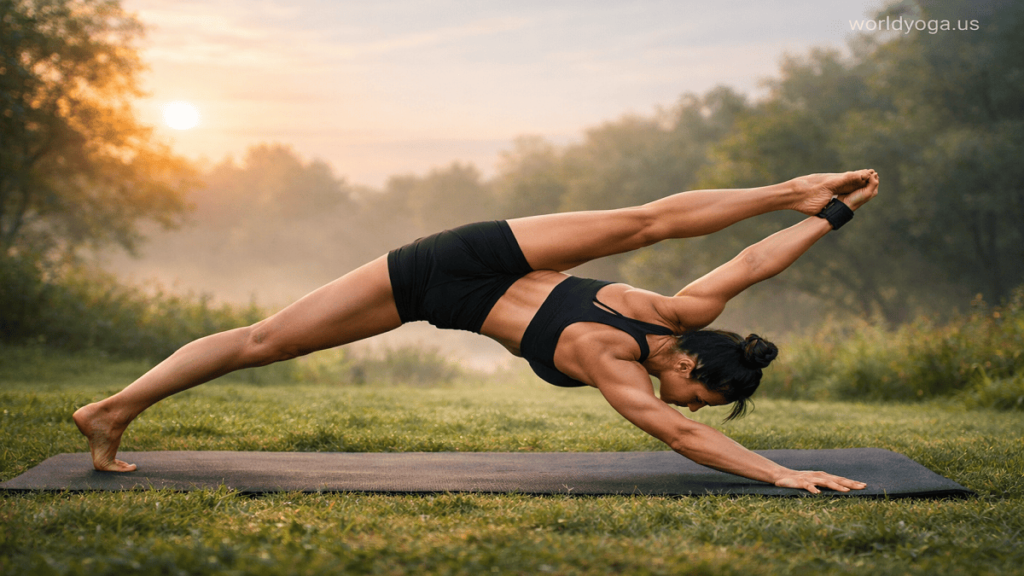
How is One Leg to the Side Downward Dog Pose performed correctly?
The One-Leg-to-the-Side Downward Dog Pose builds on the foundational alignment of Downward-Facing Dog and introduces a lateral leg lift that requires controlled movement, stability, and proper body awareness. Performing it correctly ensures both effectiveness and injury prevention.
Begin in a standard Downward-Facing Dog position. Place your hands shoulder-width apart with fingers spread evenly, pressing firmly through the palms and fingertips to distribute weight. Your feet should be hip-width apart, with heels reaching toward the floor. Lift your hips upward to create an inverted “V” shape, keeping your spine long and your head relaxed between your arms. Resources such as Yoga Journal (https://www.yogajournal.com/poses/downward-facing-dog/) provide detailed alignment cues for establishing a strong base posture.
Once stable, shift your weight evenly into both hands and your grounded foot. Engage your core muscles to stabilize your torso. Slowly lift one leg off the floor, initially extending it straight back to maintain balance. From here, gently move the lifted leg outward to the side, keeping it as straight as possible. The movement should come from the hip joint rather than the lower back.
A critical aspect of correct performance is maintaining pelvic alignment. Avoid rotating or opening the hips excessively; instead, aim to keep them as level as possible. This ensures that the core and hip stabilizers—particularly the gluteus medius—are actively engaged. The standing leg should remain strong and steady, with the foot firmly grounded.
Your shoulders should remain stable and evenly engaged, without collapsing into one side. Press the floor away through both hands, keeping the arms straight but not locked. The neck should stay neutral, with the gaze directed toward your feet or slightly forward. For additional instructional clarity, Yoga International (https://yogainternational.com/article/view/downward-facing-dog-pose/) offers guidance on maintaining proper upper-body alignment.
Hold the position for several steady breaths, focusing on controlled breathing and muscular engagement. Then slowly return the lifted leg to the floor and repeat on the opposite side. Movement should be smooth and deliberate, avoiding any jerking or momentum.
Common mistakes include over-rotating the hips, collapsing into the shoulders, or losing spinal alignment. To correct these, reduce the height of the lifted leg and focus on maintaining a strong, stable base. Beginners may benefit from practicing near a wall or under the supervision of a qualified instructor. Additional technique tips and safety considerations can be found on Verywell Fit (https://www.verywellfit.com/downward-facing-dog-adho-mukha-svanasana-3567107).
In summary, correct performance of the One-Leg-to-the-Side Downward Dog Pose depends on controlled movement, balanced weight distribution, and consistent engagement of the core and stabilizing muscles. By prioritizing alignment over height or range, practitioners can safely build strength, flexibility, and coordination.
#One Leg to the Side Downward Facing Dog Pose in Maharashtra
What is the proper alignment in this variation?
Proper alignment in the One-Leg-to-the-Side Downward Dog Pose is essential for maximizing benefits while minimizing strain on the joints and muscles. This variation builds on the structural foundation of Downward-Facing Dog, so maintaining integrity in the base posture is the first priority.
Start with hand placement. Your hands should be shoulder-width apart, fingers spread widely, and weight distributed evenly across the palms and fingertips. Press firmly through the base of the index finger and thumb to reduce stress on the wrists. The arms remain straight but not locked, with a subtle external rotation in the shoulders to create stability and prevent collapsing into the joints.
The spine should be long and neutral, with the hips lifting upward and back to form the characteristic inverted “V” shape. Avoid rounding the back or overarching the lower spine. Instead, think of lengthening from the hands through the hips. The head stays relaxed between the arms, with the neck in a neutral position. Foundational alignment cues for this base position are well documented by resources such as Yoga Journal.
In the lower body, the grounded foot should be firmly rooted, with the heel reaching toward the floor and the leg actively engaged. When lifting the opposite leg, extend it first straight back to establish balance, then move it out to the side. The key alignment principle here is pelvic control. The hips should remain as level as possible, avoiding excessive rotation or “opening” of the lifted side. This ensures that the movement originates from the hip joint rather than the lower back.
The lifted leg should remain straight and active, with the toes either pointing forward or slightly downward to help maintain neutral hip alignment. Flexing the foot can increase muscular engagement and stability. At the same time, the standing leg must stay strong, with the quadriceps engaged to support the knee and prevent sinking into the joint.
Core engagement is critical throughout the pose. The abdominal muscles, particularly the obliques, help stabilize the torso and prevent lateral shifting or twisting. Without this engagement, the body may collapse into one side, compromising alignment and increasing the risk of strain.
The shoulders and hips should remain square to the floor as much as possible, creating symmetry despite the asymmetrical leg position. According to Yoga International, maintaining even weight distribution between both hands is a key factor in preventing imbalance and overuse injuries.
Common misalignments include collapsing into the supporting shoulder, rotating the hips too far open, and shortening the spine. These can be corrected by reducing the height of the lifted leg and refocusing on stability rather than range of motion. Additional alignment insights are available through Verywell Fit.
In summary, proper alignment in this variation depends on a stable foundation, controlled hip movement, active core engagement, and balanced weight distribution. Prioritizing these elements allows practitioners to perform the pose safely and effectively while developing strength and coordination.
#One Leg to the Side Downward Facing Dog Pose in Hyderabad
Which muscles are engaged during the pose?
The One-Leg-to-the-Side Downward Dog Pose engages a wide range of muscle groups due to its combination of weight-bearing, inversion, and asymmetrical leg positioning. As a variation of Downward-Facing Dog, it requires both strength and flexibility, with added emphasis on stabilization and lateral hip control.
In the upper body, the shoulders and arms play a primary role in supporting body weight. The deltoids stabilize the shoulder joints, while the triceps work to maintain elbow extension. The rotator cuff muscles are actively engaged to keep the shoulders aligned and prevent collapse. Additionally, muscles of the upper back, including the trapezius and rhomboids, assist in stabilizing the shoulder blades and maintaining proper posture. Reliable anatomical breakdowns of this engagement can be found through sources such as Yoga Journal.
The core musculature is heavily involved throughout the pose. The rectus abdominis helps maintain overall trunk stability, while the transverse abdominis provides deep core support. Most notably, the obliques are strongly activated in this variation because they prevent the torso from rotating or tilting as the leg moves laterally. This lateral stabilization is what differentiates the pose from the standard version and increases its intensity.
In the lower body, the grounded leg is responsible for maintaining balance and structural support. The quadriceps engage to stabilize the knee, while the hamstrings lengthen as the hips lift upward. The calf muscles, particularly the gastrocnemius and soleus, work to anchor the heel toward the floor and provide additional stability.
The lifted leg introduces a different set of muscular demands. The primary muscles engaged here are the hip abductors, especially the gluteus medius and gluteus minimus, which are responsible for moving the leg outward to the side. The gluteus maximus also contributes to hip extension and control. These muscles are essential for maintaining pelvic stability and preventing excessive rotation. According to Yoga International, proper activation of these muscles helps ensure that the movement originates from the hip joint rather than compensating through the lower back.
The inner thigh muscles (adductors) of the standing leg also play a supportive role by helping stabilize the pelvis. Meanwhile, the spinal extensors work to keep the back long and neutral, counteracting gravity and maintaining alignment.
Overall, this pose is a full-body engagement exercise that integrates strength, balance, and flexibility. Additional insights into muscle activation and functional benefits can be explored through Verywell Fit, which highlights how yoga poses contribute to overall muscular coordination.
In summary, the One-Leg-to-the-Side Downward Dog Pose activates the shoulders, arms, core, hips, and legs simultaneously, with particular emphasis on the hip abductors and core stabilizers. This coordinated muscular engagement makes it an effective posture for building strength, improving balance, and enhancing body awareness.
#One Leg to the Side Downward Facing Dog Pose in Kolkata
What preparatory poses are recommended?
Preparing for the One-Leg-to-the-Side Downward Dog Pose requires a combination of strength, flexibility, and joint mobility. Because this variation builds on Downward-Facing Dog, it is important to first establish familiarity and stability in foundational yoga postures before progressing to more complex movements.
A primary preparatory pose is Downward-Facing Dog itself. Practicing this posture helps develop shoulder stability, spinal length, and hamstring flexibility. Holding the pose for several breaths while focusing on even weight distribution between the hands and feet creates the structural awareness needed for the variation. Instructional resources such as Yoga Journal provide detailed guidance on refining this base pose.
Another effective preparation is Three-Legged Dog Pose, where one leg is lifted straight back rather than to the side. This pose builds strength in the arms and core while introducing unilateral balance. It also helps practitioners understand how to stabilize the pelvis when one leg is off the ground, which is essential before adding lateral movement.
To improve hip mobility—particularly in the outer hips—Pigeon Pose is highly beneficial. This pose deeply stretches the gluteal muscles and hip rotators, which can otherwise restrict the lateral lift of the leg. Increased flexibility in this area allows for a smoother and safer execution of the side extension.
Core stability is another key requirement. Plank Pose and its variations help strengthen the abdominal muscles, shoulders, and back. A strong core supports the spine and prevents excessive shifting or twisting when transitioning into the one-legged variation. According to Yoga International, consistent core engagement is crucial for maintaining alignment in asymmetrical poses.
For hamstring and calf flexibility, Standing Forward Bend (Uttanasana) is an effective preparatory posture. It lengthens the posterior chain of the legs, making it easier to maintain a straight and grounded standing leg in Downward Dog variations. Additionally, this pose encourages spinal elongation, which carries over into inverted positions.
To further open the hips and improve lateral range of motion, Bound Angle Pose (Baddha Konasana) can be included in a warm-up sequence. This posture targets the inner thighs and groin, complementing the work done by the hip abductors during the main pose.
In summary, recommended preparatory poses focus on building a strong foundation through shoulder stability, core strength, and hip flexibility. By incorporating poses like Downward-Facing Dog, Three-Legged Dog, Pigeon Pose, and Plank Pose into a regular practice, practitioners can safely and effectively progress toward the One-Leg-to-the-Side Downward Dog Pose.
#One Leg to the Side Downward Facing Dog Pose in Chennai
What are the benefits and precautions of this pose?
The One-Leg-to-the-Side Downward Dog Pose offers a combination of strength, flexibility, and balance benefits, while also requiring careful attention to alignment and individual limitations. As an advanced variation of Downward-Facing Dog, it intensifies both the physical and neuromuscular demands of the traditional posture.
Benefits
One of the primary benefits of this pose is improved hip mobility, particularly in the outer hips. By moving the leg laterally, the pose activates and strengthens the hip abductors, including the gluteus medius and minimus. This can enhance joint stability and support functional movement patterns in daily activities.
The pose also develops core strength and stability. Because the body must resist rotation when one leg is extended to the side, the abdominal muscles—especially the obliques—are highly engaged. This contributes to better posture and spinal support over time. According to Yoga International, asymmetrical yoga poses are particularly effective for improving neuromuscular coordination and balance.
In addition, the upper body benefits from increased strength and endurance. The shoulders, arms, and upper back muscles work continuously to stabilize the torso and support body weight. Over time, this can improve shoulder resilience and functional strength.
The pose also promotes flexibility in the hamstrings and calves, as the grounded leg remains extended and active. The inverted nature of the posture may further support circulation and mild stress reduction, similar to other inversion-based yoga poses. Educational platforms like Yoga Journal highlight how such poses can contribute to overall physical balance and relaxation.
Precautions
Despite its benefits, this pose requires mindful practice. One key precaution involves shoulder and wrist safety. Because the upper body bears significant weight, individuals with wrist pain, shoulder instability, or conditions such as tendonitis should approach the pose cautiously or modify it as needed.
Another important consideration is lower back protection. Improper technique—such as over-rotating the hips or forcing the leg too high—can lead to compression in the lumbar spine. Maintaining core engagement and limiting the range of motion helps prevent strain.
Hamstring flexibility is also a factor. Tight hamstrings in the standing leg can cause rounding of the back or excessive pressure on the joints. In such cases, slightly bending the grounded knee can help maintain proper spinal alignment.
Balance and control are essential. Losing stability may lead to uneven weight distribution, increasing the risk of strain in the shoulders or hips. Beginners are advised to practice foundational poses first or work under the guidance of a qualified instructor. Additional safety insights can be found through Verywell Fit, which emphasizes gradual progression in yoga practice.
In summary, the One-Leg-to-the-Side Downward Dog Pose enhances strength, flexibility, and coordination, but it must be practiced with proper alignment and awareness. Respecting individual limits and progressing gradually ensures both safety and long-term benefit.
#One Leg to the Side Downward Facing Dog Pose in Banglore
Case Study of One Leg to the Side Downward Facing Dog Pose
A case study of the One-Leg-to-the-Side Downward Facing Dog Pose provides insight into how this variation of Downward-Facing Dog can be applied in a structured practice to improve strength, flexibility, and neuromuscular control.
Subject Profile:
A 32-year-old recreational yoga practitioner with one year of consistent experience presented with moderate hamstring tightness, limited hip abduction range, and mild shoulder fatigue during weight-bearing poses. The individual had no prior injuries but reported difficulty maintaining stability in single-leg yoga variations.
Intervention:
Over a period of eight weeks, the practitioner incorporated the One-Leg-to-the-Side Downward Dog Pose into their routine three times per week. Each session began with preparatory poses such as Downward-Facing Dog, Plank Pose, and Pigeon Pose to establish foundational strength and mobility. The target pose was held for 20–30 seconds on each side, repeated for three cycles, with emphasis on controlled movement and proper alignment. Guidance from instructional platforms like Yoga International supported technique refinement.
Observations and Outcomes:
By the fourth week, the practitioner demonstrated improved balance and reduced compensatory hip rotation. Core engagement became more consistent, allowing better control during lateral leg lifts. By the end of the eight-week period, measurable improvements included increased hip abduction range, enhanced shoulder endurance, and the ability to maintain pelvic stability throughout the pose.
Flexibility gains were also noted in the hamstrings and calves of the grounded leg, contributing to a more stable base posture. Additionally, the practitioner reported reduced fatigue in the shoulders, indicating improved muscular endurance. These findings align with general observations documented by Yoga Journal, which highlight the strengthening and stabilizing effects of advanced Downward Dog variations.
Challenges:
During the initial phase, the practitioner struggled with over-rotating the hips and placing excessive weight on one shoulder. These issues were addressed by lowering the height of the lifted leg and focusing on even weight distribution between both hands. Occasional wrist discomfort was managed by adjusting hand positioning and incorporating rest periods.
Conclusion:
This case study demonstrates that consistent and mindful practice of the One-Leg-to-the-Side Downward Facing Dog Pose can lead to significant improvements in strength, flexibility, and coordination. The pose is particularly effective for developing hip stability and core control when performed with proper alignment.
However, the study also underscores the importance of gradual progression and attention to technique. Incorporating preparatory poses and using reliable instructional resources such as Verywell Fit can enhance both safety and effectiveness.
#One Leg to the Side Downward Facing Dog Pose in Delhi
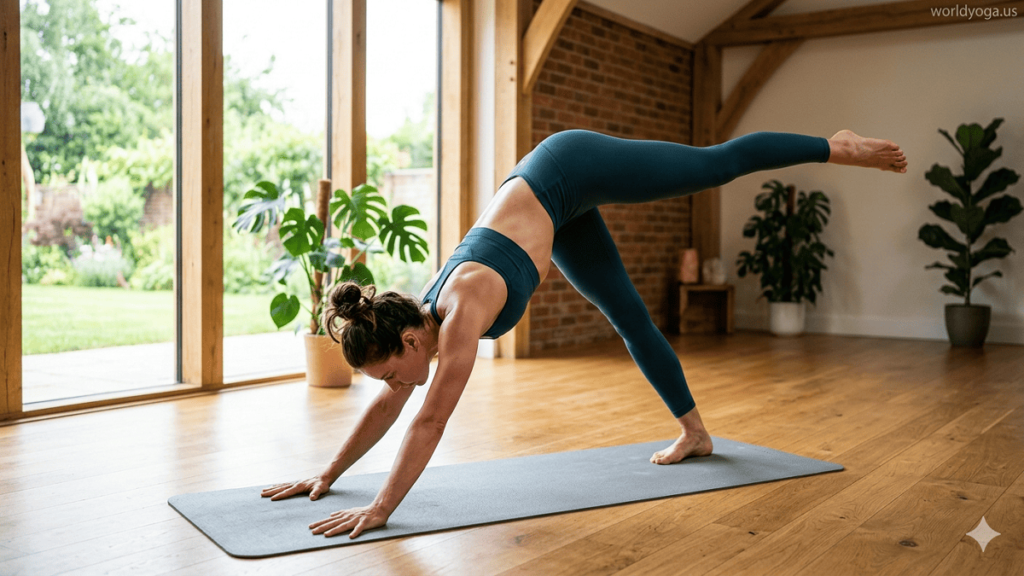
White Paper of One Leg to the Side Downward Facing Dog Pose
Abstract
The One-Leg-to-the-Side Downward Facing Dog Pose is an advanced variation of Downward-Facing Dog that integrates strength, flexibility, and neuromuscular coordination. This white paper examines the biomechanical demands, physiological benefits, and safe application of the pose within modern yoga practice. Drawing on established instructional frameworks from Yoga Journal and Yoga International, the analysis highlights its role in enhancing functional movement and stability.
Introduction
Yoga postures that incorporate asymmetrical loading patterns are increasingly recognized for their ability to improve balance and muscular coordination. The One-Leg-to-the-Side variation introduces lateral hip abduction into an inverted, weight-bearing position, creating a unique combination of challenges not present in the traditional pose. This makes it particularly relevant for intermediate to advanced practitioners seeking to deepen their practice.
Biomechanical Analysis
From a biomechanical perspective, the pose requires coordinated engagement across multiple joints and muscle groups. The shoulders function as primary load-bearing structures, supported by the deltoids, triceps, and stabilizing rotator cuff muscles. The spine remains in a lengthened, neutral position, facilitated by activation of the spinal extensors and deep core musculature.
The defining feature of this variation is lateral leg movement, driven by the hip abductors—primarily the gluteus medius and minimus. The grounded leg provides stability through engagement of the quadriceps, hamstrings, and calf muscles. Simultaneously, the obliques and transverse abdominis resist rotational forces, maintaining pelvic alignment. These interactions align with general anatomical principles described by Verywell Fit.
Physiological and Functional Benefits
The pose contributes to improved hip mobility, particularly in the frontal plane, which is often underdeveloped in conventional training. It enhances core stability by requiring sustained engagement to counterbalance asymmetrical loading. Additionally, the upper body develops endurance and strength through prolonged weight-bearing.
From a functional standpoint, these adaptations translate into better balance, coordination, and injury resilience. The inversion component may also support circulatory efficiency and mild stress reduction, consistent with findings associated with similar yoga postures.
Implementation Guidelines
Proper execution begins with establishing a stable base in Downward-Facing Dog. The practitioner then lifts one leg and extends it laterally while maintaining square hips and even weight distribution. Emphasis should be placed on controlled movement, core engagement, and avoiding excessive spinal rotation.
Progression should be gradual, with preparatory poses such as Plank Pose and Pigeon Pose incorporated to build the necessary strength and flexibility. Instructional support from credible platforms like Yoga International can enhance technique and safety.
Risk Considerations
Potential risks include strain on the wrists, shoulders, and lower back if alignment is compromised. Individuals with limited hamstring flexibility or shoulder instability should modify the pose or seek professional guidance. Overextension of the lifted leg may lead to compensatory movements, reducing effectiveness and increasing injury risk.
Conclusion
The One-Leg-to-the-Side Downward Facing Dog Pose represents a valuable progression in yoga practice, offering measurable benefits in strength, flexibility, and neuromuscular control. When performed with proper alignment and integrated into a structured routine, it serves as an effective tool for enhancing overall physical function. Continued research and practice-based observation will further clarify its applications within both fitness and therapeutic contexts.
#One Leg to the Side Downward Facing Dog Pose in Pune
Industry Application of One Leg to the Side Downward Facing Dog Pose
The One-Leg-to-the-Side Downward Facing Dog Pose, an advanced variation of Downward-Facing Dog, has practical applications across multiple industries, particularly in fitness, rehabilitation, corporate wellness, and sports performance. Its combination of strength, flexibility, and balance makes it a versatile tool for improving functional movement and overall physical health.
Fitness and Wellness Industry
In the modern fitness industry, yoga-based functional training has gained prominence for its holistic benefits. This pose is frequently integrated into intermediate and advanced yoga classes to enhance hip mobility, core strength, and upper-body endurance. Fitness platforms and studios often reference instructional frameworks from Yoga Journal to standardize alignment and teaching methodologies. The lateral leg movement in this variation specifically targets underutilized muscle groups, making it valuable for clients seeking balanced muscular development.
Additionally, boutique fitness studios and digital wellness platforms incorporate this pose into hybrid workouts, combining yoga with strength training and mobility drills. Its ability to challenge stability and coordination aligns well with current trends emphasizing functional fitness.
Rehabilitation and Physical Therapy
In rehabilitation settings, controlled variations of this pose can be adapted to support recovery and injury prevention. Physical therapists may use modified versions to strengthen the hip abductors, improve joint stability, and retrain neuromuscular coordination. According to principles outlined by Verywell Fit, targeted activation of stabilizing muscles is essential for reducing the risk of recurring injuries.
The pose is particularly relevant in addressing imbalances in the hips and core, which are common contributors to lower back pain and knee dysfunction. However, its application in clinical settings requires careful supervision and customization based on patient needs.
Corporate Wellness Programs
Organizations increasingly incorporate yoga into workplace wellness initiatives to improve employee health and productivity. The One-Leg-to-the-Side Downward Dog Pose can be included in structured programs aimed at reducing sedentary strain, enhancing posture, and promoting mental well-being. Guided sessions, often informed by platforms like Yoga International, help employees safely engage in physical activity during work hours.
By improving circulation and reducing musculoskeletal discomfort, such practices can contribute to decreased absenteeism and improved workplace performance.
Sports Performance and Athletic Training
Athletic training programs utilize yoga poses to complement traditional strength and conditioning routines. This variation is particularly beneficial for athletes who require lateral movement strength, such as those in soccer, tennis, and basketball. The pose enhances hip stability, balance, and proprioception—key factors in injury prevention and performance optimization.
Strength and conditioning coaches may integrate it into warm-up or recovery sessions to improve mobility and muscle activation patterns. Its emphasis on controlled, multi-plane movement aligns with modern sports science approaches to functional training.
Conclusion
The One-Leg-to-the-Side Downward Facing Dog Pose demonstrates significant cross-industry relevance. From fitness studios to rehabilitation clinics and corporate wellness programs, its structured application supports strength development, mobility enhancement, and injury prevention. When implemented with proper guidance and alignment principles, it serves as an effective and adaptable tool across diverse professional settings.
#One Leg to the Side Downward Facing Dog Pose in Mumbai
Ask FAQs
What is the One-Leg-to-the-Side Downward Facing Dog Pose?
It is an advanced variation of Downward-Facing Dog where one leg is lifted and extended laterally to the side instead of straight back. This modification increases the demand on core stability, hip mobility, and balance while maintaining the foundational structure of the base pose.
Who can practice this pose?
This pose is best suited for intermediate to advanced practitioners who already have a stable foundation in Downward-Facing Dog. Beginners can attempt modified versions under guidance, focusing on balance and alignment before progressing to the full variation.
What are the key benefits of this pose?
The pose improves hip flexibility, strengthens the core and shoulders, enhances balance, and promotes overall body coordination. It also helps activate the hip abductors, which are often underutilized in standard fitness routines.
What are common mistakes to avoid?
Common errors include over-rotating the hips, collapsing into the shoulders, and lifting the leg too high at the expense of alignment. Maintaining a neutral spine, engaged core, and even weight distribution is essential for safe practice.
Are there any precautions to consider?
Yes, individuals with wrist, shoulder, or lower back issues should approach this pose cautiously. It is important to avoid forcing the movement and to modify the pose if flexibility or strength is limited. Consulting a qualified instructor is recommended for safe execution.
Table of Contents
Desclaimer
This content is for informational and educational purposes only and does not constitute medical or professional advice. Individuals should consult a qualified healthcare provider or certified yoga instructor before beginning any new exercise program, especially if they have pre-existing health conditions or injuries. Practice should be performed within personal limits to avoid injury.