Parshvottanasana
Parshvottanasana, commonly known as Intense Side Stretch Pose or Pyramid Pose, is a fundamental standing forward bend in modern yoga practice. The posture combines balance, flexibility, and deep hamstring stretching while encouraging spinal alignment and mental focus. It is widely practiced in Hatha, Ashtanga, and Vinyasa yoga systems due to its ability to improve both physical stability and internal awareness.
Parshvottanasana is derived from Sanskrit: “parsva” meaning side or flank, “uttana” meaning intense stretch, and “asana” meaning posture. The pose reflects a deep lateral and forward extension of the torso over a stable base, making it both grounding and introspective.
One of the key benefits of Parshvottanasana is the intense stretching of the hamstrings, calves, and hips. Regular practice helps improve flexibility in the posterior chain of the body, which is often tight due to prolonged sitting. It also strengthens the legs, especially the quadriceps and stabilizing muscles around the knees and ankles. Additionally, the forward folding nature of the pose promotes improved digestion by gently compressing the abdominal organs.
From a postural perspective, Parshvottanasana enhances spinal alignment and encourages awareness of symmetry in the body. The requirement to square the hips and maintain balance helps develop coordination and proprioception. On a mental level, the pose is known for its calming effect on the nervous system. The inward focus required during the fold encourages mindfulness, making it useful for stress reduction and concentration.
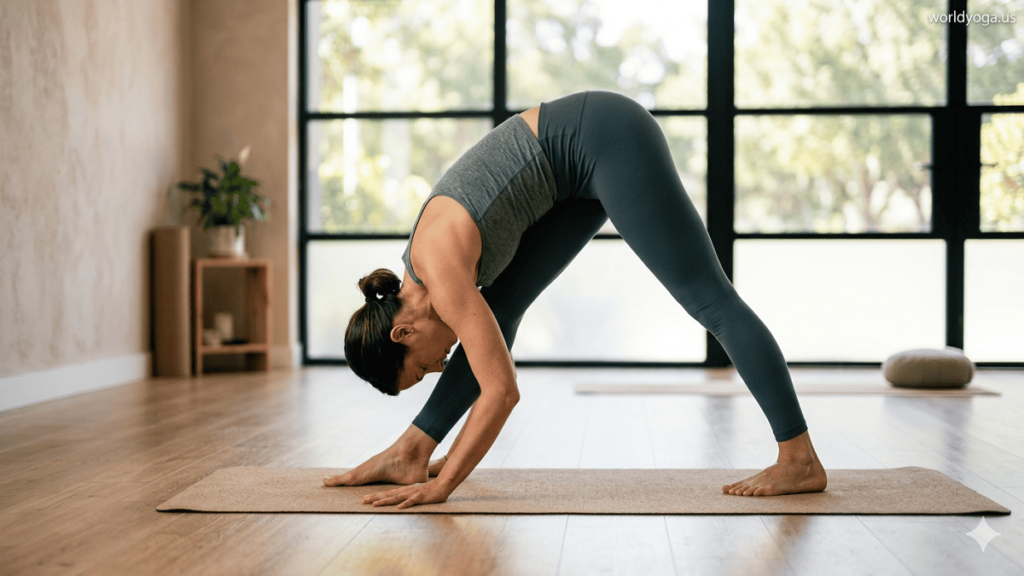
To practice the pose, begin in a standing position. Step one foot forward and the other back, keeping both legs straight. Square your hips toward the front foot and place your hands in a reverse prayer position behind your back or on the floor beside your front foot. Inhale to lengthen the spine, and exhale as you hinge forward from the hips over the front leg. Keep the spine elongated rather than rounding excessively, and maintain even weight distribution through both feet.
Alignment is critical to avoid strain. Beginners should avoid forcing the fold and instead focus on maintaining a long spine. Using yoga blocks under the hands can help maintain proper alignment. Individuals with hamstring injuries or lower back issues should proceed cautiously or practice under guidance.
Variations include using a strap between the hands for shoulder opening or keeping the hands on the hips for better control of the torso. Over time, practitioners can deepen the stretch and improve balance with consistent practice.
For more detailed guidance, refer to authoritative yoga resources such as Yoga Journal – Pyramid Pose Guide and B.K.S. Iyengar Yoga resources, which provide structured insights into alignment and therapeutic applications.
Parshvottanasana is best practiced with patience and awareness, as it gradually builds both physical flexibility and mental steadiness when integrated into a consistent yoga routine.
#Parshvottanasana in India
How is Parshvottanasana performed correctly?
Parshvottanasana, also known as the Pyramid Pose, is a standing forward bend that requires precision, balance, and controlled flexibility. Performing it correctly is essential to gain its full benefits while avoiding strain on the hamstrings, lower back, and shoulders. The pose emphasizes alignment of the hips and spine while creating a deep stretch along the posterior chain of the body.
To begin, stand in Tadasana with your feet together and your spine elongated. Step your right foot back approximately 2.5 to 4 feet, depending on your height and flexibility. Turn your back foot outward slightly, ideally at a 45-degree angle, and ground the outer edge of the foot firmly into the mat. Both legs should remain straight and active, with the thighs engaged to support stability.
Next, square your hips toward the front of the mat. This is one of the most important alignment principles in Parshvottanasana. Many beginners allow the hips to open outward, which reduces the effectiveness of the stretch and can strain the lower back. Engage your core muscles to help maintain this alignment.
Place your hands in a position that supports balance and alignment. Advanced practitioners may take a reverse prayer position behind the back, which opens the shoulders and chest. Beginners can place hands on the hips or use yoga blocks on either side of the front foot for support. Inhale deeply to lengthen the spine, creating space from the hips to the crown of the head.
As you exhale, hinge forward from the hip joints rather than rounding the spine. Lower your torso over the front leg, aiming to bring your abdomen closer to the thigh before the chest and head. The movement should be slow and controlled, with awareness maintained throughout the descent. Keep both legs straight but avoid locking the knees, as slight engagement helps protect the joints.
The head may rest near the shin or hover above it depending on flexibility. The gaze should remain soft, either toward the shin or the mat, to maintain balance and focus. Hold the position for 5 to 10 breaths, breathing steadily and allowing the hamstrings and hips to gradually release tension.
To exit the pose, inhale and slowly lift the torso back to a standing position, maintaining control through the core and legs. Step the back foot forward to return to Tadasana. Repeat on the opposite side to ensure balance between both sides of the body.
Common mistakes include rounding the spine excessively, misaligned hips, and collapsing into the front knee. Using props such as blocks or straps can help maintain proper alignment and prevent injury. Individuals with hamstring tightness or lower back issues should approach the pose gently and avoid forcing depth.
For further reference on correct alignment and variations, trusted resources include Yoga Journal – Pyramid Pose Guide and Yoga International – Parshvottanasana Practice Guide, which provide detailed instructional insights.
When practiced correctly, Parshvottanasana builds strength, improves flexibility, and enhances body awareness, making it a valuable posture in any structured yoga sequence.
#Parshvottanasana in Maharashtra
What is the proper alignment in Intense Side Stretch Pose?
Parshvottanasana, also called Intense Side Stretch Pose or Pyramid Pose, depends heavily on precise alignment rather than depth of the forward fold. Proper alignment ensures the stretch targets the hamstrings and hips effectively while protecting the lower back, knees, and shoulders. The posture is fundamentally about symmetry, spinal length, and controlled hip positioning.
The first key alignment principle is the stance. The feet should be set in a long step, similar to a shortened lunge position. The front foot points straight forward, while the back foot is angled slightly outward, typically around 30 to 45 degrees. The outer edge of the back foot must remain firmly grounded to maintain stability and balance. Both legs stay straight and actively engaged, with the quadriceps lifting to support the knee joints.
Hip alignment is the most critical aspect of the pose. The hips should be squared toward the front leg rather than opening sideways. This often requires drawing the back hip slightly forward and the front hip slightly back. Without this adjustment, the pelvis tends to rotate, reducing the effectiveness of the hamstring stretch and placing uneven stress on the lumbar spine.
Spinal alignment is equally important. The spine should remain long from the base to the crown of the head before any forward folding occurs. The chest should lift slightly, creating space between the vertebrae. The movement into the forward fold must come from the hip joints, not from rounding the upper back. A neutral spine ensures the stretch is distributed evenly along the posterior chain rather than concentrated in the lower back.
Arm and shoulder positioning depend on flexibility and experience. Advanced practitioners may use a reverse prayer position behind the back, which encourages shoulder opening and chest expansion. However, the shoulders should remain relaxed and away from the ears. Beginners may keep hands on the hips or place them on blocks beside the front foot to maintain stability and alignment.
In the forward fold phase, the torso should descend over the front leg while maintaining length in the spine. Ideally, the abdomen moves toward the thigh before the chest and head follow. The gaze remains soft and neutral, helping maintain balance and focus. Weight distribution should remain even between both feet, preventing collapse into the front leg.
Common alignment errors include allowing the hips to open outward, locking the front knee, rounding the spine excessively, and collapsing the chest. These mistakes reduce the pose’s effectiveness and can lead to strain or injury. Using props such as yoga blocks or a strap can help maintain correct structure, especially for beginners or those with tight hamstrings.
For authoritative guidance on alignment principles, refer to Yoga Journal – Pyramid Pose Alignment Guide and Yoga International – Detailed Practice Instructions, which offer structured breakdowns of safe technique and variations.
When alignment is maintained correctly, Parshvottanasana becomes a balanced posture that enhances flexibility, improves posture, and builds full-body awareness through controlled, mindful movement.
#Parshvottanasana in Ahemadabad

Which muscles are engaged during Parshvottanasana?
Parshvottanasana, commonly known as Intense Side Stretch Pose or Pyramid Pose, is a deeply integrative standing forward bend that engages multiple muscle groups across the lower body, core, and upper body. Rather than isolating a single area, the pose works through coordinated muscular activation and stretching, making it both a strengthening and lengthening posture.
One of the primary muscle groups engaged in Parshvottanasana is the hamstrings, located at the back of the thighs. These muscles are strongly lengthened as the practitioner folds forward over the front leg. At the same time, they are lightly engaged isometrically to stabilize the knee joint and control the descent into the pose. Alongside the hamstrings, the gastrocnemius and soleus muscles of the calves are also deeply stretched, especially in the front leg.
The quadriceps in both legs play an important stabilizing role. They remain active throughout the posture to keep the knees extended without hyperextension. This controlled engagement helps protect the knee joints and maintains structural integrity in the lower body. The adductor muscles of the inner thighs are also engaged, particularly in maintaining hip alignment and preventing the legs from collapsing inward.
The gluteal muscles, especially the gluteus maximus and medius, assist in stabilizing the pelvis. They help control hip positioning as the practitioner works to square the hips toward the front of the mat. This engagement is subtle but essential for maintaining balance and preventing rotational strain in the lower back.
In the core region, the abdominal muscles—including the rectus abdominis and obliques—are actively engaged to support spinal extension and controlled forward folding. These muscles help maintain a long spine during the descent and prevent excessive rounding of the back. The erector spinae muscles along the spine also play a supporting role by maintaining spinal length and stability before the fold deepens.
The hip flexors in the back leg are stretched as the pelvis is squared forward. This creates a lengthening effect along the iliopsoas group, which is often tight due to prolonged sitting. At the same time, these muscles assist in subtle stabilization of the pelvis.
In the upper body, shoulder and chest muscles become active depending on arm positioning. When practitioners use reverse prayer hands, the pectoralis major and minor are gently opened, while the shoulder stabilizers, including the rotator cuff muscles, engage to maintain alignment. If the hands are placed on the floor or blocks, the arms engage more in support and balance rather than flexibility.
Overall, Parshvottanasana creates a balanced interaction between muscular engagement and release. While the back of the body experiences deep stretching, the front and stabilizing muscles remain active to support alignment and control.
For a deeper anatomical breakdown of yoga postures, refer to trusted resources such as Yoga Journal – Pyramid Pose Guide and Yoga Anatomy Reference – Yoga International, which provide detailed insights into muscular engagement and biomechanics.
When practiced with awareness, Parshvottanasana not only increases flexibility but also builds functional strength and postural stability across the entire body.
#Parshvottanasana in Hyderabad
What preparatory poses are recommended before practicing it?
Preparing for Parshvottanasana requires a thoughtful sequence of preparatory poses that gradually open the hamstrings, hips, shoulders, and spine while building stability in the legs and core. Since this posture involves a deep forward fold combined with hip alignment and balance, adequate preparation helps prevent strain and improves overall control and ease in the final expression of the pose.
A foundational starting point is Tadasana. Although it appears simple, this posture establishes essential alignment awareness. Practicing Tadasana helps develop an understanding of weight distribution through the feet, engagement of the quadriceps, and elongation of the spine. This awareness directly translates into maintaining stability and symmetry in Parshvottanasana.
To begin opening the hamstrings, Uttanasana is highly effective. This pose gently lengthens the entire posterior chain, including the hamstrings, calves, and lower back. Practicing Uttanasana with a focus on hinging from the hips rather than rounding the spine prepares the body for the controlled forward fold required in Parshvottanasana.
Another important preparatory posture is Adho Mukha Svanasana. This inverted V-shaped pose strengthens the shoulders and arms while deeply stretching the hamstrings and calves. It also reinforces spinal elongation under load, which is crucial for maintaining proper alignment during the standing forward fold.
Low lunges, such as Anjaneyasana variations, are also beneficial. These help open the hip flexors, particularly in the back leg, which is essential when squaring the hips in Parshvottanasana. Tight hip flexors often restrict pelvic alignment, making it difficult to maintain symmetry in the pose. Gentle lunges improve both flexibility and balance in the lower body.
Supta Padangusthasana is another highly recommended preparatory pose. Performed in a reclined position, it allows targeted stretching of the hamstrings without the influence of balance demands. This helps practitioners safely increase hamstring flexibility while maintaining spinal neutrality.
Additionally, Parsvottanasana-specific prep poses at the wall can be useful. Practicing a modified version of the pose with hands on a wall or blocks helps train hip alignment and spinal extension without the full intensity of the forward fold. This builds muscle memory for correct positioning.
Gentle spinal warm-ups, such as Cat-Cow stretches, also play an important role. These movements increase mobility in the vertebral column and prepare the nervous system for deeper forward folding. They encourage coordination between breath and movement, which is essential for safe transitions into more intense postures.
For more structured guidance on sequencing and preparation, reliable references include Yoga Journal – Pyramid Pose Guide and Yoga International – Practice Preparation Insights, both of which offer detailed preparatory sequences and alignment tips.
When these preparatory poses are practiced consistently, they create the necessary foundation of flexibility, strength, and awareness, allowing Parshvottanasana to be performed safely, effectively, and with greater depth over time.
#Parshvottanasana in Banglore
What are the benefits and precautions of Parshvottanasana?
Parshvottanasana, also known as Intense Side Stretch Pose or Pyramid Pose, offers a combination of strengthening, stretching, and alignment benefits, but it also requires mindful practice due to its intensity on the hamstrings and spine. When performed correctly, it supports both physical conditioning and mental focus, while improper technique can lead to strain in the lower back or legs.
Benefits of Parshvottanasana
One of the most significant benefits of Parshvottanasana is the deep stretching of the hamstrings, calves, and posterior chain. This helps improve overall lower-body flexibility, particularly useful for individuals who spend long hours sitting. Over time, this increased flexibility can reduce stiffness in the legs and improve mobility in daily movements.
The pose also strengthens the legs, including the quadriceps and stabilizing muscles around the knees and ankles. Because the posture requires holding a stable stance while folding forward, it builds endurance and balance in the lower body. The core muscles, including the abdominals and lower back stabilizers, are also engaged, contributing to improved postural control.
From a spinal health perspective, the forward fold encourages elongation of the spine when done correctly. This can help decompress the vertebrae and improve postural awareness. It also encourages better alignment habits, particularly in people with forward-head posture or rounded shoulders.
Parshvottanasana has a calming effect on the nervous system. The forward bending position naturally activates the parasympathetic response, which supports relaxation and stress reduction. The inward focus required during the pose also enhances concentration and mindfulness.
Additionally, the posture stimulates the abdominal organs through gentle compression, which may support digestion and metabolic activity. The combination of stretching and mild internal massage contributes to overall vitality and circulation.
Precautions for Parshvottanasana
Despite its benefits, Parshvottanasana must be approached with caution. Individuals with hamstring injuries should avoid forcing the forward fold, as excessive stretching can worsen muscle strain. It is important to progress gradually and prioritize spinal length over depth.
People with lower back issues should be especially careful not to round the spine excessively. The movement should always originate from the hips rather than collapsing through the lumbar region. Using props such as yoga blocks under the hands can help maintain proper alignment and reduce pressure on the lower back.
Those with high blood pressure, vertigo, or balance issues should practice with support or avoid deep forward folds altogether, as the head-down position may cause discomfort or dizziness.
Knee health is another consideration. Locking the knees or hyperextending them can place unnecessary stress on the joint. Keeping a micro-bend in the knees helps protect ligaments and maintain muscular engagement.
Beginners should avoid attempting advanced arm positions, such as reverse prayer behind the back, until sufficient shoulder flexibility is developed. Forcing this position can strain the shoulders and chest.
Proper warm-up is essential before practicing Parshvottanasana. Preparing the body with gentle hamstring and hip-opening poses reduces the risk of injury and improves ease in the final posture.
For detailed safety guidelines and practice insights, refer to trusted resources such as Yoga Journal – Pyramid Pose Guide and Yoga International – Safe Practice Instructions, which provide structured recommendations for alignment and modifications.
When practiced with awareness and proper alignment, Parshvottanasana becomes a highly beneficial posture that enhances flexibility, strength, and mental calm while minimizing the risk of injury through mindful execution.
#Parshvottanasana in Delhi
Case Study of Parshvottanasana
This case study examines the application of Intense Side Stretch Pose (Pyramid Pose) in a structured yoga therapy setting aimed at improving hamstring flexibility, correcting postural imbalance, and reducing lower back discomfort in an adult office worker with sedentary lifestyle habits. The subject, a 34-year-old software professional, reported chronic tightness in the posterior thigh muscles, mild lower back stiffness, and reduced flexibility during forward bending movements.
Initial Assessment
At baseline, the subject demonstrated limited hamstring flexibility, unable to reach beyond mid-shin level in a standing forward bend. Postural observation revealed slight pelvic tilt imbalance and rounded shoulders due to prolonged sitting. Functional movement testing indicated restricted hip hinge mechanics and compensatory spinal flexion during forward bending.
Intervention Strategy
A 6-week progressive yoga intervention was designed with Parshvottanasana as the central posture. The sequence included preparatory poses such as Tadasana for alignment awareness, Adho Mukha Svanasana for posterior chain activation, and supported forward folds to gradually increase flexibility.
Parshvottanasana was introduced in a modified form during the first two weeks, using yoga blocks under the hands and maintaining a shorter stance to reduce strain. The emphasis was placed on hip alignment, spinal elongation, and controlled breathing rather than depth of the fold. By week three, the practitioner progressed to a fuller expression of the pose, incorporating reverse prayer arm position intermittently to enhance shoulder mobility.
Observations and Progress
By the end of week six, measurable improvements were observed in hamstring flexibility, with the subject able to reach the lower shin region comfortably without spinal collapse. Hip symmetry improved significantly, with reduced external rotation of the pelvis during forward folding. Core engagement also increased, resulting in improved control during transitions between standing and forward bending postures.
Subjectively, the participant reported reduced lower back stiffness after long working hours and improved body awareness during daily movements. The calming effect of the forward fold was also noted, contributing to decreased perceived stress levels.
Discussion
The results highlight the effectiveness of Parshvottanasana as both a therapeutic and functional posture when applied progressively. The pose’s combination of hamstring stretching, hip stabilization, and spinal alignment makes it particularly useful for individuals with sedentary habits. However, success was dependent on proper sequencing, gradual intensity progression, and consistent attention to alignment principles.
This case also reinforces the importance of preparatory poses in achieving safe outcomes. Without foundational work in Tadasana and Downward Facing Dog, the subject would likely have experienced strain in the lower back and hamstrings due to premature depth in the forward fold.
Conclusion
Parshvottanasana serves as a highly effective posture for improving lower body flexibility, spinal alignment, and postural awareness when integrated into a structured yoga program. Its benefits are maximized when introduced progressively with supportive modifications and complementary preparatory poses.
For additional reference on therapeutic applications and alignment strategies, see Yoga Journal – Pyramid Pose Guide and Yoga International – Yoga Therapy Insights, which provide evidence-informed approaches to safe and effective practice.
#Parshvottanasana in Pune
White Paper of Parshvottanasana
Abstract
Parshvottanasana is a foundational standing forward bend used in modern yoga systems for improving hamstring flexibility, postural alignment, and neuromuscular control. This white paper examines its biomechanical structure, therapeutic applications, benefits, limitations, and safety considerations. The pose integrates lower-limb strength with controlled spinal flexion, making it a widely used posture in both general yoga practice and yoga therapy protocols.
Introduction
Parshvottanasana is derived from Sanskrit terms meaning “intense side stretch.” It is commonly practiced in Hatha, Ashtanga, and Vinyasa yoga sequences as a transitional and corrective posture. The pose involves a staggered stance with a forward fold over one leg, emphasizing hip alignment and posterior chain elongation. Its dual requirement of flexibility and stability makes it a significant tool for improving functional movement patterns.
Biomechanics and Muscular Engagement
The posture primarily targets the posterior kinetic chain, including the hamstrings, gastrocnemius, and spinal extensors. The quadriceps remain actively engaged to stabilize the knee joints, while the gluteal muscles assist in pelvic positioning. Core musculature, particularly the rectus abdominis and obliques, supports controlled hip hinging and spinal lengthening. Shoulder engagement varies depending on arm placement, with reverse prayer increasing thoracic opening and scapular stabilization demand.
The key biomechanical principle is hip hinging with spinal elongation. Improper execution often leads to compensatory lumbar flexion, which reduces effectiveness and increases injury risk.
Therapeutic Benefits
Parshvottanasana provides multiple physiological and functional benefits:
- Improved hamstring and calf flexibility
- Enhanced pelvic stability and alignment awareness
- Strengthening of lower-limb stabilizers
- Improved posture through spinal decompression
- Activation of parasympathetic nervous system response, supporting stress reduction
In rehabilitation and corrective exercise contexts, the pose is frequently used to address tight posterior chain muscles resulting from prolonged sitting and sedentary behavior.
Contraindications and Precautions
Despite its benefits, the pose requires careful application. Individuals with acute hamstring injuries, lumbar disc issues, or severe sciatica should modify or avoid deep forward folding. Excessive spinal rounding should be prevented at all times. Use of props such as blocks or straps is recommended for beginners or individuals with limited flexibility.
Balance limitations and hypertension may also require caution due to the inverted head position. Proper warm-up is essential before practice.
Practical Applications
Parshvottanasana is commonly integrated into yoga sequencing for:
- Postural correction programs
- Athletic mobility training
- Stress reduction protocols
- Rehabilitation of lower-limb stiffness
It is often paired with preparatory poses such as forward bends and hip openers to ensure safe execution.
Conclusion
Parshvottanasana is a biomechanically efficient posture that combines strength, flexibility, and alignment training. When performed with correct technique and progressive adaptation, it offers significant benefits for musculoskeletal health and postural awareness. Its therapeutic value is maximized when integrated into structured yoga programs with appropriate modifications.
For further reference, see:
#Parshvottanasana in Kolkata
Industry Application of Parshvottanasana
Overview
Parshvottanasana is a structured standing forward bend widely used across fitness, wellness, rehabilitation, and performance training industries. Its value lies in its ability to simultaneously improve flexibility, stability, and postural awareness while requiring minimal equipment. Because it blends mobility with controlled strength, it has become a functional tool in both traditional yoga settings and modern movement science applications.
1. Fitness and Gym Training Industry
In contemporary fitness programs, Parshvottanasana is integrated into mobility and cooldown sequences. Personal trainers often use it to counteract tight posterior chain muscles caused by resistance training, running, or prolonged sitting. It is especially effective in improving hamstring length and hip hinge mechanics, which are essential for exercises like deadlifts and squats.
Group fitness classes such as functional training, Pilates-yoga hybrids, and mobility workshops also incorporate this posture to enhance flexibility and reduce injury risk. It is often paired with dynamic warm-ups to prepare the lower body for high-intensity workouts.
2. Yoga and Wellness Industry
Within the yoga industry, Parshvottanasana is a key posture in Hatha, Ashtanga, and Vinyasa sequencing. It is frequently used as a transitional asana that bridges standing poses and deeper forward folds. Yoga studios utilize it in beginner-to-intermediate classes to develop foundational alignment skills such as hip squaring and spinal elongation.
In wellness programs, it is applied in stress management sessions due to its calming effect on the nervous system. The forward fold component helps activate parasympathetic responses, making it valuable in corporate wellness initiatives.
3. Physiotherapy and Rehabilitation
In physiotherapy settings, Parshvottanasana is adapted as a therapeutic exercise for patients with mild hamstring tightness, postural imbalance, and lower back stiffness. Therapists often prescribe modified versions using blocks or wall support to ensure safe alignment.
It is commonly used in rehabilitation programs for individuals recovering from sedentary lifestyle-related dysfunctions. The controlled hip hinge pattern helps retrain movement mechanics and improve functional flexibility without high impact stress.
4. Sports and Athletic Training
Athletic trainers incorporate Parshvottanasana into recovery and mobility routines for runners, cyclists, football players, and dancers. The pose is particularly effective for reducing hamstring tightness and improving stride efficiency in runners.
In sports requiring explosive lower-body movement, such as sprinting or jumping, it supports injury prevention by maintaining balanced muscle length and joint mobility. It also contributes to improved proprioception and body control.
5. Corporate Wellness and Mental Health Programs
Organizations increasingly include yoga-based interventions in workplace wellness programs. Parshvottanasana is used to counteract prolonged desk posture effects, including tight hips and reduced spinal mobility. Its calming nature also supports mental relaxation, focus, and stress reduction during work breaks or guided sessions.
Conclusion
Parshvottanasana has strong cross-industry relevance due to its versatility, low equipment requirement, and broad functional benefits. From fitness studios to rehabilitation clinics and corporate wellness programs, it serves as a practical tool for improving mobility, posture, and stress regulation.
For further reference:
#Parshvottanasana in Mumbai
Ask FAQs
What is Parshvottanasana mainly used for?
Parshvottanasana is primarily used to improve hamstring flexibility, strengthen the legs, and enhance postural alignment. It also supports better balance and spinal awareness by requiring controlled hip hinging and stable lower-body engagement. In yoga practice, it is often used to prepare the body for deeper forward bends and improve overall movement efficiency.
Is Parshvottanasana suitable for beginners?
Yes, beginners can practice Parshvottanasana with modifications. Using yoga blocks under the hands, keeping a shorter stance, or bending the knees slightly can make the pose more accessible. Beginners should focus on maintaining a long spine and proper hip alignment rather than attempting a deep forward fold.
Which body parts get stretched the most in this pose?
The pose primarily stretches the hamstrings, calves, and lower back muscles. It also lengthens the gluteal region and hip flexors of the back leg. When practiced with reverse prayer hands, it additionally opens the shoulders and chest.
What are common mistakes to avoid in Parshvottanasana?
Common mistakes include rounding the spine excessively, misaligning the hips, locking the knees, and shifting too much weight onto the front leg. Another frequent error is rushing into the forward fold without proper warm-up, which can increase the risk of hamstring strain.
Can Parshvottanasana help with back pain?
Parshvottanasana may help reduce mild lower back stiffness by improving hamstring flexibility and promoting spinal elongation. However, it must be performed correctly. If the spine is rounded or the hamstrings are forced, it can worsen discomfort. Individuals with chronic or severe back pain should practice under guidance or use supported variations.
Table of Contents
Disclaimer: The information provided about Parshvottanasana is for general educational and informational purposes only. It is not a substitute for professional medical advice, diagnosis, or treatment. Always consult a qualified yoga instructor or healthcare professional before attempting this pose, especially if you have any existing injuries, medical conditions, or physical limitations.