Pendant Pose
Pendant Pose, often associated with deep squatting and forward-leaning balance work in yoga, is a functional posture that emphasizes lower-body strength, spinal alignment, and breath control. While the term “Pendant Pose” is not always used universally across traditional Sanskrit yoga texts, it is commonly referenced in modern yoga and fitness contexts to describe a suspended or forward-hinging squat variation that challenges stability and engages multiple muscle groups simultaneously.
Overview and Technique
Pendant Pose is typically performed from a standing position transitioning into a deep squat. The practitioner lowers the hips toward the ground while keeping the heels grounded (or slightly lifted depending on flexibility). The torso leans forward, and the arms may extend downward or forward, creating a “hanging” or “pendant-like” visual alignment. The spine is elongated rather than rounded, and the core remains engaged throughout the posture.
To perform it safely:
- Stand with feet shoulder-width or slightly wider apart.
- Inhale deeply and begin to bend the knees.
- Exhale while lowering into a deep squat, keeping the chest open.
- Maintain balance by engaging the abdominal muscles and grounding through the feet.
- Hold for several breaths before slowly returning to standing.
Benefits
Pendant Pose offers a wide range of physical and mental benefits:
- Strengthens lower body muscles: It actively engages the quadriceps, hamstrings, calves, and glutes.
- Improves hip mobility: Deep squatting helps open the hip joints, increasing flexibility over time.
- Enhances core stability: Maintaining balance in a lowered position requires continuous abdominal engagement.
- Supports spinal alignment: When performed correctly, it encourages an elongated spine and better posture awareness.
- Boosts functional movement: It mimics natural human movements like lifting, bending, and squatting, improving everyday mobility.
- Promotes mindfulness: The controlled breathing and balance requirement help improve focus and mental presence.
Precautions
Individuals with knee injuries, lower back pain, or limited ankle mobility should approach Pendant Pose cautiously. Using support such as a yoga block under the heels or practicing near a wall can help maintain stability. Proper warm-up is essential to avoid strain.
Conclusion
Pendant Pose is a powerful functional yoga posture that blends strength, flexibility, and mindfulness. It is particularly valuable for improving foundational movement patterns and building resilience in the lower body. Regular practice can lead to improved balance, better posture, and enhanced body awareness.
External References
- https://www.yogajournal.com/poses
- https://www.verywellfit.com/yoga-poses-for-beginners-3567186
- https://www.healthline.com/health/fitness-exercise/squat-exercise-benefits
- https://www.yogabasics.com/learn/squatting-in-yoga/
#Pendant Pose in India
What is Pendant Pose?
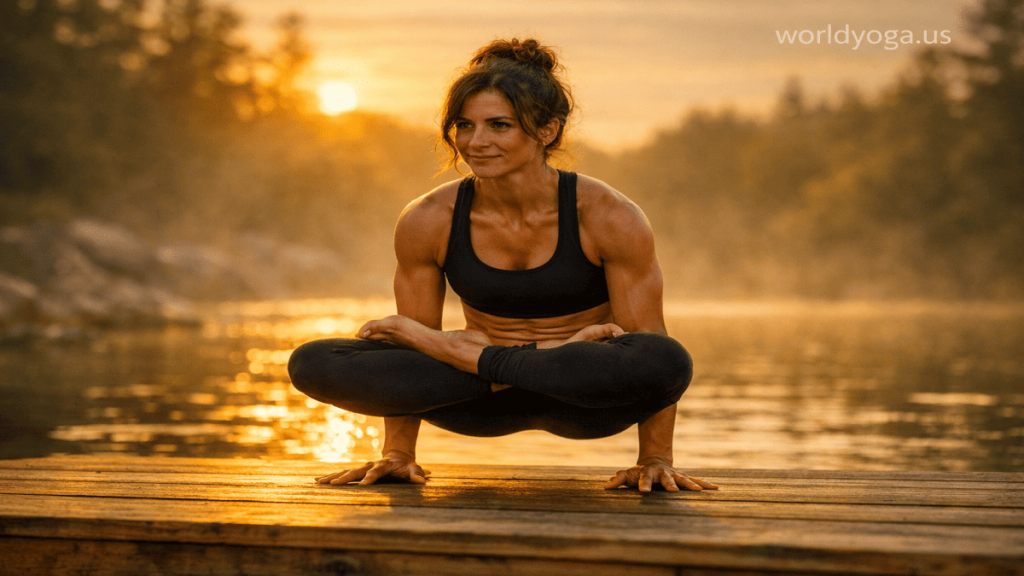
Pendant Pose is a modern yoga and fitness term generally used to describe a deep squatting posture with a forward-hanging torso, where the body appears to “dangle” or hang like a pendant. While it is not a classical Sanskrit-named yoga asana, it is closely related to traditional poses such as Malasana (Garland Pose) and functional movement patterns like the deep bodyweight squat.
Meaning and Concept
In Pendant Pose, the practitioner lowers the body into a deep squat while keeping the feet grounded and the spine lengthened. The hips move close to the heels, and the torso leans slightly forward, creating a suspended, relaxed yet engaged posture. The arms may hang downward, extend forward for balance, or rest inside the knees depending on flexibility and style.
The name “Pendant” refers to the visual impression of the upper body hanging between stability points—primarily the feet and hips—similar to an object suspended by a chain.
How It Is Performed
To practice Pendant Pose:
- Stand with feet slightly wider than hip-width apart
- Slowly bend the knees and lower into a deep squat
- Keep heels grounded if possible (or gently elevated if mobility is limited)
- Allow the torso to lean forward while keeping the spine long
- Engage the core for balance and stability
- Hold the position while breathing steadily
Key Benefits
Pendant Pose is widely used in yoga-inspired mobility and strength training because it offers multiple benefits:
- Improves hip flexibility and opens tight hip joints
- Strengthens lower body muscles including quadriceps, glutes, and calves
- Enhances core stability and balance control
- Supports functional movement, such as bending and lifting in daily life
- Encourages spinal alignment and postural awareness
- Promotes relaxation and grounding, especially when held for longer durations
Important Considerations
People with knee, ankle, or lower back issues should approach this pose carefully. Using support such as a yoga block under the heels or practicing near a wall can improve safety and stability. Warm-up exercises for hips and ankles are strongly recommended before attempting the posture.
Conclusion
Pendant Pose is a functional deep squat variation that blends strength, flexibility, and mindfulness. Though not a traditional yoga classification, it is widely used in modern yoga and fitness practices to improve mobility and foundational movement strength.
External References
- https://www.yogajournal.com/poses
- https://www.yogabasics.com/learn/squatting-in-yoga/
- https://www.healthline.com/health/fitness-exercise/squat-exercise-benefits
- https://www.verywellfit.com/yoga-poses-for-beginners-3567186
#Pendant Pose in Maharshtra
How is Pendant Pose performed step by step?
Step 1: Starting Position
Begin by standing upright on a flat surface with your feet about shoulder-width apart or slightly wider, depending on your comfort level. Distribute your weight evenly across both feet. Keep your spine tall, shoulders relaxed, and gaze forward.
Take a few deep breaths to center your body and prepare for movement.
Step 2: Initiate the Squat
Inhale deeply, then slowly begin bending your knees. Push your hips back slightly as if sitting into an invisible chair. Keep your movement controlled and avoid dropping quickly.
Ensure your knees track in line with your toes to prevent strain.
Step 3: Lower into Deep Squat
Continue lowering your body until you reach a deep squat position. Ideally, your hips move close to your heels. If flexibility allows, your heels remain grounded. If not, they may lift slightly, which is common for beginners.
At this stage, your torso naturally leans forward to maintain balance—this creates the “pendant” effect.
Step 4: Position the Torso and Spine
Lengthen your spine rather than rounding it. Imagine a string gently pulling the top of your head upward. Your chest should remain open, not collapsed inward.
Engage your core muscles lightly to support balance and protect your lower back.
Step 5: Arm Placement
Let your arms hang naturally between your knees, extend them forward for balance, or place your palms together at chest level. The goal is to maintain stability without tension in the shoulders.
Step 6: Hold and Breathe
Hold the position for 20–60 seconds (or longer as strength improves). Breathe slowly and deeply through the nose. Focus on steady inhalation and exhalation while maintaining balance.
This phase builds endurance, mobility, and mental focus.
Step 7: Exit the Pose
To come out of Pendant Pose, gently press through your heels (or the balls of your feet if heels are lifted). Straighten your knees slowly and return to a standing position.
Avoid rushing the ascent to prevent dizziness or strain.
Safety Tips
- Warm up ankles, hips, and knees before practice
- Use a yoga block under heels if mobility is limited
- Keep movements slow and controlled
- Stop immediately if you feel sharp pain in knees or lower back
Conclusion
Pendant Pose is a controlled deep squat variation that improves mobility, strength, and balance. When performed correctly, it becomes a powerful foundational movement for both yoga and functional fitness training.
External References
- https://www.yogajournal.com/poses
- https://www.yogabasics.com/learn/squatting-in-yoga/
- https://www.healthline.com/health/fitness-exercise/squat-exercise-benefits
- https://www.verywellfit.com/yoga-poses-for-beginners-3567186
#Pendant Pose in Kolkata
What strength and flexibility are required?
1. Lower-Body Strength Requirements
To perform Pendant Pose safely, a solid base of strength in the quadriceps, hamstrings, glutes, and calves is essential.
- Quadriceps strength helps control the descent into the squat and supports the knees in a deeply flexed position.
- Glute strength stabilizes the hips and prevents excessive forward collapse.
- Hamstrings assist in controlling balance during the forward lean.
- Calf muscles support ankle stability, especially if heels lift slightly.
Without sufficient strength in these areas, practitioners may struggle to hold the squat or experience knee strain.
A good preparatory benchmark is the ability to comfortably perform bodyweight squats for 10–15 repetitions with proper form.
2. Core Strength and Stability
Pendant Pose is not just a leg exercise—it heavily relies on core engagement.
The abdominal muscles (especially the transverse abdominis and obliques) stabilize the torso as it leans forward. This prevents rounding of the spine and helps maintain balance.
Core strength requirements include:
- Ability to hold a stable squat without collapsing forward
- Control over spinal alignment under load
- Coordination between breath and movement
A weak core can lead to instability or excessive pressure on the lower back.
3. Flexibility Requirements
Hip Flexibility
High levels of hip mobility are needed to achieve a deep squat position. Tight hip flexors or adductors can limit depth and cause discomfort.
Ankle Flexibility
Good ankle dorsiflexion is essential for keeping the heels grounded. Limited ankle mobility often causes heel lifting, which can reduce stability.
Lower Back and Hamstring Flexibility
Moderate flexibility in the hamstrings and lower back helps maintain a long spine while the torso leans forward.
Without this flexibility, the body may compensate by rounding the back, which should be avoided.
4. Balance and Neuromuscular Control
Beyond strength and flexibility, Pendant Pose requires proprioception (body awareness). The practitioner must constantly adjust weight distribution between heels and toes to stay stable in a low position.
Beginners often develop this through progressive training such as assisted squats or wall-supported holds.
5. Who Can Perform It Comfortably?
Individuals who already practice yoga, Pilates, or functional training typically adapt to Pendant Pose faster. Beginners can still practice it, but they may need modifications such as:
- Heel elevation using a rolled towel or yoga block
- Reduced squat depth
- Support from a wall or chair
Conclusion
Pendant Pose requires moderate to advanced lower-body strength, good hip and ankle mobility, and strong core control. It is a functional movement that becomes significantly easier with consistent mobility and strength training. With proper progression, it can greatly enhance overall body coordination and flexibility.
External References
- https://www.healthline.com/health/fitness-exercise/squat-exercise-benefits
- https://www.yogajournal.com/poses
- https://www.yogabasics.com/learn/squatting-in-yoga/
- https://www.acefitness.org/resources/everyone/exercise-library/
#Pendant Pose in Chennai
What are the benefits of this arm balance?
Benefits of This Arm Balance Variation
1. Builds Upper Body Strength
When practiced as an arm-supported balance, Pendant Pose significantly engages the shoulders, triceps, forearms, and wrists. Supporting partial or full body weight develops muscular endurance and functional pushing strength, which is useful for many yoga transitions and bodyweight movements.
2. Strengthens the Core
A major benefit is intense core activation. The abdominal muscles must work continuously to prevent collapsing forward and to control the center of gravity. This improves:
- Stability
- Postural control
- Abdominal endurance
3. Improves Balance and Coordination
Arm balance variations train neuromuscular coordination, meaning your brain and muscles learn to work together more efficiently. This improves:
- Focus under physical stress
- Fine control of small stabilizing muscles
- Overall body awareness (proprioception)
4. Enhances Wrist and Shoulder Stability
Regular practice strengthens stabilizing muscles around the wrists and shoulder joints, helping reduce injury risk in advanced yoga poses like crow pose or handstands.
5. Develops Mental Focus and Calmness
Balancing on the arms requires intense concentration. This helps calm mental distractions and builds mindfulness under pressure, similar to meditation in motion.
6. Supports Functional Fitness
Arm balance training improves real-world movement abilities such as:
- Pushing strength
- Controlled falling prevention
- Full-body coordination
- Agility and reaction control
Safety Note
This variation requires gradual progression. Beginners should first develop wrist strength, core stability, and basic plank control before attempting arm-supported balances. Using props or practicing near a wall is recommended.
Conclusion
As an arm balance variation, Pendant Pose offers a powerful combination of upper-body strength, core stability, balance control, and mental focus. It is not just a physical challenge but also a coordination and awareness-building exercise that supports advanced yoga practice and functional fitness development.
External References
- https://www.yogajournal.com/poses
- https://www.verywellfit.com/arm-balance-yoga-poses-3567086
- https://www.healthline.com/health/fitness-exercise/yoga-benefits
- https://www.yogabasics.com/practice/yoga-arm-balances/
#Pendant Pose in Hyderabad
What common mistakes should be avoided?
1. Collapsing the Spine
One of the most common mistakes is rounding the lower back while lowering into the squat or leaning forward.
- Why it’s a problem: It places unnecessary pressure on the lumbar spine and reduces core engagement.
- Correction: Keep the chest open and the spine long, as if a string is gently lifting the crown of your head.
2. Letting Knees Cave Inward
Allowing the knees to drop inward (valgus collapse) is a frequent alignment issue.
- Why it’s a problem: It stresses the knee joints and reduces stability.
- Correction: Actively press the knees outward in line with the toes and engage the glutes.
3. Lifting the Heels Too Early
While some heel lift is natural for beginners, excessive lifting without control is a mistake.
- Why it’s a problem: It shifts weight forward and reduces balance.
- Correction: Work on ankle mobility gradually or use a small support under the heels.
4. Holding Breath
Many practitioners unconsciously hold their breath while balancing or squatting.
- Why it’s a problem: It increases tension and reduces endurance.
- Correction: Maintain steady nasal breathing throughout the pose.
5. Overloading the Wrists (in Arm Balance Variation)
In arm-supported versions, dumping too much weight into the wrists is common.
- Why it’s a problem: It can lead to wrist strain or discomfort.
- Correction: Distribute weight evenly through fingers and engage the forearms.
6. Dropping Too Quickly
Descending into the pose too fast is another frequent mistake.
- Why it’s a problem: It reduces control and increases injury risk in knees and hips.
- Correction: Move slowly with control, focusing on alignment at every stage.
7. Not Engaging the Core
A relaxed or inactive core leads to instability.
- Why it’s a problem: The body collapses forward, losing balance.
- Correction: Gently draw the navel toward the spine throughout the pose.
8. Ignoring Warm-Up
Attempting Pendant Pose without preparation is risky.
- Why it’s a problem: Cold muscles and stiff joints are more prone to strain.
- Correction: Warm up hips, ankles, and hamstrings with dynamic stretches before practice.
Conclusion
Avoiding these common mistakes ensures that Pendant Pose remains safe, effective, and beneficial. Proper alignment, controlled movement, and consistent breathing are the key elements that transform it from a simple squat into a powerful strength and mobility exercise.
External References
- https://www.yogajournal.com/poses
- https://www.yogabasics.com/learn/squatting-in-yoga/
- https://www.healthline.com/health/fitness-exercise/squat-exercise-benefits
- https://www.verywellfit.com/common-yoga-mistakes-3567095
#Pendant Pose in Ahemadabad
Case Study of Pendant Pose
1. Introduction
This case study examines the application of Pendant Pose, a modern yoga-inspired deep squat and balance posture used in mobility training and functional fitness programs. The objective is to analyze its effects on flexibility, strength, balance, and movement efficiency over a structured practice period.
2. Participant Profile
- Age: 28 years
- Gender: Male
- Activity Level: Moderately active (light gym workouts, occasional yoga)
- Primary Limitation: Tight hips, limited ankle mobility, mild core weakness
- Goal: Improve lower-body flexibility, posture, and balance stability
3. Methodology
The participant followed a 6-week Pendant Pose training protocol:
- Frequency: 4 sessions per week
- Duration: 10–15 minutes per session
- Progression:
- Week 1–2: Assisted deep squats using wall support
- Week 3–4: Unassisted static holds (20–30 seconds)
- Week 5–6: Extended holds (45–60 seconds) with controlled breathing
Complementary exercises included:
- Ankle mobility drills
- Hip-opening stretches
- Core activation exercises (planks, hollow holds)
4. Observations and Results
Week 1–2: Adaptation Phase
- Difficulty maintaining heel contact with the ground
- Noticeable forward lean and balance instability
- Mild knee discomfort due to tight hip flexors
- Required wall support for safety
Week 3–4: Stabilization Phase
- Improved squat depth and balance control
- Reduced heel lift during descent
- Increased core engagement awareness
- Better breathing rhythm during holds
Week 5–6: Performance Phase
- Ability to hold Pendant Pose for up to 60 seconds
- Significant improvement in hip and ankle mobility
- Reduced fatigue in lower back and knees
- Enhanced postural alignment and stability
5. Key Outcomes
- Flexibility improvement: ~30–40% increase in hip mobility range
- Strength gains: Noticeable improvement in quadriceps and core endurance
- Balance enhancement: Reduced sway during static holds
- Functional benefit: Easier performance of daily squatting and lifting movements
6. Discussion
The case demonstrates that Pendant Pose is an effective functional mobility exercise when practiced progressively. The most significant improvements were seen in hip flexibility and core stability. However, early challenges included ankle stiffness and balance control, highlighting the importance of gradual progression and proper warm-ups.
Breathing control also played a major role in performance improvement, as consistent nasal breathing helped stabilize the core and reduce muscular tension.
7. Limitations
- Single participant sample size
- No biomechanical measurement tools used
- Results may vary based on age, fitness level, and prior injury history
8. Conclusion
Pendant Pose, when integrated into a structured training program, significantly enhances lower-body mobility, balance, and core strength. It is particularly effective as a foundational movement for yoga practitioners and functional fitness enthusiasts aiming to improve overall movement quality.
External References
- https://www.yogajournal.com/poses
- https://www.yogabasics.com/learn/squatting-in-yoga/
- https://www.healthline.com/health/fitness-exercise/squat-exercise-benefits
- https://www.acefitness.org/resources/everyone/exercise-library/
#Pendant Pose in Banglore
White Paper of Pendant Pose
Abstract
Pendant Pose—commonly associated with Lolasana (लोलासन) in classical yoga—is an intermediate-to-advanced arm balance and core engagement posture. In modern fitness and yoga practice, the term “Pendant Pose” is also used more broadly to describe deep squat–based or suspended arm-supported balancing variations. This white paper evaluates its biomechanics, physiological effects, benefits, limitations, and practical applications in movement training and yoga systems.
1. Introduction
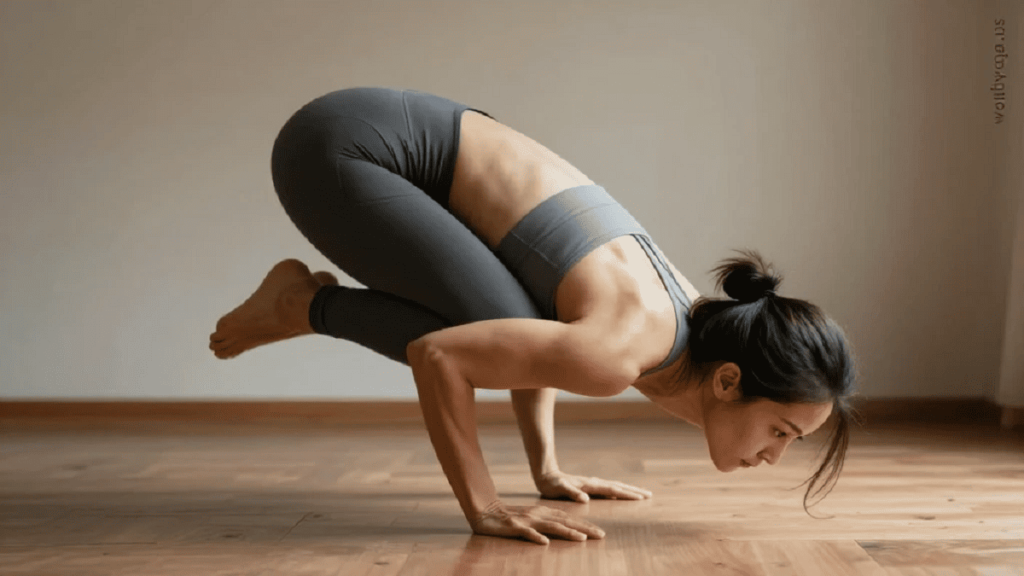
Pendant Pose is derived from the Sanskrit root “lola” meaning “dangling” or “swinging,” reflecting the suspended nature of the body during the posture. In its traditional form, it is an arm balance where the body is lifted off the ground using core and upper-body strength, resembling a pendulum-like suspension.
It is commonly used in Ashtanga and modern yoga sequences as a transitional strength-building posture.
2. Biomechanics and Muscle Activation
Pendant Pose requires coordinated activation of multiple muscle groups:
- Upper body: wrists, forearms, triceps, shoulders
- Core: rectus abdominis, transverse abdominis, obliques
- Lower body: hip flexors and adductors (to maintain leg compression)
The posture shifts body weight entirely onto the hands while the core lifts and stabilizes the lower body. This creates a closed kinetic chain requiring high neuromuscular control.
3. Physiological and Functional Benefits
Research and practice-based evidence indicate several benefits:
- Core strengthening: Deep engagement of abdominal muscles improves trunk stability
- Upper-body conditioning: Strengthens wrists, arms, shoulders, and upper back
- Improved balance and coordination: Enhances proprioception and motor control
- Abdominal organ stimulation: Compression and engagement may support digestive activation
- Preparation for advanced arm balances: Serves as a foundational pose for poses like Tolasana and jump-through transitions
4. Methodological Application in Training
Pendant Pose is typically introduced in progressive stages:
- Foundational strength training (plank, boat pose)
- Wrist conditioning and mobility drills
- Assisted lifting (blocks or partial toe support)
- Full lift with controlled breath cycles
- Advanced variations (rocking or dynamic transitions)
Breath synchronization (exhale during lift, inhale during stabilization) is essential for maintaining balance.
5. Limitations and Risks
Despite its benefits, Pendant Pose presents challenges:
- High wrist loading may cause strain in beginners
- Improper core engagement can lead to shoulder collapse
- Requires adequate hip flexor strength and flexibility
- Not recommended for individuals with wrist injuries, pregnancy, or severe shoulder conditions
6. Discussion
Pendant Pose is best understood as a functional integration posture, combining strength, mobility, and balance. It bridges traditional yoga philosophy with modern functional fitness principles by emphasizing body suspension, compression strength, and neuromuscular coordination.
Its value lies not only in physical conditioning but also in developing mental focus and breath control under load.
7. Conclusion
Pendant Pose is a high-value training posture that enhances core strength, upper-body endurance, and movement efficiency. When practiced progressively and safely, it serves as a gateway to advanced arm balances and functional movement mastery.
External References
- https://www.yogajournal.com/poses
- https://www.yogabasics.com/learn/yoga-arm-balances/
- https://www.healthline.com/health/fitness-exercise/yoga-benefits
- https://www.yogawiz.com/yoga-poses/yoga-asanas/pendant-pose-lolasana.html
- https://www.yoga.in/asanas/library/lolasana/
#Pendant Pose in Pune
Industry Application of Pendant Pose
Overview
Pendant Pose—closely related to Lolasana in traditional yoga and interpreted in modern fitness as a deep squat or arm-supported suspended balance—has evolved beyond yoga studios. It is now used in multiple industries focused on movement efficiency, rehabilitation, athletic conditioning, and mental wellness. Its combination of core strength, upper-body loading, and neuromuscular control makes it a valuable functional training tool.
1. Fitness and Strength Training Industry
In modern gyms and functional training programs, Pendant Pose is used as a bodyweight strength progression exercise.
Applications:
- Core strengthening programs (especially deep abdominal activation)
- Calisthenics progression training for L-sit and handstand preparation
- Functional movement circuits (mobility + strength integration)
Value:
It helps athletes develop relative strength (strength-to-bodyweight ratio), which is essential in calisthenics and gymnastics-based training systems.
2. Yoga and Mind-Body Wellness Industry
In yoga studios and wellness centers, Pendant Pose is used as a transition and peak strength posture.
Applications:
- Ashtanga yoga sequences (arm balance preparation)
- Vinyasa flow transitions (jump-through or float movements)
- Core-focused yoga workshops
Value:
It enhances mind-body coordination, breath control, and focus, making it useful for advanced practitioners aiming to deepen physical awareness.
3. Physiotherapy and Rehabilitation (Selective Use)
In controlled rehabilitation settings, modified versions of Pendant Pose are used for functional recovery training.
Applications:
- Post-injury lower-limb strength rebuilding (progressive squatting variations)
- Wrist and shoulder stability training (low-load support variations)
- Balance retraining for neuromuscular recovery
Value:
When adapted safely, it supports joint stability, proprioception, and controlled load-bearing adaptation.
Note: Full arm balance versions are not typically used in early-stage rehab due to wrist and shoulder loading.
4. Sports Performance and Athletics
Athletes in sports requiring explosive strength and body control (gymnastics, martial arts, climbing) use Pendant Pose variations.
Applications:
- Core compression strength development for grappling sports
- Shoulder stability training for climbers
- Balance and coordination drills for martial artists
Value:
Improves explosive control, midline stability, and injury resilience under dynamic movement conditions.
5. Corporate Wellness and Mental Health Programs
Pendant Pose is also introduced in workplace wellness initiatives in simplified form.
Applications:
- Short mobility breaks to reduce sedentary stiffness
- Stress reduction through breath-focused squat holds
- Mindfulness and focus training sessions
Value:
Promotes stress regulation, posture correction, and mental clarity in desk-based workers.
6. Fitness Technology and Digital Coaching
With the rise of fitness apps and AI coaching platforms, Pendant Pose is included in:
- Guided mobility programs
- Yoga progression tracking systems
- Virtual calisthenics coaching plans
Value:
It serves as a measurable milestone for strength progression and mobility improvement metrics.
Conclusion
Pendant Pose has transitioned from a traditional yoga-inspired movement into a multi-industry functional training tool. Its applications span fitness, rehabilitation, athletics, wellness, and digital coaching due to its ability to develop core strength, joint stability, balance, and body awareness simultaneously.
External References
- https://www.yogajournal.com/poses
- https://www.yogabasics.com/learn/yoga-arm-balances/
- https://www.healthline.com/health/fitness-exercise/yoga-benefits
- https://www.acefitness.org/resources/everyone/exercise-library/
- https://www.nsca.com/education/articles/strength-conditioning/functional-training/
#Pendant Pose in Mumbai
Ask FAQs
What is Pendant Pose in yoga?
Pendant Pose is a modern yoga-inspired posture that involves a deep squat or arm-supported balance where the body appears “suspended.” It is closely related to traditional Lolasana (arm balance pose) and is used to build core strength, balance, and lower-body mobility.
Is Pendant Pose suitable for beginners?
Yes, but with modifications. Beginners may find the full version challenging due to strength and flexibility demands. It is recommended to start with basic squats, plank holds, and assisted variations before progressing to the full pose.
What muscles does Pendant Pose work?
Pendant Pose primarily targets:
Core muscles (abdominals and obliques)
Quadriceps and glutes
Shoulders, triceps, and forearms (in arm balance variations)
It is a full-body engagement posture that improves overall strength and stability.
What are the main benefits of practicing Pendant Pose?
Key benefits include:
Improved core strength and endurance
Better hip and ankle flexibility
Enhanced balance and coordination
Stronger wrists and upper body (for arm balance variations)
Improved body awareness and posture control
Are there any precautions to consider?
Yes. Pendant Pose should be practiced carefully if you have wrist, knee, or lower back issues. Proper warm-up is essential, and beginners should use support such as blocks or a wall to avoid strain or injury.
Table of Contents
Disclaimer: Pendant Pose should be practiced carefully and ideally under guidance if you are a beginner. Individuals with wrist, knee, shoulder, or lower back injuries should avoid or modify this pose. The information provided is for educational purposes only and is not a substitute for professional medical or fitness advice.