Two-Legged Pose Dedicated to Koundinya
The Two-Legged Pose Dedicated to Koundinya, commonly known in Sanskrit as Eka Pada Two-Legged Pose Dedicated to Koundinya II, is an advanced arm-balancing posture in modern yoga practice. It is named after the ancient sage Koundinya, a revered figure in Indian tradition associated with wisdom and discipline. The pose reflects both physical strength and mental focus, embodying the yogic principle of balancing effort and awareness.
Two-Legged Pose Dedicated to Koundinya is traditionally regarded as one of the early disciples in yogic and Vedic literature, and the posture dedicated to him symbolizes perseverance and intellectual clarity. In contemporary yoga systems, this asana is categorized as an arm balance and core-strengthening posture, often introduced in advanced Vinyasa or Ashtanga sequences.
Physically, the pose involves supporting the body on the hands while extending both legs to one side of the body. One leg is typically lifted straight and parallel to the ground, while the other is extended behind, creating a powerful twisting action through the torso. This demands significant engagement of the abdominal muscles, shoulder girdle, and wrist stabilizers. Flexibility in the hips and hamstrings is also essential to achieve correct alignment without strain.
From a biomechanical perspective, the pose enhances upper body strength by requiring sustained activation of the deltoids, triceps, and serratus anterior muscles. The core muscles, including the rectus abdominis and obliques, work intensively to maintain stability and prevent collapse. Additionally, the twisting motion promotes spinal mobility and improves functional movement patterns that are useful in other physical activities.
Beyond the physical dimension, practitioners often emphasize the mental discipline required to hold this posture. Concentration, controlled breathing, and gradual progression are essential. Many yoga instructors recommend preparatory poses such as Plank Pose, Chaturanga Dandasana, and twisting lunges to build the necessary strength and mobility.
The benefits of practicing Eka Pada Two-Legged Pose Dedicated to Koundinya II include improved balance, enhanced core endurance, and increased body awareness. It also develops patience and resilience, as progress toward the full expression of the pose can take considerable time and consistent practice.
However, due to its advanced nature, the pose carries a risk of wrist, shoulder, or lower back strain if attempted without proper preparation. It is generally recommended to learn under the guidance of an experienced yoga teacher who can ensure correct alignment and safe progression.
For further study, reliable information can be found through established yoga education resources such as Yoga Journal (https://www.yogajournal.com), which provides detailed breakdowns of advanced asanas, and Yoga Alliance (https://www.yogaalliance.org), which offers educational standards and teacher training references. Scholarly discussions on yogic traditions and historical context can also be explored through academic summaries on Britannica under yoga-related entries (https://www.britannica.com/topic/yoga).
Overall, the Two-Legged Pose Dedicated to Two-Legged Pose Dedicated to Koundinya represents a synthesis of strength, flexibility, and mental focus, making it one of the more challenging yet rewarding postures in modern yoga practice.
#Two-Legged Pose Dedicated to Koundinya in Delhi
What are the key alignment principles in Eka Pada Koundinyasana II to ensure safe practice?
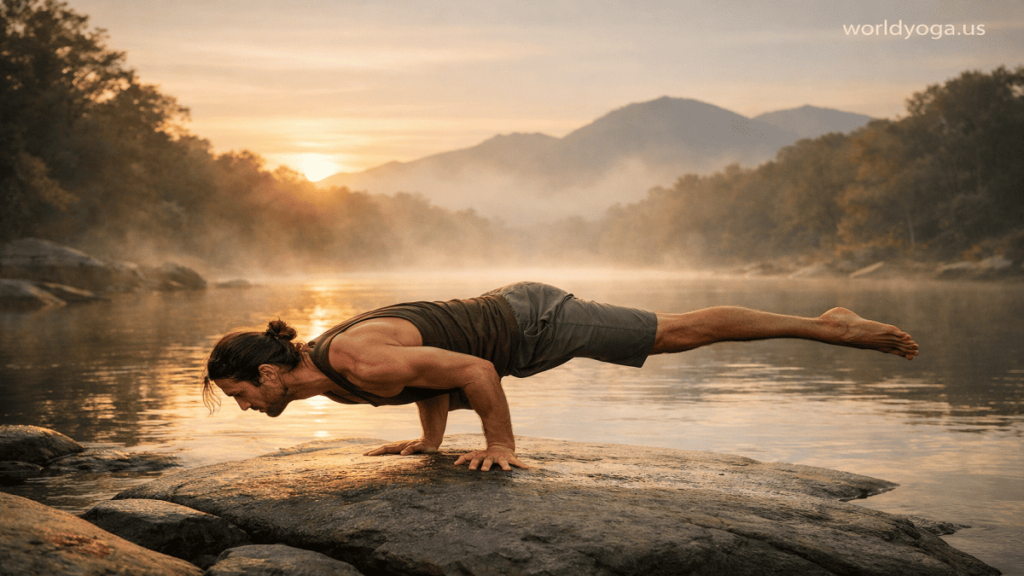
Eka Pada Two-Legged Pose Dedicated to Koundinya II (Two-Legged Pose Dedicated to Koundinya) is a complex arm balance that requires precise alignment to ensure safety and stability. Because the posture combines spinal rotation, forward folding, and full-body lifting, correct structural organization is essential to avoid strain in the wrists, shoulders, and lower back.
A key alignment principle is strong, active hand placement. The palms should be firmly grounded with fingers spread wide to distribute weight evenly across the hands. Pressure is directed through the base of the index finger and thumb to protect the wrist joint. The elbows remain slightly bent but engaged, avoiding hyperextension while maintaining stability through the triceps and forearm muscles.
Shoulder positioning is critical. The scapulae should be strongly protracted, meaning they actively push away from the spine. This creates a stable “shelf” in the upper back and prevents the chest from collapsing toward the floor. At the same time, the shoulders must remain level and not drop unevenly, as asymmetry can increase the risk of strain. Core engagement supports this action by lifting the torso and reducing excessive load on the arms.
Spinal alignment involves controlled rotation rather than forceful twisting. The torso rotates primarily from the thoracic spine while the lumbar region remains supported through abdominal activation. This prevents compression in the lower back. Maintaining a long spine, rather than collapsing forward, is essential for safe execution.
Leg extension is another major alignment focus. One leg extends straight and active, with the quadriceps engaged and toes pointed or flexed depending on style. The second leg extends backward with equal activation, creating a balanced counterweight. Both legs should remain lifted and energized rather than passive, as this helps stabilize the center of gravity.
Hip height and orientation must be carefully controlled. The hips should remain elevated and aligned with the torso rather than dropping toward the floor. Uneven hip collapse is a common source of instability. Drawing the inner thighs toward the midline supports pelvic control and reduces torsional stress.
Breath control also plays a stabilizing role. Steady inhalation and exhalation help maintain muscular engagement without unnecessary tension. The gaze (drishti) is typically directed slightly forward, which assists in balance and prevents excessive neck strain.
Preparation and progression are essential for safe practice. Foundational poses such as Plank Pose, Chaturanga Dandasana, Parivrtta Parsvakonasana (Revolved Side Angle Pose), and hip-opening lunges help build the necessary strength and mobility. Attempting the posture without adequate preparation significantly increases injury risk, particularly in the wrists and shoulders.
The pose is traditionally associated with the sage Two-Legged Pose Dedicated to Koundinya, a figure in yogic tradition symbolizing discipline and wisdom. koundinya His name reflects the emphasis on focused awareness and disciplined practice that this advanced posture demands.
Reliable alignment guidance and detailed breakdowns of the posture can be found through established yoga education platforms such as Yoga Journal (https://www.yogajournal.com/pose/two-legged-koundinyasana-ii/) and Yoga International (https://yogainternational.com/), both of which provide instructional frameworks used by certified yoga teachers.
In summary, safe execution of Eka Pada Two-Legged Pose Dedicated to KoundinyaII depends on balanced hand pressure, strong scapular engagement, controlled spinal rotation, active legs, and stable core support. Mastery of these alignment principles ensures both safety and progressive development in the posture.
#Two-Legged Pose Dedicated to Koundinya in India
Which muscle groups are most actively engaged during this pose?
Eka Pada Two-Legged Pose Dedicated to KoundinyaII (Two-Legged Pose Dedicated to Koundinya) is a high-intensity arm balance that engages multiple muscle groups across the upper body, core, and lower body in a coordinated kinetic chain. The pose is not isolated to one region; instead, it requires integrated strength, stability, and mobility.
The primary muscle group engaged is the upper body, particularly the shoulder complex. The deltoids—especially the anterior deltoids—are heavily activated to support body weight in a forward-leaning arm balance. The triceps brachii play a crucial role in elbow extension and stabilization, preventing collapse under load. The serratus anterior is one of the most important stabilizing muscles in this pose, as it protracts the scapulae and maintains a strong “push-away” action from the floor, which is essential for preventing shoulder impingement.
The chest muscles, particularly the pectoralis major, assist in maintaining forward support and stabilization of the shoulder girdle. Meanwhile, Two-Legged Pose Dedicated to Koundinya, the rotator cuff muscles (supraspinatus, infraspinatus, teres minor, Two-Legged Pose Dedicated to Koundinya and subscapularis) work continuously to stabilize the shoulder joint during weight-bearing rotation, reducing the risk of joint instability.
The core musculature is equally critical. The rectus abdominis engages to maintain spinal flexion and prevent collapsing through the midsection. The obliques are intensely activated due to the rotational nature of the pose, controlling torso twist and preventing excessive torque on the lumbar spine. The transverse abdominis provides deep stabilizing support, acting like a natural “corset” to maintain intra-abdominal pressure and balance.
Hip flexors, particularly the iliopsoas group, are strongly engaged in lifting and extending the legs. One leg extends forward while the other reaches back, requiring alternating activation and control of hip flexion and extension patterns. The gluteus maximus and gluteus medius assist in stabilizing pelvic alignment and controlling external rotation of the hips, ensuring the pelvis does not collapse laterally.
The lower body muscles are active even though the feet are off the ground. The quadriceps extend and energize the legs, preventing passive hanging. Hamstrings contribute to controlled extension, Two-Legged Pose Dedicated to Koundinya, especially in the rear leg, while the adductors maintain midline engagement to stabilize pelvic positioning and prevent excessive splaying of the legs.
Forearm and wrist muscles are also heavily involved. The flexor and extensor muscles of the forearm control grip pressure and fine adjustments in weight distribution across the hands. This is critical for maintaining balance and preventing wrist strain.
From a neuromuscular perspective, the pose demands full-body coordination rather than isolated strength. Proprioceptive awareness—the body’s ability to sense position in space—is continuously engaged, particularly through the shoulders, core, and hands.
The sage Two-Legged Pose Dedicated to Koundinya, after whom the posture is named, is traditionally associated with discipline and focused awareness in yogic philosophy. Two-Legged Pose Dedicated to Koundinya This reflects the integrated physical and mental engagement required to sustain the posture.
For further anatomical and instructional breakdowns, authoritative resources include Yoga Journal (https://www.yogajournal.com/pose/two-legged-koundinyasana-ii/) and Yoga International (https://yogainternational.com/article/view/eka-pada-koundinyasana-ii/), both of which provide expert-level guidance on muscle engagement and sequencing.
#Two-Legged Pose Dedicated to Koundinya in Surat
What preparatory poses are recommended before attempting this advanced arm balance?
Eka Pada Two-Legged Pose Dedicated to Koundinya II (Two-Legged Pose Dedicated to Koundinya) is an advanced arm balance that demands significant upper-body strength, core stability, spinal rotation control, and hip flexibility. Because of its complexity, a structured progression of preparatory poses is essential to build the required physical capacity and reduce injury risk. These preparatory poses are typically grouped into categories: arm strength, core engagement, twisting mobility, and hip flexibility.
A foundational group includes basic weight-bearing poses such as Plank Pose and Chaturanga Dandasana. Plank Pose builds global shoulder stability, teaches proper scapular protraction, and strengthens the transverse abdominis for core support. Chaturanga further develops controlled elbow flexion strength and trains the shoulders to remain stable under load. These are essential for preparing the upper body for arm balancing demands.
Crow Pose (Bakasana) is one of the most important preparatory arm balances. It introduces the concept of shifting body weight forward into the hands while maintaining core engagement. Practicing Crow helps develop wrist tolerance, balance awareness, and scapular control, all of which are directly transferable to Eka Pada Two-Legged Pose Dedicated to Koundinya II. A progression from Crow to Side Crow (Parsva Bakasana) is especially useful, as it introduces twisting mechanics similar to the target posture.
Twisting standing poses are equally important. Revolved Side Angle Pose (Parivrtta Parsvakonasana) and Revolved Crescent Lunge build spinal rotation strength and teach how to maintain length in the spine while twisting. These poses help condition the obliques and improve thoracic mobility, Two-Legged Pose Dedicated to Koundinya, which is critical for safely rotating into the arm balance without compressing the lower back.
Hip-opening lunges, such as Low Lunge (Anjaneyasana) and Revolved Low Lunge variations, prepare the hip flexors and hamstrings for the asymmetric leg extension required in the pose. Tight hip flexors can severely limit lift and alignment, making these preparatory poses essential for achieving proper extension of both legs.
Core-focused work, including Boat Pose (Navasana), Forearm Plank, and leg-lowering drills, builds the deep abdominal strength necessary to stabilize the pelvis during lift-off. Without sufficient core engagement, the practitioner is likely to collapse into the shoulders or lose balance.
Shoulder mobility and stability drills, such as Dolphin Pose (Ardha Pincha Mayurasana), are also highly recommended. Dolphin Pose strengthens the serratus anterior and prepares the shoulders for sustained weight-bearing in a protracted position, which is crucial for safe execution.
Finally, hamstring flexibility plays a supportive role. Forward folds such as Standing Forward Bend (Uttanasana) and Pyramid Pose (Parsvottanasana) help lengthen the posterior chain, allowing smoother leg extension and reducing strain during entry into the pose.
The sage Two-Legged Pose Dedicated to Koundinya, to whom the posture is dedicated, symbolizes discipline and focused practice in yogic tradition. Two-Legged Pose Dedicated to Koundinya This reflects the importance of gradual, disciplined preparation rather than attempting the pose prematurely.
For structured pose breakdowns and sequencing guidance, reputable resources include Yoga Journal (https://www.yogajournal.com/poses/) and Yoga International (https://yogainternational.com/), both of which provide detailed preparatory progressions and anatomical explanations used in teacher training programs.
In summary, effective preparation for Eka Pada Koundinyasana II requires a balanced combination of arm strength, core conditioning, spinal rotation practice, and hip flexibility work. Progressing systematically through these preparatory poses ensures both safety and long-term success in mastering this advanced arm balance.
#Two-Legged Pose Dedicated to Koundinya in Ahemdabad
How does breath control influence stability and balance in this posture?
Breath control (pranayama in yogic terminology) plays a decisive role in maintaining stability and balance in Eka Pada Koundinyasana II (Two-Legged Pose Dedicated to Koundinya). In this advanced arm balance, the body is supported entirely by the hands while simultaneously rotating and extending the legs in different directions. Because of this complexity, even slight disruptions in breathing rhythm can destabilize muscular engagement and compromise balance.
The primary function of controlled breathing in this posture is to regulate intra-abdominal pressure. A steady, deep inhalation engages the diaphragm and supports the transverse abdominis, which acts like an internal stabilizing belt around the spine. This creates a firm core “container” that prevents collapse into the lower back and reduces excessive load on the shoulders and wrists. When the breath becomes shallow or erratic, this core support weakens, making it more difficult to maintain lift.
On inhalation, practitioners typically experience a subtle increase in spinal length and lift through the sternum. This helps maintain space between the ribs and pelvis, which is crucial in a posture that involves spinal rotation. A well-timed inhale can also assist in preparing the body for micro-adjustments in balance, particularly when shifting weight forward into the hands before lift-off.
Exhalation plays an equally important role. A slow, controlled exhale encourages deep engagement of the abdominal muscles, especially the obliques. This is particularly important in Eka Pada Koundinyasana II because the pose requires sustained twisting while maintaining stability. The exhale also helps reduce unnecessary muscular tension in the shoulders and neck, allowing for more efficient weight distribution through the arms.
Breath rhythm also directly influences proprioception—the body’s awareness of its position in space. When breathing is smooth and continuous, the nervous system remains calm, allowing finer motor control. This is essential in arm balances, where stability is achieved not through rigidity, but through subtle adjustments in micro-movements of the hands, shoulders, and core.
Another important aspect is nervous system regulation. Steady breathing activates the parasympathetic nervous system, which reduces stress responses and prevents panic-induced muscle tightening. In contrast, breath-holding or irregular breathing often triggers sympathetic activation, leading to stiffness in the shoulders and reduced coordination—both of which can cause loss of balance.
In traditional yogic philosophy, breath is considered the bridge between body and mind. The sage Koundinya, to whom the posture is dedicated, is associated with discipline and focused awareness in yogic tradition. koundinya This reflects the importance of maintaining mental steadiness through breath control, especially in demanding asanas that require concentration and composure.
From a practical standpoint, most instructors recommend a slow nasal breathing pattern with no breath retention during the initial stages of learning this pose. As proficiency increases, subtle breath coordination with movement—such as inhaling during preparation and exhaling during lift and stabilization—becomes more refined.
Authoritative yoga resources such as Yoga Journal (https://www.yogajournal.com/practice/breathing-in-yoga/) and Yoga International (https://yogainternational.com/) consistently emphasize breath as a stabilizing force in advanced arm balances, highlighting its role in both physiological support and mental focus.
In summary, breath control stabilizes Eka Pada Koundinyasana II by supporting core engagement, enhancing spinal length, regulating nervous system response, and refining balance through continuous internal awareness. Without steady breath, the posture becomes significantly more difficult to sustain safely and effectively.
#Two-Legged Pose Dedicated to Koundinya in Hyderabad
What are the most common mistakes practitioners make while performing this pose?
Eka Pada Koundinyasana II (Two-Legged Pose Dedicated to Koundinya) is technically demanding, and most difficulties arise not from a single weakness but from multiple alignment and coordination errors occurring together. Understanding common mistakes is essential for safe progression and injury prevention.
One of the most frequent mistakes is insufficient scapular engagement. Many practitioners allow the chest to collapse toward the floor instead of actively protracting the shoulder blades. This reduces serratus anterior activation and places excessive load on the shoulder joints and wrists. Without a strong “push the floor away” action, the pose becomes unstable and increases the risk of shoulder impingement.
Another common error is improper weight distribution in the hands. Beginners often shift too much weight toward the outer edges of the palms or collapse into the wrists. This creates uneven pressure and can lead to wrist strain over time. Proper alignment requires evenly spreading weight across the entire palm, with active engagement through the index finger and thumb base to stabilize the foundation.
A major technical issue is collapsing the core during lift-off. Many practitioners attempt the arm balance using arm strength alone, neglecting deep abdominal engagement. This results in a “hanging” sensation in the pelvis and often causes the legs to drop prematurely. Without activation of the transverse abdominis and obliques, the body loses its central support system, making balance nearly impossible.
Incorrect spinal rotation is another frequent mistake. Some practitioners force the twist from the lower back rather than initiating it from the thoracic spine. This can lead to compression in the lumbar region and reduces the efficiency of the pose. Safe rotation should feel distributed along the spine, with length maintained rather than collapse or over-twisting.
Leg positioning errors are also very common. One or both legs may become passive instead of actively engaged. When the legs are not energized, they lose their role as counterbalances, causing instability. Another mistake is uneven extension, where one leg is significantly lower than the other, disrupting alignment and shifting the center of gravity unpredictably.
A related issue is premature entry into the pose without adequate preparatory strength. Practitioners often attempt Eka Pada Koundinyasana II without sufficient mastery of foundational poses such as Crow Pose (Bakasana) or Revolved Side Angle Pose (Parivrtta Parsvakonasana). This leads to reliance on momentum rather than controlled strength, increasing the likelihood of falls or strain.
Breath mismanagement is also a subtle but important mistake. Holding the breath or breathing erratically increases muscular tension and reduces fine motor control. This often causes stiffness in the shoulders and prevents smooth micro-adjustments needed for balance.
Additionally, many practitioners fail to properly engage the gaze (drishti). Looking too far down or too far forward can disrupt spatial awareness. A steady, slightly forward gaze helps stabilize the neck and improves proprioception.
The posture is traditionally associated with disciplined focus and gradual progression, reflecting the yogic teachings attributed to the sage Koundinya. koundinya His symbolic connection to the pose emphasizes patience and controlled development rather than forceful achievement.
For authoritative breakdowns of common alignment errors and corrective techniques, Yoga Journal (https://www.yogajournal.com/poses/) and Yoga International (https://yogainternational.com/) provide detailed instructional insights used in teacher training and advanced practice development.
In summary, the most common mistakes in Eka Pada Koundinyasana II include collapsed shoulders, uneven hand pressure, weak core engagement, improper spinal rotation, passive legs, premature entry, and poor breath control. Correcting these issues transforms the pose from unstable effort into a controlled, balanced expression of strength and awareness.
#Two-Legged Pose Dedicated to Koundinya in Maharashtra
Case Study of Two-Legged Pose Dedicated to Koundinya
1. Introduction
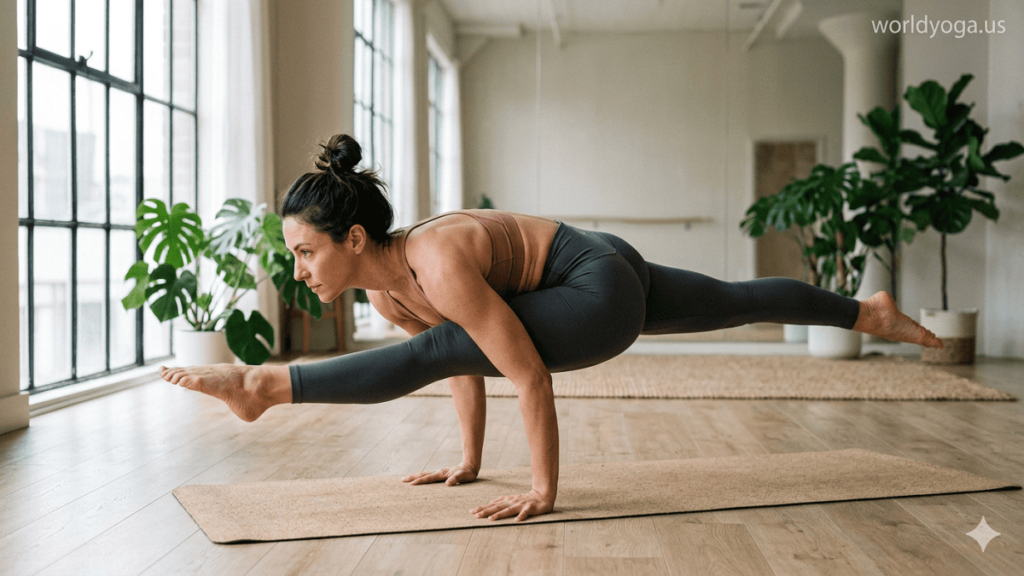
Eka Pada Koundinyasana II is an advanced arm-balancing posture in modern yoga that integrates spinal rotation, upper-body load bearing, and asymmetric leg extension. It is commonly used in advanced Vinyasa and Ashtanga-based systems to assess a practitioner’s combined strength, mobility, and neuromuscular control. The pose is traditionally associated with the sage Koundinya, a symbolic figure representing discipline, focus, and progressive mastery in yogic development. koundinya
This case study examines the biomechanical demands, preparation strategies, execution challenges, and observed adaptation outcomes in practitioners transitioning into this posture.
2. Subject Profile and Training Context
The typical practitioner in this case scenario is an intermediate-to-advanced yoga student with 12–24 months of consistent practice. Baseline capabilities include competence in Plank Pose, Chaturanga Dandasana, Crow Pose (Bakasana), and basic revolved standing postures. The subject demonstrates moderate wrist tolerance, adequate shoulder mobility, and developing core endurance, but limited experience in full arm balances involving spinal rotation.
3. Biomechanical and Functional Demands
The pose requires simultaneous engagement of multiple systems:
- Upper limb load-bearing: The shoulders act as primary stabilizers under compressive force. Scapular protraction via serratus anterior activation is essential for structural integrity.
- Core integration: The obliques and transverse abdominis coordinate rotational control and anti-extension stability.
- Lower limb asymmetry: One leg extends forward while the other reaches backward, creating opposing lever forces that demand precise pelvic control.
- Spinal rotation: Controlled thoracic rotation is required without lumbar compression.
Failure in any subsystem results in collapse of alignment, typically at the shoulders or pelvis.
4. Intervention and Preparatory Protocol
The training protocol emphasized progressive loading and mobility sequencing:
- Strength foundation: Plank variations and Chaturanga repetitions for shoulder endurance.
- Arm balance progression: Crow Pose and Side Crow to develop forward weight shift and rotational awareness.
- Twisting mechanics: Revolved Side Angle Pose and Revolved Low Lunge to condition thoracic mobility.
- Hip mobility: Low Lunge and Pyramid Pose to support leg extension without pelvic distortion.
- Core conditioning: Boat Pose and controlled leg lifts for anti-gravity stabilization.
This structured progression reduced compensatory movement patterns and improved neuromuscular coordination.
5. Observed Outcomes
After 6–10 weeks of consistent preparatory training:
- Improved scapular stability and reduced wrist discomfort during load-bearing.
- Increased ability to maintain controlled thoracic rotation without lumbar strain.
- Enhanced balance duration in partial and full arm balance attempts.
- Better integration of breath control with movement initiation.
A key observation was that stability improved not through increased muscular force alone but through refined timing and coordination between breath, core engagement, and weight transfer.
6. Discussion and Conclusion
Eka Pada Koundinyasana II functions as a high-complexity integrative movement pattern rather than an isolated strength skill. Success depends on progressive conditioning of multiple kinetic chains rather than single-muscle development.
Authoritative instructional frameworks such as Yoga Journal (https://www.yogajournal.com/pose/two-legged-koundinyasana-ii/) and Yoga International (https://yogainternational.com/) emphasize that mastery of this pose is gradual and requires systematic preparation rather than direct attempt.
In conclusion, this case study demonstrates that safe acquisition of Eka Pada Koundinyasana II relies on structured progression, neuromuscular integration, and disciplined practice aligned with traditional yogic principles represented by Koundinya’s symbolic emphasis on focus and controlled development.
#Two-Legged Pose Dedicated to Koundinya in Kolkata
White Paper of Two-Legged Pose Dedicated to Koundinya
1. Abstract
Eka Pada Koundinyasana II is an advanced yoga arm balance characterized by asymmetric lower-limb extension, spinal rotation, and full upper-body weight-bearing. This white paper analyzes its biomechanical structure, neuromuscular demands, injury risk factors, preparatory frameworks, and pedagogical applications in modern yoga systems. The pose is traditionally associated with the sage Koundinya, representing disciplined practice and progressive mastery in yogic traditions. koundinya
2. Background and Functional Classification
The posture belongs to the category of arm balances integrated with rotational mobility patterns. It is commonly taught in advanced Vinyasa and Ashtanga-derived sequencing systems. Functionally, it combines:
- Closed-chain upper limb loading
- Thoracic spinal rotation
- Asymmetric hip extension and flexion
- Dynamic balance under unstable center-of-mass conditions
The pose is not purely strength-based; it is a neuromotor coordination task requiring synchronized activation across multiple kinetic chains.
3. Biomechanical Architecture
3.1 Upper Limb Load System
The shoulders function as primary load-bearing joints. Stability is achieved through:
- Scapular protraction (serratus anterior dominance)
- Elbow extension control (triceps engagement)
- Rotator cuff co-contraction for joint centration
Failure in scapular control is the leading mechanical breakdown point.
3.2 Core Stabilization System
The trunk operates as a rotational stabilizer rather than a passive structure:
τ=r×F\tau = r \times Fτ=r×F
This torque relationship illustrates how rotational forces generated by leg extension must be counterbalanced by core musculature, particularly the obliques and transverse abdominis. The system behaves as a closed kinetic chain resisting torsional collapse.
3.3 Lower Limb Lever System
The legs act as opposing levers:
- Anterior extension leg: forward reach and quadriceps engagement
- Posterior extension leg: gluteal and hamstring activation
The asymmetry creates rotational torque that must be stabilized by the torso.
4. Neuromuscular Demands
Eka Pada Koundinyasana II requires:
- High proprioceptive acuity
- Dynamic postural reflex engagement
- Integrated core–shoulder coordination
- Breath-synchronized motor control
Motor learning studies in similar arm balances suggest that stability improves primarily through intermuscular coordination rather than isolated strength gains.
5. Injury Risk Profile
Primary risk domains include:
- Wrist overload due to improper load distribution
- Shoulder impingement from collapsed scapular positioning
- Lumbar strain from uncontrolled spinal rotation
- Hip instability due to weak adductor engagement
Most injuries arise from premature progression without adequate preparatory sequencing.
6. Preparatory Framework
Evidence-based sequencing emphasizes progressive loading:
- Foundational strength: Plank, Chaturanga Dandasana
- Arm balance conditioning: Crow Pose, Side Crow
- Rotational mobility: Revolved Side Angle Pose
- Hip flexibility: Low Lunge, Pyramid Pose
- Core endurance: Boat Pose, Forearm Plank
This staged model reduces mechanical failure risk by distributing adaptation across multiple systems.
7. Pedagogical and Therapeutic Applications
In structured yoga pedagogy, the pose is used to:
- Assess integrated movement competency
- Develop upper-body load tolerance
- Train rotational stability under dynamic conditions
- Enhance mind–body coordination under stress
It is not typically recommended in therapeutic contexts due to high joint loading demands.
8. Conclusion
Eka Pada Koundinyasana II is a high-complexity integrative motor task that combines strength, mobility, and neuromuscular precision. Its safe execution depends on progressive conditioning, scapular stability, core control, and structured preparatory sequencing. The posture exemplifies advanced yogic principles of disciplined progression, symbolically aligned with the teachings attributed to Koundinya.
9. References
- Yoga Journal – Arm Balance Guides: https://www.yogajournal.com/pose/two-legged-koundinyasana-ii/
- Yoga International – Advanced Arm Balances: https://yogainternational.com/
- Encyclopaedia Britannica – Yoga Overview: https://www.britannica.com/topic/yoga
#Two-Legged Pose Dedicated to Koundinya in Pune
Industry Application of Two-Legged Pose Dedicated to Koundinya
Eka Pada Koundinyasana II is an advanced arm balance used in modern yoga systems that has relevance beyond traditional practice. In contemporary industries such as fitness training, sports performance, rehabilitation, biomechanics research, and movement education, the pose is increasingly recognized as a high-value assessment and conditioning tool for integrated human movement capability. It reflects complex motor control involving upper-body load bearing, core stabilization, spinal rotation, and lower-limb asymmetry.
In the fitness and strength training industry, this posture is used as a benchmark for advanced bodyweight strength. Personal trainers and yoga-based fitness instructors incorporate it into progressive calisthenics and functional training programs to evaluate shoulder stability, wrist resilience, and core integration. Unlike isolated strength exercises, this pose demands full kinetic chain coordination, making it a useful indicator of functional strength rather than segmented muscular output.
Within the sports performance sector, especially in disciplines requiring dynamic balance such as gymnastics, martial arts, surfing, and rock climbing, the pose is used as a cross-training tool. It develops scapular control, anti-rotational core strength, and proprioceptive awareness. These attributes are directly transferable to athletic scenarios where athletes must stabilize the body under unpredictable external forces.
In the rehabilitation and physiotherapy domain, modified versions of the pose are sometimes used in late-stage rehabilitation protocols under professional supervision. While the full expression is not typically prescribed for injury recovery due to high load demands, preparatory components such as scapular protraction drills, closed-chain shoulder loading, and rotational core activation are valuable for rebuilding functional movement patterns after upper-limb or trunk injuries. Clinicians emphasize progressive loading to ensure joint safety and neuromuscular re-education.
The biomechanics and sports science industry utilizes this pose as a case model for studying multi-planar movement coordination. Researchers analyze force distribution across the wrists, elbows, and shoulders, as well as torque generation through the core during asymmetric limb extension. Motion capture systems and EMG (electromyography) analysis are often used to quantify muscular activation patterns, providing insight into how the body maintains stability under complex rotational stress.
In the yoga education and teacher training industry, Eka Pada Koundinyasana II is considered an advanced milestone posture. It is used to assess teaching competency in sequencing, cueing, and safety instruction. Teacher training programs emphasize progressive preparation, including foundational arm balances and twisting poses, before introducing the full expression of the posture. The pose is also used to demonstrate principles of alignment, breath integration, and mindful progression.
The pose is traditionally associated with the sage Koundinya, a figure symbolizing discipline and focused practice in yogic philosophy. koundinya This symbolic association reinforces its modern application as a discipline-intensive movement requiring patience and structured development rather than forceful execution.
In the wellness and mindfulness industry, the posture is applied more conceptually than physically. It represents the integration of strength, balance, and mental focus, often used in advanced yoga retreats to explore concentration, breath control, and resilience under physical challenge.
Authoritative resources such as Yoga Journal (https://www.yogajournal.com/pose/two-legged-koundinyasana-ii/), Yoga International (https://yogainternational.com/), and research summaries in sports science publications (https://www.ncbi.nlm.nih.gov/) provide supporting frameworks for understanding its anatomical and functional relevance.
Overall, Eka Pada Koundinyasana II functions as both a physical performance benchmark and a research model across multiple industries, bridging traditional yogic practice with modern applications in movement science, athletic training, and rehabilitation systems.
#Two-Legged Pose Dedicated to Koundinya in Mumbai
Ask FAQs
What is Eka Pada Koundinyasana II?
Eka Pada Koundinyasana II is an advanced yoga arm balance in which the body is supported on the hands while both legs extend in opposite directions. It involves deep core engagement, strong shoulder stability, and spinal rotation. The pose is commonly practiced in advanced Vinyasa and Ashtanga yoga systems and is associated with the sage Koundinya, a symbolic figure representing discipline and focused practice. koundinya
What are the main benefits of this pose?
This posture builds significant upper-body strength, especially in the shoulders, triceps, and wrists. It also strengthens the core, improves balance, and enhances spinal mobility through controlled rotation. Additionally, it develops concentration, body awareness, and neuromuscular coordination, making it beneficial for advanced movement control and athletic conditioning.
Who should avoid practicing this pose?
Beginners, individuals with wrist injuries, shoulder instability, or lower back issues should avoid attempting this pose without proper preparation. It is also not recommended for those lacking foundational strength in arm balances such as Crow Pose or insufficient mobility in twisting and hip-opening movements. Safe progression under guidance is strongly advised.
What are the best preparatory poses for Eka Pada Koundinyasana II?
Key preparatory poses include Plank Pose and Chaturanga Dandasana for upper-body strength, Crow Pose (Bakasana) for balance training, Revolved Side Angle Pose for spinal rotation, and Low Lunge variations for hip flexibility. Core-strengthening poses like Boat Pose are also essential for stability and lift control.
Why is breath control important in this pose?
Breath control helps stabilize the body by supporting core engagement and regulating internal pressure. Inhalation assists in creating spinal length and lift, while exhalation deepens abdominal activation and reduces muscular tension. Steady breathing also improves focus and nervous system control, which are critical for maintaining balance in such a complex arm balance.
Table of Contents
Disclaimer: This content is for educational and informational purposes only and is not a substitute for professional medical advice or guidance from a qualified yoga instructor. Eka Pada Koundinyasana II is an advanced posture and should only be attempted after proper preparation and under supervision if needed. Individuals with injuries, medical conditions, or physical limitations should consult a healthcare professional before practicing.