
Kukkutasana
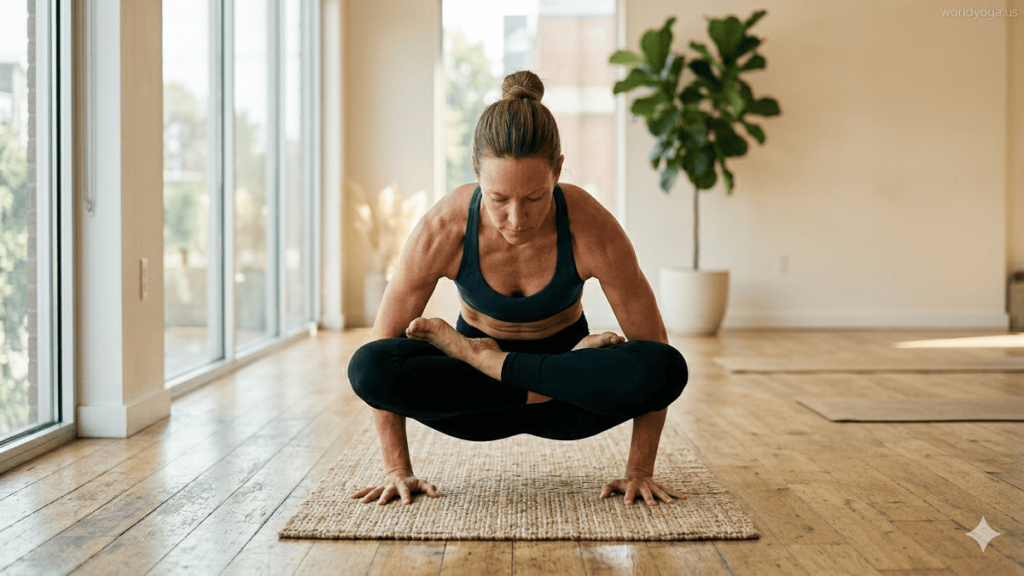
Kukkutasana, commonly known as Rooster Pose, is an advanced seated arm-balancing posture in yoga that requires a combination of strength, flexibility, and control. The name is derived from the Sanskrit words “Kukkuta” (rooster) and “asana” (pose), as the final position resembles a rooster standing upright.
In this posture, the practitioner begins in Lotus Pose (Padmasana), where both legs are crossed and placed on opposite thighs. From this position, the arms are threaded through the gaps between the thighs and calves, and the palms are placed firmly on the ground. By pressing into the hands and engaging the core, the body is lifted off the floor, balancing entirely on the arms.
Kukkutasana primarily develops upper body and core strength. The shoulders, arms, and wrists تحمل the body’s weight, while the abdominal muscles stabilize the lift. Additionally, it requires deep hip flexibility to comfortably achieve and maintain the Lotus position. Because of this, preparatory poses such as Half Lotus Pose and hip openers are essential before attempting the full posture.
The benefits of Kukkutasana are both physical and mental. Physically, it strengthens the arms, shoulders, chest, and core while improving joint stability. It also enhances flexibility in the hips, knees, and ankles. Mentally, the pose promotes concentration, balance, and body awareness, as maintaining the lift requires focus and controlled breathing.
However, Kukkutasana is not suitable for beginners or individuals with knee, hip, or wrist injuries. Entering Lotus Pose incorrectly can place strain on the knees, making proper alignment and gradual progression crucial. Practicing under the guidance of a qualified instructor is recommended to ensure safety and effectiveness.
In conclusion, Kukkutasana is a powerful arm-balancing posture that integrates strength, flexibility, and coordination. With consistent practice and proper preparation, it can significantly enhance both physical capability and mental focus within a yoga practice.
#Kukkutasana in Singapore
What is Kukkutasana?
Kukkutasana (Rooster Pose) is an advanced seated arm-balancing posture in yoga that combines strength, flexibility, and balance. The name comes from the Sanskrit words “Kukkuta,” meaning rooster, and “asana,” meaning pose. The final position resembles a rooster standing upright, supported by its legs—symbolically reflected in the practitioner balancing on their arms.
In Kukkutasana, the practitioner begins in Lotus Pose (Padmasana), where each foot is placed on the opposite thigh. From this position, the arms are carefully threaded through the gaps between the thighs and calves. The palms are then placed firmly on the ground beside the hips. By pressing down through the hands and engaging the core muscles, the entire body is lifted off the floor, balancing solely on the arms.
This pose requires significant upper body strength, particularly in the shoulders, arms, and wrists, as they support the body’s weight. At the same time, strong core engagement is essential to maintain stability and prevent the body from collapsing. Flexibility also plays a crucial role, especially in the hips, knees, and ankles, since a comfortable and stable Lotus position is necessary to enter the pose safely.
Kukkutasana is considered an advanced posture because it demands both physical readiness and technical precision. Practitioners typically prepare for it by practicing foundational poses such as Half Lotus Pose and other hip-opening exercises. These help improve flexibility and reduce the risk of strain, particularly in the knees.
The pose offers several benefits. It strengthens the upper body and core, improves balance and coordination, and enhances joint stability. Additionally, it promotes focus and mental clarity, as maintaining the posture requires steady breathing and concentration.
However, Kukkutasana should be practiced with caution. It is not suitable for beginners or individuals with knee, hip, or wrist injuries. Attempting the pose without proper preparation or forcing the Lotus position can lead to discomfort or injury.
In summary, Kukkutasana is a challenging yet rewarding yoga posture that integrates strength, flexibility, and balance. With consistent practice and proper technique, it can significantly enhance both physical and mental aspects of a yoga routine.
#Kukkutasana in India
How is this pose performed step by step?
1. Begin in a Seated Position
Sit on the floor with your legs extended forward in a comfortable seated posture. Keep your spine upright and your breathing steady.
2. Enter Lotus Position
Bring your legs into Lotus Pose (Padmasana) by placing each foot on the opposite thigh. Ensure both knees are comfortably resting on the ground. Avoid forcing this position if your hips are not sufficiently open.
3. Insert the Arms Through the Legs
Carefully slide your arms through the spaces between your thighs and calves. Your elbows should pass through until your palms can reach the floor. This step requires flexibility in the hips and knees.
4. Place the Palms Firmly on the Ground
Position your hands flat on the floor beside your hips. Spread your fingers wide to create a stable base and improve balance.
5. Engage the Core and Upper Body
Activate your abdominal muscles and press firmly into your palms. Engage your shoulders and arms to prepare for lifting the body.
6. Lift the Body Off the Floor
With a controlled push through your hands, lift your entire body off the ground. Keep your elbows slightly bent and close to the body for stability.
7. Maintain Balance and Alignment
Hold the pose by keeping your spine upright and your gaze forward. Continue engaging your core and breathing steadily. The body should remain lifted and balanced on the hands.
8. Hold the Pose
Stay in the posture for a few breaths, depending on your strength and comfort level. Avoid straining or holding your breath.
9. Lower the Body Gently
Slowly bend your elbows and lower your body back to the floor with control.
10. Release the Legs
Carefully come out of Lotus Pose and extend your legs forward to relax.
Important Tips
- Warm up with hip openers and arm-strengthening exercises before attempting Kukkutasana.
- Practice preparatory poses like Half Lotus Pose if full Lotus is not accessible.
- Avoid the pose if you have knee, hip, or wrist injuries.
With consistent practice and proper technique, Kukkutasana becomes more stable and accessible over time.
#Kukkutasana in Maharshtra

What flexibility and strength are required?
1. Flexibility Requirements
Hip Flexibility (External Rotation)
The most critical flexibility requirement is deep external rotation of the hips. The ability to comfortably enter and hold Lotus Pose is essential. Tight hips can make it difficult or unsafe to position the legs correctly, increasing strain on the knees.
Knee and Ankle Mobility
The knees and ankles must be flexible enough to accommodate the folded leg position in Lotus. Limited mobility here can lead to discomfort or injury if the pose is forced. Practicing Half Lotus Pose helps gradually build this flexibility.
Inner Thigh and Groin Flexibility
Opening the inner thighs allows the arms to pass through the legs more easily. Without sufficient space, inserting the arms can feel restricted or unstable.
2. Strength Requirements
Upper Body Strength
The arms, shoulders, and chest support the entire body weight once lifted. Strong triceps and shoulder stabilizers are particularly important for maintaining the lift. Foundational strength can be developed through poses like Chaturanga Dandasana.
Core Strength
The abdominal muscles are essential for lifting and stabilizing the body. A strong core prevents sagging and helps maintain balance while holding the posture.
Wrist Strength and Stability
Since the wrists تحمل direct pressure, they must be strong and conditioned. Proper hand placement and weight distribution are crucial to avoid strain.
3. Coordination and Balance
In addition to strength and flexibility, Kukkutasana requires coordination and body awareness. The practitioner must synchronize arm strength, core engagement, and balance to lift and hold the body steadily. Practicing arm balances such as Crow Pose can improve these skills.
Conclusion
To perform Kukkutasana effectively, practitioners need open hips for Lotus Pose, flexible knees and ankles, and strong arms, core, and wrists. The pose demands an integrated approach where flexibility allows entry into the posture, and strength sustains the lift. Consistent practice of preparatory poses and gradual progression are key to achieving this advanced asana safely.
#Kukkutasana in Ahemaddabad
What are the benefits of this pose?
1. Strengthens the Upper Body
Kukkutasana significantly builds strength in the arms, shoulders, chest, and wrists. Since the entire body is lifted and supported by the hands, the muscles must work continuously to maintain stability. Regular practice enhances muscular endurance and joint stability, similar to strength-building poses like Chaturanga Dandasana.
2. Improves Core Stability
The core muscles play a crucial role in lifting and holding the body. Engaging the abdominal muscles helps maintain balance and prevents the body from collapsing. Over time, this leads to stronger core muscles and improved posture.
3. Enhances Hip Flexibility
Because the pose begins in Lotus Pose, it promotes deep hip opening and flexibility. This can help reduce stiffness in the hips and improve overall lower body mobility when practiced consistently.
4. Develops Balance and Coordination
Balancing the body on the hands requires precise coordination and body awareness. Kukkutasana improves proprioception (the sense of body position) and enhances overall balance, which is beneficial for both yoga practice and daily activities.
5. Strengthens the Wrists and Improves Joint Stability
The wrists bear a significant portion of the body weight in this pose. Practicing Kukkutasana helps strengthen the wrist joints and improves their ability to تحمل load, reducing the risk of injury in other weight-bearing activities.
6. Boosts Focus and Mental Clarity
Maintaining the pose requires concentration and controlled breathing. This helps calm the mind, improve focus, and develop mindfulness. The mental discipline gained from practicing such a challenging pose can extend beyond the mat.
7. Increases Confidence and Body Awareness
Successfully lifting and balancing in Kukkutasana can be a significant achievement. It builds confidence and encourages a deeper connection between mind and body. Practicing preparatory poses like Crow Pose can help develop this awareness.
Conclusion
Kukkutasana offers a comprehensive set of benefits, including increased upper body strength, improved core stability, enhanced flexibility, and better balance. In addition to physical gains, it promotes mental focus and confidence. With consistent and mindful practice, it becomes a valuable addition to an advanced yoga routine.
#Kukkutasana in Hyderabad
What common mistakes should be avoided?
1. Forcing the Lotus Position
One of the most critical mistakes is forcing the legs into Lotus Pose without adequate hip flexibility. This can place excessive strain on the knees and lead to injury. The rotation should come from the hips, not the knees. Practicing Half Lotus Pose is a safer progression.
2. Insufficient Warm-Up
Attempting Kukkutasana without properly warming up the hips, knees, and wrists can increase the risk of strain. Tight muscles restrict movement and make it difficult to insert the arms through the legs or lift the body effectively.
3. Poor Arm Placement
Incorrect positioning of the arms—either not fully threading them through the legs or placing the hands too far apart—can reduce stability. The arms should be inserted deeply, and the palms should be placed firmly and evenly on the ground.
4. Lack of Core Engagement
Failing to engage the core muscles makes it difficult to lift the body off the floor. Without proper core activation, practitioners often rely too much on arm strength, leading to instability and fatigue.
5. Weak Weight Distribution
Putting excessive pressure only on the wrists instead of distributing weight through the entire hand (including fingers) can cause discomfort. Proper grounding through the palms and fingers helps create a stable base.
6. Rounded or Collapsed Posture
Allowing the shoulders to collapse or the back to round excessively reduces control and balance. The chest should remain slightly lifted, and the shoulders engaged to support the body effectively.
7. Rushing the Lift
Trying to lift the body too quickly without proper control often results in failure or loss of balance. The lift should be gradual, with steady engagement of the arms and core.
8. Holding the Breath
Breath control is often overlooked. Holding the breath creates tension and reduces focus. Maintaining slow, steady breathing helps stabilize both the body and mind during the pose.
9. Skipping Preparatory Poses
Neglecting foundational poses can limit progress. Building strength and flexibility through poses like Chaturanga Dandasana prepares the body for the demands of Kukkutasana.
Conclusion
Avoiding these common mistakes—especially forcing Lotus Pose, neglecting warm-up, and improper weight distribution—can significantly improve safety and performance in Kukkutasana. A gradual, mindful approach ensures steady progress and reduces the risk of injury while mastering this advanced posture.
#Kukkutasana in Chennai
Case Study of Kukkutasana
Background
This case study examines a 29-year-old intermediate yoga practitioner with approximately 18 months of consistent practice. The individual had developed moderate upper body strength through poses like Chaturanga Dandasana but faced limitations in hip flexibility, particularly when attempting Lotus Pose. The goal was to safely achieve Kukkutasana within a structured training period.
Initial Assessment
Key observations included:
- Limited external hip rotation, restricting full Lotus Pose
- Moderate arm strength but insufficient lift-off control
- Weak core engagement during arm-balancing attempts
- Difficulty inserting arms through the legs due to tight hips
These factors prevented the practitioner from lifting the body off the ground or maintaining balance.
Intervention Plan
An 8-week progressive training program was designed, focusing on flexibility, strength, and technique.
1. Flexibility Training
Daily hip-opening exercises were introduced, including Half Lotus Pose and seated external rotation stretches. These helped gradually improve mobility while reducing stress on the knees.
2. Strength Development
Upper body and core strength were enhanced through plank variations, controlled arm balances, and transitions into poses like Crow Pose. Emphasis was placed on proper alignment and sustained engagement.
3. Technique and Balance Training
The practitioner practiced arm insertion drills and weight distribution techniques. Blocks were used initially to elevate the body and assist in understanding lift mechanics.
Progress and Observations
Weeks 1–3:
Improved hip flexibility allowed partial Lotus positioning. Arm insertion became more comfortable, though lift-off remained limited.
Weeks 4–6:
Core engagement improved significantly. The practitioner achieved brief lift-offs lasting 1–2 seconds, indicating better coordination and strength.
Weeks 7–8:
Full Kukkutasana was achieved with stable alignment. The practitioner maintained the pose for 5–8 breaths with controlled breathing and balance.
Challenges Encountered
- Mild knee discomfort due to initial tightness in hips
- Wrist fatigue from improper weight distribution
- Over-reliance on arm strength instead of integrated body engagement
These issues were addressed through corrective alignment, gradual progression, and consistent practice.
Outcome and Benefits
By the end of the program, the practitioner experienced:
- Increased upper body and core strength
- Improved hip flexibility and joint mobility
- Enhanced balance and body awareness
- Greater confidence in performing advanced arm balances
Conclusion
This case study demonstrates that mastering Kukkutasana requires a structured and progressive approach. Limitations in flexibility and strength can be effectively addressed through targeted training and consistent practice. With proper preparation and technique, practitioners can safely achieve this advanced posture while gaining significant physical and mental benefits.
#Kukkutasana in Banglore
White Paper of Kukkutasana
Abstract
Kukkutasana, or Rooster Pose, is an advanced seated arm-balancing posture in yoga that integrates upper body strength, hip flexibility, and neuromuscular coordination. This white paper provides a structured analysis of the biomechanical principles, physiological benefits, potential risks, and implementation strategies associated with the pose. It is intended for yoga practitioners, instructors, and fitness professionals seeking a deeper, evidence-informed understanding.
1. Introduction
Kukkutasana originates from traditional Hatha Yoga practices and is commonly included in advanced asana sequences. The posture begins in Lotus Pose and transitions into a full body lift supported by the arms. It is often taught after foundational strength and flexibility are developed through preparatory poses.
2. Biomechanical Analysis
Kukkutasana operates within a closed kinetic chain where the hands serve as the primary load-bearing structure.
Key biomechanical components include:
- Upper Limb Load Bearing:
The wrists, elbows, and shoulders تحمل the body’s weight. Proper alignment—stacking joints vertically—reduces unnecessary strain. - Core Stabilization:
The abdominal muscles maintain lift and prevent collapse, ensuring the pelvis remains elevated. - Hip External Rotation:
Deep hip rotation is required to achieve and sustain Lotus Pose, engaging the gluteal and deep hip rotator muscles. - Isometric Muscle Engagement:
The posture relies on sustained muscular contraction, particularly in the arms and core, to hold the lifted position.
3. Physiological Benefits
Musculoskeletal Strength
Kukkutasana strengthens the upper body, including the deltoids, triceps, and pectoral muscles, while also enhancing core endurance.
Joint Stability
Weight-bearing through the wrists and shoulders improves joint integrity and resilience when practiced correctly.
Flexibility Enhancement
Regular practice improves mobility in the hips, knees, and ankles due to the demands of Lotus positioning.
Neuromuscular Coordination
Balancing on the hands enhances proprioception and coordination, contributing to better overall movement control.
Mental Focus
The pose requires concentration and breath control, promoting mindfulness and cognitive engagement.
4. Risk Factors and Contraindications
Despite its benefits, Kukkutasana carries potential risks:
- Knee Strain: نتيجة forcing Lotus Pose without adequate hip mobility
- Wrist Overload: Due to improper weight distribution or weak stabilizing muscles
- Hip Compression: When flexibility is insufficient
Individuals with knee, hip, or wrist injuries should avoid the pose or practice modified variations under supervision.
5. Training and Implementation Framework
A phased approach ensures safe progression:
Phase 1: Preparation
Develop hip flexibility and foundational strength through preparatory poses such as Half Lotus Pose.
Phase 2: Strength Conditioning
Focus on upper body and core strengthening using controlled arm balances and stability exercises.
Phase 3: Technique Development
Practice arm insertion, hand placement, and gradual lift-off techniques with proper alignment.
Phase 4: Integration and Mastery
Incorporate Kukkutasana into advanced sequences, emphasizing endurance, balance, and controlled breathing.
6. Conclusion
Kukkutasana represents a complex integration of strength, flexibility, and balance. Its successful execution depends on a structured training approach and a clear understanding of biomechanics. When practiced mindfully, it offers substantial physical and mental benefits, making it a valuable component of advanced yoga practice.
References
- Yoga Journal. Kukkutasana Overview: https://www.yogajournal.com/poses/rooster-pose/
- Traditional Hatha Yoga Texts and Modern Practice Guidelines
#Kukkutasana in Pune
Industry Application of Kukkutasana
1. Fitness and Wellness Industry
Kukkutasana is widely used in advanced yoga and functional fitness programs to develop upper body strength, core stability, and flexibility. Premium yoga studios and wellness centers incorporate this posture into higher-level classes to challenge experienced practitioners. It is often introduced after foundational poses like Chaturanga Dandasana to build the necessary strength and control.
Additionally, the pose is valued in bodyweight training systems, as it promotes strength without external equipment, aligning with modern trends in calisthenics and functional fitness.
2. Physiotherapy and Rehabilitation
While Kukkutasana itself is not typically used in early-stage rehabilitation, its components are highly relevant in physiotherapy. Elements such as controlled weight-bearing through the arms and hip mobility (developed through Half Lotus Pose) are incorporated into recovery programs.
Advanced rehabilitation protocols may use modified versions of arm balances to improve joint stability, coordination, and neuromuscular control under professional supervision.
3. Sports Performance and Athletic Training
Athletes benefit from the functional strength and balance developed through Kukkutasana. The pose supports:
- Core stability for sports like gymnastics and martial arts
- Upper body strength for climbing and bodyweight disciplines
- Hip mobility for improved movement efficiency
Strength and conditioning coaches often use progressions of arm-balancing poses such as Crow Pose to enhance coordination and control.
4. Corporate Wellness Programs
Corporate wellness initiatives increasingly include yoga to address sedentary lifestyles and workplace stress. While Kukkutasana is an advanced posture, its preparatory stages are adapted for office environments to:
- Improve posture and reduce musculoskeletal discomfort
- Enhance concentration and productivity
- Promote physical activity among employees
Simplified variations and foundational exercises are typically emphasized in these programs.
5. Yoga Education and Teacher Training
Kukkutasana is an important part of advanced yoga teacher training curricula. Trainees learn the biomechanics, alignment principles, and safe teaching methods associated with the pose. It is often taught in conjunction with Lotus Pose to highlight the importance of hip flexibility and proper joint alignment.
This educational approach ensures that instructors can safely guide students through progressive stages of learning.
6. Digital Fitness and Content Creation
With the growth of online fitness platforms, Kukkutasana has gained popularity as a visually impressive and technically challenging pose. It is frequently featured in:
- Online yoga classes and tutorials
- Social media fitness content
- Mobile wellness applications
Content creators use the pose to demonstrate advanced skill levels and engage audiences seeking progression in their practice.
Conclusion
Kukkutasana has diverse applications across industries including fitness, rehabilitation, sports training, corporate wellness, education, and digital media. Its value lies in the functional components it develops—strength, flexibility, balance, and coordination. When adapted appropriately, it serves as a versatile tool for both physical conditioning and holistic well-being.
#Kukkutasana in Mumbai
Ask FAQs
What is Kukkutasana in yoga?
Kukkutasana, or Rooster Pose, is an advanced arm-balancing posture where the body is lifted off the ground while seated in Lotus Pose. It requires strong arms, a stable core, and flexible hips to maintain balance.
Is Kukkutasana suitable for beginners?
No, Kukkutasana is not recommended for beginners. It requires prior experience with hip-opening and arm-balancing poses. Beginners should first practice preparatory postures such as Half Lotus Pose to build flexibility safely.
What are the main benefits of Kukkutasana?
Kukkutasana strengthens the arms, shoulders, and core while improving balance and coordination. It also enhances hip flexibility due to the Lotus position and supports overall body control.
Can Kukkutasana cause injuries?
Yes, if performed incorrectly. Forcing the legs into Lotus Pose or placing excessive pressure on the wrists can lead to knee or wrist injuries. Proper warm-up and gradual progression are essential to avoid strain.
How can I improve my ability to perform Kukkutasana?
To improve, focus on developing hip flexibility, core strength, and arm stability. Practicing foundational poses like Crow Pose and strength-building postures such as Chaturanga Dandasana can help prepare the body for this advanced pose.
Table of Contents
Disclaimer:
This content is for informational purposes only and does not replace professional medical or fitness advice. Practice Kukkutasana only within your limits and under qualified guidance. Individuals with knee, hip, or wrist issues should consult a professional before attempting poses like Lotus Pose or Kukkutasana.