
Lolasana
Lolasana (often called Pendant Pose) is an arm balance yoga posture in which the body is lifted off the ground using the strength of the arms and core while the legs are tightly tucked toward the chest. The word “Lola” means “trembling” or “swinging,” referring to the controlled instability of the body as it hovers above the floor during the pose.
Overview
Lolasana is commonly practiced in Ashtanga Yoga, Vinyasa Yoga, and Power Yoga as a foundational strength-building arm balance. It requires the practitioner to create a compact body shape and shift the center of gravity forward so that the body can be lifted entirely off the mat.
In this posture:
- Hands are placed firmly beside the hips
- Arms are straight and actively engaged
- Core muscles are strongly contracted
- Legs are tucked or crossed tightly toward the chest
- The body is lifted into a suspended position
Purpose of Lolasana
The primary purpose of is to develop integrated upper-body and core strength while improving control over body weight and balance. It teaches practitioners how to lift the body through muscular compression rather than momentum, which is essential for advanced arm balances.
Key Benefits
- Builds strong arms, shoulders, and wrists
- Strengthens deep core and hip flexor muscles
- Improves body control and coordination
- Enhances focus, discipline, and mental stability
- Prepares the body for advanced arm balances like Crow Pose (Bakasana)
Difficulty Level
Lolasana is considered an intermediate to advanced posture because it requires significant core strength and upper-body stability. Flexibility plays a minor role compared to strength and control.
Precautions
- Avoid if you have wrist, shoulder, or core injuries
- Warm up thoroughly before attempting
- Beginners should practice preparatory poses like Plank Pose and Boat Pose
Summary
is a powerful arm balance that represents strength, control, and coordination. It is not just a physical challenge but also a practice in focus and disciplined movement, making it an important milestone in yoga strength progression.
External References
- https://www.yogajournal.com/poses/lolasana/
- https://www.verywellfit.com/lolasana-pendant-pose-3567064
- https://www.siddhiyoga.com/yoga/poses/lolasana-pendant-pose
#Lolasana in India
What is Lolasana (Pendant Pose)?
Lolasana, also known as Pendant Pose, is an intermediate-to-advanced arm balance yoga posture in which the body is lifted off the ground using the strength of the arms and core while the legs are tightly tucked toward the chest.
The Sanskrit word “Lola” means “trembling” or “swinging,” which reflects the controlled instability of the body as it hovers in the air during the pose.
How the Pose Looks
In Lolasana:
- The hands are placed firmly on the floor beside the hips
- The arms are straight and actively engaged
- The core is strongly contracted
- The legs are crossed or tightly tucked into the chest
- The entire body is lifted off the ground in a suspended position
Purpose of Lolasana
The main purpose of is to build core strength, upper-body stability, and body control. It teaches practitioners how to lift the body using muscle compression rather than momentum, which is essential for advanced arm balances.
Where It Is Practiced
Lolasana is commonly included in:
- Ashtanga Yoga sequences
- Vinyasa flow classes
- Power yoga training programs
It is often used as a preparatory pose for Crow Pose (Bakasana) and other arm balances.
Key Benefits
- Strengthens arms, wrists, shoulders, and chest
- Builds deep abdominal and hip flexor strength
- Improves balance, coordination, and focus
- Enhances mental discipline and control
- Prepares the body for advanced arm balancing postures
Difficulty Level
Lolasana is considered challenging, mainly because it requires strong core engagement and upper-body strength rather than flexibility.
Summary
Lolasana (Pendant Pose) is a powerful yoga arm balance that develops strength, control, and stability. It is an important foundational posture for progressing into more advanced yoga arm balances and improving overall functional body strength.
References
- https://www.yogajournal.com/poses/lolasana/
- https://www.verywellfit.com/lolasana-pendant-pose-3567064
- https://www.siddhiyoga.com/yoga/poses/lolasana-pendant-pose
#Lolasana in Maharashtra
How is Lolasana performed step by step?
1. Start in a Seated Position
Sit on the floor in Staff Pose (Dandasana) with your legs extended straight in front of you. Keep your spine tall and shoulders relaxed.
2. Bend and Cross the Legs
Bend both knees and cross your ankles, bringing the feet closer toward the body. Then tuck the heels in toward the hips as much as possible to create a compact shape.
3. Place the Hands Correctly
Place your palms on the floor beside your hips.
- Fingers point forward or slightly outward
- Hands should be shoulder-width apart
- Press the palms firmly into the ground
4. Engage the Core
Draw your knees tightly toward your chest and activate your abdominal muscles strongly. This compression is the key to lifting the body.
5. Lean Forward Slightly
Shift your shoulders forward so they come slightly ahead of your wrists. This helps move the center of gravity into your hands.
6. Press and Lift
Press strongly into your palms and:
- Engage your core
- Lift your hips and feet off the ground
- Keep your knees tightly hugged into your chest
At first, the lift may be small—this is normal.
7. Hold the Balance
Once lifted:
- Keep breathing steadily
- Maintain strong core engagement
- Keep shoulders stable (not shrugged up)
- Focus your gaze slightly forward for balance
Hold for a few seconds to begin with, gradually increasing duration over time.
8. Lower Down Gently
Slowly lower your feet back to the ground with control. Sit back and relax your wrists before repeating.
Key Tips
- Core engagement is more important than arm strength
- Tighter knee compression makes lifting easier
- Small lifts are still progress—don’t force height
- Controlled movement is safer than momentum
References
- https://www.yogajournal.com/poses/lolasana/
- https://www.verywellfit.com/lolasana-pendant-pose-3567064
- https://www.siddhiyoga.com/yoga/poses/lolasana-pendant-pose
#Lolasana in Pune
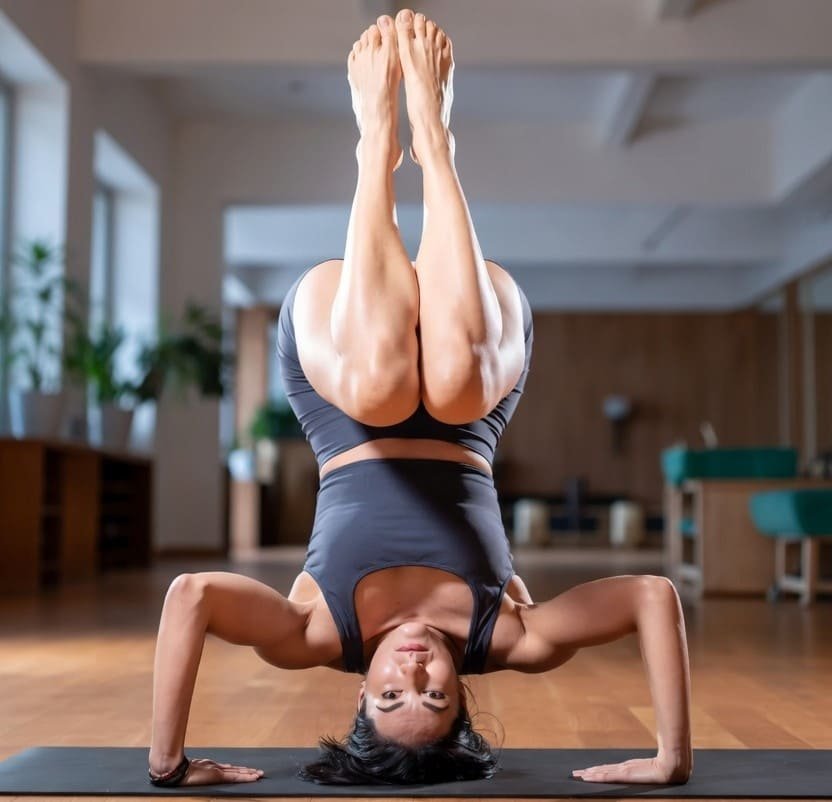
What strength and control are required?
1. Core Strength (Most Important Requirement)
The primary requirement is strong abdominal and hip flexor strength.
- The rectus abdominis and transverse abdominis compress the body inward
- Hip flexors help pull the knees tightly toward the chest
- Without strong core engagement, lifting is almost impossible
This is the foundation of Lolasana.
2. Arm Strength (Moderate to High)
Your arms support and lift the entire body weight.
- Triceps help push the body off the ground
- Shoulders stabilize the lift
- Chest muscles assist in support and control
Arms act like support pillars, not just balance tools.
3. Wrist Stability (Moderate)
Wrists bear significant pressure during the lift.
- Require endurance and proper alignment
- Must handle forward weight shift safely
- Weak wrists can limit lift capacity
4. Shoulder Control (Moderate)
Shoulders must remain stable and engaged.
- Prevent collapsing or sinking
- Maintain controlled elevation
- Support upper-body alignment during hover
5. Core Compression Control (Advanced Skill)
Beyond strength, requires precise body compression control:
- Knees must stay tightly tucked into the chest
- Spine must slightly round without collapsing
- Body must stay compact to reduce load
Compression is more important than raw strength.
6. Weight Shift and Balance Control
A key skill is shifting the center of gravity forward.
- Shoulders move slightly ahead of wrists
- Body weight is transferred into the hands
- Balance is maintained through micro-adjustments
7. Breathing and Mental Control
Control is not only physical but also mental.
- Steady breathing prevents tension buildup
- Focus improves stability
- Panic or breath-holding causes collapse
Summary
Lolasana requires a combination of:
- Strong core compression power
- Stable arm and shoulder strength
- Controlled forward weight transfer
- High body awareness and coordination
It is not just a strength pose—it is a test of precision, control, and integrated body coordination.
External References
- https://www.yogajournal.com/poses/lolasana/
- https://www.verywellfit.com/lolasana-pendant-pose-3567064
- https://www.siddhiyoga.com/yoga/poses/lolasana-pendant-pose
#Lolasana in Ahemadabad
What are the benefits of this arm balance?
1. Builds Strong Core Muscles
One of the biggest benefits of is deep activation of the abdominal muscles and hip flexors.
- Strengthens rectus abdominis and deep core stabilizers
- Improves ability to compress and control the body
- Enhances overall core endurance
This makes it one of the best yoga poses for functional core strength.
2. Strengthens Arms, Shoulders, and Wrists
Because the entire body weight is lifted using the hands, it strongly develops the upper body.
- Builds triceps, shoulders, and chest strength
- Improves wrist stability and load-bearing capacity
- Enhances upper-body endurance
It creates real functional pushing strength.
3. Improves Body Control and Coordination
Lolasana trains the body to move as a single integrated unit.
- Synchronizes breath, core engagement, and arm strength
- Improves neuromuscular coordination
- Enhances balance awareness even in unstable positions
4. Enhances Focus and Mental Discipline
This pose requires concentration and patience.
- Develops mental focus under physical stress
- Improves mindfulness and breath control
- Builds resilience through repeated practice
5. Prepares for Advanced Arm Balances
Lolasana is a key preparatory posture for more advanced yoga poses.
- Builds foundation for Crow Pose (Bakasana)
- Improves lifting mechanics for arm balances
- Teaches compression-based elevation instead of momentum
6. Improves Postural Strength
Regular practice helps support better posture.
- Strengthens core support for spine alignment
- Reduces slouching caused by weak abdominal muscles
- Supports upright sitting and standing posture
7. Boosts Functional Fitness
Beyond yoga, improves real-world movement strength.
- Better pushing strength
- Improved lifting control
- Increased overall body stability
8. Builds Confidence in Arm Balances
As practitioners progress, they develop trust in their body.
- Reduces fear of falling in arm balances
- Encourages gradual strength progression
- Builds confidence in challenging movements
Summary
Lolasana offers a combination of:
- Strong core development
- Powerful upper-body strengthening
- Improved coordination and focus
- Preparation for advanced arm balances
External References
- https://www.yogajournal.com/poses/lolasana/
- https://www.verywellfit.com/lolasana-pendant-pose-3567064
- https://www.siddhiyoga.com/yoga/poses/lolasana-pendant-pose
#Lolasana in Hyderabad
What common mistakes should be avoided?
1. Relying Only on Arm Strength
Many practitioners try to lift using just the arms.
Why it’s a mistake:
is primarily a core-driven lift, not an arm press. Without core compression, the body feels too heavy to lift.
Fix:
Engage your abdominal muscles strongly and pull the knees tightly into the chest before pressing.
2. Weak Core Engagement
A relaxed core is one of the biggest reasons for failure.
Why it’s a mistake:
Without abdominal activation, there is no upward lift.
Fix:
Actively “hug the belly inward” and create strong body compression before lifting.
3. Poor Hand Placement
Hands placed incorrectly reduce stability and strength.
Why it’s a mistake:
Incorrect positioning leads to instability and wrist strain.
Fix:
Place hands beside the hips, shoulder-width apart, with fingers pointing forward.
4. Not Leaning Forward Enough
Some people try to lift without shifting weight forward.
Why it’s a mistake:
The center of gravity stays too far back, making lift impossible.
Fix:
Bring shoulders slightly ahead of wrists before lifting.
5. Loose or Wide Knees
Letting the legs drift away from the chest reduces compression.
Why it’s a mistake:
The body becomes heavier and harder to lift.
Fix:
Keep knees tightly tucked into the chest at all times.
6. Holding the Breath
Breath-holding is very common during effort.
Why it’s a mistake:
It increases tension and reduces control.
Fix:
Maintain steady, controlled breathing throughout the lift.
7. Rushing the Lift
Trying to force the pose too quickly often leads to collapse.
Why it’s a mistake:
Lolasana requires controlled activation, not momentum.
Fix:
Build lift gradually with small hover attempts.
8. Skipping Warm-Up
Cold wrists and weak activation increase risk.
Why it’s a mistake:
Can lead to wrist or shoulder strain.
Fix:
Warm up with planks, wrist circles, and core activation drills.
Summary
To avoid mistakes in Lolasana:
- Use core strength, not arms alone
- Maintain tight knee-to-chest compression
- Shift weight forward properly
- Keep steady breathing
- Progress gradually without forcing lift
External References
- https://www.yogajournal.com/poses/lolasana/
- https://www.verywellfit.com/lolasana-pendant-pose-3567064
- https://www.siddhiyoga.com/yoga/poses/lolasana-pendant-pose
#Lolasana in Kolkata
Case Study of Lolasana
1. Background
(Pendant Pose) is an intermediate arm balance yoga posture commonly used in Ashtanga and Vinyasa yoga systems. It is designed to develop core strength, upper-body stability, and neuromuscular coordination. This case study examines the effects of structured practice on strength, balance, and movement control in a recreational yoga practitioner.
2. Participant Profile
- Age: 30 years
- Gender: Male
- Occupation: Desk-based professional (8–10 hours sitting daily)
- Fitness level: Beginner-to-intermediate yoga practitioner
- Primary goal: Improve core strength and learn arm balance control
3. Intervention Protocol
A 5-week progressive training program was followed, 5 days per week.
Daily Practice (20 minutes):
- Wrist mobility drills (2–3 minutes)
- Plank Pose (3 sets of 30–60 seconds)
- Boat Pose (Navasana) (3 sets of 20–40 seconds)
- Core compression drills (knees-to-chest holds)
- attempts (3–6 controlled lifts per session)
Focus: gradual strength building, breath control, and controlled lifting mechanics
4. Progression Observations
Week 1: Foundation Phase
- Unable to lift fully off the ground
- Weak core engagement identified
- Heavy reliance on arm strength
- Wrist fatigue during attempts
Week 2: Partial Lift Development
- Achieved brief foot hover (1–2 seconds)
- Improved forward weight shift awareness
- Better knee-to-chest compression
- Reduced wrist discomfort with warm-up routine
Week 3: Stability Building
- Consistent short lifts (2–4 seconds)
- Improved coordination between breath and lift
- Noticeable core activation improvement
- Better shoulder stability
Week 4: Control Improvement
- Longer holds (4–6 seconds) achieved
- Smoother lift-off transitions
- Reduced effort in compression phase
- Improved balance confidence
Week 5: Functional Strength Phase
- Controlled lifts with stable form (5–8 seconds)
- Significant improvement in core endurance
- Better posture awareness in daily activities
- Reduced fatigue during plank and boat pose
5. Key Findings
- Core strength is the primary determinant of success in
- Progressive training significantly improves lift efficiency
- Wrist preparation reduces discomfort and injury risk
- Small repeated lifts are more effective than long forced holds
- Breath control directly improves stability and balance
6. Benefits Observed
- Increased abdominal and hip flexor strength
- Improved upper-body strength (arms, shoulders, wrists)
- Better neuromuscular coordination
- Enhanced focus and mental control under effort
- Improved functional core engagement in daily posture
7. Challenges Identified
- Wrist strain in early stages
- Difficulty maintaining tight knee compression
- Core fatigue during repeated attempts
- Frustration due to slow initial progress
8. Conclusion
The case study demonstrates that is an effective progressive strength-building arm balance when practiced with structured progression. The most significant improvements occur when training emphasizes core compression, controlled weight shift, and gradual lift development rather than forceful attempts.
9. Practical Implications
- Useful in yoga strength training programs
- Effective for developing foundational arm balance ability
- Beneficial for improving core stability in sedentary individuals
- Serves as a preparatory posture for advanced arm balances like Crow Pose (Bakasana)
10. External References
- https://www.yogajournal.com/poses/lolasana/
- https://www.verywellfit.com/lolasana-pendant-pose-3567064
- https://www.siddhiyoga.com/yoga/poses/lolasana-pendant-pose
- https://www.yogaalliance.org/resources/yoga-therapy-overview
#Lolasana in Banglore

White Paper of Lolasana
1. Executive Summary
Lolasana (Pendant Pose) is a foundational arm balance yoga posture used in Ashtanga, Vinyasa, and Power Yoga systems. It involves lifting the entire body off the ground using integrated core compression and upper-body strength while maintaining a tightly tucked leg position.
This white paper evaluates from a biomechanical, physiological, and applied movement science perspective, highlighting its role in strength development, motor control, and functional fitness progression.
2. Definition and Scope
Lolasana is an isometric arm-supported suspension posture where:
- Hands are placed beside the hips on the floor
- Legs are crossed or tightly tucked toward the chest
- The body is lifted entirely off the ground
- Stability is maintained through core and shoulder engagement
It is widely used in:
- Yoga progression systems
- Calisthenics and bodyweight strength training
- Movement control and coordination development
- Arm balance preparation sequences
3. Biomechanical Analysis
Primary Muscle Activation
- Core: rectus abdominis, transverse abdominis, obliques
- Hip flexors: iliopsoas group (compression phase)
- Upper body: triceps, deltoids, pectorals
- Stabilizers: scapular stabilizers, serratus anterior, wrist flexors
Mechanical Principles
Lolasana relies on:
- Forward center-of-gravity shift over wrists
- Strong abdominal compression force
- Vertical lift generated through closed-chain kinetic engagement
4. Physiological Effects
Regular practice produces:
- Increased core endurance and activation efficiency
- Improved upper-body neuromuscular recruitment
- Enhanced wrist load tolerance and joint stability
- Better proprioception and balance control under load
It trains the body to maintain stability in high-tension isometric conditions.
5. Functional and Industry Applications
A. Fitness and Strength Training
- Bodyweight core conditioning
- Calisthenics progression systems
- Functional upper-body strength development
B. Yoga Systems
- Foundational arm balance training
- Transition preparation for Crow Pose (Bakasana)
- Core compression education in YTT programs
C. Rehabilitation (Controlled Use)
- Core reactivation training
- Postural correction protocols for sedentary individuals
- Shoulder and wrist stabilization (modified versions only)
D. Sports Performance
- Core stability for combat sports and gymnastics
- Balance control under dynamic load
- Upper-body endurance training
6. Strength and Flexibility Requirements
- Core strength: Very High (critical factor)
- Arm strength: Moderate to High
- Shoulder stability: Moderate
- Wrist stability: Moderate
- Flexibility requirement: Low (minor hip mobility needed)
Lolasana is classified as a strength-dominant posture (~80% strength / 20% mobility).
7. Risk Profile and Contraindications
Potential risks include:
- Wrist strain from improper load distribution
- Shoulder fatigue due to weak stabilizers
- Core overload in beginners
Contraindications:
- Wrist injuries
- Shoulder instability
- Severe abdominal strain conditions
- Post-surgical upper-body recovery (without supervision)
8. Best Practice Guidelines
- Perform thorough wrist and shoulder warm-ups
- Prioritize core compression before lift
- Shift weight forward gradually before lifting
- Maintain steady breathing throughout the attempt
- Use progressive training (plank → boat → hover lifts)
9. Conclusion
Lolasana is a highly effective functional strength-building arm balance that develops integrated core and upper-body control. Its primary value lies in teaching compression-based lifting mechanics, neuromuscular coordination, and bodyweight control under load.
When practiced systematically, it serves as a gateway posture for advanced arm balances and functional fitness development.
10. External References
- https://www.yogajournal.com/poses/lolasana/
- https://www.verywellfit.com/lolasana-pendant-pose-3567064
- https://www.siddhiyoga.com/yoga/poses/lolasana-pendant-pose
- https://www.yogaalliance.org/resources/yoga-therapy-overview
#Lolasana in Chennai
Industry Application of Lolasana
Lolasana (Pendant Pose) is an arm balance yoga posture that builds strong core compression, upper-body strength, and neuromuscular control. Because it develops functional strength without equipment, it has been widely adopted beyond traditional yoga into multiple modern industries including fitness, rehabilitation, sports performance, and digital wellness.
1. Fitness and Bodyweight Training Industry
In modern fitness systems, Lolasana is used as a core-strength and calisthenics progression exercise.
Applications:
- Core conditioning circuits
- Advanced bodyweight strength training
- Arm balance progressions in functional fitness classes
- Stability and control drills for athletes
Value:
It develops integrated strength in the core, arms, and shoulders, improving real-world pushing and lifting ability.
2. Yoga Studios and Teacher Training Programs
Lolasana is a key posture in Ashtanga and Vinyasa yoga progression systems.
Applications:
- Arm balance training sequences
- Preparatory posture for Crow Pose (Bakasana)
- Anatomy and alignment education in YTT programs
Value:
It teaches core compression, weight transfer, and controlled lifting mechanics, making it essential in advanced yoga education.
3. Physiotherapy and Movement Rehabilitation
When modified, Lolasana is used in controlled rehabilitation settings for rebuilding movement control.
Applications:
- Core reactivation exercises
- Postural correction for sedentary individuals
- Shoulder and wrist stabilization training (light progression only)
Value:
It helps restore neuromuscular coordination and deep core engagement patterns.
4. Sports Performance Training
Athletes use Lolasana as part of functional strength and stability conditioning.
Applications:
- Core endurance training for runners and fighters
- Upper-body stability drills for grappling sports
- Balance and control development under load
Value:
Improves explosive core control and upper-body endurance, enhancing athletic performance.
5. Corporate Wellness Programs
Lolasana-inspired movements are adapted into workplace wellness routines.
Applications:
- Short core activation breaks
- Desk-worker posture correction sessions
- Mobility and strength micro-workouts
Value:
Helps counteract weak core activation and postural fatigue from long sitting hours.
6. Digital Fitness and Wellness Platforms
Lolasana is widely used in online training and app-based fitness programs.
Applications:
- Guided yoga strength classes
- AI-driven mobility and strength coaching
- Progressive arm balance training modules
Value:
Its step-by-step scalability makes it ideal for virtual coaching systems and structured learning paths.
7. Mind-Body Wellness Industry
In holistic wellness systems, Lolasana is used for focus and discipline training.
Applications:
- Breath-control and movement synchronization
- Mind-body coordination practices
- Stress resilience training through physical challenge
Value:
Enhances mental focus, patience, and emotional control under physical strain.
Conclusion
Lolasana has evolved from a traditional yoga arm balance into a multi-industry functional movement tool. Its applications span fitness, rehabilitation, sports performance, corporate wellness, education, and digital health platforms. Its core value lies in developing integrated strength, body control, and neuromuscular coordination.
External References
- https://www.yogajournal.com/poses/lolasana/
- https://www.verywellfit.com/lolasana-pendant-pose-3567064
- https://www.yogaalliance.org/resources/yoga-therapy-overview
- https://www.siddhiyoga.com/yoga/poses/lolasana-pendant-pose
#Lolasana in Mumbai
Ask FAQs
What is Lolasana (Pendant Pose)?
Lolasana, also known as Pendant Pose, is an arm balance yoga posture where the body is lifted off the ground using arm and core strength while the legs are tightly tucked into the chest. It is commonly practiced in Ashtanga and Vinyasa yoga to build strength and control.
Is Lolasana suitable for beginners?
Lolasana is generally considered intermediate to advanced. Beginners can work toward it by strengthening the core and arms with preparatory poses like Plank Pose and Boat Pose before attempting full lifts.
What muscles does Lolasana work?
Lolasana primarily targets the core muscles (abdominals and hip flexors) along with the arms, shoulders, chest, and wrists. It is a full-body strength-building posture with a strong focus on core compression.
Why can’t I lift in Lolasana?
Most difficulty comes from weak core engagement, lack of forward weight shift, or insufficient arm strength. The key is to tightly compress the knees into the chest and shift the shoulders slightly forward before lifting.
How can I improve my Lolasana?
You can improve Lolasana by practicing core-strengthening exercises (Boat Pose, Plank), improving wrist stability, and training controlled hover lifts. Consistent practice and proper alignment are more important than force.
Table of Contents
Disclaimer: Lolasana (Pendant Pose) is an advanced yoga arm balance and should be practiced with caution. This content is for educational purposes only and is not medical advice. Avoid practicing if you have wrist, shoulder, or core injuries, and consult a qualified yoga instructor or healthcare professional before attempting this pose.