Paryankasana
Paryankasana is a traditional reclining posture in Hatha Yoga, often translated as the “couch pose” due to its relaxed, regal appearance. The word derives from the Sanskrit paryanka, meaning couch or bed, reflecting the body’s supported, reclined position. Though it may look restful, the pose offers a deep stretch through the thighs, abdomen, and chest, making it both restorative and invigorating.
Technique and Alignment
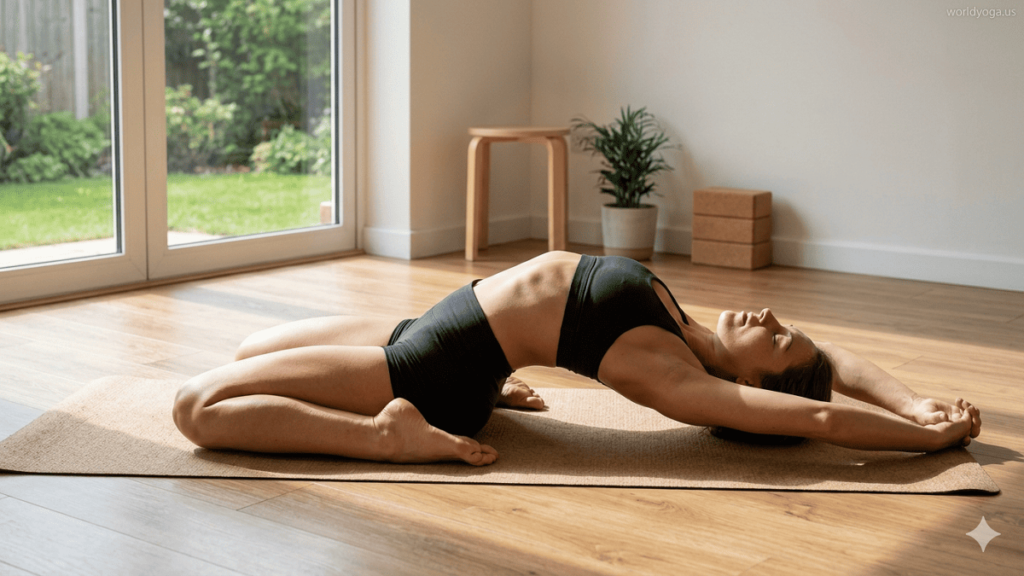
Paryankasana is typically performed from a kneeling position. The practitioner begins in Vajrasana (thunderbolt pose), with the knees together and the feet tucked beneath the hips. From here, the torso is gently lowered backward, first onto the elbows and then fully onto the back, if flexibility allows. The arms may rest beside the body or extend overhead. The spine forms a gentle arch, opening the chest and stretching the front body.
Because this posture involves a deep backward bend at the knees and spine, proper alignment is essential. The knees should remain close together, and the lower back should not be forced into discomfort. Beginners are encouraged to use props such as bolsters or cushions to support the back and reduce strain.
Benefits
Paryankasana offers several physical and physiological benefits. It stretches the quadriceps, hip flexors, and abdominal muscles while strengthening the back. The expansion of the chest can improve lung capacity and breathing efficiency, making it beneficial for those practicing pranayama. Additionally, the pose stimulates abdominal organs, aiding digestion.
From a therapeutic perspective, the posture may help relieve mild back stiffness and improve posture by counteracting prolonged sitting. It also promotes relaxation and can calm the nervous system when practiced mindfully.
Precautions
Despite its benefits, Paryankasana is not suitable for everyone. Individuals with knee injuries, severe lower back pain, or spinal issues should avoid or modify the pose. It is important to practice under the guidance of a qualified instructor, especially for beginners. Gradual progression and the use of props can significantly reduce the risk of injury.
Conclusion
Paryankasana is a valuable addition to a yoga practice, blending restorative comfort with deep muscular engagement. When performed correctly, it enhances flexibility, supports respiratory health, and encourages relaxation. As with many traditional yoga postures, mindful execution and respect for the body’s limits are key to experiencing its full benefits.
For further reading:
- Yoga Journal Pose Guide: https://www.yogajournal.com
- Detailed Asana Library by Yoga Alliance: https://www.yogaalliance.org
- Classical Yoga Text Reference – Hatha Yoga Pradipika: https://www.sacred-texts.com/hin/hyp/index.htm
#Paryankasana in India
What is Paryankasana (Couch Pose)?
Paryankasana (Couch Pose) is a classical reclining posture in Hatha Yoga that emphasizes deep relaxation combined with an intense stretch of the front body. The name comes from the Sanskrit word paryanka, meaning “couch,” “bed,” or “resting place,” which reflects the posture’s appearance—similar to lying back comfortably on a couch.
In this asana, the practitioner begins in a kneeling position, commonly in Vajrasana. From there, the upper body is slowly lowered backward, first onto the elbows and then onto the back, depending on flexibility. The legs remain folded beneath the body, with knees ideally kept together. The arms can rest alongside the body or be extended overhead, while the chest lifts upward, creating a gentle arch in the spine.
Although Paryankasana may look like a resting pose, it provides a deep stretch to several muscle groups, particularly the quadriceps (front thighs), hip flexors, abdomen, and chest. This makes it both a restorative and strengthening posture. It also promotes expansion of the lungs, which can support improved breathing and is beneficial when combined with pranayama (breath control practices).
The pose is especially useful for counteracting the effects of prolonged sitting, as it opens up the front body and encourages better posture. Additionally, it can stimulate abdominal organs, potentially aiding digestion and improving internal circulation.
However, Paryankasana requires flexibility in the knees, thighs, and lower back. Practitioners with knee injuries, spinal issues, or tight quadriceps should approach the pose with caution. Beginners are often advised to use props such as cushions or bolsters under the back for support, or to practice a modified version until sufficient flexibility is developed.
In summary, Paryankasana (Couch Pose) is a traditional yoga posture that combines relaxation with deep stretching. When practiced correctly and mindfully, it enhances flexibility, improves posture, supports respiratory function, and promotes overall physical and mental well-being.
#Paryankasana in Maharashtra
How is this backbend performed step by step?
1. Start in a Kneeling Position
Begin by sitting in Vajrasana. Keep your knees together and your feet tucked under your hips, with the tops of your feet resting on the floor. Maintain an upright spine and relaxed shoulders.
2. Prepare Your Body
Place your hands on your thighs and take a few slow, deep breaths. This helps center your body and prepares your spine and legs for the backbend.
3. Lean Back Slowly
Gently begin to lean your upper body backward. Bring your hands behind you and place them on the floor for support. Keep your knees grounded and close together as you move.
4. Lower Onto the Elbows
Gradually bend your elbows and lower your torso onto your forearms. At this stage, pause and check for any discomfort in the knees or lower back. Breathe steadily.
5. Recline Fully (If Comfortable)
If your flexibility allows, continue lowering your back until your head and shoulders rest on the floor. Your spine will form a natural arch, and your chest will open upward.
6. Position the Arms
You can keep your arms resting alongside your body, place your hands on your thighs, or extend them overhead for a deeper stretch.
7. Hold the Pose
Stay in the posture for 15–30 seconds (or longer with practice), maintaining slow, even breathing. Focus on relaxing into the stretch without forcing your body.
8. Exit the Pose Carefully
To come out, engage your core and press into your elbows and hands. Slowly lift your torso back up to the forearms, then to a seated position in Vajrasana.
9. Rest and Recover
Sit upright or move into a neutral pose to allow your body to relax and normalize.
Important Tips
- Move slowly and avoid jerky motions.
- Use props like cushions or bolsters under your back if needed.
- Do not force your body into the full pose—progress gradually.
- Stop immediately if you feel sharp pain, especially in the knees or spine.
Practicing Paryankasana step by step with awareness ensures both safety and effectiveness, helping you gain flexibility and experience the full benefits of this traditional backbend.
#Paryankasana in Ahemadabad
What flexibility and alignment are required?
Paryankasana, a classical backbend in Hatha Yoga, requires a combination of lower-body flexibility, spinal mobility, and precise alignment. Without these elements, the pose can place unnecessary strain on the knees and lower back. Understanding these requirements helps ensure a safe and effective practice.
1. Required Flexibility
a. Quadriceps and Hip Flexors
The most important flexibility requirement is in the front thighs (quadriceps) and hip flexors. Since the legs remain folded under the body (similar to Vajrasana), tightness in these muscles can create excessive pressure on the knees or pull the pelvis out of alignment.
b. Knees and Ankles
Good mobility in the knee joints is essential because they are in deep flexion. The ankles must also comfortably point backward with the tops of the feet on the floor. Limited mobility here may cause discomfort or instability.
c. Spine and Chest (Thoracic Extension)
Paryankasana involves a backbend primarily in the thoracic spine (upper and mid-back). Adequate spinal flexibility allows the chest to open upward without collapsing into the lower back.
2. Alignment Principles
a. Knees Stay Together and Grounded
Keep the knees close together and firmly on the floor. Letting them splay outward can strain the inner knees and reduce stability.
b. Neutral Pelvis (Avoid Overarching the Lower Back)
The pelvis should remain as neutral as possible. Avoid dumping weight into the lumbar spine (lower back). The lift should come more from the chest opening rather than compressing the lower back.
c. Even Weight Distribution
As you recline, distribute weight gradually—first through the hands, then elbows, and finally the back. Avoid dropping suddenly into the pose.
d. Chest Lifts, Not Just Back Bends
Focus on lifting and expanding the chest rather than simply bending backward. This creates a healthier, more balanced spinal curve.
e. Head and Neck Support
The neck should remain long and relaxed. If the head reaches the floor, it should rest comfortably without strain. If not, use a prop for support.
3. Common Misalignments to Avoid
- Forcing the backbend despite tight thighs
- Letting knees widen apart
- Collapsing into the lower back instead of opening the chest
- Ignoring pain in the knees or ankles
4. Modifications for Limited Flexibility
If flexibility is limited, place a bolster or cushions under the back and head. You can also remain on the elbows instead of lowering fully. Gradual progression is key.
#Paryankasana in Kolkata
What are the benefits of this pose?
Paryankasana, a classical backbend in Hatha Yoga, offers a combination of physical, physiological, and mental benefits when practiced with proper alignment and awareness. Though it appears restful, it actively stretches and stimulates multiple systems in the body.
1. Deep Stretch for the Front Body
One of the primary benefits of Paryankasana is the intense stretch it provides to the quadriceps (front thighs), hip flexors, and abdominal muscles. Since the posture is performed from a folded-leg position similar to Vajrasana, it lengthens muscles that often become tight due to prolonged sitting. This helps improve overall flexibility and mobility in the lower body.
2. Improves Spinal Flexibility and Posture
As a backbend, Paryankasana enhances spinal extension, particularly in the thoracic (upper) region. It encourages the chest to open and the shoulders to move back, which can counteract poor posture caused by slouching or desk work. Over time, this contributes to better alignment and reduced stiffness in the back.
3. Expands Chest and Enhances Breathing
The upward lift of the chest increases lung capacity and promotes deeper breathing. This makes the pose beneficial for respiratory efficiency and supportive of pranayama practices. Improved breathing can also have a calming effect on the nervous system.
4. Stimulates Abdominal Organs
The stretch across the abdomen gently massages internal organs such as the stomach and intestines. This stimulation may support digestion, reduce bloating, and improve metabolic function.
5. Strengthens the Back Muscles
While primarily a stretching pose, Paryankasana also engages and strengthens the muscles along the spine. These muscles help support posture and spinal stability in daily activities.
6. Promotes Relaxation and Stress Relief
Despite being a backbend, the reclined nature of the pose can have a soothing effect when practiced mindfully. Slow breathing in this posture helps calm the mind, reduce stress, and promote a sense of relaxation.
7. Counters Sedentary Lifestyle Effects
Modern lifestyles often involve long hours of sitting, leading to tight hips, weak backs, and poor posture. Paryankasana directly counteracts these effects by opening the front body and reactivating underused muscle groups.
#Paryankasana in Delhi
What common mistakes or safety risks should be avoided?
Paryankasana, a deep backbend in Hatha Yoga, can be highly beneficial—but only when performed with proper awareness. Due to the stress it places on the knees, thighs, and spine, certain mistakes can increase the risk of discomfort or injury.
1. Forcing the Backbend
A common mistake is pushing the body too quickly into the full reclined position without adequate flexibility. This often leads to excessive compression in the lower back. The movement should be gradual—first lowering onto the hands, then elbows, and only fully reclining if the body allows.
2. Ignoring Knee Discomfort
Since the pose begins in a folded-leg position similar to Vajrasana, the knees bear significant pressure. Sharp or persistent knee pain is a warning sign and should never be ignored. Forcing the posture despite discomfort can lead to ligament strain or injury.
3. Letting Knees Spread Apart
Allowing the knees to splay outward reduces stability and places uneven stress on the joints. Keeping the knees together and grounded is essential for proper alignment and safety.
4. Overarching the Lower Back
Many practitioners mistakenly dump weight into the lumbar spine (lower back) instead of distributing the bend לאורך the entire spine. This can cause strain or aggravate existing back issues. The focus should be on lifting and opening the chest rather than forcing a deep arch in the lower back.
5. Lack of Warm-Up
Attempting Paryankasana without preparing the body is risky. Tight quadriceps, hip flexors, or spine increase the likelihood of strain. Gentle warm-up poses and stretches should always precede this asana.
6. Dropping Back Too Quickly
Moving abruptly into the pose instead of lowering with control can stress the spine and joints. Controlled, mindful movement is key to avoiding injury.
7. Neglecting Neck Support
If the head does not comfortably reach the floor, letting it hang unsupported can strain the neck. Proper support—either by maintaining a lifted position or using props—is important.
8. Skipping Props When Needed
Beginners often avoid using cushions or bolsters, thinking it reduces effectiveness. In reality, props help maintain alignment and make the pose safer and more accessible.
9. Holding the Breath
Tension and breath-holding are subtle but common mistakes. Steady, relaxed breathing helps the body ease into the stretch and prevents unnecessary strain.
10. Practicing with Existing Injuries
Individuals with knee injuries, severe lower back pain, or spinal conditions should avoid or modify the pose. Practicing without proper guidance in such cases can worsen the condition.
#Paryankasana in Hyderabad
Case Study of Paryankasana
Background
A 35-year-old office professional presented with complaints of lower back stiffness, tight hip flexors, and poor posture due to prolonged sitting (8–10 hours daily). The individual had no history of major injury but reported discomfort after long workdays and limited flexibility in the thighs and spine.
Intervention
A 6-week yoga program was designed, incorporating gentle warm-ups, preparatory poses, and gradual introduction of Paryankasana. The practice began with foundational postures such as Vajrasana and progressed to supported backbends using bolsters.
- Week 1–2: Focus on mobility and stretching of quadriceps and hip flexors; modified Paryankasana using cushions
- Week 3–4: Increased duration in the pose (15–20 seconds), improved spinal extension
- Week 5–6: Transition to fuller expression of the pose with reduced reliance on props
Sessions were conducted 4 times per week, each lasting 30–40 minutes, with emphasis on proper alignment and breathing.
Observations and Results
1. Improved Flexibility
By the end of the program, the subject demonstrated increased flexibility in the quadriceps and hip flexors. The ability to recline deeper into Paryankasana improved without discomfort.
2. Reduction in Back Stiffness
Regular practice led to noticeable reduction in lower back stiffness. The subject reported improved comfort during and after long sitting hours.
3. Enhanced Posture
The chest-opening effect of the pose contributed to better spinal alignment. The subject showed reduced slouching and improved upright posture.
4. Better Breathing Capacity
Expansion of the chest during the pose appeared to support deeper breathing patterns, contributing to a sense of relaxation and reduced fatigue.
5. Mental Relaxation
The combination of controlled breathing and gentle backbending had a calming effect, helping reduce work-related stress.
Limitations
Initial discomfort in the knees required careful modification and use of props. Progress was gradual, highlighting the importance of patience and supervision. The case reflects a single individual and may not apply universally.
Conclusion
This case study demonstrates that Paryankasana, when practiced progressively and with proper alignment, can effectively improve flexibility, posture, and overall comfort in individuals with sedentary lifestyles. As part of a balanced yoga routine, it offers both physical and mental benefits, though individual limitations must always be considered.
For further reading:
- Yoga therapy resources by Yoga Alliance: https://www.yogaalliance.org
- Traditional reference: Hatha Yoga Pradipika: https://www.sacred-texts.com/hin/hyp/index.htm
#Paryankasana in Banglore
White Paper of Paryankasana
Abstract
Paryankasana, a traditional backbend in Hatha Yoga, is a reclining posture characterized by deep knee flexion and spinal extension. This white paper examines its biomechanical foundations, physiological benefits, safety considerations, and potential applications in modern wellness and therapeutic settings. The analysis integrates classical yoga principles with contemporary understanding of musculoskeletal health.
1. Introduction
Derived from the Sanskrit term paryanka (couch or bed), Paryankasana reflects a supported reclining position that combines relaxation with structural engagement. It is commonly practiced from Vajrasana and is categorized as a mild-to-moderate backbend depending on execution. With increasing sedentary lifestyles, such postures are gaining relevance for their role in restoring mobility and posture.
2. Biomechanical Analysis
Paryankasana involves coordinated action across multiple joints and muscle groups:
- Knee Joint: Deep flexion places controlled stress on ligaments and surrounding tissues
- Hip Extension: Lengthens hip flexors, particularly the iliopsoas
- Spinal Extension: Emphasizes thoracic extension while requiring lumbar stability
- Shoulder Positioning: May involve passive extension when arms are overhead
Proper load distribution is essential. The backbend should be evenly spread לאורך the spine, avoiding excessive compression in the lumbar region. Gradual descent—hands to elbows to back—ensures safe joint engagement.
3. Physiological Benefits
a. Musculoskeletal Health
The pose improves flexibility in the quadriceps and hip flexors while strengthening spinal support muscles. It contributes to better posture by counteracting prolonged sitting.
b. Respiratory Function
Chest expansion enhances lung capacity and supports deeper breathing patterns, which can benefit respiratory efficiency.
c. Digestive Stimulation
Gentle stretching of the որովայն region stimulates abdominal organs, potentially aiding digestion and metabolic activity.
d. Nervous System Regulation
When combined with controlled breathing, Paryankasana may activate the parasympathetic nervous system, promoting relaxation and stress reduction.
4. Clinical and Therapeutic Applications
Paryankasana can be integrated into yoga therapy programs for individuals experiencing:
- Postural imbalances due to sedentary work
- Mild lower back stiffness
- Tight hip flexors and reduced mobility
However, it should be adapted using props for beginners or those with limited flexibility. Clinical supervision is recommended for individuals with pre-existing conditions.
5. Safety Considerations
- Avoid in cases of knee injuries, severe back pain, or spinal disorders
- Ensure adequate warm-up before practice
- Use props (bolsters, cushions) to reduce strain
- Maintain proper alignment—knees together, chest lifted, neck supported
- Progress gradually without forcing the posture
6. Limitations and Research Gaps
While traditional texts such as the Hatha Yoga Pradipika reference foundational asanas, empirical scientific research specifically on Paryankasana remains limited. Most conclusions are based on general principles of backbending and clinical observation. Further controlled studies are needed to validate long-term therapeutic outcomes.
7. Conclusion
Paryankasana represents a valuable intersection of traditional yoga practice and modern physical therapy principles. Its ability to improve flexibility, posture, and relaxation makes it particularly relevant in addressing lifestyle-related musculoskeletal issues. With proper technique and mindful progression, it can be a safe and effective component of a holistic wellness program.
References and Further Reading
- Yoga Alliance – Standards and yoga therapy resources: https://www.yogaalliance.org
- Hatha Yoga Pradipika – Classical yoga text: https://www.sacred-texts.com/hin/hyp/index.htm
- Yoga Journal Asana Library: https://www.yogajournal.com
#Paryankasana in Pune
Industry Application of Paryankasana
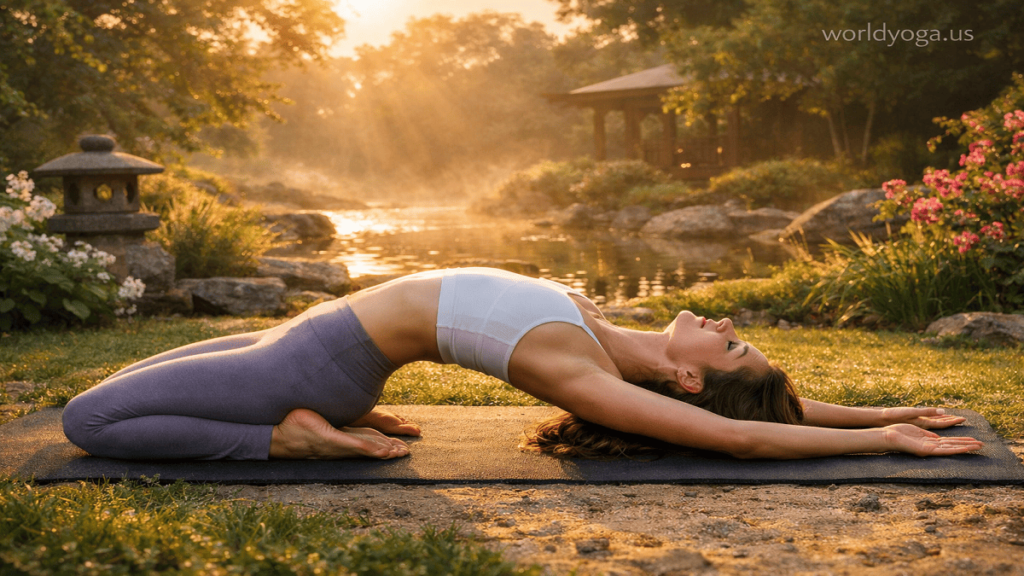
Paryankasana, a traditional backbend from Hatha Yoga, has evolved beyond its classical roots to find practical applications across multiple industries, particularly in wellness, healthcare, corporate productivity, and fitness. Its ability to address postural imbalances, enhance flexibility, and promote relaxation makes it highly relevant in modern professional environments.
1. Corporate Wellness Programs
In today’s corporate sector, prolonged sitting and screen exposure contribute to musculoskeletal issues such as back pain and tight hips. Paryankasana is increasingly incorporated into workplace wellness initiatives to counteract these effects.
- Helps reverse forward posture caused by desk work
- Reduces lower back stiffness and fatigue
- Encourages better breathing and stress management
Organizations often include guided yoga sessions where preparatory poses like Vajrasana lead into gentle backbends such as Paryankasana.
2. Healthcare and Rehabilitation
In physiotherapy and rehabilitation settings, modified versions of Paryankasana are used to improve flexibility and mobility.
- Assists in stretching tight quadriceps and hip flexors
- Supports recovery from mild postural dysfunctions
- Enhances spinal mobility when practiced under supervision
Healthcare professionals may adapt the pose using props to ensure patient safety, especially for individuals recovering from sedentary lifestyle-related conditions.
3. Fitness and Yoga Industry
Yoga studios and fitness centers widely include Paryankasana in flexibility and restorative yoga classes.
- Integrated into backbend sequences for intermediate practitioners
- Used in restorative sessions with bolsters for relaxation
- Enhances overall body awareness and mobility
It is particularly लोकप्रिय in programs focusing on mobility training and functional fitness.
4. Sports and Athletic Training
Athletes often experience tight hip flexors due to repetitive movement patterns. Paryankasana can be used as part of recovery routines:
- Improves range of motion in the hips and thighs
- Supports better posture and alignment
- Aids in muscle recovery after intense training
It is especially beneficial for runners, cyclists, and individuals involved in strength training.
5. Mental Wellness and Stress Management
The calming effect of controlled breathing in Paryankasana makes it useful in mental health and mindfulness programs.
- Encourages relaxation and nervous system regulation
- Reduces stress and anxiety when combined with breathwork
- Supports holistic wellness approaches
Many wellness retreats and therapy programs incorporate such poses to promote mind-body balance.
6. Ergonomics and Lifestyle Coaching
Professionals in ergonomics and lifestyle coaching recommend yoga-based interventions like Paryankasana to improve daily movement habits.
- Helps clients counteract sedentary behavior
- Promotes awareness of posture and body mechanics
- Encourages regular stretching routines
Conclusion
Paryankasana demonstrates significant cross-industry value, from corporate wellness to clinical therapy and fitness training. Its adaptability—ranging from restorative to more advanced forms—makes it accessible to diverse populations. When integrated thoughtfully and practiced with proper guidance, it serves as an effective tool for improving physical health, enhancing productivity, and supporting overall well-being in modern professional settings.
#Paryankasana in Mumbai
Ask FAQs
What is Paryankasana and who can practice it?
Paryankasana is a reclining backbend from Hatha Yoga that stretches the front body and opens the chest. It is suitable for intermediate practitioners with adequate flexibility in the thighs, knees, and spine. Beginners can practice modified versions using props under guidance.
What are the main benefits of practicing Paryankasana?
This pose improves flexibility in the quadriceps and hip flexors, enhances spinal mobility, and promotes better posture. It also expands the chest, supporting deeper breathing, and may help reduce stiffness caused by prolonged sitting.
Is Paryankasana safe for people with knee or back problems?
Individuals with knee injuries, severe lower back pain, or spinal conditions should avoid or modify the pose. Since it begins in a position similar to Vajrasana, it places pressure on the knees. Consulting a qualified instructor or healthcare professional is recommended before attempting it.
How long should the pose be held?
Beginners can hold Paryankasana for 10–20 seconds, gradually increasing to 30–60 seconds as flexibility improves. The duration should always be comfortable, with steady breathing and no pain.
What are common mistakes to avoid in Paryankasana?
Common mistakes include forcing the backbend, letting the knees spread apart, and putting too much pressure on the lower back. Practicing slowly, maintaining proper alignment, and using props when needed can help prevent injury and improve effectiveness.
Table of Contents
Desclaimer:
This information is provided for educational purposes only and should not be considered medical advice. Always consult a qualified yoga instructor or healthcare professional before attempting Paryankasana, especially if you have existing injuries or medical conditions. Practice mindfully and within your physical limits to avoid injury.