Hasta Garudasana in Ardha Padma Prapadasana
Garudasana combined with Ardha Padma Prapadasana is an advanced balancing and concentration posture practiced in contemporary yoga. The variation known as “Hasta Garudasana in Ardha Padma Prapadasana” integrates the arm position of Eagle Pose with the lower-body foundation of Half Lotus Tiptoe Pose. This posture requires flexibility, joint stability, muscular endurance, and mental focus, making it suitable for intermediate to advanced yoga practitioners.
In this posture, the practitioner first establishes a stable Half Lotus position by placing one foot onto the opposite thigh while balancing on the toes of the standing leg. The body is gradually lowered into a squat-like position while maintaining spinal alignment. Once balance is secured, the arms are wrapped into the Garudasana arm bind, where one elbow crosses over the other and the palms attempt to touch. The combined posture creates a compact, grounded structure that challenges both physical and mental equilibrium.
The primary physical benefits of Hasta Garudasana in Ardha Padma Prapadasana include improved ankle mobility, hip flexibility, knee stability, and enhanced proprioception. Because the practitioner balances on the forefoot while maintaining a folded lower-body structure, the muscles of the calves, quadriceps, gluteals, and core are actively engaged. Simultaneously, the Garudasana arm position stretches the shoulders, upper back, and wrists, helping release tension accumulated from prolonged sitting or repetitive upper-body activity.
This posture also contributes to neuromuscular coordination and concentration. Yoga balancing poses are often associated with increased body awareness and mental steadiness because they require sustained attention and controlled breathing. The combination of balance and compression in this pose encourages practitioners to cultivate patience, calmness, and controlled movement patterns.
From a therapeutic perspective, the posture may assist in improving postural control and lower-limb strength when practiced under proper supervision. However, it should be approached cautiously by individuals with knee injuries, ankle instability, hip mobility limitations, or balance disorders. Since the Half Lotus component places rotational stress on the knee joint, proper alignment and gradual preparation are essential. Preparatory postures such as Tree Pose, Eagle Pose, Half Lotus Pose, and Malasana are commonly recommended before attempting this variation.
Breathing remains an important component throughout the posture. Slow and controlled diaphragmatic breathing helps maintain stability and prevents unnecessary muscular tension. Practitioners are advised to enter and exit the posture gradually to minimize strain on the joints.
For further study and visual references on yoga alignment and balancing techniques, the following resources may be useful:
- Yoga Journal – Eagle Pose Guide
- Iyengar Yoga Resources
- Yoga International – Balance Pose Tutorials
- The Yoga Institute
#Hasta Garudasana in Ardha Padma Prapadasana in India
How is Hasta Garudasana in Ardha Padma Prapadasana performed correctly?
Hasta Garudasana in Ardha Padma Prapadasana is an advanced yoga balancing posture that combines lower-body stability with upper-body flexibility and concentration. Proper execution requires controlled movement, correct alignment, Hasta Garudasana, steady breathing, and gradual progression. The posture should ideally be practiced on a stable surface under the guidance of a qualified yoga instructor, especially for beginners attempting advanced balancing techniques.
The practice begins in a standing position with the spine erect and the feet grounded evenly. The practitioner shifts body weight onto one leg while lifting the opposite foot and placing it carefully onto the upper thigh of the standing leg in Half Lotus position. The sole of the lifted foot should face upward, and the knee should remain relaxed without forceful pressure. Maintaining proper hip mobility is essential to avoid unnecessary strain on the knee joint.
Once balance is established, the standing leg slowly bends as the practitioner lowers the body into a controlled squat while simultaneously rising onto the toes of the supporting foot. This forms the Ardha Padma Prapadasana foundation. The torso should remain upright with the core muscles actively engaged to stabilize the spine and pelvis. The practitioner should avoid collapsing the chest or leaning excessively forward, as this can disturb balance and place stress on the lower back.
After stabilizing the lower body, the arms move into the Garudasana position. One arm crosses over the other at the elbows, and the forearms wrap around each other until the palms touch or come as close together as possible. The elbows are lifted slightly to shoulder level while the shoulders remain relaxed and away from the ears. This arm position stretches the upper back, shoulders, and wrists while encouraging postural awareness.
Breathing plays a critical role throughout the posture. Slow inhalation helps lengthen the spine, while controlled exhalation assists in maintaining stability and muscular control. The gaze, or drishti, should remain fixed on a stable point in front of the practitioner to improve concentration and reduce wobbling.
To exit the posture safely, the practitioner slowly releases the Garudasana arms, lowers the heel of the standing foot, and gently removes the Half Lotus leg before returning to a neutral standing position. The posture should then be repeated on the opposite side to maintain muscular balance and symmetry.
Correct performance of this posture depends heavily on preparation and gradual progression. Warm-up practices focusing on hip opening, ankle strengthening, and balance development are highly recommended. Preparatory postures commonly include Tree Pose, Eagle Pose, Hasta Garudasana, Half Lotus Pose, Garland Pose, and Toe Balance variations.
Practitioners with knee injuries, ankle instability, hip limitations, or balance disorders should avoid attempting the posture without professional supervision. Excessive force should never be used when entering the Half Lotus position, as improper alignment may lead to ligament or joint strain.
Additional instructional resources and alignment references can be found at:
- Yoga Journal – Eagle Pose Instructions
- Yoga International – Balance and Alignment Guides
- Iyengar Yoga Association
- The Yoga Institute – Yoga Posture Tutorials
#Hasta Garudasana in Ardha Padma Prapadasana in Maharashtra
What is the proper alignment in this balancing variation?
Proper alignment in Hasta Garudasana performed within Ardha Padma Prapadasana is essential for maintaining balance, preventing injury, Hasta Garudasana and achieving the full physical and mental benefits of the posture. Since this is an advanced yoga variation involving a Half Lotus position, toe balance, and an upper-body bind, alignment must be approached with precision and awareness.
The posture begins with establishing a stable base. The standing foot should be firmly grounded through the ball of the foot and toes while the heel remains lifted. Weight distribution should remain centered rather than shifting excessively forward or backward. The ankle of the supporting leg must stay active and aligned vertically beneath the knee to maintain stability and avoid collapse. The knee of the standing leg should bend in line with the toes and should not rotate inward or outward excessively.
The lifted leg enters Half Lotus alignment by placing the foot high on the opposite thigh with the sole facing upward. The placement should originate from external rotation at the hip joint rather than force at the knee. The knee of the folded leg should descend naturally without strain. Practitioners should avoid pulling the foot aggressively into position, as incorrect alignment in Half Lotus can place excessive stress on the medial knee ligaments and surrounding connective tissues.
Pelvic alignment is equally important in this balancing variation. The pelvis should remain level and neutral rather than tilting excessively to one side. Engaging the lower abdominal muscles helps stabilize the lumbar spine and prevents compression in the lower back. The spine should remain elongated and upright throughout the posture, Hasta Garudasana creating a vertical line from the crown of the head through the supporting foot.
Once the lower body is stable, the arms move into the Garudasana configuration. One elbow crosses over the other, and the forearms wrap until the palms touch or approach each other. The elbows should lift to approximately shoulder height while the shoulders remain relaxed and broad. The practitioner should avoid hunching the shoulders or collapsing the chest, as this restricts breathing and compromises spinal alignment. The upper back should feel gently expanded while the neck remains long and neutral.
The gaze, or drishti, should remain fixed at eye level on a stable point ahead. This visual focus enhances neuromuscular coordination and assists in maintaining equilibrium. Breathing should remain slow, rhythmic, and diaphragmatic, supporting muscular control and mental concentration throughout the posture.
Correct alignment also requires mindful transitions. Entering and exiting the posture slowly helps maintain joint integrity and muscular control. Practitioners should prioritize stability over depth and avoid forcing the posture beyond their current mobility range.
Preparatory practices such as Tree Pose, Eagle Pose, Toe Squat, and Half Lotus seated variations can improve alignment awareness and mobility before attempting the complete posture. Because of the complexity of this balancing variation, professional instruction is strongly recommended for safe progression.
Further alignment references and yoga anatomy resources are available at:
- Yoga Journal – Yoga Alignment Principles
- Yoga International – Anatomy and Alignment
- Iyengar Yoga National Association
- The Yoga Institute – Posture and Technique Resources
#Hasta Garudasana in Ardha Padma Prapadasana in Ahemadabad
Which muscles are engaged during the pose?
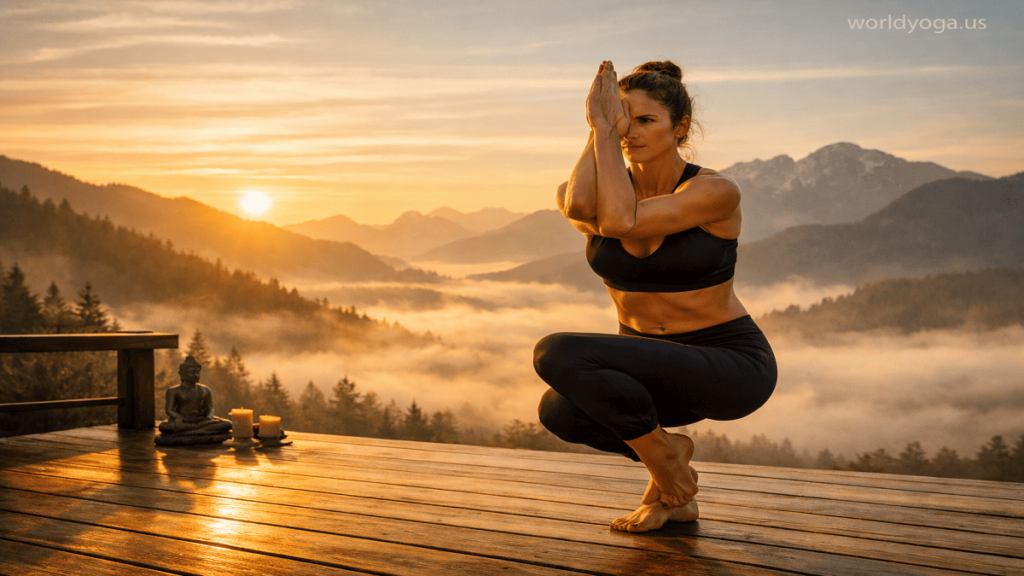
Hasta Garudasana in Ardha Padma Prapadasana is a complex balancing posture that activates multiple muscle groups simultaneously. Because the pose combines a Half Lotus leg position, toe balance, deep squat mechanics, Hasta Garudasana and the Garudasana arm bind, it requires coordinated engagement of stabilizing, supporting, and postural muscles throughout the body.
The primary muscular engagement occurs in the lower body. The standing leg plays the most significant stabilizing role. The quadriceps actively support knee flexion and maintain controlled lowering of the body, while the hamstrings assist in stabilizing the hip and knee joints. The gluteus medius and gluteus maximus are strongly engaged to maintain pelvic balance and prevent lateral collapse during the one-legged balance phase.
The calf muscles, particularly the gastrocnemius and soleus, are heavily activated because the practitioner balances on the toes in Prapadasana. These muscles work continuously to stabilize the ankle joint and maintain equilibrium. The intrinsic muscles of the foot and toes are also highly engaged, helping create a stable foundation and improving proprioceptive awareness.
The hip muscles contribute significantly to maintaining the Half Lotus position. External rotators of the hip, including the piriformis and deep lateral rotator group, facilitate the outward rotation necessary for safe lotus alignment. The hip flexors assist in positioning and stabilizing the folded leg without placing excessive strain on the knee.
Core musculature is essential throughout the posture. The transverse abdominis, rectus abdominis, and oblique muscles stabilize the torso and pelvis while supporting spinal alignment. Continuous core engagement prevents excessive forward leaning and helps maintain upright posture during the balance challenge.
In the upper body, the Garudasana arm position activates and stretches several muscles simultaneously. The deltoids and trapezius contribute to shoulder positioning, while the rhomboids and muscles of the upper back help stabilize the scapulae. The forearm and wrist muscles are engaged to maintain the arm wrap and hand positioning. Additionally, the posture creates a stretch across the posterior shoulders and upper thoracic region, which can relieve muscular tightness caused by prolonged desk work or repetitive movement patterns.
The spinal erectors also remain active throughout the pose to maintain an elongated and upright spine. These postural muscles support alignment and reduce unnecessary compression in the lower back.
Because balancing postures require constant micro-adjustments, many smaller stabilizing muscles throughout the ankles, hips, and spine work continuously during the pose. This makes Hasta Garudasana in Ardha Padma Prapadasana particularly effective for developing neuromuscular coordination, joint stability, and overall body awareness.
Regular practice may improve muscular endurance, flexibility, and postural control when performed with proper technique. However, due to the complexity of the posture, gradual progression and adequate preparation are important to avoid overloading the knee or ankle joints.
For additional anatomy and yoga muscle engagement resources, the following references may be helpful:
- Yoga International – Yoga Anatomy Resources
- Yoga Journal – Muscle Engagement in Yoga Poses
- Iyengar Yoga Association
- The Yoga Institute – Yoga Anatomy and Practice Guides
#Hasta Garudasana in Ardha Padma Prapadasana in Hyderabad
What preparatory poses are recommended?
Preparing for Hasta Garudasana in Ardha Padma Prapadasana requires gradual development of balance, hip mobility, ankle stability, spinal alignment, and shoulder flexibility. Since this advanced variation combines a Half Lotus leg position with toe balance and the Garudasana arm bind, preparatory poses are essential for reducing injury risk and improving overall execution.
One of the most important preparatory poses is Vrikshasana. Tree Pose develops single-leg balance, strengthens the standing leg, and improves concentration. It also introduces external hip rotation similar to the Half Lotus position used in the final posture. Practicing Tree Pose regularly enhances pelvic stability and body awareness, both of which are necessary for advanced balancing variations.
Garudasana itself is another essential preparation. This posture strengthens the legs, improves balance, and mobilizes the shoulder girdle through the characteristic arm wrap. The arm position used in Hasta Garudasana closely resembles the traditional Garudasana arm bind, making this pose valuable for improving upper-body flexibility and scapular mobility.
To prepare the hips safely for Half Lotus alignment, practitioners often use Ardha Padmasana and Baddha Konasana. These postures improve external rotation of the hip joints while reducing unnecessary strain on the knees. Gentle hip-opening poses allow the lotus position to develop gradually and safely over time.
Malasana is highly effective for preparing the lower body mechanics required in Prapadasana. This deep squat posture enhances ankle flexibility, strengthens the feet, and improves hip mobility. Since Hasta Garudasana in Ardha Padma Prapadasana requires controlled lowering into a compact balancing position, Malasana helps practitioners become comfortable with deep flexion in the knees and hips.
Toe balance preparation is equally important. Prapadasana strengthens the calves, ankles, and intrinsic muscles of the feet. Practicing toe balancing independently helps develop stability before combining it with the more complex Half Lotus variation.
Core strengthening postures such as Phalakasana and Navasana are also recommended. Strong abdominal and spinal stabilizers are necessary for maintaining upright posture and preventing collapse during balancing transitions.
For shoulder and upper-back preparation, poses like Gomukhasana and seated Eagle Arms stretches improve flexibility in the deltoids, trapezius, and rhomboid muscles. These stretches assist in achieving a more comfortable and aligned Garudasana arm position.
Practitioners should approach these preparatory poses progressively and avoid forcing flexibility, especially in the knees and hips. Adequate warm-up and mindful breathing are essential throughout practice.
Additional instructional resources and alignment guides can be found at:
- Yoga Journal – Preparatory Yoga Poses
- Yoga International – Yoga Sequencing and Alignment
- Iyengar Yoga Resources
- The Yoga Institute – Foundational Yoga Practices
#Hasta Garudasana in Ardha Padma Prapadasana in Delhi
What are the benefits and precautions of this pose?
Hasta Garudasana in Ardha Padma Prapadasana is an advanced yoga balancing posture that combines flexibility, muscular control, concentration, and postural stability. The pose integrates the arm positioning of Eagle Pose with the lower-body structure of Half Lotus Tiptoe Pose, creating a demanding practice that engages both physical and mental faculties. While the posture offers several benefits, it also requires careful attention to safety and alignment because of the stress placed on the knees, ankles, and balance mechanisms.
One of the primary benefits of this pose is improved balance and proprioception. Since the practitioner balances on the toes of one foot while maintaining a compact body position, the nervous system is trained to coordinate muscular responses efficiently. This enhances body awareness and postural control, which are important for both yoga practice and daily movement patterns.
The posture also strengthens the lower body significantly. The quadriceps, calves, ankles, gluteal muscles, and intrinsic foot muscles work continuously to stabilize the body. Balancing on the toes develops ankle strength and endurance, while the squat-like positioning improves muscular engagement in the thighs and hips. Over time, consistent practice may contribute to better lower-limb stability and functional mobility.
Another important benefit is increased flexibility, particularly in the hips, shoulders, and upper back. The Half Lotus component promotes external hip rotation, while the Garudasana arm bind stretches the shoulders, trapezius, rhomboids, and wrists. This combination can help reduce muscular stiffness caused by sedentary lifestyles or repetitive movements.
Core activation is another significant aspect of the posture. The abdominal and spinal stabilizing muscles remain engaged to maintain upright alignment and prevent collapse during balancing transitions. This contributes to improved spinal support and postural awareness.
Mentally, the pose encourages concentration, patience, and breath control. Balancing postures often require sustained focus, helping practitioners develop mindfulness and mental steadiness. The need to coordinate breath with movement also supports relaxation and controlled nervous system activity.
Despite these benefits, several precautions must be observed. The Half Lotus position can place considerable rotational stress on the knee joint if hip flexibility is insufficient. Practitioners should never force the foot into position, as improper alignment may strain ligaments and cartilage structures around the knee. Individuals with knee injuries, meniscus problems, or hip limitations should avoid the pose unless guided by an experienced yoga instructor.
The balancing nature of the posture also increases the risk of falling or ankle strain. Practitioners with balance disorders, recent ankle injuries, or weak foot stability should practice near a wall or with supervision. Those with severe arthritis, chronic joint instability, or dizziness should approach the posture cautiously or avoid it entirely.
Adequate warm-up and preparatory poses are essential before attempting the posture. Entering and exiting slowly helps maintain muscular control and reduces unnecessary stress on the joints. Pain should never be ignored during practice, particularly around the knees or ankles.
Further educational resources and safety guidelines are available at:
- Yoga Journal – Yoga Safety and Alignment
- Yoga International – Anatomy and Safe Practice
- Iyengar Yoga Association
- The Yoga Institute – Yoga Benefits and Precautions
#Hasta Garudasana in Ardha Padma Prapadasana in Banglore
Case Study of Hasta Garudasana in Ardha Padma Prapadasana
Hasta Garudasana in Ardha Padma Prapadasana represents an advanced yogic balancing posture that integrates flexibility, neuromuscular coordination, concentration, and postural control. This case study examines the effects of consistent practice of the posture on balance, muscular endurance, flexibility, and mental focus in an intermediate-level yoga practitioner over a twelve-week observation period.
The subject of the case study was a 29-year-old yoga practitioner with three years of regular yoga experience and no major musculoskeletal disorders. Before beginning the practice protocol, the participant demonstrated moderate hip flexibility, average ankle stability, and adequate upper-body mobility but experienced difficulty maintaining advanced balancing postures for extended durations. The objective of the study was to evaluate whether structured practice of Hasta Garudasana in Ardha Padma Prapadasana could improve physical stability, muscular engagement, and concentration.
The participant practiced five days per week under the supervision of a certified yoga instructor. Each session included preparatory postures such as Vrikshasana, Garudasana, Malasana, and Ardha Padmasana to improve mobility and reduce injury risk. The practitioner initially held the posture for approximately 8–10 seconds per side, gradually increasing duration to 35–40 seconds by the end of the study period.
Observations during the first four weeks indicated challenges related to ankle instability, pelvic imbalance, and difficulty maintaining the Garudasana arm bind while balancing on the toes. Mild muscular fatigue in the calves and quadriceps was frequently reported after practice sessions. However, by the sixth week, notable improvements in balance control and lower-body endurance were observed. The participant demonstrated greater steadiness during transitions and reduced compensatory torso movements.
At the conclusion of twelve weeks, the practitioner showed measurable improvement in several functional parameters. Single-leg balance duration improved significantly, ankle stability increased, and hip mobility became more symmetrical. The participant also reported reduced upper-back stiffness and improved postural awareness during daily activities. Enhanced concentration and breath control were noted during yoga sessions, suggesting positive neuromuscular and psychological adaptation.
The case study further highlighted the importance of proper alignment and gradual progression. No injuries occurred during the observation period because adequate preparation, controlled transitions, and professional supervision were maintained consistently. The instructor emphasized avoiding excessive force in the Half Lotus position, particularly around the knee joint.
This case demonstrates that regular and carefully supervised practice of Hasta Garudasana in Ardha Padma Prapadasana may contribute positively to balance, flexibility, lower-body strength, core stability, and mental focus. However, the posture should be considered appropriate primarily for intermediate or advanced practitioners with sufficient hip mobility and balance proficiency.
Further study involving larger participant groups and biomechanical analysis would be valuable for understanding the long-term physiological and therapeutic effects of this advanced balancing variation.
Additional educational references include:
- Yoga Journal – Advanced Balancing Poses
- Yoga International – Yoga Research and Anatomy
- Iyengar Yoga Association
- The Yoga Institute – Advanced Yoga Practices
#Hasta Garudasana in Ardha Padma Prapadasana in Hyderabad
White Paper of Hasta Garudasana in Ardha Padma Prapadasana
Introduction
Hasta Garudasana in Ardha Padma Prapadasana is an advanced yogic balancing posture that combines lower-body stability, upper-body flexibility, neuromuscular coordination, and focused concentration. This posture integrates the arm positioning of Eagle Pose with the compact balancing foundation of Half Lotus Tiptoe Pose. As a multidimensional yoga variation, it serves both physical and psychological functions within advanced yoga practice.
The posture demands coordinated muscular activation, controlled breathing, and precise joint alignment. Because of its complexity, it is generally practiced by intermediate and advanced yoga practitioners who possess sufficient hip mobility, ankle stability, and balance proficiency.
Biomechanical Overview
The lower-body mechanics of the posture involve unilateral weight-bearing combined with deep knee flexion and toe balancing. The standing leg functions as the primary stabilizing structure while the folded leg enters a Half Lotus configuration through external rotation at the hip joint. This creates substantial engagement in the quadriceps, calves, gluteal muscles, hip stabilizers, and intrinsic foot musculature.
The upper body simultaneously performs the Garudasana arm bind, engaging the deltoids, trapezius, rhomboids, forearm muscles, and scapular stabilizers. Core musculature, particularly the transverse abdominis and spinal erectors, maintains postural integrity and spinal alignment throughout the pose.
The posture also activates proprioceptive pathways due to the constant requirement for balance correction and neuromuscular adaptation. This makes the pose beneficial for developing body awareness and coordinated movement efficiency.
Physiological and Psychological Benefits
The practice of Hasta Garudasana in Ardha Padma Prapadasana offers several physiological benefits. Regular practice may improve ankle strength, lower-body endurance, hip flexibility, spinal alignment, and postural control. Toe balancing strengthens the stabilizing muscles of the feet and ankles, while the compact structure of the pose promotes core activation and muscular endurance.
The Garudasana arm position contributes to increased shoulder mobility and upper-back flexibility. This may help reduce muscular tightness associated with sedentary behavior and repetitive upper-body movements.
Psychologically, balancing postures are often associated with enhanced concentration, mental discipline, and breath regulation. The requirement for sustained focus encourages mindfulness and cognitive steadiness. Controlled breathing patterns further support nervous system regulation and stress management.
Risks and Safety Considerations
Despite its benefits, this posture presents several biomechanical challenges. The Half Lotus component may place rotational stress on the knee if hip mobility is inadequate. Improper alignment or forceful positioning can increase the risk of ligament strain or meniscal irritation.
The balancing aspect of the posture may also elevate the likelihood of ankle instability or falls, particularly in practitioners with insufficient proprioceptive control. Therefore, gradual progression, preparatory poses, and qualified instruction are strongly recommended.
Individuals with knee injuries, chronic ankle instability, severe arthritis, vertigo, or hip pathology should approach the posture cautiously or avoid it entirely without professional guidance.
Preparatory and Complementary Practices
Preparatory poses commonly include:
- Vrikshasana
- Garudasana
- Malasana
- Ardha Padmasana
- Prapadasana
These postures improve balance, hip mobility, ankle flexibility, and muscular endurance required for safe execution.
Conclusion
Hasta Garudasana in Ardha Padma Prapadasana represents a sophisticated integration of balance, flexibility, muscular control, and mindful awareness. When practiced with proper alignment and progressive preparation, the posture can contribute significantly to physical conditioning, postural stability, and mental concentration. However, due to its advanced nature, professional supervision and careful biomechanical attention remain essential for safe and effective practice.
References and External Resources
- Yoga Journal – Yoga Pose Library
- Yoga International – Anatomy and Alignment Resources
- Iyengar Yoga National Association
- The Yoga Institute
- International Association of Yoga Therapists
#Hasta Garudasana in Ardha Padma Prapadasana in Kolkata
Industry Application of Hasta Garudasana in Ardha Padma Prapadasana
Introduction
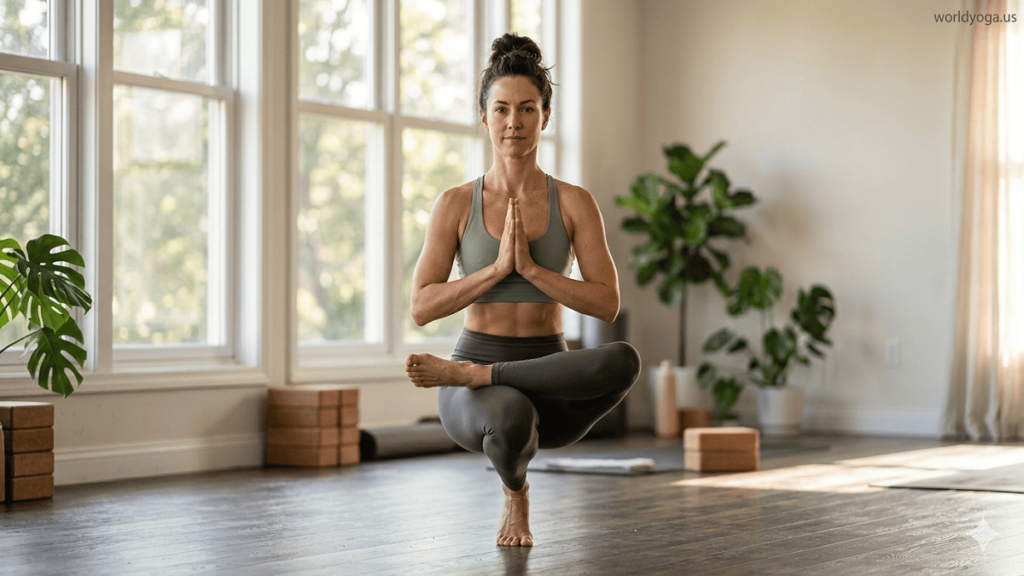
Hasta Garudasana in Ardha Padma Prapadasana is an advanced yoga balancing posture with applications extending beyond traditional yoga practice. The pose combines flexibility, neuromuscular coordination, muscular endurance, postural control, and concentration, making it relevant across multiple industries including wellness, healthcare, sports performance, rehabilitation, corporate wellness, fitness education, and mindfulness training.
As global interest in preventive healthcare and holistic wellness continues to expand, advanced yoga postures are increasingly integrated into professional environments that prioritize physical conditioning, stress management, and functional movement development.
Application in the Wellness and Fitness Industry
The wellness and fitness industry is one of the primary sectors utilizing advanced yoga practices such as Hasta Garudasana in Ardha Padma Prapadasana. Yoga studios, fitness centers, and wellness retreats incorporate balancing postures into advanced yoga programs to improve flexibility, coordination, and mental focus.
The posture is particularly valuable in specialized yoga disciplines emphasizing balance and body control, including Vinyasa Yoga, Ashtanga Yoga, and advanced Hatha Yoga training. Fitness professionals use the posture to enhance lower-body strength, ankle stability, core activation, and proprioceptive awareness among experienced practitioners.
Additionally, the pose contributes to functional fitness by training joint stabilization and controlled movement patterns, both of which are essential for injury prevention and athletic conditioning.
Application in Sports Performance Training
Athletic performance programs increasingly incorporate yoga-based balance training to improve coordination, flexibility, and neuromuscular efficiency. The balancing mechanics involved in Hasta Garudasana in Ardha Padma Prapadasana can support athletes in disciplines requiring high levels of stability and concentration, including gymnastics, martial arts, dance, skating, and climbing.
The posture develops ankle and foot strength while improving hip mobility and spinal alignment. Sports physiologists and conditioning coaches may integrate modified variations into mobility and recovery sessions to enhance muscular balance and reduce movement asymmetries.
Controlled breathing and concentration developed through yoga balancing postures may also assist athletes in managing competitive stress and improving mental focus during performance.
Application in Rehabilitation and Physiotherapy
In rehabilitation settings, simplified components of the posture may be adapted for balance retraining and proprioceptive development. Physiotherapists and movement specialists sometimes use yoga-inspired exercises to improve postural stability, lower-limb coordination, and muscular control.
Although the full posture is considered advanced, selected elements such as toe balancing, Eagle Arms, or supported Half Lotus positioning may contribute to rehabilitation protocols focused on ankle strengthening, postural correction, and neuromuscular recovery.
Clinical application must always be individualized and supervised by qualified healthcare professionals, particularly for individuals recovering from orthopedic injuries.
Application in Corporate Wellness Programs
Corporate wellness programs increasingly integrate yoga practices to address stress, poor posture, sedentary behavior, and reduced concentration among employees. While advanced postures such as Hasta Garudasana in Ardha Padma Prapadasana may not be suitable for beginners, the underlying principles of balance, mindfulness, and controlled breathing are often incorporated into workplace wellness initiatives.
Organizations use yoga training sessions to improve employee well-being, reduce muscular tension, enhance concentration, and support mental resilience. Advanced practitioners within executive wellness programs may utilize balancing postures as part of higher-level mindfulness and physical conditioning routines.
Application in Yoga Education and Teacher Training
Yoga teacher training institutions use advanced balancing postures to teach anatomy, biomechanics, alignment principles, and injury prevention. Hasta Garudasana in Ardha Padma Prapadasana provides valuable instructional opportunities regarding hip external rotation, knee safety, ankle stabilization, and postural integration.
The posture is frequently analyzed in advanced yoga certification programs to improve instructors’ understanding of sequencing, modifications, contraindications, and progressive teaching methodologies.
Conclusion
Hasta Garudasana in Ardha Padma Prapadasana demonstrates meaningful applications across wellness, fitness, sports conditioning, rehabilitation, corporate health, and yoga education industries. Its emphasis on balance, flexibility, muscular coordination, and concentration aligns with growing professional interest in holistic health and functional movement systems. However, due to its advanced nature, proper instruction, preparation, and safety awareness remain essential in all professional applications.
References and External Resources
- Yoga Journal – Advanced Yoga Practices
- Yoga International – Yoga and Functional Movement
- International Association of Yoga Therapists
- Iyengar Yoga National Association
- The Yoga Institute
#Hasta Garudasana in Ardha Padma Prapadasana in Mumbai
Ask FAQs
What is Hasta Garudasana in Ardha Padma Prapadasana?
Hasta Garudasana in Ardha Padma Prapadasana is an advanced yoga balancing posture that combines the Eagle Pose arm bind with a Half Lotus toe-balancing squat position. The pose requires flexibility, balance, muscular control, and mental concentration. It is commonly practiced in advanced Hatha Yoga and Vinyasa Yoga sequences to improve postural stability and body awareness.
What are the main benefits of this pose?
The posture offers several physical and mental benefits. It strengthens the ankles, calves, thighs, and core muscles while improving hip flexibility and shoulder mobility. The balancing aspect enhances proprioception, coordination, and concentration. The Garudasana arm position also stretches the upper back and shoulders, helping relieve muscular tension caused by prolonged sitting or repetitive movement patterns.
Is this pose suitable for beginners?
No, this posture is generally considered suitable for intermediate to advanced yoga practitioners. Beginners may lack the hip mobility, ankle stability, and balance control necessary for safe execution. Before attempting this variation, practitioners should first develop proficiency in foundational poses such as Vrikshasana, Garudasana, and Ardha Padmasana.
What precautions should be taken while practicing this posture?
The most important precaution involves protecting the knee joint during the Half Lotus position. The leg should rotate from the hip rather than forcing the knee into alignment. Practitioners with knee injuries, ankle instability, hip disorders, or balance-related conditions should avoid the posture unless medically cleared and supervised by an experienced instructor.
Which preparatory poses help improve performance in this posture?
Several preparatory poses help improve flexibility, balance, and muscular control required for Hasta Garudasana in Ardha Padma Prapadasana. Common preparatory postures include:
Vrikshasana
Garudasana
Malasana
Prapadasana
Baddha Konasana
These poses improve hip mobility, ankle strength, postural alignment, and neuromuscular coordination necessary for safe and effective practice.
Table of Contents
Disclaimer:
The information provided about Hasta Garudasana in Ardha Padma Prapadasana is intended for educational and informational purposes only. This advanced yoga posture should be practiced under the guidance of a qualified yoga instructor. Individuals with knee, ankle, hip, or balance-related conditions should consult a healthcare professional before attempting the pose. Improper practice may lead to injury.