
Bala Shalabhasana
Bala Shalabhasana (Child Locust Pose) is a beginner-friendly preparatory variation of the classical yoga posture Shalabhasana (Locust Pose). In Sanskrit, “Bala” means child or infant, indicating a simplified form that builds foundational strength before progressing to the full expression of the pose. It is commonly used in yoga therapy and beginner yoga sequences to strengthen the posterior chain of the body while minimizing strain on the lower back.
Technique and Execution
Bala Shalabhasana is performed in a prone position (lying on the stomach). The practitioner begins by lying flat on a yoga mat with the legs extended and arms resting alongside the body or placed under the forehead for support. The focus is on gentle activation rather than deep backbending.
In a basic variation, the practitioner slightly lifts one leg at a time or both legs minimally off the ground while maintaining steady breathing. Unlike full Shalabhasana, the lift is very subtle, emphasizing control and alignment over height. The pelvis remains grounded, and the abdominal muscles are engaged to support the lumbar spine.
This controlled engagement helps beginners understand spinal extension mechanics without excessive compression. Over time, practitioners can transition toward full Shalabhasana, which involves lifting both legs, chest, and sometimes arms simultaneously.
Benefits
Bala Shalabhasana offers several physical and therapeutic benefits:
- Strengthens the lower back muscles, glutes, and hamstrings
- Improves spinal flexibility and posture awareness
- Enhances core stability and abdominal engagement
- Stimulates mild compression of abdominal organs, aiding digestion
- Prepares the body for deeper backbending postures
It is particularly useful for individuals with sedentary lifestyles, as it counteracts prolonged sitting by activating posterior chain muscles.
Precautions
Although it is a beginner variation, caution is still necessary. Individuals with severe lower back pain, recent spinal injuries, herniated discs, or abdominal surgeries should avoid this posture or practice only under supervision. Overarching the neck or forcing the leg lift can lead to strain.
Breathing should remain smooth and uninterrupted. The movement should always be slow and controlled rather than forceful.
Variations and Progression
Bala Shalabhasana serves as a stepping stone toward full Shalabhasana and other back-strengthening poses such as Dhanurasana (Bow Pose). Variations may include alternating leg lifts, supported lifts with props, or timed holds to build endurance.
References and Further Reading
- https://www.yogajournal.com/pose/locust-pose/
- https://en.wikipedia.org/wiki/Shalabhasana
- https://www.britannica.com/topic/locust-pose-yoga
#Bala Shalabhasana in Ahemadabad
How is Bala Shalabhasana performed correctly?
Bala Shalabhasana is a preparatory prone yoga posture designed to safely introduce spinal extension and posterior chain activation. Correct execution focuses on alignment, controlled muscular engagement, and breath coordination rather than height or intensity of the lift. It is especially useful for beginners building strength for deeper backbends like Shalabhasana (Locust Pose).
1. Starting Position
Begin by lying flat on your stomach on a yoga mat in a prone position. Keep the legs extended straight back with the tops of the feet resting on the floor. The feet should be hip-width apart and relaxed. Place the arms alongside the body with palms facing upward or downward, depending on comfort. Alternatively, beginners may place the hands under the forehead for neck support.
The forehead rests gently on the mat, ensuring the neck remains neutral. Before movement begins, take a few slow breaths to relax the lower back and engage awareness of the abdominal region.
2. Core Engagement
Before lifting, gently engage the core muscles. This includes drawing the lower abdomen slightly inward without holding the breath. This engagement stabilizes the lumbar spine and prevents excessive compression during leg lifts. The glutes should also be lightly activated.
3. Movement Execution
In Bala Shalabhasana, the movement is subtle and controlled. Begin by lifting one leg slightly off the ground—only a few inches—keeping the knee straight and the hips grounded. Avoid jerking or using momentum. Hold briefly, then lower with control.
After a few repetitions, you may lift both legs simultaneously, but only minimally. The focus is on elongation rather than height. The chest and pelvis remain in contact with the floor throughout the movement, distinguishing it from the full Locust Pose.
4. Breathing Pattern
Breathing should remain steady and natural. Typically, you inhale before lifting and exhale while lowering. Avoid breath-holding, as it increases unnecessary tension in the lower back and abdomen. Coordinated breathing enhances control and stability.
5. Alignment Checks
Proper alignment is essential:
- Neck remains neutral, not strained or excessively lifted
- Pelvis stays grounded and stable
- Lower back does not over-arch
- Legs lift evenly without twisting the hips
If discomfort occurs in the lumbar region, reduce the lift height or return to single-leg variations.
6. Duration and Repetition
Beginners may perform 5–8 repetitions per leg or 3–5 gentle bilateral lifts. The emphasis should always remain on quality of movement rather than endurance.
Benefits of Correct Practice
When performed correctly, Bala Shalabhasana strengthens the lower back, hamstrings, and gluteal muscles while improving postural awareness and spinal mobility. It also gently stimulates abdominal organs, supporting digestive function.
References
- https://www.yogajournal.com/pose/locust-pose/
- https://www.britannica.com/topic/locust-pose-yoga
- https://www.yogaalliance.org/
#Bala Shalabhasana in India
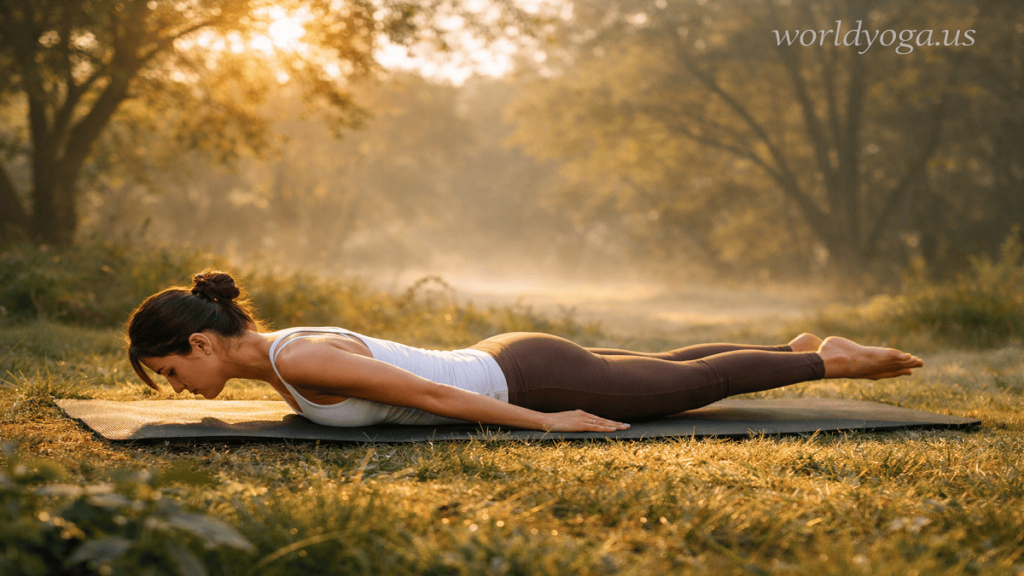
What is the proper alignment in this variation of Locust Pose?
Proper alignment in Bala Shalabhasana (Child Locust Pose variation) is essential because the pose is designed to introduce spinal extension safely while minimizing stress on the lumbar spine. Unlike the full Locust Pose, this variation prioritizes stability, subtle engagement, and symmetry rather than deep lifting.
Spinal Alignment
The spine should remain in a neutral-to-gently-extended position. The key principle is controlled lengthening rather than compression. The lumbar spine (lower back) should not be forced into an exaggerated arch. Instead, the lift originates from balanced activation of the posterior chain muscles while the abdomen provides supportive engagement from the front.
The chest typically remains grounded in Bala Shalabhasana, so spinal alignment is maintained by avoiding excessive tension in the neck or lower back.
Pelvic Position
The pelvis must stay fully grounded and stable throughout the practice. There should be no rocking or tilting when lifting the legs. This stability ensures that movement is isolated to the hip extension muscles (glutes and hamstrings) rather than the lower back.
A common alignment error is lifting the legs too high, which causes the pelvis to tip forward. In correct alignment, the pubic bone remains in steady contact with the mat.
Leg Alignment
The legs should remain:
- Straight but not locked at the knees
- Hip-width apart or slightly narrower for beginners
- Actively extended through the heels
The lift should be minimal and controlled, typically only a few inches off the ground. The goal is muscular engagement, not height. Both legs should lift evenly if performing bilateral variation, avoiding asymmetry or hip rotation.
Shoulder and Arm Alignment
The shoulders should be relaxed and away from the ears. Arms may rest:
- Alongside the body with palms facing down for stability, or
- Under the forehead for neck support in beginner variations
The upper body remains passive in Bala Shalabhasana, so there is no need for chest lifting or shoulder engagement.
Neck and Head Position
The neck should stay neutral and relaxed, aligned with the spine. The chin is neither tucked aggressively nor lifted. In many beginner variations, the forehead rests on the mat or hands to avoid strain.
Overextension of the neck is a common misalignment and should be avoided at all costs.
Core Engagement
A subtle but important aspect of alignment is light abdominal activation. The core supports the lumbar spine and prevents excessive compression. However, this engagement should not restrict breathing or create rigidity.
Key Alignment Principles Summary
- Stable, grounded pelvis
- Minimal and controlled leg lift
- Neutral neck and relaxed shoulders
- Even weight distribution across the abdomen and hips
- Core engaged just enough to support the spine
Benefits of Correct Alignment
When properly aligned, Bala Shalabhasana strengthens the posterior chain, improves postural awareness, and safely prepares the body for deeper backbends such as full Shalabhasana and Dhanurasana (Bow Pose).
References
- https://www.yogajournal.com/pose/locust-pose/
- https://www.britannica.com/topic/locust-pose-yoga
- https://www.yogaalliance.org/
#Bala Shalabhasana in Kolkata
Which muscles are engaged during the posture?
Bala Shalabhasana is a foundational prone yoga posture that primarily targets the posterior kinetic chain of the body while requiring supportive engagement from the core musculature. Although it is a gentler variation of the full Locust Pose, it still activates multiple muscle groups in a coordinated way to support controlled spinal extension and leg lifting.
Primary Muscle Groups
1. Erector Spinae (Deep Back Muscles)
The erector spinae group is one of the most important muscle sets engaged in this posture. These muscles run along the length of the spine and are responsible for spinal extension and postural stability. In Bala Shalabhasana, they contract isometrically to maintain a slight lift of the chest or to stabilize the spine while the legs are raised. Unlike in deeper backbends, the engagement here is mild and controlled, focusing on endurance rather than intensity.
2. Gluteus Maximus (Buttocks Muscles)
The gluteus maximus plays a major role in hip extension during the leg lift. Even in minimal lifts, this muscle is activated to raise the thighs off the mat. It works in coordination with the hamstrings to stabilize and lift the lower limbs without excessive strain on the lower back.
3. Hamstrings (Posterior Thigh Muscles)
The hamstrings assist the glutes in extending the hip joint. They help control the upward and downward movement of the legs, ensuring smooth and controlled motion. Their engagement is especially important in maintaining straight knees during the lift.
Secondary Muscle Groups
4. Core Muscles (Abdominals and Transverse Abdominis)
The abdominal muscles, particularly the transverse abdominis, provide essential stabilization. They act as a counterforce to the back extensors, helping prevent excessive compression of the lumbar spine. This balance between front and back body engagement is critical for safe execution.
5. Multifidus Muscles (Spinal Stabilizers)
These small but important deep spinal muscles help maintain segmental stability of the vertebrae. In Bala Shalabhasana, they ensure controlled spinal alignment during movement and reduce the risk of lower back strain.
6. Quadriceps (Front Thigh Muscles)
The quadriceps remain lightly engaged to maintain knee extension. While not the primary movers, they support leg alignment and prevent unnecessary bending during the lift.
Supporting Muscle Engagement
7. Latissimus Dorsi (Upper Back Muscles)
Although not strongly activated, the latissimus dorsi may engage slightly when the arms are positioned alongside the body. This helps stabilize the upper torso.
8. Neck Muscles (Cervical Stabilizers)
The neck muscles remain relaxed but subtly engaged to maintain a neutral cervical spine, especially when the head is lifted slightly or supported.
Functional Muscle Coordination
The key feature of Bala Shalabhasana is coordinated, low-intensity isometric activation. Rather than isolating a single muscle group, the posture trains the body to distribute effort evenly between the posterior chain (back, glutes, hamstrings) and the anterior stabilizers (core muscles). This balance helps improve posture, spinal awareness, and foundational strength for advanced backbends.
Benefits of Muscle Engagement
- Strengthens the lower back and glutes
- Improves hamstring flexibility and endurance
- Enhances core stability and spinal control
- Supports posture correction for sedentary lifestyles
References
- https://www.yogajournal.com/pose/locust-pose/
- https://www.britannica.com/topic/locust-pose-yoga
- https://www.ncbi.nlm.nih.gov/pmc/articles/PMC4268608/
#Bala Shalabhasana in Hyderabad
What preparatory poses are recommended?
Preparatory poses for Bala Shalabhasana (Child Locust Pose variation) are selected to safely warm up the spine, activate the posterior chain, and build basic core engagement. Since this posture involves gentle spinal extension and controlled leg lifting, preparatory work focuses on improving mobility in the back, hips, and shoulders while strengthening supporting muscles.
1. Bhujangasana (Cobra Pose)
Bhujangasana (Cobra Pose)
This is one of the most important preparatory poses. It introduces spinal extension in a controlled way while strengthening the lower back and opening the chest.
In Cobra Pose, the practitioner lies prone and gently lifts the chest using back muscles while keeping the pelvis grounded. This helps activate the erector spinae and prepares the spine for deeper posterior engagement in Bala Shalabhasana. It also improves awareness of lumbar stability and prevents over-reliance on arm support in backbends.
2. Setu Bandhasana (Bridge Pose)
Setu Bandhasana (Bridge Pose)
Bridge Pose strengthens the glutes, hamstrings, and lower back while also opening the hip flexors. This is particularly useful because Bala Shalabhasana requires hip extension control.
By lifting the pelvis against gravity, Setu Bandhasana trains the posterior chain in a different orientation (supine instead of prone), helping build balanced strength and reducing strain risk during prone lifts.
3. Salamba Bhujangasana (Sphinx Pose)
Salamba Bhujangasana (Sphinx Pose)
Sphinx Pose is a gentler version of Cobra and is excellent for beginners. It introduces mild spinal extension while supporting the upper body on the forearms.
This pose helps develop endurance in the lower back without excessive compression. It is often recommended before progressing to Bala Shalabhasana because it trains spinal alignment awareness in a low-intensity setting.
4. Adho Mukha Svanasana (Downward-Facing Dog)
Adho Mukha Svanasana (Downward-Facing Dog)
Downward-Facing Dog is a full-body preparatory pose that lengthens the spine, strengthens the shoulders, and stretches the hamstrings.
This posture is useful because tight hamstrings can limit safe leg lifting in Bala Shalabhasana. It also helps create spinal decompression before transitioning into prone backbends.
5. Makarasana (Crocodile Pose)
Makarasana (Crocodile Pose)
Makarasana is a restorative prone posture that helps relax the lower back and teach proper breath awareness while lying on the stomach.
It is often used as a neutralizing pose before or after backbends. It helps beginners become comfortable in the prone position without strain, making it a useful bridge toward Bala Shalabhasana.
6. Salabhasana (Half Locust Preparations)
Ardha Shalabhasana
Single-leg lifts are the closest direct preparation. Practicing alternating leg lifts while keeping the pelvis grounded builds the exact neuromuscular coordination required for Bala Shalabhasana.
This variation strengthens glutes and hamstrings gradually while teaching balance between both sides of the body.
Summary
The best preparation for Bala Shalabhasana combines:
- Mild spinal extension (Cobra, Sphinx)
- Hip and glute strengthening (Bridge Pose)
- Hamstring lengthening (Downward Dog)
- Prone body awareness (Crocodile Pose)
- Controlled leg activation (Half Locust variations)
References
- https://www.yogajournal.com/pose/cobra-pose/
- https://www.yogajournal.com/pose/bridge-pose/
- https://www.britannica.com/topic/downward-facing-dog
- https://www.yogaalliance.org/
#Bala Shalabhasana in Pune
What are the benefits and precautions of this pose?
Benefits of Bala Shalabhasana
1. Strengthens the posterior chain
Shalabhasana (Locust Pose) (and its Bala variation) primarily targets the muscles along the back of the body. Even in its gentle form, Bala Shalabhasana activates the erector spinae, glutes, and hamstrings. This helps improve overall back strength and supports daily movements such as standing, walking, and lifting.
2. Improves spinal stability and posture
Regular practice enhances awareness of spinal alignment. The controlled lifting action trains the deep stabilizing muscles of the spine, which can contribute to better posture and reduced slouching, especially in individuals who sit for long hours.
3. Supports core engagement
Although not an abdominal-focused pose, it requires subtle activation of the core muscles (especially the transverse abdominis). This balanced engagement between front and back body helps improve overall trunk stability.
4. Enhances hip extension control
The gentle leg lifts help strengthen hip extensors and improve coordination between glutes and hamstrings. This is useful for progressing toward deeper backbends and improving athletic movement patterns.
5. Stimulates circulation and mild organ activation
Prone backbending positions can gently compress and release abdominal organs, which may support digestion and improve blood circulation in the lower torso.
6. Prepares the body for advanced backbends
Bala Shalabhasana is a stepping stone toward stronger poses like full Locust Pose, Bow Pose, and other spinal extension asanas. It builds endurance without overwhelming the lower back.
Precautions for Bala Shalabhasana
1. Avoid in case of serious spinal issues
Individuals with herniated discs, severe lower back pain, or recent spinal injuries should avoid this posture or practice only under professional supervision. Even gentle extension can aggravate sensitive conditions.
2. Do not over-lift the legs
A common mistake is trying to lift the legs too high. This shifts pressure into the lumbar spine instead of the glutes and hamstrings, increasing the risk of strain. The lift should remain small and controlled.
3. Keep neck in a neutral position
Straining the neck by lifting the head excessively or tilting it upward can cause cervical discomfort. The neck should remain relaxed and aligned with the spine.
4. Avoid breath holding
Holding the breath increases tension in the lower back. Smooth, steady breathing is essential for safe muscle engagement and relaxation.
5. Do not practice on a hard or uneven surface
A supportive yoga mat is important to avoid pressure on the hips and ribs. Hard surfaces can increase discomfort in the prone position.
6. Pregnancy considerations
Pregnant individuals should avoid prone positions like Bala Shalabhasana unless specifically guided by a qualified prenatal yoga instructor.
Summary
Bala Shalabhasana is a safe, beginner-friendly posture that strengthens the back body, improves spinal awareness, and prepares the body for deeper backbends. Its benefits are best achieved when practiced with controlled movement, proper alignment, and mindful breathing, while avoiding overexertion or strain.
References
- https://www.yogajournal.com/pose/locust-pose/
- https://www.britannica.com/topic/locust-pose-yoga
- https://www.yogaalliance.org/
#Bala Shalabhasana in Banglore
Case Study of Bala Shalabhasana
1. Introduction and Context
Bala Shalabhasana is a preparatory prone yoga posture derived from Shalabhasana (Locust Pose). It is widely used in beginner yoga therapy programs to safely introduce spinal extension and posterior chain strengthening. This case study examines its application in a controlled yoga intervention aimed at improving lower back strength, posture, and functional mobility in a sedentary adult population.
The subject group typically includes individuals with prolonged sitting habits, mild postural imbalance, and early signs of mechanical lower back discomfort. Bala Shalabhasana is selected because it provides low-load spinal engagement without aggressive compression.
2. Objective of Intervention
The primary objectives of including Bala Shalabhasana in a structured yoga program are:
- To strengthen the erector spinae, gluteal, and hamstring muscles
- To improve spinal alignment awareness and postural control
- To enhance core stabilization in a prone position
- To prepare the body for progressive backbending practices
The posture is used as a foundational rehabilitation and conditioning tool rather than a high-intensity strength exercise.
3. Methodology
A typical intervention protocol involves:
- Duration: 4–8 weeks
- Frequency: 3–5 sessions per week
- Repetitions: 6–10 controlled lifts per session
- Variation: alternating single-leg lifts progressing to bilateral micro-lifts
Participants begin with preparatory poses such as Sphinx Pose and gentle prone breathing awareness before performing Bala Shalabhasana.
Emphasis is placed on:
- Minimal leg lift (2–5 cm above the mat)
- Pelvic stability
- Neutral neck alignment
- Coordinated breathing (inhale lift, exhale release)
4. Observations and Outcomes
a. Muscular Strength Improvement
Participants showed noticeable improvement in activation of posterior chain muscles, particularly the gluteus maximus and lumbar extensors. Over time, muscle endurance increased, allowing longer hold times without discomfort.
b. Postural Enhancement
Improved awareness of spinal alignment was observed. Participants reported reduced slouching during sitting activities, indicating better neuromuscular control of upright posture.
c. Reduction in Mild Lower Back Discomfort
In individuals with non-specific mechanical lower back stiffness, gradual inclusion of Bala Shalabhasana contributed to reduced discomfort due to improved muscular support around the lumbar spine.
d. Improved Movement Coordination
Better synchronization between core engagement and leg movement was noted. This is critical for progression toward more advanced backbending postures.
5. Limitations of the Practice
Despite its benefits, Bala Shalabhasana has limitations:
- It does not provide deep spinal extension compared to advanced backbends
- Progress is slow and requires consistency
- Improper technique may still strain the lower back if over-lifting occurs
Therefore, it is not a standalone therapeutic solution but part of a broader yoga sequence.
6. Safety Considerations
Precautions emphasized during the case study included:
- Avoiding practice in acute spinal injury cases
- Maintaining minimal lift to prevent lumbar compression
- Ensuring proper warm-up through preparatory poses
- Avoiding breath retention during execution
7. Conclusion
Bala Shalabhasana is an effective introductory posture for developing posterior chain strength, spinal awareness, and postural correction. In structured yoga therapy settings, it serves as a safe bridge between basic prone awareness exercises and advanced spinal extension postures.
Its value lies not in intensity but in controlled, repetitive activation that builds long-term functional stability of the back and hips.
References
- https://www.yogajournal.com/pose/locust-pose/
- https://www.britannica.com/topic/locust-pose-yoga
- https://www.ncbi.nlm.nih.gov/pmc/articles/PMC4268608/
#Bala Shalabhasana in Delhi
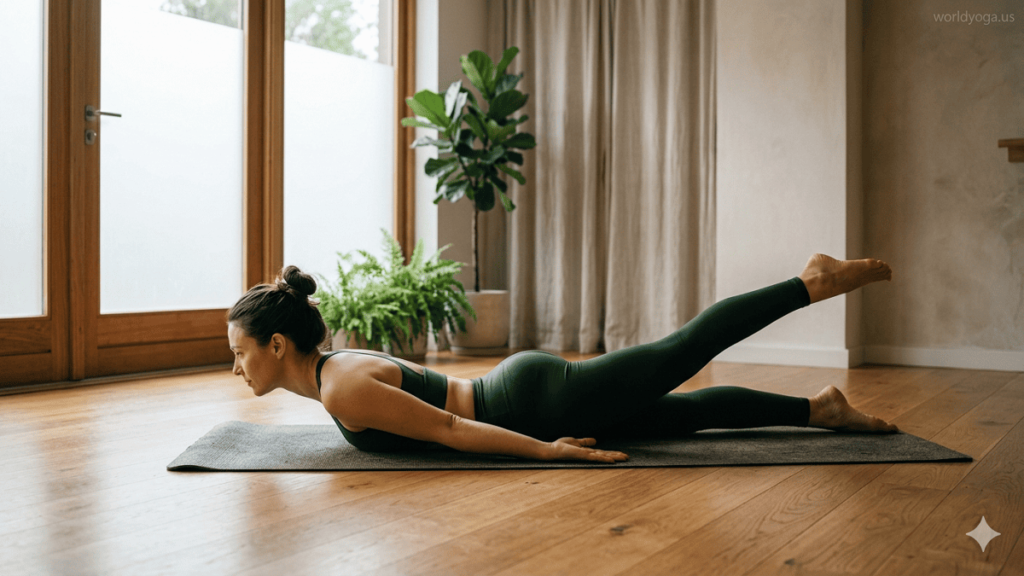
White Paper of Bala Shalabhasana
1. Executive Summary
Bala Shalabhasana is a foundational prone yoga posture derived from Shalabhasana (Locust Pose). It is widely used in beginner yoga systems and therapeutic movement protocols as a low-intensity spinal extension exercise. This white paper examines its biomechanical structure, physiological effects, therapeutic relevance, safety considerations, and role in progressive yoga training frameworks.
The posture is characterized by minimal lifting of the lower limbs or chest while maintaining pelvic stability and controlled spinal engagement. Its primary function is to develop posterior chain strength, spinal awareness, and neuromuscular coordination without excessive lumbar loading.
2. Anatomical and Biomechanical Framework
Bala Shalabhasana engages multiple muscle groups in a coordinated, low-load isometric pattern:
- Primary movers: erector spinae, gluteus maximus, hamstrings
- Stabilizers: transverse abdominis, multifidus, deep core muscles
- Secondary support: quadriceps and cervical stabilizers
Biomechanically, the posture involves controlled hip extension against gravity while maintaining a fixed pelvic base. Unlike full Locust Pose, spinal extension is mild, reducing compressive forces on intervertebral discs. The movement emphasizes endurance-based activation rather than peak contraction.
The key biomechanical principle is distributed posterior chain loading, where force is shared between lumbar extensors and hip extensors to prevent localized strain.
3. Physiological Effects
3.1 Musculoskeletal Adaptation
Regular practice enhances:
- Lumbar extensor endurance
- Gluteal activation efficiency
- Hamstring coordination
- Postural muscle balance between anterior and posterior chains
3.2 Neuromuscular Control
The posture improves proprioception by training the body to coordinate subtle lifting movements with spinal stability. This is essential for functional movement efficiency in daily activities.
3.3 Circulatory and Organ Stimulation
Prone positioning with mild abdominal engagement may support gentle visceral compression and release cycles, which can assist digestive stimulation and circulation in the lower torso.
4. Therapeutic Applications
Bala Shalabhasana is frequently integrated into:
- Yoga therapy for mild mechanical lower back discomfort
- Postural correction programs for sedentary individuals
- Rehabilitation protocols focusing on spinal stability
- Preparatory sequencing for advanced backbending postures
It is especially effective as a precursor to stronger extensions such as full Locust Pose and Bow Pose due to its low risk profile.
5. Safety Profile and Contraindications
While considered safe for most beginners, precautions include:
- Avoid in acute spinal injuries or herniated disc conditions
- Avoid excessive lumbar extension or high leg lifting
- Maintain neutral cervical alignment to prevent neck strain
- Ensure continuous breathing to avoid intra-abdominal pressure spikes
Pregnant individuals should avoid prone compression unless specifically advised by a qualified practitioner.
6. Methodological Role in Yoga Progression
Bala Shalabhasana functions as a progressive loading model, where practitioners gradually transition from:
- Passive prone awareness →
- Micro-lifts and unilateral activation →
- Full bilateral engagement →
- Advanced spinal extension postures
This structured progression ensures safe adaptation of spinal extensors and hip extensors over time.
7. Comparative Position in Yogic System
Compared to advanced backbends, Bala Shalabhasana has:
- Lower spinal compression risk
- Higher emphasis on endurance than flexibility
- Greater suitability for rehabilitation contexts
It is not intended as a peak flexibility posture but as a foundational conditioning tool.
8. Conclusion
Bala Shalabhasana is a biomechanically efficient and therapeutically valuable preparatory posture that strengthens the posterior chain while maintaining spinal safety. Its controlled, low-intensity nature makes it suitable for beginners, rehabilitation settings, and progressive yoga training systems.
Its significance lies in its role as a bridge between basic prone awareness and advanced spinal extension mechanics, making it a critical component in structured yoga development frameworks.
References
- https://www.yogajournal.com/pose/locust-pose/
- https://www.britannica.com/topic/locust-pose-yoga
- https://www.ncbi.nlm.nih.gov/pmc/articles/PMC4268608/
#Bala Shalabhasana in Kolkata
Industry Application of Bala Shalabhasana
Bala Shalabhasana, derived from Shalabhasana (Locust Pose), is a low-intensity prone spinal extension exercise that has practical applications across multiple modern industries. Its value lies in its simplicity, safety profile, and ability to activate the posterior chain without requiring equipment. As a result, it is increasingly integrated into healthcare, fitness, corporate wellness, education, and rehabilitation frameworks.
1. Healthcare and Physiotherapy Applications
In clinical rehabilitation environments, Bala Shalabhasana is used as a therapeutic strengthening tool for patients with mild mechanical lower back issues, postural imbalance, or sedentary lifestyle-related dysfunction.
Physiotherapists incorporate it into graded exercise programs because it:
- Strengthens lumbar extensors without high spinal compression
- Improves neuromuscular control of the glutes and hamstrings
- Supports post-injury functional recovery (non-acute phases)
- Enhances spinal stability before progressing to advanced movements
It is especially useful in early-stage rehabilitation protocols where high-load exercises are contraindicated.
2. Fitness and Strength Conditioning Industry
In fitness training systems, Bala Shalabhasana is used as a foundational posterior chain activation drill. While not a high-intensity strength exercise, it serves as an effective activation movement before resistance training.
Applications include:
- Warm-up routines before deadlifts or squats
- Core stability circuits for beginners
- Mobility and control training for spinal health
- Injury prevention programs targeting lower back resilience
Trainers use it to teach proper glute engagement patterns and reduce reliance on lumbar overcompensation during lifting.
3. Corporate Wellness Programs
With increasing sedentary work environments, corporate wellness programs integrate Bala Shalabhasana into desk-based employee health initiatives.
Benefits in this context include:
- Counteracting prolonged sitting posture effects
- Reducing stiffness in lower back and hips
- Improving posture awareness in office workers
- Enhancing short-duration stress relief through controlled movement
It is particularly effective because it requires minimal space, no equipment, and can be performed in short breaks.
4. Education and Youth Development
In schools and youth physical education programs, Bala Shalabhasana is introduced as a basic spinal awareness exercise.
Its applications include:
- Teaching foundational body alignment principles
- Improving posture in children with heavy academic workloads
- Developing early core and back strength safely
- Introducing mindful movement practices
It is often included in yoga-based physical education curricula due to its simplicity and safety.
5. Sports Training and Athletic Conditioning
Athletic training systems use Bala Shalabhasana as part of injury prevention and activation protocols, particularly for sports requiring strong posterior chain engagement (running, cycling, wrestling, and field sports).
Key benefits include:
- Activating glutes before explosive training
- Enhancing hamstring endurance
- Supporting spinal stabilization during dynamic movement
- Reducing risk of lower back overload injuries
It is commonly used in warm-up sequences rather than as a primary strength builder.
6. Wellness and Mind-Body Industry
In yoga studios and wellness centers, Bala Shalabhasana is used as a gateway posture for beginners entering backbend sequences. It is often paired with mindful breathing practices to enhance body awareness and relaxation.
7. Summary
Bala Shalabhasana serves as a cross-sector functional movement tool due to its adaptability, safety, and effectiveness in activating key posterior chain muscles. Its industry relevance spans:
- Clinical rehabilitation
- Fitness conditioning
- Workplace wellness
- Education systems
- Athletic training
- Mind-body wellness programs
References
- https://www.yogajournal.com/pose/locust-pose/
- https://www.britannica.com/topic/locust-pose-yoga
- https://www.ncbi.nlm.nih.gov/pmc/articles/PMC4268608/
#Bala Shalabhasana in Mumbai
Ask FAQs
What is Bala Shalabhasana and how is it different from full Locust Pose?
Bala Shalabhasana is a simplified, beginner-friendly version of Shalabhasana (Locust Pose). In this variation, the practitioner performs only minimal lifting of the legs (or sometimes alternating single-leg lifts) while keeping the chest and pelvis mostly grounded. Unlike the full Locust Pose, which involves lifting the chest, arms, and both legs simultaneously, Bala Shalabhasana focuses on controlled activation and spinal awareness rather than intensity or height.
Who can safely practice Bala Shalabhasana?
This posture is generally suitable for beginners, individuals with sedentary lifestyles, and those in early-stage yoga practice. It is also used in rehabilitation and gentle conditioning programs. However, people with severe lower back injuries, recent spinal surgery, or acute disc issues should avoid it or practice only under professional supervision. Pregnant individuals should avoid prone poses unless guided by a qualified instructor.
What are the main benefits of Bala Shalabhasana?
The posture helps strengthen the posterior chain, including the lower back, glutes, and hamstrings. It improves spinal stability, posture awareness, and core engagement. It also supports better hip extension control and prepares the body for deeper backbending postures. Additionally, its gentle compression of the abdomen may assist mild digestive stimulation and circulation.
What are common mistakes to avoid in this pose?
A frequent mistake is lifting the legs too high, which shifts pressure to the lower back instead of the glutes and hamstrings. Other errors include straining the neck, holding the breath, or rocking the pelvis during movement. Proper execution requires minimal lift, steady breathing, a neutral neck, and a stable pelvis grounded on the mat.
How long should Bala Shalabhasana be held or practiced?
Beginners should perform 5–10 slow, controlled repetitions or hold each lift for 3–5 seconds depending on comfort and strength level. The focus should be on quality of movement rather than duration. Over time, practitioners can gradually increase repetitions or transition to more advanced variations of Locust Pose as strength improves.
Table of Contents
Disclaimer:
Bala Shalabhasana is a yoga practice intended for general fitness and wellness education only. It should not be considered a substitute for medical advice, diagnosis, or treatment. Individuals with back pain, spinal injuries, or other medical conditions should consult a qualified healthcare professional before practicing. Practice under guidance if you are a beginner or unsure of correct technique.