Vamadevasana
Vamadevasana is an advanced seated yoga posture named after the sage Vamadeva, one of the revered seers mentioned in ancient Indian spiritual traditions. The asana is recognized for its deep hip-opening action, spinal alignment requirements, and meditative stability. It belongs to the category of advanced flexibility and balance postures commonly practiced in higher-level Hatha Yoga and Ashtanga Yoga systems.
The posture demands significant mobility in the hips, knees, and ankles, along with a strong and upright spinal structure. Traditionally, Vamadevasana is associated with inner stillness, concentration, and disciplined breath control. Because of its complexity, it is generally recommended only for practitioners who have already developed proficiency in foundational seated postures such as Padmasana (Lotus Pose), Baddha Konasana, and Eka Pada Rajakapotasana preparations.
In its classical form, the practitioner positions one leg behind the neck while the other leg remains folded in a stable seated arrangement. The hands may rest in prayer position or on the knees depending on the variation being practiced. Maintaining an erect spine is essential, as the posture is not intended to rely solely on flexibility but also on muscular control and postural awareness.
The physical benefits of Vamadevasana are considerable when practiced correctly under proper supervision. It enhances hip flexibility, stretches the gluteal and hamstring muscles, and improves spinal posture. The asana also strengthens the core muscles that support balance and alignment. Due to the intense external rotation involved in the hips, many practitioners use this pose as part of a progressive flexibility and mobility practice.
From a mental and energetic perspective, the pose encourages concentration and breath awareness. Traditional yoga philosophy often associates advanced seated postures with the cultivation of pratyahara, or sensory withdrawal, which prepares the mind for meditation. Controlled breathing while holding the posture may also contribute to mental steadiness and improved focus.
Despite its benefits, Vamadevasana carries a high risk of strain if attempted without adequate preparation. Individuals with knee injuries, hip instability, lower back pain, or hamstring issues should avoid the posture unless guided by an experienced yoga instructor or therapist. Proper warm-up practices, including hip-opening sequences and spinal mobility drills, are essential before attempting the asana.
Modern yoga schools emphasize gradual progression rather than forcing the body into advanced positions. Safe practice involves patience, alignment awareness, and consistent training over time. For serious practitioners, Vamadevasana represents not only physical achievement but also the disciplined integration of flexibility, strength, breath, and concentration central to traditional yogic practice.
#Vamadevasana in India
How is Vamadevasana performed correctly?
Vamadevasana is an advanced yoga posture that requires a combination of flexibility, balance, muscular control, and breath awareness. Correct performance of the posture depends on gradual preparation, proper alignment, and disciplined movement rather than forceful stretching. Since the pose places considerable pressure on the hips, knees, and lower back, it should ideally be practiced under the supervision of an experienced yoga instructor.
The practice begins with an adequate warm-up sequence. Preparatory postures such as Pigeon Pose, Bound Angle Pose, Lotus Pose variations, and seated forward bends help open the hips and lengthen the hamstrings. Gentle spinal mobility exercises and controlled breathing techniques are also important to prepare the body for the deeper range of motion required in Vamadevasana.
To enter the posture, the practitioner usually starts in a seated position on the floor with the spine upright. One leg is gradually lifted and carefully placed behind the neck. This movement must be performed slowly and without strain. The hip joint should externally rotate naturally while the knee remains protected and aligned. Excessive force on the knee can lead to serious injury, so flexibility should originate primarily from the hips rather than from pulling the leg aggressively.
The second leg is then folded into a stable seated arrangement, often resembling a modified lotus or cross-legged position depending on the practitioner’s flexibility and tradition of practice. Once both legs are positioned correctly, the pelvis should remain grounded evenly on the floor. The spine must stay erect, the chest lifted, and the shoulders relaxed. Practitioners may place the hands on the knees or bring them into a prayer position at the center of the chest.
Breathing plays a significant role in maintaining stability in the posture. Slow and controlled inhalations and exhalations help relax unnecessary muscular tension and improve concentration. The gaze is generally kept steady at a fixed point to support balance and mental focus. The posture should never cause sharp pain; mild stretching sensations are acceptable, but discomfort in the knees, hips, or lower back indicates improper alignment or insufficient preparation.
To exit the posture safely, the practitioner should release the leg from behind the neck gradually and return to a neutral seated position. Counterposes such as gentle twists or forward bends may then be practiced to relax the hips and spine.
Correct practice of Vamadevasana depends on patience and progressive training. Advanced postures in yoga are not intended to demonstrate extreme flexibility alone but to cultivate body awareness, breath control, and mental steadiness. Consistent preparation, proper alignment, and mindful execution are essential for practicing the posture safely and effectively.
#Vamadevasana in Maharashtra
What is the proper alignment in this advanced pose?
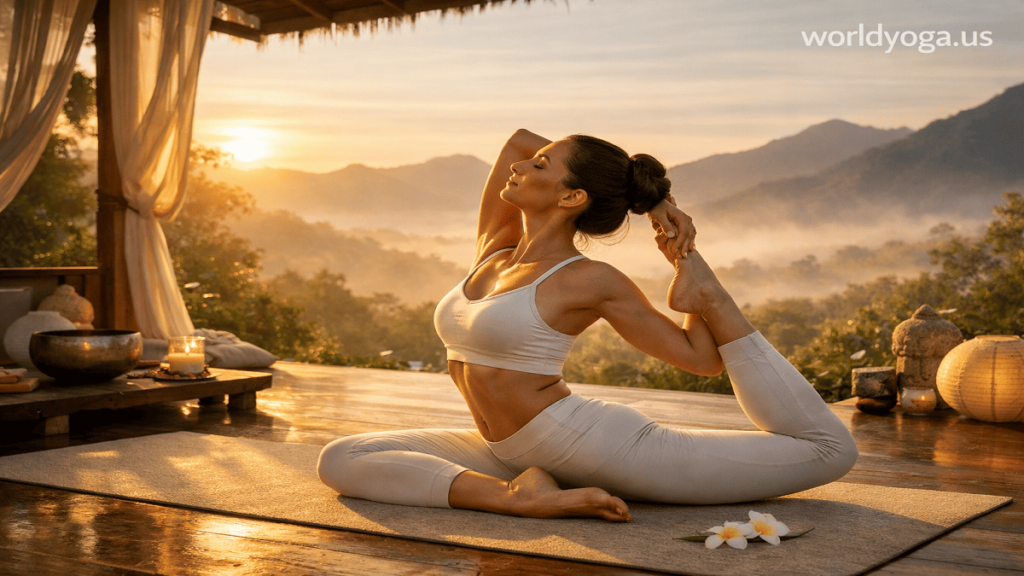
Vamadevasana requires precise alignment to ensure stability, prevent injury, and achieve the intended physical and meditative benefits of the posture. Because the pose combines deep hip rotation, spinal extension, and seated balance, correct structural positioning is essential. Proper alignment should prioritize joint safety and controlled breathing rather than extreme flexibility.
The foundation of the pose begins at the pelvis. Both sitting bones should remain evenly grounded on the floor to create a stable base. Tilting excessively to one side places unnecessary strain on the lower back and hips. The pelvis should maintain a neutral position, allowing the spine to rise naturally upward without collapsing or arching excessively.
The leg positioned behind the neck must come into place through hip flexibility rather than force from the hands or shoulders. The thigh should externally rotate deeply at the hip joint while the knee remains comfortable and protected. The foot should stay active, with the ankle engaged to reduce stress on the knee ligaments. If the practitioner experiences pressure directly in the knee joint, the posture is being forced beyond safe mobility limits.
The second leg is folded beneath the body or placed in a supportive seated variation depending on the practitioner’s flexibility. This leg should provide grounding and balance rather than becoming compressed under body weight. Both knees should move toward the floor naturally without aggressive pushing.
Spinal alignment is one of the most important aspects of Vamadevasana. The spine should remain elongated and upright from the sacrum through the crown of the head. The chest stays open and lifted while the shoulders relax downward away from the ears. Collapsing the chest or rounding the back reduces stability and interferes with efficient breathing. A long and neutral spine also allows the practitioner to maintain the pose comfortably for a longer duration.
The head and neck should remain aligned with the spine. The chin is generally kept parallel to the floor, avoiding excessive forward projection or backward tilting. A steady gaze at a fixed point helps improve concentration and balance.
Breath coordination further supports alignment. Slow diaphragmatic breathing reduces muscular tension and helps maintain steadiness in the posture. Practitioners should avoid holding the breath, as this often creates unnecessary rigidity in the hips and shoulders.
Correct alignment in Vamadevasana is achieved through gradual progression and body awareness. Advanced yoga postures are not measured by appearance alone but by the practitioner’s ability to maintain ease, stability, and controlled breathing within the pose. Consistent preparatory work, especially in hip mobility and spinal strengthening, is essential before attempting the full posture. When practiced with proper alignment and mindful technique, Vamadevasana becomes a balanced integration of flexibility, strength, and meditative focus.
#Vamadevasana in Ahemadabad
Which muscles are engaged during the posture?
Vamadevasana engages a wide range of muscles throughout the body, particularly those involved in hip mobility, spinal support, balance, and postural control. As an advanced seated posture, it requires both flexibility and muscular activation working together to maintain stability and alignment.
One of the primary muscle groups involved is the hip musculature. The gluteus maximus, gluteus medius, and deep external rotator muscles such as the piriformis play a major role in creating and stabilizing the external rotation needed to place the leg behind the neck. These muscles help support the pelvis and maintain balance while reducing strain on the knee joint.
The hip flexors, especially the iliopsoas, are also significantly engaged. They assist in lifting and positioning the leg while maintaining control throughout the movement. At the same time, the adductor muscles along the inner thigh lengthen and stabilize the pelvis during the seated arrangement.
The hamstrings experience deep stretching and controlled engagement, particularly in the leg placed behind the neck. Because the posture requires high levels of flexibility, the hamstring muscles must remain active enough to support the joint without becoming rigid. The quadriceps of the grounded leg contribute to knee stabilization and maintain structural support in the seated base.
Core muscles are essential for maintaining the upright posture of Vamadevasana. The rectus abdominis, transverse abdominis, and oblique muscles stabilize the torso and help prevent collapsing or excessive spinal rounding. Strong core engagement also improves balance and reduces unnecessary pressure on the lumbar spine.
The muscles supporting the spine are continuously active during the posture. The erector spinae muscles help maintain spinal extension and upright alignment, while smaller stabilizing muscles around the vertebral column assist in maintaining posture over time. Without proper spinal engagement, the chest may collapse and breathing may become restricted.
The shoulders and upper back muscles also contribute to stability. The trapezius, rhomboids, and deltoids assist in keeping the shoulders relaxed yet controlled. If the hands are placed in a prayer position, the muscles of the forearms and chest become lightly engaged as well.
In addition to muscular activation, several muscle groups undergo deep stretching during the pose. These include the gluteal muscles, hip rotators, hamstrings, lower back muscles, and portions of the neck and shoulders depending on the variation practiced.
Vamadevasana demonstrates the balance between flexibility and strength that is central to advanced yoga practice. The posture is not sustained by passive flexibility alone; it depends on coordinated muscular engagement to maintain alignment, protect the joints, and support steady breathing. Proper conditioning and gradual progression are therefore essential for practicing the pose safely and effectively.
#Vamadevasana in Hyderabad
What preparatory poses are recommended before practicing it?
Vamadevasana requires extensive preparation because it combines deep hip opening, spinal alignment, flexibility, and muscular control. Attempting the posture without sufficient mobility and conditioning can place excessive stress on the hips, knees, hamstrings, and lower back. For this reason, yoga practitioners are encouraged to develop strength and flexibility gradually through a series of preparatory poses.
One of the most important preparatory postures is Baddha Konasana, commonly known as Bound Angle Pose. This posture improves flexibility in the inner thighs, groin, and hips while promoting external hip rotation. Practicing it regularly helps prepare the pelvic region for the deeper movements required in Vamadevasana.
Upavistha Konasana is another beneficial preparatory pose. It stretches the hamstrings, adductors, and lower back while improving seated posture and pelvic mobility. Controlled forward bending in this posture also supports spinal elongation and breath awareness.
Hip-opening postures such as Eka Pada Rajakapotasana are especially valuable because they target the gluteal muscles and deep hip rotators. Since Vamadevasana demands advanced external hip rotation, pigeon variations help increase mobility while improving joint stability.
Padmasana is often considered an essential preparatory posture. Lotus Pose develops external hip rotation, ankle flexibility, and seated stability. Practitioners who can comfortably maintain Padmasana with proper alignment are generally better prepared for more advanced seated poses involving leg-behind-head positioning.
Forward bends such as Paschimottanasana assist in lengthening the hamstrings and improving spinal flexibility. Flexible hamstrings reduce tension during leg placement and help maintain an upright spine in the final posture.
Core-strengthening postures are equally important. Navasana strengthens the abdominal muscles and improves balance, both of which are necessary for maintaining stability in Vamadevasana. A strong core also helps protect the lower back from excessive strain.
Gentle spinal mobility poses such as Marjaryasana-Bitilasana prepare the vertebral column for upright seated alignment and controlled breathing. Maintaining spinal flexibility and extension is critical in advanced yoga postures.
Many yoga practitioners also include leg-behind-head preparation exercises and supine hip openers in their training routine. These movements should always be approached gradually and without force.
Consistent practice of these preparatory poses develops the flexibility, strength, and joint stability required for Vamadevasana. Proper preparation not only improves performance of the posture but also significantly reduces the risk of injury, allowing practitioners to approach the asana with greater control, balance, and confidence.
#Vamadevasana in Delhi
What are the benefits and precautions of Vamadevasana?
Vamadevasana is an advanced yoga posture known for its deep hip opening, spinal alignment, and meditative stability. Practiced correctly and with proper preparation, the pose offers several physical, mental, and postural benefits. However, because it involves intense flexibility and complex joint positioning, it also requires careful attention to safety and technique.
One of the primary benefits of Vamadevasana is improved hip mobility. The posture deeply stretches the hip joints, gluteal muscles, groin, and inner thighs, increasing flexibility and range of motion. This enhanced mobility can support better movement efficiency in both yoga practice and daily physical activity.
The posture also contributes to spinal strength and postural awareness. Maintaining an upright seated position requires activation of the spinal stabilizers and core muscles, which helps improve alignment and body control. Over time, practitioners may develop greater balance, muscular endurance, and coordination.
Another important benefit is increased flexibility in the hamstrings and lower body. The pose lengthens muscles around the hips and legs while promoting controlled external rotation of the hip joints. Advanced practitioners often use Vamadevasana to refine flexibility gained from foundational yoga postures.
From a mental perspective, the posture encourages concentration, patience, and breath awareness. Because the pose demands steadiness and control, practitioners often experience improved focus and mindfulness during practice. Traditional yoga philosophy also associates advanced seated postures with meditative preparation and sensory discipline.
The posture may additionally improve breath control when practiced with slow and conscious breathing techniques. An upright chest and elongated spine allow the lungs to expand more efficiently, supporting calm and regulated respiration.
Despite these benefits, Vamadevasana carries significant risks if practiced improperly. One of the major precautions involves the knees. Since the posture requires deep external hip rotation, forcing the leg into position without sufficient hip flexibility can transfer dangerous pressure to the knee joint. This may result in ligament strain or meniscus injury.
Individuals with hip injuries, lower back pain, sciatica, hamstring tears, or neck issues should avoid the posture unless guided by a qualified yoga therapist or experienced instructor. Beginners should not attempt Vamadevasana without extensive preparatory training and progressive flexibility development.
Proper warm-up is essential before practicing the pose. Hip-opening sequences, hamstring stretches, spinal mobility exercises, and core activation techniques help reduce injury risk. The posture should always be entered gradually and without sudden movements.
Pain should never be ignored during practice. Mild muscular stretching sensations are acceptable, but sharp or compressive pain indicates improper alignment or excessive force. Practitioners should immediately release the posture if discomfort occurs in the knees, hips, or lower back.
When approached patiently and mindfully, Vamadevasana can become a powerful posture for developing flexibility, strength, concentration, and body awareness while reinforcing the disciplined principles of advanced yoga practice.
#Vamadevasana in Pune
Case Study of Vamadevasana
Vamadevasana is considered one of the advanced seated yoga postures requiring exceptional hip flexibility, spinal control, and mental concentration. This case study examines the physical, psychological, and therapeutic aspects of practicing Vamadevasana in an experienced yoga practitioner over a structured training period.
The subject of the study was a 32-year-old intermediate yoga practitioner with five years of consistent Hatha Yoga experience. The practitioner had prior proficiency in foundational hip-opening and seated postures such as Padmasana, Eka Pada Rajakapotasana, and Paschimottanasana. However, the individual had limited experience with advanced leg-behind-head postures. The primary objective of the study was to evaluate the effects of systematic preparation and guided practice on flexibility, posture, muscular control, and mental focus during the performance of Vamadevasana.
The training program was conducted over twelve weeks under the supervision of a certified yoga instructor. Sessions were performed five days per week and included warm-up exercises, hip-opening sequences, hamstring stretches, spinal mobility drills, core strengthening exercises, and controlled breathing practices. Preparatory postures such as Bound Angle Pose, Pigeon Pose, Lotus Pose, and Boat Pose were regularly incorporated into the routine.
During the first four weeks, the practitioner focused primarily on increasing hip mobility and hamstring flexibility. Mild stiffness was observed in the external hip rotators and lower back. By the sixth week, the practitioner demonstrated improved pelvic stability and was able to comfortably position one leg behind the shoulder without strain. Continued training emphasized spinal alignment, breath regulation, and gradual progression into the full posture.
By the end of the twelfth week, measurable improvements were observed in flexibility, balance, and postural endurance. The practitioner could maintain Vamadevasana for approximately thirty seconds with controlled breathing and minimal muscular tension. Increased activation of the core and spinal stabilizing muscles contributed to better upright posture and improved balance during seated practice.
Psychological observations also revealed notable improvements in concentration and mental steadiness. The practitioner reported increased body awareness, reduced mental distraction during yoga sessions, and greater confidence in advanced posture practice. Controlled breathing techniques practiced alongside the posture contributed to relaxation and improved focus.
Despite these positive outcomes, the study highlighted important precautions associated with Vamadevasana. Occasional discomfort in the hamstrings and hip joints was noted during early stages of training, particularly when flexibility limits were approached too aggressively. Instructor supervision and gradual progression were essential in preventing knee and lower back strain.
The case study demonstrates that Vamadevasana can provide significant physical and mental benefits when practiced systematically and with proper preparation. The posture improves flexibility, core stability, balance, and concentration while reinforcing disciplined movement and breath control. However, due to its advanced nature, the posture should only be attempted after adequate conditioning and under professional guidance to minimize injury risk and ensure safe progression.
#Vamadevasana in Banglore
White Paper of Vamadevasana
Introduction
Vamadevasana is an advanced yogic posture categorized within deep hip-opening and seated balancing asanas. Named after the ancient sage Vamadeva, the posture represents a combination of flexibility, muscular control, breath regulation, and meditative awareness. Traditionally practiced in advanced Hatha Yoga systems, Vamadevasana requires extensive preparation and disciplined progression due to its demanding physical and neurological requirements.
This white paper examines the biomechanical structure, physiological effects, training methodology, therapeutic implications, and safety considerations associated with Vamadevasana. The objective is to provide a structured overview suitable for yoga practitioners, instructors, researchers, and wellness professionals.
Biomechanical Analysis
Vamadevasana primarily involves deep external rotation of the hip joint, spinal extension, pelvic stabilization, and core engagement. One leg is positioned behind the neck while the opposite leg remains grounded in a seated arrangement. This positioning requires coordinated muscular activation and balanced joint mobility.
Major muscle groups involved include:
- Gluteus maximus and gluteus medius
- Piriformis and deep hip rotators
- Hamstrings
- Hip flexors
- Erector spinae
- Abdominal stabilizers
The posture places significant emphasis on hip flexibility rather than knee mobility. Improper force distribution can transfer excessive stress to the knee ligaments and lumbar spine, making alignment precision critical.
Physiological and Psychological Benefits
Regular and properly supervised practice of Vamadevasana may provide several physiological benefits. These include improved hip mobility, increased hamstring flexibility, enhanced spinal posture, and greater muscular endurance. Core stabilization developed through the posture contributes to balance and postural efficiency.
From a neurological perspective, controlled breathing and sustained concentration may stimulate parasympathetic nervous system activity, encouraging relaxation and mental focus. Advanced yoga postures are also associated with improved proprioception and body awareness.
Psychological benefits may include:
- Enhanced concentration
- Increased mindfulness
- Improved emotional regulation
- Greater self-discipline
- Reduced mental distraction during practice
Preparatory Requirements
Due to the complexity of the posture, preparatory training is essential. Recommended prerequisite postures include:
- Padmasana
- Baddha Konasana
- Paschimottanasana
- Eka Pada Rajakapotasana
- Navasana
Progressive mobility work, controlled stretching, and supervised instruction are necessary before attempting the full posture.
Risks and Safety Considerations
Vamadevasana presents elevated injury risk when practiced without adequate preparation. Common areas vulnerable to strain include:
- Knees
- Hip joints
- Hamstrings
- Lower back
- Neck
The posture should be avoided by individuals with orthopedic injuries, severe spinal disorders, or chronic joint instability unless medically approved and professionally supervised.
Key safety recommendations include:
- Adequate warm-up before practice
- Avoiding forceful entry into the posture
- Maintaining controlled breathing
- Releasing the posture immediately if pain occurs
- Practicing under qualified instruction
Conclusion
Vamadevasana represents an advanced integration of flexibility, strength, balance, and concentration within yogic practice. When approached progressively and mindfully, the posture can contribute to improved mobility, postural control, and mental focus. However, its technical complexity requires disciplined preparation and alignment awareness to ensure safe execution.
#Vamadevasana in Kolkata
Industry Application of Vamadevasana
Introduction
Vamadevasana is traditionally recognized as an advanced yogic posture emphasizing flexibility, balance, spinal alignment, and mental concentration. Beyond its role in classical yoga practice, Vamadevasana has growing relevance across multiple industries, including wellness, fitness, rehabilitation, sports conditioning, corporate wellness, and yoga education. As global interest in holistic health and preventive wellness continues to expand, advanced yoga postures are increasingly integrated into professional health and performance programs.
This paper explores the practical applications of Vamadevasana across modern industries and examines its contribution to physical conditioning, mental wellness, and professional yoga training systems.
Application in the Wellness Industry
The wellness industry extensively incorporates yoga-based practices into lifestyle management and preventive healthcare programs. Vamadevasana is often included in advanced yoga workshops and flexibility-focused wellness retreats designed for experienced practitioners.
The posture supports:
- Hip mobility enhancement
- Postural correction
- Breath awareness
- Stress management
- Mind-body integration
Luxury wellness resorts, yoga retreat centers, and integrative wellness clinics frequently use advanced asanas to promote long-term physical conditioning and mental discipline among participants.
Role in the Fitness and Sports Industry
Modern fitness programs increasingly integrate yoga into athletic conditioning routines. Vamadevasana contributes to flexibility development, muscular control, and joint mobility, making it relevant for athletes requiring high levels of movement efficiency.
Industries benefiting from such applications include:
- Professional sports training
- Dance and performing arts
- Martial arts conditioning
- Functional fitness coaching
- Mobility and recovery programs
The posture particularly assists in improving hip flexibility, spinal stabilization, and neuromuscular coordination. Athletes in gymnastics, martial arts, and dance disciplines may incorporate preparatory elements of Vamadevasana to improve range of motion and reduce muscular stiffness.
Application in Yoga Education and Certification
Yoga teacher training institutes use Vamadevasana as part of advanced asana curriculum development. The posture is commonly studied in:
- Advanced Hatha Yoga training
- Ashtanga Yoga progression systems
- Yoga anatomy education
- Alignment and adjustment workshops
- Flexibility specialization programs
Instructors analyze the biomechanics, muscular engagement, contraindications, and sequencing methods associated with the posture. This supports safer teaching methodologies and evidence-based yoga instruction.
Therapeutic and Rehabilitation Relevance
While Vamadevasana itself is not generally prescribed as a therapeutic posture for beginners, modified preparatory practices inspired by its mechanics are used in mobility rehabilitation and corrective exercise programs.
Physical therapists and yoga therapists may adapt hip-opening and spinal stabilization exercises derived from advanced yoga systems to support:
- Postural rehabilitation
- Mobility restoration
- Core stabilization
- Stress reduction programs
- Functional movement training
However, the full posture should only be practiced under professional supervision due to its advanced nature.
Corporate Wellness and Mental Performance
Corporate wellness programs increasingly adopt yoga practices to improve employee well-being and reduce stress-related health concerns. Advanced yoga demonstrations, workshops, and mindfulness sessions sometimes incorporate postures like Vamadevasana to represent discipline, concentration, and body awareness.
The meditative and breath-regulation aspects of the posture align with workplace wellness objectives such as:
- Improved concentration
- Reduced mental fatigue
- Better stress management
- Enhanced mindfulness practices
Conclusion
Vamadevasana has evolved beyond a traditional yogic posture into a specialized practice with applications across wellness, fitness, rehabilitation, education, and corporate health sectors. Its emphasis on flexibility, balance, muscular control, and concentration makes it valuable within modern performance and wellness industries.
#Vamadevasana in Mumbai
Ask FAQs
What is Vamadevasana in yoga?
Vamadevasana is an advanced seated yoga posture that combines deep hip opening, spinal alignment, balance, and concentration. The pose is named after the ancient sage Vamadeva and is commonly practiced in advanced Hatha Yoga and Ashtanga Yoga traditions. It requires high levels of flexibility, muscular control, and breath awareness.
Who should practice Vamadevasana?
Vamadevasana is recommended for advanced yoga practitioners who already have experience with foundational hip-opening and seated postures such as Padmasana and Eka Pada Rajakapotasana. Beginners should avoid attempting the posture without proper preparation and supervision from a qualified yoga instructor.
What are the main benefits of Vamadevasana?
The posture helps improve hip flexibility, spinal posture, core strength, balance, and concentration. It also promotes body awareness and controlled breathing. Regular and safe practice may support mobility, muscular endurance, and mental focus while enhancing overall yoga performance.
What precautions should be taken while practicing Vamadevasana?
Practitioners should warm up thoroughly before attempting the posture. The pose should never be forced, especially at the knees or hips. Individuals with knee injuries, lower back pain, hip instability, or hamstring issues should avoid the posture unless guided by an experienced yoga therapist or instructor. Proper alignment and gradual progression are essential for injury prevention.
Which preparatory poses help in learning Vamadevasana?
Several preparatory poses improve the flexibility and strength required for Vamadevasana. Commonly recommended postures include:
Baddha Konasana
Paschimottanasana
Navasana
Padmasana
Eka Pada Rajakapotasana
Table of Contents
Disclaimer
The information provided about Vamadevasana is intended for educational and informational purposes only. Vamadevasana is an advanced yoga posture that requires proper flexibility, strength, and professional guidance. Practitioners should consult a qualified yoga instructor or healthcare professional before attempting the pose, especially if they have existing injuries, medical conditions, or physical limitations. Improper practice may result in strain or injury.