Pose Dedicated to Sage Vamadeva 1
Pose Dedicated to Sage Vamadeva I (Vamadevasana I) is an advanced seated yoga posture named after Sage Vamadeva, a revered Vedic seer associated with wisdom, introspection, and spiritual insight. This asana belongs to the family of deep hip-opening and spinal extension postures, requiring a combination of flexibility, joint mobility, balance, and mindful breath control. Traditionally practiced in advanced Hatha Yoga and Ashtanga Yoga sequences, it symbolizes both physical discipline and inner steadiness.
From a biomechanical perspective, Vamadevasana I primarily targets the hips, Sage Vamadeva, knees, shoulders, and thoracic spine. The practitioner typically enters the posture from a seated position, bringing one leg into a lotus-like placement while extending or positioning the opposite leg in a way that challenges both hip external rotation and pelvic stability. The spine remains elongated while the chest lifts, encouraging an open thoracic cavity and improved postural alignment.
Key Benefits
- Improves Hip Mobility
The posture creates a deep stretch in the hip flexors, gluteal muscles, and adductors, helping improve range of motion and reduce stiffness. - Enhances Spinal Extension
Maintaining an upright chest and neutral lumbar spine promotes healthier posture and strengthens postural muscles. - Builds Joint Awareness
Because the pose requires precise alignment, it improves proprioception and neuromuscular coordination. - Promotes Mental Focus
Like many advanced yoga postures, Vamadevasana I demands concentration, controlled breathing, and patience, supporting mindfulness and mental resilience.
Contraindications and Safety
This pose is not recommended for beginners without professional supervision. Individuals with knee injuries, hip impingement, lower back pain, Sage Vamadeva or shoulder limitations should avoid attempting it without guidance. Since the posture places rotational load on the knee joint, Sage Vamadeva, proper hip mobility—not forced leg positioning—is essential.
Before practicing Vamadevasana I, preparatory poses such as:
- Pigeon Pose
- Lotus Pose
- Bound Angle Pose
can help safely develop the required mobility.
Best Practice Recommendations
- Warm up thoroughly with dynamic hip and spinal mobility drills.
- Use props such as yoga blocks or folded blankets to support alignment.
- Focus on gradual progression rather than achieving the “full pose” immediately.
- Practice under a certified yoga instructor, especially during early attempts.
For detailed anatomical guidance and visual demonstrations, reliable resources include:
Yoga Journal
Iyengar Yoga Association
International Association of Yoga Therapists
In summary, Pose Dedicated to Sage Vamadeva I is a sophisticated asana that blends flexibility, structural control, and meditative awareness. When practiced progressively and safely, Sage Vamadeva it can become a powerful tool for both physical development and deeper yogic discipline.
#Pose Dedicated to Sage Vamadeva 1 in India
How is Pose Dedicated to Sage Vamadeva 1 performed correctly?
Pose Dedicated to Sage Vamadeva I (Vamadevasana I) is an advanced seated yoga posture that combines deep hip opening, spinal extension, and controlled balance. Because the pose places significant demand on the hips, knees, and lower back, Sage Vamadeva it should be practiced gradually and with proper alignment. Mastery of foundational postures such as lotus variations and seated hip openers is generally recommended before attempting this asana.
Step-by-Step Technique
1. Begin in a Stable Seated Position
Sit on a yoga mat in a comfortable cross-legged position with the spine upright and shoulders relaxed. Establish slow, even breathing before entering the pose.
2. Position the First Leg
Carefully bring one foot into a half-lotus or lotus placement, Sage Vamadeva depending on your flexibility. The foot should rest comfortably on the opposite thigh without forcing the knee joint. The movement should originate from the hip rather than the knee.
A strong preparation for this stage is:
- Lotus Pose
3. Fold or Extend the Opposite Leg
The second leg is bent and positioned behind or beside the body, Sage Vamadeva depending on the traditional variation being practiced. The pelvis should remain grounded evenly on the mat to avoid twisting the lower spine excessively.
4. Lengthen the Spine
Lift through the chest and elongate the spine upward. Avoid collapsing into the lower back. The shoulders remain broad and relaxed while the neck stays neutral.
5. Establish the Arm Position
In classical versions of the posture, one arm may reach behind the back to hold the foot or ankle. This requires substantial shoulder mobility and should never be forced.
Helpful preparatory postures include:
- Cow Face Pose
- Bound Angle Pose
6. Maintain Steady Breathing
Hold the posture for several slow breaths while maintaining stability and comfort. Breathing should remain smooth and controlled throughout the pose.
7. Release Slowly
Exit the posture gradually and repeat on the opposite side to maintain muscular balance and joint symmetry.
Alignment Principles
Correct alignment is essential for preventing injury and maximizing the benefits of the pose:
- Keep the spine tall rather than rounded.
- Avoid forcing the knees downward.
- Engage the core gently to stabilize the pelvis.
- Distribute body weight evenly through the sitting bones.
- Maintain relaxed facial muscles and steady breathing.
Common Mistakes
Practitioners frequently make the following errors:
- Forcing the lotus position without adequate hip mobility.
- Rounding the lower back.
- Twisting the knee joint instead of externally rotating the hip.
- Holding the breath during difficult transitions.
- Attempting the full pose too early.
Because of its complexity, Sage Vamadeva beginners should practice under the supervision of a qualified yoga instructor.
Safety Considerations
This posture may not be appropriate for individuals with:
- Knee injuries
- Hip impingement
- Sciatica
- Lower back instability
- Shoulder mobility restrictions
Professional instruction is strongly advised before attempting advanced variations.
For additional instructional resources and anatomical guidance, consult:
Yoga Journal
Yoga International
International Association of Yoga Therapists
#Pose Dedicated to Sage Vamadeva 1 in Maharashtra
What is the proper alignment in this pose?
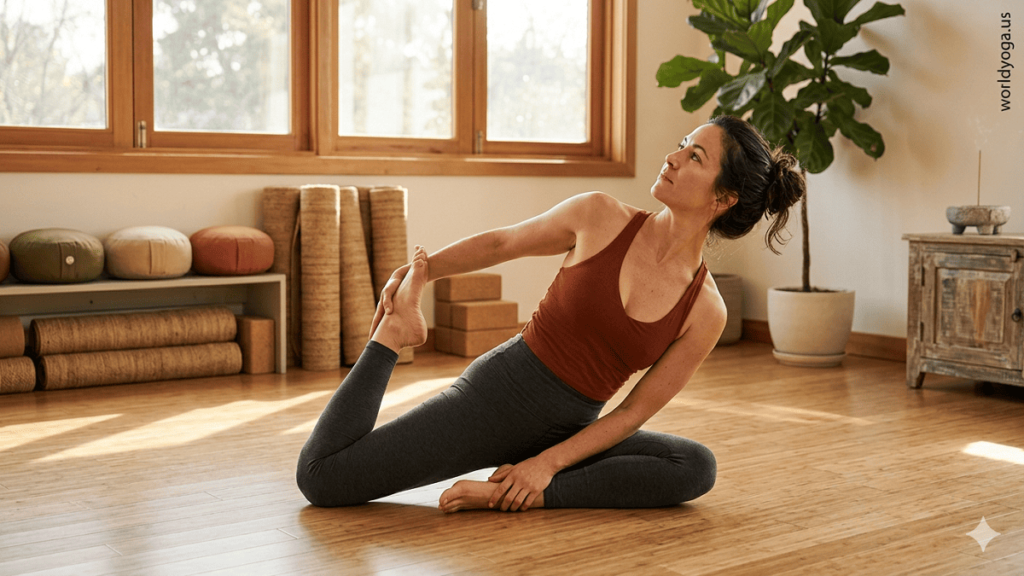
Proper alignment in Pose Dedicated to Sage Vamadeva I (Vamadevasana I) is essential for maintaining stability, protecting the joints, and achieving the full physical and energetic benefits of the posture. Because this is an advanced yoga pose involving deep hip rotation, spinal extension, Sage Vamadeva and shoulder mobility, Sage Vamadeva alignment should always take priority over achieving the final shape.
1. Pelvic Position and Foundation
The alignment begins at the base of the posture. The pelvis should remain grounded evenly on both sitting bones to create stability throughout the spine. Avoid leaning heavily to one side or collapsing backward, as this places unnecessary strain on the lumbar spine and hips.
The hips should rotate externally from the hip sockets rather than forcing movement through the knees. If the pelvis tilts excessively or the lower back rounds, the practitioner may need additional hip-opening preparation before attempting the full expression of the pose.
Preparatory postures that improve pelvic mobility include:
- Bound Angle Pose
- Pigeon Pose
2. Knee and Leg Alignment
The knees should remain comfortable and supported throughout the posture. One of the most important alignment principles is to avoid twisting the knee joint while entering lotus-style leg placements.
The movement must originate from:
- External rotation of the hips
- Controlled engagement of the thigh muscles
- Gradual flexibility development
If pain is felt in the knee, the posture should be released immediately. The foot should rest naturally on the opposite thigh without pressing or forcing the joint into position.
A foundational pose for safe leg positioning is:
- Lotus Pose
3. Spinal Alignment
The spine should remain elongated and upright throughout the pose. Rather than arching aggressively in the lower back, Sage Vamadeva practitioners should lift through the sternum and create length evenly from the pelvis to the crown of the head.
Key spinal alignment cues include:
- Lift the chest gently upward
- Keep the shoulders broad and relaxed
- Engage the abdominal muscles lightly for support
- Maintain a neutral neck position
The goal is a balanced spinal extension rather than compression in the lumbar region.
4. Shoulder and Arm Placement
In traditional variations, one arm may reach behind the back to hold the foot or ankle. The shoulder should rotate smoothly without collapsing forward or elevating toward the ear.
Proper shoulder alignment includes:
- Keeping the chest open
- Drawing the shoulder blades slightly back and down
- Avoiding excessive strain in the neck
Preparatory mobility work may include:
- Cow Face Pose
5. Breath and Internal Stability
Breathing plays a critical role in maintaining alignment. Slow, controlled breathing helps reduce muscular tension and improves postural awareness. The breath should remain smooth and uninterrupted while holding the pose.
Common Alignment Errors
Frequent mistakes include:
- Forcing the lotus position
- Rounding the spine
- Collapsing into the lower back
- Uneven pelvic grounding
- Twisting the knees instead of opening the hips
- Holding tension in the shoulders and jaw
Professional Guidance
Due to the complexity of Vamadevasana I, practicing under a qualified yoga instructor is strongly recommended. Proper instruction can help ensure safe progression and reduce the risk of injury.
Additional alignment resources are available through:
Yoga Journal
Iyengar Yoga Association
Yoga International
Correct alignment in Pose Dedicated to Sage Vamadeva I is ultimately about creating balance between flexibility, stability, breath control, Sage Vamadeva and mindful movement rather than forcing the body into an advanced shape.
#Pose Dedicated to Sage Vamadeva 1 in Ahemadabad
Which muscles are engaged during the posture?
Pose Dedicated to Sage Vamadeva I (Vamadevasana I) is a highly advanced yoga posture that requires coordinated muscular engagement throughout the entire body. The pose combines deep hip opening, spinal stabilization, shoulder mobility, Sage Vamadeva and postural control, making it both physically demanding and neurologically complex. Understanding the muscles involved helps practitioners improve alignment, avoid injury, and develop greater body awareness during practice.
1. Hip Muscles
The hips are the primary area of muscular involvement in Vamadevasana I. Because the posture requires deep external rotation and flexion, several muscle groups are actively engaged or lengthened.
Engaged Hip Stabilizers
- Gluteus medius and gluteus minimus help stabilize the pelvis.
- Piriformis and other deep lateral rotators assist in external hip rotation.
- Iliopsoas contributes to hip flexion and postural support.
Lengthened Hip Structures
- Hip adductors
- Tensor fasciae latae (TFL)
- Portions of the gluteal complex
Preparatory postures that activate these regions include:
- Pigeon Pose
- Bound Angle Pose
2. Core Muscles
Strong core engagement is essential for maintaining spinal alignment and balance during the pose.
Primary Core Muscles Activated
- Transverse abdominis stabilizes the trunk.
- Rectus abdominis supports spinal positioning.
- Internal and external obliques assist rotational stability.
- Multifidus muscles support the vertebral column.
The abdominal muscles work continuously to prevent collapse into the lower back and maintain an upright torso.
3. Spinal and Back Muscles
Maintaining an elongated spine in Vamadevasana I requires activation of several posterior chain muscles.
Key Muscles Involved
- Erector spinae maintain spinal extension.
- Quadratus lumborum supports lateral spinal stability.
- Latissimus dorsi assists shoulder positioning and torso control.
- Trapezius and rhomboids help stabilize the shoulder blades.
Proper spinal engagement helps distribute force evenly across the body and reduces lumbar compression.
4. Shoulder and Arm Muscles
Traditional variations of the pose involve arm binding or reaching movements that require substantial shoulder flexibility and strength.
Muscles Activated
- Deltoids
- Rotator cuff muscles
- Biceps brachii
- Triceps brachii
- Pectoralis major and minor
These muscles stabilize the shoulder joint while allowing controlled arm movement behind the body.
Preparatory shoulder-opening work often includes:
- Cow Face Pose
5. Leg and Knee Stabilizers
Although the pose emphasizes flexibility, the legs remain actively engaged.
Important Supporting Muscles
- Quadriceps
- Hamstrings
- Gastrocnemius and soleus
- Inner thigh stabilizers
These muscles help protect the knee joint and maintain lower-body control during deep rotational positioning.
Functional Importance of Muscle Engagement
Balanced muscular activation in Vamadevasana I serves several purposes:
- Protects vulnerable joints, especially the knees and hips
- Improves balance and proprioception
- Enhances postural endurance
- Supports controlled breathing
- Prevents excessive spinal compression
Because this is an advanced posture, insufficient muscular control can increase the risk of strain or joint stress.
Professional Practice Recommendations
Practitioners should develop adequate mobility and strength before attempting the full pose. Gradual progression, Sage Vamadeva proper warm-up, and expert instruction are strongly advised.
For anatomical references and yoga biomechanics resources, consult:
Yoga International
Yoga Journal
International Association of Yoga Therapists
#Pose Dedicated to Sage Vamadeva 1 in Hyderabad
What preparatory poses are recommended?
Pose Dedicated to Sage Vamadeva I (Vamadevasana I) is an advanced yoga posture that requires substantial hip mobility, spinal stability, shoulder flexibility, and joint control. Because of the complexity of the pose, practitioners should first develop adequate flexibility and muscular support through a structured sequence of preparatory postures. These poses gradually open the hips, lengthen the spine, improve shoulder mobility, and reduce the risk of injury.
A well-designed preparation routine also helps the body adapt safely to the deep external hip rotation and seated alignment required in Vamadevasana I.
1. Lotus Pose (Padmasana)
One of the most important preparations for Vamadevasana I is:
- Lotus Pose
Padmasana develops:
- External hip rotation
- Knee and ankle mobility
- Pelvic grounding
- Upright seated posture
Since Vamadevasana I often incorporates lotus-style leg positioning, practitioners should be able to enter and maintain Lotus Pose comfortably without knee discomfort before progressing further.
Key Benefit
Improves hip opening while training spinal alignment and meditative stability.
2. Bound Angle Pose (Baddha Konasana)
- Bound Angle Pose
This seated posture stretches the:
- Inner thighs
- Hip adductors
- Groin muscles
It also encourages proper pelvic positioning and reduces tightness that can interfere with deeper rotational movements.
Key Benefit
Enhances flexibility in the hips and groin while promoting relaxed external rotation.
3. Pigeon Pose
- Pigeon Pose
Pigeon Pose is widely used to prepare for advanced seated asanas because it deeply targets:
- Gluteal muscles
- Piriformis
- Hip rotators
- Hip flexors
Key Benefit
Creates balanced hip mobility and helps reduce tension in the lower body.
4. Cow Face Pose (Gomukhasana)
- Cow Face Pose
This posture improves:
- Shoulder mobility
- Chest opening
- Upper back flexibility
- Hip alignment
The arm positioning in Gomukhasana closely resembles the shoulder mechanics needed in binding variations of Vamadevasana I.
Key Benefit
Prepares both the shoulders and hips simultaneously.
5. Seated Forward Bend (Paschimottanasana)
- Seated Forward Bend
This foundational seated posture stretches:
- Hamstrings
- Lower back muscles
- Spinal fascia
It also encourages controlled breathing and spinal awareness.
Key Benefit
Improves posterior chain flexibility and seated stability.
6. Cat-Cow Stretch
- Cat-Cow Stretch
This gentle spinal movement sequence increases:
- Spinal mobility
- Pelvic awareness
- Coordination between movement and breath
Key Benefit
Warms up the vertebral column before deeper seated postures.
Practice Recommendations
When preparing for Vamadevasana I:
- Warm up gradually before deep hip work
- Never force lotus positioning
- Focus on symmetrical flexibility development
- Maintain steady breathing during each preparatory pose
- Use props such as blankets or blocks if necessary
Practicing these poses consistently helps build the mobility and stability necessary for safe progression into advanced asanas.
Professional Guidance and Learning Resources
Due to the advanced nature of Vamadevasana I, instruction from a qualified yoga teacher is highly recommended. Additional guidance can be found through:
Yoga Journal
Yoga International
Iyengar Yoga Association
#Pose Dedicated to Sage Vamadeva 1 in Delhi
What are the benefits and precautions of this pose?
Pose Dedicated to Sage Vamadeva I (Vamadevasana I) is an advanced seated yoga posture that combines deep hip opening, spinal extension, shoulder mobility, and mental concentration. Traditionally associated with higher levels of yogic practice, the posture demands flexibility, balance, controlled breathing, and strong postural awareness. When practiced correctly and progressively, it offers a wide range of physical and psychological benefits. However, due to its complexity, the pose also requires important precautions to avoid strain or injury.
Benefits of Pose Dedicated to Sage Vamadeva I
1. Improves Hip Flexibility and Mobility
One of the primary benefits of Vamadevasana I is the development of deep hip mobility. The posture stretches and strengthens muscles surrounding the hip joints, including the gluteals, hip rotators, and adductors.
Preparatory postures that support this benefit include:
- Pigeon Pose
- Bound Angle Pose
Improved hip flexibility may contribute to better posture, movement efficiency, and reduced muscular tension.
2. Enhances Spinal Alignment and Posture
The pose encourages an elongated spine and open chest, activating postural muscles that support spinal stability.
Benefits include:
- Improved upright posture
- Increased thoracic mobility
- Better body alignment awareness
- Reduced tendency toward spinal collapse during seated activities
Maintaining proper spinal positioning also promotes balanced muscular engagement throughout the torso.
3. Strengthens Core and Stabilizing Muscles
Vamadevasana I requires continuous activation of the abdominal and spinal stabilizers to maintain balance and alignment.
Muscles strengthened include:
- Deep abdominal muscles
- Lower back stabilizers
- Pelvic support muscles
- Shoulder stabilizers
This contributes to improved coordination and body control.
4. Develops Mental Focus and Breath Control
Advanced yoga postures often require intense concentration and mindful breathing. Holding the pose steadily can help improve:
- Mental discipline
- Breath awareness
- Patience and concentration
- Mind-body coordination
The meditative quality of the posture aligns with traditional yogic principles of internal focus and controlled awareness.
5. Increases Shoulder and Chest Mobility
Binding variations of the pose encourage shoulder opening and chest expansion.
Helpful preparatory poses include:
- Cow Face Pose
This can improve upper-body flexibility and counteract stiffness caused by prolonged sitting or poor posture.
Precautions and Safety Considerations
1. Avoid Forcing the Knees
The most important precaution involves knee safety. The posture requires external hip rotation, not twisting at the knee joint. Forcing lotus-style positioning without adequate hip mobility can result in ligament strain or meniscus injury.
A safe foundation should first be developed through:
- Lotus Pose
2. Practice Only with Adequate Preparation
Vamadevasana I is not recommended for beginners without proper guidance. Attempting the pose prematurely may place excessive stress on:
- Hips
- Lower back
- Knees
- Shoulders
Consistent preparatory practice is essential before attempting the full posture.
3. Individuals with Certain Conditions Should Avoid the Pose
The posture may not be suitable for people with:
- Knee injuries
- Hip impingement
- Sciatica
- Lumbar disc problems
- Severe shoulder restrictions
Medical or therapeutic consultation may be necessary before practicing advanced yoga postures.
4. Maintain Controlled Breathing
Holding the breath during the pose can increase muscular tension and reduce stability. Smooth, steady breathing helps maintain safer alignment and relaxation.
Professional Guidance
Because of its advanced nature, Vamadevasana I should ideally be practiced under the supervision of a qualified yoga instructor.
Additional educational resources are available at:
Yoga Journal
Yoga International
International Association of Yoga Therapists
#Pose Dedicated to Sage Vamadeva 1 in Banglore
Case Study of Pose Dedicated to Sage Vamadeva 1
Introduction
Pose Dedicated to Sage Vamadeva I (Vamadevasana I) is an advanced seated yoga posture that combines deep hip opening, spinal alignment, shoulder mobility, and mental concentration. Named after the Vedic sage Vamadeva, the pose is traditionally associated with discipline, self-awareness, and advanced yogic control. Due to its technical complexity, Vamadevasana I is generally practiced by intermediate to advanced yoga practitioners who have already developed substantial flexibility and body awareness.
This case study examines the physical, functional, and psychological effects of incorporating Vamadevasana I into a structured yoga practice over a sustained period.
Subject Profile
Participant Information
- Age: 34 years
- Gender: Female
- Yoga Experience: 5 years
- Practice Frequency: 5 sessions per week
- Primary Goal: Improve hip flexibility, posture, and advanced pose proficiency
The participant had prior experience with foundational postures such as:
- Lotus Pose
- Pigeon Pose
- Cow Face Pose
However, she reported limitations in deep external hip rotation and shoulder binding mobility before beginning focused Vamadevasana I training.
Training Methodology
The participant followed a structured 12-week progression program supervised by a certified yoga instructor.
Weekly Practice Components
- Hip-opening mobility exercises
- Core stabilization training
- Shoulder flexibility drills
- Breath-control techniques
- Gradual Vamadevasana I progression
Preparatory poses included:
- Bound Angle Pose
- Seated Forward Bend
- Cat-Cow Stretch
Sessions lasted approximately 60 minutes, with direct Vamadevasana I practice introduced progressively during the fourth week.
Observed Outcomes
1. Improvement in Hip Mobility
After 12 weeks, the participant demonstrated:
- Increased external hip rotation
- Reduced muscular tightness in the gluteal region
- Improved pelvic stability during seated postures
The participant reported greater comfort in lotus-based positions and decreased stiffness during daily activities.
2. Enhanced Postural Alignment
Consistent practice improved spinal awareness and upright posture. Observations included:
- Reduced thoracic rounding
- Better shoulder alignment
- Improved seated balance
Core stabilization exercises contributed significantly to maintaining spinal integrity during the posture.
3. Increased Shoulder Flexibility
The participant experienced measurable improvements in shoulder mobility and chest opening, particularly during binding variations of the pose.
Functional benefits included:
- Easier overhead arm movement
- Reduced upper-back tension
- Improved shoulder coordination
4. Mental and Breathing Benefits
The participant reported improvements in:
- Concentration
- Breath awareness
- Patience during difficult postures
- Stress management
Slow breathing techniques appeared to enhance relaxation and muscular control during extended holds.
Challenges and Limitations
Several challenges emerged during the study:
- Mild knee discomfort during early lotus transitions
- Difficulty maintaining even pelvic grounding
- Limited shoulder mobility in binding phases
These issues were addressed through:
- Reduced intensity
- Additional hip preparation
- Prop-assisted modifications
- Close instructor supervision
No serious injuries occurred during the program.
Safety Considerations
The case study reinforced several important safety principles:
- Hip mobility must precede deep lotus positioning.
- The knees should never be forced into rotation.
- Progressive loading is essential for advanced postures.
- Consistent warm-up and recovery practices reduce injury risk.
Practitioners with existing knee, hip, or spinal conditions may require medical clearance before attempting advanced yoga postures.
Conclusion
This case study demonstrates that Pose Dedicated to Sage Vamadeva I can significantly improve flexibility, postural control, muscular coordination, and mental focus when practiced progressively and under qualified supervision. The results highlight the importance of preparatory training, controlled breathing, and proper alignment in safely developing advanced yoga skills.
Additional educational and anatomical resources are available through:
Yoga Journal
Yoga International
International Association of Yoga Therapists
#Pose Dedicated to Sage Vamadeva 1 in Pune
White Paper of Pose Dedicated to Sage Vamadeva 1
Abstract
Pose Dedicated to Sage Vamadeva I (Vamadevasana I) is an advanced seated yoga posture that integrates deep hip rotation, spinal extension, postural control, and mindful breathing. Rooted in traditional yogic practice, the pose is named after Sage Vamadeva, a respected Vedic seer associated with wisdom and self-realization. This white paper examines the anatomical, physiological, biomechanical, and psychological dimensions of Vamadevasana I while evaluating its applications, benefits, limitations, and safety considerations within modern yoga practice.
Introduction
Yoga postures have evolved from meditative seating arrangements into sophisticated systems supporting physical conditioning, mobility, neuromuscular coordination, and mental regulation. Among advanced seated postures, Vamadevasana I represents a complex integration of flexibility, stability, and concentration.
The posture demands:
- External hip rotation
- Pelvic stabilization
- Spinal elongation
- Shoulder mobility
- Controlled respiratory mechanics
Because of these requirements, Vamadevasana I is typically introduced only after proficiency in foundational postures such as:
- Lotus Pose
- Bound Angle Pose
- Pigeon Pose
Anatomical and Biomechanical Analysis
Hip Joint Mechanics
The posture primarily depends on substantial external rotation at the femoroacetabular joint. Proper execution requires mobility in:
- Gluteal muscles
- Piriformis
- Hip adductors
- Iliopsoas complex
Biomechanically, inadequate hip mobility may transfer rotational stress to the knee joint, increasing injury risk. Therefore, hip opening rather than forced knee positioning is considered fundamental to safe practice.
Spinal Alignment
Vamadevasana I promotes axial extension of the spine and activation of postural stabilizers.
Primary muscular engagement includes:
- Erector spinae
- Multifidus
- Transverse abdominis
- Oblique abdominal muscles
Correct spinal alignment minimizes lumbar compression while improving thoracic extension and postural awareness.
Shoulder and Upper Body Involvement
Binding variations of the posture require advanced shoulder mobility involving:
- Rotator cuff stabilization
- Scapular control
- Chest opening
Preparatory work often includes:
- Cow Face Pose
These adaptations improve upper-body flexibility and neuromuscular coordination.
Physiological Benefits
1. Musculoskeletal Benefits
Consistent practice may contribute to:
- Increased hip mobility
- Improved spinal posture
- Enhanced joint stability
- Better muscular coordination
- Greater flexibility in connective tissues
The posture also strengthens stabilizing musculature essential for balance and movement efficiency.
2. Neurological and Psychological Benefits
Advanced yoga postures frequently require sustained concentration and controlled breathing. Vamadevasana I may support:
- Improved proprioception
- Enhanced focus and mindfulness
- Breath regulation
- Reduced stress response
The integration of breath and movement reflects traditional yogic principles emphasizing mind-body synchronization.
Clinical and Therapeutic Considerations
Although Vamadevasana I offers mobility and postural benefits, it is not universally appropriate.
Contraindications
The pose should be approached cautiously or avoided in cases involving:
- Knee injuries
- Hip impingement
- Sciatica
- Lumbar instability
- Severe shoulder dysfunction
Incorrect execution may lead to:
- Meniscal strain
- Ligament stress
- Lower back compression
- Hip irritation
Professional supervision is strongly recommended during progression into advanced variations.
Preparatory Framework
A progressive preparation strategy is essential for safe practice.
Recommended preparatory postures include:
- Seated Forward Bend
- Cat-Cow Stretch
- Bound Angle Pose
These postures improve mobility, spinal awareness, and muscular readiness while reducing injury potential.
Best Practice Recommendations
For optimal safety and effectiveness:
- Warm up thoroughly before deep hip work.
- Prioritize alignment over depth.
- Avoid forcing lotus positioning.
- Maintain steady diaphragmatic breathing.
- Progress gradually under qualified instruction.
- Use props when necessary to support pelvic alignment.
Yoga educators should emphasize functional mobility rather than aesthetic achievement.
Conclusion
Pose Dedicated to Sage Vamadeva I represents a sophisticated integration of flexibility, stability, breath control, and mental discipline. From a biomechanical and physiological perspective, the posture offers substantial benefits for mobility, posture, neuromuscular coordination, and mindfulness when practiced correctly.
However, the advanced demands of the pose require careful preparation, progressive training, and alignment awareness to minimize injury risk. Future research into advanced yoga biomechanics and therapeutic applications may further clarify the long-term physiological effects of postures such as Vamadevasana I.
Additional professional resources and research references are available through:
Yoga Journal
International Association of Yoga Therapists
Yoga International
#Pose Dedicated to Sage Vamadeva 1 in Kolkata
Industry Application of Pose Dedicated to Sage Vamadeva 1
Introduction
Pose Dedicated to Sage Vamadeva I (Vamadevasana I) is an advanced yoga posture recognized for its emphasis on hip mobility, spinal alignment, muscular control, and mental concentration. Traditionally rooted in classical yoga systems, the pose has increasingly gained relevance across modern wellness, rehabilitation, fitness, and corporate health industries. As organizations and healthcare professionals continue to integrate movement-based wellness practices into their programs, advanced yoga postures such as Vamadevasana I are being explored for their functional, therapeutic, and performance-enhancing applications.
This paper examines how Vamadevasana I contributes to multiple industries, including fitness and wellness, physiotherapy, sports performance, corporate wellness, yoga education, and holistic healthcare.
1. Fitness and Wellness Industry
The global fitness and wellness sector has increasingly incorporated yoga-based mobility training into mainstream exercise programs. Vamadevasana I is often introduced in advanced flexibility and mobility sessions designed to improve:
- Hip flexibility
- Postural alignment
- Core stability
- Neuromuscular coordination
High-end yoga studios and mobility-focused training centers use advanced postures to help experienced practitioners progress beyond foundational flexibility work.
Preparatory postures commonly integrated into these programs include:
- Pigeon Pose
- Bound Angle Pose
Industry Benefits
- Enhances premium yoga curriculum offerings
- Supports flexibility-focused fitness programs
- Improves client engagement in advanced classes
- Encourages long-term mobility development
2. Physiotherapy and Rehabilitation
Although Vamadevasana I itself is not typically prescribed during early rehabilitation stages, its movement principles are highly relevant in therapeutic mobility training.
Physical therapists and movement specialists may adapt components of the pose to improve:
- Hip external rotation
- Pelvic stability
- Spinal posture
- Controlled breathing patterns
Modified preparatory movements are sometimes used in rehabilitation protocols for sedentary individuals or clients recovering from postural dysfunction.
Clinical Relevance
The pose demonstrates the importance of:
- Controlled joint mobility
- Progressive flexibility development
- Functional movement integration
However, therapists emphasize that advanced lotus-style positioning should only be attempted with adequate mobility and professional supervision.
3. Sports Performance and Athletic Training
Athletes increasingly use yoga to improve flexibility, recovery, balance, and movement efficiency. Vamadevasana I contributes to athletic conditioning by targeting:
- Hip mobility
- Core stabilization
- Postural endurance
- Breath control
Sports requiring rotational mobility and balance, such as martial arts, gymnastics, dance, and climbing, may particularly benefit from yoga-based mobility practices.
Supporting postures frequently include:
- Cow Face Pose
- Seated Forward Bend
Performance Benefits
- Improves movement efficiency
- Reduces muscular stiffness
- Supports recovery protocols
- Enhances proprioception and body awareness
4. Corporate Wellness Programs
Corporate wellness initiatives increasingly integrate yoga to address workplace stress, sedentary behavior, and posture-related discomfort.
While Vamadevasana I itself is generally reserved for advanced practitioners, its preparatory techniques are commonly incorporated into:
- Desk mobility sessions
- Stress-management programs
- Mindfulness training
- Executive wellness retreats
Workplace Applications
- Promotes spinal health
- Improves concentration and focus
- Encourages mindfulness and breathing awareness
- Reduces musculoskeletal tension associated with prolonged sitting
5. Yoga Education and Teacher Training
Advanced postures such as Vamadevasana I play a significant role in professional yoga education programs.
Teacher training institutions use the pose to teach:
- Advanced alignment principles
- Functional anatomy
- Safe progression techniques
- Biomechanics of hip rotation and spinal stabilization
Educational emphasis is often placed on:
- Injury prevention
- Individual anatomical variation
- Ethical instruction methods
6. Holistic Healthcare and Mind-Body Therapy
Holistic wellness practitioners recognize advanced yoga postures as tools for integrating physical movement with mental focus and breath regulation.
Vamadevasana I may support:
- Stress reduction
- Breath awareness
- Mind-body coordination
- Meditative discipline
These applications align with broader integrative health approaches combining movement therapy, mindfulness, and lifestyle management.
Challenges and Industry Limitations
Despite its benefits, several limitations affect the broader application of Vamadevasana I:
- High technical difficulty
- Increased injury risk if improperly taught
- Limited accessibility for beginners
- Need for individualized progression
As a result, many industries prioritize preparatory and modified variations over the full posture itself.
Conclusion
Pose Dedicated to Sage Vamadeva I demonstrates significant relevance across wellness, rehabilitation, sports performance, education, and holistic healthcare industries. Its emphasis on flexibility, stability, alignment, and concentration aligns with growing industry demand for integrative movement practices that support both physical and mental well-being.
However, due to the advanced nature of the posture, safe application depends on qualified instruction, progressive preparation, and careful attention to biomechanics. As yoga continues to expand within modern health and performance sectors, Vamadevasana I remains a valuable example of the intersection between traditional yogic practice and contemporary movement science.
Further professional resources are available at:
Yoga Journal
Yoga International
International Association of Yoga Therapists
#Pose Dedicated to Sage Vamadeva 1 in Mumbai
Ask FAQs
What is Pose Dedicated to Sage Vamadeva I?
Pose Dedicated to Sage Vamadeva I (Vamadevasana I) is an advanced seated yoga posture that combines deep hip opening, spinal alignment, shoulder mobility, and controlled breathing. The pose is traditionally associated with higher levels of yoga practice and requires flexibility, balance, and concentration.
Is Vamadevasana I suitable for beginners?
No, Vamadevasana I is generally not recommended for beginners. The posture places significant demands on the hips, knees, spine, and shoulders. Practitioners should first develop sufficient flexibility and joint stability through foundational yoga poses and guided practice under a qualified instructor.
What are the main benefits of this pose?
The pose may help improve:
Hip mobility and flexibility
Postural alignment
Core strength and stability
Shoulder flexibility
Mental concentration and breath awareness
Regular and safe practice can also enhance overall body awareness and neuromuscular coordination.
What precautions should be taken while practicing Vamadevasana I?
Important precautions include:
Never forcing the knees into lotus positioning
Warming up properly before practice
Maintaining steady breathing
Avoiding excessive lower-back compression
Progressing gradually with proper supervision
Individuals with knee injuries, hip problems, sciatica, or spinal conditions should consult a medical or yoga professional before attempting the posture.
Which preparatory poses help improve performance in Vamadevasana I?
Several foundational poses can help prepare the body for Vamadevasana I, including:
Cow Face Pose
Bound Angle Pose
Cat-Cow Stretch
These poses improve hip mobility, spinal flexibility, shoulder openness, and overall postural control.
Table of Contents
Disclaimer:
The information provided about Pose Dedicated to Sage Vamadeva I (Vamadevasana I) is intended for educational and informational purposes only. This advanced yoga posture should be practiced under the guidance of a qualified yoga instructor. Individuals with existing medical conditions, injuries, or physical limitations should consult a healthcare professional before attempting the pose. Improper practice may result in injury.