Narasimhasana in Malasana
The combination of Malasana (Garland Pose) and Narasimhasana (Lion Pose variation) is a powerful yoga integration that blends deep hip opening with expressive breathwork and facial release. While Malasana focuses on grounding, mobility, and lower-body flexibility, Narasimhasana emphasizes facial tension release, breath activation, and throat stimulation. Practicing Narasimhasana within Malasana creates a holistic approach that engages both physical stability and energetic expression.
Malasana is a deep yogic squat where the feet are placed wider than hip-width apart, heels grounded or supported, and palms brought together at the heart center. It is widely used to improve hip flexibility, ankle mobility, and spinal alignment. According to Yoga Journal, this pose also supports digestive health and pelvic floor strength when practiced consistently (https://www.yogajournal.com/poses/garland-pose/).
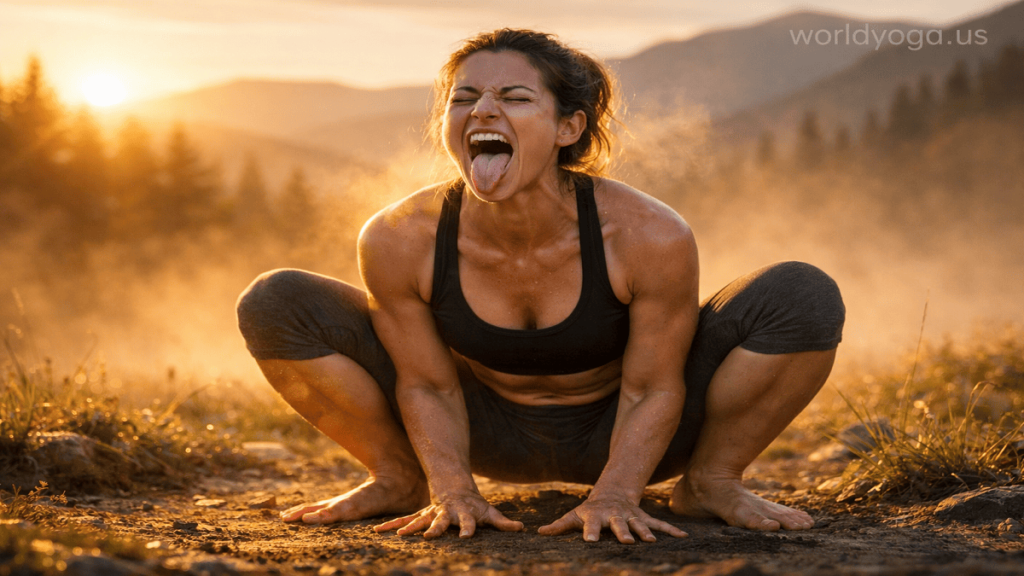
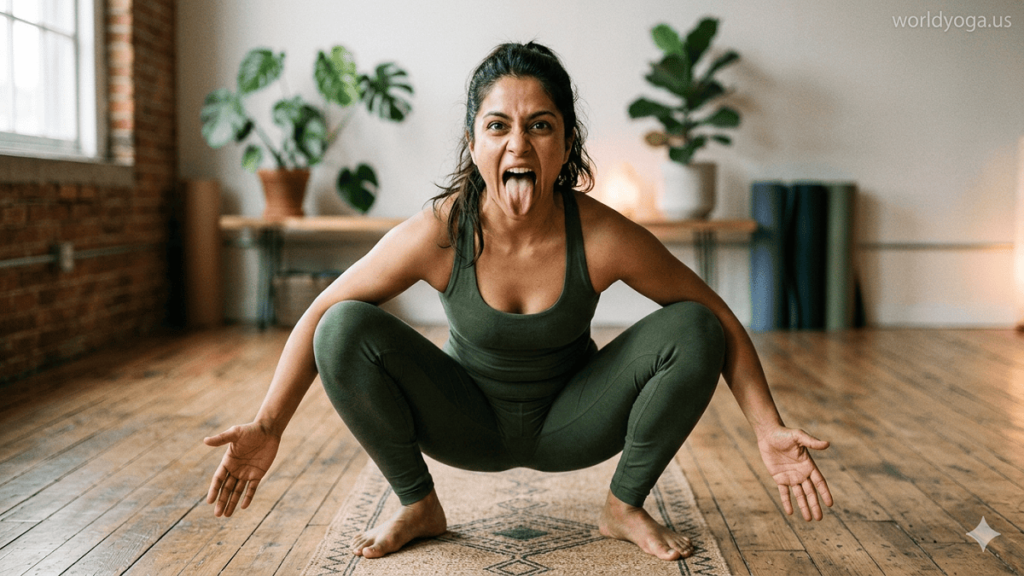
Narasimhasana, often referred to as Lion Pose, is typically performed in a kneeling position. However, when integrated into Malasana, the practitioner remains in the squat while adding the expressive elements of the lion breath. This includes inhaling deeply through the nose, then exhaling forcefully through the mouth with the tongue extended downward, eyes wide, and fingers splayed. The combination introduces a dynamic release of facial and throat tension while maintaining lower-body engagement.
How to Practice Narasimhasana in Malasana
Begin in a stable squat position (Malasana). Ensure your feet are firmly grounded and your spine is elongated. Bring your palms to your knees or place them on the floor for balance. Once stable, take a deep inhale through the nose. As you exhale, open your mouth wide, stick out your tongue, and contract your throat muscles while producing a controlled “ha” sound. Repeat this breath cycle for 5–8 rounds.
Benefits of the Combined Practice
This integration enhances multiple systems simultaneously. Malasana strengthens the lower body, improves hip mobility, and supports detoxification through compression of abdominal organs. Narasimhasana adds respiratory benefits by engaging the diaphragm, improving oxygen flow, and reducing stress-related tension in the face and jaw.
Together, the practice is especially useful for individuals experiencing stiffness in the hips and emotional tension stored in the jaw or throat region. Yoga International highlights that expressive breathwork techniques like Lion’s Breath can also help release suppressed emotions and improve vocal clarity (https://yogainternational.com/article/view/lions-breath).
Precautions and Variations
Practitioners with knee injuries or limited ankle mobility should use props such as a yoga block or folded blanket under the heels. Those with high blood pressure should perform the breathwork gently without excessive force. Beginners may separate the poses initially before combining them.
#Narasimhasana in Malasana in Chennai
How is Narasimhasana in Malasana performed correctly?
The combined practice of Malasana with Narasimhasana (Lion Pose breath variation) is a coordinated yoga sequence that requires attention to alignment, breath control, and mindful expression. When performed correctly, it enhances lower-body mobility while simultaneously activating the respiratory system and releasing facial and throat tension.
Step 1: Entering Malasana with Proper Alignment
Begin by standing with your feet slightly wider than hip-width apart. Slowly bend your knees and lower your hips toward the ground, transitioning into a deep squat. Ensure that your heels are either grounded or supported with a folded mat if flexibility is limited. Keep your spine elongated rather than rounded, and bring your palms together at your chest in a prayer position. The knees should gently press outward to create space for the torso. This foundational posture improves hip opening, ankle mobility, and lower back stability. Guidance on proper alignment for Malasana is widely documented by Yoga Journal, which emphasizes grounding through the heels and lengthening the spine for safety (https://www.yogajournal.com/poses/garland-pose/).
Step 2: Establishing Stability and Breath Awareness
Once stable in Malasana, focus on steady breathing through the nose. The breath should be slow and diaphragmatic, allowing the body to relax into the squat. This stage is essential because it prepares the practitioner for the transition into Narasimhasana breathwork. The pelvis should remain neutral, and the core gently engaged to prevent collapsing forward.
Step 3: Performing Narasimhasana Breath
From the stable squat, place your hands on your knees or extend fingers outward for grounding. Inhale deeply through the nose, expanding the chest and abdomen. As you exhale, open your mouth wide, extend your tongue downward toward the chin, and contract the throat muscles. The eyes should widen, and the gaze can be directed upward or forward to intensify the expression. This forceful exhalation resembles a lion’s roar and is designed to release built-up tension in the face, jaw, and chest.
Repeat this breath cycle for 5–8 rounds while maintaining the squat position. According to Yoga International, Lion’s Breath techniques help stimulate the throat chakra and reduce stress-related facial tension (https://yogainternational.com/article/view/lions-breath).
Step 4: Maintaining Balance and Control
The key to correct execution is ensuring that the lower body remains stable in Malasana while the upper body engages in expressive breathwork. The squat should not collapse during exhalation, and knees should remain aligned with the toes. Beginners may practice near a wall for support or place a block under the hips if balance is difficult.
Step 5: Exiting the Pose Safely
To finish, return to a neutral breathing pattern. Slowly bring the tongue back inside the mouth, close the lips, and inhale gently through the nose. Place hands on the floor for support and gradually straighten the legs to return to standing.
Conclusion
Correct performance of Narasimhasana in Malasana requires a balance of grounding and expression. When practiced with awareness, it improves joint flexibility, enhances respiratory function, and promotes emotional release, making it a valuable addition to holistic yoga routines.
#Narasimhasana in Malasana in India
What is the proper alignment in this squat variation?
Proper alignment in the combined practice of Malasana with Narasimhasana (Lion Pose breath variation) is essential for safety, stability, and effectiveness. This hybrid posture blends a deep yogic squat with expressive breathwork, so alignment must support both structural grounding and upper-body release.
Foot and Ankle Alignment
Begin with the feet slightly wider than hip-width apart, toes turned outward at approximately 30–45 degrees. The heels should ideally remain grounded. If the heels lift due to tight calves or ankles, placing a folded blanket or yoga block underneath provides support without compromising alignment. Weight should be evenly distributed across the entire foot—avoid collapsing into the inner arches or rolling onto the outer edges. This stable base ensures proper load distribution through the knees and hips.
Knee Positioning
The knees should track in line with the toes throughout the squat. As you lower into Malasana, gently press the knees outward using the inner arms or elbows. This action creates space in the pelvis and prevents inward collapse, which can strain the knee joints. According to Yoga Journal, maintaining knee-to-toe alignment is a key safety principle in deep squatting postures like Malasana (https://www.yogajournal.com/poses/garland-pose/).
Hip and Pelvic Alignment
The hips should lower toward the ground while remaining balanced and centered. Avoid tilting the pelvis excessively forward or backward. Instead, aim for a neutral pelvic position that allows the spine to lengthen naturally. The tailbone should point slightly downward, encouraging openness in the lower back and hips. This alignment enhances mobility while protecting the lumbar spine.
Spine and Upper Body Alignment
The spine should remain elongated rather than rounded. Imagine lifting the crown of the head upward while the hips sink downward, creating gentle axial extension. The chest stays open, and the shoulders are relaxed away from the ears. Hands may be placed in prayer at the chest or resting on the knees for support. A neutral spine is crucial to maintaining breath efficiency during the Narasimhasana phase.
Head, Neck, and Facial Alignment (Narasimhasana Phase)
During the Lion Pose breath, the head remains stable and aligned with the spine. As you exhale, the mouth opens wide, and the tongue extends downward without straining the neck. The eyes may widen slightly, but the forehead and jaw should not be excessively tensed. The facial expression is active yet controlled, ensuring that the movement comes from the breath rather than force.
Yoga International notes that controlled expression in Lion’s Breath helps release tension in the jaw, throat, and face while maintaining safe cervical alignment (https://yogainternational.com/article/view/lions-breath).
Breath and Core Engagement
Core engagement should be gentle but present. This supports balance in the squat and prevents collapsing forward during exhalation. Breathing remains diaphragmatic, with inhalations expanding the rib cage and exhalations activating the throat and facial release.
Conclusion
Correct alignment in Narasimhasana within Malasana is about integrating stability with expressive release. When the feet are grounded, knees aligned, spine elongated, and breath controlled, the posture becomes both structurally safe and energetically effective, supporting flexibility, stress release, and improved body awareness.
#Narasimhasana in Malasana in Maharashtra
Which muscles are engaged during the pose?
The combined practice of Malasana with Narasimhasana (Lion Pose breath variation) is a full-body engagement technique that activates the lower body for stability while simultaneously stimulating the upper body, respiratory system, and facial musculature for expressive release. This makes it a uniquely integrated yoga posture that blends strength, mobility, and breath control.
Lower Body Muscle Engagement
The foundation of this posture is a deep squat, which heavily recruits the muscles of the lower body. The quadriceps are primary stabilizers as they control knee flexion and support the body in a lowered position. The gluteus maximus and gluteus medius assist in hip stabilization and external rotation of the thighs, preventing the knees from collapsing inward.
The adductor group (inner thigh muscles) is strongly activated as they lengthen under tension while the knees press outward. This creates both strength and flexibility in the hip region. The hamstrings contribute to stabilizing the pelvis, especially when maintaining balance in a deep squat position.
The calves, particularly the gastrocnemius and soleus muscles, are engaged to support ankle stability. Depending on flexibility, they may work eccentrically if the heels remain lifted or isometrically if the heels are grounded. According to Yoga Journal, deep squatting postures like Malasana significantly enhance ankle mobility and strengthen the posterior chain over time (https://www.yogajournal.com/poses/garland-pose/).
Core and Spinal Stabilizers
The core muscles, including the rectus abdominis, transverse abdominis, and obliques, play a stabilizing role in maintaining balance and upright posture. These muscles prevent excessive forward collapse and support controlled breathing during the transition into Narasimhasana.
The erector spinae muscles along the spine are engaged isometrically to maintain spinal elongation. This helps keep the chest open and prevents rounding of the back, especially during deep inhalation and forceful exhalation cycles.
Upper Body and Shoulder Activation
Although the posture is primarily lower-body dominant, the upper body remains actively engaged. The deltoids and trapezius muscles stabilize the shoulders, particularly when the arms are extended or placed on the knees for support. The forearm muscles and intrinsic hand muscles activate when fingers are spread wide for grounding, enhancing proprioception and balance.
Facial, Throat, and Respiratory Muscles (Narasimhasana Component)
The Narasimhasana breath adds a distinct layer of muscular engagement. The diaphragm becomes highly active during deep inhalation and forceful exhalation. Intercostal muscles between the ribs assist in expanding and contracting the rib cage for controlled breath flow.
Facial muscles, including the orbicularis oris, masseter, and temporalis, are engaged during the expressive exhalation phase. The tongue muscles, particularly the genioglossus, activate when extended downward. The throat muscles, including the pharyngeal constrictors, are stimulated during the “lion’s breath,” which helps release tension in the jaw and vocal region.
Yoga International highlights that Lion’s Breath techniques improve respiratory efficiency and help release accumulated facial and throat tension through active muscle engagement (https://yogainternational.com/article/view/lions-breath).
Conclusion
Narasimhasana within Malasana is a multi-layered muscular practice that strengthens the lower body, stabilizes the core, and activates the respiratory and facial systems. This combination creates a balanced integration of strength, flexibility, and expressive release, making it a highly effective posture for both physical conditioning and stress relief.
#Narasimhasana in Malasana in Ahemadabad
What preparatory poses are recommended?
Before practicing the combined posture of Malasana with Narasimhasana (Lion Pose breath variation), it is important to prepare the joints, muscles, and breath system. This ensures safety in the deep squat and improves ease during the expressive breathing phase. Preparatory poses primarily focus on opening the hips, ankles, knees, spine, and jaw while activating foundational stability.
Hip-Opening Preparations
Since Malasana requires deep hip flexion and external rotation, hip-opening poses are essential.
- Bound Angle Pose (Baddha Konasana): This posture gently stretches the inner thighs and groin while improving hip external rotation. Sitting with the soles of the feet together helps prepare the adductors for the squat position.
- Lizard Pose (Utthan Pristhasana): This deeper lunge variation increases flexibility in the hip flexors and groin, making it easier to lower into Malasana without strain.
According to Yoga Journal, consistent hip-opening work significantly improves accessibility in deep squatting postures like Malasana (https://www.yogajournal.com/poses/garland-pose/).
Ankle and Calf Preparation
Tight ankles and calves are a common limitation in deep squats. Preparing these areas improves stability and grounding.
- Downward-Facing Dog (Adho Mukha Svanasana): This pose stretches the calves and Achilles tendons while improving ankle mobility.
- Heel-Elevated Squat Holds: Practicing partial squats with heel support helps gradually condition the ankles for full grounding in Malasana.
Knee Stability and Joint Readiness
To protect the knees during deep flexion, strengthening and mobility work is beneficial.
- Chair Pose (Utkatasana): This strengthens the quadriceps and improves knee stability under load.
- Low Lunges (Anjaneyasana): These help balance strength around the knee joint and prepare for controlled flexion.
Spine and Core Activation
A stable spine is essential for maintaining posture during both Malasana and Narasimhasana breathwork.
- Cat-Cow Pose (Marjaryasana–Bitilasana): This dynamic movement improves spinal flexibility and prepares the breath-spine connection.
- Plank Pose (Phalakasana): Strengthens the core muscles, ensuring better stability in the squat position.
Jaw, Neck, and Breath Preparation (for Narasimhasana)
Since Narasimhasana involves expressive facial release and forceful exhalation, preparing the throat and jaw is important.
- Jaw Relaxation Exercises: Gentle opening and closing of the mouth reduce tension in the masseter muscles.
- Seated Deep Breathing (Dirga Pranayama): Helps activate diaphragmatic breathing, which is essential for controlled Lion’s Breath.
Yoga International highlights that preparatory breathwork enhances the effectiveness and safety of Lion’s Breath by improving diaphragm control and reducing strain in the throat (https://yogainternational.com/article/view/lions-breath).
Conclusion
Effective preparation for Narasimhasana in Malasana involves a balanced sequence of hip openers, ankle mobilizers, knee-strengthening poses, and breath-awareness practices. When these preparatory steps are practiced consistently, the final posture becomes more accessible, stable, and expressive, allowing for deeper physical engagement and safer breath integration.
#Narasimhasana in Malasana in Hyderabad
What are the benefits and precautions of this pose?
The combined practice of Malasana with Narasimhasana (Lion Pose breath variation) offers a blend of deep structural conditioning and expressive breathwork. It is both a grounding posture for the lower body and a release-oriented technique for the face, throat, and respiratory system. However, because it involves a deep squat and forceful exhalation, it must be practiced with awareness.
Benefits of the Pose
1. Improved Hip and Lower Body Mobility
Malasana is one of the most effective yoga postures for opening the hips, groin, and inner thighs. Regular practice improves external hip rotation, ankle flexibility, and knee joint mobility. Over time, it helps reduce stiffness caused by prolonged sitting.
2. Strengthening of Lower Body Muscles
This posture actively engages the quadriceps, glutes, hamstrings, and calves. Holding the squat builds endurance in the legs while improving functional strength required for daily movements such as lifting and bending.
3. Enhanced Digestive Function
The compression of the abdominal region in Malasana gently stimulates digestive organs, which may support improved digestion and elimination. Yoga Journal notes that deep squatting postures can assist in supporting healthy bowel movement patterns due to abdominal engagement (https://www.yogajournal.com/poses/garland-pose/).
4. Stress and Emotional Release
The Narasimhasana (Lion’s Breath) component introduces a powerful emotional release mechanism. Forceful exhalation, tongue extension, and facial activation help reduce tension stored in the jaw, throat, and chest. Yoga International highlights that Lion’s Breath may help release suppressed stress and improve vocal clarity through controlled exhalation (https://yogainternational.com/article/view/lions-breath).
5. Improved Respiratory Function
Deep inhalation followed by active exhalation strengthens the diaphragm and intercostal muscles. This enhances lung capacity and breath control, supporting better respiratory efficiency over time.
6. Increased Mind-Body Awareness
The combination of stability (Malasana) and expression (Narasimhasana) improves proprioception and mindfulness. Practitioners become more aware of how breath influences muscular tension and emotional state.
Precautions and Safety Considerations
1. Knee Sensitivity or Injury
Individuals with knee injuries, arthritis, or instability should avoid deep squatting or use support such as blocks under the hips. The knees should never collapse inward during the pose.
2. Ankle and Hip Limitations
Tight ankles or hips may cause discomfort or loss of balance. Using a folded blanket under the heels can reduce strain and make the posture more accessible.
3. High Blood Pressure or Dizziness
The forceful exhalation in Narasimhasana may temporarily increase pressure in the head and neck. Individuals with hypertension or dizziness should practice gently or avoid strong breath force.
4. Neck or Jaw Strain
Excessive tension in the neck or jaw during Lion’s Breath should be avoided. The movement should originate from the breath, not muscular force.
5. Pregnancy Considerations
Deep squats and forceful exhalations are generally not recommended during later stages of pregnancy unless guided by a qualified instructor.
Conclusion
Narasimhasana in Malasana is a powerful combination that enhances lower-body strength, improves flexibility, supports respiratory health, and promotes emotional release. When practiced with correct alignment and appropriate modifications, it is highly beneficial for both physical conditioning and stress management. However, attention to joint safety, breath control, and individual limitations is essential to ensure a safe and effective practice.
#Narasimhasana in Malasana in Delhi
Case Study of Narasimhasana in Malasana
This case study explores the application of combining Malasana with Narasimhasana (Lion Pose breath variation) in a structured yoga therapy-style setting. The objective was to evaluate improvements in lower-body mobility, respiratory control, and stress-related tension over a 6-week period.
Background
A 34-year-old office professional with a predominantly sedentary lifestyle reported chronic hip stiffness, reduced ankle mobility, and frequent jaw tension linked to work-related stress. The participant also experienced shallow breathing patterns, especially during periods of mental fatigue.
The intervention focused on integrating Malasana with Narasimhasana breathwork to address both musculoskeletal and psychosomatic restrictions. Malasana was selected for its deep squatting mechanics, while Narasimhasana was included to encourage expressive exhalation and release of facial and throat tension.
Yoga Journal highlights Malasana as an effective posture for improving hip flexibility and lower-body engagement, especially in individuals with prolonged sitting habits (https://www.yogajournal.com/poses/garland-pose/).
Intervention Protocol
The practice was conducted 5 days per week over 6 weeks, with each session lasting approximately 15–20 minutes. The structure included:
- Warm-up phase: Gentle hip circles, ankle mobilization, and Cat-Cow movements to prepare the spine and joints.
- Malasana hold: Deep squat held for 45–60 seconds with controlled diaphragmatic breathing.
- Narasimhasana breath cycles: 6–8 rounds of Lion’s Breath performed within the squat, emphasizing full inhalation through the nose and forceful exhalation with tongue extension and widened eyes.
- Recovery phase: Supine rest in Shavasana for integration of effects.
Yoga International notes that Lion’s Breath techniques support stress reduction and release of facial and throat tension through active exhalation patterns (https://yogainternational.com/article/view/lions-breath).
Observations and Outcomes
After 6 weeks, the participant reported measurable improvements in several areas:
- Hip mobility: Increased ease in deep squatting with reduced stiffness in the groin and inner thighs.
- Ankle flexibility: Improved ability to maintain heel contact with the ground during Malasana.
- Breath control: Noticeable shift from shallow chest breathing to deeper diaphragmatic breathing patterns.
- Stress reduction: Decreased jaw clenching and reduced facial tension during work hours.
- Emotional release: The expressive nature of Narasimhasana was described as helpful in relieving mental fatigue and irritability.
Physically, the participant was able to hold Malasana for longer durations without discomfort, indicating improved muscular endurance in the lower body.
Discussion
The combination of a grounding posture (Malasana) with expressive breathwork (Narasimhasana) created a dual-action effect: structural strengthening and neuro-muscular relaxation. The squat component improved joint mobility and lower-body stability, while the Lion’s Breath component activated the diaphragm and released stored tension in the upper body.
This integrated approach demonstrates how combining static postures with dynamic breath techniques can enhance both physical and emotional well-being.
Conclusion
This case study suggests that practicing Narasimhasana within Malasana can be an effective multi-dimensional yoga intervention for improving mobility, breath awareness, and stress regulation. When practiced consistently and with proper alignment, it offers a balanced approach to both physical conditioning and emotional release, making it suitable for individuals with sedentary lifestyles and stress-related muscular tension.
#Narasimhasana in Malasana in Kolkata
White Paper of Narasimhasana in Malasana
1. Executive Summary
The combined practice of Malasana with Narasimhasana (Lion Pose breath variation) represents an integrated yogic intervention that merges deep lower-limb flexion with expressive respiratory activation. This white paper evaluates its biomechanical demands, physiological effects, and potential therapeutic applications in mobility enhancement, stress modulation, and breath regulation.
2. Introduction
Malasana is a foundational deep squatting posture widely used in traditional yoga systems for hip opening, ankle mobility, and pelvic floor engagement. When paired with Narasimhasana, which emphasizes forceful exhalation, tongue extension, and facial muscle activation, the practice becomes a multimodal intervention targeting musculoskeletal, respiratory, and neuro-emotional systems.
Yoga Journal identifies Malasana as a posture that supports hip flexibility and lower-body strength while encouraging spinal elongation and functional joint mobility (https://www.yogajournal.com/poses/garland-pose/).
3. Biomechanical Analysis
3.1 Lower-Body Kinetics
Malasana places the body in extreme hip flexion with external rotation. Key muscle groups engaged include:
- Quadriceps (isometric stabilization in knee flexion)
- Gluteus maximus and medius (hip stabilization and external rotation control)
- Adductor group (eccentric lengthening under load)
- Calves and Achilles tendon complex (ankle dorsiflexion demand)
This closed-chain squat pattern increases compressive loading on the ankle, knee, and hip joints while improving joint congruency over time.
3.2 Spinal and Core Stabilization
The erector spinae maintain axial extension, while the transverse abdominis stabilizes intra-abdominal pressure. This creates a controlled anti-flexion environment essential for safe deep squatting.
4. Respiratory and Neurophysiological Mechanisms
Narasimhasana introduces controlled hyperactivation of the expiratory phase:
- Diaphragmatic engagement during deep inhalation
- Forced exhalation through mouth with glottal activation
- Tongue protrusion activating genioglossus muscle group
- Facial muscle contraction (orbicularis oris, masseter modulation)
This pattern stimulates vagal response modulation and enhances respiratory muscle efficiency. Yoga International reports that Lion’s Breath techniques may assist in stress regulation and emotional release through controlled autonomic activation (https://yogainternational.com/article/view/lions-breath).
5. Therapeutic Applications
5.1 Musculoskeletal Therapy
- Improved hip external rotation range
- Increased ankle dorsiflexion mobility
- Reduction in lower back stiffness through pelvic decompression
5.2 Respiratory Therapy
- Enhanced diaphragmatic control
- Improved expiratory strength
- Better breath awareness in stress conditions
5.3 Psycho-Emotional Regulation
- Reduction in jaw and facial tension
- Stress discharge via expressive exhalation
- Improved mind-body feedback integration
6. Clinical Considerations and Contraindications
While beneficial, the combined posture requires careful application:
- Knee instability or osteoarthritis may limit deep squat capacity
- Hypertension cases should avoid forceful exhalation patterns
- Cervical strain risk exists if neck alignment collapses during breathwork
- Pregnancy requires modified squatting and avoidance of strong breath retention or force
Support tools such as blocks, heel lifts, or wall assistance may be required for accessibility.
7. Implementation Framework
A structured protocol is recommended:
- Frequency: 3–5 sessions per week
- Duration: 10–20 minutes per session
- Progression: static Malasana → supported Malasana → integrated Narasimhasana cycles
- Monitoring: breath comfort, joint tolerance, and neuromuscular fatigue
8. Conclusion
The integration of Narasimhasana within Malasana presents a biomechanically rich and therapeutically versatile yoga model. It simultaneously addresses lower-body mobility, respiratory efficiency, and emotional tension regulation. When applied with proper alignment and progressive loading principles, it offers significant potential for inclusion in yoga therapy, rehabilitation programs, and stress-management interventions.
#Narasimhasana in Malasana in Banglore
Industry Application of Narasimhasana in Malasana
The integration of Malasana with Narasimhasana (Lion Pose breath variation) has moved beyond traditional yoga practice and is increasingly being explored across multiple industries, including wellness, rehabilitation, corporate health, sports conditioning, and mental health support systems. Its unique combination of deep squat biomechanics and expressive breathwork makes it a versatile tool for both preventive and therapeutic applications.
1. Wellness and Fitness Industry
In modern fitness studios and yoga wellness centers, Malasana-based sequences are used to improve hip mobility, lower-body strength, and functional movement patterns. When combined with Narasimhasana breathwork, the practice adds a neuro-respiratory dimension that enhances stress release and body awareness.
Many yoga instructors incorporate this variation in mobility classes to:
- Improve squat depth and joint flexibility
- Enhance diaphragmatic breathing capacity
- Support stress relief through expressive exhalation techniques
Yoga Journal highlights Malasana as a foundational posture for improving functional hip mobility, making it highly relevant in fitness programming (https://www.yogajournal.com/poses/garland-pose/).
2. Physiotherapy and Rehabilitation
In physiotherapy settings, Malasana-based squats are used as a progressive mobility tool for patients recovering from lower-limb stiffness or sedentary-related dysfunctions. The addition of Narasimhasana breathwork introduces controlled respiratory activation, which can assist in neuromuscular re-education.
Applications include:
- Hip and ankle mobility restoration programs
- Postural correction and lower-back decompression routines
- Breathing retraining for shallow breath patterns
Clinicians often adapt the pose using props such as blocks or wall support to ensure safe joint loading.
3. Corporate Wellness Programs
With increasing awareness of workplace stress and musculoskeletal strain, corporate wellness initiatives have begun integrating short movement-breath sequences inspired by Malasana and Narasimhasana.
Benefits in workplace environments include:
- Reduction in jaw and neck tension from prolonged screen use
- Improved oxygen intake through guided breath cycles
- Short stress-reset interventions during breaks
Yoga International notes that Lion’s Breath techniques help release accumulated tension in the jaw and face, making them particularly effective for stress-heavy work environments (https://yogainternational.com/article/view/lions-breath).
4. Sports and Athletic Training
Athletes and functional movement trainers use deep squat variations like Malasana to improve lower-body explosiveness, hip stability, and joint resilience. When combined with Narasimhasana breathing, it also supports:
- Pre-performance breathing activation
- Mental focus through controlled exhalation
- Release of upper-body tension before competition
This integration is especially relevant in sports requiring strong hip mechanics, such as martial arts, wrestling, and sprinting.
5. Mental Health and Breathwork Practices
In mental health and stress management contexts, the expressive component of Narasimhasana is valuable for emotional release techniques. The combination with Malasana creates a grounding posture that supports psychological stability while enabling controlled emotional expression.
Applications include:
- Anxiety reduction through breath regulation
- Somatic therapy support for tension release
- Mindfulness-based stress reduction (MBSR) adaptations
Conclusion
The combined practice of Narasimhasana in Malasana is increasingly recognized as a multi-industry wellness tool. Its ability to integrate biomechanical training with respiratory and emotional regulation makes it valuable across fitness, healthcare, corporate wellness, sports performance, and mental health domains. As modern wellness continues to emphasize holistic approaches, this hybrid posture is likely to see expanded structured adoption in both preventive and therapeutic frameworks.
#Narasimhasana in Malasana in Mumbai
Ask FAQs
What is Narasimhasana in Malasana?
Narasimhasana in Malasana is a combined yoga practice that integrates Malasana with Narasimhasana (Lion Pose breath). It involves holding a deep squat while performing expressive breathing techniques, including forceful exhalation with the tongue extended and facial activation. The practice blends lower-body strengthening with respiratory and emotional release work.
Who can practice this pose safely?
Generally, individuals with basic mobility in the hips, knees, and ankles can practice this variation. It is commonly used in yoga fitness and mobility training. However, people with knee injuries, severe ankle stiffness, or uncontrolled hypertension should modify the posture or avoid forceful breathing techniques. Beginners are advised to start with supported squats before adding Narasimhasana breathwork.
What are the main benefits of this combined practice?
The pose offers multiple benefits:
Improved hip and ankle flexibility
Strengthening of lower-body muscles
Enhanced diaphragmatic breathing capacity
Release of jaw, throat, and facial tension
Stress reduction through expressive exhalation
Yoga Journal notes that Malasana supports hip mobility and functional joint health, making it effective for sedentary individuals (https://www.yogajournal.com/poses/garland-pose/).
Can this pose help with stress and anxiety?
Yes. The Narasimhasana (Lion’s Breath) component is particularly effective for stress release. It encourages forceful exhalation, which helps reduce tension in the chest, jaw, and face. Yoga International explains that Lion’s Breath can support emotional release and improve breath awareness by activating controlled exhalation patterns (https://yogainternational.com/article/view/lions-breath)
How long should I hold or practice this pose?
A typical session involves holding Malasana for 30–60 seconds while performing 5–8 rounds of Narasimhasana breath cycles. Beginners may start with shorter durations and gradually increase as flexibility and breath control improve. The focus should be on comfort, stability, and controlled breathing rather than duration or intensity.
Table of Contents
Disclaimer: The information provided is for educational and informational purposes only and is not a substitute for professional medical advice, diagnosis, or treatment. Yoga practices, including Malasana and Narasimhasana, should be performed within personal limits and preferably under the guidance of a qualified instructor. Individuals with medical conditions, injuries, or concerns should consult a healthcare professional before attempting these practices.