Malasana
Malasana, commonly known as the Garland Pose or Yogic Squat, is one of the most effective foundational yoga postures for improving lower body flexibility, hip mobility, and overall body balance. Rooted in traditional yoga practices, this deep squat posture is widely recognized for its ability to strengthen the body while promoting relaxation and mindfulness. As modern lifestyles increasingly involve prolonged sitting, Malasana has become an essential pose for restoring natural movement and improving posture.
The word “Malasana” comes from the Sanskrit words mala, meaning garland, and asana, meaning posture. In this pose, the body resembles a garland hanging gracefully, symbolizing grounding and stability. The posture primarily targets the hips, thighs, ankles, knees, and lower back, making it an excellent stretch for people who experience stiffness due to sedentary routines.
To perform Malasana correctly, begin by standing with your feet slightly wider than hip-width apart. Slowly lower your hips into a deep squat while keeping your heels grounded on the floor. Bring your palms together in a prayer position at the center of your chest and gently press your elbows against the inner knees. Lengthen the spine and maintain steady breathing throughout the pose. Holding the posture for 30 seconds to one minute can significantly improve flexibility and circulation.
One of the major benefits of Malasana is improved hip mobility. Tight hips are a common issue caused by long hours of desk work and reduced physical activity. Practicing this posture regularly helps open the hips and stretch the groin muscles, reducing stiffness and discomfort. Additionally, Malasana strengthens the lower body muscles, including the quadriceps, hamstrings, calves, and core muscles.
Another important advantage of this yoga pose is its positive effect on digestion. The deep squat position gently compresses the abdominal area, stimulating digestive organs and promoting better bowel movement. Many yoga practitioners also use Malasana to support pelvic floor health and improve body alignment.
Malasana is also beneficial for mental well-being. Like many grounding yoga poses, it encourages deep breathing and mindfulness, helping reduce stress and anxiety. The pose creates a sense of stability and connection with the body, which is especially valuable in fast-paced lifestyles.
Beginners may initially struggle to keep their heels flat on the floor. Using a folded blanket or yoga block under the heels can provide support while gradually improving flexibility. Individuals with knee injuries or severe ankle issues should practice the pose under professional guidance.
For detailed guidance on yoga alignment and pose techniques, readers can explore resources such as Yoga Journal and Healthline Yoga Resources.
Incorporating Malasana into a daily fitness or yoga routine can improve flexibility, posture, digestion, and mental focus. With consistent practice, this simple yet powerful pose can contribute significantly to overall physical and emotional wellness.
#Malasana in India
How is Malasana performed correctly?
Malasana, also known as Garland Pose or Yogic Squat, is a foundational yoga posture that improves hip flexibility, strengthens the lower body, and supports better posture and digestion. Although the pose may appear simple, performing it correctly is essential to gain maximum benefits while avoiding strain on the knees, ankles, or lower back. Proper alignment, breathing, and body awareness are key components of mastering Malasana safely and effectively.
To begin the pose, stand upright with your feet slightly wider than hip-width apart. Turn your toes outward at a comfortable angle, usually around 30 to 45 degrees. This outward positioning helps the hips open naturally and allows the knees to track properly over the feet. Before lowering into the squat, engage your core muscles and lengthen your spine to maintain balance and stability.
Slowly bend your knees and lower your hips toward the floor into a deep squat position. Keep your chest lifted rather than rounding the back forward. Ideally, your heels should remain flat on the ground throughout the posture. If your heels lift due to tight ankles or calves, place a folded blanket or yoga mat underneath them for support. Maintaining grounded heels improves stability and prevents unnecessary pressure on the knees.
Once in the squat position, bring your palms together in a prayer position at the center of your chest, also known as Anjali Mudra. Gently press your elbows against the inside of your knees while simultaneously pressing the knees outward. This action deepens the hip stretch and encourages proper spinal alignment. Keep your shoulders relaxed and your neck neutral while gazing softly forward.
Breathing plays a crucial role in Malasana. Take slow, deep breaths through the nose while holding the pose. Inhale to lengthen the spine and exhale to relax the hips deeper into the stretch. Controlled breathing enhances relaxation, improves balance, and increases body awareness during the posture.
For beginners, holding the pose for 20 to 30 seconds is sufficient. With regular practice, the duration can gradually increase to one minute or longer. The key is to avoid forcing the body into discomfort. The posture should feel stable and stretching, not painful.
Correct alignment is important to prevent common mistakes. Avoid collapsing the chest forward, lifting the heels excessively, or allowing the knees to cave inward. These errors can reduce the effectiveness of the pose and create unnecessary joint strain. Individuals with knee injuries, severe lower back pain, or ankle limitations should practice under the supervision of a qualified yoga instructor.
Malasana is widely appreciated for its physical and mental benefits. Regular practice can improve hip mobility, strengthen leg muscles, stimulate digestion, and reduce tension caused by prolonged sitting. The grounding nature of the pose also supports mindfulness and relaxation.
For more detailed yoga alignment tips and beginner guidance, readers can visit Yoga International and Yoga Journal.
#Malasana in Maharashtra
What is the proper alignment in Garland Pose?
Garland Pose, traditionally known as Malasana, is a deep yogic squat that focuses on flexibility, balance, and grounding. Proper alignment in this posture is essential to ensure safety, improve stability, and maximize the physical and mental benefits of the pose. When practiced with correct technique, Garland Pose can strengthen the lower body, improve hip mobility, and support healthy posture. However, poor alignment may place unnecessary stress on the knees, ankles, or lower back.
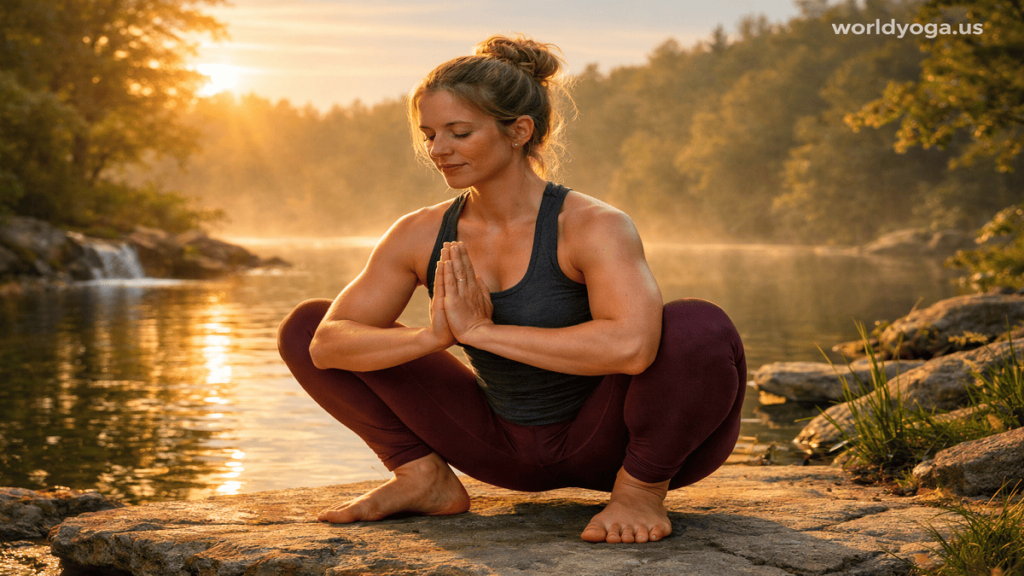
The alignment process begins with the feet. Stand with your feet slightly wider than hip-width apart, allowing enough space for the torso to fit comfortably between the thighs. The toes should point slightly outward at an angle of about 30 to 45 degrees. This positioning helps the hips open naturally and allows the knees to track correctly over the toes during the squat.
As you lower into the squat, distribute your body weight evenly across both feet. Ideally, the heels should stay firmly grounded on the floor. Keeping the heels down improves balance and activates the muscles in the legs and core more effectively. If tight ankles or calf muscles prevent the heels from touching the floor, placing a folded blanket or yoga wedge beneath the heels can provide support while maintaining proper alignment.
The knees should move outward in the same direction as the toes. Avoid allowing the knees to collapse inward, as this can strain the joints and reduce hip engagement. The thighs should gently open away from the torso, creating space in the hips and pelvis.
Spinal alignment is one of the most important aspects of Garland Pose. The spine should remain long and upright rather than rounded forward. Lift the chest slightly while relaxing the shoulders away from the ears. This upright posture supports healthy breathing and reduces tension in the lower back. Engaging the core muscles also helps stabilize the torso and maintain balance throughout the pose.
The hands are typically brought together in a prayer position at the center of the chest. Pressing the elbows gently against the inner knees encourages the hips to open further while supporting an elongated spine. However, the pressure should remain gentle and controlled rather than forceful.
Head and neck alignment should remain neutral. The gaze can rest softly forward or slightly downward without straining the neck. Deep, steady breathing is equally important, as it helps the body relax into the posture and enhances mindfulness.
For beginners, flexibility limitations in the hips, ankles, or lower back are common. Modifications such as sitting on a yoga block or supporting the heels can make the pose more accessible while preserving proper alignment. Practicing consistently improves mobility and comfort over time.
Garland Pose offers numerous benefits when aligned correctly, including improved digestion, increased hip flexibility, stronger leg muscles, and better posture. It also promotes grounding and relaxation, making it valuable for both physical fitness and mental well-being.
For expert guidance on yoga posture and alignment, readers can explore Yoga Journal and DoYogaWithMe.
#Malasana in Ahemadabd
Which muscles are engaged during Malasana?
Malasana, commonly known as Garland Pose or Yogic Squat, is a powerful yoga posture that activates and stretches multiple muscle groups throughout the body. Although it may appear to be a simple deep squat, the pose requires coordinated muscle engagement to maintain balance, stability, and proper alignment. Practicing Malasana regularly can strengthen the lower body, improve flexibility, and enhance overall mobility, making it one of the most beneficial foundational yoga poses.
One of the primary muscle groups engaged during Malasana is the lower body muscles. The quadriceps, located at the front of the thighs, work actively to control the squat position and support body weight. These muscles help stabilize the knees and assist in maintaining balance while lowering and holding the body close to the ground.
The gluteal muscles, particularly the gluteus maximus and gluteus medius, are also strongly activated in Malasana. These muscles support hip stability and help control the deep squat position. Since Malasana involves significant hip opening, the glutes work continuously to maintain proper alignment and prevent the body from collapsing inward.
The hamstrings, positioned at the back of the thighs, play an important supporting role by stabilizing the legs and assisting in hip mobility. At the same time, the inner thigh muscles, known as the adductors, are stretched and activated as the knees move outward. This engagement improves flexibility in the groin and pelvic region.
The calf muscles and ankle stabilizers are heavily involved as well. Keeping the heels grounded requires activation of the calves, Achilles tendon area, and small stabilizing muscles around the ankles. These muscles contribute to balance and help improve ankle mobility over time.
Malasana also engages the core muscles. The abdominal muscles, including the transverse abdominis and obliques, work to stabilize the spine and maintain an upright posture. A strong core prevents rounding of the lower back and helps distribute body weight evenly throughout the pose.
The lower back muscles, particularly the erector spinae, are engaged to support spinal extension and posture. Maintaining a long spine during Malasana requires constant activation of these muscles, which contributes to improved posture and reduced lower back tension.
Additionally, the pelvic floor muscles are gently activated during the posture. This engagement supports pelvic stability and may contribute to better core control and body awareness. Because of this, Malasana is often included in yoga practices that focus on pelvic health and functional movement.
Beyond muscular engagement, Malasana also provides deep stretching benefits. The hips, groin, ankles, and lower back gradually become more flexible with consistent practice. This makes the pose especially valuable for individuals who spend long hours sitting or have limited lower-body mobility.
Proper breathing enhances muscle engagement in Malasana. Slow, controlled breathing allows the muscles to relax while maintaining strength and stability throughout the pose. Beginners may use yoga blocks or heel support to improve comfort and alignment while developing flexibility.
For additional information on yoga anatomy and muscle activation, readers can explore Yoga International and Yoga Anatomy Resources.
#Malasana in Hyderabad
What preparatory poses are recommended before practicing it?
Malasana, or Garland Pose, is a deep yogic squat that requires flexibility, balance, and mobility in the hips, ankles, knees, and lower back. While the pose offers numerous physical and mental benefits, many beginners find it challenging due to tight muscles or limited joint mobility. Practicing preparatory poses before entering Malasana helps warm up the body, improve alignment, and reduce the risk of discomfort or strain. These poses gradually open the hips, stretch the lower body, and activate the muscles needed to perform Malasana safely and effectively.
One of the most effective preparatory poses is Child’s Pose, also known as Balasana. This gentle resting posture helps release tension in the lower back, hips, and thighs while encouraging deep breathing and relaxation. It prepares the spine and pelvis for the deeper movements involved in Malasana.
Another important warm-up posture is Cat-Cow Stretch. This flowing spinal movement increases mobility in the back and pelvis while improving body awareness. Practicing Cat-Cow before Malasana helps create flexibility in the lower spine and encourages proper posture during the squat position.
Downward-Facing Dog is also highly beneficial as a preparation pose. This classic yoga posture stretches the calves, hamstrings, ankles, and spine, all of which are essential for maintaining proper alignment in Malasana. Tight calves and ankles are common reasons why people struggle to keep their heels grounded in Garland Pose, making this stretch particularly valuable.
Low Lunge is another recommended preparatory posture because it deeply stretches the hip flexors and groin muscles. Since Malasana requires open hips and flexible inner thighs, practicing lunges can significantly improve comfort and mobility in the squat position. Twisting variations of the lunge can further enhance spinal flexibility and pelvic stability.
Bound Angle Pose, or Baddha Konasana, is especially effective for opening the hips and stretching the inner thighs. Sitting upright with the soles of the feet together helps loosen the groin area and improve external hip rotation, which is necessary for proper knee and thigh alignment in Malasana.
Garland Pose preparation can also include Happy Baby Pose. This posture gently opens the hips, stretches the inner thighs, and improves mobility in the pelvis while keeping the spine supported on the floor. It is particularly useful for beginners who need a gentler approach to hip opening exercises.
Standing Forward Fold helps release tension in the hamstrings and lower back while improving circulation throughout the body. Flexible hamstrings support better pelvic positioning and spinal alignment during deep squatting postures like Malasana.
In addition to yoga poses, ankle mobility exercises and gentle bodyweight squats can help prepare the joints and muscles for deeper movement. Practicing controlled squats improves balance and strengthens the legs, making it easier to maintain stability in Garland Pose.
Proper breathing during preparatory poses is equally important. Deep, steady breaths relax the muscles, increase circulation, and help the body transition smoothly into deeper stretches and movements.
For additional yoga preparation techniques and alignment guidance, readers can explore Yoga Journal and Yoga International.
#Malasana in Banglore
What are the benefits and precautions of Malasana?
Malasana, commonly known as Garland Pose or Yogic Squat, is a traditional yoga posture widely practiced for its ability to improve flexibility, mobility, and overall physical well-being. This deep squat position engages multiple muscle groups while promoting balance, stability, and relaxation. As modern lifestyles often involve prolonged sitting and reduced movement, Malasana has become increasingly valuable for restoring natural body mechanics and improving posture. However, like any yoga posture, it is important to understand both its benefits and necessary precautions to practice it safely and effectively.
One of the primary benefits of Malasana is improved hip flexibility. The pose deeply stretches the hips, groin, and inner thighs, helping release tightness caused by inactivity or prolonged sitting. Increased hip mobility can improve posture, reduce stiffness, and support better overall movement patterns in daily life.
Malasana also strengthens the lower body muscles, including the quadriceps, hamstrings, calves, glutes, and core muscles. Holding the squat position requires muscular engagement and balance, which gradually builds strength and endurance in the legs and pelvic region. The pose also activates the ankles and feet, improving stability and coordination.
Another major advantage of Malasana is its positive impact on digestion. The deep squat gently compresses the abdominal area, stimulating digestive organs and promoting healthy bowel function. In many traditional yoga practices, Malasana is considered beneficial for supporting natural detoxification and digestive efficiency.
The posture is also known to support pelvic floor health and spinal alignment. By encouraging an upright spine and open hips, Malasana can help relieve tension in the lower back and improve body posture. For individuals who spend long hours sitting at desks, the pose may help counteract muscular imbalances and lower back discomfort.
In addition to physical benefits, Malasana offers mental and emotional advantages. The grounding nature of the pose encourages mindfulness, deep breathing, and relaxation. Practicing slow, controlled breathing while holding the posture can reduce stress levels and improve focus and mental clarity.
Despite its many benefits, certain precautions should be considered before practicing Malasana. Individuals with knee injuries, ankle problems, or severe hip discomfort should approach the pose carefully or seek guidance from a qualified yoga instructor. Deep squatting can place pressure on sensitive joints if proper alignment is not maintained.
People with lower back pain should avoid rounding the spine during the posture, as improper alignment may increase strain on the lumbar region. Keeping the chest lifted and engaging the core muscles helps protect the back and maintain stability.
Beginners often struggle to keep their heels grounded due to limited ankle flexibility. In such cases, placing a folded blanket or yoga block beneath the heels can provide support while gradually improving mobility. It is important not to force the body into the pose, especially if pain or discomfort occurs.
Pregnant individuals or people recovering from surgery should consult a healthcare professional or certified yoga instructor before practicing deep squat postures. Practicing with awareness and proper technique is essential for avoiding unnecessary strain or injury.
For additional guidance on yoga safety and alignment, readers can visit Yoga Journal and Yoga International.
#Malasana in Pune
Case Study of Malasana
Malasana, also known as Garland Pose or Yogic Squat, is a traditional yoga posture widely recognized for improving flexibility, hip mobility, posture, and digestion. Over recent years, yoga practitioners, physiotherapists, and wellness experts have increasingly recommended Malasana as an effective posture for counteracting the effects of sedentary lifestyles. This case study highlights how consistent practice of Malasana contributed to improved physical mobility, posture correction, and stress reduction in an individual experiencing lower body stiffness and postural discomfort.
Background
A 34-year-old office professional with a sedentary work routine reported experiencing tight hips, lower back discomfort, reduced ankle flexibility, and poor posture due to prolonged sitting for more than eight hours daily. The individual had limited experience with yoga and found deep squat positions uncomfortable. Physical activity levels were low, and mobility restrictions were beginning to affect daily movement and exercise performance.
After consulting a certified yoga instructor, the individual began a structured yoga routine that included Malasana as a core posture. The goal was to improve flexibility, strengthen the lower body, and reduce muscular stiffness without engaging in high-impact exercise.
Practice Routine
The participant practiced Malasana five days per week for eight weeks. Each session included warm-up poses such as Child’s Pose, Cat-Cow Stretch, and Low Lunge to prepare the hips, ankles, and lower back. Initially, the participant held Malasana for 20 seconds using a folded blanket under the heels for support. Over time, the duration increased to one minute with improved stability and alignment.
The practice focused on proper posture, controlled breathing, and gradual progression rather than forcing flexibility. Deep breathing techniques were incorporated to encourage relaxation and body awareness during the pose.
Observed Results
After eight weeks of regular practice, significant improvements were observed in flexibility and mobility. Hip stiffness reduced noticeably, allowing the participant to squat more comfortably and move with greater ease during daily activities. Ankle flexibility improved, enabling the heels to remain grounded without support.
The participant also reported reduced lower back tension and improved sitting posture at work. Strength gains were observed in the legs, glutes, and core muscles, contributing to better balance and stability. Additionally, digestive comfort improved, which the participant associated with the abdominal compression and relaxation benefits of the pose.
Mental wellness benefits were also reported. The grounding nature of Malasana, combined with mindful breathing, helped reduce stress levels and improve concentration. The participant described feeling more physically connected and relaxed after each session.
Key Findings
This case study demonstrates that consistent practice of Malasana can support flexibility, lower body strength, posture correction, and stress management. The posture proved particularly effective for addressing movement limitations associated with prolonged sitting and inactive lifestyles.
However, the study also highlighted the importance of proper alignment and gradual progression. Attempting deep squats without preparation or flexibility support may increase discomfort or strain on the knees and lower back. Professional guidance and modifications were essential during the early stages of practice.
For further information on yoga posture benefits and alignment techniques, readers can explore Yoga Journal and Yoga International.
Overall, this case study illustrates how Malasana can become an effective and accessible yoga posture for improving mobility, posture, physical strength, and overall wellness when practiced consistently and mindfully.
#Malasana in Kolkata
White Paper of Malasana
Introduction
Malasana, commonly referred to as Garland Pose or Yogic Squat, is a foundational yoga posture rooted in traditional yoga practices. This deep squat position is recognized for its ability to improve lower body flexibility, hip mobility, posture, and overall physical well-being. As sedentary lifestyles become increasingly common in modern society, movement-based practices such as Malasana are gaining attention among yoga professionals, physiotherapists, and wellness experts for their role in restoring natural body mechanics and supporting holistic health.
This white paper examines the physical, functional, and therapeutic significance of Malasana, along with its applications in yoga practice, mobility training, and preventive wellness programs.
Overview of Malasana
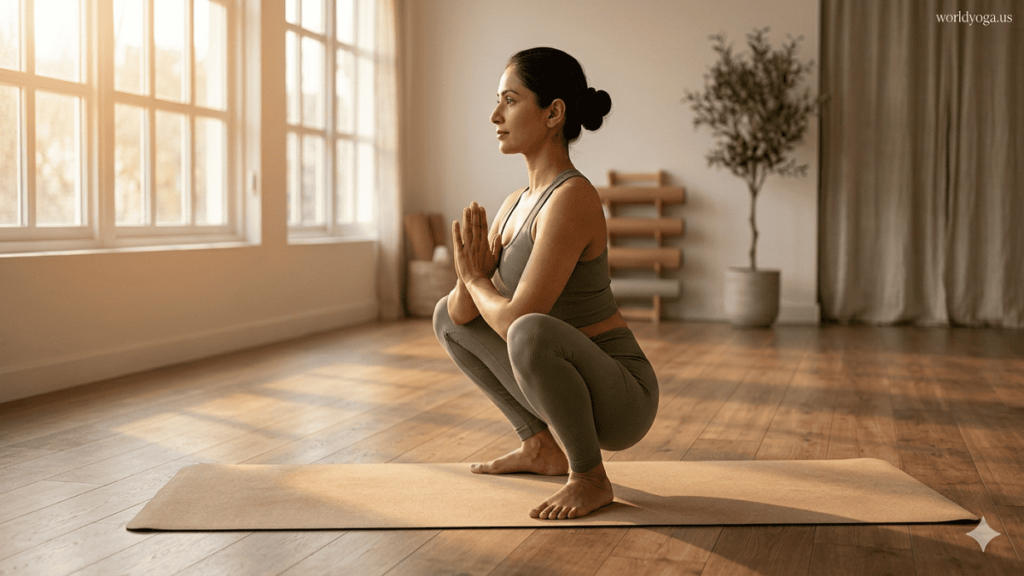
Malasana is performed by lowering the body into a deep squat with the feet slightly wider than hip-width apart and the palms joined together in front of the chest. The posture requires flexibility in the hips, ankles, knees, and lower back while simultaneously engaging the core and lower body muscles.
Traditionally, deep squatting has been a natural resting position in many cultures. However, modern lifestyles involving prolonged sitting and reduced physical activity have contributed to limited mobility and muscular imbalances. Malasana addresses these issues by encouraging functional movement and restoring mobility in key joints and muscle groups.
Physical and Functional Benefits
1. Improved Hip and Ankle Mobility
One of the primary benefits of Malasana is enhanced mobility in the hips and ankles. The posture stretches the groin, inner thighs, calves, and Achilles tendons while improving joint flexibility. Increased mobility supports better posture, athletic performance, and injury prevention.
2. Strength Development
Malasana actively engages the quadriceps, glutes, hamstrings, calves, core muscles, and pelvic floor. Maintaining the squat position develops lower body strength, balance, and muscular endurance.
3. Postural Correction
Poor posture caused by prolonged sitting is a widespread issue in workplace environments. Malasana encourages spinal elongation, pelvic alignment, and core activation, helping reduce lower back tension and improve postural awareness.
4. Digestive and Pelvic Health Support
The deep squat posture gently compresses the abdominal region, stimulating digestive organs and supporting bowel movement. The pose also activates pelvic floor muscles, which may contribute to pelvic stability and functional movement patterns.
5. Mental and Emotional Wellness
Like many grounding yoga postures, Malasana promotes mindfulness and controlled breathing. Slow breathing during the pose can reduce stress, improve focus, and encourage relaxation.
Applications in Wellness and Rehabilitation
Malasana is increasingly integrated into yoga therapy, mobility training, and rehabilitation programs. Fitness professionals use the posture to improve squat mechanics, lower body mobility, and functional movement. Physiotherapists may recommend modified versions of the pose for improving hip and ankle flexibility under professional supervision.
In workplace wellness initiatives, Malasana can help counteract the physical effects of prolonged sitting by promoting circulation, joint mobility, and muscular activation.
Precautions and Limitations
Despite its benefits, Malasana should be practiced with proper alignment and awareness. Individuals with knee injuries, severe ankle restrictions, lower back pain, or recent surgeries should consult qualified healthcare or yoga professionals before practicing the posture.
Common modifications include using yoga blocks, folded blankets, or heel support to reduce strain and improve accessibility for beginners. Gradual progression is essential to prevent excessive pressure on joints and connective tissues.
Conclusion
Malasana represents a valuable intersection of traditional yoga practice and modern functional movement training. Its ability to improve flexibility, strength, posture, digestion, and mental focus makes it a highly effective posture for overall wellness.
#Malasana in Delhi
Industry Application of Malasana
Introduction
Malasana, also known as Garland Pose or Yogic Squat, is a traditional yoga posture increasingly being integrated into modern health, wellness, fitness, and rehabilitation industries. Known for its ability to improve mobility, flexibility, posture, and muscular strength, Malasana has evolved beyond a yoga studio practice into a valuable movement tool used across multiple professional sectors. As organizations and healthcare systems place greater emphasis on preventive wellness, ergonomics, and physical rehabilitation, Malasana has gained recognition for its practical applications in improving functional movement and overall well-being.
This article explores how Malasana is applied across different industries, including fitness, healthcare, corporate wellness, sports performance, physiotherapy, and occupational health.
Application in the Fitness Industry
The fitness industry widely incorporates Malasana into mobility training, warm-up routines, and functional fitness programs. Fitness trainers use the pose to improve hip flexibility, ankle mobility, and squat mechanics, all of which are essential for strength training exercises such as deadlifts, lunges, and barbell squats.
Functional fitness programs often include Malasana to enhance lower body stability and movement efficiency. Since many individuals struggle with limited hip mobility caused by sedentary lifestyles, the pose is considered an effective corrective exercise for restoring natural movement patterns.
Yoga studios and wellness centers also use Malasana in beginner and advanced yoga classes due to its grounding and strengthening effects. The posture is particularly popular in flexibility-focused and restorative yoga sessions.
Role in Healthcare and Physiotherapy
Healthcare professionals and physiotherapists frequently recommend modified squat-based exercises, including Malasana, for mobility improvement and rehabilitation support. The posture helps strengthen the lower body, activate the core muscles, and improve posture while promoting joint mobility.
In physiotherapy settings, Malasana may be incorporated into rehabilitation programs for patients recovering from muscular tightness, postural imbalances, or mobility limitations. Controlled versions of the posture can improve flexibility in the hips, groin, ankles, and lower back.
Pelvic health specialists may also use variations of Malasana to support pelvic floor awareness and improve body alignment. However, all therapeutic applications require professional supervision and individualized modifications based on patient conditions.
Corporate Wellness and Ergonomic Programs
The growing focus on workplace wellness has increased the relevance of yoga-based movement practices like Malasana. Office workers often experience stiffness, lower back discomfort, and poor posture due to prolonged sitting. Corporate wellness programs now integrate yoga sessions and mobility exercises to address these concerns.
Malasana is particularly effective in ergonomic wellness initiatives because it promotes spinal elongation, hip opening, and lower body circulation. Short movement breaks that include squatting postures can help employees reduce muscular tension and improve physical comfort during long work hours.
Organizations investing in employee wellness programs increasingly recognize yoga-based mobility practices as cost-effective strategies for improving workplace health and productivity.
Use in Sports Performance Training
Athletes and sports performance coaches utilize Malasana to improve flexibility, balance, and lower body mobility. Sports requiring agility, squatting, jumping, or rapid directional movement benefit from improved hip and ankle flexibility.
The pose is commonly included in warm-up and recovery routines for runners, weightlifters, martial artists, and athletes involved in functional movement training. Improved squat depth and mobility may contribute to better athletic performance and injury prevention.
Wellness and Mindfulness Industry
The global wellness industry emphasizes holistic health approaches that combine physical fitness with stress reduction and mindfulness. Malasana aligns with these objectives by encouraging deep breathing, grounding, and body awareness.
Meditation centers, yoga retreats, and holistic wellness programs often include the pose as part of mindfulness-focused movement sessions. Its calming and stabilizing effects make it valuable for reducing stress and improving mental focus.
For additional information on yoga applications and wellness practices, readers can visit Yoga Journal and Yoga International.
Conclusion
Malasana has evolved into more than a traditional yoga posture. Its applications across fitness, healthcare, corporate wellness, sports training, and rehabilitation demonstrate its versatility and practical value in modern industries. By supporting flexibility, posture, strength, mobility, and mental well-being, Malasana continues to play an important role in preventive health and functional movement practices worldwide.
#Malasana in Mumbai
Ask FAQs
What is Malasana in yoga?
Malasana, also known as Garland Pose or Yogic Squat, is a deep squatting yoga posture that helps improve flexibility, balance, posture, and lower body strength. It primarily targets the hips, thighs, ankles, and lower back while promoting better mobility and relaxation.
Is Malasana suitable for beginners?
Yes, Malasana can be practiced by beginners with proper guidance and modifications. Individuals with limited flexibility may use yoga blocks or place a folded blanket under their heels for support. Gradual practice helps improve comfort and mobility over time.
What are the main benefits of practicing Malasana?
Malasana offers several physical and mental benefits, including improved hip flexibility, stronger leg muscles, better posture, enhanced digestion, and reduced lower back tension. The pose also encourages mindfulness and stress relief through deep breathing.
How long should Malasana be held?
Beginners can start by holding Malasana for 20 to 30 seconds while maintaining steady breathing. With regular practice and improved flexibility, the duration can gradually increase to one minute or longer depending on comfort and experience.
Who should avoid practicing Malasana?
People with severe knee injuries, ankle problems, lower back pain, or recent surgeries should consult a healthcare professional or certified yoga instructor before practicing Malasana. Proper alignment and modifications are important to prevent strain or discomfort.
Table of Contents
Disclaimer:
The information provided in this content is for educational and informational purposes only and should not be considered medical advice. Consult a qualified healthcare professional or certified yoga instructor before starting any new exercise or yoga practice, especially if you have existing medical conditions or injuries.