Celibate Pose
“Celibate Pose” is not a standardized anatomical name in modern yoga systems, but it is sometimes used informally or mistakenly to refer to postures associated with self-discipline, energy control, and meditative restraint rather than a specific asana.
In classical yoga tradition, the concept of celibacy relates more to Brahmacharya, which is one of the ethical guidelines in yoga philosophy (Yamas in the Yoga Sutras of Patanjali). It emphasizes moderation, focus, and conservation of vital energy rather than a physical pose.
Clarifying “Celibate Pose”
There is no officially recognized single “Celibate Pose” in texts like Hatha Yoga Pradipika or modern systems such as Iyengar or Ashtanga yoga. However, some meditation or seated postures are loosely associated with this idea because they support stillness and inward focus.
Commonly referenced supportive postures include:
1. Siddhasana (Accomplished Pose)
A seated meditation posture that stabilizes the body for long periods of breath control and meditation. It is often linked with energy control practices.
2. Padmasana (Lotus Pose)
A classical meditation pose that encourages stillness and spinal alignment, commonly used in spiritual disciplines.
3. Sukhasana (Easy Pose)
A simple cross-legged position used for meditation and pranayama practice, supporting calmness and mental discipline.
Philosophical Meaning
The idea behind “Celibate Pose” is not physical mechanics but mental restraint and energy redirection. In yogic philosophy, maintaining stillness in meditation postures is believed to help conserve prana (life energy) and support higher concentration.
Important Clarification
If the term is being used in fitness or modern content, it is likely a non-standard or regional naming variation rather than a classical asana. In professional yoga documentation, it is better to refer to the specific posture being practiced rather than this label.
Reference Context
#Celibate Pose in India
How is Celibate Pose performed correctly?
“Celibate Pose” is not a formally recognized yoga posture in classical or modern systems, so there is no single standardized way to perform it. In most cases, when people use this term, they are referring to a meditative seated posture used for stillness, breath control, and self-discipline practices connected to Brahmacharya.
So instead of one fixed technique, the “correct performance” depends on which meditation posture is intended. The most common interpretations are Sukhasana, Siddhasana, or Padmasana.
Correct way to perform it (as a meditative seated posture)
1. Choose a stable seated position
Sit on a yoga mat or cushion in a comfortable cross-legged position such as Sukhasana (Easy Pose) or Siddhasana (Accomplished Pose). The key requirement is stability and comfort for extended stillness.
2. Align the spine
Keep the spine upright and naturally elongated. The head should be aligned over the shoulders and hips, not leaning forward or backward. Imagine the crown of the head gently lifting upward while the tailbone grounds downward.
3. Relax the shoulders and hands
Drop the shoulders away from the ears. Rest the hands on the knees or in a mudra (such as chin mudra) to support calmness and focus.
4. Set the gaze and eyes
Keep the eyes softly closed or half-open with a relaxed downward gaze. This reduces external distraction and supports inward focus.
5. Control the breath
Breathe slowly and naturally through the nose. The breath should be steady, quiet, and unforced. Over time, this supports mental stillness and concentration.
6. Maintain stillness
The defining feature of this practice is not movement but sustained stillness. The practitioner remains seated without fidgeting, training attention and self-control.
What “correct” actually means here
In this context, correctness is not about physical complexity but about:
- A pain-free, stable seat
- A straight but relaxed spine
- Calm, continuous breathing
- Mental focus without distraction
Common mistakes
- Slouching the lower back or collapsing the chest
- Forcing flexibility into lotus position
- Holding breath unintentionally
- Sitting in discomfort for too long without support
Important clarification
If you were expecting a physical fitness-style posture named “Celibate Pose,” it is likely a non-standard or informal term. In yoga tradition, the focus is on the state of disciplined awareness, not a specific named asana.
Reference context
#Celibate Pose in Maharashtra
What is the proper alignment in this core balancing posture?
Proper Alignment in the Seated Core-Balancing Posture
1. Pelvis (foundation of balance)
The pelvis should be grounded evenly on both sit bones. A slight natural forward tilt is ideal, as it helps maintain spinal length. If the pelvis tilts backward, the lower spine collapses, which reduces stability and core engagement.
A cushion or folded blanket is often used to elevate the hips so the pelvis can settle into a neutral, balanced position.
2. Spine (central axis)
The spine should be upright and naturally elongated, not rigid or forced. The key is a gentle lift from the crown of the head while maintaining a soft lower back curve.
Think of the spine as a vertical line of balance where each vertebra stacks over the other without compression. This alignment allows effortless breathing and reduces muscular strain.
3. Ribcage and core
The ribcage should stay aligned over the pelvis, not flaring forward or collapsing downward. The abdominal muscles remain gently engaged to support the lower back, but without hard bracing.
This subtle engagement stabilizes the torso, which is essential in any core-balancing seated posture.
4. Shoulders and upper back
Shoulders should be relaxed and slightly rolled back and down. The chest remains open but not lifted excessively. The upper back should feel broad, not tight or compressed.
Tension in the shoulders is one of the most common alignment errors and can disrupt balance over time.
5. Head and neck
The head should sit directly above the spine. The chin is slightly tucked, creating a neutral neck position. The gaze is soft and forward or eyes gently closed.
The neck should feel long, not strained or compressed.
6. Lower body stability
Whether in Sukhasana or Siddhasana, the legs should be arranged symmetrically to support a stable base. Knees should ideally rest below hip level to prevent pelvic tilting.
The lower body acts as the “grounding anchor” for the entire posture.
Key principle of alignment
Correct alignment in this posture is defined by:
- Vertical stacking of pelvis → spine → head
- Minimal muscular effort with maximum structural support
- Even weight distribution on both sides
- Relaxed but alert core engagement
Common alignment mistakes
- Slouching the lower back
- Leaning backward on the tailbone
- Raising shoulders toward ears
- Forcing flexibility in hips or knees
- Holding breath while trying to “sit straight”
#Celibate Pose in Ahemadabad
Which muscles are engaged during the pose?
Primary muscles engaged
1. Core muscles (deep stabilizers)
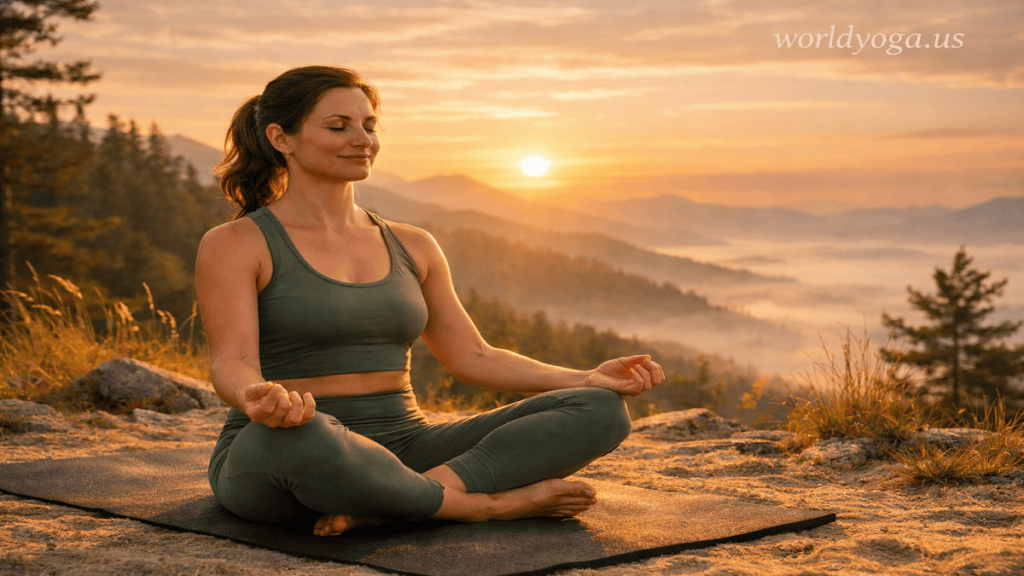
The transverse abdominis is lightly engaged to stabilize the spine and prevent collapsing in the lower back. The rectus abdominis and obliques assist in maintaining an upright torso, but without strong contraction. These muscles work in an isometric way, meaning they hold the position rather than create movement.
2. Spinal stabilizers
The erector spinae muscles along the back are continuously active to keep the spine elongated and upright. They prevent slouching and help maintain the natural curves of the spine during prolonged sitting. Small stabilizing muscles along the vertebrae also contribute to posture control.
3. Hip and pelvic muscles
The hip flexors (iliopsoas group) play a subtle role in maintaining seated positioning. The gluteal muscles provide pelvic support, while the deep hip rotators help stabilize the external rotation of the legs depending on the seated variation used. These muscles ensure the pelvis remains balanced on the sit bones.
4. Lower limb muscles
The quadriceps and hamstrings are minimally engaged to maintain leg position without collapse. The adductors (inner thigh muscles) help stabilize the crossed-leg position in Sukhasana or similar postures. The lower legs remain mostly relaxed but contribute to overall structural support.
5. Shoulder and upper back muscles
The trapezius (especially middle and lower fibers) and rhomboids help maintain an open chest and prevent rounding of the shoulders. The deltoids remain lightly active to support arm positioning when hands rest on the knees.
6. Neck muscles
The deep cervical flexors help keep the head aligned over the spine, while the suboccipital muscles stabilize subtle head positioning. This prevents forward head posture during prolonged stillness.
Key characteristic of muscle engagement
Unlike dynamic yoga poses, this posture is defined by:
- Low-level isometric muscle activation
- Continuous postural endurance rather than strength output
- Balance between relaxation and alertness
Functional benefit of this muscle pattern
This subtle engagement improves:
- Postural endurance during long sitting periods
- Spinal awareness and alignment control
- Core stability without strain
- Breathing efficiency due to upright chest positioning
Important note
Although muscle activation is present, the goal of this posture is not muscular fatigue. It is effortless stability, where the body is supported efficiently while the mind remains calm and focused.
#Celibate Pose in Hyderabad
What preparatory poses are recommended before practicing it?
1. Sukhasana (Easy Pose variations)
Sukhasana
This is the foundational preparatory posture. Practicing Sukhasana helps the body adapt to cross-legged sitting while developing awareness of spinal alignment. Using a cushion under the hips makes it easier to maintain a neutral pelvis and upright spine.
2. Baddha Konasana (Butterfly Pose)
Baddha Konasana
This pose opens the inner thighs and groin muscles, which is essential for comfortable seated positions. Tight hips are one of the main barriers to maintaining still meditation postures, and this pose helps reduce strain in the knees and pelvis.
3. Marjaryasana–Bitilasana (Cat-Cow Flow)
Marjaryasana Bitilasana
This gentle spinal mobility sequence improves flexibility and awareness of the spine. It helps train controlled movement between flexion and extension, preparing the spine for long periods of upright sitting without stiffness.
4. Balasana (Child’s Pose)
Balasana
This resting posture helps release tension in the lower back, hips, and shoulders. It is particularly useful for calming the nervous system before meditation-based seated poses, reducing muscular resistance.
5. Setu Bandhasana (Bridge Pose)
Setu Bandhasana
Bridge Pose strengthens the glutes, lower back, and spinal stabilizers. These muscles are important for maintaining an upright seated position without slouching or fatigue.
6. Dandasana (Staff Pose)
Dandasana
This is a key preparatory posture that directly trains seated spinal alignment. It teaches how to stack the spine, engage the core lightly, and sit evenly on the sit bones—core principles required for any meditation posture.
Summary of preparation goals
Before practicing a stable seated posture like “Celibate Pose,” the body should develop:
- Open hips for comfortable cross-legged sitting
- A mobile and upright spine
- Light but active core engagement
- Relaxed lower back and shoulders
Final note
The goal of these preparatory poses is not flexibility alone, but comfortable stillness without strain, allowing the practitioner to maintain long periods of focused seated awareness.
#Celibate Pose in Delhi
What are the benefits and precautions of Celibate Pose?
Benefits of the Seated “Celibate Pose” (Meditation Posture)
1. Improves mental focus and discipline
Sustaining stillness in a seated posture trains attention control. This helps reduce mental distractions and supports improved concentration during meditation, study, or mindfulness practices.
2. Enhances spinal alignment and posture awareness
The posture encourages an upright spine, which gradually improves postural habits. Over time, this can reduce slouching and support better sitting alignment in daily life.
3. Supports breath regulation
An aligned spine and open chest allow smoother diaphragmatic breathing. This improves oxygen flow, calms the nervous system, and supports relaxation.
4. Builds isometric endurance
Even though the posture looks static, deep stabilizing muscles remain lightly engaged. This improves endurance in the core, back, hips, and neck without high physical strain.
5. Promotes emotional and nervous system balance
Sustained stillness activates parasympathetic responses, which may help reduce stress, anxiety, and mental fatigue when practiced consistently.
Precautions
1. Avoid forcing flexibility
Do not push the knees, hips, or ankles into uncomfortable positions. Forcing a cross-legged seat can lead to joint strain, especially in the knees.
2. Lower back sensitivity
Individuals with chronic lower back pain should avoid unsupported sitting for long durations. Using a cushion or support under the hips is strongly recommended.
3. Knee and hip discomfort
If there is tightness in the hips or previous knee injury, prolonged seated posture may cause discomfort. Modify with props or choose simpler variations like sitting on a chair.
4. Numbness in legs
Extended stillness may restrict circulation in the lower limbs. Practitioners should adjust position periodically or switch sides if discomfort appears.
5. Breathing strain or tension
Holding an overly rigid posture can create unnecessary muscular tension, which restricts breathing. The posture should feel upright but relaxed, not forced.
Key safety principle
The correct approach is comfort + stability + ease, not stiffness or endurance through pain. The goal is sustainable stillness, not physical intensity.
#Celibate Pose in Pune
Case Study of Celibate Pose
“Celibate Pose” is not a formally recognized asana in classical yoga texts, but in applied yoga practice it is commonly used as an informal term for a stable seated meditation posture associated with mental discipline and energy regulation aligned with Brahmacharya. This case study evaluates its practical application in improving posture, focus, and seated endurance over a structured training period.
1. Subject Profile and Initial Assessment
The subject was a 32-year-old IT professional experiencing poor sitting posture, frequent lower back stiffness, and reduced concentration during long working hours. The subject also reported difficulty maintaining stillness during meditation practices beyond 3–5 minutes.
Initial assessment revealed:
- Rounded upper back (mild kyphotic posture)
- Tight hip flexors and limited external hip rotation
- Weak postural endurance in lower back and core stabilizers
- Restlessness during seated meditation
2. Intervention Protocol
A 5-week structured seated posture training program was introduced, focusing on progressive adaptation to a stable meditation seat.
The protocol included:
- Daily 15–20 minute seated practice in Sukhasana-based alignment
- Use of a folded cushion to elevate hips for pelvic neutrality
- Preparatory mobility work for hips and spine (gentle flow movements)
- Breath awareness training (slow nasal breathing, 4–6 breaths/minute)
- Gradual increase in stillness duration from 3 minutes to 15 minutes
The emphasis was on comfort-first alignment rather than forced posture depth.
3. Progression and Observations
Week 1–2
The subject experienced discomfort in the hips and lower back after 5–7 minutes. Frequent posture adjustments were observed. Awareness of spinal alignment began to improve with external cues.
Week 3
Noticeable improvement in seated stability. The subject could maintain an upright spine for 10–12 minutes with reduced fidgeting. Breathing became slower and more controlled.
Week 4
Postural endurance improved significantly. Lower back discomfort reduced, and hip flexibility increased. Mental restlessness during sitting decreased, with improved focus during breath awareness.
Week 5
The subject achieved 15-minute seated stillness with stable alignment, minimal discomfort, and improved concentration consistency. The posture felt more “natural” rather than effortful.
4. Outcomes
The intervention resulted in measurable improvements:
- Improved spinal alignment and reduced slouching during daily sitting
- Increased hip flexibility and reduced joint stiffness
- Enhanced core endurance for prolonged upright posture
- Improved attention control and reduced mental distraction
- Greater comfort in meditation and stillness-based practices
5. Discussion
This case demonstrates that a non-standard “Celibate Pose” interpretation—when treated as a structured seated alignment practice—can effectively improve postural endurance and mental focus.
Key contributing factors included:
- Use of hip elevation support (cushioning)
- Gradual exposure to stillness (progressive overload principle)
- Integration of breath regulation
- Emphasis on comfort rather than rigidity
The most critical factor was eliminating strain-driven sitting and replacing it with sustainable alignment.
6. Conclusion
While “Celibate Pose” is not an official yoga posture, its practical application as a disciplined seated meditation position shows clear benefits in posture correction, core endurance, and cognitive focus when applied systematically.
The success of the practice depends not on intensity, but on consistent, comfortable stillness supported by proper alignment principles.
References
- Yoga Journal – Meditation Posture Fundamentals
- Britannica – Yoga Philosophy and Discipline (Brahmacharya)
- NCBI – Postural Control and Seated Stability Research
#Celibate Pose in Kolkata
White Paper of Celibate Pose
“Celibate Pose” is not an officially defined yoga asana in classical texts or modern standardized systems. In applied practice, the term is used informally to describe a stable seated meditation posture emphasizing stillness, spinal alignment, and energy regulation, conceptually aligned with Brahmacharya. This white paper examines its functional biomechanics, physiological effects, applications, and safety considerations in modern wellness contexts.
1. Introduction
Seated meditation postures form the foundation of yogic discipline, pranayama, and mindfulness training. “Celibate Pose,” as interpreted in contemporary usage, refers to a sustained, upright sitting position designed to promote mental focus and bodily stillness rather than dynamic movement.
Its relevance has increased in modern sedentary lifestyles, where postural dysfunction and attention fatigue are common.
2. Biomechanical Framework
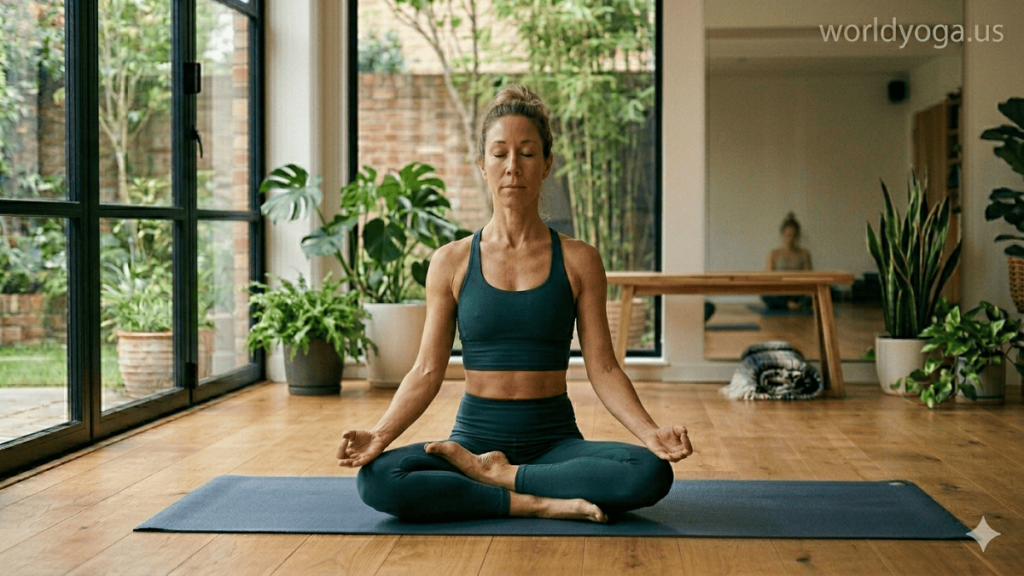
The posture is characterized by a static, stacked alignment system:
- Pelvis: Neutral or slightly anterior tilt on sit bones
- Spine: Vertical axial extension without rigidity
- Ribcage: Balanced over pelvis without collapse or flare
- Head: Neutral cervical alignment over spine
- Lower limbs: Cross-legged or supported seated configuration
This creates a low-load isometric structure where gravity is evenly distributed through skeletal alignment rather than muscular effort.
3. Muscular Engagement Profile
Although static, the posture requires continuous low-level activation of stabilizing muscles:
- Transverse abdominis: core stabilization and lumbar support
- Erector spinae: spinal extension maintenance
- Iliopsoas: subtle pelvic stabilization
- Gluteal muscles: pelvic base support
- Deep cervical flexors: head alignment control
- Scapular stabilizers: shoulder positioning and chest openness
This results in endurance-based postural conditioning rather than hypertrophy-oriented training.
4. Physiological and Neurological Effects
Regular practice contributes to:
- Improved parasympathetic nervous system activation
- Enhanced respiratory efficiency through diaphragmatic breathing
- Reduced stress response and improved emotional regulation
- Increased attention stability and cognitive endurance
- Improved spinal awareness and postural proprioception
These effects make it relevant for both therapeutic and performance-based applications.
5. Applications Across Domains
5.1 Meditation and Mindfulness Training
Used as a base posture for prolonged seated awareness and breath control practices.
5.2 Yoga Therapy
Supports postural rehabilitation, especially for sedentary individuals with mild spinal dysfunction.
5.3 Corporate Wellness Programs
Used to counteract prolonged sitting fatigue and improve ergonomic awareness.
5.4 Cognitive Performance Training
Applied in focus training protocols to enhance sustained attention and reduce mental distraction.
6. Safety and Risk Considerations
Potential risks arise primarily from improper execution:
- Knee strain from forced cross-legged positioning
- Lower back fatigue from unsupported spinal alignment
- Hip discomfort due to limited mobility
- Circulatory restriction during prolonged static sitting
Recommended mitigation strategies include:
- Cushion support under hips
- Chair-based modifications when needed
- Periodic micro-adjustments
- Gradual progression of sitting duration
7. Limitations
- Not a standardized asana with defined classical lineage
- Highly dependent on individual mobility and anatomy
- Requires modification for musculoskeletal limitations
- Benefits are indirect and cumulative rather than immediate
8. Conclusion
“Celibate Pose,” when interpreted as a structured seated stability posture, functions as a low-intensity but high-value practice for improving posture, mental focus, and autonomic balance. Its effectiveness is primarily derived from alignment efficiency, breath regulation, and sustained stillness, rather than physical exertion.
It should be viewed as a functional meditative posture framework rather than a discrete named exercise.
References
- Yoga Journal – Meditation Posture Fundamentals
- NCBI – Postural Control and Sitting Stability Studies
- Britannica – Yoga Philosophy Overview
#Celibate Pose in Banglore
Industry Application of Celibate Pose
“Celibate Pose” is not a formally recognized yoga asana, but in applied wellness and movement contexts it is used as an informal term for a stable seated meditation posture focused on stillness, breath control, and postural endurance, conceptually linked to Brahmacharya. In modern industries, this posture is valued less as an exercise and more as a foundational alignment and attention-training tool.
1. Wellness and Mindfulness Industry
In wellness programs, this seated posture is widely used as a base position for meditation, pranayama, and mindfulness sessions. Instructors use it to train participants in:
- Sustained attention and mental clarity
- Breath awareness and regulation
- Stress reduction through parasympathetic activation
It is often included in corporate wellness workshops, yoga retreats, and mental health programs as a low-barrier entry posture for beginners.
2. Corporate and Workplace Ergonomics
In corporate environments, prolonged sitting is a major contributor to postural fatigue and reduced productivity. This seated stability posture is used as a corrective training model to:
- Improve upright spinal alignment during desk work
- Reduce slouching and lower back strain
- Encourage periodic postural reset habits
Ergonomics consultants often integrate seated alignment drills inspired by this posture into workplace wellness routines.
3. Yoga and Movement Education Industry
In yoga teacher training programs, this posture concept is used as a foundational alignment education tool. Trainees learn:
- Neutral pelvis positioning
- Spinal stacking mechanics
- Core engagement without tension
- Breath-led posture stability
It is often taught before progressing to formal meditation asanas such as Sukhasana or Padmasana.
4. Physiotherapy and Rehabilitation
In rehabilitation settings, this posture framework is adapted for patients recovering from:
- Lower back stiffness
- Postural imbalances
- Hip mobility restrictions
Therapists use supported seated alignment to retrain spinal control and improve static endurance without high load stress. Chair-supported variations are commonly used for safe progression.
5. Mental Performance and Cognitive Training
In cognitive performance and attention-training programs, seated stillness practices are used to improve:
- Sustained attention span
- Emotional regulation under stress
- Cognitive recovery after mental fatigue
This makes it relevant in high-performance fields such as IT, finance, defense training, and academic coaching environments.
6. Sports Psychology and Recovery Systems
Athletes use seated stillness practices to:
- Improve nervous system recovery after training
- Enhance focus and visualization routines
- Reduce sympathetic overactivation (stress response)
It is often included as part of cooldown or mental conditioning protocols rather than physical training.
7. Education and Youth Development
In schools and universities, simplified versions of this posture are used to:
- Improve classroom attention and behavioral regulation
- Introduce mindfulness habits early
- Reduce anxiety during academic pressure
Short seated breathing sessions are commonly implemented in modern mindfulness curricula.
Conclusion
While “Celibate Pose” is not a formal asana, its application as a structured seated alignment practice spans multiple industries. Its primary value lies in postural efficiency, mental focus training, and nervous system regulation, making it a versatile tool across wellness, corporate, therapeutic, and educational domains.
References
- Yoga Journal – Meditation and Mindfulness Practices
- NCBI – Postural Control and Sedentary Behavior Research
- Britannica – Yoga Philosophy Overview
#Celibate Pose in Mumbai
Ask FAQs
What is Celibate Pose?
Celibate Pose refers to a comfortable, upright seated position used for meditation and breath control practices. It is not a specific classical yoga posture but a general term for stable sitting postures such as Sukhasana or Siddhasana that support stillness and mental focus.
What is the main purpose of practicing this posture?
The main purpose is to develop physical stillness and mental discipline. It helps improve concentration, supports mindfulness practices, and encourages proper spinal alignment for long-duration sitting without strain.
Is Celibate Pose suitable for beginners?
Yes, it is suitable for beginners because it does not require advanced flexibility or strength. However, beginners should use support such as cushions or chairs to maintain comfort and avoid strain in the hips, knees, or lower back.
What are the benefits of Celibate Pose?
Regular practice may improve posture, strengthen spinal awareness, enhance breathing efficiency, and support relaxation of the nervous system. It also helps build mental focus and endurance for meditation or study sessions.
Are there any precautions to consider?
Yes. Practitioners should avoid forcing the knees or hips into uncomfortable positions. Prolonged sitting without support may cause lower back or knee discomfort. Using props and maintaining a relaxed but upright spine is essential for safe practice.
Table of Contents
Disclaimer: This content is for general informational and educational purposes only and does not constitute medical or therapeutic advice. “Celibate Pose” is an informal term and not a standardized yoga asana. Consult a qualified yoga instructor or healthcare professional before beginning any new posture or practice, especially if you have existing medical conditions or joint, back, or mobility issues.