Jathara Urdhva Mukha Paschimottanasana
Jathara Urdhva Mukha Paschimottanasana is an advanced seated forward-bending yoga posture that combines intense abdominal engagement, spinal extension, and deep posterior chain stretching. The name is derived from Sanskrit, where “Jathara” refers to the abdomen, “Urdhva Mukha” means upward-facing, and “Paschimottanasana” relates to an intense stretch of the back body. This posture requires flexibility, balance, controlled breathing, and strong core activation.
Jathara Urdhva Mukha Paschimottanasana is generally practiced by intermediate to advanced yoga practitioners because it demands coordinated engagement of the abdominal muscles, hamstrings, hip flexors, and spinal stabilizers. The posture also requires substantial body awareness to maintain alignment and avoid unnecessary strain.
Technique and Execution
The posture usually begins in a seated position with both legs extended forward. The practitioner gradually lifts and positions the legs while maintaining spinal elongation and abdominal control. Depending on the variation, the torso remains upright or slightly extended while the legs are elevated and stretched, creating an intense engagement of the core and posterior chain.
The spine should remain elongated rather than collapsed, and the chest should stay open throughout the posture. The abdominal region actively stabilizes the body while the hamstrings and lower back experience a deep stretch. Breathing remains slow and controlled to support muscular endurance and balance.
Muscular Engagement
This posture strongly activates the transverse abdominis, rectus abdominis, and oblique muscles to stabilize the pelvis and spine. The hip flexors work dynamically to support leg elevation, while the hamstrings and calf muscles experience significant stretching. The erector spinae and deep spinal stabilizers maintain upright posture and prevent spinal collapse.
Shoulder stabilizers and upper-back muscles may also engage depending on arm positioning and variation used during practice.
Benefits
Jathara Urdhva Mukha Paschimottanasana offers several physical and mental benefits. It enhances core strength, improves hamstring flexibility, and increases spinal mobility. The posture also supports balance and neuromuscular coordination by requiring controlled movement and sustained muscular engagement.
Additionally, the abdominal compression involved in the pose may stimulate digestive organs and improve internal circulation. The posture also encourages focused breathing and concentration, supporting mental discipline and body awareness.
Precautions
Due to its intensity, this posture should be practiced carefully. Individuals with lower back injuries, hamstring strains, hip issues, or abdominal conditions should avoid attempting it without professional supervision. Forcing flexibility or lifting the legs without adequate core strength can place excessive stress on the lumbar spine.
Warm-up exercises targeting the hips, hamstrings, and core are essential before attempting the posture. Beginners should practice modified variations before progressing to the full expression.
Conclusion
Jathara Urdhva Mukha Paschimottanasana is a demanding yet highly beneficial yoga posture that develops flexibility, core stability, and postural control. Through the integration of spinal elongation, abdominal activation, and breath awareness, it serves as an advanced practice for improving both physical endurance and internal body awareness.
#Jathara Urdhva Mukha Paschimottanasana in India
How is Jathara Urdhva Mukha Paschimottanasana performed correctly?
Jathara Urdhva Mukha Paschimottanasana is an advanced yoga posture that combines deep core activation, spinal elongation, and intense posterior chain stretching. Proper execution requires flexibility, controlled breathing, and strong postural awareness to maintain balance and alignment safely.
Jathara Urdhva Mukha Paschimottanasana begins from a seated position on a yoga mat with both legs extended forward. The practitioner sits upright on the sitting bones while lengthening the spine upward. The shoulders remain relaxed, and the chest stays open to avoid collapsing the upper body.
The first step is establishing a stable seated foundation. The legs are kept straight with the knees fully extended but not forcefully locked. The feet remain active, with toes pointing upward or slightly flexed depending on flexibility and variation. The abdominal muscles engage gently to support the lumbar spine and maintain pelvic stability.
Once alignment is established, the practitioner gradually lifts the legs while maintaining spinal elongation. In some traditional variations, the torso remains upright while the legs rise upward, creating an intense balance challenge. The movement should be controlled and initiated from the core rather than using momentum.
During the lift, the pelvis should remain stable without excessive backward rolling. The spine must stay long and neutral, avoiding rounding of the lower back. The chest continues to expand upward while the abdominal region draws inward to stabilize the posture.
Breathing plays a critical role throughout the practice. Slow inhalation helps lengthen the spine and create space in the torso, while controlled exhalation supports deeper abdominal engagement and balance. The breath should remain steady and uninterrupted.
The posture is held only as long as proper alignment and breath control can be maintained comfortably. To release, the legs are lowered slowly and with control back to the mat while maintaining core engagement. Abrupt movements should be avoided to protect the lower back and hip flexors.
Proper alignment is essential during the entire posture. The neck should remain neutral, aligned with the spine, without excessive forward projection. The shoulders should not elevate or tense excessively. The thighs remain active, and the knees continue facing upward rather than rotating outward.
Common mistakes include rounding the spine, forcing leg elevation beyond current flexibility, holding the breath, or relying on momentum to lift the legs. These errors can reduce the effectiveness of the posture and increase strain on the lumbar spine and hip joints.
Due to the advanced nature of the pose, preparatory practices such as seated forward bends, core stabilization exercises, and hamstring stretches are highly recommended before attempting full execution.
In conclusion, Jathara Urdhva Mukha Paschimottanasana is performed correctly through controlled leg elevation, strong core engagement, spinal elongation, and mindful breathing. When practiced with proper alignment and gradual progression, it develops flexibility, balance, postural control, and deep abdominal strength safely and effectively.
#Jathara Urdhva Mukha Paschimottanasana in Maharashtra
What is the proper alignment in this upward-facing intense stretch variation?
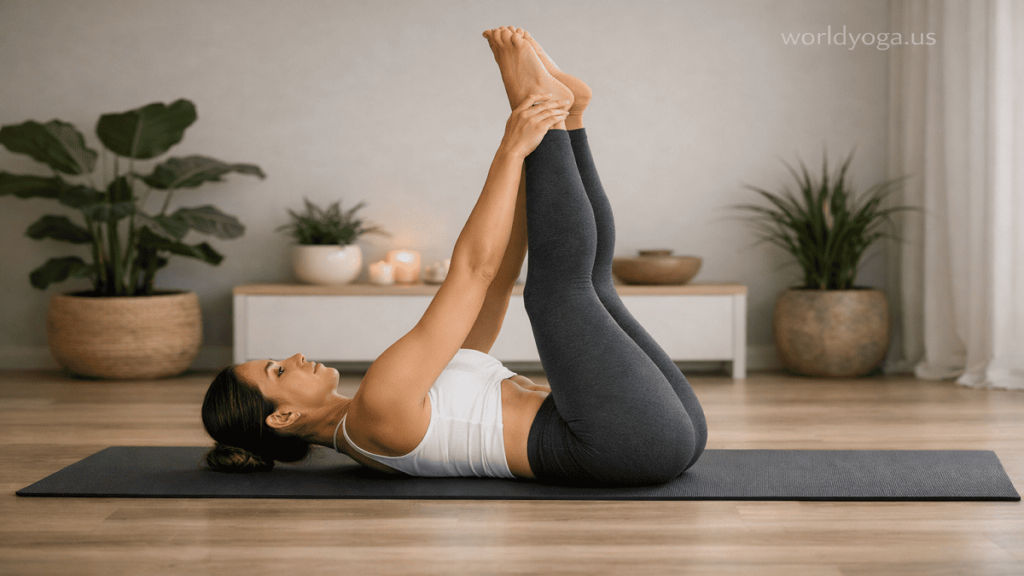
Proper alignment in Jathara Urdhva Mukha Paschimottanasana is essential for achieving the benefits of the posture while protecting the spine, hips, and hamstrings from unnecessary strain. Since this is an advanced upward-facing intense stretch variation, alignment must balance flexibility, core stability, and controlled muscular engagement.
Jathara Urdhva Mukha Paschimottanasana begins with establishing a stable seated base. The practitioner should sit evenly on the sitting bones with the pelvis grounded and balanced. The hips should remain level, avoiding excessive leaning to one side. Proper pelvic positioning is crucial because it directly affects spinal alignment and hamstring tension.
The spine should remain elongated from the base of the pelvis to the crown of the head. Instead of collapsing or rounding forward, the torso should lift upward with a neutral spinal curve. The chest stays open and gently elevated, allowing the rib cage to expand naturally without creating excessive lumbar arching.
The abdominal muscles should remain actively engaged throughout the posture. Deep core activation stabilizes the pelvis and prevents strain on the lower back during leg elevation and stretching. The navel gently draws inward toward the spine to support balance and internal control.
Both legs should remain fully extended and aligned evenly. The knees are straight but not hyperextended. The thighs remain active, with the quadriceps engaged to support the hamstrings and maintain stability. The legs should stay parallel without rotating outward or inward excessively.
The feet are generally kept active, either flexed or neutrally pointed depending on the variation practiced. Maintaining active feet helps preserve muscular engagement throughout the posterior chain and improves overall alignment awareness.
The shoulders should remain relaxed and away from the ears. Excessive shoulder tension can interfere with breathing and reduce spinal length. If the hands are involved in supporting the posture, they should assist balance without causing collapse in the upper body.
The neck should follow the natural line of the spine. The head remains neutral rather than dropping forward or tilting backward excessively. A stable neck position helps maintain balance and reduces unnecessary cervical strain.
Breathing must remain smooth and controlled throughout the posture. Inhalation supports spinal extension and chest expansion, while exhalation deepens abdominal engagement and muscular control. Breath-holding should always be avoided.
One of the most important alignment principles is avoiding force. The stretch should develop gradually without pulling aggressively into the hamstrings or lower back. Proper alignment prioritizes controlled elongation rather than maximum flexibility.
Common alignment mistakes include rounding the lumbar spine, collapsing the chest, locking the knees forcefully, or using momentum to achieve leg positioning. These errors can reduce stability and increase injury risk.
In conclusion, proper alignment in Jathara Urdhva Mukha Paschimottanasana requires a grounded pelvis, elongated spine, engaged core, active legs, relaxed shoulders, and controlled breathing. When these elements work together, the posture becomes both stable and effective, supporting flexibility, balance, and advanced postural control safely.
#Jathara Urdhva Mukha Paschimottanasana in Ahemadabad
Which muscles are engaged during the pose?
Jathara Urdhva Mukha Paschimottanasana is an advanced yoga posture that demands coordinated activation of multiple muscle groups to maintain balance, spinal alignment, and controlled leg positioning. The pose combines intense stretching with strong muscular stabilization, making it both physically challenging and highly effective for developing body control.
Jathara Urdhva Mukha Paschimottanasana primarily engages the deep core musculature. The transverse abdominis acts as a stabilizing muscle, supporting the spine and pelvis throughout the posture. The rectus abdominis and obliques assist in maintaining trunk control and preventing excessive spinal movement during leg elevation.
The hip flexors, especially the iliopsoas and rectus femoris, are strongly activated because they help lift and stabilize the legs against gravity. These muscles work continuously to maintain the elevated leg position while supporting pelvic alignment.
The quadriceps muscles at the front of the thighs remain actively engaged to keep the knees extended and stable. This activation also helps protect the hamstrings by balancing tension through the legs. At the same time, the hamstrings experience a deep stretch due to the forward extension and elevation of the legs.
The spinal stabilizers, including the erector spinae and multifidus muscles, play a major role in maintaining an elongated and upright spine. These muscles prevent the torso from collapsing forward and support postural endurance throughout the hold.
The pelvic floor muscles may also engage subtly to assist with internal stabilization and pressure control. This deeper engagement enhances balance and contributes to overall core integration.
In the upper body, the shoulder stabilizers such as the trapezius, rhomboids, and serratus anterior help maintain chest openness and shoulder positioning. If the arms are used for support or balance, the triceps and forearm muscles also contribute to stabilization.
The calf muscles and intrinsic foot muscles remain lightly active when the feet are flexed or energetically extended. This engagement improves neuromuscular connection through the entire posterior chain.
Additionally, the gluteal muscles provide support for pelvic stability, particularly the gluteus medius and gluteus maximus. They help maintain balance and reduce unnecessary movement in the hips.
Beyond isolated muscle activation, the posture creates an integrated kinetic chain response where the core, hips, spine, and legs work together simultaneously. This full-body coordination is one of the defining features of advanced yoga postures such as this one.
Common muscular imbalances during the pose include over-reliance on the hip flexors or excessive tension in the neck and shoulders. Proper technique ensures that muscular engagement remains distributed evenly throughout the body.
In conclusion, Jathara Urdhva Mukha Paschimottanasana activates the core muscles, hip flexors, quadriceps, spinal stabilizers, gluteal muscles, and shoulder stabilizers while deeply stretching the hamstrings and posterior chain. This coordinated muscular engagement improves strength, flexibility, balance, and advanced postural control.
#Jathara Urdhva Mukha Paschimottanasana in Hyderabad
What preparatory poses are recommended before practicing it?
Jathara Urdhva Mukha Paschimottanasana is an advanced posture that requires significant flexibility, core stability, and spinal control. Proper preparation is essential before attempting the full pose because the body must be conditioned to handle intense hamstring stretching, abdominal engagement, and balance demands safely.
Jathara Urdhva Mukha Paschimottanasana should ideally be approached gradually through preparatory poses that improve mobility, strengthen stabilizing muscles, and increase body awareness.
1. Dandasana (Staff Pose)
Dandasana is one of the most important foundational preparations. It teaches proper seated alignment, spinal elongation, and leg engagement. Practicing this posture develops awareness of pelvic positioning and encourages activation of the quadriceps and core muscles.
2. Paschimottanasana (Seated Forward Bend)
This forward-bending posture helps lengthen the hamstrings, calves, and spinal muscles. It prepares the posterior chain for the deeper stretch required in Jathara Urdhva Mukha Paschimottanasana. The emphasis should remain on spinal length rather than forcing flexibility.
3. Navasana (Boat Pose)
Boat Pose is highly beneficial because it strengthens the deep core muscles and hip flexors. Since the advanced posture requires controlled leg elevation and abdominal stability, Navasana helps build the strength necessary to maintain balance without collapsing the spine.
4. Supta Padangusthasana (Reclining Hand-to-Big-Toe Pose)
This reclining hamstring stretch improves flexibility in the legs while reducing strain on the lower back. It allows practitioners to gradually increase hamstring mobility without excessive pressure on the spine.
5. Janu Sirsasana (Head-to-Knee Forward Bend)
This asymmetrical forward bend improves flexibility in the hamstrings and hips while also promoting spinal extension. It is useful for addressing side-to-side flexibility imbalances before attempting the advanced posture.
6. Ardha Navasana (Half Boat Pose)
Half Boat Pose develops endurance in the abdominal muscles and improves lumbar stability. It also trains coordinated breathing during sustained muscular engagement, which is essential for advanced balancing postures.
7. Cat-Cow Stretch
Dynamic spinal mobility exercises such as Cat-Cow help warm up the spine and improve awareness of spinal flexion and extension. This preparation reduces stiffness and supports better posture control during practice.
8. Seated Hip Openers
Gentle seated hip-opening movements help reduce restriction around the pelvis and improve comfort during seated balancing and stretching variations. Flexible hips contribute to smoother pelvic alignment and reduced lumbar compensation.
Importance of Warm-Up
Before attempting the pose, the body should be fully warmed through gentle movement and controlled breathing. Cold muscles are more vulnerable to strain, especially in advanced flexibility postures involving the hamstrings and lower back.
Conclusion
Preparatory poses such as Dandasana, Paschimottanasana, Navasana, Supta Padangusthasana, and spinal mobility exercises help create the flexibility, strength, and alignment awareness required for Jathara Urdhva Mukha Paschimottanasana. A progressive approach ensures safer practice, better control, and reduced risk of injury while developing the physical foundation necessary for this advanced posture.
#Jathara Urdhva Mukha Paschimottanasana in Delhi
What are the benefits and precautions of this advanced posture?
Jathara Urdhva Mukha Paschimottanasana is an advanced yoga posture that combines deep abdominal engagement, intense hamstring stretching, spinal elongation, and balance control. Due to its complexity, the posture offers significant physical and mental benefits when practiced correctly, but it also requires careful attention to safety and alignment.
Jathara Urdhva Mukha Paschimottanasana is primarily valued for its ability to develop integrated body strength and flexibility simultaneously. The posture challenges multiple systems of the body, making it highly effective for advanced practitioners seeking improved control and endurance.
Benefits of the Posture
1. Strengthens the Core Muscles
One of the primary benefits is deep core activation. The abdominal muscles, especially the transverse abdominis and obliques, work continuously to stabilize the spine and pelvis during leg elevation and balance maintenance. This improves overall trunk stability and postural control.
2. Enhances Hamstring and Posterior Chain Flexibility
The posture creates an intense stretch through the hamstrings, calves, and lower back muscles. Regular practice can improve flexibility and mobility throughout the posterior chain, which supports better movement efficiency in daily activities and athletic performance.
3. Improves Spinal Alignment and Posture
Maintaining an elongated spine in this pose strengthens the spinal stabilizers and encourages better postural habits. It promotes awareness of spinal neutrality and reduces the tendency toward slouching or collapse in seated positions.
4. Develops Balance and Neuromuscular Coordination
Because the posture requires controlled leg positioning and stability, it enhances coordination between the core, hips, spine, and lower limbs. This integrated muscular control improves body awareness and balance.
5. Stimulates Abdominal Organs
The abdominal engagement and compression involved in the posture may support digestive stimulation and improve circulation in the abdominal region. Controlled breathing during the posture also contributes to internal awareness and relaxation.
6. Builds Mental Focus and Discipline
Advanced yoga postures require concentration, patience, and controlled breathing. Practicing this pose can improve mental focus, endurance, and mindfulness during physically demanding situations.
Precautions and Safety Considerations
1. Avoid Forcing Flexibility
Attempting to achieve maximum stretch too quickly can strain the hamstrings or lower back. The posture should always be approached gradually with progressive flexibility development.
2. Lower Back Protection
Improper pelvic alignment or spinal rounding may place excessive pressure on the lumbar spine. Maintaining core engagement and spinal elongation is essential for protecting the lower back.
3. Not Suitable for Certain Conditions
Individuals with lower back injuries, sciatica, hip problems, hamstring tears, abdominal disorders, or severe balance limitations should avoid this posture unless supervised by a qualified professional.
4. Warm-Up Is Essential
Cold muscles are more vulnerable to injury. Adequate preparation through core activation, hamstring stretching, and spinal mobility exercises is necessary before attempting the posture.
5. Controlled Breathing Must Be Maintained
Holding the breath during the pose can increase tension and reduce stability. Slow, steady breathing helps maintain muscular control and reduces unnecessary strain.
6. Practice According to Skill Level
This is an advanced posture and should not be attempted prematurely. Beginners should first master foundational seated forward bends and core stabilization exercises.
Conclusion
Jathara Urdhva Mukha Paschimottanasana offers substantial benefits in core strength, flexibility, balance, posture, and mental concentration. However, due to its advanced nature, it must be practiced with proper preparation, alignment, and mindful progression. When approached safely and consistently, it becomes a powerful posture for developing both physical control and internal awareness.
#Jathara Urdhva Mukha Paschimottanasana in Banglore
Case Study of Jathara Urdhva Mukha Paschimottanasana
This case study examines the structured application of Jathara Urdhva Mukha Paschimottanasana in an advanced yoga training program designed to improve flexibility, core stability, and postural control in an experienced practitioner.
Jathara Urdhva Mukha Paschimottanasana was introduced to a 34-year-old yoga practitioner with intermediate-to-advanced experience who reported limitations in hamstring flexibility, reduced seated balance endurance, and mild lower back fatigue during prolonged forward-bending practices.
Initial Assessment
The participant demonstrated strong general fitness and adequate mobility but showed restricted posterior chain flexibility and insufficient deep core stabilization during advanced seated postures. Assessment revealed:
- Tight hamstrings limiting spinal elongation
- Mild pelvic instability during leg elevation
- Over-reliance on hip flexors during balancing poses
- Reduced endurance in sustained abdominal engagement
The practitioner had no major musculoskeletal injuries but experienced occasional lumbar discomfort when attempting advanced seated balance variations.
Intervention Program
A progressive eight-week intervention was designed focusing on flexibility, core integration, and postural awareness.
Phase 1: Foundational Preparation (Weeks 1–2)
The initial phase emphasized preparatory poses including Dandasana, Paschimottanasana, Supta Padangusthasana, and Navasana. The primary goals were improving hamstring mobility, activating the deep core muscles, and establishing neutral spinal alignment.
Breathing exercises and controlled pelvic stabilization drills were also included to improve neuromuscular coordination.
Phase 2: Progressive Strength and Balance Training (Weeks 3–5)
The participant began practicing modified variations of Jathara Urdhva Mukha Paschimottanasana with partial leg elevation and shorter hold durations. Core endurance training was increased gradually using controlled seated balancing exercises.
During this phase, emphasis was placed on:
- Maintaining spinal elongation
- Preventing lumbar rounding
- Coordinating breath with movement
- Reducing excessive hip flexor dominance
Improved postural control and smoother transitions into the posture were observed.
Phase 3: Full Posture Integration (Weeks 6–8)
By the sixth week, the participant was able to enter the full posture with improved balance and reduced strain. Hamstring flexibility increased noticeably, allowing better pelvic positioning and spinal extension.
The practitioner demonstrated:
- Increased abdominal endurance
- Improved seated balance stability
- Better breath control during sustained holds
- Reduced lower back fatigue after practice sessions
The posture was held safely for longer durations without compensation patterns such as shoulder tension or spinal collapse.
Outcomes and Observations
At the conclusion of the program, significant improvements were documented in flexibility, core strength, and neuromuscular coordination. The participant reported enhanced body awareness and greater confidence during advanced yoga transitions.
The most notable improvement was the reduction in lower back discomfort, which was attributed to improved pelvic stability and stronger deep core activation.
Safety and Precautions
Throughout the intervention, careful monitoring ensured that the practitioner did not force flexibility or overstrain the hamstrings. Adequate warm-up and recovery periods were maintained, and all progressions were introduced gradually.
Conclusion
This case study demonstrates that Jathara Urdhva Mukha Paschimottanasana can effectively improve flexibility, core integration, balance, and postural control when approached progressively and with proper guidance. The posture proved particularly valuable in enhancing neuromuscular coordination and reducing compensatory strain patterns in advanced yoga practice.
#Jathara Urdhva Mukha Paschimottanasana in Pune
White Paper of Jathara Urdhva Mukha Paschimottanasana
Abstract
Jathara Urdhva Mukha Paschimottanasana is an advanced yoga posture integrating deep abdominal activation, spinal elongation, seated balance, and posterior chain flexibility. The posture combines static muscular stabilization with dynamic flexibility demands, making it highly relevant in advanced yoga training, movement conditioning, and postural development. This white paper examines the biomechanical characteristics, physiological effects, muscular engagement, therapeutic implications, safety considerations, and modern applications of the posture.
Jathara Urdhva Mukha Paschimottanasana is characterized by elevated leg positioning, intense posterior chain stretching, and controlled trunk stabilization while maintaining spinal extension and balanced seated alignment.
Biomechanical Overview
The posture creates a complex kinetic chain involving simultaneous flexibility and stabilization. The pelvis functions as the central balancing structure, requiring coordinated activation of the abdominal wall, hip flexors, and spinal stabilizers to maintain equilibrium.
The lumbar spine must remain elongated and neutral while resisting flexion collapse caused by hamstring tension and leg elevation demands. Proper force distribution relies on deep core engagement, especially through the transverse abdominis and multifidus muscles.
The posture also requires active quadriceps contraction to support knee extension and reciprocal hamstring lengthening. Balance is maintained through continuous neuromuscular adjustments involving the pelvis, trunk, and lower limbs.
Muscular and Physiological Engagement
Primary muscular activation includes:
- Transverse abdominis for deep core stabilization
- Rectus abdominis and obliques for trunk control
- Iliopsoas and hip flexors for leg elevation
- Erector spinae and multifidus for spinal support
- Quadriceps for knee extension stability
- Gluteal stabilizers for pelvic alignment
The hamstrings, calves, and posterior fascial chains experience significant elongation during the posture.
Physiologically, the posture enhances neuromuscular coordination, balance control, and proprioceptive awareness. Controlled breathing during sustained holds also supports respiratory efficiency and concentration.
Functional Applications
Jathara Urdhva Mukha Paschimottanasana is primarily utilized in advanced yoga training systems for:
- Core strengthening
- Posterior chain flexibility development
- Seated balance enhancement
- Spinal postural correction
- Neuromuscular coordination training
In movement-based rehabilitation settings, modified elements of the posture may be used selectively to improve pelvic stability and seated postural endurance under professional supervision.
Benefits
The posture offers multiple integrated benefits:
1. Core Stability Enhancement
Continuous abdominal activation improves trunk stability and spinal support.
2. Flexibility Development
Deep stretching of the hamstrings and posterior chain improves lower-body mobility.
3. Postural Improvement
Maintaining spinal elongation strengthens postural endurance and body alignment awareness.
4. Balance and Coordination
The pose challenges dynamic equilibrium and enhances neuromuscular control.
5. Mental Concentration
The complexity of the posture requires sustained focus, breath regulation, and movement precision.
Risks and Contraindications
Due to its advanced nature, the posture carries risks if performed incorrectly or prematurely.
Contraindications include:
- Acute lower back injuries
- Hamstring tears or strains
- Hip joint instability
- Severe sciatica
- Abdominal injuries or surgeries
Excessive force, spinal rounding, or poor pelvic control may increase lumbar stress and soft tissue strain.
Safety and Implementation Guidelines
Safe implementation requires:
- Progressive flexibility development
- Strong foundational core conditioning
- Adequate warm-up procedures
- Controlled breathing patterns
- Supervised progression for less experienced practitioners
Preparatory postures such as Dandasana, Navasana, and Paschimottanasana are strongly recommended before full execution.
Conclusion
Jathara Urdhva Mukha Paschimottanasana represents a sophisticated integration of flexibility, balance, and core stabilization within advanced yoga practice. Its biomechanical complexity makes it highly effective for developing neuromuscular coordination, postural control, and posterior chain mobility. However, due to its intensity and technical demands, the posture requires progressive training, proper alignment, and mindful execution to ensure both safety and long-term effectiveness.
#Jathara Urdhva Mukha Paschimottanasana in Kolkata
Industry Application of Jathara Urdhva Mukha Paschimottanasana
Jathara Urdhva Mukha Paschimottanasana is an advanced yoga posture with applications extending beyond traditional yoga practice into modern wellness, rehabilitation, fitness, and movement science industries. Its combination of flexibility training, core stabilization, balance control, and postural conditioning makes it relevant in multiple professional environments focused on physical performance and body mechanics.
Jathara Urdhva Mukha Paschimottanasana is particularly valued for its ability to integrate neuromuscular coordination with mobility and strength development, which supports its use across several specialized industries.
1. Yoga and Wellness Industry
Within the yoga industry, this posture is used in advanced Hatha, Ashtanga, and Vinyasa training systems to improve flexibility, core endurance, and concentration. Yoga instructors often incorporate it into advanced sequencing to challenge practitioners physically and mentally.
In wellness environments, the posture is also used as part of mindfulness-based movement practices because it encourages breath awareness, balance, and internal focus. It is commonly included in advanced flexibility and mobility workshops.
2. Fitness and Functional Training Industry
In modern fitness programs, elements of the posture are adapted for core stabilization and flexibility development. Functional trainers may use modified variations to strengthen the abdominal muscles, improve seated balance, and increase hamstring mobility.
The posture’s emphasis on integrated movement patterns aligns with functional fitness methodologies that focus on coordinated strength rather than isolated muscle training.
3. Sports Performance and Athletic Conditioning
Sports performance specialists apply principles similar to this posture to improve posterior chain flexibility, trunk stability, and movement efficiency. Athletes involved in gymnastics, martial arts, dance, and endurance sports benefit from enhanced flexibility and balance control developed through advanced seated stabilization exercises.
The posture also contributes to neuromuscular awareness, which supports injury prevention and improved body mechanics during complex athletic movements.
4. Physiotherapy and Rehabilitation
Although the full posture is generally too advanced for early rehabilitation stages, modified versions are sometimes used in physiotherapy settings for advanced recovery and postural retraining. Therapists may adapt components of the posture to improve:
- Core activation
- Pelvic stability
- Hamstring flexibility
- Seated postural endurance
These adaptations are carefully scaled according to patient capacity and recovery stage.
5. Corporate Wellness and Ergonomic Programs
Sedentary work environments often contribute to poor posture, weak core engagement, and reduced flexibility. Corporate wellness programs occasionally integrate simplified seated flexibility and spinal elongation practices inspired by this posture to reduce stiffness and improve movement awareness among office workers.
6. Movement Science and Human Performance Research
Researchers and movement specialists analyze advanced yoga postures like Jathara Urdhva Mukha Paschimottanasana to study balance control, spinal stabilization, and muscular coordination. The posture provides insight into how flexibility and core activation interact during complex movement tasks.
This research contributes to improved exercise programming in sports science, rehabilitation, and corrective movement systems.
Limitations in Industry Use
Despite its benefits, the posture has limited accessibility for beginners and individuals with mobility restrictions. Its advanced demands require progressive preparation, professional supervision, and careful screening for contraindications such as lower back injuries or hamstring strains.
Conclusion
Jathara Urdhva Mukha Paschimottanasana has practical applications across yoga, fitness, sports performance, rehabilitation, wellness, and movement science industries. Its unique combination of flexibility, balance, and core stabilization makes it a valuable advanced training tool when implemented progressively and safely. Through proper adaptation and professional guidance, it supports improved movement quality, postural control, and functional physical performance.
#Jathara Urdhva Mukha Paschimottanasana in Mumbai
Ask FAQs
What is Jathara Urdhva Mukha Paschimottanasana?
Jathara Urdhva Mukha Paschimottanasana is an advanced seated yoga posture that combines deep abdominal engagement, spinal elongation, leg elevation, and intense hamstring stretching. It requires strong core stability, flexibility, and balance control.
What are the main benefits of this posture?
This posture helps strengthen the core muscles, improve hamstring flexibility, enhance spinal alignment, and develop balance and coordination. It also promotes body awareness and postural control through controlled breathing and muscular engagement.
Is this pose suitable for beginners?
No, this is considered an advanced posture. Beginners should first develop foundational flexibility, core strength, and seated balance through preparatory poses before attempting the full variation.
What are the common mistakes in this pose?
Common mistakes include rounding the lower back, forcing flexibility, locking the knees excessively, using momentum to lift the legs, and holding the breath. These errors can increase strain on the spine and hamstrings.
Who should avoid practicing this posture?
Individuals with lower back injuries, hamstring strains, hip problems, severe sciatica, or abdominal conditions should avoid this posture unless guided by a qualified yoga professional or healthcare practitioner.
Table of Contents
Disclaimer: The information provided is for educational purposes only and is not intended as medical or professional health advice. Jathara Urdhva Mukha Paschimottanasana is an advanced yoga posture and should be practiced under qualified guidance. Individuals with injuries, medical conditions, or mobility limitations should consult a healthcare professional before attempting this pose.