
Abdominal Lift Pose
The Abdominal Lift Pose, commonly known in yogic tradition as Uddiyana Bandha, is a powerful internal abdominal engagement technique used to strengthen core control, improve digestive function, and enhance breath awareness. Unlike conventional abdominal exercises, this posture is not about visible movement but about deep internal muscular activation combined with breath regulation.
Abdominal Lift Pose is typically performed in a standing or slightly bent-knee stance after exhalation. The practitioner empties the lungs completely, then gently draws the abdominal wall inward and upward beneath the rib cage without inhaling. This creates a “lifted” hollowing effect in the abdominal region, which engages deep core muscles and internal pressure regulation systems.
Technique and Execution
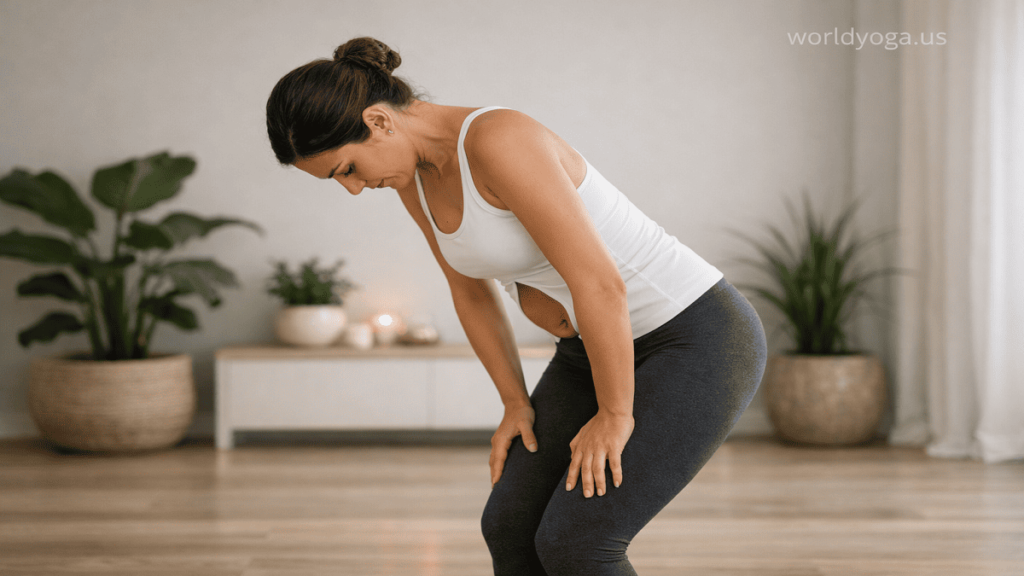
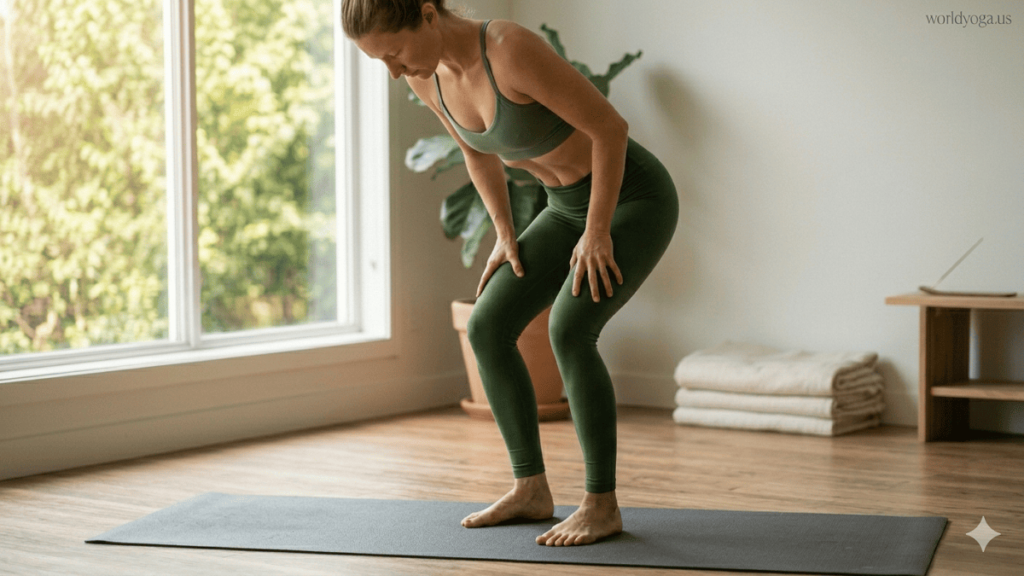
To perform the pose correctly, stand with feet hip-width apart and knees slightly bent. Place the hands on the thighs for support. Take a deep inhalation, then exhale fully through the mouth until the lungs are empty. After exhalation, hold the breath out and gently contract the abdominal muscles inward and upward. The diaphragm naturally rises, creating a suction-like effect in the abdomen. This position is held only for a short duration before slowly releasing the contraction and returning to normal breathing.
Muscular and Physiological Engagement
The Abdominal Lift Pose primarily activates the transverse abdominis, rectus abdominis, and oblique muscles. It also influences the diaphragm, pelvic floor, and deep spinal stabilizers. This coordinated engagement improves intra-abdominal pressure control, which supports spinal stability and posture.
In addition to muscular activation, the pose stimulates internal organs such as the stomach, intestines, and liver through gentle compression and release. This is believed to enhance digestive efficiency and improve metabolic function when practiced consistently.
Benefits
Regular practice of the Abdominal Lift Pose offers multiple benefits. It strengthens deep core muscles, improves breath control, enhances abdominal tone, and supports spinal alignment. It is also known to increase awareness of internal body mechanics, making it valuable in yoga therapy and advanced breathing practices.
Another key benefit is its effect on energy regulation. In traditional yogic systems, this practice is considered to help redirect internal energy flow, promoting mental clarity and reduced stress levels when performed correctly.
Precautions
Despite its benefits, the pose must be practiced with caution. It is not recommended for individuals with high blood pressure, heart conditions, hernias, or recent abdominal surgery. Beginners should avoid excessive strain and should learn the technique under professional guidance. It should always be performed on an empty stomach and never during pregnancy.
Conclusion
The Abdominal Lift Pose is a deeply effective internal core activation technique that goes beyond physical exercise. It integrates breath control, muscular engagement, and internal awareness to support core strength, spinal stability, and digestive health. When practiced safely and progressively, it becomes a valuable component of advanced yoga and breathwork systems.
#Abdominal Lift Pose in India
How is Abdominal Lift Pose (Uddiyana Bandha) performed correctly?
The Abdominal Lift Pose, known in yogic practice as Uddiyana Bandha, is a controlled abdominal lock technique that focuses on breath regulation and deep core activation. Correct execution is essential because the effect is internal rather than external, requiring precision, timing, and awareness.
Abdominal Lift Pose is traditionally performed on an empty stomach and ideally in the morning after bowel clearance. The practitioner begins by standing upright with feet hip-width apart. Knees are slightly bent to allow better access to the abdominal region and to reduce tension in the lower back. Hands are placed firmly on the thighs for support, which helps stabilize the upper body during the breath retention phase.
The first step is controlled inhalation through the nose, allowing the lungs to fill naturally without strain. This is followed by a slow, complete exhalation through the mouth. The key requirement is to empty the lungs fully so that no air remains inside. This creates the foundation for the abdominal lift.
After exhalation, the breath is held out—this is called external breath retention. During this phase, the abdominal muscles are gently drawn inward and upward beneath the rib cage. The diaphragm naturally rises due to the vacuum created in the thoracic cavity, and the abdomen appears hollowed. This lifting action should be smooth and controlled rather than forceful or abrupt.
While holding the position, the chest remains expanded but relaxed, and the shoulders stay soft without tension. The focus is on internal engagement rather than visible movement. The duration of the hold is typically short, especially for beginners, lasting only a few seconds before releasing.
To release the posture, the abdominal contraction is gently relaxed first, followed by a slow inhalation through the nose. Breathing returns to normal rhythm without sudden movement. It is important not to rush the inhalation, as this can reduce control and cause discomfort.
Proper alignment and safety are essential. The spine should remain neutral, avoiding excessive bending or collapsing forward. The knees should stay slightly bent throughout to prevent strain. The practitioner should never attempt the technique if there is air remaining in the lungs or if dizziness occurs during practice.
Common mistakes include forcing the abdominal contraction, holding the breath for too long, or performing the technique with incomplete exhalation. These errors reduce effectiveness and may create discomfort in the chest or abdomen.
In summary, correct performance of the Abdominal Lift Pose involves a sequence of full exhalation, external breath retention, gentle upward abdominal draw, controlled release, and slow inhalation. When practiced with awareness and proper technique, it safely activates deep core muscles, improves breath control, and enhances internal body awareness.
#Abdominal Lift Pose in Maharashtra
What is the proper alignment and technique for engaging the abdominal lock?
The abdominal lock, known as Uddiyana Bandha, is a controlled yogic technique that requires precise alignment, breath control, and internal muscular engagement. Proper execution is essential because the effectiveness of the practice depends on creating a safe internal vacuum through correct posture and breathing mechanics.
Abdominal Lift Pose begins with establishing a stable standing foundation. The feet should be placed hip-width apart to provide balance and even weight distribution. The knees are slightly bent rather than fully locked, which helps reduce pressure on the lower back and allows easier access to the abdominal region. The spine should remain elongated and neutral, avoiding excessive arching or rounding.
The shoulders must stay relaxed and down, preventing unnecessary tension in the upper body. The chest should remain open but not overly expanded. The head is aligned with the spine, keeping the neck in a natural position without tilting forward or backward. This overall alignment ensures that the abdominal region is free to move inward and upward without resistance from surrounding muscle tension.
The technique begins with a deep, controlled inhalation through the nose, followed by a slow and complete exhalation through the mouth. The critical requirement is that the lungs must be fully emptied. This external breath retention phase is essential for the abdominal lock to occur safely and effectively.
Once the breath is fully exhaled, the abdominal muscles are gently drawn inward and upward toward the rib cage. This movement is not a forceful contraction but a lifting action created by the natural vacuum effect inside the thoracic cavity. The diaphragm rises passively, while the abdominal wall is guided upward using deep core engagement, primarily involving the transverse abdominis.
During this phase, the pelvic floor muscles may also engage subtly, creating a coordinated internal lift from the base of the pelvis to the lower rib cage. The chest remains open and lifted, but without strain. The face, shoulders, and arms should stay relaxed throughout the hold.
The position is maintained only as long as comfortable, typically a few seconds for beginners. There should be no sensation of pressure, dizziness, or strain. If any discomfort arises, the engagement should be immediately released.
To release the lock, the abdominal contraction is gently relaxed first, followed by a slow inhalation through the nose. The breath should return to a natural rhythm without abrupt movement. This gradual transition is important for maintaining internal pressure balance and preventing dizziness.
Common alignment errors include leaning forward excessively, locking the knees, over-contracting the abdominal muscles, or attempting the technique with incomplete exhalation. These mistakes can reduce effectiveness and increase strain on the diaphragm and abdominal wall.
In summary, proper alignment and technique for the abdominal lock involve a stable standing posture, neutral spine, full exhalation, controlled abdominal lift, and gradual release with mindful breathing. When practiced correctly, it enhances deep core activation, improves breath awareness, and supports internal stability and control.
#Abdominal Lift Pose in Ahemadabad
Which muscles and internal systems are activated during the practice?
The abdominal lock, or Uddiyana Bandha, is a highly integrated yogic technique that activates not only superficial muscles but also deep stabilizing structures and internal physiological systems. Its effect is primarily internal, relying on breath regulation and controlled muscular engagement rather than external movement.
Abdominal Lift Pose primarily activates the deep core musculature. The most important muscle involved is the transverse abdominis, which acts as a natural internal corset. When engaged, it draws the abdominal wall inward and upward, creating stability for the spine and pelvis. The rectus abdominis and oblique muscles assist in maintaining abdominal control, though they are not forcefully contracted in the same way as in traditional abdominal exercises.
The diaphragm plays a central role in this practice. During the exhalation and breath retention phase, the diaphragm relaxes and rises passively due to the vacuum created in the thoracic cavity. This upward movement is what allows the abdominal organs to shift slightly upward, contributing to the characteristic “lift” of the abdomen.
The pelvic floor muscles, including the levator ani group, are also subtly activated. This creates a coordinated engagement known as an internal pressure system between the diaphragm at the top and the pelvic floor at the base. This synergy enhances core stability and supports spinal alignment.
The spinal stabilizers, particularly the multifidus and erector spinae, work in a supportive role. While they are not the primary focus, they help maintain a neutral spine during the posture, preventing excessive rounding or collapse. The hip flexors may also remain in a relaxed lengthened state, contributing indirectly to pelvic positioning.
Beyond muscular involvement, several internal systems are influenced by this practice. The respiratory system is directly engaged through controlled exhalation and breath retention, improving breath awareness and capacity control. The nervous system also responds significantly; the practice stimulates the parasympathetic nervous system, promoting a state of internal calm and reduced stress response when performed correctly.
The digestive system is another key area affected. The gentle upward suction and internal pressure changes are believed to stimulate abdominal organs such as the stomach, intestines, liver, and pancreas. This may support digestive efficiency and improve gastrointestinal motility over time.
Additionally, the circulatory system experiences subtle changes due to pressure variations within the abdominal cavity. These shifts may enhance blood flow regulation in the core region, although the effect remains gentle and non-invasive when practiced properly.
The endocrine system is indirectly influenced through stress reduction and improved vagal tone, which can support hormonal balance over time. However, these effects are secondary and depend on consistent, mindful practice.
In summary, the abdominal lock engages a coordinated network of deep core muscles, respiratory mechanics, pelvic floor structures, spinal stabilizers, and internal organ systems. This integrated activation is what makes it a unique practice, combining physical control, breath regulation, and internal physiological awareness into a single controlled technique.
#Abdominal Lift Pose in Hyderabad
What preparatory practices are recommended before attempting it?
The abdominal lock, or Uddiyana Bandha, is an advanced internal yogic technique that requires proper preparation of the respiratory system, core muscles, and nervous system. Without adequate groundwork, the practice can feel difficult or cause unnecessary strain. Preparatory practices help build breath control, abdominal awareness, and spinal stability.
Abdominal Lift Pose should ideally be approached only after establishing basic comfort with breathing control and gentle core engagement. The preparation process focuses on three main areas: breath mastery, abdominal activation, and postural stability.
1. Diaphragmatic Breathing Practice
One of the most important preparatory steps is learning diaphragmatic breathing. This involves slow, deep inhalation through the nose, allowing the abdomen to expand naturally, followed by controlled exhalation where the abdomen gently contracts. This trains awareness of the diaphragm and improves control over breath phases, which is essential for external breath retention used in Uddiyana Bandha.
2. Basic Core Activation Exercises
Before attempting the abdominal lock, it is important to develop awareness of the deep core muscles. Gentle exercises such as abdominal bracing, where the lower abdomen is lightly drawn inward while maintaining normal breathing, help activate the transverse abdominis. This builds foundational strength and control without requiring breath retention.
3. Standing Posture Familiarization
Since Uddiyana Bandha is typically performed in a standing position, practicing correct standing alignment is essential. This includes maintaining a neutral spine, soft knees, and relaxed shoulders. Simple standing balance awareness drills help ensure stability during the abdominal lift phase.
4. Gentle Forward Bend Preparation
Light forward bending movements with relaxed breathing can help release tension in the lower back and abdomen. This increases comfort when transitioning into the abdominal lift posture, where the abdominal wall is drawn inward and upward. These movements also improve flexibility in the posterior chain.
5. Breath Retention Introduction
Before attempting full abdominal lock, practitioners should become comfortable with simple breath retention practices. This involves exhaling fully and holding the breath out for short durations without abdominal engagement. Gradually increasing comfort with external breath retention is critical for safe execution of the technique.
6. Digestive and Timing Awareness
Uddiyana Bandha should always be practiced on an empty stomach. Preparatory discipline includes ensuring that at least 4–6 hours have passed after a meal. Morning practice is often recommended because the body is naturally light and the digestive system is not actively processing food.
7. Relaxation and Nervous System Readiness
Practices such as gentle supine relaxation, slow breathing, or short meditation sessions help reduce nervous system tension. A calm mental state improves control during breath retention and abdominal engagement.
Conclusion
Proper preparation for abdominal lock involves coordinated training of breath control, core activation, posture stability, and nervous system relaxation. These preparatory practices ensure that the body is ready for safe and effective execution, reducing strain and enhancing the quality of internal engagement during the technique.
#Abdominal Lift Pose in Pune
What are the benefits and precautions of Abdominal Lift Pose?
The Abdominal Lift Pose, known as Uddiyana Bandha, is a traditional yogic practice focused on internal core activation through breath control and abdominal engagement. It is considered one of the most powerful “internal locks” in yoga due to its combined effects on muscular strength, respiratory control, and internal organ stimulation.
Abdominal Lift Pose is primarily practiced to enhance deep core strength, improve breath regulation, and support internal physiological balance. However, its effectiveness depends heavily on correct technique and appropriate precautions.
Benefits of Abdominal Lift Pose
1. Deep Core Strength and Stability
One of the main benefits is strengthening the transverse abdominis, the deepest abdominal muscle responsible for spinal stability. This improves posture control, reduces strain on the lower back, and enhances overall core endurance.
2. Improved Breath Control
The practice trains the respiratory system by using full exhalation and controlled breath retention. This increases awareness of breathing mechanics and improves lung efficiency over time.
3. Digestive System Stimulation
The upward abdominal suction gently stimulates internal organs such as the stomach, intestines, liver, and pancreas. This may support improved digestion, metabolism, and abdominal organ mobility.
4. Enhanced Postural Awareness
By engaging deep stabilizing muscles, the posture encourages better alignment of the spine and pelvis. This can help reduce slouching and improve overall postural habits in daily life.
5. Nervous System Regulation
When performed correctly and without strain, the technique can activate the parasympathetic nervous system, promoting relaxation, reduced stress, and mental clarity.
6. Energy and Internal Awareness (Yogic Perspective)
In traditional yoga systems, Uddiyana Bandha is believed to influence internal energy flow, improving focus, vitality, and mind-body awareness.
Precautions of Abdominal Lift Pose
1. Medical Restrictions
This practice should be avoided by individuals with heart conditions, high blood pressure, hernia, gastric ulcers, or recent abdominal surgery. It is also not recommended during pregnancy.
2. Empty Stomach Requirement
Uddiyana Bandha must always be performed on an empty stomach. Practicing after meals can cause discomfort, nausea, or pressure in the abdomen.
3. Breath Retention Safety
Over-holding the breath can lead to dizziness or lightheadedness. Beginners should keep breath retention short and comfortable, gradually increasing duration with experience.
4. Avoid Excessive Force
The abdominal contraction should never be forced. Over-tightening the abdomen or straining the diaphragm can lead to discomfort and reduce the effectiveness of the technique.
5. Proper Spinal Alignment
Maintaining a neutral spine with slightly bent knees is essential. Poor posture, such as excessive forward bending or locked knees, may increase lower back strain.
6. Supervision for Beginners
New practitioners are advised to learn under the guidance of a qualified yoga instructor to ensure correct technique and avoid improper breathing patterns.
Conclusion
The Abdominal Lift Pose offers significant benefits in core strengthening, breath control, digestion, and postural awareness when practiced correctly. However, it requires careful attention to safety guidelines, proper preparation, and controlled execution. With mindful practice, it becomes a powerful tool for both physical conditioning and internal body awareness.
#Abdominal Lift Pose in Banglore
Case Study of Abdominal Lift Pose
This case study examines the application of the Abdominal Lift Pose, also known as Uddiyana Bandha, as a structured intervention for improving core stability, breath control, and functional posture in an adult with sedentary lifestyle-related discomfort.
Abdominal Lift Pose was introduced into a controlled wellness program for a 42-year-old office professional presenting with chronic abdominal weakness, poor postural endurance, and mild digestive irregularity. The individual reported prolonged sitting hours, shallow breathing patterns, and frequent lower back fatigue during daily activities.
Initial Assessment
Baseline evaluation indicated weak deep core activation, reduced diaphragmatic breathing efficiency, and poor intra-abdominal pressure control. The participant also demonstrated a tendency toward slouched posture and limited awareness of abdominal engagement during movement. No major medical contraindications were present, but breath control capacity was below average.
Intervention Protocol
The intervention involved a structured progression over eight weeks. In the initial phase (weeks 1–2), the focus was placed on preparatory practices such as diaphragmatic breathing, gentle abdominal bracing, and breath retention awareness without abdominal locking. This helped establish foundational control and safety.
In weeks 3–4, the participant was introduced to modified Uddiyana Bandha practice in a standing position with support from thighs. The emphasis was on complete exhalation followed by short-duration abdominal lift without strain. Duration of breath retention was limited to a few seconds to prevent dizziness or fatigue.
From weeks 5–6, the intensity and duration were gradually increased. The participant demonstrated improved ability to draw the abdominal wall inward and upward with better coordination between breath and muscle engagement. Postural control during standing activities also began to improve.
By weeks 7–8, the individual was able to perform the abdominal lock with stable alignment, consistent breath control, and reduced muscular effort. The practice duration increased moderately while maintaining comfort and safety. Integration into daily routine became more consistent, with improved awareness of core engagement during sitting and walking.
Observed Outcomes
The intervention resulted in measurable improvements in core stability, posture endurance, and breathing efficiency. The participant reported reduced lower back fatigue and improved abdominal tone awareness. Digestive comfort also showed subjective improvement, particularly in terms of reduced bloating and better regularity.
Neuromuscular control of the deep abdominal muscles showed significant enhancement, especially in maintaining spinal alignment during prolonged sitting. Breath control improved from shallow chest breathing to more balanced diaphragmatic patterns.
Safety Considerations
Throughout the case, strict precautions were maintained. Breath retention duration was carefully monitored, and the practice was avoided if any dizziness or discomfort occurred. The participant was instructed to perform the technique only on an empty stomach and under guided supervision during the early stages.
Conclusion
This case study demonstrates that the Abdominal Lift Pose can be an effective low-frequency but high-impact intervention for improving core stability, respiratory control, and postural awareness in sedentary individuals. When introduced progressively and with proper guidance, it supports functional improvements in both physical and internal body awareness systems.
#Abdominal Lift Pose in Kolkata
White Paper of Abdominal Lift Pose
The Abdominal Lift Pose, commonly referred to as Uddiyana Bandha, is an advanced yogic breathing and core engagement technique that integrates breath control, neuromuscular activation, and internal pressure regulation. It is widely used in traditional yoga systems and increasingly explored in modern movement science for its role in core stability, postural control, and respiratory efficiency. This white paper outlines its biomechanics, physiological effects, applications, benefits, limitations, and safety considerations.
Abdominal Lift Pose is defined as a controlled abdominal retraction and upward lift performed during external breath retention (after full exhalation), creating a vacuum effect within the thoracoabdominal cavity. This results in a coordinated activation of deep muscular and fascial systems supporting spinal stability.
Biomechanical and Physiological Overview
The technique is characterized by a sequence of full exhalation followed by diaphragmatic relaxation and abdominal suction. This produces an upward displacement of the diaphragm and a hollowing of the abdominal wall. The primary muscular driver is the transverse abdominis, supported by the obliques and rectus abdominis in a stabilizing role.
The pelvic floor muscles engage subtly, forming a functional “core cylinder” with the diaphragm and deep spinal stabilizers such as the multifidus. This integrated system regulates intra-abdominal pressure and enhances spinal support during static and dynamic activities.
Respiratorily, the practice emphasizes breath cessation after exhalation, improving awareness of ventilatory control and tolerance to controlled hypoxic states under safe conditions.
Functional Applications
Uddiyana Bandha is used in traditional yoga therapy for internal cleansing practices and energy regulation. In modern contexts, it is applied in:
- Core stabilization training
- Postural correction programs
- Breath control and respiratory conditioning
- Mind-body awareness training
- Early-stage rehabilitation protocols (under supervision)
In sports and fitness domains, it is occasionally integrated into advanced core training systems to improve intra-abdominal pressure management and trunk stability.
Benefits
Key benefits include enhanced deep core strength, improved spinal alignment, and increased control of breathing mechanics. The practice supports neuromuscular coordination between the diaphragm, abdominal wall, and pelvic floor, improving functional stability.
It may also support digestive stimulation through gentle organ mobilization and pressure variation within the abdominal cavity. Additionally, it promotes parasympathetic activation, contributing to stress reduction and improved mental focus when performed correctly.
Limitations and Contraindications
Despite its benefits, the technique is not suitable for all populations. It should be avoided by individuals with cardiovascular conditions, hypertension, hernia, peptic ulcers, glaucoma, or recent abdominal surgery. It is also contraindicated during pregnancy.
Improper execution, such as excessive force or prolonged breath retention, may result in dizziness, abdominal strain, or discomfort. Therefore, progression must be gradual and closely monitored.
Safety and Implementation Guidelines
Safe practice requires an empty stomach, neutral spinal alignment, slightly bent knees, and controlled external breath retention. Beginners should focus first on diaphragmatic breathing and basic abdominal awareness before attempting full execution.
Supervised instruction is strongly recommended during initial learning phases to ensure correct technique and prevent compensatory patterns.
Conclusion
The Abdominal Lift Pose represents a highly specialized integration of breath control, core activation, and internal physiological regulation. When practiced with precision and appropriate progression, it offers measurable benefits in core stability, respiratory efficiency, and postural control. However, due to its intensity and internal pressure demands, it requires careful instruction and adherence to safety protocols to ensure effective and safe application in both traditional and modern movement systems.
#Abdominal Lift Pose in Delhi
Industry Application of Abdominal Lift Pose
The Abdominal Lift Pose, known as Uddiyana Bandha, has evolved from a traditional yogic technique into a functional tool used across multiple modern industries. Its relevance lies in its ability to influence core stability, breath control, and internal pressure regulation, making it valuable in both clinical and performance-based environments.
Abdominal Lift Pose is primarily applied in fields that focus on human movement efficiency, rehabilitation, stress regulation, and physical performance optimization. Its versatility allows it to be adapted for both therapeutic and conditioning purposes.
Healthcare and Physiotherapy
In physiotherapy and rehabilitation settings, Uddiyana Bandha is used as a controlled method for retraining deep core activation. It is particularly useful for patients with weak abdominal musculature, postural instability, or mild lower back dysfunction. Therapists incorporate modified versions of the technique to improve intra-abdominal pressure control and spinal stabilization without external load.
It is also used in post-rehabilitation programs where patients are transitioning from passive recovery to active core engagement training.
Sports Science and Athletic Performance
In sports performance training, the technique is valued for its ability to enhance core stiffness and trunk control. Athletes in disciplines requiring explosive power, balance, and rotational strength—such as running, martial arts, and gymnastics—may benefit from improved abdominal pressure management.
Strength and conditioning coaches may integrate simplified breath-control drills inspired by Uddiyana Bandha to enhance diaphragmatic control and core endurance under fatigue conditions.
Fitness and Movement Training Industry
Within the fitness industry, the abdominal lock is used in advanced core training programs and corrective exercise systems. It is often introduced to clients who have already developed basic breathing control and core awareness.
Personal trainers use it as a progression tool for improving posture, reducing abdominal weakness, and enhancing mind-muscle connection. It is also incorporated into yoga-based fitness systems and Pilates-inspired conditioning routines focused on controlled stability rather than high-impact movement.
Yoga and Wellness Industry
In yoga therapy and wellness practices, Uddiyana Bandha is considered a foundational energetic and physical technique. It is used in breathwork sessions, meditation preparation, and advanced yogic practices aimed at improving internal awareness and energy regulation.
Wellness practitioners use it to support relaxation, digestive balance, and stress reduction through controlled activation of the parasympathetic nervous system.
Occupational Health and Corporate Wellness
In occupational health programs, simplified versions of abdominal engagement techniques are used to counteract the effects of prolonged sitting and sedentary work environments. Corporate wellness initiatives may include guided breathwork sessions inspired by Uddiyana Bandha to improve posture awareness and reduce workplace fatigue.
Limitations in Industry Use
Despite its broad applicability, the technique requires careful modification for different populations. It is not suitable for untrained individuals in its full form and must be scaled according to physical capacity, medical condition, and training level. Improper use can lead to discomfort or dizziness due to breath retention demands.
Conclusion
The Abdominal Lift Pose serves as a multidisciplinary tool bridging traditional yogic practice and modern movement science. Its applications in healthcare, sports performance, fitness training, wellness, and occupational health highlight its adaptability. When appropriately modified and professionally guided, it supports core stability, respiratory control, and functional movement efficiency across diverse industry settings.
#Abdominal Lift Pose in Mumbai
Ask FAQs
What is the Abdominal Lift Pose?
The Abdominal Lift Pose, also known as Uddiyana Bandha, is a yogic technique where the abdominal muscles are drawn inward and upward after a full exhalation. It is used to activate deep core muscles, improve breath control, and enhance internal body awareness.
What are the main benefits of this practice?
This technique strengthens deep core muscles, improves spinal stability, enhances breathing efficiency, and supports better posture. It may also stimulate digestive organs and promote relaxation when practiced correctly.
Who should avoid practicing Abdominal Lift Pose?
Individuals with heart disease, high blood pressure, hernia, peptic ulcers, recent abdominal surgery, or pregnancy should avoid this practice. It is also not recommended for beginners without proper guidance.
When is the best time to practice it?
The best time to practice is early in the morning on an empty stomach. It should never be performed immediately after meals, as it can cause discomfort and interfere with digestion.
What are common mistakes beginners make?
Common mistakes include not fully exhaling before engaging the lock, forcing the abdominal contraction, holding the breath too long, or practicing with poor posture such as locked knees or a rounded spine. These errors can reduce effectiveness and cause discomfort.
Table of Contents
Disclaimer: The information provided is for educational and informational purposes only and should not be considered medical advice. Abdominal Lift Pose (Uddiyana Bandha) should be practiced under proper guidance, especially by beginners. Individuals with medical conditions such as heart disease, hernia, high blood pressure, or pregnancy should avoid this practice unless advised by a qualified healthcare professional.