
Lunge: Back Knee on the Floor-Forward Bend
The lunge with the back knee on the floor combined with a forward bend is a foundational movement pattern used in strength training, mobility work, and rehabilitation programs. It blends lower-body strength development with hip mobility and a controlled spinal hinge, making it a highly functional exercise for beginners and advanced practitioners alike. In structured training contexts, it is often categorized under unilateral lower-body exercises, similar to a standard Lunge variation.
Movement Overview
This variation begins from a half-kneeling position. One foot is placed forward with the knee stacked above the ankle, while the opposite knee rests gently on the floor. The torso remains upright at first, establishing stability through the core and hips. Once balanced, the practitioner initiates a controlled forward bend from the hips, Forward Bend maintaining a neutral spine rather than rounding the back.
The forward bend should be driven by hip flexion, not spinal collapse. The chest moves slightly toward the front thigh, while the pelvis remains stable. The motion is slow and deliberate, Forward Bend emphasizing control and alignment over depth.
Key Benefits
One of the primary benefits of this movement is improved hip flexor mobility. Many individuals with sedentary lifestyles develop tight hip flexors, which can restrict posture and movement efficiency. The half-kneeling lunge position allows the back hip to open gradually while the forward bend enhances dynamic stretching.
Additionally, this exercise strengthens stabilizing muscles in the glutes, quadriceps, and core. Because the body is split into a staggered stance, it demands unilateral control, Forward Bend which can help correct muscular imbalances between the left and right sides of the body.
It also supports spinal awareness. By practicing a controlled forward hinge, individuals learn to differentiate between hip movement and lower back movement, an essential skill for safe lifting mechanics in daily life and sports performance.
Proper Form and Safety Considerations
Correct alignment is critical. The front knee should not collapse inward, and the back knee should rest on a padded surface to reduce joint stress. The spine must remain long throughout the movement, avoiding excessive rounding or arching.
Breathing should be steady—exhaling during the forward bend and inhaling while returning to the starting position. Beginners should limit range of motion until they can maintain stability.
Common Applications
This movement is widely used in warm-up routines, corrective exercise programs, and yoga-inspired mobility sequences. It is also effective in athletic conditioning programs where hip mobility and unilateral strength are essential.
External References
- https://www.acefitness.org/resources/everyone/exercise-library/
- https://www.nhs.uk/live-well/exercise/
- https://exrx.net/WeightExercises/HipFlexors/BWLunge
- https://www.healthline.com/health/exercise-fitness/lunges-benefits
When performed consistently and with proper technique, the back-knee lunge with forward bend becomes a powerful tool for improving movement quality, flexibility, and lower-body strength.
#Lunge: Back Knee on the Floor-Forward Bend in India
How is Lunge with back knee on the floor and forward bend performed correctly?
The lunge with the back knee on the floor combined with a forward bend is a controlled mobility-strength exercise that requires precise alignment, balance, Forward Bend and awareness of hip mechanics. It is commonly used in fitness training, rehabilitation, and mobility routines to improve lower-body flexibility and unilateral stability. This movement is closely related to the basic Lunge pattern, but adds a deeper mobility component through the forward hinge.
Step-by-Step Execution
Begin in a half-kneeling position on a mat. Place your right foot forward so that your knee is bent at approximately 90 degrees, Forward Bend stacked above the ankle. The left knee rests on the ground directly under the hip. Ensure the back knee is cushioned if needed for comfort.
Before moving, engage your core by gently tightening your abdominal muscles. Keep your torso upright and your hips squared forward. Your spine should remain neutral—neither excessively arched nor rounded.
Once stable, initiate the forward bend by hinging at the hips. Push your hips slightly backward while allowing your chest to move forward over the front thigh. The movement should come from the hip joint, not by collapsing the upper back. The forward motion should be slow and controlled, Forward Bend maintaining balance throughout.
Lower yourself only as far as you can maintain proper spinal alignment. You may feel a stretch in the hip flexor of the back leg and the hamstrings of the front leg. Pause briefly at the deepest comfortable position.
To return, press lightly through the front foot, engage the glutes, and lift your torso back to the starting upright half-kneeling position. Repeat for the desired number of repetitions before switching sides.
Key Form Principles
Proper alignment is essential for safety and effectiveness. The front knee should track in line with the toes and not collapse inward. The pelvis should remain level, avoiding excessive tilting. The spine must stay long throughout the movement, Forward Bend with the head aligned over the shoulders.
Breathing also plays an important role. Inhale as you prepare and exhale during the forward bend to help maintain core control and relaxation in the hips.
Common Mistakes to Avoid
One of the most common errors is rounding the lower back instead of hinging at the hips. Another mistake is shifting too much weight forward onto the front knee, which can strain the joint. Losing balance by neglecting core engagement is also frequent among beginners.
Benefits of Proper Execution
When performed correctly, this movement improves hip mobility, enhances core stability, and reinforces proper movement mechanics for daily activities like walking, running, and lifting. It is widely used in structured training programs and supported by general exercise guidelines from organizations such as ACE Fitness and NHS physical activity recommendations:
- https://www.acefitness.org/resources/everyone/exercise-library/
- https://www.nhs.uk/live-well/exercise/
- https://exrx.net/WeightExercises/HipFlexors/BWLunge
With consistent practice and attention to form, this exercise becomes a powerful tool for improving functional movement and reducing stiffness in the hips and lower back.
#Lunge: Back Knee on the Floor-Forward Bend in Maharashtra
What is the proper alignment in this low lunge forward fold variation?
The low lunge forward fold variation is a hybrid mobility and strength exercise that combines a half-kneeling lunge position with a controlled hip hinge. It is widely used in mobility training, yoga-inspired conditioning, and corrective exercise programs to improve hip flexibility, core stability, and movement control. It builds on the foundational principles of the standard Lunge pattern, but places greater emphasis on spinal alignment and hip positioning during the forward fold.
Understanding proper alignment is essential, because even small deviations can shift stress away from the intended muscles and place unnecessary load on the knees or lower back.
Head, Spine, and Torso Alignment
The spine should remain neutral from the base of the pelvis to the crown of the head. This means avoiding both excessive arching in the lower back and rounding through the upper spine. Imagine a straight line extending from your tailbone to your head.
During the forward fold, the movement must originate at the hips, not the spine. The torso inclines forward as a single unit while maintaining length through the back. The chest should move toward the front thigh without collapsing inward.
The head should stay in line with the spine, with the gaze directed slightly downward rather than forward or upward. This helps prevent unnecessary cervical strain.
Pelvis and Hip Position
The pelvis plays a central role in proper alignment. In the half-kneeling stance, both hip points should face forward, avoiding rotation to either side. The pelvis should remain level, not tilted excessively forward or backward.
As you hinge forward, the hips move backward slightly while maintaining square alignment. This ensures the stretch is distributed through the hip flexors of the rear leg and the hamstrings of the front leg, rather than compressing the lower back.
Knee and Foot Position
The front knee should stay directly above the ankle in a stable vertical line. It should track in the same direction as the toes and not collapse inward. The back knee rests comfortably on the ground, ideally on a cushioned surface to protect the joint.
The front foot should be fully grounded, with weight distributed evenly between the heel and midfoot. Lifting the heel or rolling the foot inward can compromise balance and alignment.
Core and Breathing Control
A lightly engaged core stabilizes the spine and pelvis throughout the movement. This does not require maximal bracing but rather a gentle inward engagement of the abdominal muscles.
Breathing should remain steady and controlled. Inhale to prepare in the upright position, and exhale slowly as you move into the forward fold. This supports smoother motion and reduces tension in the hips and lower back.
Common Alignment Errors
Frequent mistakes include rounding the lower back, shifting the hips out of square alignment, and allowing the front knee to drift inward. Another common issue is collapsing the torso instead of maintaining a hip-driven hinge.
External References
- https://www.acefitness.org/resources/everyone/exercise-library/
- https://www.nhs.uk/live-well/exercise/
- https://exrx.net/WeightExercises/HipFlexors/BWLunge
When these alignment principles are followed consistently, the low lunge forward fold becomes a highly effective exercise for improving mobility, posture, and lower-body control while minimizing injury risk.
#Lunge: Back Knee on the Floor-Forward Bend in Ahemadabad
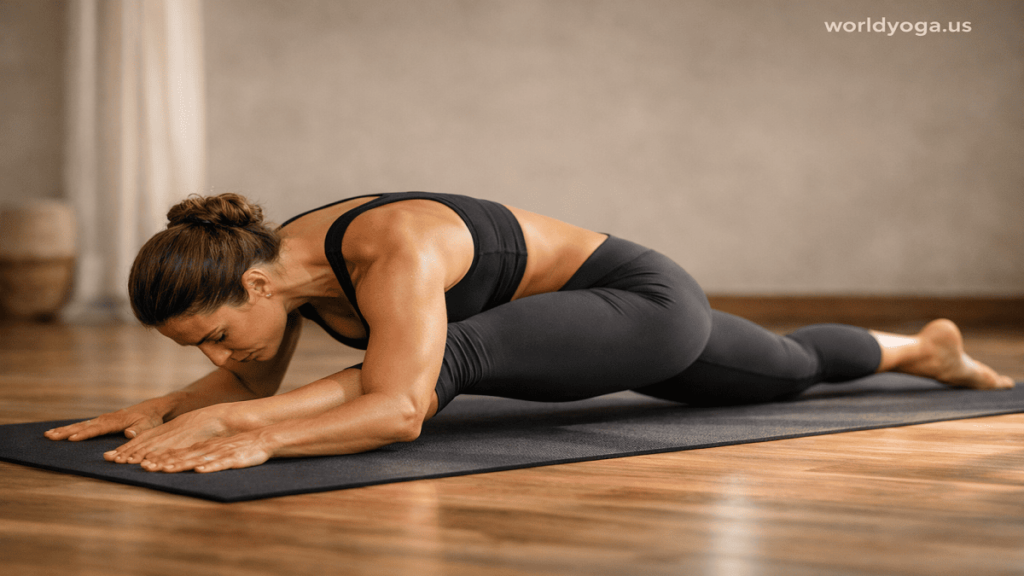
Which muscles are engaged during the posture?
The low lunge forward fold variation is a compound movement that integrates lower-body strength, hip mobility, and core stabilization. It activates multiple muscle groups simultaneously due to the split stance and the controlled hip hinge pattern. This makes it a highly functional exercise for improving movement quality, especially in activities that require balance, flexibility, and unilateral control. It is based on the fundamental mechanics of the Lunge pattern, with additional emphasis on posterior chain engagement during the forward fold.
Primary Muscles Worked
The most active muscles in this posture are located in the lower body, particularly in the front and back legs.
In the front leg, the quadriceps are heavily engaged to stabilize the knee and control the bent position. The gluteus maximus assists in maintaining hip stability and supports the return phase of the movement. The hamstrings also contribute, especially during the forward hinge, as they help control the descent and support hip extension when returning upright.
In the back leg, the hip flexors are the primary focus. The iliopsoas group (including the psoas major and iliacus) is stretched and lightly activated to maintain the half-kneeling position. This position creates a strong lengthening effect, particularly during the forward bend.
Secondary Muscles Involved
Several secondary muscle groups assist in maintaining balance and posture.
The gluteus medius plays a key stabilizing role in both hips, preventing excessive inward or outward collapse of the knees and pelvis. The adductor muscles of the inner thigh also help maintain alignment of the front leg.
The calf muscles in the front leg contribute to ankle stability, ensuring the foot remains grounded throughout the movement.
Core and Upper Body Engagement
The core muscles are essential for maintaining spinal control during the forward fold. The rectus abdominis, obliques, and deep transverse abdominis work together to stabilize the trunk and prevent excessive spinal rounding.
The spinal erectors along the back support a neutral spine position, especially during the hinge phase. Without their engagement, the torso would collapse forward, increasing strain on the lumbar region.
The shoulders and upper back muscles, including the trapezius and rhomboids, play a subtle role in maintaining posture and preventing the chest from collapsing inward.
Functional Muscle Integration
One of the key benefits of this posture is how it integrates multiple muscle groups into a coordinated movement pattern. Rather than isolating a single muscle, it trains the body to stabilize and mobilize simultaneously. This is particularly valuable for athletic performance and everyday movement efficiency.
Summary of Muscle Activation
- Front leg: quadriceps, gluteus maximus, hamstrings
- Back leg: hip flexors (iliopsoas group)
- Stabilizers: gluteus medius, adductors, calves
- Core: abdominals, obliques, transverse abdominis
- Postural support: spinal erectors, upper back muscles
External References
- https://www.acefitness.org/resources/everyone/exercise-library/
- https://www.nhs.uk/live-well/exercise/
- https://exrx.net/WeightExercises/HipFlexors/BWLunge
- https://www.healthline.com/health/exercise-fitness/lunges-benefits
When performed with correct form, this posture provides a balanced activation of strength and flexibility, making it effective for improving hip health, core stability, and overall lower-body coordination.
#Lunge: Back Knee on the Floor-Forward Bend in Hyderabad
What preparatory poses are recommended before practicing it?
The low lunge forward fold is a moderately complex mobility-strength posture that requires a combination of hip flexibility, core control, and lower-body stability. Preparing the body with simpler foundational movements helps reduce injury risk and improves the quality of the final posture. Since the movement is derived from the basic mechanics of a Lunge pattern, most preparatory poses focus on opening the hips, activating the glutes, and training spinal awareness.
1. Hip Flexor Openers (Half-Kneeling Holds)
A simple half-kneeling lunge hold is one of the most effective preparatory positions. In this pose, one knee is on the floor and the opposite foot is placed forward. Instead of moving into a forward fold, the practitioner holds an upright posture.
This helps gently stretch the hip flexors of the back leg while teaching pelvic alignment and core engagement. It also builds tolerance in the knees and improves balance before adding dynamic movement.
2. Low Lunge with Upright Torso
Before introducing the forward bend, it is recommended to practice a low lunge with the torso fully upright. This variation strengthens the front leg quadriceps and glute muscles while reinforcing correct knee alignment over the ankle.
Holding this position allows the body to stabilize in a split stance, which is essential for maintaining control during the forward fold phase.
3. Cat-Cow Movement for Spinal Awareness
The cat-cow exercise helps develop awareness of spinal positioning and movement control. It trains the practitioner to distinguish between spinal flexion and extension, which is crucial for avoiding rounding during the forward hinge.
This preparation improves coordination between breath and movement, making it easier to maintain a neutral spine in the final posture.
4. Standing Hip Hinge Drill
A standing hip hinge is another important preparatory movement. It teaches the correct mechanics of bending from the hips rather than the lower back.
Practicing this movement helps reinforce the pattern needed for the forward fold portion of the lunge. It also activates the hamstrings and glutes in a controlled manner.
5. Dynamic Hip Flexor Stretch (Lunge Pulses)
Gentle pulsing in a half-lunge position helps gradually increase hip mobility. These small controlled movements improve flexibility in the hip flexors without overstretching the joint.
This prepares the back leg for deeper lengthening in the full posture.
6. Glute Activation Exercises
Exercises such as bridges or standing glute squeezes help activate the posterior chain. Engaging the glutes ensures better pelvic stability during the lunge and prevents excessive strain on the lower back.
Summary of Preparation Focus
Before practicing the low lunge forward fold, the body should be prepared in three key areas:
- Hip mobility (hip flexor stretches, lunge holds)
- Spinal control (cat-cow, hinge drills)
- Lower-body stability (glute activation, upright lunge holds)
External References
- https://www.acefitness.org/resources/everyone/exercise-library/
- https://www.nhs.uk/live-well/exercise/
- https://exrx.net/
- https://www.healthline.com/health/exercise-fitness/lunges-benefits
When these preparatory poses are practiced consistently, the transition into the low lunge forward fold becomes smoother, safer, and significantly more effective for improving mobility and movement control.
#Lunge: Back Knee on the Floor-Forward Bend in Pune
What are the benefits and precautions of this forward bending lunge variation?
The forward bending lunge variation (low lunge with a forward fold) is a hybrid mobility and stability exercise that combines a split stance with a controlled hip hinge. It is commonly used in fitness conditioning, yoga-based mobility systems, and rehabilitation settings to improve lower-body function. Built on the foundational mechanics of a Lunge, this variation adds a deeper emphasis on hip flexibility and spinal control.
Key Benefits
1. Improved Hip Flexibility and Mobility
One of the primary benefits of this movement is enhanced hip flexor flexibility, particularly in the back leg. The half-kneeling position allows the iliopsoas group to lengthen safely while maintaining joint alignment. Over time, this can reduce tightness associated with prolonged sitting and improve stride efficiency during walking and running.
2. Better Hamstring and Posterior Chain Stretch
The forward fold component introduces a controlled stretch to the hamstrings of the front leg. Unlike passive stretching, this dynamic position integrates strength and flexibility, helping improve functional range of motion without compromising stability.
3. Enhanced Core Stability and Postural Control
Maintaining a neutral spine during the forward hinge requires continuous engagement of the core muscles. The transverse abdominis, obliques, and spinal stabilizers work together to prevent rounding or excessive arching. This improves overall postural awareness and supports safer movement patterns in daily activities.
4. Improved Unilateral Strength and Balance
Because the movement is performed in a split stance, it challenges balance and coordination between both sides of the body. This helps correct muscular imbalances and enhances single-leg stability, which is important for athletic performance and injury prevention.
5. Functional Movement Transfer
This exercise closely mimics real-life movement patterns such as bending, stepping, and reaching. It helps reinforce proper hip-hinge mechanics, which are essential for lifting objects safely and efficiently.
Precautions and Safety Considerations
1. Avoid Lower Back Rounding
A common mistake is collapsing the spine during the forward fold. This shifts pressure onto the lumbar region and may increase the risk of strain. The movement should always originate from the hips, not the spine.
2. Protect the Front Knee
The front knee should remain aligned with the toes and not cave inward. Excess forward pressure or misalignment can stress the knee joint unnecessarily.
3. Use Support if Needed
Beginners or individuals with balance limitations should use yoga blocks or place a hand on a stable surface for support. This helps maintain control and reduces the risk of falling.
4. Knee Sensitivity in the Back Leg
Since the back knee rests on the floor, cushioning is recommended. Individuals with knee discomfort should avoid hard surfaces or reduce time spent in the kneeling position.
5. Avoid Overstretching
Forcing a deep forward fold too early can overstretch the hamstrings or hip flexors. The range of motion should be gradual and controlled, respecting individual flexibility limits.
6. Breathing and Control
Holding the breath can create unnecessary tension. Steady breathing helps maintain core engagement and smooth movement transitions.
Summary
The forward bending lunge variation is highly effective for improving hip mobility, core stability, and unilateral control. However, its benefits depend on maintaining correct alignment and avoiding excessive depth or spinal collapse. When practiced with proper progression, it becomes a valuable tool for functional fitness and movement efficiency.
External References
- https://www.acefitness.org/resources/everyone/exercise-library/
- https://www.nhs.uk/live-well/exercise/
- https://exrx.net/WeightExercises/HipFlexors/BWLunge
- https://www.healthline.com/health/exercise-fitness/lunges-benefits
With mindful execution and gradual progression, this variation can significantly improve lower-body mobility while maintaining joint safety and long-term movement quality.
#Lunge: Back Knee on the Floor-Forward Bend in Delhi
Case Study of Lunge: Back Knee on the Floor-Forward Bend
This case study explores the application and outcomes of the low lunge with back knee on the floor and forward bend in a structured mobility and corrective exercise program. The movement is based on the fundamental Lunge pattern and is commonly used to address hip tightness, postural imbalances, and movement inefficiencies in individuals with sedentary lifestyles.
Subject Profile
The participant was a 32-year-old office professional with a predominantly sedentary work routine (8–10 hours of sitting daily). The individual reported:
- Tightness in hip flexors and hamstrings
- Occasional lower back stiffness
- Difficulty maintaining upright posture during prolonged standing
- Reduced mobility during squatting and bending movements
No prior history of major musculoskeletal injury was reported.
Intervention Design
A 6-week corrective exercise program was introduced, incorporating the low lunge forward bend as a primary mobility drill. Sessions were performed 4 times per week, with gradual progression in depth and duration.
The exercise protocol included:
- Half-kneeling low lunge hold (upright posture)
- Controlled forward hip hinge into the lunge
- 3–5 second isometric hold in end range
- Return to starting position with glute activation
Each session lasted 10–15 minutes as part of a broader mobility routine.
Additional supporting exercises included hip flexor stretches, glute bridges, and spinal mobility drills.
Movement Focus
The intervention emphasized:
- Neutral spine maintenance during forward bending
- Proper knee alignment over the front ankle
- Pelvic stability without excessive tilt
- Controlled breathing during movement transitions
The goal was to retrain movement mechanics rather than simply increase flexibility.
Outcomes After 6 Weeks
1. Improved Hip Mobility
The participant demonstrated a noticeable increase in hip extension range in the back leg. The iliopsoas region showed reduced tightness, especially during prolonged standing.
2. Reduced Lower Back Discomfort
Subjective reports indicated a significant decrease in lower back stiffness. Improved hip mobility reduced compensatory stress on the lumbar spine during daily bending tasks.
3. Enhanced Postural Control
The participant showed better ability to maintain an upright posture during standing and walking. Core engagement improved, leading to reduced slouching behavior.
4. Better Movement Efficiency
Functional tasks such as squatting, stair climbing, and bending became easier and more controlled. The improved hip hinge pattern reduced reliance on the lower back during movement.
Discussion
The results highlight the effectiveness of integrating low-load, controlled movement patterns into corrective exercise programs. The low lunge forward bend serves not only as a flexibility drill but also as a neuromuscular re-education tool that improves coordination between the hips, core, and spine.
Its unilateral nature helps identify and correct side-to-side imbalances, while the forward hinge reinforces safe spinal mechanics.
Precautions Observed During Implementation
- Depth of forward fold was carefully progressed to avoid lumbar strain
- Knee support was used to prevent discomfort in the back leg
- Emphasis was placed on quality of movement over range of motion
- Breathing control was reinforced to reduce tension
External References
- https://www.acefitness.org/resources/everyone/exercise-library/
- https://www.nhs.uk/live-well/exercise/
- https://exrx.net/WeightExercises/HipFlexors/BWLunge
- https://www.healthline.com/health/exercise-fitness/lunges-benefits
Conclusion
The low lunge with back knee on the floor and forward bend is an effective intervention for improving hip mobility, postural stability, and movement mechanics in sedentary individuals. When applied progressively and with proper alignment principles, it serves as a practical and scalable tool in corrective and functional training programs.
#Lunge: Back Knee on the Floor-Forward Bend in Banglore
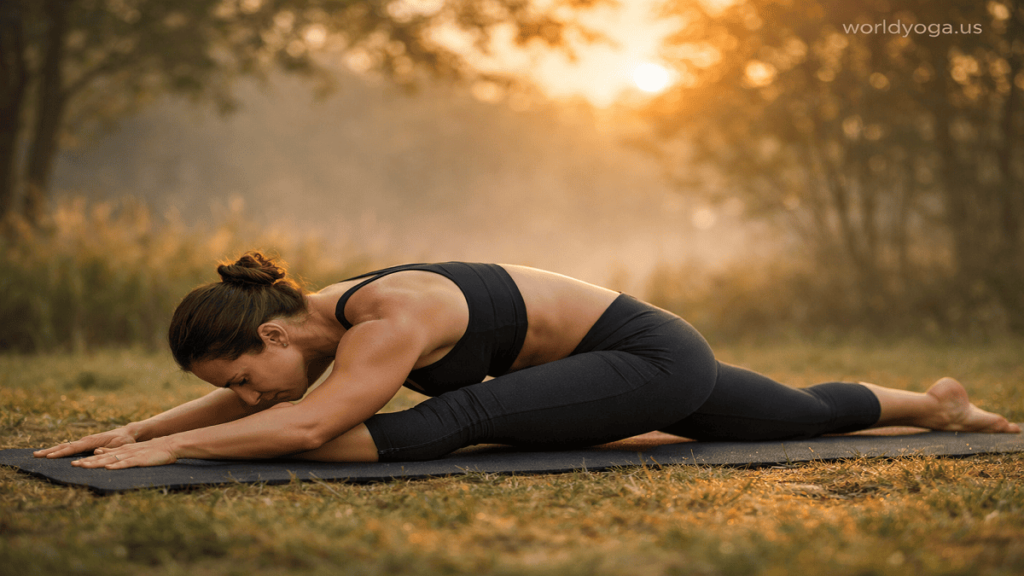
White Paper of Lunge: Back Knee on the Floor-Forward Bend
1. Executive Summary
The lunge with back knee on the floor combined with a forward bend is a hybrid movement pattern that integrates unilateral lower-body strength, hip mobility, and spinal control. This white paper examines its biomechanics, neuromuscular demands, and practical applications in corrective exercise, athletic conditioning, and general fitness programming.
The movement is derived from the foundational Lunge pattern and extends it by adding a controlled hip hinge under a stabilized split stance. This combination makes it particularly effective for addressing hip flexor tightness, postural dysfunction, and movement inefficiencies commonly associated with sedentary behavior.
2. Movement Classification and Purpose
This exercise can be classified as:
- Unilateral lower-body mobility-strength hybrid
- Closed kinetic chain (front leg support) with open-chain hip extension (back leg stretch)
- Dynamic hip hinge with isometric stabilization phase
Its primary purpose is to improve:
- Hip extension mobility (rear leg)
- Hamstring flexibility (front leg)
- Core stabilization under load
- Functional movement coordination
3. Biomechanical Analysis
3.1 Lower Body Mechanics
The front leg acts as the primary load-bearing structure. The quadriceps control knee flexion while the gluteus maximus stabilizes hip position. The hamstrings assist in eccentric control during the forward hinge.
The back leg remains in a kneeling position, placing the hip flexors—particularly the iliopsoas group—under controlled lengthening. This position promotes improved pelvic alignment and reduces anterior chain stiffness.
3.2 Spinal and Core Control
The forward bend phase requires strict maintenance of a neutral spine. The transverse abdominis and obliques stabilize the trunk, while the spinal erectors prevent excessive flexion collapse.
Neutral spine alignment=hip flexion with minimal spinal flexion\text{Neutral spine alignment} = \text{hip flexion with minimal spinal flexion}Neutral spine alignment=hip flexion with minimal spinal flexion
This relationship highlights the fundamental principle: movement must originate from the hip joint rather than spinal rounding.
3.3 Joint Load Distribution
- Front knee: moderate compressive load, stabilized by quadriceps
- Hip joints: primary mobility drivers
- Lumbar spine: low load when properly executed, high risk when misaligned
- Rear knee: static contact point requiring surface support
4. Neuromuscular Activation Profile
Primary muscle groups include:
- Quadriceps (front leg stabilization)
- Gluteus maximus (hip control and return phase)
- Iliopsoas (rear hip flexor stretch)
Secondary stabilizers:
- Gluteus medius (pelvic stability)
- Hamstrings (eccentric control)
- Calves (ankle stabilization)
- Deep core musculature (postural control)
This coordinated activation improves intermuscular coordination and movement efficiency.
5. Functional Applications
5.1 Corrective Exercise
Used to address:
- Anterior pelvic tilt
- Tight hip flexors from prolonged sitting
- Reduced hip hinge capacity
5.2 Athletic Conditioning
Supports:
- Sprint mechanics
- Change-of-direction efficiency
- Single-leg strength development
5.3 Rehabilitation Contexts
Applied in early-stage reconditioning programs due to its low axial spinal load and controllable range of motion.
6. Benefits Summary
- Improved hip mobility and extension capacity
- Enhanced core stabilization under dynamic movement
- Better unilateral strength balance
- Reinforced hip hinge mechanics
- Reduced compensatory lumbar stress when properly executed
Supporting evidence for lunge-based training benefits is widely documented in exercise science literature:
https://www.acefitness.org/resources/everyone/exercise-library/
https://exrx.net/WeightExercises/HipFlexors/BWLunge
https://www.nhs.uk/live-well/exercise/
7. Risk Factors and Limitations
Despite its benefits, improper execution may lead to:
- Lumbar spine flexion stress during forward bend
- Anterior knee strain due to misalignment
- Hip impingement in individuals with restricted mobility
- Balance instability in beginners
Mitigation requires progressive loading, strict alignment control, and surface support for the kneeling knee.
8. Conclusion
The back-knee lunge with forward bend is a highly efficient movement pattern for integrating mobility, stability, and neuromuscular coordination. Its value lies not in intensity but in precision of execution and progressive adaptation.
#Lunge: Back Knee on the Floor-Forward Bend in Kolkata
Industry Application of Lunge: Back Knee on the Floor-Forward Bend
The lunge with back knee on the floor combined with a forward bend is a versatile movement pattern widely used across multiple health, fitness, rehabilitation, and performance industries. It is based on the fundamental Lunge pattern and is valued for its ability to integrate hip mobility, unilateral stability, and spinal control in a low-impact position.
Because it requires minimal equipment and offers scalable intensity, it is frequently adopted in professional settings ranging from clinical rehabilitation to elite athletic conditioning.
1. Fitness and Strength Training Industry
In commercial gyms and personal training environments, this movement is commonly used as a corrective warm-up and accessory mobility drill.
Applications include:
- Pre-workout hip mobility activation
- Improving squat and deadlift mechanics
- Correcting left-right muscular imbalances
- Enhancing single-leg stability for functional training
Personal trainers often use it to teach foundational hip hinge mechanics before progressing clients to loaded compound lifts such as squats or Romanian deadlifts.
2. Physiotherapy and Rehabilitation Sector
In physiotherapy clinics, the movement is used as a controlled reconditioning exercise due to its low spinal compression and adjustable range of motion.
Clinical applications:
- Rehabilitation of hip flexor tightness
- Postural correction for anterior pelvic tilt
- Early-stage lower back pain management (non-acute cases)
- Gradual reintroduction of functional lower-body movement after inactivity
The back-knee-supported position reduces load on joints, making it suitable for patients who cannot tolerate standing unilateral work.
3. Sports Performance and Athletic Conditioning
Sports scientists and strength coaches use this variation to improve movement efficiency and injury resilience in athletes.
Performance benefits:
- Improved sprint mechanics through better hip extension
- Enhanced deceleration and change-of-direction control
- Increased single-leg strength endurance
- Better dynamic flexibility for kicking, running, and jumping sports
Athletes in sports such as football, basketball, and track and field benefit from the improved coordination between hip mobility and core stability.
4. Yoga, Pilates, and Mind-Body Training Systems
In yoga and Pilates-based programs, this movement is often integrated as a hybrid posture combining stability and controlled flexibility.
Functional uses:
- Deepening hip opening sequences
- Enhancing breath-movement coordination
- Supporting mindful spinal alignment training
- Preparing for deeper forward fold or split variations
It is commonly used as a transitional pose in flow-based routines.
5. Corporate Wellness and Occupational Health
With increasing sedentary work environments, this movement has become relevant in workplace wellness programs.
Workplace applications:
- Counteracting prolonged sitting posture
- Reducing hip and lower back stiffness
- Improving circulation during breaks
- Supporting ergonomic health interventions
Organizations incorporate it into short mobility routines for employees to reduce musculoskeletal strain.
6. Sports Medicine and Preventive Health
Sports medicine professionals recommend this movement as part of injury prevention protocols.
Preventive applications:
- Reducing risk of hamstring strains
- Improving pelvic stability under load
- Enhancing movement screening outcomes
- Supporting return-to-play progressions
Its controlled nature makes it suitable for monitoring functional improvement over time.
7. Key Industry Value Drivers
The widespread adoption of this movement is driven by:
- Low equipment requirement
- Scalability for all fitness levels
- Strong transfer to functional movement patterns
- Low joint impact with high neuromuscular benefit
- Applicability across rehabilitation and performance domains
External References
- https://www.acefitness.org/resources/everyone/exercise-library/
- https://www.nhs.uk/live-well/exercise/
- https://exrx.net/WeightExercises/HipFlexors/BWLunge
- https://www.healthline.com/health/exercise-fitness/lunges-benefits
Conclusion
The back knee lunge with forward bend has become a cross-disciplinary movement tool used in fitness, rehabilitation, sports performance, and workplace wellness. Its adaptability and functional benefits make it a standard inclusion in programs aimed at improving mobility, posture, and lower-body control across diverse professional settings.
#Lunge: Back Knee on the Floor-Forward Bend in Mumbai
Ask FAQs
What is the main purpose of the back knee lunge with forward bend?
This variation is designed to improve hip mobility, especially in the hip flexors of the back leg, while also enhancing hamstring flexibility in the front leg. It also trains core stability and reinforces proper hip-hinge mechanics. Because it is based on the foundational Lunge pattern, it is widely used in mobility, corrective exercise, and functional training programs.
Is this exercise suitable for beginners?
Yes, it is beginner-friendly when performed with proper support and reduced range of motion. The back knee-on-floor position makes it more stable than standing lunge variations. Beginners should focus on maintaining balance, keeping the spine neutral, and avoiding a deep forward fold until control improves.
Which muscles are most engaged during this movement?
The front leg primarily activates the quadriceps and gluteus maximus, while the back leg targets the hip flexors, especially the iliopsoas. The core muscles, including the abdominals and spinal stabilizers, work continuously to maintain posture and control during the forward bend.
What are the most common mistakes to avoid?
Common mistakes include rounding the lower back during the forward fold, allowing the front knee to collapse inward, and shifting weight too far forward. Another frequent error is forcing excessive depth before adequate flexibility and stability are developed, which can lead to discomfort or strain.
How often should this exercise be performed?
For general mobility and flexibility, it can be performed 3–5 times per week as part of a warm-up or cooldown routine. In corrective exercise programs, it may be practiced more frequently but with low intensity and controlled repetitions. Consistency is more important than intensity for long-term improvements.
Table of Contents
Disclaimer
This content is for general educational and informational purposes only and should not be considered medical advice. Always consult a qualified healthcare professional, physiotherapist, or certified fitness trainer before starting any new exercise program, especially if you have existing injuries, pain, or medical conditions. Exercise should be performed with proper technique and within individual comfort and ability levels to reduce the risk of injury.