Angle Pose
The Angle Pose is a foundational standing yoga posture that emphasizes lateral body extension, spinal alignment, and lower-body stability. Commonly practiced in yoga sessions, mobility training, and fitness warm-ups, this pose helps improve flexibility in the hips, thighs, and sides of the torso while also strengthening balance and body coordination. It is often used as a preparatory or transitional posture in more advanced yoga sequences due to its ability to engage multiple muscle groups in a controlled and low-impact manner.
In its basic form, the Angle Pose begins with a wide-legged stance that creates a stable foundation. One foot may be turned outward while the other remains at a slight angle, depending on the variation being practiced. The arms are typically extended in alignment with the legs, either reaching outward horizontally or lifted overhead in more advanced variations. The spine remains elongated throughout the movement, and the chest is kept open to support proper breathing and posture alignment.
One of the key benefits of the Angle Pose is improved flexibility in the inner thighs, hamstrings, and hip joints. The wide stance encourages gentle stretching of the lower body, which helps reduce stiffness caused by prolonged sitting or inactivity. At the same time, the lateral extension of the torso promotes flexibility along the sides of the body, including the oblique muscles and intercostal muscles between the ribs.
The pose also plays an important role in strengthening balance and stability. Holding the position requires engagement of the core muscles, including the abdominal and lower back muscles, which support spinal alignment. This makes the Angle Pose particularly useful for developing functional strength that translates into better posture and movement control in daily activities.
From a physiological perspective, the Angle Pose supports improved circulation and joint mobility. The combination of stretching and stabilization enhances blood flow to the lower limbs and helps maintain healthy range of motion in the hips and knees. According to yoga and mobility experts, standing lateral stretches are effective for reducing muscular tension and improving overall body awareness. Yoga Journal – Standing Yoga Poses Guide
Breathing control is another essential aspect of this posture. Slow and steady breathing helps relax the muscles and allows for deeper stretching without strain. Practitioners are encouraged to inhale while lengthening the spine and exhale while gently deepening the stretch. This coordination between breath and movement enhances both physical and mental relaxation.
The Angle Pose is widely used across different fitness and wellness disciplines. In yoga, it is often part of beginner and intermediate sequences. In physiotherapy, it is used to support rehabilitation for mild stiffness and mobility restrictions. In fitness training, it is included in warm-up routines to activate the lower body and prepare the muscles for more intense physical activity.
Despite its benefits, proper alignment is essential to avoid strain. Practitioners should avoid collapsing the chest, overextending the knees, or forcing the stretch beyond comfort. Individuals with knee, hip, or lower-back conditions should practice under professional guidance or use modified variations.
#Angle Pose in India
How is Angle Pose performed correctly in yoga practice?
The Angle Pose in yoga is a standing posture designed to improve flexibility, stability, and spinal alignment through a combination of wide-legged grounding and controlled upper-body positioning. Although the pose appears simple, correct technique is essential to ensure safe alignment and maximum benefit. It is commonly used in beginner and intermediate yoga sequences, as well as in mobility and warm-up routines.
To begin the Angle Pose correctly, stand upright on a stable surface and step your feet wide apart. The distance should be wider than shoulder-width but still comfortable enough to maintain balance. Turn your right foot outward at approximately a 90-degree angle while keeping the left foot slightly inward or forward, depending on comfort and balance. This setup creates a strong foundation for the posture.
Once the lower body is positioned, engage your core muscles gently. This helps stabilize the spine and prevents unnecessary strain on the lower back. Keep both legs active by pressing evenly through the feet while maintaining a slight softness in the knees. Locking the knees should be avoided, as it can reduce stability and increase joint pressure.
Next, extend your arms outward at shoulder height, forming a straight line from fingertip to fingertip. The chest should remain open, and the shoulders should stay relaxed rather than lifted toward the ears. In some variations, one arm may extend upward while the other reaches downward toward the front leg, depending on the style of Angle Pose being practiced.
As you settle into the posture, focus on lengthening the spine rather than collapsing into the hips. The torso should remain aligned and elongated, with the head positioned neutrally in line with the spine. Breathing plays a key role here—inhale deeply to create space in the body and exhale slowly while maintaining stability in the stance.
According to yoga practice guidelines, proper alignment in standing poses helps improve posture, flexibility, and joint stability when practiced consistently. Yoga Journal – Standing Yoga Poses Guide
To deepen the stretch safely, practitioners may gently shift weight into the front leg while maintaining control and balance. However, the movement should never feel forced or painful. The goal is to create a steady, comfortable stretch across the hips, thighs, and sides of the torso.
Common mistakes to avoid include overextending the front knee, collapsing the chest, rounding the spine, or losing balance due to improper foot alignment. Practicing in front of a mirror or under instructor supervision can help correct these alignment issues, especially for beginners.
The Angle Pose is typically held for 15 to 30 seconds on each side and repeated as part of a balanced yoga sequence. It can also be combined with other standing poses to enhance overall mobility and body awareness.
When performed with correct alignment, controlled breathing, and mindful movement, the Angle Pose becomes a highly effective yoga posture for improving flexibility, posture, and full-body stability.
#Angle Pose in Maharashtra
What is the proper alignment in Angle Pose variations?
Proper alignment in Angle Pose variations is essential to ensure stability, prevent strain, and maximize the benefits of the posture. While different styles of Angle Pose may vary in arm placement or torso direction, the foundational alignment principles remain consistent across all variations. These principles focus on the relationship between the feet, knees, hips, spine, shoulders, and head.
The alignment begins with the feet, which form the base of the posture. In most variations, the feet are placed in a wide stance, significantly broader than shoulder-width. One foot is typically turned outward while the other remains slightly angled inward for balance. Both feet should remain firmly grounded, with weight distributed evenly to maintain stability. The arches of the feet should stay active to support the legs and prevent collapsing inward.
The knees must align directly over the direction of the toes. In the front leg, the knee should not extend beyond the ankle, as this can place unnecessary stress on the joint. Instead, the knee should track in the same direction as the foot, creating a stable and safe lower-body structure. The back leg remains engaged and straight or slightly soft, depending on flexibility and variation.
Hip alignment is another critical factor. The hips should remain open and balanced rather than twisted or collapsed. In many Angle Pose variations, practitioners are encouraged to gently square or align the hips with the front direction of the pose. This helps maintain symmetry and supports proper spinal positioning.
The spine should remain long, neutral, and fully extended throughout the posture. Whether the torso is upright or angled sideways, the back should avoid rounding or excessive arching. Engaging the core muscles helps stabilize the spine and maintain correct posture alignment. According to yoga alignment principles, a neutral spine is key to safe and effective practice in standing poses. Yoga Journal – Standing Pose Alignment Guide
Shoulder alignment depends on the variation being practiced. In a basic Angle Pose, the arms are extended horizontally in line with the shoulders, creating a straight line from fingertip to fingertip. The shoulders should remain relaxed and down, avoiding tension in the neck. In extended variations, one arm may reach upward while the other reaches downward toward the front leg, but both shoulders should still remain stable and open.
The head and neck should stay aligned with the spine. The gaze may be forward, upward, or downward depending on the variation, but it should not create strain in the neck. Maintaining a neutral neck position supports overall balance and prevents unnecessary tension.
Breathing also supports proper alignment. Deep inhalation helps lengthen the spine, while exhalation allows for deeper engagement and stability in the posture. Controlled breathing enhances body awareness and helps maintain alignment throughout the hold.
Common alignment mistakes include collapsing the chest, overextending the front knee, tilting the hips unevenly, or lifting the shoulders toward the ears. These errors can reduce the effectiveness of the pose and increase the risk of discomfort.
When practiced with correct alignment, Angle Pose variations improve flexibility, balance, posture, and overall body coordination, making it a valuable addition to yoga and mobility-focused routines.
#Angle Pose in Ahemadabad
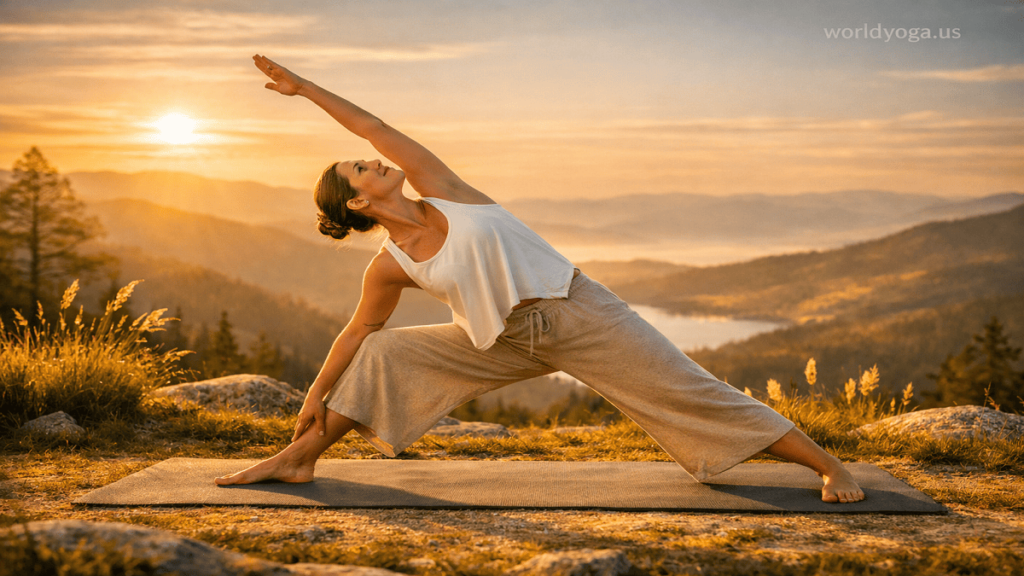
Which muscles are engaged during Angle Pose?
The Angle Pose is a multi-muscle standing yoga posture that engages the entire body through a combination of stability, alignment, and controlled stretching. Although it is often categorized as a flexibility exercise, it also activates key muscle groups responsible for balance, posture, and functional movement. Because of this integrated activation, it is widely used in yoga, physiotherapy, and mobility training programs.
One of the primary muscle groups engaged during Angle Pose is the lower body. The quadriceps play a major role in stabilizing the front leg and controlling knee alignment. The hamstrings assist in supporting hip movement and maintaining leg extension. The gluteal muscles, particularly the gluteus medius and maximus, help stabilize the pelvis and support balance during the wide-legged stance. The inner thigh muscles, known as the adductors, are also activated to control leg positioning and maintain stability across the hips.
The calves and ankle stabilizers are continuously engaged to maintain grounding and balance. These muscles help distribute body weight evenly across both feet, preventing instability or excessive pressure on one side of the body. This lower-body activation is essential for maintaining a strong foundation in all Angle Pose variations.
The core muscles play a central role in supporting spinal alignment. The rectus abdominis, obliques, and transverse abdominis work together to stabilize the torso and prevent excessive arching or collapsing of the spine. A strong core engagement ensures that the upper body remains aligned while transitioning between different variations of the pose.
The back muscles, including the erector spinae, contribute significantly to posture control. These muscles help keep the spine elongated and upright, especially in variations where the torso is lifted or extended. The latissimus dorsi and rhomboids also assist in maintaining shoulder stability and upper-back alignment.
In the upper body, the shoulder muscles are actively involved, particularly the deltoids, which support arm positioning in extended variations. The trapezius muscles help stabilize the shoulder blades, while the serratus anterior contributes to proper shoulder movement and control. Arm engagement varies depending on whether the pose includes lateral extension or overhead reaching.
According to yoga and movement specialists, standing poses that combine stability and stretching are highly effective for improving muscular coordination and overall functional strength. Yoga Journal – Standing Yoga Poses Guide
The Angle Pose also engages smaller stabilizing muscles throughout the body, including those in the hips, knees, and spine. These muscles are essential for maintaining balance, especially in wide-stance positions where control and alignment are critical.
Breathing further supports muscular engagement by promoting relaxation and endurance. Controlled breathing allows muscles to remain active without unnecessary tension, improving overall performance and comfort during the pose.
When practiced consistently with proper alignment, the Angle Pose strengthens stabilizing muscles, improves flexibility, enhances balance, and supports better posture and full-body coordination.
#Angle Pose in Hyderabad
What preparatory poses are recommended before practicing Angle Pose?
Preparing the body before practicing Angle Pose is important for ensuring stability, preventing strain, and achieving proper alignment. Since this posture involves a wide-legged stance, lower-body engagement, hip opening, and spinal extension, preparatory poses should focus on warming up the legs, hips, spine, and shoulders. A well-structured warm-up also improves flexibility and allows smoother transitions into the pose.
One of the most effective preparatory poses is Mountain Pose (Tadasana). This foundational standing posture helps establish correct alignment of the feet, knees, hips, and spine. It also activates the core muscles and improves body awareness, which is essential before moving into more complex standing variations like Angle Pose. Practicing Mountain Pose helps build stability and balance from the ground up.
Warrior II is another highly recommended preparatory posture. It closely resembles the structure of Angle Pose by incorporating a wide stance and strong engagement of the legs. Warrior II helps open the hips, strengthen the thighs, and improve balance while teaching proper knee and foot alignment. It also prepares the shoulders for extended arm positioning, which is commonly used in Angle Pose variations.
Extended Side Angle preparation is particularly beneficial for lateral flexibility. This movement gently stretches the inner thighs, hips, and sides of the torso, which are heavily engaged in Angle Pose. It also encourages spinal lengthening and core activation, both of which are essential for maintaining correct posture during the main pose.
Wide-Legged Forward Fold is another important preparatory pose. It helps loosen the hamstrings, calves, and lower back while increasing flexibility in the hips. This makes it easier to maintain a stable wide-legged stance without discomfort or tension. According to yoga alignment principles, forward folds are effective for improving lower-body flexibility and preparing the body for standing balance poses. Yoga Journal – Standing Pose Preparation Guide
Cat-Cow Stretch is also highly beneficial before practicing Angle Pose. This gentle spinal movement increases mobility in the back, activates the core, and helps coordinate breath with movement. It prepares the spine for safe extension and stabilization during standing postures.
Shoulder mobility exercises, such as arm circles and shoulder rolls, are equally important. Since Angle Pose often includes extended arm positions, warming up the shoulders reduces stiffness and improves range of motion. These movements help prevent tension in the neck and upper back during practice.
Low Lunge (Anjaneyasana) is another effective preparatory posture that opens the hip flexors and improves lower-body mobility. Tight hip flexors can restrict movement in wide-legged poses, so stretching them beforehand enhances comfort and alignment.
Breathing exercises are also recommended as part of preparation. Deep, controlled breathing helps relax the muscles, improves focus, and increases body awareness before entering the pose.
When practiced consistently, these preparatory poses help improve flexibility, enhance alignment, and ensure safe and effective performance of Angle Pose in yoga and mobility routines.
#Angle Pose in Delhi
What are the benefits and precautions of Angle Pose?
Angle Pose is a widely practiced standing yoga posture that combines a wide-legged stance with coordinated arm and torso positioning. It is valued for its ability to improve flexibility, strengthen stabilizing muscles, and enhance overall body alignment. Like most yoga postures, it offers significant physical and functional benefits when performed correctly, but it also requires attention to proper technique and safety precautions to avoid strain or injury.
One of the primary benefits of Angle Pose is improved lower-body flexibility. The wide stance helps stretch the inner thighs, hamstrings, and hip joints, which are often tight due to prolonged sitting or limited movement. This makes the posture especially useful for individuals with sedentary lifestyles. Regular practice can gradually increase range of motion in the hips and legs, contributing to better mobility in daily activities.
The pose also enhances spinal alignment and posture. As the torso remains elongated and the chest open, the spine is encouraged to stay in a neutral and upright position. This helps counteract slouching and rounded shoulders caused by desk work or screen usage. Engaging the core muscles during the posture further supports the spine and improves postural stability.
Another key benefit is increased muscular strength and endurance. Angle Pose activates multiple muscle groups simultaneously, including the quadriceps, hamstrings, glutes, core muscles, and shoulder stabilizers. This full-body engagement helps improve balance, coordination, and functional strength. According to yoga and mobility experts, standing poses that combine strength and flexibility are effective for improving overall body control and movement efficiency. Yoga Journal – Standing Yoga Poses Guide
Angle Pose also supports better balance and body awareness. Holding a wide stance while maintaining upper-body alignment requires concentration and coordination. This improves proprioception, which is the body’s ability to sense position and movement in space. Enhanced balance can reduce the risk of falls and improve performance in other physical activities.
In addition, the posture encourages controlled breathing and relaxation. Deep, steady breathing during the pose helps reduce muscular tension and promotes mental calmness. This makes it beneficial not only for physical fitness but also for stress relief and mindfulness practice.
Despite its benefits, proper precautions are essential. One common risk is overstraining the knees, especially if they extend beyond the toes in the front leg. To prevent injury, the knee should always align with the direction of the foot. Another concern is lower-back strain, which can occur if the spine is excessively arched or if the core is not engaged properly.
Individuals with knee injuries, hip problems, or lower-back conditions should practice Angle Pose with caution or under professional supervision. Modifications, such as reducing the width of the stance or using support, can help make the posture safer and more accessible.
It is also important to avoid forcing the stretch beyond a comfortable range. The pose should feel stable and controlled rather than painful or strained. Warming up before practice, especially with hip and shoulder mobility exercises, is strongly recommended to prepare the body.
When performed with correct alignment and mindful awareness, Angle Pose is a highly effective yoga posture for improving flexibility, posture, strength, and overall functional movement while supporting long-term physical well-being.
#Angle Pose in Banglore
Case Study of Angle Pose
Angle Pose is a foundational standing yoga posture widely used to improve flexibility, balance, and musculoskeletal alignment. This case study examines the effects of regular Angle Pose practice on a sedentary working adult experiencing hip stiffness, lower-back discomfort, and postural imbalance due to prolonged desk-based activity.
Background
A 34-year-old office employee reported persistent tightness in the hips, inner thighs, and lower back, along with reduced flexibility and occasional shoulder tension. The individual’s daily routine involved more than 9 hours of sitting, minimal physical activity, and poor ergonomic posture. These factors contributed to reduced mobility and muscular stiffness.
A structured yoga-based intervention was introduced, with Angle Pose as a key component of the mobility program. The goal was to improve hip flexibility, restore postural alignment, and enhance overall body awareness.
Initial Assessment
At the beginning of the program, the participant showed limited hip mobility and difficulty maintaining a wide-legged stance without discomfort. The spine tended to round slightly during lateral extension, and balance stability was moderate. Holding the pose for more than 10–15 seconds caused mild strain in the thighs and lower back.
According to yoga and movement specialists, standing lateral stretch postures are effective in improving flexibility and postural alignment when practiced consistently. Yoga Journal – Standing Yoga Poses Guide
Intervention Plan
The participant followed a 6-week structured routine that included:
- Mountain Pose for alignment awareness
- Warrior II for lower-body strength and hip opening
- Extended Side Angle preparation for lateral flexibility
- Wide-Legged Forward Fold for hamstring release
- Angle Pose practice (3–5 sets per session, 20–30 seconds per side)
The focus was placed on proper alignment, controlled breathing, and gradual progression without forcing the stretch.
Observations and Progress
After three weeks, noticeable improvements were observed in hip flexibility and balance stability. The participant reported reduced stiffness in the inner thighs and improved comfort during prolonged sitting. Shoulder alignment also improved due to better postural awareness.
By the sixth week, the participant demonstrated significantly improved range of motion in the hips and spine. The ability to maintain Angle Pose increased to 40–45 seconds without discomfort. Core engagement became more consistent, leading to better spinal stability and reduced lower-back strain during daily activities.
Breathing control during the posture also improved, contributing to reduced muscular tension and enhanced relaxation after long working hours.
Discussion
The results indicate that consistent practice of Angle Pose, when combined with preparatory movements and proper alignment, can effectively improve flexibility, posture, and functional mobility. The pose engages multiple muscle groups, including the quadriceps, hamstrings, glutes, core, and shoulder stabilizers, which contributes to overall muscular balance and coordination.
Research in mobility training supports the use of multi-joint standing poses for improving functional movement and reducing stiffness associated with sedentary lifestyles.
Conclusion
This case study demonstrates that Angle Pose is a practical and effective yoga posture for addressing mobility limitations caused by prolonged sitting and inactivity. With consistent practice and correct alignment, it can enhance hip flexibility, improve posture, strengthen stabilizing muscles, and support overall physical well-being.
#Angle Pose in Pune
White Paper of Angle Pose
Introduction
Angle Pose is a foundational standing yoga posture used in flexibility training, mobility enhancement, and postural correction practices. It combines a wide-legged stance with structured arm and torso positioning to promote lower-body flexibility, spinal alignment, and muscular coordination. Due to its accessibility and adaptability, Angle Pose is widely applied in yoga, physiotherapy, athletic conditioning, and workplace wellness programs.
In modern sedentary lifestyles, individuals frequently experience reduced hip mobility, lower-back stiffness, and postural imbalance. Angle Pose addresses these issues through a structured combination of stretching and stabilization, making it a valuable component in preventive and rehabilitative movement systems.
Biomechanical Overview
Angle Pose is characterized by a wide base of support and controlled distribution of body weight across both lower limbs. The posture engages multiple joint systems, including the hips, knees, spine, and shoulders, while requiring coordinated muscular activation for balance and alignment.
Key biomechanical components include:
- Hip abduction and controlled external rotation
- Knee stabilization through quadriceps engagement
- Spinal elongation supported by core musculature
- Shoulder alignment and controlled arm extension
- Balance regulation through ankle and foot stabilizers
This integration of movement and stability improves functional biomechanics and enhances neuromuscular coordination.
Muscular Engagement
Angle Pose activates both primary and stabilizing muscle groups:
- Lower body: quadriceps, hamstrings, gluteus maximus, gluteus medius, adductors, calves
- Core: rectus abdominis, obliques, transverse abdominis
- Back: erector spinae, latissimus dorsi, rhomboids
- Upper body: deltoids, trapezius, serratus anterior
This full-body engagement contributes to improved muscular endurance, postural strength, and movement efficiency.
According to established yoga and mobility frameworks, standing multi-plane poses are effective for enhancing strength, flexibility, and coordination simultaneously. Yoga Journal – Standing Yoga Poses Guide
Functional Benefits
Angle Pose provides a range of physical and functional benefits:
- Improved hip and lower-limb flexibility
- Enhanced spinal alignment and postural correction
- Increased core stability and muscular endurance
- Better balance and proprioceptive awareness
- Reduced stiffness from prolonged sedentary behavior
- Improved range of motion in shoulders and torso
These benefits make the posture suitable for both preventive health strategies and rehabilitation programs.
Applications Across Industries
Angle Pose is widely used across multiple sectors:
Healthcare and Physiotherapy
Used for improving mobility, reducing stiffness, and supporting recovery from mild musculoskeletal restrictions.
Corporate Wellness
Incorporated into workplace stretching programs to reduce posture-related discomfort and improve employee productivity.
Sports and Fitness Training
Used in warm-up and conditioning routines to activate lower-body muscles and improve movement efficiency.
Yoga and Mindfulness Practices
Integrated into beginner and intermediate sequences for flexibility, alignment, and breath coordination.
Safety Considerations
While Angle Pose is generally safe, correct alignment is essential. Key precautions include:
- Avoiding knee overextension beyond the toes
- Maintaining a neutral spine without excessive arching
- Engaging core muscles for spinal support
- Avoiding forced stretching beyond comfort level
- Modifying stance width for beginners or individuals with joint limitations
Individuals with knee, hip, or lower-back conditions should practice under professional supervision when necessary.
Conclusion
Angle Pose is a highly effective multi-dimensional yoga posture that supports flexibility, strength, balance, and postural alignment. Its biomechanical efficiency and adaptability make it suitable for diverse applications ranging from clinical rehabilitation to athletic training and workplace wellness. When performed with correct alignment and consistent practice, Angle Pose contributes significantly to long-term musculoskeletal health and functional movement improvement.
#Angle Pose in Kolkata
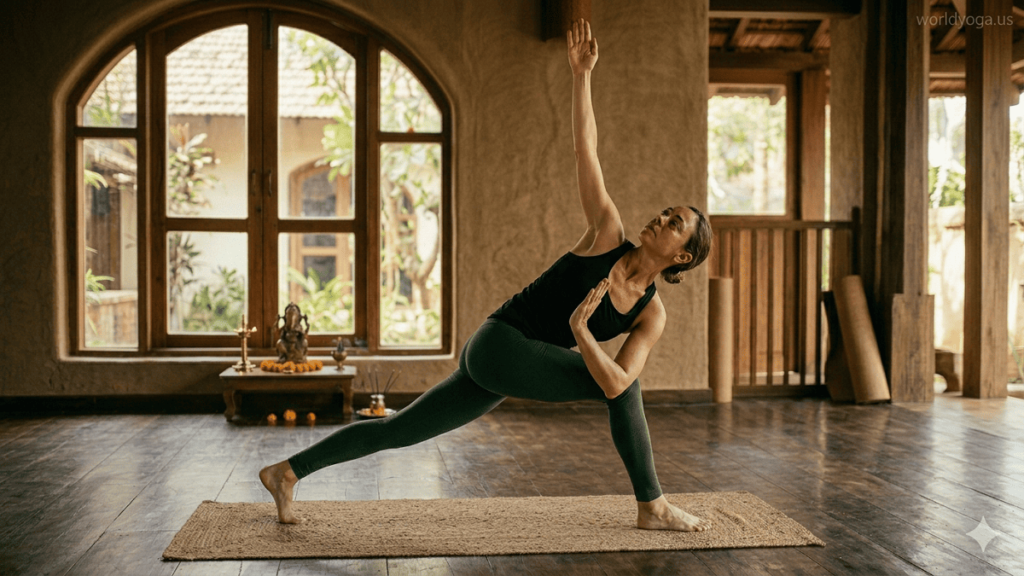
Industry Application of Angle Pose
Angle Pose is a widely used standing yoga posture that combines a wide-legged stance with structured alignment of the spine, hips, and upper body. Beyond traditional yoga practice, it has gained strong relevance across multiple industries due to its effectiveness in improving flexibility, posture, balance, and muscular coordination. Its simplicity, scalability, and low-impact nature make it suitable for preventive health programs, rehabilitation settings, and performance training environments.
Healthcare and Physiotherapy
In healthcare and physiotherapy, Angle Pose is frequently used as part of mobility restoration and musculoskeletal conditioning programs. It helps improve hip flexibility, reduce lower-back stiffness, and enhance spinal alignment in patients recovering from sedentary lifestyles or mild mobility restrictions.
Physiotherapists often incorporate Angle Pose into rehabilitation plans because it encourages controlled movement without excessive joint stress. The posture also supports gradual strengthening of stabilizing muscles, making it useful for long-term recovery strategies and posture correction protocols.
Corporate Wellness Programs
In corporate environments, Angle Pose is commonly included in workplace wellness initiatives. Office workers often experience neck stiffness, shoulder tension, and tight hips due to prolonged sitting and poor ergonomic habits.
Angle Pose helps counteract these effects by promoting full-body extension, improving circulation, and reducing muscular fatigue. Many organizations integrate short guided stretching sessions during work breaks to enhance employee comfort, reduce stress, and improve productivity. Its minimal space requirement makes it ideal for office settings.
Sports and Athletic Training
In sports and athletic conditioning, Angle Pose is used as part of dynamic warm-ups and mobility routines. It activates key muscle groups such as the quadriceps, hamstrings, glutes, core, and shoulders, preparing the body for physical performance.
Athletes benefit from improved hip mobility, better balance, and enhanced body coordination, which are essential for injury prevention and performance optimization. Sports that require agility, rotational movement, and lower-body strength particularly benefit from such standing mobility exercises.
Fitness and Yoga Studios
Angle Pose is a core component in yoga studios and fitness training programs. It is often included in beginner and intermediate yoga sequences to develop foundational flexibility and alignment awareness.
Fitness trainers use the posture to improve full-body engagement during warm-ups and mobility circuits. It is also effective in functional training programs that emphasize movement efficiency and joint stability.
Education and Wellness Programs
Educational institutions use Angle Pose in physical education and student wellness programs to encourage healthy posture habits and physical activity. It helps students develop body awareness, flexibility, and stress management skills.
Wellness workshops and mindfulness sessions also include the posture due to its ability to combine controlled breathing with physical stretching, supporting both physical and mental well-being.
Ergonomics and Occupational Health
In ergonomics and occupational health, Angle Pose is recommended as part of active break routines for individuals working in static or repetitive environments. It helps reduce musculoskeletal strain caused by prolonged sitting or standing.
Occupational health experts often advocate simple stretching protocols that include standing poses like Angle Pose to maintain joint mobility and reduce workplace-related injuries.
According to general mobility and fitness guidelines, regular stretching and standing mobility exercises can improve flexibility and reduce stiffness associated with sedentary behavior. Healthline Stretching and Mobility Guide
Conclusion
Angle Pose has evolved into a versatile movement tool with applications across healthcare, corporate wellness, sports training, education, and ergonomics. Its ability to improve flexibility, posture, balance, and muscular coordination makes it highly valuable in both preventive and performance-based contexts. When integrated into structured programs, Angle Pose supports long-term physical well-being and functional movement efficiency across diverse industries.
#Angle Pose in Mumbai
Ask FAQs
What is Angle Pose in yoga?
Angle Pose is a standing yoga posture performed with a wide-legged stance and structured arm and body alignment. It is designed to improve flexibility, balance, posture, and overall body mobility by engaging multiple muscle groups simultaneously.
What are the main benefits of Angle Pose?
Angle Pose helps improve hip and thigh flexibility, strengthens the core and legs, enhances spinal alignment, and supports better balance and coordination. It is also effective in reducing stiffness caused by prolonged sitting or inactivity.
Who can practice Angle Pose?
Most beginners and intermediate practitioners can safely perform Angle Pose. It is commonly included in yoga, fitness, and physiotherapy routines. However, individuals with knee, hip, or lower-back issues should practice under professional guidance or use modifications.
What muscles are used in Angle Pose?
Angle Pose activates the quadriceps, hamstrings, glutes, inner thighs, calves, core muscles, and back muscles. It also engages the shoulders and arms in extended variations, making it a full-body engagement posture.
How long should Angle Pose be held?
Angle Pose is typically held for 15 to 30 seconds on each side, depending on flexibility and comfort level. It can be repeated multiple times within a yoga or mobility routine while maintaining proper alignment and steady breathing.
Table of Contents
Disclaimer:
This content is for informational and educational purposes only and is not a substitute for professional medical, physiotherapy, or fitness advice. Please consult a qualified healthcare provider or certified yoga instructor before starting any new exercise, especially if you have existing injuries or medical conditions.