Baddha Parivritta Anjaneyasana
Baddha Parivritta Anjaneyasana, also known as the Bound Revolved Crescent Lunge Pose, is an advanced yoga posture that combines balance, flexibility, spinal rotation, and deep concentration. Derived from Sanskrit, “Baddha” means bound, “Parivritta” means revolved or twisted, and “Anjaneyasana” refers to the crescent lunge pose associated with Hanuman, symbolizing strength and devotion. This posture is commonly practiced in advanced Hatha and Vinyasa yoga sequences because of its ability to strengthen the body while improving mental focus.
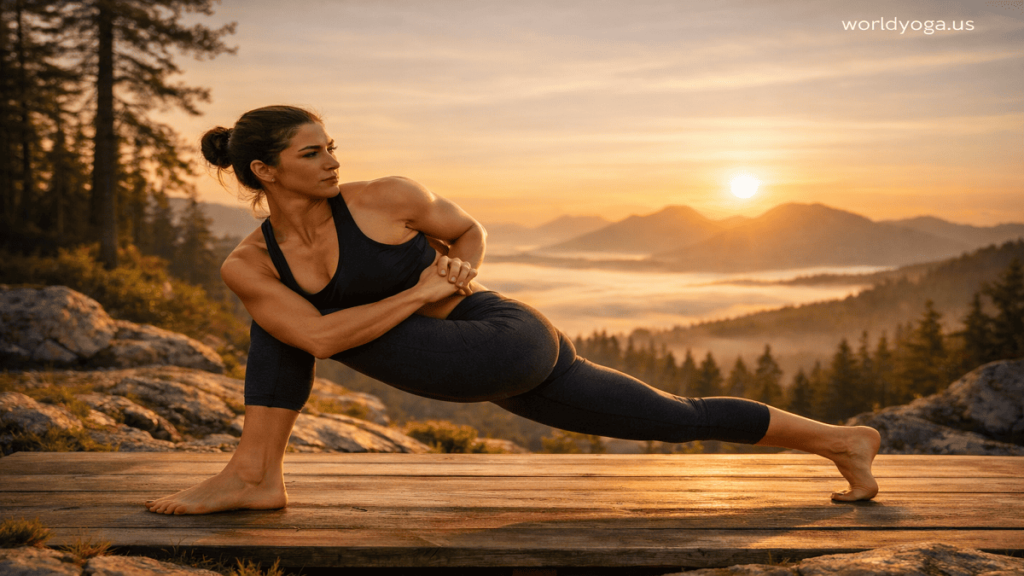
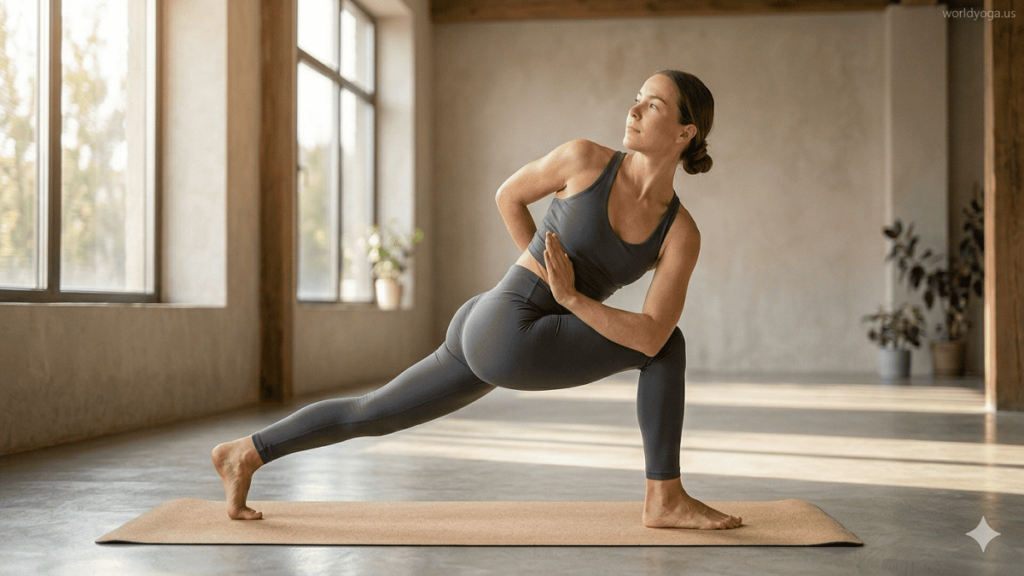
The pose begins in a low lunge position with one leg bent forward and the opposite knee grounded or lifted depending on the practitioner’s flexibility and strength. The torso twists toward the bent leg while the arms create a binding movement around the thigh and back. This combination of twisting and binding requires significant mobility in the hips, shoulders, spine, and hamstrings, making it a challenging yet rewarding asana for experienced yoga practitioners.
One of the primary benefits of Baddha Parivritta Anjaneyasana is improved spinal flexibility and core strength. The deep rotational movement engages the abdominal muscles and stimulates the digestive organs, which may help improve digestion and detoxification. At the same time, the lunge position strengthens the quadriceps, glutes, hips, and lower back. Regular practice can also enhance posture, coordination, and body awareness. According to yoga experts, revolved poses are known for activating the solar plexus or Manipura Chakra, associated with confidence, personal power, and inner strength.
In addition to physical benefits, this posture supports mental concentration and emotional stability. Since the pose demands balance and controlled breathing, practitioners develop mindfulness and mental discipline while holding the asana. Many yoga teachers recommend incorporating preparatory poses such as Anjaneyasana, revolved lunge variations, and shoulder-opening stretches before attempting the full bind. This helps reduce the risk of strain and improves alignment during practice.
However, beginners and individuals with knee, hip, spinal, or shoulder injuries should practice caution. It is advisable to perform the posture under the supervision of a certified yoga instructor to ensure safe alignment and avoid unnecessary pressure on the joints. Modifications using yoga blocks or straps can make the pose more accessible while gradually building flexibility and stability.
For detailed guidance on yoga posture techniques and anatomy, readers can explore Yogapedia and Tummee Yoga. These resources provide step-by-step instructions, variations, and additional insights into advanced yoga practices.
#Baddha Parivritta Anjaneyasana in India
How is Baddha Parivritta Anjaneyasana performed correctly?
Baddha Parivritta Anjaneyasana, commonly known as Bound Revolved Crescent Lunge Pose, is an advanced yoga posture that combines a deep lunge, spinal twist, and arm bind. Practicing this pose correctly requires balance, flexibility, controlled breathing, and proper body alignment. Because of its complexity, it is generally recommended for intermediate to advanced yoga practitioners who already have experience with twisting and balancing postures.
To begin the pose, start in a low lunge position. Step the right foot forward between the hands while extending the left leg back with the toes tucked under. Keep the front knee aligned directly above the ankle to avoid unnecessary strain on the joints. Lengthen the spine and engage the core muscles to create stability throughout the body. Many practitioners begin from Anjaneyasana before moving into the revolved variation.
Next, bring the palms together at the center of the chest in a prayer position. Exhale slowly and twist the torso toward the right side, placing the left elbow outside the right thigh. The twist should originate from the abdomen and spine rather than forcing the shoulders. Maintaining a long spine is essential for protecting the lower back and allowing deeper rotation. According to Yoga Journal, engaging the abdominal muscles during twists improves stability and spinal support.
Once the body feels stable in the revolved lunge, practitioners can move into the binding stage of the posture. Slide the left arm underneath the front thigh while the right arm reaches behind the back. Attempt to clasp the hands or fingertips together near the hip. This binding action opens the shoulders and chest while intensifying the spinal twist. If the hands do not connect comfortably, a yoga strap can be used as a modification. The chest should remain lifted and the gaze can be directed upward or sideways depending on neck comfort.
Breathing plays a critical role in performing Baddha Parivritta Anjaneyasana correctly. Inhale deeply to elongate the spine, and exhale to deepen the twist gradually without forcing the body. Hold the pose for several breaths while maintaining steady balance and muscular engagement. Practitioners should avoid collapsing into the front hip or placing excessive pressure on the lower back.
To exit the pose safely, release the bind slowly, return the hands to the floor, and step back into a neutral position such as Downward-Facing Dog. Repeat the posture on the opposite side to maintain balance in the body.
Regular practice of this asana may improve hip mobility, spinal flexibility, balance, and concentration. However, individuals with knee, shoulder, spinal, or hip injuries should practice under professional guidance. Detailed pose breakdowns and alignment tips can be found on Tummee Yoga and Yoga International, which offer instructional resources for advanced yoga practitioners.
#Baddha Parivritta Anjaneyasana in Maharashtra
What is the proper alignment in this bound revolved crescent lunge?
Proper alignment is essential in Baddha Parivritta Anjaneyasana, or Bound Revolved Crescent Lunge Pose, to ensure stability, maximize the benefits of the posture, and reduce the risk of injury. Since this advanced yoga asana combines a deep lunge, spinal twist, and shoulder bind, maintaining correct body positioning throughout the pose is critical for both safety and effectiveness.
The alignment begins with the foundation of the pose. From a lunge position, place the front foot firmly on the mat with the knee stacked directly above the ankle. The front knee should point forward rather than collapsing inward or outward. The back leg remains extended and active, with the heel lifted and the back thigh engaged. This creates strength and balance in the lower body while supporting the spinal twist. In traditional Anjaneyasana variations, maintaining a stable lower-body foundation is considered the key to safe progression into deeper twists.
The hips should remain as level as possible instead of opening excessively to one side. Drawing the inner thighs toward the center helps stabilize the pelvis and protect the lower back. Engaging the core muscles is equally important, as it supports the spine and allows the twist to originate from the torso rather than forcing movement through the neck or shoulders. According to Yoga Journal, activating the abdominal muscles during revolved postures improves balance and spinal integrity.
As the torso twists toward the bent leg, lengthening the spine before deepening the rotation is essential. Practitioners should avoid rounding the back or collapsing the chest. Instead, the chest should stay broad and lifted to encourage proper breathing and spinal extension. The twist should distribute evenly through the entire spine, especially the thoracic region, rather than placing excessive pressure on the lumbar spine.
In the binding stage, the lower arm threads underneath the front thigh while the upper arm wraps behind the back. The shoulders should remain relaxed and away from the ears to prevent tension in the neck. The bind should never be forced; flexibility develops gradually with consistent practice. Using a yoga strap can help maintain alignment while safely working toward a full bind.
The neck alignment is also important in this posture. The gaze may be directed upward, sideways, or downward depending on comfort and cervical spine mobility. Keeping the neck neutral prevents unnecessary strain and allows the practitioner to maintain steady breathing throughout the pose.
Breath awareness supports alignment in Baddha Parivritta Anjaneyasana. Inhalations help create length in the spine, while exhalations allow the twist to deepen naturally. Practicing slow, controlled breathing improves concentration and body awareness during the posture.
For detailed alignment instructions and posture variations, practitioners can refer to Yoga International and Tummee Yoga. These platforms provide expert guidance on safe yoga practice and advanced pose alignment.
#Baddha Parivritta Anjaneyasana in Ahemadabad
Which muscles and spinal regions are engaged during the posture?
Baddha Parivritta Anjaneyasana, or Bound Revolved Crescent Lunge Pose, is a complex yoga posture that activates multiple muscle groups while challenging spinal mobility and balance. This advanced asana combines a deep lunge, a rotational twist, and a binding movement, making it highly effective for improving strength, flexibility, coordination, and postural control. Understanding which muscles and spinal regions are engaged during the posture can help practitioners perform it safely and with greater body awareness.
One of the primary areas activated in this pose is the lower body. The front leg, positioned in a lunge, heavily engages the quadriceps, hamstrings, and gluteal muscles to stabilize the body and support balance. The back leg remains extended and active, strengthening the hip flexors, calves, and thigh muscles. Since the pose requires strong lower-body engagement, it also improves endurance and joint stability in the knees and hips. These muscular actions are commonly developed through foundational yoga postures such as Anjaneyasana and revolved lunge variations.
The core muscles play a major role in supporting the spinal twist. The obliques, transverse abdominis, and rectus abdominis are activated to maintain stability and control rotational movement. During the twist, the abdominal muscles contract to assist spinal rotation while protecting the lower back from excessive strain. According to Yoga Journal, engaging the deep core muscles during twisting postures enhances balance, posture, and spinal support.
The spinal muscles are also significantly involved throughout the pose. The erector spinae muscles help maintain an elongated spine, while smaller stabilizing muscles support the rotational movement. The thoracic spine, located in the upper and middle back, is the primary region responsible for the twist. Proper thoracic mobility allows the chest to rotate effectively without placing too much pressure on the lumbar spine. The lumbar spine, or lower back, should remain stable and supported by the core rather than being forced into deep rotation.
In addition to the lower body and core, the shoulders and upper back muscles are actively engaged during the binding phase. The deltoids, trapezius, rhomboids, and rotator cuff muscles assist in creating the bind and maintaining shoulder stability. The chest muscles also stretch deeply as the arms wrap around the body. This combination improves shoulder mobility and upper-body flexibility over time.
The posture also affects the hips and pelvis. The hip flexors and adductors are lengthened while the gluteal muscles help stabilize pelvic alignment. Maintaining proper hip engagement is essential for balance and preventing compression in the lower back.
Breath control further enhances muscular engagement and spinal awareness during the pose. Inhalations lengthen the spine, while exhalations help deepen the twist gradually and safely. Practitioners are encouraged to avoid forcing the movement and instead focus on controlled muscular activation.
For deeper anatomical insights and yoga alignment guidance, readers can explore Yoga International and Tummee Yoga, which provide detailed explanations of muscle engagement and spinal mechanics in advanced yoga postures.
#Baddha Parivritta Anjaneyasana in Hyderabad
What preparatory poses are recommended before attempting it?
Baddha Parivritta Anjaneyasana, also known as Bound Revolved Crescent Lunge Pose, is an advanced yoga posture that requires flexibility, balance, spinal mobility, hip openness, and shoulder strength. Because the pose combines a deep lunge, twisting action, and arm bind, preparing the body properly is essential for safe and effective practice. Yoga practitioners are often encouraged to perform a sequence of preparatory poses that gradually open the hips, lengthen the spine, strengthen the legs, and improve rotational flexibility before attempting this challenging asana.
One of the most important preparatory poses is Anjaneyasana, or Crescent Lunge Pose. This foundational posture stretches the hip flexors, strengthens the legs, and improves balance. Practicing Anjaneyasana helps create stability in the lower body, which is necessary for maintaining alignment in the revolved variation. It also encourages proper pelvic positioning and spinal extension.
Another effective preparation is Revolved Crescent Lunge, often considered the direct precursor to Baddha Parivritta Anjaneyasana. In this pose, the practitioner twists the torso while maintaining a stable lunge position. This movement activates the core muscles and increases thoracic spinal mobility, which is essential for deeper rotational postures. According to Yoga Journal, practicing controlled spinal twists before advanced binds helps improve flexibility and reduce the risk of lower-back strain.
Hip-opening poses are equally important because tight hips can restrict movement and affect balance. Poses such as Pigeon Pose, Low Lunge, and Lizard Pose help release tension in the hip flexors, glutes, and inner thighs. These stretches create more space in the pelvis and allow smoother movement during the binding phase of the posture. Flexible hips also help maintain proper alignment and reduce pressure on the knees.
Shoulder-opening postures should also be included in the warm-up sequence. Since the pose involves binding the arms around the leg and torso, adequate shoulder mobility is essential. Cow Face Arms, Reverse Prayer Pose, and Bound Side Angle variations can help improve flexibility in the shoulders, chest, and upper back. These preparatory movements gradually condition the body for the arm bind without excessive strain.
Core-strengthening poses such as Plank Pose and Side Plank are highly beneficial as well. A strong core supports balance, stabilizes the spine, and controls the twisting motion during the pose. Practicing twists like Seated Spinal Twist or Revolved Triangle Pose can further improve rotational flexibility and spinal awareness.
Breath-focused movements are another important part of preparation. Controlled breathing during warm-up poses helps activate the nervous system, improve concentration, and create better body awareness. Smooth inhalations help lengthen the spine, while exhalations support deeper and safer twists.
For detailed pose sequences and preparatory yoga routines, practitioners can explore Yoga International and Tummee Yoga. These resources provide expert guidance on alignment, modifications, and safe progression into advanced yoga postures.
#Baddha Parivritta Anjaneyasana in Delhi
What are the benefits and precautions of Baddha Parivritta Anjaneyasana?
Baddha Parivritta Anjaneyasana, commonly known as Bound Revolved Crescent Lunge Pose, is an advanced yoga posture that combines a deep lunge, spinal twist, and arm bind. This challenging asana requires strength, flexibility, concentration, and balance, making it a powerful addition to advanced yoga practice. The posture not only improves physical fitness but also enhances mental focus and body awareness when practiced with correct alignment and controlled breathing.
One of the major benefits of Baddha Parivritta Anjaneyasana is improved spinal mobility and flexibility. The deep twisting movement stretches and strengthens the muscles surrounding the spine while encouraging better posture and spinal alignment. Twisting poses are known to activate the thoracic spine, improving rotational flexibility and reducing stiffness in the back. According to Yoga Journal, revolved yoga postures also stimulate the abdominal region and support healthy digestion.
The posture significantly strengthens the lower body. The front leg engages the quadriceps, hamstrings, and gluteal muscles, while the back leg activates the hip flexors and calves. Maintaining stability in the lunge position develops endurance, coordination, and balance. Practicing Anjaneyasana variations regularly can help improve lower-body strength and hip mobility, which are essential for advanced yoga sequences.
Core engagement is another important benefit of this pose. The abdominal muscles stabilize the body during the twist and support the spine, improving overall core strength and postural control. At the same time, the shoulder bind opens the chest, shoulders, and upper back, helping to increase flexibility in areas often affected by tension and poor posture.
In addition to physical advantages, Baddha Parivritta Anjaneyasana supports mental focus and mindfulness. Balancing in a deep twist requires concentration, controlled breathing, and body awareness. Many yoga practitioners find that holding the posture encourages calmness, patience, and improved mental clarity. Breath awareness during the pose also helps regulate the nervous system and promotes relaxation.
Despite its benefits, this posture requires careful practice and proper preparation. Since it places pressure on the knees, hips, shoulders, and spine, individuals with injuries or chronic pain in these areas should avoid attempting the pose without professional guidance. Over-rotating the spine or forcing the bind may lead to muscle strain or joint discomfort. Beginners should first master foundational poses and preparatory stretches before progressing into the full variation.
Pregnant individuals and people with severe spinal conditions, high blood pressure, or balance-related issues should also exercise caution. Using yoga props such as blocks or straps can provide additional support and make the posture safer and more accessible. Practicing under the supervision of a certified yoga instructor is strongly recommended to ensure proper alignment and prevent injury.
For more detailed guidance on yoga alignment, modifications, and safety, readers can explore Yoga International and Tummee Yoga. These resources offer expert insights into advanced yoga techniques and safe practice methods.
#Baddha Parivritta Anjaneyasana in Pune
Case Study of Baddha Parivritta Anjaneyasana
Baddha Parivritta Anjaneyasana, or Bound Revolved Crescent Lunge Pose, is widely recognized in advanced yoga practice for its ability to improve flexibility, balance, core strength, and spinal mobility. This case study examines how consistent practice of this challenging posture can influence physical performance, posture correction, and mental focus in experienced yoga practitioners. The analysis is based on common observations from yoga therapy principles, instructor feedback, and practitioner experiences documented in modern yoga training systems.
Background of the Practitioner
A 34-year-old intermediate yoga practitioner with three years of consistent yoga experience incorporated Baddha Parivritta Anjaneyasana into a structured weekly practice routine. The individual initially experienced limitations in thoracic spine mobility, tight hip flexors, and reduced shoulder flexibility due to long hours of desk-based work. Although foundational postures such as Anjaneyasana and Revolved Lunge were manageable, the practitioner struggled with balance and maintaining a full bind in the advanced variation.
The goal of the practice program was to improve spinal mobility, hip flexibility, core engagement, and postural awareness while safely progressing into advanced twisting asanas.
Practice Method
The practitioner followed a guided yoga sequence four times per week for eight weeks. Each session included warm-up movements, hip-opening stretches, spinal twists, shoulder mobility exercises, and core-strengthening poses before attempting Baddha Parivritta Anjaneyasana. Preparatory postures included Crescent Lunge, Pigeon Pose, Revolved Triangle Pose, and Plank variations.
Breath control techniques were emphasized throughout the practice. Inhalations were used to lengthen the spine, while exhalations supported deeper yet controlled twisting movements. According to Yoga Journal, integrating breath awareness with twisting postures enhances spinal alignment and muscular stability.
Observed Improvements
After eight weeks of consistent practice, noticeable improvements were observed in several physical and mental areas. The practitioner demonstrated increased flexibility in the hips, shoulders, and thoracic spine, allowing a more stable and comfortable bind during the posture. Core strength and balance also improved significantly, making transitions into the pose smoother and more controlled.
Postural alignment during standing and seated activities improved as well. Reduced stiffness in the lower back and shoulders was reported, likely due to the combination of spinal rotation and chest-opening movements. The practitioner also experienced greater body awareness and concentration during yoga sessions, indicating the mental benefits often associated with advanced balancing postures.
In addition to physical changes, controlled breathing during the pose contributed to reduced stress levels and improved focus. The practitioner described the posture as mentally grounding despite its physical intensity.
Challenges and Precautions
The primary challenge during the initial weeks was maintaining stability without collapsing into the lower back or forcing the shoulder bind. Minor discomfort in the hips and hamstrings occurred when flexibility was insufficient. To address this, yoga blocks and modified binds were used temporarily.
This case study highlights the importance of gradual progression, proper alignment, and professional instruction when practicing advanced postures. Attempting the pose without adequate preparation may increase the risk of strain in the knees, spine, or shoulders.
For additional insights into yoga alignment and advanced posture techniques, readers can explore Yoga International and Tummee Yoga, which provide detailed resources on safe yoga practice and anatomical awareness.
#Baddha Parivritta Anjaneyasana in Banglore
White Paper of Baddha Parivritta Anjaneyasana
Introduction
Baddha Parivritta Anjaneyasana, commonly referred to as Bound Revolved Crescent Lunge Pose, is an advanced yoga posture that integrates balance, spinal rotation, lower-body stability, shoulder mobility, and breath control. Rooted in traditional yogic practices, this posture is widely included in advanced Hatha and Vinyasa yoga sequences due to its comprehensive physical and mental benefits. The term originates from Sanskrit, where “Baddha” means bound, “Parivritta” means revolved, and “Anjaneyasana” refers to the crescent lunge posture associated with Hanuman, symbolizing strength, devotion, and resilience.
This white paper examines the biomechanical structure, muscular engagement, physiological benefits, therapeutic relevance, and safety considerations associated with Baddha Parivritta Anjaneyasana. It also highlights the growing relevance of advanced yoga postures in modern wellness, rehabilitation, and mind-body fitness programs.
Biomechanical Structure
Baddha Parivritta Anjaneyasana combines three primary movement patterns: lunging, twisting, and binding. The lower body creates a stable base through a deep lunge, while the spine rotates toward the front leg. The arms wrap around the body to establish a bind, increasing shoulder mobility and chest expansion.
The posture heavily activates the quadriceps, hamstrings, gluteal muscles, hip flexors, and calves. Simultaneously, the abdominal muscles, especially the obliques and transverse abdominis, stabilize the torso during spinal rotation. The thoracic spine is the primary region involved in the twisting movement, while the lumbar spine requires controlled stabilization to avoid strain. According to Yoga Journal, controlled twisting movements improve spinal flexibility, posture, and muscular coordination.
Preparatory postures such as Anjaneyasana, Revolved Crescent Lunge, and shoulder-opening exercises are commonly recommended before practicing the full variation.
Physiological and Psychological Benefits
One of the major physiological benefits of Baddha Parivritta Anjaneyasana is improved mobility and flexibility. The posture stretches the hips, shoulders, chest, and spinal muscles while strengthening the legs and core. The twisting action may also stimulate abdominal organs, supporting digestion and circulation.
From a neuromuscular perspective, the pose improves balance, proprioception, and coordination. Maintaining stability in a deep twist requires controlled muscular engagement and refined body awareness. This contributes to better posture and functional movement patterns in daily life.
The psychological effects of the posture are equally significant. Breath-focused movement combined with balancing challenges encourages concentration, mindfulness, and mental discipline. Advanced yoga practices have been associated with reduced stress levels and improved emotional regulation. Controlled breathing during the posture also supports nervous system relaxation and mental clarity.
Risks and Safety Considerations
Despite its benefits, Baddha Parivritta Anjaneyasana is considered an advanced asana and should be practiced carefully. Improper alignment or forced twisting may lead to strain in the knees, hips, shoulders, or lower back. Individuals with spinal injuries, shoulder instability, or balance-related conditions should seek guidance from certified yoga professionals before attempting the pose.
Modifications using yoga blocks or straps can help practitioners maintain alignment while gradually improving flexibility and mobility. Warm-up sequences focusing on hip opening, spinal mobility, and shoulder flexibility are strongly recommended.
Conclusion
Baddha Parivritta Anjaneyasana represents a sophisticated integration of strength, flexibility, balance, and mindfulness within advanced yoga practice. Its ability to engage multiple muscle groups while enhancing spinal mobility and mental focus makes it valuable for experienced practitioners seeking comprehensive physical and psychological development.
#Baddha Parivritta Anjaneyasana in Kolkata
Industry Application of Baddha Parivritta Anjaneyasana
Baddha Parivritta Anjaneyasana, commonly known as Bound Revolved Crescent Lunge Pose, has evolved beyond traditional yoga studios and is now increasingly integrated into multiple wellness-related industries. As global interest in holistic health, mobility training, and preventive wellness continues to grow, advanced yoga postures such as this one are being applied in fitness, rehabilitation, sports conditioning, corporate wellness, and therapeutic movement programs. Its combination of strength, flexibility, balance, and breath control makes it particularly valuable in industries focused on physical performance and mental well-being.
Application in the Fitness and Wellness Industry
The fitness industry has widely adopted yoga-based mobility practices to complement strength and endurance training. Baddha Parivritta Anjaneyasana is frequently included in advanced flexibility and functional movement programs because it targets the hips, spine, shoulders, and core simultaneously. The posture improves muscular coordination, joint stability, and balance, which are essential components of functional fitness.
Modern fitness studios and wellness centers often integrate advanced yoga flows into hybrid training systems such as mobility training, athletic yoga, and corrective exercise programs. According to Yoga Journal, revolved yoga postures support spinal mobility and postural alignment, both of which are increasingly important for individuals with sedentary lifestyles and desk-based occupations.
Role in Sports Performance and Athletic Conditioning
Athletes across various sports require flexibility, rotational mobility, and lower-body strength to improve performance and reduce injury risk. Baddha Parivritta Anjaneyasana engages the hips, hamstrings, quadriceps, glutes, and core muscles, making it beneficial for athletes involved in running, martial arts, tennis, swimming, and team sports.
The rotational movement in the posture enhances thoracic spine mobility, which contributes to better movement efficiency and coordination. Many sports conditioning professionals incorporate yoga-based twisting postures into recovery and mobility sessions to improve muscular balance and body control. Foundational postures such as Anjaneyasana are commonly used as part of athletic warm-up and recovery routines before progressing into advanced variations.
Use in Rehabilitation and Physical Therapy
The rehabilitation and physiotherapy industry increasingly recognizes yoga as a supportive movement therapy for posture correction, mobility restoration, and stress management. Under professional supervision, modified versions of Baddha Parivritta Anjaneyasana may help improve spinal mobility, hip flexibility, and muscular stability in individuals recovering from movement restrictions caused by prolonged inactivity or poor posture.
Therapeutic yoga programs often emphasize controlled breathing and mindful movement, both of which contribute to improved neuromuscular coordination and mental relaxation. However, because the posture is advanced, therapists generally introduce preparatory poses before attempting full binds or deep spinal twists.
Corporate Wellness and Workplace Health Programs
Corporate wellness programs are increasingly integrating yoga into employee health initiatives to address stress, poor posture, and physical discomfort associated with long working hours. Advanced yoga practices, including twisting and balance-oriented postures, are used in specialized workplace wellness workshops designed for stress reduction and mobility improvement.
The posture’s emphasis on concentration and breath control can also support mental clarity and focus. This aligns with the growing demand for mindfulness-based wellness programs within modern organizations.
Conclusion
Baddha Parivritta Anjaneyasana demonstrates how traditional yoga practices can be adapted for modern wellness industries. Its applications in fitness, athletic conditioning, rehabilitation, and workplace wellness highlight the increasing recognition of yoga as both a preventive and performance-enhancing discipline.
#Baddha Parivritta Anjaneyasana in Mumbai
Ask FAQs
What is Baddha Parivritta Anjaneyasana?
Baddha Parivritta Anjaneyasana, also known as Bound Revolved Crescent Lunge Pose, is an advanced yoga posture that combines a deep lunge, spinal twist, and arm bind. The pose improves flexibility, balance, strength, and concentration while engaging multiple muscle groups throughout the body.
Who should practice Baddha Parivritta Anjaneyasana?
This posture is best suited for intermediate to advanced yoga practitioners who already have experience with twisting poses, balancing postures, and hip-opening exercises. Beginners are advised to first practice foundational poses such as Anjaneyasana before attempting the full bound variation.
What are the main benefits of this posture?
Baddha Parivritta Anjaneyasana helps improve spinal mobility, hip flexibility, core strength, balance, and shoulder flexibility. The twisting movement may also support digestion and posture correction. In addition, the pose encourages mindfulness, breath control, and mental focus during yoga practice.
Are there any precautions to consider before practicing it?
Yes. Individuals with knee, hip, shoulder, or spinal injuries should practice caution and seek guidance from a qualified yoga instructor. The posture should never be forced, especially during the twisting or binding phase. Using yoga props such as straps or blocks can help maintain safe alignment and reduce strain.
What preparatory poses are recommended before attempting this pose?
Preparatory poses commonly include Crescent Lunge, Revolved Lunge, Pigeon Pose, Plank variations, and shoulder-opening stretches. These poses help improve flexibility, balance, and spinal mobility, making the transition into Baddha Parivritta Anjaneyasana safer and more effective. For additional guidance, practitioners can refer to Yoga International and Tummee Yoga.
Table of Contents
Disclaimer:
The information provided in this article is for educational and informational purposes only and should not be considered medical or professional health advice. Always consult a qualified yoga instructor or healthcare professional before attempting advanced yoga postures such as Baddha Parivritta Anjaneyasana, especially if you have existing injuries or medical conditions.