Supine: Both Legs Straight
The supine position with both legs straight is a fundamental posture widely used in fitness training, physiotherapy, yoga, and rehabilitation programs. In simple terms, it refers to lying flat on your back on a stable surface while keeping both legs extended in a straight alignment. This position may appear basic, but it plays an important role in improving body awareness, posture alignment, and core stability.
Supine Position is often used as a starting point for a variety of exercises because it provides full spinal support and minimizes unnecessary strain on joints. When both legs are kept straight in this posture, the body engages a controlled alignment that helps assess flexibility, hamstring length, and core engagement.
One of the primary benefits of the supine straight-leg position is spinal decompression. Since the back is fully supported by the ground, the spine is able to relax, reducing pressure on the lumbar region. This makes it particularly useful for individuals experiencing lower back stiffness or postural fatigue from prolonged sitting. Additionally, the position encourages even weight distribution across the body, which helps in resetting natural alignment patterns.
From a muscular perspective, keeping both legs straight activates the abdominal muscles to maintain stability. Without conscious effort, many individuals tend to arch the lower back when lying down. However, when performed correctly, this posture encourages the core muscles to engage gently, improving endurance over time. The hip flexors and hamstrings also experience a passive stretch, contributing to improved flexibility.
This position is commonly used as a base for rehabilitation exercises. Physiotherapists often incorporate it into recovery programs for individuals with knee injuries, back pain, or postural imbalances. It allows controlled movement initiation, meaning exercises can be gradually progressed without overwhelming the body.
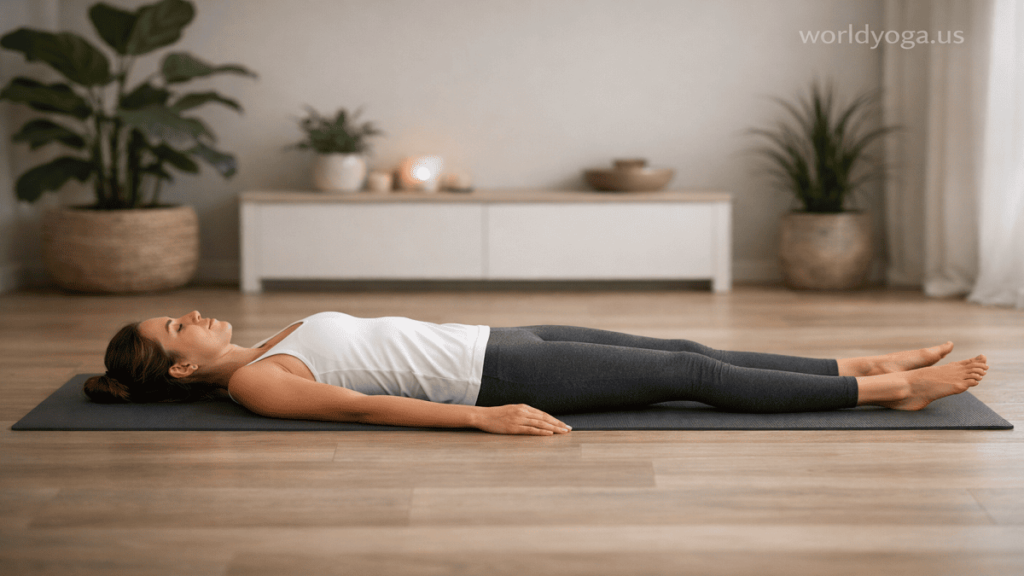
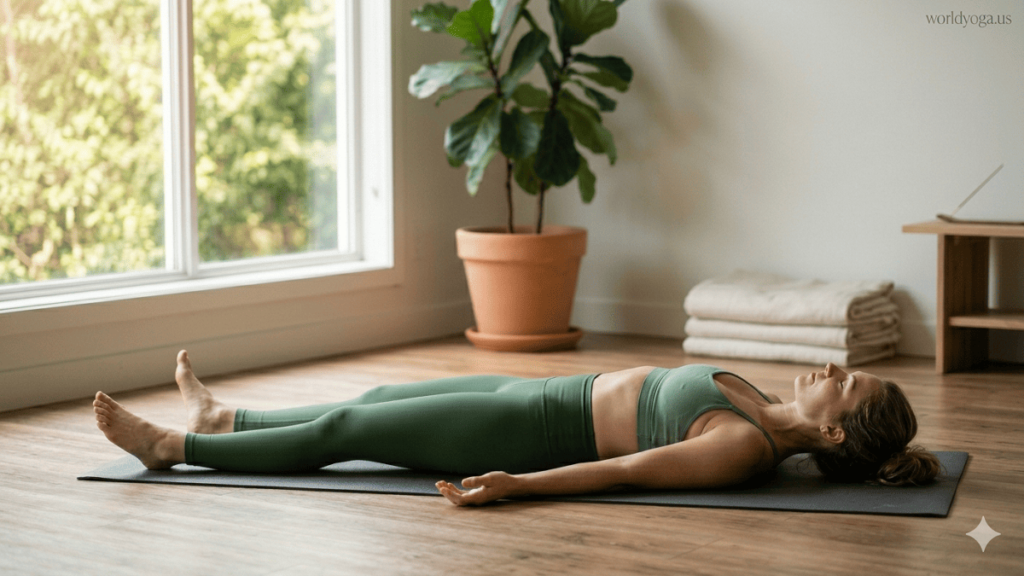
To perform the supine both legs straight position correctly, lie flat on your back on a mat or firm surface. Keep your head, shoulders, and hips aligned. Extend both legs fully, ensuring the knees are not bent and the feet are relaxed or slightly dorsiflexed depending on the objective. The arms should rest comfortably by the sides with palms facing upward. Breathing should remain slow and controlled throughout.
Although simple, this posture requires attention to detail. A common mistake is allowing the lower back to over-arch or the legs to rotate outward. Maintaining neutral alignment is essential for maximizing benefits and preventing strain. Beginners may place a small cushion under the knees or lower back if discomfort occurs, gradually progressing toward a fully extended position.
In conclusion, the supine position with both legs straight is more than just a resting posture. It serves as a foundational alignment tool that supports flexibility, core activation, and rehabilitation. When practiced consistently with correct form, it contributes significantly to improved posture, movement efficiency, and overall physical well-being.
#Supine: Both Legs Straight in India
How is Supine: Both Legs Straight performed correctly?
The supine position with both legs straight is a simple but technically important posture used in exercise therapy, fitness training, and rehabilitation. Performing it correctly is essential because even small alignment errors can reduce its benefits or create unnecessary strain on the lower back and hips.
Supine Position begins with proper setup. To perform this correctly, choose a flat, stable surface such as an exercise mat or a firm bed. Lie down on your back with your body fully supported from head to pelvis. The head should rest comfortably without excessive lifting or tilting. The shoulders must remain relaxed and evenly placed on the surface, avoiding any forward rounding or tension in the neck.
Once the upper body is settled, the next step is aligning the spine. The spine should maintain a neutral position, meaning it is neither excessively arched nor overly flattened against the surface. A natural curve in the lower back is normal, but it should not be exaggerated. If discomfort is present, a small towel or cushion may be placed under the head or knees temporarily during practice, although the goal is to gradually achieve unsupported alignment.
After establishing spinal alignment, both legs are extended straight. This means fully straightening the knees without locking them forcefully. The legs should lie parallel to each other, with a natural hip-width distance. Feet can either remain relaxed or slightly flexed toward the body depending on the purpose of the exercise. It is important to avoid letting the legs fall outward or inward, as this can disrupt pelvic alignment.
The arms should be placed comfortably beside the body with palms facing upward. This open position helps maintain shoulder relaxation and prevents upper-body tension. Throughout the posture, breathing should remain slow, steady, and controlled. Deep diaphragmatic breathing is recommended, as it helps stabilize the core and enhances relaxation of the entire body.
A key aspect of correct performance is engaging the core muscles gently. The abdomen should be lightly activated to support the lower back and prevent excessive arching. At the same time, the hips and thighs should remain relaxed rather than rigid. This balance between relaxation and controlled engagement is what makes the posture effective for both rehabilitation and conditioning.
Common mistakes include over-arching the lower back, allowing the feet to rotate outward, or tensing the shoulders and neck. Another frequent error is holding the breath, which reduces the effectiveness of the posture and increases muscular tension. Correcting these issues ensures better spinal alignment and improved muscular balance.
In conclusion, performing the supine both legs straight position correctly involves mindful alignment of the spine, proper leg extension, relaxed upper body positioning, and controlled breathing. When practiced consistently with attention to detail, it supports improved posture, flexibility, and core stability, making it a foundational element in many physical training and rehabilitation programs.
#Supine: Both Legs Straight in Maharahstra
What is the proper alignment in this lying leg extension position?
Proper alignment in the supine lying leg extension position is essential for ensuring that the posture is both effective and safe for the spine, hips, and lower limbs. This position is commonly used in rehabilitation, mobility training, and core stabilization work because it allows the body to be fully supported while focusing on controlled lower-limb positioning.
Supine Position begins with the body placed flat on a stable surface such as a mat or firm bed. The first element of correct alignment is the head and neck. The head should rest in a neutral position, meaning it is neither tilted forward nor excessively extended backward. The chin should remain gently aligned with the chest without tension in the neck muscles. If needed, a thin support such as a small towel may be used, but the goal is to maintain a natural cervical curve.
Next, attention shifts to the shoulders and upper back. The shoulders should rest evenly on the surface without lifting or rounding forward. The chest should remain open and relaxed, avoiding any stiffness in the upper torso. The arms are typically placed alongside the body with palms facing upward, which helps reduce shoulder tension and encourages natural external rotation of the upper arm.
The most critical aspect of alignment in this position is the spine and pelvis. The spine should maintain a neutral alignment, preserving its natural curves without excessive flattening or arching. The pelvis should remain stable and level, avoiding tilting forward or backward. This neutral pelvic position ensures that the lumbar spine is neither compressed nor overstretched, which is particularly important for individuals with lower back sensitivity.
When extending both legs, proper alignment requires the knees to be fully straightened without hyperextension. The legs should be parallel to each other and aligned with the hips, maintaining a natural hip-width distance. This prevents unnecessary strain on the hip joints and ensures symmetrical muscle engagement. The thighs should remain relaxed rather than rigid, while the quadriceps maintain a gentle activation to support the knee joint.
The feet also play an important role in alignment. They should remain in a neutral position, either relaxed or slightly dorsiflexed depending on the exercise objective. It is important to avoid external rotation or excessive pointing of the toes, as this can disrupt overall lower-limb alignment and create muscular imbalance.
Breathing and muscular engagement are also part of correct alignment. The breath should be slow, steady, and diaphragmatic. At the same time, the core muscles should be lightly engaged to support the lumbar spine. This engagement should be subtle, not forceful, ensuring stability without creating tension.
In summary, proper alignment in the supine lying leg extension position involves a neutral head and spine, relaxed shoulders, stable pelvis, straight and parallel legs, and balanced foot positioning. When these elements are maintained together, the position becomes highly effective for improving posture, enhancing core stability, and supporting safe movement patterns in both rehabilitation and fitness contexts.
#Supine: Both Legs Straight in Ahemadabad
Which muscles are engaged during the posture?
The supine position with both legs straight is often perceived as a resting posture, but it involves a coordinated pattern of low-level muscular engagement to maintain alignment and stability. While it does not create high-intensity contraction, it activates several key muscle groups in a subtle and controlled way, especially when performed correctly.
Supine Position primarily engages the core musculature. The deep abdominal muscles, including the transverse abdominis, play a central role in stabilizing the pelvis and lumbar spine. This muscle acts like a natural support belt, preventing excessive arching of the lower back and maintaining a neutral spinal position. Alongside this, the rectus abdominis and obliques may also contribute lightly to postural control, particularly when the legs are fully extended and require greater stabilization.
The hip flexors are another important group involved in this posture. Muscles such as the iliopsoas remain in a lengthened state while still maintaining mild engagement to support leg positioning. When both legs are held straight, these muscles help stabilize the hip joint and prevent unwanted movement or external rotation.
The quadriceps muscles, located at the front of the thighs, are also gently activated. Their role in this position is to maintain knee extension without allowing the legs to collapse or rotate. This engagement is typically low-intensity but becomes more noticeable if the posture is held for longer durations or combined with breathing control exercises.
In the posterior chain, the hamstrings remain in a stretched but lightly engaged state. Although they are not actively contracting, they contribute to overall leg stability and alignment. This passive engagement helps improve flexibility over time while supporting knee joint positioning.
The spinal stabilizers, including the multifidus and erector spinae muscles, work subtly to maintain neutral spinal alignment. These muscles ensure that the spine does not collapse into excessive flattening against the surface or arching away from it. Their role is especially important for individuals with weak postural control or lower back discomfort.
The gluteal muscles, particularly the gluteus maximus, may also engage at a low level to support pelvic stability. While they are not strongly activated in this static position, they assist in maintaining even hip alignment and preventing unnecessary rotation.
Additionally, the muscles of the shoulders and upper back, including the trapezius and rhomboids, remain relaxed but slightly engaged to keep the upper body stable and open. Proper arm positioning helps reduce unnecessary tension and allows these muscles to maintain a neutral resting tone.
In conclusion, although the supine straight-leg posture appears simple, it involves a coordinated activation of the deep core, hip stabilizers, quadriceps, hamstrings, spinal muscles, and supporting upper-body musculature. This balanced, low-intensity engagement is what makes the posture valuable for improving stability, posture awareness, and foundational strength without placing excessive load on the body.
#Supine: Both Legs Straight in Hyderabad
What preparatory poses are recommended before practicing it?
Before practicing the supine position with both legs straight, it is important to prepare the body with a few foundational movements that improve mobility, reduce stiffness, and activate the correct muscle groups. Proper preparation helps ensure that the body can maintain alignment comfortably and reduces the risk of strain in the lower back, hips, and hamstrings.
Supine Position is easier and more effective when the surrounding muscles are adequately warmed up and conditioned. Since this posture requires a neutral spine, flexible hamstrings, and controlled core engagement, preparatory poses should focus on these specific areas.
One of the most recommended preparatory movements is the pelvic tilt. This exercise helps the individual become aware of spinal positioning by gently rocking the pelvis forward and backward while lying on the back. It activates the deep abdominal muscles and teaches control over the lumbar spine. Practicing pelvic tilts before holding a static supine leg position improves the ability to maintain a neutral spine without excessive arching.
Another useful preparation is the knee-to-chest stretch. In this movement, one or both knees are drawn gently toward the chest while lying supine. This helps release tension in the lower back and improves hip mobility. It also provides a gentle stretch to the gluteal muscles and prepares the pelvis for stable alignment during straight-leg extension.
Hamstring stretching is also essential. Tight hamstrings are one of the most common limitations when performing straight-leg positions. A simple lying hamstring stretch using a strap or towel allows gradual lengthening of the posterior thigh muscles. This ensures that when both legs are extended straight, the body does not compensate by over-arching the lower back.
The bridge pose is another highly effective preparatory exercise. By lifting the hips off the ground while keeping the shoulders and feet grounded, the gluteal muscles and posterior chain are activated. This strengthens the muscles responsible for pelvic stability, making it easier to maintain alignment in the supine straight-leg posture.
Additionally, gentle core activation exercises such as dead bug variations can be beneficial. These movements train the abdominal muscles to stabilize the spine while the limbs move independently. This directly translates to better control when holding both legs straight in a supine position.
Child’s pose or other gentle forward-bending stretches may also be used to relax the lower back and reduce tension before lying supine. While not performed in the same position, they help prepare the nervous system for relaxation and controlled breathing.
Breathing exercises are equally important. Deep diaphragmatic breathing practiced in a lying position helps activate the parasympathetic nervous system, reducing muscular tension and improving focus. This ensures the body remains calm and stable during the posture.
In summary, preparatory poses such as pelvic tilts, knee-to-chest stretches, hamstring stretching, bridge pose, core activation drills, and relaxation breathing collectively prepare the body for the supine both legs straight position. These movements enhance flexibility, improve muscle coordination, and support safe spinal alignment, making the main posture more effective and sustainable.
#Supine: Both Legs Straight in Pune
What are the benefits and precautions of this supine variation?
The supine position with both legs straight is a foundational posture used in rehabilitation, yoga-based movement training, and general fitness conditioning. Although it appears simple, it offers multiple physical benefits when performed with correct alignment, while also requiring certain precautions to avoid strain or discomfort.
Supine Position provides one of the most significant benefits in the form of spinal decompression. By lying flat on a stable surface with full back support, the spine is able to release compressive forces accumulated from sitting, standing, or physical activity. This helps reduce tension in the lower back and promotes a more neutral spinal alignment. Over time, this can contribute to improved posture awareness and reduced discomfort in the lumbar region.
Another key benefit is core stabilization. Holding both legs straight requires subtle engagement of the deep abdominal muscles, especially the transverse abdominis. This engagement helps build foundational core strength without high-impact movement. It also enhances the body’s ability to stabilize the pelvis during daily activities, reducing the risk of postural imbalance.
Flexibility improvement is another important advantage. Keeping both legs extended in a controlled manner gently stretches the hamstrings and hip flexors. This gradual lengthening improves lower-limb mobility and can enhance performance in other movements such as walking, running, and bending. It also helps reduce stiffness caused by prolonged sitting.
This posture also supports neuromuscular awareness. Practicing stillness while maintaining alignment trains the nervous system to recognize proper body positioning. This is particularly beneficial in rehabilitation settings where individuals are relearning controlled movement patterns after injury.
From a relaxation perspective, the supine position encourages calm breathing and reduces physical tension. When combined with diaphragmatic breathing, it activates the parasympathetic nervous system, promoting relaxation and stress reduction. This makes it useful not only for physical conditioning but also for recovery and recovery-focused routines.
Despite these benefits, there are important precautions to consider. Individuals with acute lower back injuries should avoid forcing full leg extension if it causes discomfort. Overstretching the hamstrings without proper preparation can increase strain on the lumbar spine. In such cases, a slight bend in the knees or the use of support under the legs may be necessary.
Another precaution involves spinal alignment. Excessive arching of the lower back can place pressure on the lumbar vertebrae, while flattening the spine too aggressively may create tension. Maintaining a neutral spine is essential to prevent imbalance and discomfort.
People with tight hamstrings should progress gradually into the straight-leg position rather than forcing full extension immediately. Sudden or forceful stretching can lead to muscle strain. Similarly, individuals with hip or knee conditions should monitor joint alignment carefully to avoid unnecessary stress.
It is also important to avoid holding the breath during the posture. Breath-holding increases muscular tension and reduces the relaxation benefits of the position. Continuous, steady breathing should always be maintained.
In conclusion, the supine both legs straight variation offers benefits such as spinal decompression, improved core stability, enhanced flexibility, and better body awareness. However, it must be practiced with attention to alignment, gradual progression, and mindful breathing. When performed correctly, it becomes a safe and highly effective posture for both rehabilitation and general physical well-being.
#Supine: Both Legs Straight in Delhi
Case Study of Supine: Both Legs Straight
A case study of the supine position with both legs straight provides practical insight into how this simple posture can be applied in rehabilitation and movement re-education. It highlights how controlled positioning, even without dynamic exercise, can influence pain levels, mobility, and muscular coordination over time.
Supine Position was introduced as a foundational intervention for a 38-year-old office worker experiencing chronic lower back stiffness and reduced hamstring flexibility. The individual reported long hours of sitting, poor posture habits, and occasional discomfort during forward bending activities. Clinical assessment indicated tight hamstrings, weak core stabilization, and mild anterior pelvic tilt.
The intervention plan included daily practice of the supine both legs straight position as a primary corrective posture. The individual was instructed to lie on a firm surface with neutral spinal alignment, both legs extended without forceful locking, and arms resting by the sides. Emphasis was placed on diaphragmatic breathing and gentle activation of the deep abdominal muscles to support lumbar stability.
During the initial phase (weeks 1–2), the patient was unable to fully straighten both legs without experiencing mild lower back tension. A modified approach was used, allowing slight knee flexion supported by a small towel under the knees. This adaptation helped reduce strain while gradually improving tolerance to extension. At this stage, the primary goal was neuromuscular awareness rather than flexibility gain.
By weeks 3–5, improvements in hamstring flexibility and core control were observed. The patient was able to extend both legs more fully while maintaining a neutral pelvis. The duration of holding the posture was gradually increased from 2 minutes to 8 minutes per session. Feedback indicated reduced lower back stiffness after prolonged sitting and improved comfort during daily movements.
From weeks 6–8, the posture was performed without support. The patient demonstrated improved spinal alignment, reduced anterior pelvic tilt, and better control of abdominal engagement. Functional improvements included easier forward bending, reduced fatigue during sitting, and decreased reliance on postural compensation patterns.
Key observations from this case highlighted that the supine straight-leg posture is not merely a passive position but a corrective tool when used consistently. The combination of alignment training, breathing control, and gradual progression played a crucial role in improving both flexibility and stability.
Precautions were also reinforced throughout the program. The patient was advised not to force full extension, avoid breath-holding, and discontinue the posture if sharp pain occurred. Attention to neutral spine alignment remained the central focus of every session.
In conclusion, this case study demonstrates that the supine both legs straight position can be an effective low-intensity intervention for individuals with mild postural imbalances and flexibility restrictions. When applied progressively and with proper technique, it supports pain reduction, improved mobility, and enhanced core stability, making it a valuable component in basic rehabilitation and movement correction programs.
#Supine: Both Legs Straight in Banglore
White Paper of Supine: Both Legs Straight
Abstract
The supine position with both legs straight is a foundational posture used in rehabilitation, physiotherapy, yoga therapy, and corrective exercise systems. Despite its simplicity, it plays a significant role in spinal alignment training, neuromuscular re-education, and low-load core stabilization. This white paper examines its biomechanical principles, therapeutic applications, benefits, limitations, and clinical relevance in movement-based interventions.
Supine Position is defined as a neutral, gravity-supported posture in which an individual lies flat on a stable surface with the spine in contact with support and both lower limbs extended in a straightened alignment. The posture reduces gravitational load on the spine and allows for controlled muscular engagement without dynamic movement demands.
Biomechanical Overview
In this position, the body is influenced primarily by passive skeletal alignment and low-level isometric muscle activity. The lumbar spine seeks a neutral curvature supported by the pelvis, while the lower limbs require stabilization through the hip and knee joints. The absence of movement reduces external load, allowing the neuromuscular system to focus on postural control rather than force production.
Key muscular involvement includes the deep core stabilizers (transverse abdominis, multifidus), hip flexors in a lengthened state, quadriceps maintaining knee extension, and hamstrings contributing to passive tension regulation. The spinal extensors maintain low-level activation to preserve lumbar neutrality.
Therapeutic Applications
The supine both legs straight posture is widely used in clinical rehabilitation programs for individuals with lower back discomfort, postural imbalances, and reduced hamstring flexibility. It serves as a baseline assessment position for evaluating spinal neutrality and lower limb alignment.
In physiotherapy, it is often prescribed as an early-stage intervention for patients recovering from musculoskeletal injuries due to its low compressive load and high stability. In yoga therapy and corrective movement systems, it is used to train breath control, body awareness, and core engagement.
Benefits
The primary benefits include spinal decompression, improved postural awareness, gentle hamstring lengthening, and enhanced core activation. It also supports parasympathetic nervous system activation when combined with controlled breathing, promoting relaxation and recovery.
Additionally, it provides a controlled environment for neuromuscular re-education, allowing individuals to retrain movement patterns without external resistance or instability.
Limitations and Contraindications
While generally safe, this posture may present challenges for individuals with acute lumbar disc issues, severe hamstring tightness, or hip joint restrictions. Forcing full leg extension may increase lumbar strain if pelvic control is inadequate. Proper progression and modification are essential in such cases.
Clinical Considerations
Effective implementation requires attention to spinal neutrality, gradual progression of leg extension, and integration of diaphragmatic breathing. Clinicians often modify the posture using knee support or reduced duration during initial stages.
Conclusion
The supine position with both legs straight is a low-intensity yet highly valuable therapeutic posture. Its significance lies not in mechanical intensity but in its ability to retrain alignment, improve stability, and support functional recovery. When applied with clinical precision and progressive adaptation, it serves as a foundational element in rehabilitation and corrective movement frameworks.
#Supine: Both Legs Straight in Kolkata
Industry Application of Supine: Both Legs Straight
The supine position with both legs straight is a foundational posture used across multiple industries where human movement, rehabilitation, performance, and well-being are central concerns. Its simplicity allows it to be widely adopted, while its biomechanical value makes it highly effective for assessment, training, and recovery purposes.
Supine Position is commonly applied in healthcare, sports science, fitness training, ergonomics, and wellness industries. In each of these fields, the posture serves a distinct but complementary purpose related to alignment, stability, and neuromuscular control.
Healthcare and Physiotherapy
In physiotherapy and clinical rehabilitation, this posture is frequently used as an initial assessment and treatment position. It allows practitioners to evaluate spinal alignment, pelvic positioning, and lower limb flexibility without the influence of gravity-related postural compensation. Patients recovering from lower back injuries, postural dysfunction, or surgical procedures often begin their rehabilitation in this position due to its low-load nature. It is also used to introduce early-stage core activation and controlled breathing exercises.
Sports and Athletic Training
In sports science and athletic conditioning, the supine straight-leg position is used for mobility screening and recovery protocols. Athletes use it to assess hamstring tightness, hip mobility, and core stability. Strength and conditioning coaches incorporate it into warm-up and cooldown routines to reduce muscular tension and improve neuromuscular efficiency. It is particularly valuable in sports requiring sprinting, jumping, and directional changes where posterior chain flexibility is critical.
Fitness and Movement Training
Within the fitness industry, personal trainers and movement specialists use this posture as a corrective exercise tool. It helps clients develop awareness of neutral spine alignment and proper core engagement before progressing to more complex movements. It is also used in mat-based training systems such as Pilates-inspired conditioning, where controlled stability is prioritized over high-impact loading.
Ergonomics and Occupational Health
In ergonomics, this posture is used indirectly as a reference model for spinal neutrality. Occupational health professionals recommend supine-based relaxation and decompression techniques for individuals with sedentary work patterns. It is often incorporated into workplace wellness programs to counteract prolonged sitting and postural fatigue.
Yoga and Wellness Industry
In yoga therapy and wellness practices, the supine straight-leg position is used as a restorative posture. It supports relaxation, breath regulation, and body awareness training. It is often included in guided relaxation sequences where the goal is to reduce stress and restore physiological balance.
Limitations in Industry Use
Despite its wide application, the posture must be adapted based on individual flexibility and health conditions. Forcing full leg extension or ignoring spinal discomfort can reduce effectiveness and increase risk of strain. Proper instruction and gradual progression remain essential across all industries.
Conclusion
The supine both legs straight posture is a versatile and universally applicable position across healthcare, sports, fitness, ergonomics, and wellness industries. Its value lies in its ability to support assessment, rehabilitation, and recovery with minimal risk and high adaptability. As a result, it remains a standard reference posture in multiple professional domains focused on human movement and physical well-being.
#Supine: Both Legs Straight in Mumbai
Ask FAQs
What is the supine position with both legs straight?
The supine position with both legs straight is a basic body posture where a person lies flat on their back on a stable surface while keeping both legs fully extended and aligned. It is commonly used in rehabilitation, fitness training, and posture correction exercises to improve alignment and body awareness.
What are the main benefits of this position?
This posture helps improve spinal alignment, core stability, and hamstring flexibility. It also supports relaxation by reducing tension in the lower back and encouraging controlled breathing. Over time, it can improve posture awareness and movement control in daily activities.
Is this position safe for people with back pain?
In most cases, it is safe and often recommended for mild lower back discomfort because it supports the spine in a neutral position. However, individuals with acute injuries, severe disc problems, or sharp pain should modify the position or seek professional guidance before practicing it.
How long should this posture be held?
Beginners can start by holding the position for 1 to 3 minutes while focusing on relaxed breathing and proper alignment. As comfort and control improve, the duration can gradually be increased to 5 to 10 minutes depending on individual tolerance and therapeutic goals.
What are common mistakes to avoid?
Common mistakes include over-arching the lower back, locking the knees too tightly, allowing the feet to rotate outward, or holding the breath. These errors can reduce the effectiveness of the posture and may create unnecessary strain. Maintaining a neutral spine and relaxed breathing is essential for correct practice.
Table of Contents
Disclaimer: The information provided is for educational purposes only and is not a substitute for professional medical advice, diagnosis, or treatment. Always consult a qualified healthcare professional or physiotherapist before beginning any exercise or rehabilitation program, especially if you have existing pain, injuries, or medical conditions.