Ardha Baddha Hasta Pada Vishama Prapadasana
Ardha Baddha Hasta Pada Vishama Prapadasana is a complex standing yoga posture that combines balance, flexibility, coordination, and concentration. Rooted in traditional Hatha Yoga practices, this asana is often practiced in advanced sequences to enhance body awareness and mental stability. The name reflects its structure: Ardha (half), Baddha (bound), Hasta (hand), Pada (foot), and Vishama Prapadasana (uneven toe balance posture), indicating a partially bound standing balance pose performed on the toes.
This posture is considered a progression-level asana in modern yoga systems and is typically introduced after mastering foundational standing poses such as Tadasana. It requires strong engagement of the core, legs, and ankles while maintaining steady breath control.
Meaning and Practice Significance
The pose symbolizes harmony between opposing forces—strength and softness, stability and movement. In traditional yoga philosophy, such balancing postures are believed to cultivate dharana (concentration) and sthira sukham (steady comfort). The binding action of the hand and foot further enhances body awareness and promotes mindful movement, making it both physically and mentally demanding.
Benefits of the Asana
Practicing this asana regularly can improve balance and neuromuscular coordination. It strengthens the ankles, calves, thighs, and core muscles while increasing flexibility in the hamstrings and shoulders. The binding element also stimulates the shoulder joints and enhances spinal alignment. Mentally, the posture encourages focus, reduces distractions, and supports stress regulation by requiring sustained attention. According to general yoga principles supported by traditional wellness frameworks such as the Ministry of AYUSH, consistent yoga practice improves overall physical stability and mental clarity AYUSH Yoga Guidelines.
Step-by-Step Execution
Begin in a stable standing position with feet grounded evenly. Shift weight onto one leg and slowly lift the opposite foot behind you. Reach one hand to hold the lifted foot while maintaining upright posture. Engage the core to prevent wobbling and keep the supporting leg firm. Gradually bring awareness to breath rhythm and maintain a steady gaze (drishti) to stabilize balance. Hold the position for a few seconds before releasing slowly and switching sides. Practicing near a wall is recommended for beginners.
Precautions and Safety
This posture should be avoided by individuals with ankle injuries, severe lower back pain, or balance disorders. Beginners should not force the binding action if flexibility is limited. Overstretching or rushing into the pose may lead to instability or strain. Proper warm-up, especially for hamstrings and shoulders, is essential before attempting it.
Conclusion
Ardha Baddha Hasta Pada Vishama Prapadasana is a challenging yet rewarding yoga posture that builds strength, focus, and bodily coordination. With consistent practice and mindful progression, it enhances both physical stability and mental discipline, making it a valuable addition to advanced yoga routines. For deeper study and structured guidance, resources such as Yoga Journal provide detailed instructional insights Yoga Journal Yoga Resources.
#Ardha Baddha Hasta Pada Vishama Prapadasana in India
How is Ardha Baddha Hasta Pada Vishama Prapadasana performed correctly?
Ardha Baddha Hasta Pada Vishama Prapadasana is an advanced standing balance posture that demands stability, flexibility, and coordinated control of breath and movement. Correct execution is essential to avoid strain and to gain the full physical and mental benefits of the pose.
1. Preparation and Alignment
Begin in a stable foundational stance such as Tadasana. Stand tall with feet together or hip-width apart, distributing weight evenly across both feet. Engage the thighs, lift the kneecaps slightly, and activate the core muscles. Keep the spine elongated, shoulders relaxed, and gaze forward. Proper grounding in this stage is crucial for balance in later steps.
A short warm-up focusing on hamstrings, hip flexors, ankles, and shoulders is recommended. Without adequate preparation, the binding and balancing components of the posture become difficult and potentially unsafe.
2. Weight Shift and Leg Lift
Slowly shift your body weight onto one leg, ensuring the standing foot is firmly rooted into the ground. Begin to lift the opposite foot by bending the knee and drawing the heel toward the glute muscles. Maintain a straight spine and avoid leaning forward or sideways.
At this stage, core engagement is essential to prevent wobbling. The standing leg should remain strong but not locked at the knee.
3. Binding the Hand and Foot
Carefully reach back with one hand (usually the same-side or opposite-side hand depending on flexibility) and grasp the lifted foot or big toe. This creates the “ardha baddha” or half-bound position. The binding should be firm but not forced. If reaching the foot is difficult, a yoga strap can be used as a modification.
Keep the chest open and avoid collapsing the shoulders forward during the bind.
4. Transition into Toe Balance (Vishama Prapadasana Element)
Once stability is achieved, begin shifting the standing foot slightly forward onto the toes, entering the “vishama prapadasana” (uneven toe balance) phase. This is the most challenging portion of the pose, requiring intense focus and ankle strength. The heel may lift slightly depending on variation and balance capacity.
Maintain a steady gaze (drishti) on a fixed point to reduce instability. Breathing should remain slow and controlled.
5. Holding and Release
Hold the posture for 5–10 breaths initially, gradually increasing duration with practice. To exit, gently release the bind, lower the lifted foot slowly to the ground, and return to the starting standing position. Repeat on the opposite side to maintain balance in both sides of the body.
Key Alignment Tips
- Keep the spine elongated throughout the pose
- Avoid collapsing into the standing hip
- Engage the core to stabilize balance
- Use a wall for support if needed
- Never force the bind or toe balance
Safety and Learning Guidance
This posture should be practiced under guidance if you are a beginner or have ankle, knee, or lower back issues. Progressive training is essential before attempting full expression of the pose.
Reliable yoga resources such as the Ministry of AYUSH provide structured guidance on safe yoga practices AYUSH Yoga Guidelines. Additional instructional references and alignment insights can be found through Yoga Journal Yoga Journal Yoga Resources.
#Ardha Baddha Hasta Pada Vishama Prapadasana in Maharashtra
What is the proper alignment in this asymmetrical bound balance pose?
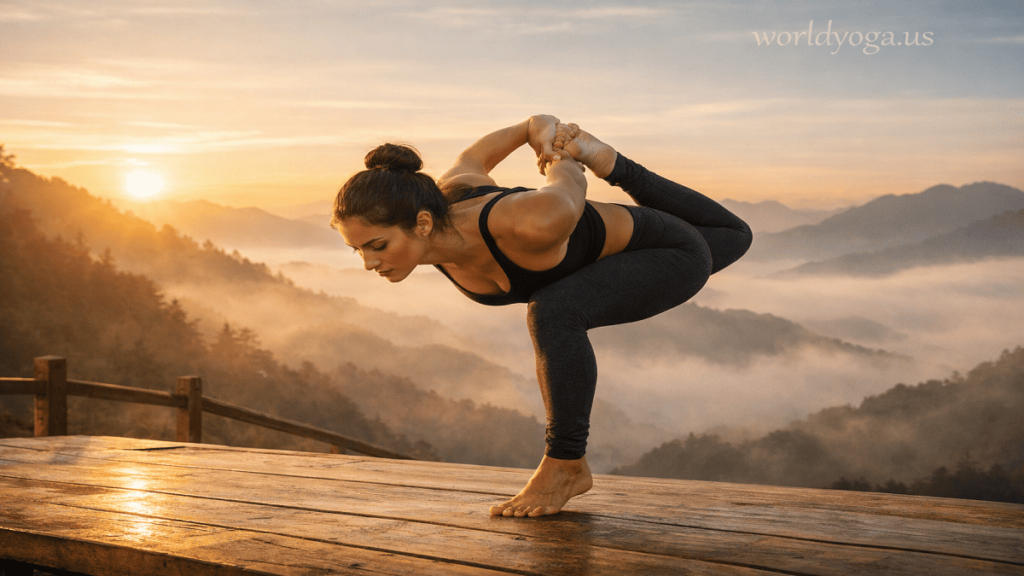
Ardha Baddha Hasta Pada Vishama Prapadasana is a highly technical standing balance posture where correct alignment determines both safety and effectiveness. Because it combines a one-leg balance, a binding action, and a toe-based transition, even small misalignments can destabilize the pose or strain the joints.
Foundation: Feet, Ankles, and Base Stability
Alignment begins at the base in a grounded standing posture such as Tadasana. The standing foot must be firmly rooted with equal pressure on the inner heel, outer heel, and ball of the foot. The arch should be active but not rigid.
The ankle of the supporting leg should remain neutral—neither collapsing inward nor rolling outward. A common mistake is shifting weight excessively onto the inner edge of the foot, which compromises stability. When transitioning into the toe balance variation, the heel lifts gradually without sudden shifts in weight.
Knee and Hip Alignment
The standing knee must track directly over the second toe of the foot. It should remain slightly soft (micro-bent) rather than locked, allowing for micro-adjustments in balance.
In the hip region, both hip points should stay squared forward. A frequent alignment error is opening or twisting the pelvis to compensate for limited flexibility in the bound leg. Instead, the pelvis should remain stable while the lifted leg moves independently.
The lifted leg’s knee should point downward, not flare outward. This maintains joint integrity and prevents torque in the hip and knee.
Spine, Core, and Upper Body Alignment
The spine should remain in a neutral elongated position, extending from the tailbone to the crown of the head. Avoid leaning forward or backward to “counterbalance” the lifted leg.
Core engagement is essential—especially the transverse abdominis—to stabilize the pelvis and spine. Without core activation, the upper body tends to collapse or overcompensate.
Shoulders should remain relaxed and level. In the binding phase, the chest must stay open rather than collapsing inward. The shoulder blade of the binding arm should gently retract to maintain space across the chest.
Binding (Hasta-Pada Connection)
The hand reaching for the foot or toe should create a controlled, non-strained bind. The elbow should not hyperextend or twist excessively. Ideally, the bind is achieved without pulling the shoulder joint out of alignment.
If the hand cannot comfortably reach the foot without rounding the spine or collapsing the chest, a strap is recommended to maintain structural integrity.
Toe Balance Transition (Vishama Prapadasana Element)
When shifting into toe balance, weight transfer must be gradual. The heel lifts in a controlled manner while the spine remains vertical. The ankle should stay strong but responsive, avoiding sudden inward collapse.
The gaze (drishti) should remain fixed on a single point at eye level or slightly below to stabilize vestibular orientation and reduce sway.
Key Alignment Principles Summary
- Standing foot: fully grounded, arch active
- Knee: aligned over second toe, not locked
- Hips: squared forward, pelvis stable
- Spine: neutral, elongated, no leaning
- Shoulders: relaxed, chest open during bind
- Bind: controlled without spinal collapse
- Toe transition: gradual heel lift, steady gaze
Safety Note
Proper alignment is especially important in this asymmetrical pose because compensations often occur unconsciously. Over time, incorrect alignment can strain the ankle, knee, or lower back.
Guidance from structured yoga systems such as those outlined by the Ministry of AYUSH emphasizes progressive training and alignment awareness in balance-based asanas AYUSH Yoga Guidelines. For detailed alignment breakdowns and instructional cues, Yoga Journal also provides reliable reference material Yoga Journal Yoga Resources.
#Ardha Baddha Hasta Pada Vishama Prapadasana in Ahemadabad
Which muscles are engaged during the posture?
Ardha Baddha Hasta Pada Vishama Prapadasana is a complex asymmetrical standing balance posture that integrates strength, stability, flexibility, and neuromuscular coordination. Because it combines single-leg support, binding, and a toe-based balance transition, it activates multiple muscle groups across the lower body, core, and upper body simultaneously.
1. Primary Lower Body Muscles (Stability and Balance)
The most active muscle group in this posture is the lower body of the standing leg. The quadriceps femoris plays a major role in stabilizing the knee joint and maintaining controlled extension without locking. The gluteus medius and gluteus maximus are heavily engaged to stabilize the pelvis and prevent lateral tilting during single-leg support.
The calf muscles—primarily the gastrocnemius and soleus—become increasingly active during the toe balance transition, helping control plantar flexion and fine-tune micro-adjustments at the ankle. Intrinsic foot muscles, along with the tibialis anterior and posterior, contribute to arch stability and prevent collapse of the foot structure.
2. Core Musculature (Centering and Postural Control)
Core engagement is essential in maintaining upright alignment. The rectus abdominis supports trunk stability, while the transverse abdominis acts as a deep stabilizer to control intra-abdominal pressure and maintain balance. The obliques assist in resisting unwanted rotation, especially due to the asymmetrical nature of the bound leg position.
The erector spinae muscles along the back of the spine maintain vertical alignment and prevent forward or backward collapse. Together, these core muscles ensure that the spine remains elongated and stable while the limbs are in motion or bound.
3. Hip Flexors and Hamstrings (Lifted Leg Control)
The iliopsoas group (hip flexors) of the lifted leg is actively engaged during knee flexion and foot elevation toward the hand. The hamstrings assist in controlling the bend of the knee and maintaining a stable position in the lifted leg.
Because the posture includes a binding action, these muscles work eccentrically to manage flexibility demands while maintaining control, rather than allowing passive stretching.
4. Upper Body Muscles (Binding and Postural Support)
The binding phase activates the shoulder complex, including the deltoids, rotator cuff muscles (supraspinatus, infraspinatus, teres minor, and subscapularis), and the latissimus dorsi. These muscles work together to stabilize the shoulder joint while reaching back to hold the foot.
The biceps brachii and forearm flexors assist in maintaining grip strength during the bind. Meanwhile, the trapezius and rhomboids support scapular stability, ensuring that the chest remains open and the shoulders do not collapse forward.
5. Supporting Stabilizers and Neuromuscular Control
Smaller stabilizing muscles throughout the ankles, knees, hips, and spine work continuously in micro-adjustments. Proprioceptive feedback from these muscles is essential for maintaining balance, especially during the transition to toe support in the Vishama Prapadasana phase.
This continuous neuromuscular engagement improves coordination and balance over time, making the posture highly effective for functional strength development.
Conclusion
Ardha Baddha Hasta Pada Vishama Prapadasana is a full-body integrative posture that engages nearly every major muscle group, with emphasis on the lower limbs, core stabilizers, and shoulder complex. Its asymmetrical structure demands continuous muscular coordination, making it a powerful practice for strength, balance, and proprioceptive awareness.
#Ardha Baddha Hasta Pada Vishama Prapadasana in Hyderabad
What preparatory poses are recommended before practicing it?
1. Foundational Standing and Alignment Poses
A strong base is essential before moving into asymmetrical balance work. Tadasana is the most important preparatory posture because it establishes correct alignment of the feet, knees, hips, and spine. Practicing Tadasana with awareness of weight distribution helps train the neuromuscular system for stillness and balance.
Other helpful standing poses include Vrksasana, which builds single-leg stability, and Utthita Hasta Padangusthasana, which directly prepares the body for lifting and controlling one leg while maintaining balance. These poses strengthen the ankles, calves, and core while improving proprioception.
2. Hip Flexibility and Hamstring Preparation
Because the lifted leg must bend and eventually be held in a bound position, hip and hamstring flexibility is essential. Gomukhasana helps open the hips and external rotators, which is crucial for comfortable leg positioning.
Supta Padangusthasana is also highly effective for safely stretching the hamstrings without placing load on the standing leg. This supine position allows controlled stretching and reduces risk of overstretching.
3. Shoulder and Binding Preparation
Since the pose involves a binding action, shoulder mobility and strength are important. Gomukhasana Arms helps open the shoulders, chest, and triceps, preparing the arms for reaching behind the body.
Garudasana is another valuable preparatory posture because it develops upper body coordination, scapular stability, and balance simultaneously. The wrapping action in Garudasana also conditions the body for asymmetry and controlled restriction of movement.
4. Core Activation and Balance Conditioning
Core strength is critical for maintaining vertical alignment in the final posture. Poses like Phalakasana activate the entire core system, including the transverse abdominis and obliques. This helps maintain stability during single-leg balance transitions.
Dynamic balance drills, such as slow knee lifts from standing or controlled leg swings, also improve neuromuscular coordination and prepare the body for the unstable toe balance phase of the posture.
5. Ankles and Foot Strengthening
Since the final variation involves toe balance, strengthening the feet is essential. Practicing gentle heel raises and balancing drills on one foot helps condition the intrinsic foot muscles and stabilizing ligaments around the ankle joint.
Conclusion
A well-rounded preparation sequence for Ardha Baddha Hasta Pada Vishama Prapadasana should include standing balance poses like Tree Pose, hip openers like Gomukhasana, shoulder bind preparation, and core activation exercises. Together, these preparatory postures develop the strength, flexibility, and neuromuscular control required for safe and stable execution.
#Ardha Baddha Hasta Pada Vishama Prapadasana in Delhi
What are the benefits and precautions of this advanced variation?
Key Benefits
1. Improved Balance and Proprioception
This posture strongly develops neuromuscular coordination. Balancing on one leg while managing a bound position trains the brain and body to respond to micro-adjustments. Over time, this enhances proprioception—the body’s awareness of position in space—which is essential for functional movement and athletic performance.
2. Strengthening of Lower Body Muscles
The standing leg works intensely, engaging the quadriceps, gluteus medius, gluteus maximus, and calf muscles. The ankle stabilizers and intrinsic foot muscles are also highly activated, especially during the toe balance phase. This improves joint stability and reduces the risk of ankle weakness or instability in daily movement.
3. Core Stability and Postural Control
The deep core muscles, including the transverse abdominis and obliques, are continuously activated to maintain upright alignment. This improves spinal stability and supports better posture in everyday activities. The erector spinae also help maintain controlled spinal extension.
4. Shoulder Mobility and Upper Body Strength
The binding element engages the shoulder complex, including the rotator cuff, deltoids, and upper back muscles. This enhances shoulder flexibility, strength, and joint integrity when practiced correctly.
5. Mental Focus and Stress Regulation
Like many advanced balancing postures, this asana requires sustained attention and breath control. The concentration needed to maintain stability encourages mental clarity and reduces distraction. This aligns with traditional yoga principles that link balance postures with improved focus and emotional steadiness.
Precautions and Contraindications
1. Balance and Injury Risk
Because the posture is performed on one leg with a binding element, it places high demand on ankle and knee stability. Individuals with recent ankle sprains, knee injuries, or chronic instability should avoid or modify the pose.
2. Spinal and Shoulder Strain
Forcing the bind can lead to excessive rounding of the spine or shoulder strain. If flexibility is limited, a strap should be used instead of forcing the hand to reach the foot.
3. Avoid Overloading the Toe Balance Phase
The Vishama Prapadasana component involves shifting weight onto the toes, which can stress the forefoot and Achilles tendon if done incorrectly. Beginners should avoid lifting the heel too early and should prioritize stability over depth.
4. Not Suitable for Certain Conditions
People with vertigo, severe balance disorders, or uncontrolled hypertension should practice with caution or avoid this posture unless guided by a qualified instructor.
5. Importance of Progression
This is not a beginner-friendly pose. It should only be attempted after mastering foundational poses such as Tadasana and basic single-leg balances like Vrksasana. Skipping progression increases the risk of misalignment and injury.
Conclusion
Ardha Baddha Hasta Pada Vishama Prapadasana is a powerful advanced posture that builds strength, balance, flexibility, and mental focus. However, its benefits can only be fully realized when practiced with proper preparation, alignment awareness, and respect for physical limitations. Gradual progression and mindful execution are essential to ensure safety and long-term improvement.
#Ardha Baddha Hasta Pada Vishama Prapadasana in Pune
Case Study of Ardha Baddha Hasta Pada Vishama Prapadasana
Ardha Baddha Hasta Pada Vishama Prapadasana is an advanced asymmetrical standing balance posture used in progressive yoga training to develop neuromuscular control, joint stability, and sustained concentration. This case study examines its application within an experienced yoga practitioner’s structured training cycle to evaluate physical and cognitive outcomes over a short-term practice period.
Background
The subject was a 32-year-old experienced yoga practitioner with over four years of consistent practice, primarily focused on Hatha and Vinyasa-based sequences. The individual demonstrated strong baseline flexibility and moderate single-leg balance ability but reported instability during asymmetrical standing postures and difficulty maintaining controlled binding positions.
The objective of the intervention was to improve unilateral balance control, enhance shoulder-to-hip coordination, and increase proprioceptive awareness through structured progression toward the target posture.
Methodology
A four-week progressive training protocol was designed. Sessions were conducted five times per week, each lasting approximately 60 minutes. The preparation phase emphasized foundational alignment and stability work using postures such as Tadasana and other standing balance drills.
Preparatory sequencing included hip-opening and shoulder-mobility work, followed by controlled balance progression. The final phase gradually introduced partial binding and assisted toe balance variations of the target posture.
Breath awareness (controlled diaphragmatic breathing) and visual focus (drishti) were maintained throughout all balance exercises to enhance cognitive stability.
Observations
During the first week, the subject exhibited difficulty maintaining pelvic alignment and experienced frequent lateral sway in single-leg stance. The binding action was incomplete due to limited shoulder range and hamstring tension.
By the second week, improved core activation and ankle stability were observed. The subject demonstrated increased ability to maintain balance for 10–15 seconds without external support. However, toe transition remained unstable.
In the third week, controlled entry into the Vishama Prapadasana (toe balance) phase became possible with minimal wobbling. Shoulder binding improved significantly, indicating increased joint mobility and neuromuscular adaptation.
By the fourth week, the subject achieved a stable hold of the full posture for approximately 20–25 seconds on each side, with improved spinal alignment and reduced compensatory movements.
Outcomes
The structured progression led to measurable improvements in three key areas:
- Balance Control: Enhanced stability in single-leg stance with reduced postural sway.
- Neuromuscular Coordination: Improved synchronization between upper and lower body during asymmetrical binding.
- Core Engagement: Increased endurance of deep stabilizing muscles, particularly the transverse abdominis and gluteal stabilizers.
Additionally, the subject reported improved mental focus and reduced cognitive distraction during balance tasks, suggesting enhanced mind-body integration.
Conclusion
This case study demonstrates that systematic progression into Ardha Baddha Hasta Pada Vishama Prapadasana can significantly improve balance, coordination, and postural awareness when supported by structured preparatory training.
#Ardha Baddha Hasta Pada Vishama Prapadasana in Banglore
White Paper of Ardha Baddha Hasta Pada Vishama Prapadasana
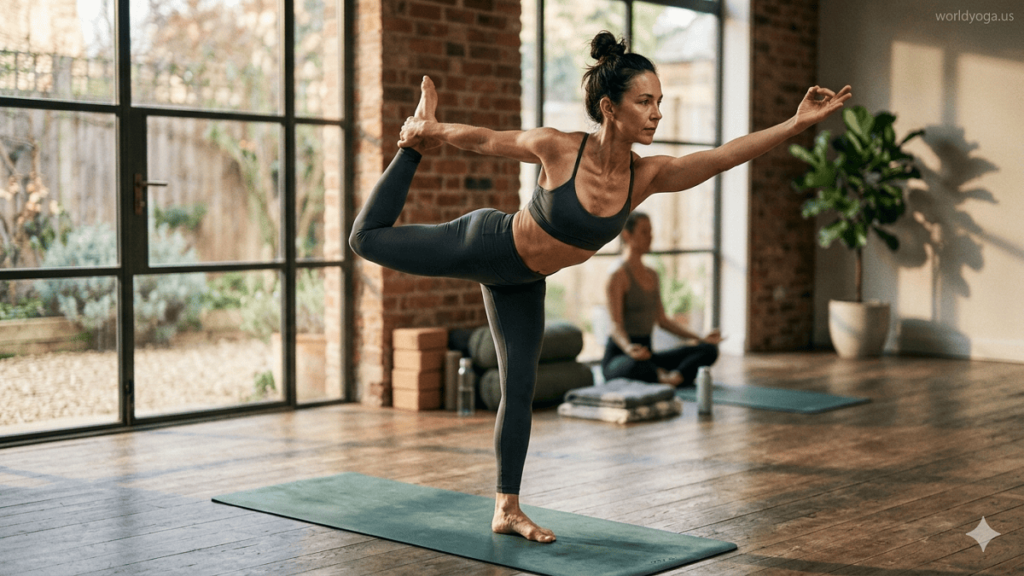
Ardha Baddha Hasta Pada Vishama Prapadasana is an advanced asymmetrical standing balance posture that integrates unilateral weight-bearing, upper-limb binding mechanics, and dynamic toe-based stabilization. This white paper examines its biomechanical structure, neuromuscular demands, training methodology, safety considerations, and applied value in modern yoga and movement conditioning systems.
1. Abstract
This posture represents a high-complexity integration of balance, flexibility, and strength. It challenges the musculoskeletal and proprioceptive systems simultaneously by requiring single-leg stability, spinal neutrality under asymmetrical load, and coordinated shoulder–hip linkage through binding. The pose is best categorized as an advanced neuromotor control task rather than a purely flexibility-based asana.
2. Introduction
In traditional yoga frameworks, advanced standing balances are used to refine concentration (dharana) and physical steadiness (sthira). This posture extends beyond foundational balances such as Tadasana by introducing compounded instability through asymmetry and reduced base of support (toe transition phase). It is typically practiced in advanced Hatha or modern alignment-based systems.
3. Biomechanical Analysis
The posture imposes multi-planar demands:
- Lower limb: The standing leg undergoes continuous eccentric and isometric activation of quadriceps, gluteus medius, and calf complex to maintain alignment over a reduced base of support.
- Ankle–foot complex: Intrinsic foot muscles and tibialis stabilizers regulate micro-adjustments during toe loading in the Vishama Prapadasana phase.
- Core system: The transverse abdominis, obliques, and erector spinae coordinate to resist rotational collapse caused by asymmetrical limb positioning.
- Upper limb binding: Shoulder stabilizers (rotator cuff group, deltoids, and scapular retractors) maintain joint integrity during posterior or lateral foot grasping.
This integration creates a closed kinetic chain across upper and lower body segments.
4. Methodology for Training Integration
Effective progression requires staged conditioning:
- Foundational alignment in static standing balance (Tadasana variations)
- Unilateral control training through poses such as Vrksasana
- Hip and shoulder mobility development
- Gradual introduction of binding mechanics
- Assisted toe-loading transitions before full expression
Breath regulation and visual fixation (drishti) are essential for stabilizing vestibular response during execution.
5. Safety and Risk Considerations
Primary risks include ankle inversion strain, knee valgus collapse, and shoulder impingement due to forced binding. The toe transition phase increases stress on the metatarsophalangeal joints and Achilles tendon if improperly loaded.
Contraindications include recent lower-limb injuries, vestibular disorders, and severe spinal instability. Use of props (straps, wall support) is recommended during early learning phases.
Authoritative frameworks such as the Ministry of AYUSH emphasize progressive loading and supervised training in advanced yoga postures AYUSH Yoga Guidelines. Biomechanical alignment principles are further supported in applied yoga resources such as Yoga Journal Yoga Journal Yoga Resources.
6. Applications
This posture is relevant in advanced yoga education, proprioceptive rehabilitation protocols, and athletic balance training systems. It is particularly useful for enhancing unilateral control, postural symmetry correction, and cognitive-motor integration under instability conditions.
7. Conclusion
Ardha Baddha Hasta Pada Vishama Prapadasana functions as a high-level integrative movement pattern that develops structural control, neuromuscular precision, and focused attention. When applied within a structured progression model, it serves as an effective tool for advanced physical conditioning and mind-body synchronization.
#Ardha Baddha Hasta Pada Vishama Prapadasana in Kolkata
Industry Application of Ardha Baddha Hasta Pada Vishama Prapadasana
Ardha Baddha Hasta Pada Vishama Prapadasana is an advanced asymmetrical standing balance posture that extends beyond traditional yoga practice into multiple modern industries focused on physical performance, rehabilitation, mental wellness, and human movement optimization. Its combination of unilateral balance, binding mechanics, and toe-based stability makes it relevant in both clinical and performance-oriented environments.
1. Fitness and Athletic Training Industry
In sports performance systems, this posture is used as a functional balance and coordination drill. Athletes benefit from its demand on single-leg stability, which directly translates to running, jumping, and directional changes.
- Enhances ankle stability and reduces injury risk in dynamic sports
- Improves proprioception for better movement control
- Strengthens gluteus medius, crucial for knee alignment in athletes
- Develops core integration under asymmetrical load
Strength and conditioning coaches often adapt elements of this pose into dynamic warm-ups and mobility circuits for runners, dancers, and field athletes.
2. Physiotherapy and Rehabilitation Industry
In rehabilitation settings, modified versions of the posture are used for balance retraining and neuromuscular recovery. It is particularly useful in lower-limb injury rehabilitation protocols when introduced progressively.
- Helps restore ankle and knee stability after sprains
- Improves neuromuscular coordination post-injury
- Supports proprioceptive retraining in controlled environments
- Aids in gradual reintroduction of single-leg load-bearing
However, clinical adaptation requires modification (support wall, reduced binding, or elimination of toe transition) to ensure patient safety.
3. Yoga and Wellness Industry
Within modern yoga studios and wellness programs, this posture is positioned as an advanced training milestone in Hatha and alignment-based yoga systems. It is often included in advanced sequencing workshops and teacher training curricula.
Foundational postures such as Tadasana are used as preparatory alignment tools before progressing into complex asymmetrical balances.
Key applications include:
- Advanced balance training modules
- Teacher certification progression benchmarks
- Mindfulness and focus enhancement practices
- Postural correction and body awareness development
4. Mindfulness and Mental Wellness Programs
The pose is also applied in mind-body integration training, particularly in corporate wellness and stress management programs. The sustained focus required for balance activates attentional control mechanisms.
- Enhances concentration and cognitive focus
- Reduces mental distraction through drishti-based stability
- Supports stress regulation through controlled breathing
- Builds resilience under physical and cognitive challenge
Such applications are increasingly used in workplace wellness initiatives.
5. Dance, Performing Arts, and Movement Training
In dance and performance industries, the posture contributes to controlled body articulation and balance under asymmetry, which is essential in choreography and stage movement.
- Improves single-leg stage balance
- Enhances flexibility with controlled binding mechanics
- Develops expressive control through static and dynamic stability
- Supports injury prevention in repetitive movement careers
6. Biomechanics and Movement Science Research
Researchers in human movement science analyze this posture to study:
- Load distribution in single-leg stance
- Foot biomechanics during toe-based balance
- Shoulder–hip kinetic chain integration during binding
- Neuromuscular adaptation under unstable conditions
This makes it relevant in gait analysis and functional movement screening models.
Conclusion
Ardha Baddha Hasta Pada Vishama Prapadasana has practical applications across multiple industries, including sports performance, rehabilitation, yoga education, mental wellness, performing arts, and biomechanics research. Its value lies in its ability to integrate strength, balance, flexibility, and cognitive focus into a single complex movement system.
#Ardha Baddha Hasta Pada Vishama Prapadasana in Mumbai
Ask FAQs
What is Ardha Baddha Hasta Pada Vishama Prapadasana?
Ardha Baddha Hasta Pada Vishama Prapadasana is an advanced standing yoga posture that combines single-leg balance, a partial binding of the hand and foot, and a controlled toe-based stability phase. It is primarily practiced to develop balance, coordination, flexibility, and mental focus.
Who should practice this posture?
This posture is suitable only for intermediate to advanced yoga practitioners who already have strong control over basic standing poses such as Tadasana and single-leg balances like Tree Pose. Beginners should avoid attempting it without proper guidance or progression training.
What are the main benefits of this pose?
The posture improves ankle and leg strength, core stability, and shoulder mobility due to its binding action. It also enhances proprioception, body awareness, and concentration. Regular practice can help improve overall balance and neuromuscular coordination.
What are the common mistakes while practicing it?
Common mistakes include collapsing the standing knee inward, leaning the torso excessively forward, forcing the bind beyond flexibility limits, and rushing into the toe balance phase. These errors can reduce stability and increase the risk of strain in the knees, ankles, or shoulders.
Are there any precautions or contraindications?
Yes. Individuals with ankle injuries, knee problems, shoulder instability, or balance disorders should avoid this posture. It is also not recommended for beginners without preparatory training. Using a wall for support or modifications like straps is advised when learning the pose.
Table of Contents
Disclaimer: The information provided about Ardha Baddha Hasta Pada Vishama Prapadasana is for educational and informational purposes only and is not a substitute for professional medical advice, diagnosis, or treatment. This advanced yoga posture should be practiced under the guidance of a qualified yoga instructor. Individuals with injuries, medical conditions, or balance-related issues should consult a healthcare professional before attempting this pose.