Core Poses
Squat Heels Up Knees Together Arms Below Head requires a strong foundation of balance, ankle strength, inner thigh control, and core stability. The following core poses and movements help build the necessary strength and alignment for safe and effective practice.
1. Tadasana
This is the primary alignment foundation. It teaches proper weight distribution through the feet, spinal stacking, and core engagement. It also helps develop awareness of posture and balance before introducing instability.
2. Bodyweight Squats (Basic Squat Variations)
Standard squats build essential strength in the quadriceps, glutes, and hamstrings. They also train hip-knee-ankle coordination, Core Poses which is critical before introducing heel lift and knee adduction.
3. Heel Raises (Calf Strengthening)
Heel raises condition the gastrocnemius and soleus muscles. This directly prepares the ankles and calves for the sustained forefoot load required in the squat variation.
4. Adductor Activation Drills (Inner Thigh Squeezes)
Using a block or soft ball between the knees helps activate the adductor muscles. This supports controlled knee alignment and prevents collapse during the knees-together position.
5. Plank Pose (Core Stability Foundation)
Plank builds deep core strength, including the transverse abdominis and obliques. This is essential for maintaining spinal stability during the squat’s unstable heel-lifted position.
6. Chair Pose Variation (Utkatasana)
Chair pose strengthens the lower body while reinforcing alignment under load. It also trains endurance in the quadriceps and improves balance control in semi-squat positions.
7. Single-Leg Balance Drills
Basic balance poses like tree pose variations help develop proprioception and stability. These are essential for preparing the nervous system for instability in advanced squat variations.
Conclusion
These core poses collectively prepare the body for Squat Heels Up Knees Together Arms Below Head by building strength, stability, Core Poses and coordination across the lower body, core, and upper body systems. Practicing them regularly ensures safer progression into advanced functional squat variations.
#Core Poses in India
What are the most important core yoga poses for strength and stability?
Core strength in yoga is not just about abdominal muscles—it includes the deep stabilizers of the spine, hips, pelvis, and shoulders working together. The most effective poses build endurance, control, Core Poses and balance under both static and dynamic conditions.
1. Phalakasana
Plank pose is one of the most effective foundational core builders. It activates the transverse abdominis, rectus abdominis, obliques, shoulders, and glutes simultaneously. It teaches full-body tension control and spinal alignment under load, making it essential for stability training.
2. Navasana
Boat pose directly targets deep abdominal strength and hip flexor control. It improves balance while seated and strengthens the core’s ability to hold the spine in a stable, upright position without external support.
3. Chaturanga Dandasana
This is a dynamic strength posture that builds core, chest, shoulder, Core Poses and arm stability. It requires controlled lowering with strong abdominal engagement, making it highly effective for building functional upper-body core integration.
4. Vasisthasana
Side plank emphasizes lateral core strength, particularly the obliques and deep stabilizers of the spine. It also improves balance and shoulder stability on one side of the body, Core Poses supporting asymmetrical movement control.
5. Ardha Navasana
This variation of boat pose increases difficulty by lowering the body closer to the ground, intensifying abdominal engagement. It builds endurance in the deep core muscles and improves control during dynamic transitions.
6. Setu Bandhasana
Bridge pose strengthens the posterior core chain, including glutes, lower back, and hamstrings. It supports spinal stability and balances anterior core activation with posterior chain engagement.
Conclusion
These core yoga poses form a complete foundation for strength and stability. When practiced consistently, Core Poses they improve posture, balance, and neuromuscular control, preparing the body for advanced movements such as Squat Heels Up Knees Together Arms Below Head and other complex balance-based yoga variations.
#Core Poses in Maharashtra
How do core poses improve balance and posture in yoga practice?
Core yoga poses improve balance and posture by training the body’s deep stabilizing system—not just the visible abdominal muscles, but also the muscles that control the spine, pelvis, hips, and shoulder girdle. When these systems work efficiently together, Core Poses the body becomes more stable in both static holds and dynamic transitions.
A strong example is Phalakasana, which teaches full-body tension control. In plank, the core prevents the lower back from sagging while the shoulders and glutes stay engaged. This teaches the nervous system how to maintain a neutral spine under load, which directly improves standing posture and movement efficiency in everyday life.
Balance in yoga depends heavily on the body’s ability to manage weight shifts. Poses like Vasisthasana strengthen the obliques and lateral stabilizers of the spine. These muscles are essential for preventing side-to-side collapse during single-leg standing poses. As a result, practitioners develop better control in asymmetrical postures and transitions.
Core stability also enhances posture by supporting spinal alignment. In Navasana, the abdominal muscles and hip flexors work together to keep the torso lifted without slouching. This builds endurance in the deep core, helping the practitioner maintain an upright seated and standing posture for longer periods without fatigue.
Another important aspect is posterior chain activation. In Setu Bandhasana, the glutes and lower back muscles strengthen the back side of the body. This balances the forward-dominant posture created by sitting, screen use, and daily habits, reducing postural imbalances over time.
Core poses also improve neuromuscular coordination. Movements like Chaturanga Dandasana require controlled lowering and full-body engagement. This trains the body to stabilize under motion, which is essential for dynamic balance in flows and transitions.
Finally, improved core strength directly enhances advanced balance postures by creating a stable center of gravity. When the core is active, the limbs can move more freely without destabilizing the body. This is especially important in challenging movements like Squat Heels Up Knees Together Arms Below Head, where instability is intentionally increased.
#Core Poses in Ahemadabad
Which muscles are primarily engaged in core strengthening poses?
Core strengthening yoga poses primarily engage a deep network of muscles responsible for spinal stability, pelvic control, and balanced movement. Unlike isolated abdominal exercises, yoga-based core work activates multiple muscle layers working together to maintain posture and control.
A central muscle in nearly all core-focused poses is the transverse abdominis, which acts like a natural belt around the abdomen. It stabilizes the spine and pelvis by maintaining internal abdominal pressure. In poses like Phalakasana, this muscle works continuously to prevent the lower back from collapsing.
The rectus abdominis is the more superficial “six-pack” muscle that helps control forward flexion of the spine. It becomes especially active in poses such as Navasana, where the torso must stay lifted against gravity without rounding.
The obliques (internal and external) play a major role in rotational stability and side-to-side balance. They are strongly engaged in Vasisthasana, where the body must resist lateral collapse while balancing on one arm and foot.
The erector spinae, a group of deep back muscles running along the spine, are essential for maintaining upright posture. These muscles work in coordination with the abdominal muscles to keep the spine neutral in poses like Setu Bandhasana, where the body lifts against gravity while keeping alignment stable.
The hip flexors, including the iliopsoas, also contribute significantly to core stability. In poses such as Ardha Navasana, they help maintain leg elevation while the abdominal muscles control spinal position.
In addition, deep stabilizers like the pelvic floor muscles, diaphragm, and multifidus form part of the body’s internal support system. These muscles coordinate breathing, posture, and subtle spinal adjustments, especially during transitions such as those seen in Chaturanga Dandasana.
#Core Poses in Hyderabad
What are beginner-friendly core poses to start with safely?
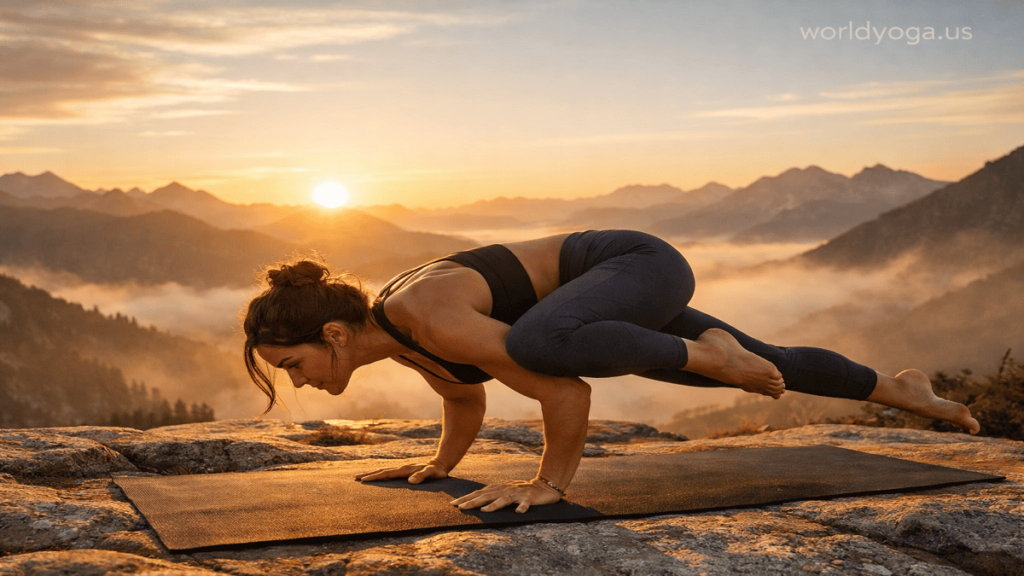
Beginner-friendly core yoga poses focus on building deep abdominal control, spinal stability, and breath coordination without overwhelming the body. These poses create a safe foundation before progressing to stronger stability work.
A very safe starting point is Setu Bandhasana. This pose gently activates the glutes, lower back, and deep core muscles while keeping the spine supported on the ground. It is especially helpful for beginners because it builds posterior chain strength without requiring balance.
Another excellent entry-level core pose is Phalakasana. Even though it looks simple, plank teaches full-body engagement. Beginners can start by holding it for short durations or practicing with knees down to develop transverse abdominis strength and shoulder stability.
Marjaryasana Bitilasana is also highly recommended. While it is not a strength hold, it gently activates the core through spinal flexion and extension. It improves awareness of the spine and helps beginners learn how to coordinate movement with breath.
A seated option like Ardha Navasana is useful for gradually introducing abdominal strength. It allows controlled core engagement while keeping the lower back partially supported, making it easier to build endurance safely.
Another accessible pose is Balasana. Although it is a resting posture, it helps beginners understand breath control, spinal relaxation, and gentle abdominal compression, which is essential for core awareness and recovery between stronger poses.
Finally, simple standing core engagement in Tadasana helps beginners learn alignment. By gently activating the abdomen while standing, practitioners build awareness of posture without strain.
Summary
Beginner-friendly core poses include:
- Bridge Pose
- Plank Pose (modified if needed)
- Cat-Cow Movement
- Half Boat Pose
- Child’s Pose (for awareness and recovery)
- Mountain Pose (for alignment training)
These poses prepare the body for more advanced core work and stability-based movements, including challenging variations like Squat Heels Up Knees Together Arms Below Head.
#Core Poses in Pune
What precautions should be taken while practicing core yoga poses?
Core yoga poses are highly effective for strength and stability, but they must be practiced with control and awareness to avoid strain—especially in the lower back, neck, and shoulders. Because core work often involves holding the spine against gravity or stabilizing in unstable positions, correct technique is more important than intensity.
A key precaution is maintaining spinal neutrality and avoiding over-compression. In poses like Phalakasana, beginners often let the hips drop or lift too high, which shifts pressure into the lumbar spine or shoulders. The core should stay gently engaged to keep the body in one long line without collapsing.
Breathing is another critical factor. Many practitioners unintentionally hold their breath during effort, which increases internal pressure and reduces control. In poses such as Navasana, steady breathing helps stabilize the spine and prevents unnecessary tension in the neck and hip flexors.
It is also important to avoid neck strain and shoulder overload, especially in arm-support poses like Chaturanga Dandasana. The shoulders should stay engaged and aligned, not collapsing forward. Beginners should modify by lowering knees or reducing depth until adequate strength is developed.
Another precaution involves lower back protection. In poses like Ardha Navasana, excessive rounding of the spine can strain the lumbar region. Keeping the chest lifted slightly and engaging the deep abdominal muscles helps maintain safe alignment.
Overexertion is also a common issue. Core muscles fatigue quickly, and pushing beyond capacity can lead to poor form. Rest poses like Balasana should be used frequently to release tension and reset the spine.
Proper progression is essential. Starting with foundational alignment work in Tadasana helps build awareness before moving into stronger core holds. Jumping directly into advanced variations increases injury risk and reduces effectiveness.
Finally, individuals with existing spinal issues, herniated discs, or recent abdominal surgery should consult a qualified instructor or healthcare professional before attempting intense core training.
#Core Poses in Banglore
Case Study of Core Poses
Core yoga training focuses on improving deep abdominal strength, spinal stability, and neuromuscular control through progressive bodyweight-based postures. This case study examines the impact of structured core pose practice on a recreational practitioner over a four-week period.
Foundational movements included Phalakasana, Navasana, Setu Bandhasana, and Ardha Navasana, supported by mobility and recovery work such as Marjaryasana Bitilasana and Balasana. Alignment awareness was reinforced through standing posture training in Tadasana.
1. Background
The subject was a 30-year-old office worker with moderate fitness levels but weak core endurance, poor postural alignment, and frequent lower back fatigue during prolonged sitting. The goal was to improve trunk stability, posture control, and movement efficiency using yoga-based core training.
2. Methodology
A structured four-week program was implemented with five sessions per week, each lasting 45–60 minutes. Sessions included:
- Static holds (plank, boat pose variations)
- Controlled dynamic movements (cat-cow flows)
- Posterior chain activation (bridge pose)
- Breathing and alignment drills
- Recovery phases using child’s pose
Progression was gradual, increasing hold duration rather than intensity to ensure safe adaptation.
3. Observations
Week 1
The subject experienced early fatigue in plank pose within 15–20 seconds. Boat pose showed difficulty in maintaining spinal alignment, with noticeable rounding of the lower back.
Week 2
Improved endurance in plank holds (up to 40 seconds) and better control in half boat pose. Breathing became more coordinated with movement, reducing unnecessary muscle tension.
Week 3
Significant improvement in core stability was observed. The subject maintained neutral spine alignment in plank and demonstrated better balance in boat pose without excessive strain in hip flexors.
Week 4
The subject achieved consistent 60–75 second plank holds, improved posture during sitting and standing, and reduced lower back discomfort during daily activities.
4. Outcomes
The structured core yoga program resulted in:
- Increased deep abdominal endurance
- Improved spinal alignment and posture awareness
- Reduced lower back fatigue
- Better neuromuscular coordination between upper and lower body
- Enhanced balance control during transitional movements
5. Discussion
The results indicate that progressive core training using yoga-based postures effectively improves functional stability. Static holds like plank pose developed endurance, while dynamic movements such as cat-cow improved spinal mobility and control. Posterior chain activation through bridge pose balanced anterior core engagement, reducing postural imbalances.
#Core Poses in Kolkata
White Paper of Core Poses
Core yoga training is a structured approach to developing deep abdominal strength, spinal integrity, and full-body neuromuscular coordination through bodyweight-based postures. This white paper examines the biomechanical principles, muscle activation patterns, progression strategies, safety considerations, and applied use cases of core-focused yoga poses.
1. Abstract
Core yoga poses are designed to train the body’s deep stabilizing system, including the abdominal wall, spinal extensors, pelvic floor, and hip stabilizers. Unlike isolated abdominal exercises, yoga-based core work emphasizes integrated control of posture, breath, and movement. The system is scalable from beginner-level activation to advanced stability under load and instability.
2. Conceptual Framework
Core stability in yoga is defined as the ability to maintain spinal alignment and pelvic control during static and dynamic movement. Foundational alignment is often introduced through Tadasana, which teaches neutral posture, weight distribution, and basic core engagement before progressing into load-bearing positions.
Core training is structured around three functional pillars:
- Static stability (holding positions)
- Dynamic control (movement transitions)
- Integrated coordination (full-body engagement)
3. Biomechanical and Physiological Analysis
Core yoga poses activate multiple muscle layers:
3.1 Primary Muscle Systems
- Transverse abdominis (deep stabilizer of spine)
- Rectus abdominis (spinal flexion control)
- Obliques (rotational and lateral stability)
- Erector spinae (spinal extension and posture control)
3.2 Supporting Muscle Systems
- Hip flexors (iliopsoas group)
- Gluteal muscles (pelvic stabilization)
- Pelvic floor muscles (internal pressure regulation)
- Diaphragm (breath coordination and core pressure control)
These systems work synergistically to maintain stability under varying loads and positions.
4. Key Core Yoga Poses in the System
Core training typically progresses through structured poses such as:
- Phalakasana – full-body isometric stability and endurance
- Navasana – deep abdominal and hip flexor strengthening
- Chaturanga Dandasana – controlled strength under load
- Vasisthasana – lateral core and oblique stability
- Setu Bandhasana – posterior chain activation and spinal support
- Ardha Navasana – progressive abdominal endurance training
These poses collectively develop balanced anterior, posterior, and lateral core strength.
5. Training Methodology
A structured core yoga system follows progressive overload principles:
- Foundational alignment and postural awareness
- Static holds for endurance development
- Dynamic transitions for neuromuscular control
- Integrated flow sequences for functional strength
- Recovery and decompression phases
Breath control (pranayama integration) is essential for stabilizing intra-abdominal pressure and improving movement efficiency.
6. Safety and Risk Considerations
Core training must prioritize spinal neutrality and controlled progression. Key risks include:
- Lumbar strain from excessive spinal flexion
- Neck tension during improper plank alignment
- Hip flexor overload in prolonged boat pose holds
- Breath holding leading to reduced stability
Recovery poses such as Balasana are essential for neuromuscular reset and spinal decompression.
7. Applications Across Industries
Core yoga poses are widely used in:
- Fitness and strength conditioning programs
- Rehabilitation and physiotherapy protocols
- Sports performance and injury prevention systems
- Yoga teacher training and wellness education
- Corporate wellness and stress management programs
They are especially effective in improving functional movement patterns and postural efficiency.
8. Conclusion
Core yoga poses provide a comprehensive system for developing stability, strength, and coordination through integrated muscle activation and controlled movement patterns. When practiced progressively, they enhance spinal health, improve posture, and support advanced movement capabilities.
#Core Poses in Delhi
Industry Application of Core Poses
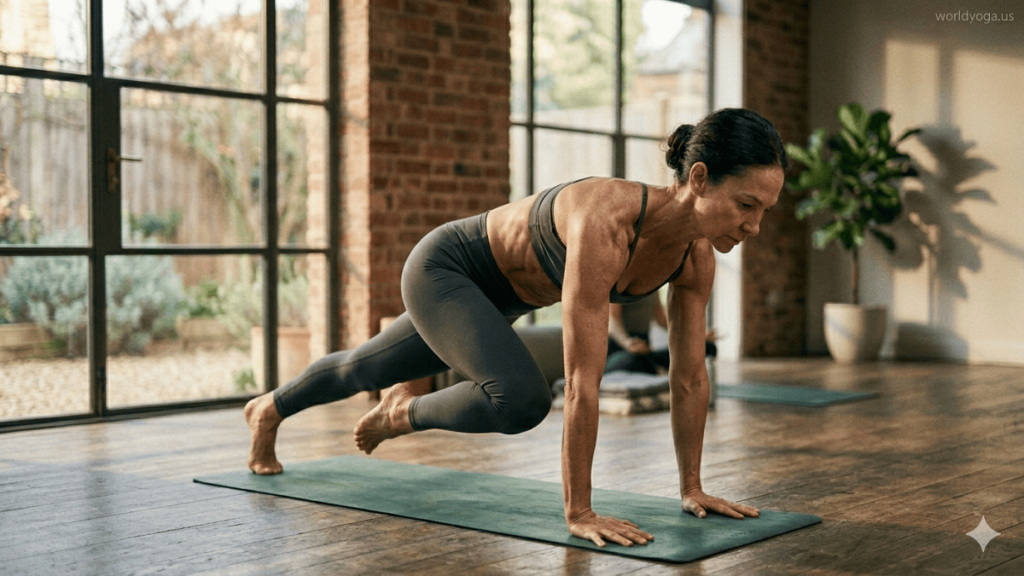
Core yoga training refers to structured practice of stability-focused postures that develop deep abdominal strength, spinal control, and full-body coordination. These practices are widely applied across modern industries due to their strong connection with functional movement, injury prevention, and performance optimization.
Core foundations often begin with alignment-based standing awareness such as Tadasana, before progressing into structured stability training systems.
1. Fitness and Strength Training Industry
In fitness programming, core yoga poses are used to improve functional strength and movement efficiency without external equipment.
Key applications include:
- Building deep abdominal endurance for athletic performance
- Improving posture during weight training and bodyweight exercises
- Enhancing balance in dynamic workouts and HIIT systems
- Supporting controlled movement under fatigue
Core poses such as plank and boat variations are frequently integrated into functional circuits and mobility-based strength programs.
2. Sports Performance and Athletic Conditioning
In sports science, core yoga training is used to improve stability under dynamic load conditions.
Benefits for athletes include:
- Better control during sprinting, jumping, and landing
- Reduced risk of lower back and knee injuries
- Improved rotational stability in sports like tennis, football, and cricket
- Enhanced balance during rapid directional changes
Core stability is considered essential for efficient force transfer between upper and lower body.
3. Physiotherapy and Rehabilitation Industry
Core yoga poses are widely used in rehabilitation and corrective movement therapy.
Clinical applications include:
- Recovery from lower back pain and postural dysfunction
- Post-injury reconditioning of abdominal and spinal stabilizers
- Improving pelvic alignment and hip stability
- Gradual reintroduction of functional movement patterns
Gentle core activation sequences are often prescribed before progressing to advanced strength work.
4. Yoga and Wellness Industry
Within yoga education and wellness systems, core poses are a foundational element of strength-building and alignment training.
Applications include:
- Yoga teacher training programs (TT modules)
- Alignment-focused yoga classes
- Breath and posture integration practices
- Advanced flow sequencing preparation
Core stability supports progression into advanced postures and balance-based movements.
5. Corporate Wellness and Mental Health Programs
Core yoga is increasingly used in workplace wellness initiatives to improve posture and stress management.
Key benefits:
- Reduces fatigue caused by prolonged sitting
- Improves spinal posture and ergonomic awareness
- Supports stress reduction through breath-based stabilization
- Enhances focus and cognitive clarity
Short core-focused sessions are often included in desk-based wellness routines.
6. Dance, Performing Arts, and Movement Training
In performing arts, core yoga training improves body control, balance, and expressive movement quality.
Applications include:
- Enhancing control during floor work and lifts
- Improving balance in complex choreography
- Supporting injury prevention in repetitive motion training
- Increasing endurance in performance-based movement
Core strength is essential for controlled transitions and stage stability.
7. Biomechanics and Movement Science Research
Researchers use core yoga poses to study:
- Spinal stability under static and dynamic load
- Muscle activation patterns in deep stabilizers
- Balance response under reduced base of support
- Coordination between breath and movement
These insights support developments in rehabilitation science and functional movement screening.
Conclusion
Core yoga poses are widely applied across multiple industries due to their ability to improve stability, posture, and functional strength. From fitness and sports to rehabilitation and corporate wellness, they provide a scalable system for enhancing human movement efficiency.
#Core Poses in Mumbai
Ask FAQs
What are core yoga poses?
Core yoga poses are postures that activate the deep stabilizing muscles of the abdomen, spine, pelvis, and hips. They help improve posture, balance, and overall body control through static holds and controlled movements.
Why are core poses important in yoga practice?
Core poses are essential because they stabilize the spine and support safe movement in all other yoga postures. They improve balance, reduce injury risk, and enhance efficiency in both static and dynamic sequences.
Which are the most effective core yoga poses?
Some of the most effective core poses include Phalakasana, Navasana, Vasisthasana, Setu Bandhasana, and Ardha Navasana.
How often should core yoga poses be practiced?
Core yoga poses can be practiced 3–5 times per week depending on fitness level. Beginners should start with short holds and gradually increase duration as strength and endurance improve.
Are core yoga poses safe for beginners?
Yes, core poses are safe for beginners when practiced with proper alignment and progression. Starting with foundational movements like Tadasana and using modifications helps prevent strain and builds strength gradually.
Table of Contents
Disclaimer: The information provided about core yoga poses is for educational and informational purposes only and is not a substitute for medical advice. Practice under the guidance of a qualified instructor, and consult a healthcare professional before beginning if you have any existing injuries, medical conditions, or concerns.